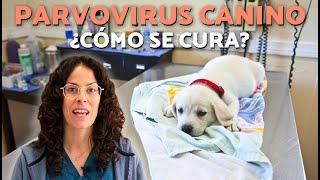
This is a YouTube video titled "PARVOVIRUS en PERROS cachorros y adultos 🐶💉¿Tiene CURA? Síntomas y Tratamiento" created in January 2025. It features Alba Perez, a veterinarian and CEO of the Vetropea Group, providing an informative monologue about canine parvovirus. The video explains the disease's causes, symptoms, diagnosis, treatment, and prevention, aimed at dog owners, especially those with puppies. The content is educational and presented in a single-speaker format without conversational elements.
Hello, family. Welcome back to the Experto Animal Channel. In case you don't know me, I'm Alba Perez. I'm a veterinarian. I'm the CEO of the Vetropea Group and I'm the manager of the Vetropea Veterinary Clinic located in the Valleys countryside. Well, family, today I'm here to talk to you about a disease that I'm sure you've heard of and that many dog owners must be concerned about, especially when you pick up a puppy. We're going to talk about canine parvovirus. Canine parvovirus, as its name suggests, is a contagious disease caused by a viral agent. It mainly affects puppies because it's true that once we start vaccinating our dog, they'll start acquiring immunity. And if our dog is properly vaccinated from puppyhood and later in adulthood, it'll be very difficult for them to contract this disease. And how exactly is parvovirus contracted? It really is a virus that is in the environment. It can be anywhere, and it is transmitted because dogs that are carriers and that have the disease excrete it through their feces. The virus survives in the environment for quite some time and can be infectious for a very long time. That is why it is extremely important that you follow the advice of your trusted veterinarian when you get a puppy and that you respect the times during which you are ordered not to take your dog outside the house. We know that sometimes it can be difficult to manage having a puppy at home and not being able to go outside. But until he can start going outside on the ground, if he is a dog of a size that allows you to do so, what you can do is carry him in your arms. That way at least he can get used to sounds and visual stimuli and get a little idea of what to expect when he can go outside more freely. And now we are going to talk about something very important. How can we recognize this disease? The main signs that you will detect in your puppy or in your adult dog, if for some reason it has not been vaccinated correctly, is that it will suddenly be much more lethargic, much more apathetic, it will not want to eat, and it will start. Above all, the most notable characteristics are digestive signs. You will see that your puppy suddenly begins to vomit a lot, to have a lot of liquid diarrhea, and with a very specific characteristic, and that is that this diarrhea is usually accompanied by fresh blood, that is red blood, and it will also have a very strong odor. It is super Important that if you suspect and detect any of these symptoms, go to the emergency room immediately and tell your veterinarian that you suspect that your puppy may have parbovirus. That way, they will be treated as quickly as possible and will also take measures to prevent contaminating the environment in the veterinary clinic. And thus we will avoid infecting other possible patients who come to the center for vaccinations or their periodic checkups. Another important thing, how will the diagnosis of the disease be confirmed? Your veterinarian will perform different tests, perform a general physical exam, and this disease is often accompanied by fever and abdominal pain. They will also perform blood tests, since parbovirus can cause a very sharp drop in white blood cells. In addition to replicating in intestinal cells and causing digestive symptoms. This virus also replicates in the bone marrow and causes a dramatic drop in your dog's defenses. To fully confirm the diagnosis, your veterinarian can perform a fecal exam. We will do a rapid test that will confirm whether or not your dog has the disease. Furthermore, this test is not interfered with by vaccines. So if your dog has had any of the first baby vaccines and it comes back positive, it will not be related to the vaccination. In the event that it is confirmed that your animal has parbovirus, you should know that the indicated treatment will always involve hospitalizing the animal. The animal will basically need supportive treatment to combat the disease, because remember that it is a virus. There is no specific treatment that kills this viral agent. The only thing we can do is give it fluid therapy so that it does not become dehydrated, antibiotics for opportunistic infections, and try to control diarrhea, vomiting and tummy pain. It is also very common for them to need a tube that goes from the nose to the stomach in order to be fed, since they are not normally hungry on their own. There are some breeds that are more susceptible to this disease, for example German Shepherds or American Staffords. Therefore, depending on the animal, it will need more or less days to overcome the disease. In addition, the animal will continue to be infectious for a few days. So many hygiene measures must be taken to avoid infecting other animals. And most importantly, how are we going to prevent this disease? Prevention is basically through correct vaccination. Remember that your trusted veterinarian will set the vaccination times for you, but by consensus, some puppies leave the litter very early or are from the street or from the shelter. They receive a very small first vaccination, called the poopy vaccine, at six weeks of age. But in general, we will start with the first multivalent vaccination against all diseases at eight weeks of age. We will give a booster at 12 weeks and a final booster at 16 weeks. Finally, when the animal is one year old, we will give another booster, and from then on they will be vaccinated every year, every two years or every three years, depending on the situation. But for this reason, it is very important that you do not take your puppy out on the street before finishing the first round of vaccinations. Furthermore, I insist that even if our animal overcomes the disease, which fortunately the prognosis for this disease has improved a lot, because the support we provide is increasingly intensive and hospitalizations in veterinary medicine are more advanced, our animals may still have sequelae. Sometimes this viral disease causes such severe inflammation in the digestive system that the intestine can remain chronically inflamed for quite some time. So it is possible that in the long term, your animal, even if it has overcome the canine parvovirus, will need a specific diet and some specific care for its digestive system. That is why I insist prevention is better than treatment. Well, family, I hope that now you have a clearer idea of what this disease is. But in any case, if you have any questions, opinions, comments or anything, you can leave them all below. If you like the video and want to continue watching content of this type, remember to subscribe to the channel and also leave us your like, which serves as feedback to let us know if you like what we publish. I say goodbye. Now, family, you have other videos to continue informing yourself and do not worry, we will see you very soon.