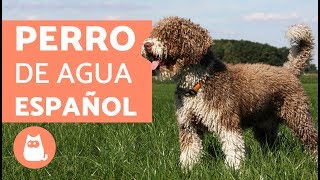
Spanish Water Dogs are medium-sized hunting dogs with curly coats and strong swimming abilities. They're intelligent and energetic, needing regular exercise and mental stimulation. Originally bred for water retrieval work, they make loyal family companions when properly trained and socialized.
The Spanish water dog has been a shepherd dog for generations. However, its nobility and loyalty have made it one of the most beloved companion dogs on the Iberian Peninsula. For this reason, in this video by an animal expert, we will explain everything you need to know about this dog breed, its physical characteristics, origin, care and much more. Don't miss the Spanish water Dog's predecessor was the ancient barbed dog, a water dog that has also given way to other breeds such as the poodle or poodel, the Portuguese water dog and the French water dog, among others. Its presence on the Iberian Peninsula dates back to at least 1100 BC, but its exact origin and whether other breeds existed in its development are unknown. During the 17th century, the Spanish water dog was used as a working dog in activities such as herding and hunting. Large likewise, and due to its ability to swim, fishermen in northern Spain occasionally used it as a helper. Its population was mainly found in Andalusia and it was known as the Turkish Dog. Later, with the appearance of other breeds in the country, the Spanish water dog ceased to be the main helper in herding and hunting tasks, thus decreasing its population. Today, this breed is still very popular, although its tasks have changed and now it is one of the most popular dogs as a companion animal and for practicing different sports. The Spanish water dog is very similar physically to the current French barbette due to their common origin. It is a medium sized rustic dog with an athletic and muscular build. The head is strong, elegant and with a flattened cranial roof. The nasofrontal depression is soft and shallow. The slightly oblique eyes range from hazel to chestnut in color. The ears are medium set, triangular and drooping. The body is medium sized, robust and slightly longer than high. Although we are talking about a fairly proportionate dog, the back is straight and strong while the croup slopes gently with respect to the horizontal. The chest is broad and deep. The belly is slightly tucked up. According to the FCI, a male usually measures between 44 and 50 centimeters at the withers and weighs between 18 and 22 kilograms while the female measures between 40 and 46 and weighs between 414 and 18 kilogram. The coat of the Spanish water dog is long, curly and woolly. Regarding the accepted colors, the FCI states that this dog can only be white, black or brown or bicolor, combining white with black or white with brown. Probably due to its long history as a working dog, the Spanish water dog is usually very obedient and shows a natural predisposition to learning. This is also due to its intelligence which must be stimulated regularly with training, dog skills and other activities. It is also a very loyal dog and attached to its owners, brave and with a very balanced character. In general, it usually shows hunting and herding instincts, although we do not necessarily see these traits in all of them. Caring for the Spanish Water Dog's coat will require extra effort on the part of the owners as tangles and dirt buildup are common. For this reason, it is recommended to leave the hair between 3 and 12 centimeters long and to brush it practically daily if you want to keep it looking nice and tangle free. For a perfect finish, it is ideal to visit the dog groomer approximately every two months. However, you can bathe it at home using nourishing shampoos and conditioners that soften the coat and make brushing easier. Another aspect to highlight is the physical exercise and mental stimulation that this breed needs. It is important to understand that this is an active dog that requires a minimum of three walks a day combined with games and activities that keep it well stimulated such as canine skills, intelligence, games, etc. Mainly due to its attached and loyal nature. The Spanish Water Dog will need to start socializing early. That is the process in which it will learn to relate to different people, animals and environments. This process lasts a lifetime and is essential to avoid fears and unwanted reactions in adulthood. Socialization begins with the mother and siblings, so separating the puppy too early can harm later learning and cause behavioral problems in the future. In general, a well socialized Spanish Water dog usually gets along well with other animals and people, although it tends to be somewhat reserved compared to other more extroverted breeds. It is a very intelligent dog and it is very easy to work on obedience and other exercises with it. Apart from improving our relationship with it and fostering good communication, teaching our dog obedience commands will be very beneficial for it since it is a breed that requires regular mental stimulation. It is also very interesting to teach canine skills or various tricks such as teaching your dog to shake hands. All these exercises will help keep it distracted and avoid negative behaviors. On our channel you can find many videos in which we teach basic dog training techniques to obtain good results and ensure that the animal is increasingly eager to learn. It is essential to use positive reinforcement and avoid punishment. It is also recommended to carry out short sessions, no more than 15 minutes, but to be consistent. Repeated several times a day and in different environments. The Spanish Water Dog is considered one of the healthiest dogs in existence and is not prone to hereditary problems. However, the most common diseases recorded are cataracts, follicular dysplasia and diciasis to avoid the late detection of any of these diseases, we always recommend visiting the vet approximately every six months. In the same way, we will follow the dog's vaccination schedule and regular external and internal deworming. If you follow our advice, you will enjoy a healthy and happy dog between the ages of 10 and 14. And that's it for today's video. If you liked it, give it a like. Don't forget to subscribe and leave a comment about the breed you would like us to talk about. See you in the next video. Until next time, experts.