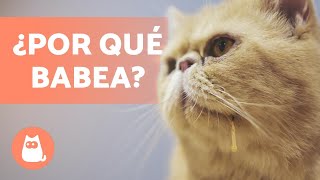
An animal expert explains why cats drool excessively. The main causes are stress, poisoning, nausea, medication side effects, oral problems, foreign objects in the mouth, aging, and sometimes just pleasure. Know when to call a vet.
Excessive saliva production is called thiolism, both in cats and other mammals. This can be part of the feline personality. However, a cat drooling a lot is usually not normal for this reason. In this video by an animal expert, we will mention the most common causes that explain why cats drool and what you should do in each case. First, stress. Cats are very susceptible animals and therefore tend to suffer stress easily. Among the symptoms that indicate that a cat is stressed is uncontrolled drooling. Why? When something causes excessive fear or nervousness in the cat, its neurological system sends a series of response orders as a shield against this situation that it is unable to control. This process can express itself in the form of drool, very dilated pupils, etc. The solution lies in finding the stressor and eliminating it. Second, intoxication or poisoning. A clear sign of intoxication or poisoning is excessive saliva production or the expulsion of white foam. Andreas suspects any of these cases and it is necessary to go to the vet immediately. Poisoning can occur after eating spoiled food or by consuming cleaning or hygiene products. Likewise, if the cat has been poisoned, only a specialist can treat it. On the other hand, if you have just applied a topical antiparasitic product such as a pipette and the cat has licked the area, it may have also suffered mild poisoning and shown excessive drooling. 3. Nausea and vomiting. Both nausea and vomiting accelerate salivation, causing the cat to drool. This can be a consequence of the formation of hairballs, a gastrointestinal problem or the onset of an illness. So if you notice that your cat goes after expelling a hairball, it is probably due to this. Now, if you notice that it is very nauseous or vomits frequently, go to the vet for a more in depth examination. 4. Consumption of medications. Anyone who lives with a cat knows how complicated it is to medicate them, especially when it involves giving them medication in the form of a syrup. In these cases, it is common to see the cat drooling all over the place after ingesting the doses. It is a consequence of the stress that the cat may have suffered during the process of receiving the medication and the taste of the drug, which may be unpleasant for the cat. In any case, it usually disappears after a while. However, if you notice that the hours go by and the drooling continues, call the vet because the medication may not be suitable for the cat or it may need to take a stomach protector. 5. Oral problems such as cavities, a tongue infection, gingivitis, a bacterial infection, ulcers, periodontitis, wounds or tumors. They also cause excessive drooling that is usually accompanied by a bad smell and an unusual color of saliva, such as red or green. In addition, problems related to the pharynx, such as pharyngitis, may be behind the drooling. 6. Foreign bodies if your cat has pieces of food between its teeth or an object stuck in the oral cavity, it may develop hypersalivation as a result. In these cases, it is common to see the feline coughing or gagging to expel the object that is bothering it. Especially if it is something stuck, it is essential to visit a specialist to remove it and prevent it from choking. 7. Problems associated with Old Age As a cat ages, a series of age related problems and pathologies may appear. Arthrosis or kidney failure are diseases that usually appear in older cats and can cause Hypersalivation, among other symptoms. 8. Pleasure of course, not all the causes behind excessive drooling are negative. A cat can also drool for pure pleasure or when it is very happy. For example, if you have just arrived home and it is happy to see you, it is normal for it to drool. Likewise, if you are about to give it its favorite food and you notice that it is drooling, it is. It is most likely because it has smelled the smell and is very happy. Tell us, have you ever seen your cad drool? Why do you think it has done it? Leave us your comment with your experience and if you found the video useful, don't forget to like it and subscribe. Until next time. Experts.