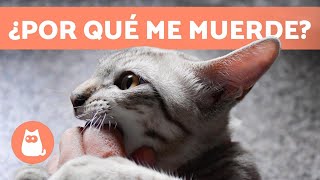
Un experto en animales explica seis razones por las que los gatos muerden a sus dueños: exploración, juego, afecto, comunicación de espacio, preferencias al acariciar, y agresión defensiva. Aprende a entender el comportamiento de tu gato.
Biting is part of a cat's wide behavioral repertoire and can have several meanings that we explain in this video by an animal expert. Pay attention and take note. 1. They love to explore. Cats are very curious felines and it is easy to see them approaching, getting into or jumping on anything that catches their attention. Although they do not tend to use their mouths as much as dogs, cats can also take small and subtle bites at plants, cables, and other novel objects that they find inside and outside the home. Their goal is to investigate them in greater depth, and this is especially true for puppies and younger animals. If your furry friend tends to do this, be very careful. They could hurt themselves by biting or ingesting something they shouldn't. 2. They want to play with you. Cats are great hunters, so their favorite game is to replicate hunting sequences by stalking and biting their prey during play, cats can become very aggressive in their behavior regarding the use of their mouth and claws, especially in the case of cats that have not been properly socialized or that have been separated from their mothers early. However, during play, cats have no intention of causing harm. If your cat is very rough when playing, avoid using your hands directly when playing with them. It is better to use feather dusters, ropes, balls, or any other object that they can chase and capture. It is also a good idea to provide your furry friend with a climbing tower or interactive toys. 3. Show your cat their love. If your cat nibbles at you while licking you, you are engaging in affiliative behavior where they demonstrate the attachment they feel towards you by grooming and nibbling on you. If they do not harm you, ideally you should allow them to do so as this behavior strengthens the bond between you. Now, if these bites bother you or you prefer to avoid them, you just have to gently remove your hand or move a little away from the cat so that it stops the behavior without scolding or pushing it. In any case, here above we leave you a video in which we talk in detail about why your cat licks you and then bites you. 4. It is asking for space. Biting is also part of feline communication and in many cases it is used on another individual to indicate that it should go away or leave it alone. This behavior does not necessarily have to be accompanied by an aggressive attitude as the cat can be perfectly relaxed while expressing its desire to be alone. 5. Does it not want to be petted? Does your cat bite you suddenly while you are relaxed? This behavior is very common in felines and they do it simply as a way of indicating to us that they no longer want to continue receiving caresses from us, that we are being too rough for their taste, or that we are touching them in an area where they do not like to be petted. Avoid petting them in areas such as their belly or paws. Always make gentle movements in the direction of their fur and do not force them to have physical contact with you. If you see that they prefer to be al, find out more about cat language in the video included in the card. 6 they are aggressive or defensive. Another reason why cats may bite is to voluntarily attack another individual or to defend their territory, a resource, or themselves. During a conflict, the feline adopts a tense posture. They will lay their ears back, bristle, swish their tail rapidly from side to side, hiss while showing their teeth, or swipe their paws in the air, among many other behaviors. If you occasionally observe signs of aggression in your furry friend, it is best to leave them alone and not force them to interact, as they are probably very scared or in some type of pain. If this is your case, the first thing you should do is go to the vet to rule out any ailments or pathologies. Once you've done this, contact a feline ethologist, a specialist in behavior modification if you want to continue learning about cat behavior. This don't miss the playlist we've left for you here on the side. Tell us now you know why your cat nips at you. Until next time, experts.