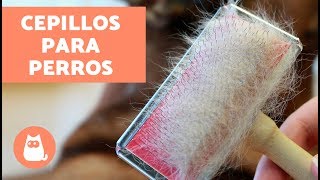
Expert guide to dog brushes for different coat types: short, medium, long, and water dog hair. Learn which brush works for each type and how to groom your dog properly to keep their coat healthy.
During walks, dogs tend to roll around, play with other dogs, jump, and in general are exposed to factors that cause their hair to get dirty or tangled. Failure to properly clean their coat can result in health problems and one of the most important grooming habits is brushing for this reason. In this video by an animal expert, we will talk about the different types of dog brushes and which one to choose based on the animal's hair. In general, there are three types of short, medium and long. Each of them requires a specific type of brush and brushing times for proper coat care. So let's see which ones are the most suitable brushes for short haired dogs. Short haired dogs need much lighter hair care since their coat is very thin. Two or three brushings a week are more than enough. Of course, within the breeds considered short haired, there are different hair lengths and characteristics that stipulate the final number of combing sessions. For example, the French Bulldog has very short hair and needs fewer brushings than the Chihuahua, which, despite having short hair, tends to shed a lot of it. For this type of hair, it is advisable to use brushes that simply remove excess hair as they are not likely to create tangles or excessive dirt. To do this, use a rubber bristle brush, a glove or a rubber brush. These types of brushes prevent damaging the animal's skin and pulling out hair. Since they are made of rubber, they allow dead hair to adhere to them easily while giving your dog a gentle and pleasant massage. Always comb your dog gently to make brushing a positive moment for them. Following the direction of the hair brushes. For dogs with medium, soft and fine hair. Medium haired dogs usually need a minimum of four brushings a week, although if you have enough time, ideally you should do it once a day. Since they have longer hair than the previous group of dogs, we will use a brush with fine close knit metal bristles known by many as a card or racket. To remove all accumulated dead hair and to avoid damaging their skin, we will pay attention to the tips of the bristles and choose those cards with rounded tips. Likewise, brushes or cards with rubber bristles are also suitable for these dogs. As with the previous dogs, we will brush very gently, paying attention to the areas with the most hair and always in the direction of the hair brushes for dogs with medium, thick, dense and double coated hair. Within the medium haired group, we find dogs with thicker and double coated hair, such as the German Shepherd. These dogs need special brushes both to remove accumulated dead hair and to untangle any knots. Therefore, to brush and comb the hair first we will use the brush with metal bristles mentioned above. However, once this step has been completed, it is advisable to use a brush or rake comb in order to untangle and reach the dead hair located close to the skin. Rubber bristle brushes are also effective and can even be used after bathing. Another popular brush for removing dead hair from dogs with this type of hair is the dematting brush. The effectiveness of this brush is truly amazing since it has been shown to collect up to 90% of dead hair. It is characterized by having a single row of very short, thin and close together metal bristles. It also benefits the dog's skin and provides shine and softness to the coat due to its ability to easily distribute the natural fat present in the animal's dermis. This type of brush is useful for dogs with long or curly hair that tend to generate knots or tangles because it has the ability to cut them. Brushes for Long and Very Long Haired Dogs Dogs with long or very long hair are the ones that need more attention in terms of hair care. Since they tend to have quite a few tangles. The best thing to do is to brush their coat every day and visit the groomer when necessary. For long haired dogs with delicate skin like Yorkies, we will use a double sided brush with rounded bristles on one side and stiffer synthetic bristles on the other. First we will use the part with the rounded bristles, combing the coat carefully and removing any dead hair. Then the other side will provide softness and shine. We can also use a comb with long, rounded metal teeth. For dogs with thicker, long, less delicate skin, we will use the previous brush with metal teeth, combing in the direction of the hair and being careful not to apply too much pressure. And for dogs with long, thick, dense hair that tends to tangle, we can also use a rake comb. Brushes for Water Dogs the hair of water dogs is characterized by being curly and very dense. For this reason, we need a specific type of brush to be able to brush their hair and undo the knots without damaging or pulling them out. The most suitable type is a comb with thick, widely spaced metal teeth, also called a knot trimmer. Some of them have a single row of teeth while others have two, one with teeth that are more widely spaced than the other. If we prefer to use this second type of hair trimmer, we will first go over the part with the widely spaced teeth and then the row with the teeth that are closer together. If the dog has knots that are very close to the skin or that are difficult to undo, we will avoid using a knot trimmer and will instead use rubber tipped scissors to cut them or go to the dog groomer. Sometimes brushing allows us to detect the presence of fleas or lice as well as their traces. To remove them. We have a type of comb that is specifically designed to identify the places where these parasites are and proceed to apply the antiparasitic treatment prescribed by the veterinarian. These combs are characterized by having fine, tightly packed metal prongs that can drag and collect feces. They are suitable for all hair types and should be used by running them through the coat carefully and patiently to avoid pulling. Electric Brush Electric brushes like this one are currently on the market that help us untangle, comb our dogs and remove dead hair. In general, it is recommended for dogs with medium and thick hair, for long haired dogs or for dogs that tend to create knots. Have you found the ideal brush for your dog? If you like the video, don't forget to like, comment and subscribe. See you next time. Experts.