Defeating the Imposter Syndrome. Pushing thru fraudulent feelings to embrace your genius!
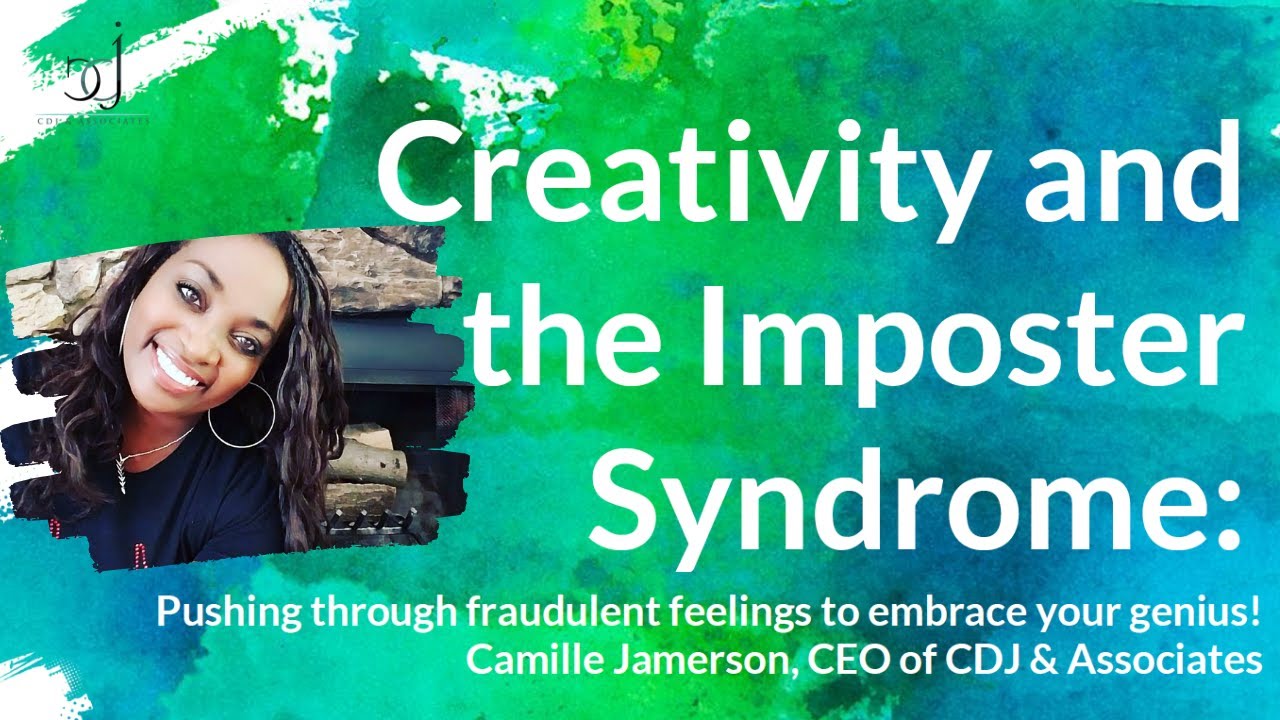
In this interactive workshop, Camille D. Jamerson, C.E.M®, guides participants through understanding and overcoming imposter syndrome. She begins by defining the syndrome as the feeling of being a fraud despite evidence of competence, and elicits audience input to surface common misconceptions. Jamerson shares personal stories—including a beauty‑pageant experience, a resume interview, and her reaction to the TV character Olivia Pope—to illustrate how pervasive the feeling can be. She outlines telltale signs such as fear of failure, down‑playing achievements, and attributing success to luck. The core of the session presents seven practical strategies: (1) separate facts from feelings, (2) monitor and verbalize your thoughts, (3) uncover the root cause of fraud feelings, (4) flip the internal script to a mastery narrative, (5) collect "battle data" (testimonials, compliments, documented successes) for future confidence boosts, (6) clarify who you are not to sharpen identity, and (7) recognize that most people also experience imposter syndrome, using it as a strategic advantage. Throughout, Jamerson encourages audience participation, answers questions about job re‑entry, and emphasizes the importance of tangible evidence and supportive feedback to counteract self‑doubt. The workshop concludes with a call to action to apply these tools, gather battle data, and reframe self‑perception.
Chapters
I am Camille D. Jamerson. This is my second time with C.E.M®. I was here last year. Anybody— was anybody here last year that might have taken my course? We had a lot of fun. Um, and it must have worked out okay. They asked me back, so they weren't afraid. And so I am here all the way from Michigan. I flew in yesterday and will be flying back this evening. And I give this time to the SEA Conference because I truly believe in its mission and helping creatives and giving back. This is my way of giving back. So I'm excited to be here. And I want to applaud you all for taking this course, for choosing to come in here this morning. Because of its subject matter, it's a little difficult to deal with. It's a little uneasy to admit, to degree. So whether you're here for yourself or for a friend, welcome. I'm glad that if nothing else you came to get the information to discover whether this applies to you and if it helps you to put a name to some of the things you might have been thinking and feeling. And that's usually what it does. That's what happened with me. So just to start things off, that's me. That's me on a really cute day. I was really cute that day. And speaking of cute, if anybody takes a picture of of me, like, and you get a good picture— if you don't know what a good picture is, ask somebody next to you— if you get a good picture of me, please make certain that you tag me in it, because I never get pictures of me talking, because I'm talking. So if you get a good picture, good picture, tag me. Or if I say something that really resonates with you, you're more than welcome to tweet it, quote it, put it on Instagram, what have you. I'm totally open to that. And actually encourage it. As you know, this is the hashtag they want us to use for the conference. The Imposter is the hashtag for this course. So that's my stuff, and I wrote it on the board just in case you need it as we're going, and I'll explain why I put my website up there a little bit later. I'm going to do my best to leave time for questions as well. So let's talk about this. What is the imposter syndrome? I'm asking. It's not rhetorical.
What do you think?
Just based on what you heard, seen, thought, assumed, the clue that I gave you in the session description, what do you think it is? Anybody? Yes. It's like when you're wondering like, am I as good as I think? Like, is this just me? Or like, am I a fraud?
Like—
okay, that's good, that's good. Keywords she said there was Think and fraud. Anybody else? Yeah, pretty much the same. And that's a very, very good definition because what you're gonna find during this discovery is that so much of this is right up here. So much of it is right up here. Okay? So, am I a fraud? This question— this is the question that always needs answering. Because if— truth be told, if you've faked your way through school and you're in a relationship and you've been phony or what have you, then okay, you need to own up to that, right? You need to own up to the fact that, okay, you know, this was my dating face and that's my representative actually, but the real me is X, Y, and Z. You need to own that. But in most cases, that's not what you're dealing with. In most cases, you've worked your butt off and you have the skill sets, you have the abilities, you have the know-how, you have the talent, and— but up here, you're like, "They're gonna figure out I'm a fake in 5, 4, 3—" Anybody? Yeah, and we're going to go through that, and usually creatives are very visual people, and so if you guys are anything like me, you're very visual people, so I'm going to show you some things that will help you identify yourself as we go forward. But more likely than not, you guys, you're not a frog. Simple definition, this is my— well, let's read this. It says it's 'Not unusual to feel like you're about to be exposed as a fraud. They've been gathering evidence on you for a while.' Um, and when I saw that, I was like, 'That's exactly how I feel. I feel as if people are gathering information so they can just expose who they think I really am at a moment's notice.' But my simple definition for the imposter syndrome— and I'm going to read this because I'm going to make sure I get it right— it's feeling like an imposter when you're not. Like you're a frog and the whole world is gonna find you out. And I'll read that again. It's feeling like an imposter when you're not, like you're a frog and the whole world is going to find you out. And here's the, as I call it, the tweetables. But you have this feeling that the idea that you succeeded is only because of luck.— and that people really haven't figured out that you ain't as awesome as you think you are. You just wait and you're like, "Soon as they figure this out, it's gonna be over." Anybody seeing themselves yet? Now here's a twist on this. There is a way to use the imposter syndrome to your advantage. And why do I say that? It's because 9 times out of 10, everybody is dealing with the imposter syndrome. So if you're dealing with it, 9 times out of 10, people that you're working with, people that you're going to school with, people that you may be in a relationship with are also dealing with it. Now, I used this to my advantage and I didn't even know what it was at the time. Um, way back, back, back in the day, I was in an international beauty pageant. And I won the state, I had won country, so I was in an international, it was called Miss Black International Beauty Pageant, and so I show up, my coach is with me, and I'm like, I mean, and these girls were like, "You people," I mean, gorgeous, had their stuff together, and I'm just like, all of a sudden I walked in the room and I didn't feel like I belonged, and she saw it. All in my face, my coach did. And I was like, I wanna go home. I just, nevermind, I wanna go home. And my coach, she pulled me to the side. She was like, first of all, you're just as good as they are. And secondly, they're feeling exactly what you're feeling. They're looking at you and thinking exactly the same thing. She said, walk in there like a bitch, like you own this. And I was just like, Well, I can't choose. Yeah, you can. So I got my little self together, reapplied the makeup, and I walked in there like I had already won. Really, I was like, oh, hi, how you doing? I'm so good. I'm so glad that you made it. Like I just owned the whole pageant. And you can just, you could see the demeanor of other people change just that quickly because now all of a sudden people were wondering, well, who is that? You know, does she got an inside connection? Did she already win and we don't know it? You could just see that it was great, but I didn't know at the time that that's what it was. So 9 times out of 10, when you're feeling a certain way, everybody around you is feeling that too, so you can use that to your advantage when you're in competitions, when you are up for jobs, whatever it is, you can use that to your advantage. Remember, and I think I put it in the session title, everybody's winging it, whether it's parenting, school, their job, eyeliner, everything. Everybody's winging it. I still can't wing eyeliner, just FYI. That's information you can use. Okay, now here are some telltale signs that you are infected, as I call it, with the imposter syndrome. Are these things that you have said to yourself or said to other people, "I can't afford to fail." You feel as if you can't afford to make a mistake because if you make a mistake, you feel that people will judge that mistake as if you don't know what you're doing, period. Okay, so you feel that you can't afford to fail. You feel like a phony. You feel like you do not belong in this particular environment. Success— when somebody encourages you or congratulates you or something, you always kind of poo-poo it. Oh, that was nothing. Oh, that, you know, whatever. I mean, I can do that in my sleep. That was nothing. You always downgrade your success. You always downgrade something that you do well. Okay, that's another sign that you could be dealing with the imposter syndrome. If they only knew. I got this done, right? You feel as if people knew the process as to how you got something done that you would be deemed a phony. I used to deal with that a lot. I have one of my companies, CDJ Associates, is a branding and management firm, and one of the things that I do for my clients in emergencies is sometimes they need a promo flyer or something for something that they're doing and we really don't have a lot of turnaround time, so it's something that I can do if I need to do it. And so when they see it, they're like, oh my God, this promo is beautiful. And in the back of my head, I'm like, if you only knew that I went to canva.com and created this in 15 minutes or less. You know, I got it. I mean, but actually it took skill to do that. I mean, I know people that have access to Canva and still can't pull off some of the things that I do, alright, but I immediately downgrade it or I immediately think, "If they only knew how I got this done." Doesn't matter how I got it done. I got it done and it rocks, okay. I don't even believe what I'm saying. Let me tell you when this happened to me. I was updating, I was updating my resume and in preparation for an interview. I was updating my resume, got it all done, did the phone interview. And so she asked me to tell her some of the things that I had done and about my school and blah, blah, blah. So I'm talking to her on the phone and everything I'm telling her is true, everything. And I mean, I've got a really great background. I've been chief of staff, I've been head of global offices for an international company, I went to Harvard. I mean, girlfriend got it going on. But on the phone with her, I didn't even want to tell her some of that stuff because it felt like I was being fake or being pretentious or that it was just by happenstance that all of those things happened. I automatically did not even believe my own press. And everything I was telling her was legit. Now I can see if I was kind of, you know, fudging the truth a little bit or expanding a couple of things to make me sound as if, but I wasn't. Even in my own truth, I struggled to even believe what I was saying. You could be infected with the imposter syndrome. So now these are some visuals coming up and they should help you figure out if this is something you've faced or, um, someone else you know. What kind of basis is this? This is who you believe is qualified for the job, and that's you. Okay? This is who you believe is qualified to win first place, but that's you. These are all the people you believe are qualified to be famous or what have you, and that's you. Okay? Anybody see the difference? Yes, yes. Next one. These are the compliments that you receive. In the green, somebody's lying. These are compliments you receive from somebody that's lying, in the green. And in the pink is from nice relatives who don't know what the hell they're talking about. So either way, you don't feel like the compliment is legit. They either are lying or they're nice relatives who just, "God bless your heart, honey." Right? So this is something that fit with me as well because— and I didn't say this at the beginning, I usually do, to explain why I like for you guys to kind of talk back. I'm the daughter of a Baptist pastor, so yes, I'm a preacher's kid and everything you heard about us is true. Everything, everything, everything, plus stuff that you didn't even think about. Yes, all of it is true. We're a trip. So, but with that, but with that, I'm used to people talking back. So talk back, it's okay. Wave hand, or I'll take an offering. So one of the two, you guys don't have to work with me here. But with that being said, I grew up in church and, um, my dad Like I said, he's a pastor, was very, very vocal. So I don't care what I did in church, he was loud and encouraging almost to the point of— I could be reading the church announcements for that week and he was like, "That's right, baby, read it. That's right, baby, that fish fry at 3 o'clock, y'all better be there. You heard what she said." And I'm just sitting there like, "Kitty here again?" So I was so accustomed to getting those kinds of compliments from my dad and from well-meaning others that outside of that I'm just like, "Ugh, they're just like those church folks. They're well-meaning, but I didn't read it that well." You know, you just start downplaying it when in fact it took a lot to do some of the things that I actually pulled off. Here's another. Things that you beat yourself up for. Anybody see themselves here? In the yellow, stuff that's outside of your control. Beat yourself up for things that you had nothing to do with. In the green, stuff that everybody else has literally forgotten about already. Nobody even remembers it but you. And then half the time in the pink is stuff that nobody else even noticed anyway. I went to apologize to my husband about something I did, and he was like, "Really? I didn't know that." And I was like, 'Cause I could have saved myself an apology, even though it was due, but he didn't even know. He didn't even notice. I mean, it was far off his radar, and I was walking around like in the hall of shame that whole week over something that he hadn't even paid attention to, right? So think about that. If half the time you're beating yourself up for stuff that nobody even noticed. In this one, it's showing that the amount of success you have, the higher you go, the more you worry that you are one mistake away from losing everything. Yes, thank you, Sissy. You are one mistake away from losing everything. I feel this almost every single day. And the reason that it's so is because, especially online, with how, you know, that whole world, you can make one mistake, say one thing off color, or post one thing that's inappropriate, and it can go viral, and everything around you can go crashing down. And I walk around with this fear that I'm one mistake away from losing everything. When in fact what I do for a living is fix stuff like that. So I know if I get in that kind of jam, I know what to do to get out. But that overwhelming fear, like, I'm one mistake away, I'm one mistake away, I'm one mistake away, really? Really? You can't function that way. And more so, you can't be creative if that's an overlying fear all the time, okay? We doing good. Here's another one. Reasons why a good thing happened to you. In the blue, ugh, like I got no clue. I don't even know why that jumped off. Nope, I mean, yeah, okay, fine, I worked for it. You right, yeah, I studied, I practiced. Yup, I did. But still, I don't even know why that even happened for me. Green, that little slice there, luck. I just lumped up on that opportunity. Purple is a mistake. It happened to me just by accident. They didn't even mean it for me. They probably meant it for the person sitting next to me, but I just happened to be sitting there and it worked out for me. Or you believe because something bad is about to happen. You believe that something good is happening to you now to prepare you for something bad that's happening. I see a lot of nods. I see a lot of nods. So in this, in this, when something good happens to you, why is it hard for you to just say, because I deserve it? Anybody? That's not rhetorical. Why is it so hard for you to say, because I deserve something good? To happen to me. Yes. Because you don't feel like you deserve it. That's a key word, feel. Anybody else? Feel pretentious, assuming that something good could happen to you. Wow, like you don't deserve it? Yeah, pretty much. Okay, anybody else? I think also society perpetuates like wanting more is being shallow or something like that. Okay, no, that's good. That's good, especially when You're in a situation where you get more and you see so many others with less. Is that where we're going? I see a lot of nods. Okay. Anybody not dealing with imposter syndrome yet? Your thoughts when someone says you would be good for a job or a role. What? And then this one is really key. I think it should have been bigger. Why? Why do you think I'm— you're automatically on defense. Why do you think I would be good for a role? Why are you trying to get me into that position? Is there something I don't know about that position? Are those people crazy and you want me to take that job because you don't want to do it and you really want me to do it so you can avoid it and do something else? You— why? Not that you're good and you could do the job, but you want to know the underlay for the overlay. Hey, Purple, have you met me? Right? Like, do you really know me? Because if you did, I don't think that that job would be good for me. Or in most cases, you're just— you don't think you deserve it. You just think, ah, they're just trying to be nice. Right? They're just trying to be nice. Not that you deserve it, not that you're qualified for it, not that you worked for it, none of that. Just, they're just trying to be nice. So think, as I said earlier, have you seen yourself in any of these?
I was just gonna say, when I quit/was fired, I pointed out from a in attendance at my last job. Okay. My, um, store manager was like, you know, in 6 months you can have your job back. And I was like, you actually like want me to come back even though like I pointed out, like it didn't feel like I deserved like that much praise in my position at all.
I got a trick for you. Number 1, they open that back up to you because obviously you were a good worker outside of the attendance issue. Obviously you were a good worker. Number 2, it's a win-win for them because you can come right back in the door and start working. They don't have to retrain you. Mm-hmm. They don't have to worry about what you know or don't know. Turnover is expensive. So when companies find somebody that's good, they will hold onto them. They will work with them. They will say you can come back in 6 months 'cause you obviously knew your stuff. Take them up on it. And that way you have the opportunity to repair your relationship and repair your reputation. And then when you go from there to the next place and you can use them as a reference, it will be an all positive one. That's a total sidebar, but that was good. All right? You good? All right. So, I'm going to share with you when I discovered that I had the imposter syndrome. Everybody know who this is? Please tell me. Olivia Pope. Back in 2012, when Scandal came out, I was like extra excited. Like, oh my gosh. I'm watching all the previews and I'm like, oh my God, this is written by a Black woman. And this was the first time an African-American woman starred in prime time. So I'm like, let's get it. All right, I'm excited. And plus the person who Olivia Pope is portraying, most people don't know it's a real person. Her name is Judy Smith. And Judy Smith is a political consultant out of DC. She worked in the Clinton case, and even before that she worked with Bush. She's amazing. She's an amazing woman. But that's who this character is built on. And I love Judy Smith, read her books. Gosh, I mean, think she's amazing. So I'm ready, let's go, Scandal. Very first episode, very first episode, they show her in all of her splendor. You know, they're talking about gladiators and She got on these banging outfits, hair swinging. I'm like, "Oh my God, what the hell happened?" And then, this is hard to see, but this is from the very first episode. She is in a coat closet crying. I was furious. I'm like, "How are they gonna show this powerful woman and she's miserable?" running this team and she's gladiating and she's fixing this person and fixing that person, and then they're gonna show a picture of us of her cowering in a closet crying. I was so mad. I was gonna write Shonda and everybody. I'm like, if this is what this show is going to be about, then I'm not here for it. And blah blah blah. What? What was I thinking? That's me. That's why it was hard for me to see. Because by day, yeah, Camille D. Jamerson is slamming and taking care of clients, but actually when nobody's looking, I could very well be cowered in a closet crying my eyes out, scared, afraid that I'm one mistake away from losing it all, or that I do something wrong with the client, they think I don't know what I'm doing, or walking in a room and not being prepared. Or people seeing my credentials and think that I'm pretentious, right? That's when I discovered that, oh, wait a second, that's why that hurt, because it's me. So how do we get from cowering in a closet to running things and managing whatever it is we've got to manage? Life. How do we get from all of those thoughts that are going on inside of our head, from being a fraud, an imposter, not worthy, why do they want me, why— how do you get from that to standing in front of folks, be it your job, be it school, whatever it is, and, and running it and being secure and who you are. Is it in your mind? Is it all a mind game? Yes, but if thoughts are the problem, how can we combat our own brain? And I can tell you, your brain is smarter than you. It has all types of things in there to protect you. So how do you combat that? How do you acknowledge what's going on and what steps can be taken to start to turn that thing around. I've got about, I think it's 20, I don't know how many it is. I had about 21 of them. I had to whittle it down to my top 7, um, for this. But there, these are things that I have used personally to change that mindset. First one, determine upfront what is factual versus what is feeling. And that's why when you guys were using that word feel a lot, that's important. That's important to separate what you feel versus what is fact. What do you know for sure that's true? What are the facts about the situation? Not the facts necessarily about you, we're going to deal with that in a minute, but what are the facts about the situation? So in her case, the facts about the situation are she had poor attendance, she pointed out, they admired her work, they want her to come back in 6 months or whatever it is. Those are the facts about the situation. What does she feel about the situation? Well, why do they want me to come back? I can't believe that they want me. And I pointed out those are the feelings about the situation, but you've got to learn how to separate what is fact versus what you feel. Look at what is true about the situation. Document it if you have to, or at the very least Say it, okay? And you've got to focus your energy on the facts. Feelings are not only unreliable, they're an unstable source of information. That's something I tell my kids all the time because they'll come up to me and they'll say, "But I feel, but I feel." I said, "What do you know? What do you know?" I try to change their mindset. What do you know? Because if you rely on your feelings, feelings are an unstable source of information. Feelings can be affected by anything. Feelings can be affected by hormones, your time of the month, if you're sleepy, if you're hungry, if you're irritated that day, if somebody cut you off in traffic. Feelings can be affected by so many outlying resources that you can't rely on them as the total source of your information, okay? Another one. You need to remember this also, that feelings are the last thing in most cases to change. So you're gonna have to be able to plow through a situation regardless to how you feel. And your feelings about it will change along the way. So when you go back to that job, you're still gonna feel as if you shouldn't be there, or that you don't deserve to be there, or that you don't belong. Or that you aren't worthy, but you're going to have to plow through that. And then feelings will change later because once you get back in the groove, you'll be like, oh yeah, this is what I do.
And when you get your first check back—
yeah, that part.
Well, also, like, my original team leader is gone now, so it's like I'm gonna be the only original person in the department, so you get a fresh start.
Yeah, you get a fresh start. Okay. Number 2, think about what you're thinking about and talk about it. It sounds like a play on words, but it's not. You really need to be mindful of what you're thinking about and make certain that all of the conversations aren't just happening in your head and talk about those things with someone that you trust. But think about what is going on inside my head. Like, when I start feeling those feelings of insecurity, I have to stop and think, okay, what am I thinking about right now? And what I'm usually thinking about is what somebody else has done, what somebody else has said, what somebody else is doing, what somebody else brings to the table. And I have to make those adjustments. Another reason that you need to think about what you're thinking about is because hopefully it'll get you out of the habit of staying in your own head so much. I stay in my head so much and have so many conversations that one— I do this all the time. I'll go to my husband and I'll tell him, "Well, no, I told you that." And he's like, "No, no, you didn't." And when I go back and think about it, it's like I had that whole conversation up here. I ain't told him nothing. And I do it all the time. I do it with my kids. I practice conversations in the car in my head about when I'm thinking what I'm going to say, what they're going to say, and then what I'm going to say back to them when they say that, that I— and it's so real that I think I've had the conversation. And then when I deal with them— I see her nodding and smiling— and then when I go back, I haven't even talked to them. So I've already set up the whole outcome off of thoughts, and none of it is real. So think about what you're thinking about and actually have the conversations that you need to have. Number 3, recognize the why behind your feelings of being a fraud. Um, in some— like we said earlier, in some cases, um, you might be a pretender or fudged a little on your resume or whatever. And those are things that you just gotta come to grips with and make right. But in most cases, you deserve to be where you are. So where are those feelings coming from? Who told you that you were not talented? Who told you that you were not gifted? Who told you that your work was not good enough? Sometimes we can point to a person, a teacher, a parent, a sibling, a friend. But in most cases, the person you have to point to is the person in the mirror because you are the one that told you, and it's not necessarily the case. Um, and another thing is that you might feel that you are a fraud because you're in a place where you wouldn't normally be. I'll give you an example. I Being in my industry as a consultant, there are a lot of times I walk into the room and I'm the only person of color there. I mean, a lot of times. And then even more so, sometimes I'm the only woman there. And in one particular case, I was at the Michigan State Senate. I served as an executive on loan to them, and I was in a meeting and it was, you know, a lot of state senators, a couple of house reps, the state senator that I was representing and the Lieutenant Governor and I'm just sitting there looking around the room like, "I do not belong here." Why? Not because I didn't deserve it or that I didn't I didn't work hard or that I didn't know my stuff, but I was comparing myself to the people around the table. And I should have known better. I helped one of those people get into office, so I know they're just regular people just like me. But I immediately started downplaying who I was because I was in a position I wouldn't have normally been in. So recognize your feelings as to why. You feel that you are a fraud. That's number 3. Number 4, flip the script. As a matter of fact, write a new one. Flip the script. What script am I talking about? I'm talking about the script in your head. I'm talking about what you say to yourself. I'm talking about what you say about yourself to others. I'm talking about— I heard, overheard someone Yesterday I was doing office hours downstairs, and outside of my office there was a guy, and I couldn't get to him in time because I wanted to tell him he gave someone some really great advice. He was helping with resumes, and one of the things he shared with her— yeah, I was totally ear hustling because it was great— but one of the things he told her was that you got yourself listed as a student here and student here, and that this blah blah blah is your experience. He was like, quit referring to yourself as a student. You've just done what you've done. You're not a student in this anymore. You've mastered it. And it was like, she was like, oh! And it was like she had never even thought that she could even put on her resume that she was more than a student. He was like, no, you've mastered this. You can say you're a student at whatever university you go to, but you're not a student this or a student that or, um, a low-level this. You've mastered that skill and you need to own it. And it was such great advice that he was explaining to her that you need to start telling yourself that, um, and that way you will be able to more easily write that down and explain that to other people. So flip the script in your head. Flip the script as far as what you say about yourself in your head. I have to do that almost every time I get ready to walk into a major meeting. I have to tell myself, Camille, you know what you're doing. This is what you do. You're a fixer. You manage businesses, you manage people, you manage brands. You've done this time and time again. Don't let anybody take you off your A-game. You know what you're doing. Rock it. I mean, I have to literally tell myself that, and people wouldn't know the inner script that I have to tell myself, but that's none of their business. And unless you're watching this tape, you won't know it. So shout out to everybody watching Miss Hay. Um, but that's what I have to replay in my head over and over again to remind me of who I am regardless to what I see when I walk in that room. And some of you need to do the same thing. Stop even discussing the— that you pointed out. The truth of the matter is I was so good that even though I had issues with attendance, they want me back. That's the new script.
I told everybody that like was wondering where I went that I quit because I was fed up, not that I planned that.
See, but the truth of the matter is the focus should be on the positive, that they want me back because I was so good. But we do that. We'll change the narrative to fit what we want it to be instead of just telling the truth the matter. And the truth of the matter is they want you back because that was so good. Okay, this is the last one out of the ones that I'm sharing with you. Collect battle data. What is battle data? Battle data is hopefully what I get from some of you when this is over. What does that look like? That looks like tweets saying, "Oh my God, Camille D. Jamerson, this was so amazing. I saw myself in your presentation." Or it's an Instagram post that, "Oh my God, I didn't look at imposter syndrome that day. You really helped me." Battle data is information from other people that you collect that Talks about your skills, your abilities, your talents, your creativity, things that other people tell you and share with you that encourage you. And the reason that I say collect it is because we are so quick to forget it. We are so quick to forget it, and you need this. I say collect it because you need to keep it. I don't care if you have to print the email off. I know that sounds antiquated, but I don't care. Print it and put it in a folder. I have a folder that's about this thick of battle data, and when I'm having a bad day, when I'm struggling with the client, I will flip back through there. Camille D. Jamerson, I can't believe how much money we made off of this particular project. You and C.E.M® AJ and Associates was the bomb. Oh my gosh, this was amazing. Thanks for doing this graphic for me, blah, blah, blah, blah, blah. And I'll read through those things and encourage myself. You need to collect battle data because, like I said, you will forget how awesome you are. And sometimes if you don't have the script, you need to read the script of other people who confirmed and have told you what you've done for them. So you collect it and you keep it. The, um, the other piece of this, the reason that you collect battle data, is it's also— it's kind of like what companies do with testimonials, right? And for those of you like me who read reviews of products all the time, what somebody else says about a particular brand or product is important to us. And if you start seeing the same thing over and over again, you're going to believe it, either positively or negatively, right? If you see this review on Amazon for this sweater and everybody is saying you need to order up a size because that sucker runs small, then 9 times out of 10 you're going to order up a size because all of these people have said it runs small. So we really take stock in testimonials and reviews. So when it comes time for you to interview for that job or to audition for a particular thing, having those testimonials about how amazing you are can carry a lot of weight if presented in the right way. So you want to collect those things not just for you, but to show others. Birthday— wasn't last year, so it had to be maybe the year before last— one birthday, instead of, you know, how on Facebook, those of you who are still on it, um, they, you know, your birthday comes up and everybody can wish you happy birthday, etc. What I asked that particular year was for all of my friends, instead of giving me your typical birthday wish with 17 emojis share with me something I did for you that was positive or something that I did that changed your life. Oh my God, I cried all day. I mean, all day long. It was the most amazing thing. Same. Some things I knew, some things I knew because I remember, yes, I was there with you when you were going through chemotherapy and, um, you know, held your hair while you were throwing up. And I really— I— some of those things I knew. But some other things— I got a post from my cousin at that particular time. We were going to the same church, and he said, I saw you one afternoon and asked you to give me a ride home. And because I got a ride there, but I needed a ride home. And in my head, I'm like, yeah, I remember that, but a ride? You gonna post about a ride? I kept reading. He was like, I don't know if you remember, but in the car, you were just encouraging me and thanking me for, um, you know, staying diligent and doing this for this, that, and the other, and You know, we were just laughing and talking and joking, and you didn't know, but that night I had planned to commit suicide. And I'm like, this is my cousin. Like, my daddy's sister's child. Not like play cousin, my cousin. And I'm just like, whoa, whoa. And all I did was talk to him. I didn't know. I mean, you're my cousin, you're my fam, we're just talking. And so story after story about Camille, how your book encouraged me, and at the end of that day, I was so full of battle data that, oh, you couldn't tell me nothing for the rest of that, I mean, that year. You couldn't tell me nothing. Not that I was arrogant, But I knew I was making a difference, and I knew that the character that I was trying to build in myself wasn't fake. I knew that it was real enough that it wasn't just making a difference in my life, it was making a difference in the lives of other people. That I was as creative as I thought I was. I was the stuff! And I'm trying not to use bad language because this is going on the tape. And it's something. Jesus, what's up? But reading those things, um, on my birthday and, and other situations was so incredibly life-changing. So if you don't do any of the 5, do that one. Do that one, because I think it does the most in helping you to defeat that syndrome. It does the most to help you to flip the script in your head because you have told yourself whatever story it is for so long, you think it's real. It's not. Your designs are amazing. Your designs are amazing. You can act your butt off. Oh yes, you can sing. That instrument is— you make it blow. Whatever your thing is, collect your battle data, start gathering what other people think about you that's positive, that's reassuring, that's refreshing, and then start changing that script, changing that script so you can start saying what you know is true, not what you feel, but what you know is true.
I think another thing that's like really important is doing it even with hobbies, because if you like allow yourself to do things that you feel are really outside of your comfort zone, you learn a lot in the process.
That's good. That's good. That's very good. Yes, ma'am.
Um, how do you collect battle data, or like how do you approach it? Like you can't just go up to your friend and be like, Can you just tell me like positive things that you like about me so I can feel better?
Okay, you know what? Here's the trick to that. Here's the trick to that. Why can't you? Why can't you go to your friend and ask your friend that?
It's like fishing for compliments.
But why? Why is that bad? Why is that bad? Here's the way to approach it. You know what? I'm doing some work on me. I want you to tell me what you think about me as it relates— it can be positive or negative because you need to know both. In all honesty, you need to know both. So just ask them. It's not fishing for compliments. And if they're your friend, they'll understand. They'll be happy to tell you. They've probably been waiting to tell you. Positively or negatively. You know, they might be waiting to tell you. Me and my— I have a girlfriend circle and we do that every year. Man, we go in August. I start preparing like in June. Like, okay, I'm gonna tell Sheila about this and then when she— and not all bad, but it's like your one time a year where you get a pass to kind of just say whatever is on your mind. Um, but you gotta make sure you understand that you dishing it out, but you're gonna get it back. But it's, it's kind of our bat cave, you know, whatever happens in there stays in there. And it's the opportunity for us to be honest with each other. And I never leave feeling defeated or feeling, um, bad. I walk away with things that I can work on, but I also leave refueled, um, because they've told me things about myself how they see me growing over that previous year, and it's stuff that I might not have even paid attention to, so it's more valuable data. Okay, so actually I get— I got 7 on here, I forgot. Recognize that you aren't the only one. Just like I discovered, you know, with Olivia Pope, you need to understand that you are not the only person dealing with the imposter We talked a little bit about that towards the beginning and how you can use that to your advantage, but there are a lot of public figures that have been studying this for a minute. There are a lot of public figures that have admitted— admittedly said that they deal with imposter syndrome. People like Tina Fey, Seth Godin, Kate Winslet, Michelle Pfeiffer, and the one that floored me most of all was Maya Angelou. I was like, what? And yet Maya friggin' Angelo— and for those of you who don't know who she is, just pretend like you do, okay? Just do me that solid. Just pretend like you do, okay? But when I saw that, I was like, one of the most amazing writers of our time, she thinks that everybody's gonna find her out Are you kidding me? Number 7, last. Ooh, we're doing good. Know who you are and know who you are not. You have a lot of people that will say, um, you need to know who you are, you need to know who you are, and that is true, but sometimes the easiest way to determine who you are is to be clear about who you are not. Okay, so if you don't know that you're whatever, start going through what you know you aren't. It's like, okay, I'm not that, I'm not that, I'm not her, I'm not that, I'm not that. What's left? And use that to define you. Actually, um, there was an episode on Scandal, um, that, that's very reminiscent of this. Um, there was a scene with Olivia and her dad, who was a trip, and he had arranged for her to get out of this jam that she was in and got a plane for her and everything and said, okay, this is how you're going to get out of this jam. Get on the plane, go here, I've got it all set up for you, you escape everything. And so Olivia, at first she kind of went with it, she's like, Okay, fine. You know, she gets on the plane and then she sat there for a minute and started thinking, and then she got off the plane and her father was like, what are you doing? Are you stupid? And she looked, she was like, okay, I'm a lot of things, but stupid is not one of them. And right there she was able to recenter herself because what went through her head, she acknowledged that she is a lot Olivia had a lot of issues. God bless her, she had a lot, a lot of issues, and she owned that, right? She owned that because in her head she's probably like, okay, what he said about me is true concerning this, this, this, this, and that, but what I am not is stupid. So being able to separate who she was from who she wasn't gave her clarity of purpose and she was able to move forward through her little crisis without having to do things his way. And what you'll find is if you can separate who you are from who you are not, it'll recenter you. It'll recenter you. Um, because some of us really struggle with who we are, but you know who you're not, okay? You know what You know your standards. You know how low you will go. You know your boundaries. So clarify those things and use those as kind of bumper cars for creating your circle as to this is how I operate. This is who I am. I'm right through here. I hope everybody got something from it. Yay? Yay! Good. Sorry.
More from Camille


"Going in Circles" dealing w/the PTSD of 2020 | Mogul Moments w/CDJ & Guest Mogul Sherry James S4 E5


My First, My Last, My Everything | Mogul Moments w/guests Brittney Major and Jai & Angela Anderson

Escapade! Mogul Moments with Mogul Maker Camille Jamerson & Guest Mogul Tenita Johnson


