Mogul Moments S3E7 W/CDJ & Crystal Gunn "After the Protests--Strategies to build Black Wealth!"
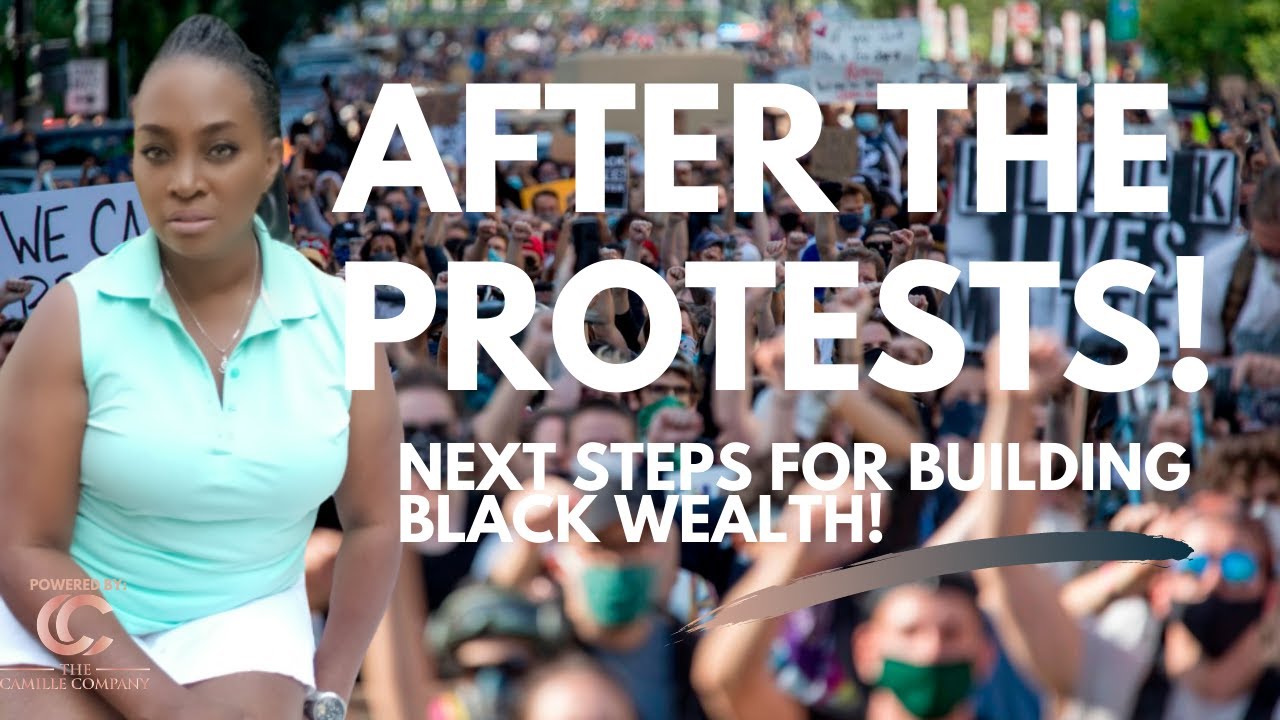
Crystal Gunn, founder of the 50/50 Accord, talks with Camille D. Jamerson about turning 2020 protest energy into Black wealth. The plan asks Black consumers to spend 50% of monthly dollars at Black-owned businesses while owners keep money circulating in the community. They identify nine key sectors to own: manufacturing, media, housing, finance, construction, agriculture, cannabis, logistics, health, and education.
Chapters
And I know you guys, you'll be logging in momentarily, but we definitely want to start the conversation on time. And then you guys just have to go back and watch the repeat, which will be— I keep them on Facebook for a little while. But I also edit them and put it on Camille D. Jamerson TV on YouTube. So if you are not a subscriber to Camille D. Jamerson TV on YouTube, um, you need to do that. You need to, um, make sure you get over there and hit subscribe, and I'll make certain that I get that and put it in the, um, I'll put it in the chat as soon as I, um, I have the link somewhere, so I'll put it in the chat. All right, so, um, anyway, um, before we bring our guest in, I just want to give you, um, a little bit of, um backdrop about what we're going to discuss today, and, um, then I'll bring in our guest and we'll get the conversation going. So with that being said, welcome back to Mogul Moments. Um, for those of you who will be watching a Mogul Moment episode for the very first time, if you're watching the repeat later, my name is Camille D. Jamerson and I am the C.E.M® and founder of both CDJ Associates and The Camille Company. The Camille Company, which is my newer lifestyle brand for icons, creatives, and entrepreneurs, is also the sponsor of Mogul Moments. So shout out to The Camille Company for sponsoring this— these shows this whole season. Now, um, when we start season 4, which will be this fall, If your business wants to be a sponsor of Mogul Moments and get a shout out on the show, um, get included, get your logo and stuff included on, um, the promos and stuff that I send out, then get additional, um, shout out and coverage when we post it onto YouTube with links and all of that, this whole package involved. If you're interested in that, let me know. We have very, very affordable packages to help give your business additional exposure. Okay, so just reach out and let me know. But with that, we're going to go ahead and get started. This particular episode today is going to be about, as you've seen in the, um, in the promos and all of that, it, it, it says kind of like, what are we going to do after these protests are over? What's after the protests? And how do we, as an African-American community, or even as a nation, how do we build Black businesses, support Black businesses, and build Black wealth? And it really doesn't matter whether you are Black or not, but everybody has a stake. Not as high as others, of course, but everybody has a stake. In building Black wealth and building the Black community and helping the Black community rebuild. And, um, the more I thought about that title, um, the more I realized that, um, and it's something that me and this guest had a conversation about, this isn't do this, um, or protest. This is do this and, okay? And we'll talk a little bit more about that, but everybody has a role. In, um, this next leg of our journey as an African American community. And so this particular leg that we're going to be talking about is, um, Black businesses— how to support them, how to build them, and where do we go from here in leveraging that community to build Black wealth. So with that being said, I have the distinct honor of bringing in an amazing guest. You guys are going to love her. She is a speaker. She's an author. She's an activist. And she's the founder of a group called 50/50 Accord. It's actually an initiative, which is how I came to know of her. During this whole state of civil unrest, there were a lot of initiatives popping up with what African Americans could do because we were in a position we wanted to do something. What do we do? How do we support Black businesses? What Black businesses? How do we support the cause? How do we support Black Lives Matter? Do we protest? Do we write signs? Do we march? What do we do? And Crystal's initiative that she created was one of the very few that I found that was, first of all, doable, that was, secondly, sustainable. And third, it was incremental. It was something that she set in stages. It wasn't just like drinking from a fire hose, right? So, um, it drew me to her initiative, and the more I found out about it, the more, um, I loved it and wanted to be a part of sharing it and making certain that my audience and my circle knew of her initiative and could see if there was a fit in there for them. So with that being said, I want to introduce to you guys my guest for Mogul Moments for tonight, Ms. Crystal Gunn. So now this is the part where you're supposed to clap while I try to get her in here. Clap, clap, clap, clap, clap! You guys, are you clapping? Really, are you clapping? Hold on. Let's see, I think I got her. I hope I got her. Do I have you? Did I do it right, Crystal?
Oh, I think I did it.
Yay! Hi! Girl, I get so nervous. This technology, help me God.
Better you doing this than me, because yeah, I can't.
Oh my gosh, I'm getting there, I'm getting there. I, I tell you, it, it gets easier, but there's always hiccups. There's always—
oh, absolutely, it's technology for sure.
I am so glad that you're with me here tonight. Like I said, we had a lot of, um, false starts in there. Um, we're supposed to be one week and then that didn't quite work out, and then we were supposed to be next week, then I realized I scheduled it and I wasn't supposed to. Because I was supposed to be doing something else, and then we had to move it to this week. So we made it. But I was so determined to make certain that we did this episode because I think it's critically important. So Crystal, I gave them a little bit about who you are, but girl, you got a slew of who you are and what you're about. So can you just give them the elevator speech as to who you are, what you're doing, and then we'll lead into our conversation tonight? Okay, perfect.
Thank you, thank you, and thank you for having me on the show. Um, I am Crystal Gunn. I'm actually founder of an organization called the Amazing Woman Network, right? And it was truly an assignment that was given to me. I didn't choose it. And, um, we work to empower and unite Black women on a global capacity. We have 3 main pillars: take back your power personally, mind, body, and spirit; take back your power financially; and to increase our social involvement, right? And we go about the business of making sure that every Black woman owns her amazing because it looks different for all of us, right? And so just giving that support and giving everything that goes along with it. So there's— oh my God, there's initiatives in it. You know, there's Amazing Woman Entrepreneur, there is Flawless, which is Financially Literate Amazing Women Learning Economic Success Strategies. So it's a financial course for women.
I know, right? Oh, okay, okay.
There is some, you know, there's some other charitable things that we do as well, um, and, and, and this whole 50/50 Accord is one of those initiatives. Um, but in short, I always like to say I am, um, the person that empowers people and I help to provide that shift for change, for movement. For growth, for freedom. So, and I love it.
That's awesome. Yeah. So with that being said, let's talk about 50/50. So I want you to tell them exactly what it is, and then you guys will see why I was drawn to it.
So in its simplest form, well, let's go with what the first phase is, right? Yes. The first phase of it is at least 50% of the Black population ensuring that at least 50% of the money that they spend every month, they spend with a Black business, right? So at least 50, because we know everybody's not going to do it, right? But at least 50, spending at least 50. And it's something that we grow into. Some people are, you know, at 5%, some people are 25%, but the goal is within 20, you know, within the next, I don't know, 4 to 6 months, people getting to at least 50%, and I always say don't let the minimum be your maximum, right? If you can do more, do, do more. Um, but it, it, it— I pushed it out after the George Floyd murder, right? And protests started happening. There were organizations that were, you know, putting these lists together of businesses that we need to boycott because they don't support our community or because of their views about the Black community. And I was like, yeah, those are, you know, those are two legs to that disruption stool. Anytime you want change, you have to have disruption. So the boycotts and the, and the protests, definitely disruptions. But the third leg of that stool is this economic disruption, right? We have to recognize our power. We have a $1.3 trillion buying power. So if we just shift, then it's, you know, the protests, we have those people that that's their lane. We have the people who put together the list for the boycotts, that's their lane. This whole economic piece is really just my lane, right? And, um, if we don't do something, we're gonna be in trouble, right? There was an article that I read a few years ago that said if the current trend continues, um, in 30 years, despite the fact that people of color will be the majority population, Blacks will have zero wealth. I have a 19-year-old daughter, and I was like, that can't happen on my watch. So anything and everything that I do is about this unity between us, right? And this whole economic empowerment piece. And so I believe the 50/50 Accord is that third leg to that disruption stool, right? But it's the piece that we do, right? From the individual perspective, we can then start to see that change, which will have a ripple effect for generations to come.
So how do people start? How do people who have never really been intentional about supporting Black business, how do they start to make that shift?
Okay, so this isn't— this is going to sound like a pitch, but it's not. So I want you to go to 5050accord.com, 5050accord.com, and register, right? They're going to get they're going to get a welcome email when they do, right? They'll also get on the Facebook group. There's a 50/50 Accord Facebook group. That's the first place to be in an environment that one is going to support you in what you're doing, right? But it's going to guide you, right? And give you some things to consider, right? Maybe you could do this or maybe you could do that. And I always look at in, in any workshop, any class, any course that I, that I, that I teach, it's always about what the individual can do, but also what we can do collectively because we know so much, we can do so much more collectively. So that really and truly, that would be the first step is going in there and registering so that you can get into the community so that you can hear and you can see everything that's going on. And from there, instructions are gonna come. Suggestions are going to come and all of that, and you do what you can when you can. But we start to have the conversation with those people who've never thought about it and been intentional before. And that's the thing, we have to be— we have to do it intentionally, habitually, and generationally.
That's good. I hope somebody is writing this in the chat for me. Bryan Watkins. Bryan Watkins says, it's good to see you after 13 years. Let's have a mutual— we have a mutual friend. So you said habitually, what was the second one?
No, so intentionally.
Intentionally.
Intentionally was first, intentionally, habitually, and then generationally. We have to have those conversations because again, what we do today, we'll see some of it, but it really is for those generations to come as well, right?
And my granddad used to say all the time, you're, um, planting a seed for a tree you'll never sit under.
For sure. Absolutely.
And, um, we've got to be okay with that.
We do.
We got to be okay with that and, and understand that that's how wealth is generated in other communities. Correct. Um, I won't even go into the whole life insurance and that whole—
yeah, let's not.
We just got— we've just got so much work to do. Okay, so, so With that being said, one of the nuances of supporting Black businesses and making certain that we spend our money with them is then these Black business owners in turn don't keep the money in the community. You see them styling and profiling with their Louis Vuitton and what have you, and I'm like, bruh, did you— we did not invest this money in your business for you to go and give it outside the community. How do we keep it? And eventually it's going to go, I get that. Sure. But how do we turn that dollar over in the community even more? So the business owners even have a responsibility. Is that—
oh, they absolutely have a responsibility. And so you'll see that it's business owners that are in the Accord, right? And so there's this thing that I like to call the relationship, right? And it's the relationship between the consumer and the business owner. So the consumer is— well, you know, the business owner is going to give us— well, should be giving us great customer service, right? Clean environment, right? Making sure that their infrastructure is sound and making sure that if they're getting this new business, that they can manage that growth, right? And realizing that they don't know it all, right? And, you know, I always say because you are a cabinetmaker doesn't mean you know how to run a cabinetmaking business, right? So you may have to go out and do— get a business consultant to come in to help you scale and do what you need to do in that business. On the flip side, the consumer has to pack our— we got to pack our patience with these businesses, right? With some of them, right? Because if they've experienced growth right now. I got to train new people. So that means if you come into my establishment, the line might be a little longer because I'm trying to train somebody, or it's longer and I don't have enough people in here yet to help. So we got to pack our patients. We also have to say when there's a problem, we have to, um, make sure that the owner knows it's a problem, or the highest level of management. And that person may not be in the facility when you went in there that day.
Yep.
And we then have to give that complaint, and it needs to be a real complaint, right? Um, this— the food is too expensive is not a—
no, you know what I mean?
It's just not a complaint. So we got to make sure that we get— and we got to give them the opportunity, right, to, uh, fix whatever the problem was.
That's right.
And then we need to tell other people about it, but we also need to keep the bad complaints off social media, right?
Give them, give them some grace.
Give them some grace. Give them the same grace that you give these other places, okay? Give them the same, right? And then, and at least allow them to fix it. But the biggest piece for this all, which really goes back to when you say how do we keep the money here and, and, and throughout this, our chat today, you'll probably hear me say this again and again. We have so much healing to do in the Black community, right? We have to stop spending our money with people that don't respect us, right? So we, we have to stop preaching that. We gotta stop spending our money with people who continually show us over and over again, right, that it's like, okay, why are you buying And you mentioned the name, right? Why are you buying that when they've shown you, right?
They've shown you who they are.
And then they come back and they say, oh, we'll take it off, you know, we won't sell that anymore. Well, who was sitting at that table that thought that was a good idea anyway, right? And it's hard to believe that the people at the top of that food chain didn't know that that was happening. So we have to understand that. We have to understand our own worth.
Right?
Because you can't tell me, right, that I really love who I am if I'm continuously giving my money to people who continuously showing me that they have no dis— that no respect and just total hatred for my people. So it's that part of the healing, because once we understand our power, then we move differently.
That's good. How do we start to heal? I know that's a whole different— I mean, that's not even where we are, but that's so critical. That's critical because, um, first of all, hurt people hurt people. Um, people that are wounded can't make sound decisions. So in order for us to make the sound decisions that are necessary in order to move our community forward, we can't do that out of a place of brokenness.
Successfully, and we're broken. And, and so much of it really isn't even our fault, right? Because you don't— if you don't know better, you can't do better, right?
Yeah.
But once we, we tell you, we show you, then you do have a responsibility to do something different. So part of that thing is like, you'll, you'll see in the, uh, 50/50 Accord group on Facebook that it's not just about marketing businesses. I try to put information in there so that people can see this is what has happened. Because in, in things that I've thought everyone should have known, sometimes I'll see comments that says, wow, I never knew this. Never knew that.
Yes, I've seen that a lot in there.
Yeah. So I'm like, okay, that means this, this information is, is, is valuable. And then we have to— we as a people have to admit, one, that we are broken. And it doesn't— it's the truth. And there's nothing wrong with speaking the truth, right? And what has happened to us over our lifetimes, right, has been ingrained into our DNA. So we have this self-hate thing. And you don't even know you have self-hate, right? So if you can say— and I, a few years ago, a few years ago, I had a woman come into my office, and this is when I was, um, ran a housing counseling agency, and we were looking at her finances, and, you know, we're just talking about spending habits and whatever. And I don't know, somehow or another we got on the topic of shopping and this dress that she wanted. And, um, there was this boutique that was right by her house, but she she would not shop at that boutique because it was owned by a Black woman. And she said— yeah, she said, I'm not going in there to give her my money to make her rich. I was like, first of all, that $100 dress ain't gonna make her rich. But secondly, what you're saying to me is you don't value who you are enough to want to make the person that looks like you rich, right? And you will pass her and go to someone that doesn't look like you and give them the sale. And I put her out of my office because I was like, I can't even— you can't, you can't justify that.
You cannot put her out.
I did, because when you start to try to justify that madness, come on, you gotta go. I can't, because you're not gonna listen to anything, and you won't even— you don't even understand that really and truly is not even your fault. It's been ingrained in you. If we can separate you as a people, we then don't have to separate you. And they separated us as a people, and we continue to move. And, you know, or you're gonna go into this Black business and you go into it looking for stuff to be wrong with it. Yeah, you know what I mean?
Expectation that something's gonna be wrong.
Exactly. So, or then you're just waiting. Or this statement that just burns my soul— see, that's why I don't support Black business.
Yes.
So you had a problem with one, so now you're not going to support none of them? None of them. Right. So we have to be open to the truth, right? We got to be open to the truth. We got to hold that mirror up and say, am I continuing to do more harm to my community than, you know, than not? And be willing to change and do something different. And again, not everybody's going to do it, which is why it's at least 50%, because everybody's not going to do it. Everybody can't face the truth.
Wow. Now, one of the things that I think came up in the group, I think you shared something, and this is that educational piece that she was talking about. So when you're a part of the 50/50 Accord, the Facebook group, and, and when you, uh, join it online— and I did put, um, the website right in the chat for those who are watching Facebook Live, um, One of the things she said is that she shares information in there that you either forgot about or just didn't hear about. And one of the things I think it was in your group, you shared about Tulsa and Black Wall Street.
Mm-hmm.
And I remember seeing a lot of comments like, I didn't know that happened. I didn't know we had all of that. I didn't know that it was burned down. I mean, just didn't know, never was taught that. So, um, and for those of you who don't know what I'm referring to, there was a time where Blacks owned their own area, so to speak, in Tulsa, Oklahoma, and it was referred to as Black Wall Street because of the booming businesses and the wealth that they were building in that particular community. And civil unrest happened. And just to be blunt, white folks came and burned it down. That's true.
And it was several of those type of communities.
Yes, absolutely.
Across the country. Across the country. Every single one of them, they came in and yet they wouldn't say no violence in protesting. But yeah.
Exactly.
Right. Right. Yeah, that.
So with that, do you think that that model will work today? Do you think that, um, building communities like that is sustainable? Do you think that will work, or do you think that we need a different approach this time?
Um, I think there needs to be a slightly different approach, right? So I don't think we can go in and recreate that, right? So because there was the bad that went along with that, right? So you can't— Jurassic Park, you can't have these great dinosaurs and not have the killer dinosaurs that's killing everybody on the island, right? So I don't think we can necessarily go in and recreate it. So at that point in time, they didn't have an option, right? There was no option. You couldn't, you couldn't roam about freely, right? There were areas that you could not go into. There were businesses that you could not go into. So they were forced to live amongst one another. They were forced to support one another and to buy from this Black grocer and this, you know, so it was it was different. There was no option. This— it was about a different type of survival, because I know somebody would say, oh no, but we're at that point in that level now. Well, we still have our certain freedoms and, and things of that nature. So I don't think you can recreate that. I think we need to do it with a different spin. And I think because technology is what it is, I think we have the ability to unite across the country and definitely across the globe. And that is ultimately what I want to do with the 50/50 Accord. So yeah, we, you know, if we have all of these people register with the Accord in these certain zip codes, we should start to see some economic changes and impacts in those zip codes, right? And it's like we don't have to continuously recreate the wheel. It's done. The blueprint is there, right? People again just have to be willing and have to say, yeah, I want to be a part of that, and I want to intentionally habitually and generationally support people that look like us. So can we do it? Yes, it just needs to be, you know, the 2020 and beyond version.
I agree. And remembering too, like you said, um, they were forced to do that, um, because of what was going on, and they didn't have some of the amenities that we have today. Um, they didn't have the ability to kind of reach out and talk to somebody in China if that's what they needed to do.
Correct.
Um, you know, so, right, we have different capabilities and abilities that I think put us at an advantage if we know how to leverage them appropriately. And to your previous point, when we were talking about the stereotypes for Black-owned business, I have a comment here from Katrina, and Katrina happens to own a spa. And she says, I can't tell you how many times people have said to me, in reference to her business, this is really nice for a Black-owned business.
I know, that's so—
it's just like the comments that I get from people, oh, you're really cute to be a dark-skinned Black girl.
Yeah, so were you really trying to give me a comment or a dig? Yeah, but then, oh, that's, that, that's that self-hate. Yeah, that's what has been put into us. Automatically Black means inferior, so That's not black. Doesn't even have as low. Yeah.
So they come in like, oh, well, oh yeah.
So that means you had a lower expectation when you walked through the door.
Right.
And I exceeded that expectation, but even in exceeding that expectation, because I'm a Black-owned business, there's still that, you know, and you still hold me to a higher standard.
Correct.
Because I can guarantee you they didn't walk into the white spa and say, oh, this is nice for a white spa.
Absolutely not. Right. Absolutely not.
And that's the healing piece that we have to— we have to, you know, on the individual level, you have to even acknowledge that there's something wrong with that statement, right? There's something. And, you know, on the flip side, it would have been nice if she could have said, you know, that's not really a compliment. But people are so crazy that you can't even like Yeah, you come back and try to burn us down.
So right, you so stunned at the time, you're like, wait a minute, that wasn't a compliment.
It was not a compliment. No.
Yeah. Wow, wow, wow, wow. So, okay, so what areas— because in looking in the 50/50 Accord, and you talked about— we talked about it before with seeing a lot of people who are doing bath lotions and soaps and all that stuff. And, you know, I told people, I said, I am transitioning out of Bath and Body Works because I'm too old to be still smelling like jasmine, gingham, honeysuckle. It's like, it's over, it's over.
I'm too old for that.
So, but I was intentional about making certain that I found an African American or Black-owned business to meet that need. And I did, I found two companies and I will shout them out on here. One was called Herb and Eden, that's Herb, H-E-R-B and the letter N, Eden. And then the second one was Honey Milk. And both of them, amazing customer service. Even in the pandemic, I got my stuff back relatively quickly. The quality of what I received, burn on. It was amazing. Um, but so we know we got a gazillion of those. Are there any— God bless them, keep putting in that lotion, y'all, because we can do that. We do butter here.
Absolutely. And we need it, you know.
Again, all needed. The future at all costs. Yeah. Um, but with that being said, um, are there specific industries that you see that just— we're just not there and we need to be? Yes.
Okay, so manufacturing, right? So, um, manufacturing, distribution, and that's, you know, like logistics, logistics, trucking. You own your own trucking company, right? So you're starting to see more and more African Americans having their own, you know, 18-wheelers or whatever and being able to So we have to definitely see more of that media, media, right? We have to own some platforms in order to be able to—
Byron Allen cannot do it by himself. Somebody get in there. Yeah, exactly.
So we have to own that. And, you know, from the, from the extremely large, you know, billion-dollar platforms down to the very small platforms, we have to own them in order to be able to tell our story without someone tapping us on our shoulder and saying, hey, you shouldn't have said that, you need to apologize, right? So media and print media as well, right?
Okay.
Housing.
What do you mean when you say housing? Are you talking which side of housing?
Yeah. So every—
all.
But One thing that they're not making more of is land, right? We're not making any more land, right? Okay, so we need to own the land, right? So anybody listening, if you live on a block and it's a vacant lot on your block, you need to buy the vacant lot. I don't— don't worry about what you're gonna do with it yet, just get it, own it, right? So we need your own land. We need to own our own homes, right? We do need to invest in real estate, but we also need to own housing development, apartments, senior housing, right?
And definitely senior housing.
Oh my God, because do you know how hard it is to place a senior in senior housing right now? It's absolutely— right, it's absolutely ridiculous. So, but then we also, you know, Even in that housing arena, we also need to do everything around it. Like, we need more people that look like me being mortgage loan officers, right? We need more people that look like me being appraisers, right? You just saw the article yesterday about the house that, you know, biracial couple got their house appraised.
Please talk on that.
Yeah, so biracial couple got their house appraised and they felt like it came in really low. They wound up getting a second appraisal. The wife was not at home when the appraiser came, right? And they removed all type of ethnic or any pictures that showed that they were a biracial couple. So it was just pictures of the husband in, in the house. $115,000 more the value came in from, right? And so I see it every single day, you know, mortgage loan officer is my day job, and I just see it Every single day. I just had a conversation with somebody today who did an appraisal for a friend of mine who's in the industry, right? And he said, you know, the guy used comps from 2018. I'm like, this is 2020, because he didn't want to give him the value. And when he challenged him, you know, the guy just basically got, you know, indignant and was like, well, that's why you live in Detroit, you know what I mean? And I was like, okay, you got— yeah, I was like, you got to file every type of complain everywhere about this appraisal. And so it's still happening to this day. And think about it, even when property values, you know, before the mortgage crash and property values across the country were at its peak, Detroit never peaked the way that it should have like everyone else, right? Because that same thing. So, you know, you see, so things of that nature, we have to be able to control the narrative and be fair. That's one thing about us, we're fair. You just have to be in that position. So finance, we need, you know, people who are in, you know, teaching finance, financial advisors. Uh, you know, I have people— yeah, it's, it's, it's, it's critical and important because it's not taught in school, and that's by design, right?
Um, right.
Construction, ah, right. Um, beauty, farming and agriculture.
Yeah, right.
If we— something happening, we, we can't feed ourselves, right?
Uh, marijuana.
Say what you want about the industry, marijuana, we need to be in that industry. Um, it's anything that's Black people specific. And look, you gotta— you have to think that the Black culture, we're trendsetters. We drive everything, right? We drive everything from hairstyles to beauty to fashion to music. We drive everything. So we should be in every one of those areas, right?
Right.
Decision makers owning those companies. And when you look at what goes into a community— schools, Black businesses, churches, politics, health and wellness, housing, jobs, family, legal, banking, personal finance, and safety— we need to be in every one of those areas. And we have to own, because if we don't, we're constantly dependent upon someone else. To give us what they think we deserve when they don't want to do that anyway. Or they'll take our money but they don't, you know, respect us.
So, and, and the other thing I will add to that is it's just, it's being in those industries, but it's thriving and taking over.
I mean, and taking over and them over, holding the door open for somebody else. And bringing in more people that look like you. You can't say, you know, I got my seat at the table, that, and then lock the door for everybody else. You gotta hire Black people. You have to open the door and you have to train somebody else. There is enough to go around. That person, they're not your competition. The pie is so huge, you can only handle your market share anyway, right? So Yeah, we gotta keep going.
We've gotta remain strategic, and we can't, um, you know, as they say, throw the baby out with the bathwater. It was the conversation that I was having with somebody, and they were jumping up and down because this new young person won this, um, political seat. And I'm like, you know what, I'm happy for her, she's African-American. I said, but here's the problem: the person that she just unsat, that she— who she took their seat they hold positions on very strategic committees.
Correct.
Now, her coming in as a newbie, we've lost a Black vote at that and a Black voice at all of those tables now. Yeah, because she's not getting in there. They're not gonna let her. She just— I mean, she brand new, so, and never been in politics in her life. So I'm like, you gotta make sure your wins are really wins for the community. Unity.
Not just for you.
For you, right?
It can't just be for you.
Walked away with a win, but all of us lost because now we don't have a Black voice in critical committee position. And the man earned it because he was there over time, and he was Black too. But I'm like, no, that's not a win.
But here is the other piece of that. The other side of that coin is those individuals, they at some point have to retire or will lose, and they have to train the people to come behind them.
Yes, you know what I mean? Almost be automatic that you should see succession plans in place.
Exactly.
We are horrible at succession.
Well, that's part of the healing that we need to do, right? I agree.
I totally agree. But when I saw that, I'm like Yeah, not see how we, we, we didn't win there, right? Right. Okay, so, um, oh, now back with the 50/50 Accord. Yeah, I know that the target is, is for Black people to support Black-owned businesses at 50%, etc., but is there an effort or is there an arm of this that reaches out to people of other races and other communities?
No. Okay.
All right, so we're going to the next one. That's what we doing then.
And let me just tell why. And those that are watching that know me, they know why. But there's not another community, right? When— or I'm sorry, there's not another nationality that when they're coming up with their economic plan— and believe me, other nationalities have economic plans, right? When they're coming up with their economic plan, they are not reaching out to us to ask for input, to help. They're not doing any of that, right? However, in that economic plan, they are targeting us as consumers. So we have, right? So they're definitely— so because, because, you know, why else would you want to own a beauty supply store, right? You're targeting us as consumers. So they're all— so we're part of their economic plan as consumers to help their nationalities grow. So no, there's no, you know, there's no—
that's good, right?
So someone posted in a question. So Judy has a question that says, do you believe the current climate is driving us to dominate all of the industries you just mentioned. Yes, we have to dominate all of them. We have to dominate all of them. Or if we don't dominate them, we have to have a major— you got to be a major player in it. We got to have some major players in every one of these industries because we're losing. We're just losing. And the generations behind us won't have anything if we don't. So yeah, if we're not dominating— And when you think about it, in all of these industries, we're probably already doing all of the work. We've created all of the stuff, right?
So we just need to—
we just need to— we just need to, to, to have the ownership.
And when, when I say ownership, immediately people start thinking about titles. Yeah, but I, I don't want you to think about necessarily titles. That, that's a part of it. I want you to start thinking about influence. Correct. It's about who are the decision makers, and if you are not one of them, do you influence one of them?
Correct.
And that's a very powerful role. It's a— it reminds me of a wife-husband. It's like when the buck stops, it stops with my husband. Um, but I'm his biggest influencer, correct? So if I'm in his ear saying, okay, but we need to do this, but I need to take care of that, nope, I don't want that, that's not gonna make me happy. I'm the, I'm the influencer that steers that, that decision-making process. It's not manipulative, no, but it's influential. And because he trusts my voice and he trusts what I bring to the table, he's able to use what I bring to him to help him make his decision. So if you are not at the table making the decision, the goal is in all of those areas that I listed, and they're in the group. And if you're watching this later on YouTube, I'll be certain that I list them, you know, either on screen or on a graphic for you, because there are very good areas that I would want people to start considering. Um, where they can start infiltrating. That's what I call it. I call it—
yeah, absolutely, absolutely.
Um, where we can start infiltrating and steering our kids too. Um, if you know that your child has a proclivity towards building things, let's start feeding that STEM and getting them in manufacturing. Okay, let's, let's start early. It's never too early.
One of the, the fields that you just said that, that I left off of there is medical. And I, and I don't mean— I mean doctors. And I— because we're dying at the hands of— because they're not paying attention to us, they don't care. Or I saw a post today that someone did, and it was an Asian doctor, and she said, um, something had happened to the patient. And she didn't talk about what had happened to the patient, but they had brought their dad in. Their dad was the patient, and something must have happened because his his clothes were bloody or whatever. And so she steps out in the hall to talk to the kids, right? And maybe his wife, right? And they spent, instead of them talking about the condition and what kind of treatment he needed, they spent, 'cause this was in the trauma center, they spent their time telling her that, you know, he had gone to such and such and such and such, and he was, you know, this great man in the community and people really— and she was like, it literally broke her heart that she felt like— that they felt like they had to sway my, you know, her thoughts about who this man was so that he would get good treatment. And she was like, we gotta do better, right? So, you know, medical too, we need those medical doctors because, you know, they're sending people home and they're not listening to what their issues are, and they're going home and they're dying.
Wow. So yeah, and, and then there are other things too that just as an African-American community, we're just different. So we, for example, and I'll use this as a very quick example, I, um, my doctor and I fought back and forth about high blood pressure. She's, she's African-American too. We fought back and forth about high blood pressure for about a year and a half. Finally, she puts me on some meds Coming to find out the medicine that I took has a high rate of allergic reactions in African American women. So, and you can take it for a long time before this pops up. It's called lisinopril. Mm-hmm. And so after about a year or so, I took it one day, I woke up, half my face was swollen. I called, Got online because we have the nurse online with the Cross and Blue Shirt. I'm like, I feel funny. I don't know what's going on. I got to have my tooth taken out. And so she brought up my— because she has my information there. And she saw, she's like, you're taking lisinopril? I was like, yes. She was like, do you have any Benadryl in the house? I was like, yes. She was like, take 2, and you need to get to the emergency room immediately. Wow. I live maybe 10 minutes from the hospital. By the time I got in there, it was swollen all the way across, and it had started closing up.
Closing up. Wow.
Yeah. I mean, if I— they said if I were 10 minutes later, they would have had to cut. And so it's just knowing those nuances. I just went off on Lean Cuisine on Twitter today. About the sodium content. I did.
You can— I know, isn't it ridiculous?
And I just told him, I said, African Americans can't eat this. I said, it's loaded with sodium. I said, we have a high proclivity to high blood pressure. I said, so we'll make our own, thank you very kindly, until you can bring this down. So, and then of course by then everybody was jumping in like, yeah, and furthermore, I was like, you did your job. I did what I was supposed to do. But it's knowing those things. So I'm really glad that you added doctors. I'll go back and—
And Calvin said specifically, which thank you Calvin for that reminder, birthing children, we need to have more midwives and doulas that look like us. I had my child at home. I had a midwife. She wasn't African American, but I still had one. And it was the best experience ever. It was literally the best experience ever. So we do need to do more of that. So yeah, it's— that's really important because Black women are dying in childbirth when they should not be dying in childbirth.
All right.
Yeah.
So wow. Yeah, we've got a lot of work to do.
We have a lot of work to do.
We have a lot of work to do. And looking at it on the surface is so overwhelming. And I think that's Like I said in the beginning, that is the one thing that drew me to the 50/50 Accord because it was bite-sized and it's like, I can do that. Yeah. I'm like, I can't figure out where I can go instead of Target and instead of here and instead of there and instead of here. I said, but I can switch off where I buy certain household products and where I get my skincare stuff and where— for sure, I can switch that. I can do that.
That's where you start, right? Like, you're not buying your— you're not buying your toilet paper and your paper towel from you know, the, uh, what's the name of it, Freedom Paper Company, the Black toilet.
Yeah.
And so it's, yeah, it's those things that you do automatically that you buy all the time. And yeah, that's fine if you still got to go to Target, you go to Target, but you have this stuff. Or can I get whatever I'm getting at Target at this store, this Black-owned store?
I like, right? Because that works too. Yeah.
So yeah, and, and, and, and that's It's really the easiest thing because, okay, you're going out to eat. If you go out to eat 4 times a month, just make sure you do it twice at a Black restaurant, Black restaurant at least. And so you start there, but when you— with you, then as you do it, you start to feel good about yourself and you want to do it more and you want to do it again. And then if you're having those conversations with your—
with your—
with your kid— with your family rather, then they start to think about it too. And then they're asking, wait, is this coming How many Black-owned are we doing?
Right?
And so, and that's how that thing becomes generational. We got to be intentional about it. And again, it's the thing that you can start on the individual level. And then as we work up to all of the rest of this stuff that needs to happen, right? You are, you're more open because you start to see that, you start to see those, that change. And let's just think about it, we need to— we need an infusion of money into the Black community. So, and that's how we get it there, period.
And, and again, my challenge to African American business owners who are getting this influx, influx of Black-owned dollars, you too have a responsibility to buy Black-owned. So things that you need for your business, let's try to find um, Black businesses to supply your business. So it's business to business and it's business to consumer. We all have a responsibility in this, but don't let it be that as soon as the money gets to your hands from a Black consumer that it leaves our community. Let's try to circle that sucker back a couple of times before it leaves our community.
Nina said lawyers, lawmakers, social service advocates. Yes. But it becomes this cycle because, you know, people think, okay, well, I go and I support this Black business in my community, but how is it helping me?
It—
that specific act may not help you specifically, but it's helping the collective. And because now that Black business is expanding, that they can hire more Black staff, right? So now this person has this full-time job where they had only been having a part-time job before.. And now they have benefits so they can get sick and go to the hospital without, you know, thinking that it's gonna totally bankrupt their whole house. So it becomes a cycle. We, we, the individual support the Black business. The Black business can expand and grow and then can support other Black businesses. We then can start additional Black businesses because we've come together to do this thing. And it's like, okay, you got a, a, uh, a, uh, what do you call it?
Would you do event?
You got an event planning company and I got an event planning company. Why are we not coming together when we have to do, you know, I can do 100 people, you can do 200. Well, now we collectively can do an event for 300 or 500 people, but we also can come together and say, well, you know what, we're also going to start this linen company so that now we own our linens, but we also can rent them out to other people. So now we got another revenue stream that's helping with these event planning minutes. So there has to be that open mind. We have to trust and want to work and understand that there is enough money out there for all of us, and that these people that look like you that are in the same business are not your competition.
That's good. Now I've got a statement here that I want to make sure that I get to. Katrina says, as a Black-owned business, it doesn't mean that we just target Black dollars though.
Correct.
Target all consumers. So in short, get all the money.
Get all the money.
Set up your company to get all the money. All available money. Get all the money. Yes, unless you have a product that is specifically for Black people, um, for whatever reason. I don't quite know what that could be, but I mean, I don't, but if it is, then fine. But other than that, it's for— I mean, get all, all the money.
And these, these, these areas that we're talking about really and truly are, you know, they're— they are across the board, um. So yeah, you get all the money. You, you're marketing to anyone who needs that service.
Yes, right.
But you, you are that Black business owner.
That's right. Um, in, in addition with that, in preparing for this, I was studying something that, um, my pastor who is now deceased, um, taught on, um, some years ago. And he talked about the 7 Mountains of Influence that, um, he was preaching about it from the perspective that, um Christians or believers need to have a foot in all of these Seven Mountains of Influence. But I think the template is also true for the African-American community. So if we start thinking about these Seven Mountains of Influence, and I'll share them with you here, there it kind of ties into what you were saying with some of the specific industries that we need to get engaged in. Start thinking about arts and entertainment, government, um, business and economics, which we talked about some of the businesses, and she mentioned finance, media, education, meaning who's teaching our children, not just K through 12. We're talking about college, collegiate professors. That is critical because we need us teaching us. Religion, and that doesn't just mean Christianity. That means all religions. We need to have our hand in the decision-making process regardless. Of what your religion is. And then the seventh one is family. We definitely need to master and understand the collaborative power of family. So just keep those, um, seven mountains, um, of influence in mind too. So of course we're, we're done out of time because I mean, I just knew we would be. But before, um, I let you kind of tell people kind of the what's next in where they can find you and everything. Um, do you have a book that you're reading? I try to ask this to everybody. Do you have a book that you're reading right now that you will recommend?
I have a book that I'm reading right now. I don't know that everyone would want to read this book, right? Because it's the Community Land Trust Handbook, right? And I don't know, I don't know if anybody just want to pick that up and, and read that thing, right? But as I think about what needs to happen, right, and it goes back to that ownership of land and making sure that we have those things that we need in the community, that handbook is really providing some other perspectives around—
That's good. And for those of you who came later, she made a really good point of saying that one thing that they're not making any more of is land. So if there is land near you or you have access to it and it's available, you need to snatch it up. And she also mentioned, don't worry about what you're going to do with it. Just get it and hold it.
Just get it and hold it. Just get it, hold it. Look, and then message me because we can talk about what you do. But think about how many wars over— still to this day and over history have been fought over land, right? So yeah, they're not—
Yeah. Um, well, I will share what I'm reading, and it's really interesting that I'm, I'm almost, I'm almost finished with it. Um, but this book I actually, um, got because of something that Crystal shared, and it's called— I know it's backward and I apologize— but it's called The Color of Law, and it's by, um, Richard Rothstein. And the, um, subtitle is A Forgotten History of How Our Government Segregated America. Crystal had shared within the 50/50 Accord group a short video of Richard Rothstein, and he was talking about how the federal government intentionally and diabolically set it up so African Americans could not buy houses in certain places. And that doesn't sound like a big deal. Oh, that's just discrimination, and yeah, we've grown out of it. What you don't understand is how home ownership starts cycles of wealth, um, in white families. And because of, um, the homes that they own, the homes that were passed down to them, the equity that were— was in their homes, they were able to educate their children. They were able to buy their kids, um, you know, their first home or give them a home or buy them their first car or, um, send them to private school. So he talked about how, um, we started off at a, at a severe disadvantage because of the things that were put in place by the federal government intentionally to hold us down and hold us back as a people. It is a very good read, but it's very hard to read, um, because when it's one thing when, you know, somebody's just picking at you But when you know somebody is strategically and diabolically after you and trying to destroy you, um, you just take on a different attitude.
So, and you have to think, you, you, you, you, you really have to sit back and say, okay, let me look at why. There, there's, there's a, there was a post rolling around on Facebook that said, you know, something about, um, they just want to ask, um, white people specifically, what did we do, right, that they hate us so much? And it's not what we did, it's who we are, right? Because they know and recognize the power that's in us, the ability that we have. And when we come together and unite and work together as a collective, they know Oh wait, this is going to be a problem. This is going to be a problem. And then they're worried that we want to retaliate when that's not the nature of Black people, right? And so it's like, if we understood— if we understood our power the way that they understand our power, we would do something differently. Because I'm not going to work so hard to destroy you if you're not powerful. And so we have to understand, and we have to say, well, wait a minute.
What if we— why are you all on me like that?
They know our power and they've— it—
they have a greater respect for it than we do, right?
They have a greater respect for it than we do. And we just— that's again part of that healing. We have to recognize who we are, the power that we possess. And when we do that and decide, I'm going to stand in my power Right. It's, you know, what can stop us from rising? Nothing.
That's good.
Yeah.
Well, well, that is where we will leave it. Crystal, why don't you tell people kind of what's next? Please let them know how to find you again and what, um, you need people to do so they can get connected to 50/50 Accord and to you.
Yes, please, please, please go register. 5050accord.com. The— it's free. And what that allows us to do is to be able to build a database. If social media said we're shutting this thing down, or if they say we're shutting all of these Black information groups down, right, we still have the ability to organize outside of that. That becomes the power to organize, right? So go there. Also, when things are sent out, they're sent out to those emails to the people that have organized— I mean, that have registered, right? And so in September, September, there will be things coming that will show you how to take your house and, you know, flip it to that you are spending 50% of your money with, you know, at least 50% with Black businesses. There'll be other things coming on how we can do things collectively as businesses. So I'll be looking at different industries and saying, okay, do you all want to come have this conversation so we can show you how or we can build this collective so that you all win and that you all rise. So yeah, 5050accord.com. You can also find the 50/50 Accord on Facebook and then go in and ask to join the group. And it's a whole lot of stuff coming, so be ready.
Oh, I know. And Crystal and I even are— we're talking about collaborating on something.
So yes, we'll see.
It's going to be good. I don't know where we're going to find these extra hours in the day to do all of this, but we're going to go down swinging. How about that?
We're going to go down swinging. And I always have to spin a special thanks to Tiffany because she is my ride or die, and she helps me all the time when I need something done. She'll chime in and say, hey, you need some help with this? So that's important. But that goes back to the collective. She recognizes it's for the greater good.
Absolutely. And she, um, I'm assuming it's Tiffany Nance, correct? Yes, she posted, um, all of your information on, um, the registration information, um, under on my, um, chat too. So I appreciate that, Tiffany. Thank you so much. Um, Katrina, as always, thank you. She posted those, um, 7 Mountains of Influence for me too, and she's always there and supporting. So to my regular moguls, thank you for joining. To The new people who were just exposed to Mogul Moments this week, we're so happy that you joined us as guests of Crystal. This was so fun, and I knew it would be. Oh, my brother is here. My brother's there. Hey, brother. My brother said it was an informative session. Thank you.
We love big brothers. I have a big brother too. Brothers are the best.
Actually, he's my little brother. Thank you very much. I'm the oldest. Thank you. No. But they, they act like my dad. Both of my brothers do. But yeah, I'm the oldest, and then I have a sister, and then it's my two brothers. But, um, my, my siblings especially, I mean, they're my biggest cheerleaders. I wouldn't know what I'd be doing without them. But thank you, Tiffany. You got something else? What you got?
I do. I just have to say that I think you are awesome, absolutely amazing. Thank you for everything that you do. Um, this has been a blast. And I can't wait to work with you.
Oh, thank you. This has been so fun. Well, guys, this is going to be on YouTube if you didn't catch it all. We'll leave it. It's going to be on Facebook for a little while too. I'll leave the video here too. But thank you so much for joining Mogul Moments. This has been so fun. Tiffany, I'm going to go ahead and let you go, and then I'll tell people what I got coming up for next week.
All right. Thank you.
Go ahead and chat out. And thank you so much. I had so much fun.
I did too. Have a good one. Thank you. Thank you.
You're welcome. Bye. Well, all right, was that like fun or what? Oh my God, Tiffany is, um, Tiffany, you, you're the best. Thank you for doing all of this. I appreciate it. I see all your posts. Thank you, thank you, thank you, thank you. Um, to all of you guys, again, thanks so much for joining Mogul Moments. Um, this is episode 7 in the third season. Um, I was only supposed to do 5, and I still have 2 more that I want to try to squeeze in this season before we, um, take a little bit of a hiatus and prepare for fall. Um, but stuff keeps happening, and, and things— um, there's so many discussions to be had, and as I find out information and learn things that I think will be of a value add, um, to my community in Mogul Moments and to my community in ICE, which is Icons, Creatives, and Entrepreneurs. If you're not a part of the ICE Society, you need to be. Just look us up, ICE Society by, um, The Camille Company. We're, um, it's a Facebook group, um, that you can get to from, um, either just on Facebook, search it out, or, um, if you go to thecamillecompany.com um, you can, um, request to be a part of the iSociety there too. So, um, what's coming? We're going to be doing an episode on, um, Black nutrition, um, African American nutrition, I should say, um, and what we should and should not be eating. And, um, kind of, uh, health and wellness, maybe that, that's probably more accurate because it's not going to just include nutrition, but nutrition is going to be a big part of it. So you can look forward to that coming up next. We have, um, an episode coming up, I think, on branding. I gotta just double-check that for your business. So, um, as you know, this entire season has been dedicated to African American businesses and to Black-owned businesses because this was, this was my lane. This is my way to do my part to uplift us and support us. Not all Mogul Moments, um, are, are lined up this way. Not all Mogul Moments, um, have, um, talked about African American businesses, but I felt it was important in this season, um, to carve out this time to put the spotlight on us and, um, have the conversations that need to be had to build, um, us and to build our businesses and to build change and shift our mindset. So with that, thank you guys so much for being a part of the conversation. Thanks for joining in with your questions and with your comments and all those amazing hearts. Um, and thank you for putting the ICE Society information in there. I really, really would love it if you guys became a part of that as well. Um, but if you do nothing else, make certain that you join 50/50 Accord. Um, and again, that's um, 5050accord.com. Make certain that you get in there, get registered so you can be a part of those conversations. She has a ton of African American businesses within that, um, group that you can hook up with, you can look to collaborate with, or you can just look to support and help and buy from. So that's what it's all about. So I'm getting ready ready to go to bed. So good night, y'all. Thanks so much for tuning in to Mogul Moments. Until next time, thanks for joining. I look forward to talking to y'all next time. Bye!
More from Camille

"Going in Circles" dealing w/the PTSD of 2020 | Mogul Moments w/CDJ & Guest Mogul Sherry James S4 E5


My First, My Last, My Everything | Mogul Moments w/guests Brittney Major and Jai & Angela Anderson

Escapade! Mogul Moments with Mogul Maker Camille Jamerson & Guest Mogul Tenita Johnson


