Mogul Moments w/CDJ S3E5 Rebuilding Wealth (After Covid-19) w/Stephanie Vaught, JD & Dr. Amber Brown
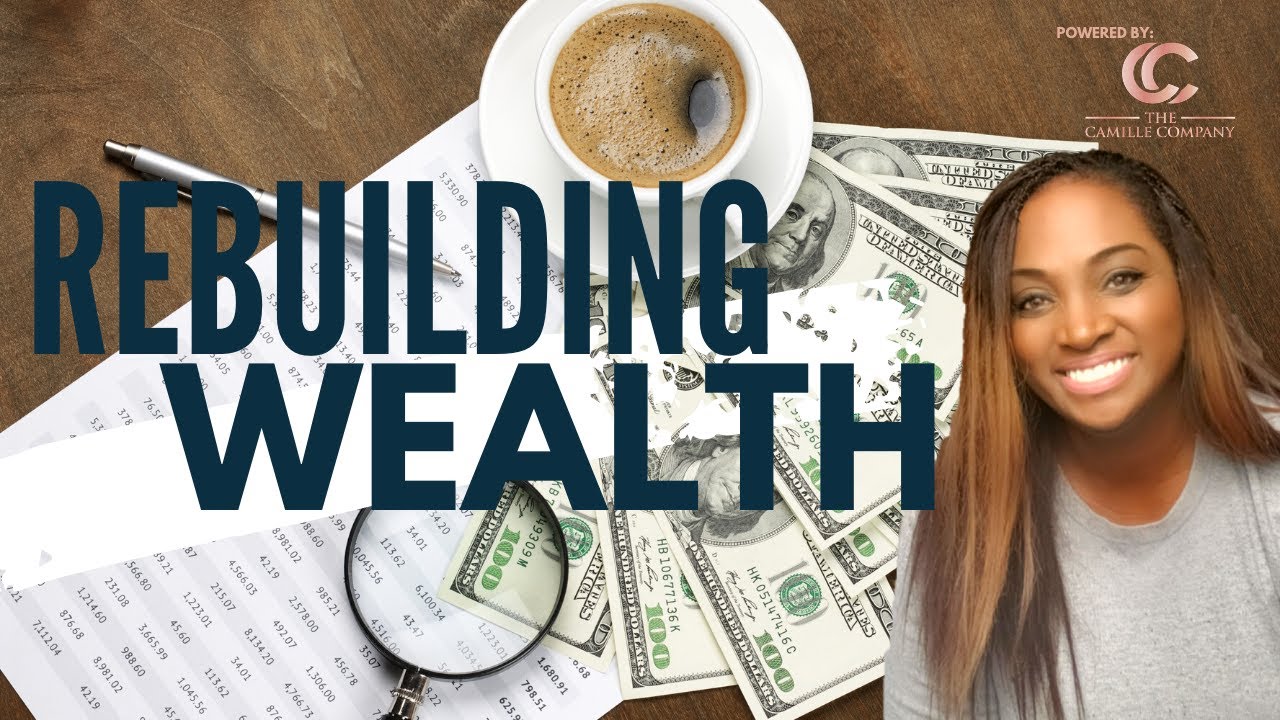
Stephanie Vaught and Dr. Amber Brown discuss rebuilding finances after COVID-19. They cover checking credit reports, building a 3-6 month emergency fund, and shifting from panic decisions to disciplined planning. The conversation includes generational wealth, teaching kids about money, and staying out of harmful financial comparisons.
Chapters
because you get to engage and ask questions and really be a part of the conversation. So with that, we are about 5 after, so, um, we're gonna go ahead and get started, right? So hello out there, um, I am Camille D. Jamerson, your host of Mogul Moments. I am also the CEO of both C.E.M® and Associates and The Camille Company. And The Camille Company is is sponsoring Mogul Moments this season. So I am especially excited for this season. It is— I think this is episode 5, third season, episode 5. And we were only supposed to do 5 episodes this season, but I think we've got 2 more that we want to squeeze in. But you are going to be so glad that you tuned into this one just because of the conversation. That we're going to have tonight. I have got two powerhouse ladies that are just going to bring it, top of their field as far as finance and financial coaching is concerned. For some of us, COVID has affected us physically. We know people who have died from it, and especially in our communities. We know others are acting like it isn't real or it isn't a hoax, but it's affected us personally. And not only has it affected us physically, it's affected us emotionally, right? It's caused us to rethink so many things. But on top of all of that, it has affected us financially. Right? It's affected us financially in that for some of us who were building businesses, we exhausted what savings we had to try to keep the business afloat. And this was before grants and loans started, you know, flowing from the sky. We didn't know what was going to happen. We were trying to make certain our employees and our vendors were okay. Proposals started dropping, events started getting canceled, revenue streams started drying up. We started dipping into personal savings. And for those of us who ended up getting laid off during the season, if you're working a 9 to 5 right now, making that shift and adjustment into unemployment and trying to keep everything afloat and keep a sense of normalcy around your home has, has broke some of us, just to be totally honest. The little savings that we had or the financial goals that we had have had to be put on the back burner because of this. For some of us who have not been able to pay our bills, it's affected our credit. Even though creditors are extremely lenient and are exercising grace at this time, that's not gonna last for long and it's not gonna last always, that's for certain. And with the instability of everything right now, really getting your arms around your finances is going to be important going forward. So what I decided to do was pull together a show that really talked about building or rebuilding. So if, you know, if you didn't have anything to begin with and this is just your season to pull it together and get yourself together, then you're on the right show.. But if you, um, did have a nice nest egg and, and you, you were rolling and things were going along and then COVID hit and, you know, all of a sudden you don't know which way is up, you have landed on the right show. So I'm going to bring in two ladies, um, Stephanie Vaught, who, um, is a colleague of mine. Um, we met, um, because of an event that she brought me on to do for her last year and that I was supposed to do for her this year. But of course, due to COVID, we were unable to do it, but we remain connected. And she is an attorney, but she's also a personal finance— financial coach, and she specializes in the Gen X generation, which of course is she and I. Generation, so we have, um, that bond as well. And then we're also going to, um, invite to the conversation Dr. Amber Brown. Now Amber's got a lot going on. I'm gonna let her tell you about that. But not only is she a doctor of physical therapy, I believe it is, but she too is also a, a personal finance coach. And so I'm going to bring these two ladies into the conversation. Would you guys put your hands together and clap for them while I try to get them in the room? Hopefully I can do this right like I did last week. Here we go, put your hands together. Here we go, ladies. I don't see y'all clapping. You guys are not clapping. I don't see y'all clapping. Stephanie, Amber, you guys here? Yay, I did it! Okay, I gotta unmute you guys. How do I do that?
Mute.
All right, do I have everybody?
Yes.
Yes. Awesome. Welcome, ladies. I was just telling our crew about you guys and what you guys are going to be bringing to the table, so they're just as excited as I am to hear what we're going to talk about tonight. So in my screen, Stephanie, you're in the top corner, so you go first. Introduce yourself. Tell the folks what you're all about and give them your elevator speech.
Yes, well, thank you so, so much for having me, for having me on. This has been— this is such an honor, and I am so excited about it. So my name is Stephanie Vaught. I am a Gen X financial coach and the founder of Social Money Finance. And we work with Gen Xers in particular with helping them to effectively manage their money. And we do that through talking about what are their financial concerns, what are their goals. And it's really important to us that you articulate what is important to you, what is your highest value, what life do you see for yourself. And we help you achieve that through effective money management, as well as getting to the bottom of your relationship with money, right? What is your mindset around money and what sort of behaviors have you been doing, right, with money, and looking at that to see if there's any behaviors or habits that need adjusting. So we help you create a financial plan that gets you on track, and we work with you to make sure that you are living the life you want to live.
Awesome. And I just put Stephanie's, um, Facebook page right in the chat, so make sure you guys catch that. All right, um, Amber, it's on you.
Hi, so I'm Dr. Amber Brown. I'm a doctor of physical therapy. I'm a doctor of physical therapy. I specialize in maternal health. So I'm a public floor specialist and board-certified women's health. And that kind of led me because at a young age, I learned about financial literacy starting first grade. I learned how to manage my savings account. And so I was helping a lot of my patients learn how to navigate the healthcare system, understanding deductibles and copays and coinsurance.. And that led me to kind of just realizing like, oh yeah, I do, I do know how to manage my money. So I also became a certified financial coach, um, so that I could help a lot of people build generational wealth. Unfortunately, my parents passed unexpectedly, but through their financial decisions, I'm, I'm the product. I was able to benefit from generational wealth. And I want that to be something that's not unusual. Um, cause the other part of that with having some generational wealth, allowed me to be able to build two different private practices, have my own self-care. And if I didn't know how to manage money, it will be gone, right? So that's one thing that I really help people learn, how to set their kids up for a positive future and also make sure they have good money habits through the 3F method of foundation, freedom, and flourish.
So, oh my gosh, what an amazing point there. There are like 17 things I can ask, right? Just in what She said— and I saw Stephanie nodding, so I know she knew exactly where I was going, but we're gonna stay on point. Um, okay, so like I was telling, um, our guests, COVID has ravaged, um, finance, financial plans, savings accounts, what people had in mind. Um, and a lot of folks those that are working 9-to-5s found themselves unemployed in the unemployment system, getting what, $600 every 2 weeks or whatever it is, and really having to make serious adjustments in how they handle and manage their money. They exhausted their savings and any little nest eggs that they had. This this time in this season has just sucked the life out of all of that. And then you've got folks who are building businesses who had to pivot and pivot quickly, um, because, you know, we had employees that we had to take care of. And, um, you know, we started dipping into personal finance to keep the business afloat. And like I said in the beginning, this is kind of before grants and loans and all that stuff started flourishing. But needless to say, everybody has felt this in some way, shape, form, or fashion.
So with—
I guess the biggest question is, how do you start over from such a massive reset that we find ourselves in? And either of you, you can jump in and start however you guys want to answer that.
Yeah, I don't mind starting. And this is such a great question because the thing about it is it literally impacts every single person on the planet, right? And, you know, often in the financial field, we will tell our clients, you know, you're not alone, you're not by yourself when it comes to a financial challenge. And while that is true, I mean, literally everybody can say on some level that they are directly or indirectly impacted by COVID, by this pandemic, you know, what has happened. So that, first of all, requires acknowledgement, right? Because I think we're in such an unprecedented time that anybody you mention, you know, coronavirus or COVID-2, they know what you're talking about, right? So that's the first thing is, you know, really trying to help our clients understand that they're not by themselves. They're not going through these things by themselves. That's generally how I start. Secondly, depending on if they're talking about their personal income or business income or both, you know, I tell them to first pause and don't panic. And I know that can be tough, right? I know that can feel like, what do you mean? But let me tell you, when you make decisions from an emotional state, from a panic state, usually it's the wrong decision, right? Usually you're doing something that you're going to regret later. For example, you may take out a loan that has an extremely high interest rate because you're like, oh my God, I need money. And while that might be true, right, if you haven't paused and assessed, right, and really see where you are financially, how much money do I need, what kind of hit have I really taken, you might do something, you know, that you may not even need to do. So that's the second piece is I tell my clients, pause, let's take a beat, and then let's assess where are you. You know, what do you need? How much money do you in fact need? And if there is a need there, which oftentimes there is or was, then it's seeing what resources are available. The last piece to this, 'cause I certainly want to hear from our lovely Dr. Brown, is, you know, let go of pride and ego. You got to let go of the ego, right? Again, making decisions based on, fear and high emotion and ego. That is a sneaky little sucker, and it will have us doing some things that, you know, we don't want to do, or it may have us doing some things or not acting right, like, I'm too good for this. So it might require you to do something that is not something you normally do, right, to get extra income. So those are this— those are my points, is to pause Let's reassess, let's see where you are, and then make some decisions on resources that you need, but from a place of humility and not ego.
Yes. I love that because, you know, the ego gets in the way for a lot of things. We hold ourselves from wanting to be able to actually ask for that help, right? We don't want to ever— we don't want other people to know our situation sometimes, but like you mentioned earlier, we're all in a situation. Right?
Everybody.
It's not your fault.
Like, you know, this is something that really a lot of people, we, there was no way that we knew this was coming. Kind of picking back off of what you said, especially with this being something that could, you know, if you have a compromised immune system, stress compromises your immune system.
Yeah.
So I coach my patients to like, let's figure out a way that simple task, because me sitting here telling you to relax, you're not going to relax, right? Like no one ever wants to hear someone say relax. Like, I'm trying to. So I, I walk them through different breathing exercises that are quick and simple, different clearing the mind exercises, counting down 10 to 0. Oftentimes people try to do that and it takes them 5, 10, 20 minutes before their mind wanders off. But that just tells you you're not present in the moment, right? And you need to be in order to have that clear mind to make a clear decision. Also, know your baseline. Get organized. This is the time to get organized because you don't know what you need If you're just thinking like, I think I owe this much on loans, or I think, you know, the student loan, the mortgage, the interest rate. If you don't know your numbers, you don't have action plan. So this is the time to really stop. Let's get organized and write it all out to see, to actually see your numbers.
That's good. Um, with, um, Stephanie, with what you were saying about, uh, let go of ego. And not, um, the point before when you were talking about not taking what you don't need, because you don't even know what it is. And I'm so grateful that you said that because, um, there was something that I applied for. One was a grant and one was a loan. And when the grant came in, I mean, you know, that's free money. So I'm like, okay, cool. And I mean, it wasn't for a whole lot of money. It was just, you know, whatever. And then when the opportunity for the loan came about, I really had to take a beat because I was just like, oh man, this is cool. If I get this money, I can do this and I can do that. But I didn't need it. I didn't need it for where I was. And for— because I've been— because a lot of my work is virtual, I've really been able to maintain and be okay. But I saw that money and the first thing I thought about is I need to take it because I can do blah blah blah and XYZ. But then I'd have been stuck with a debt because that's something I had to repay on something that I really didn't need to do. So I'm really grateful that you brought that point up. And then, oh gosh, Amber, as far as organizing, that is really critical because it kind of takes me to my next question for you guys. A lot of people don't want to make those calls. You know, they don't. They don't want to call those creditors to find out what they really owe. They don't want to run that credit report. And a lot of it is fear, a lot of it is embarrassment, a lot of it is probably a whole lot of things that you guys know that I don't. But credit scores have plummeted probably during this time, I can imagine. You guys will probably know better than me. Are there specific things that people need to do to rebuild or repair or at least maintain their current credit status, or is that even important right now?
I think it's important, like, at least to maintain, right? You always want to rebuild too, because you want to think about the future. It's not just like what's happening right now at the moment. You want to think about your future and be prepared. So making sure that you have that list to know your debts, Do you know the contact information of who you need to contact and talk about it? Are there any disputes on your credit report? I have everyone check with the 3 credit bureaus for 3 times a year, one from each for, you know, annual credit report doc. Like, you check one time, you could check your report. And you can at that time see, is there anything on there that doesn't seem right? Make that call.
It's—
you won't know, like, you won't ever fix anything if you don't know. Right? We don't know what we don't know. So this is the time where we're actually, we have the time to sit down and really look through everything and come up with that action plan. Look at your debt plan, look if there's anything that you need to dispute, draw up those letters, call them and see if you could figure out a good payment plan with them. Some people are writing things off right now. This is the time.
Wow. Yeah.
Good point.
Yeah, I totally agree. I think that, you know, as I said before, you know, I always tell my clients to start with the facts. You have to start with where you are. If you don't, then again, you're working on assumption. You're working on a lot of fear-based assumption too, because you don't know what the next step is that you need to take. In addition to what Dr. Brown said, you know, I would tell my clients to do exactly, Camille D. Jamerson, what you were saying that you don't want to do is contact your creditor. But here's the thing, you might be surprised to know that your creditor would be willing to work with you, especially in a time like this, right? But beyond this, what they're looking at is if you take initiative. So if you take the initiative and say, look, I've lost my job, I've lost some income, my business is under, right? I've lost some clients. Let— just be honest, be transparent about what's going on. They know, they should know, they should not be acting brand new that they don't know what's going on in the world. So just be transparent and open with them and say, look, this is where I am, what can you do? And I have advised my clients of this very thing. And I'll tell you some specific examples that I have seen, whereas creditors have been willing to reduce interest rates, right? Give you a break on the interest rate. Creditors have been willing to even dismiss, or I shouldn't say dismiss, but defer a few payments depending on the creditor. This is typical with maybe a car loan or something like that, right? But they may defer a payment for a month or two to let you kind of get your bearings. Some creditors are willing to take maybe a settlement. So if you can't pay the whole thing, but maybe to pay half of it, they may be willing to take that and write that off. Now, on the other hand, if you do something like that, as Dr. Brown was saying, you know, look on your credit report and see how that's going to impact things. Because on one hand, if you do the settlement and you write it off, it might still appear on your credit report. So in addition to getting this help, make— do some negotiation. I'm always going to tell my clients to negotiate, right? What can I do to not have this appear on my credit report? You know, so there you don't know until you ask, and there is nothing wrong with asking. So in a time like this, asking is your best friend. And even beyond a time like this, asking for what you want is going to be the best move that you can make. Wow.
And I just want to piggyback one more thing because I don't want to assume everyone has to rebuild their credit right now because some people are maintaining, some people have the excellent credit. That's good. So this is the time that if you do have student loans or you do have mortgage, keep paying at this time.
Yes.
Especially student loans with them deferring interest rate. Don't let that pile up at the end. It's going to pile up. So if you have the means right now, keep paying. It's just going to help you out in the long run. So that's something because I noticed some people are like, oh, this is my time to just kind of stash everything and wait till the payments kick back in. No, if you have it, pay it. Pay it.
Pay it.
This is interesting right now.
Pay it down.
Pay it. So what would you guys say is the biggest misnomer or the biggest assumption or mistake that people make when it comes to money?
That's such a loaded question because I can think of a few things, but you know what, okay, a top, just a top couple, right?
Um, so there's a few things I think I can tell you about 10 that I didn't hear that from me.
Okay, look, I think it starts with relationship, and so this is my take on it. I tell my clients, and some Some may be a little bit like, oh, I never heard it like that. But money is a life force. It is not the life force. It is a life force. So here's the thing. Anything that has that kind of power in your life, you need to have some kind of relationship with it. You need to have a decent relationship with it, right? Because you need money in order to live. Now, how much money you need all depends on your lifestyle costs. But you need money in order to live. A person that doesn't have money most likely, you know, won't be living in the nicest house, right? Or a house, or being able to eat, being able to have, you know, basic shelter, being able to feed and clothe themselves and take care of their family. So money is important. It is an important thing. And I think really telling people to let go of sort of the negative connotation that we often attribute to money. Because a lot of times, depending on what you were taught or how you were raised or what you saw in your community, you know, a lot of times money comes with a negative. It makes people feel kind of, ugh, you know, kind of icky, like either I shouldn't be talking about it, I shouldn't be thinking about it, wanting it, right? I shouldn't be wanting it, or that makes me greedy. It makes me sleazy. It makes me, you know, you don't talk about money. I know, Camille, I know, you know, you have heard this. This is not something you talk about, right? Or, you know, that's nobody's business, right? And so we have come from a faith or church background, right? Right. Right. And I do too. So I know that that is typically what you're taught. And the thing of it is, as you continue to mature, you grow into adulthood, you realize that a lot of those beliefs are not serving you as best as they could, right? So if you're going around feeling, um, sleazy or dirty, or you're not really allowing money to work for you, and then you are— you don't necessarily have a good relationship with it. So for example, what does that look like? Well, You may not know what any of your bills cost. I don't know how much it costs, right? If somebody were to ask you, what are your lifestyle costs? What portion of your income is going to your bills, your expenses? They may not know, and it's because they don't want to deal with it. I don't want to deal with it. I may pay a bill.
I just—
just don't talk to me about it. So that's just one example. Like I said, I could think of a ton of things, but I really wanted to zero in on that. I think when we, we get to the very foundation of it, a lot of times it comes down to the mindset around money and the relationship, and that literally will drive the rest of your decision. When you're not dealing with it, when you're not accepting, or you're looking at it as it's a negative, and it— and, and again, you need it in order to live, then you will notice that some of your lifestyle choices some of your maybe goals you want to achieve that you're not getting to, you can't figure out why. A lot of it has to do with your relationship and your mindset around money.
Wow.
Yeah.
Okay. I don't know if I want to hear anymore. Okay. So Dr. Brown, you tell me, what do you think is kind of the biggest misnomer or mistake people make around money?
Yeah, I joke with all of my clients and say it's the phase of Mom, I made it.
Now what?
Right. So especially if they're the first in the family to start making money and they're thinking, oh, what, more money, no more problems, right? All I need is more money. But if you don't know how to manage it, it's going to slip through your fingers. It's going to— you're going to wake up one day and be like, wait, this is my paycheck. I bring this in monthly and somehow I don't have a savings account.
Right.
Somehow I have all this debt. You know, and it goes into that mom, I made it kind of in the mindset of am I spending because I'm missing, like I'm making up for missed time for what things that I didn't have growing up.
Wow.
Am I giving more than what I actually can afford to give, uh, which is not kind to ourselves that, you know, cause some people feel like it's selfish. If you have someone coming saying, can I have a loan? They feel like it's selfish. If like you technically you have it. But it's hurting you in the long run to loan it out. And, and I think that's one of the big things is just when you have hit the phase of mama, I made it, now what? And not having that guidance, you, you, you make a lot of mistakes. We don't know how sometimes to navigate the world, especially if you weren't taught at a young age what to do. So, and also for the newer graduates, if you will, missing out on free money from jobs, not signing up for matching, you know, like the 401, all those things, not knowing how to look at your health insurance to understand what would benefit you because people don't ask. They don't ask their HR. You know, there are ways that you can really make some money from your company. But if we don't stop and ask and really dig deep into it, we miss out and then go. The money goes through our fingers, and we're thinking we need a second job, when in reality, we just need to know how to manage our money to begin with.
That's good. And that actually takes me to a question that we kind of touched on in your introduction. You talked, Dr. Brown, about how because of what your parents did, they set you up financially— well, not just financially, but with financial literacy as well. And Stephanie, you know, you know, in our generation, one of the things that we weren't necessarily taught is how to prepare the next generation.
Yeah.
So Dr. Brown, I would love, as much as you want, to share kind of how your parents did what they did for you. And then Stephanie, perhaps we can kind of piggyback on that conversation and share with Gen X, and even if there's some boomers that are watching, things that they can still do to put some of these things in place?
Yeah, so I joke— people joke and say I have an old soul. My parents were boomers, and I think that part, that kind of tied into some of my mindset. I will tell folks, my mom was the third oldest of 9, my dad the third youngest of 9, and for me to be the first person of our whole family to have generational wealth, that's a big thing. Yeah. So my dad learned a lot about investments He was able to retire at age 44 from the Air Force. He was Lieutenant Colonel. But he being in that officer position, he met people in his field who, who educated him on finances, who educated him on investments. I think a lot of us don't want to ask like our neighbor, who's a coworker who you could tell knows finances. Some people are afraid to ask. My dad had no problem talking. So he was able to really get that information to learn about investments. A lot of people miss out on life insurance. That's a big thing. I know every other week I'm seeing GoFundMes and I'm like, that's not, that's not the way to go. And it doesn't cost a lot. Like you, if you talk to a broker, there are so many different types of life insurance that don't cost a lot that you can look into because you're looking into setting up the next generation and not just paying for a funeral.
I just want to say that for the good of the group. Yeah, you're not just looking to get life insurance to cover funeral costs. Yeah, you're looking to invest into the next generation. Okay, go ahead.
I'm sorry. No, I mean, because even if you think about funeral costs, that changes. Like, you don't know when you're gonna pass, right?
Right.
Because you buy a $5,000 life insurance policy, but if you're passing now, it could be $10,000, you know. So, so keeping in mind that you don't want to think about about, let me just pay $5 a month. Sometimes you need to pay a little bit more and put it into your accounting for that. But they also talked about, like I mentioned earlier, 401. They introduced that to me because I had no idea. They also put me on as the authorized credit card user. I was responsible. So you have to know your children. Don't set yourself up for failure. So put them up. But they had to have good credit. In order for that to be a benefit to me. So for anyone who has children, I would say make sure your credit is good. And all they did was when I went to college, they had me as authorized user. I used it for books, for my flight home because I went to school out of state. And then if there was an emergency, they paid the card because they knew that I wasn't just willy-nilly, you know, buying whatever.
But they simultaneously built your credit though.
Yep. Which helped me get into a better position where if I get loans, like I have my house that I built, and this was before my parents passed. I was able to build my own home and my interest rate was great, but it was because I earned the credit from them. But then also with me having financial literacy, I've had a job off and on since like really technically 6th grade, but that's because I'm an Air Force kid. You could work for tips. So, so I'll just go ahead and say like for tax purposes, probably since sophomore year of high school. I've had a job and, and they were able to instill in me responsibilities for if I wanted to buy gifts, I had to make sure I had the money for that. If I wanted to buy, you know, I know everyone watching knows what CDs are, but, but, you know, like the CDs, the games, all those things, that was my responsibility to buy it unless it was, you know, holiday time or birthday. And even with that, my parents didn't go broke for, for holidays. We had a list, there was a budget, and they bought certain things, but we, we never had like the, you know, go wild for the birthday where it was going to put them in a hole. So me seeing how they were financially responsible all throughout my life, seeing how they maintain cars, because that's another thing people don't talk about. I know several people who, you know, they'll ignore the little sticker that suggests for you go in for maintenance, not realize in the long run that can cost you more money.
Little things like that, where it's like the adult indicator lights, all that.
That is nice. That is nice.
You know, because that, that, but that bill in the long run, when you push it off, that's a pretty little penny versus if you were just, you know, chipping away slowly at it and helping maintain the car.
The oil change is a lot cheaper than an engine.
Yes.
Yes.
Than being reactive for a lot of things.
Yes.
Whether it's wealth, whatever.
I know.
Wow. Yes, ma'am.
But no, like, just their, their techniques throughout, throughout life, learning from other people and making sure they're instilling it in us, making sure we actually knew how to manage our— because I'm a brother of mine as well. We knew how to manage our money. We knew how we were responsible for Different things like how we have to save money in order to buy a Barbie, buy, you know, a CD player, whatever, all those fun things that we wanted. Well, how are you going to earn it? And it wasn't in a mean way. I know people are really strict with how they instill that. It was just norm for us. It was our norm. We grew up like this since first grade.
That is awesome.
So Stephanie, for some of us, we didn't have that as an advantage. And we're just learning some of these financial literacy pieces now. My kids are grown, but I'm still passing back wisdom as I get it to share with them. And they also know people in our family who are more financially astute than others. So I— hey, no, you need to call your Auntie Crystal about that, or you need to talk to, you know, my husband who's a numbers guy, um, about such and so-and-so. So we know that piece, but what more, um, should we be doing to play catch-up, um, in so many— in so many areas? Um, because now I'm looking at, you know, Dr. Amber's life, you see the advantage Right. You see the advantage and you see how we can set up the next generation, but some of us feel so far behind that we don't know if we can be effective.
Right.
So can you speak to that?
Yeah. First of all, hearing Dr. Brown's life and how her parents essentially modeled good financial management, money management, financial literacy, and teaching it as a child is just amazing, especially in a Black community. I mean, let's just be real.
That's real talk.
That is amazing, first of all. So your parents did a phenomenal job. But I want to encourage those that maybe their parents didn't do that, or maybe they didn't know to do it, right? And I want people to feel like it is not too late, because it isn't. It's not too late. You know, just because, or if you did not get that sort of foundation or upbringing, that you're 40, 45, 50, whatever it is, 35, however old you are, right? And you're like, oh my God, I had— I didn't do that. I don't know, I feel behind, you're not behind. It's not too late because you can always start where you are. So what I typically encourage my clients to do is look at, again, what your current financial situation is. You know, how much of your income is going to your expenses? Are you spending all of the money you make, or are you spending 80% of it or 70% of it? So it's going to take you a moment to do that. I, I, I I stress that every single time because you have to start there. Once you do that, if you are spending, let's say, let me put some numbers to it. Let's say your income is $5,000 a month, right? And you're spending $4,000 a month on your expenses. So whatever that is, mortgage, car insurance, food, because you got to include food, gas, whatever it is, right? Utilities, phone. And so you total it up and it's roughly about $4,000. Technically, you got about $1,000 to work with.. So if that's the case, start thinking about what can I do with this money? One of the simpler starts is just to save it, put it into a high-yield savings account. Now, right now, the savings accounts, those interest rates are a little lower because of what is going on in the world, but don't let that deter you. Don't say, well, I'm not going to earn no money. I'm not— no, no, no. Get into the habit of saving it, right? So that you are not spending everything you make. And that passes on to your children. So I'm talking to adults, parents right now, but this is the same information you can apply and teach your children. So get them into the habit, if they're working or they're making some money or you give them some money, get them into the habit of putting something away. Now, a percentage that you attach to that, a lot of times you hear the rule of thumb is 10%. It's a good starting point. So of that $1,000, save $100. But you can save 20%, you can save 25%, you can save more. You're not married to that 10%, but again, it's a good start place. Then, in addition to a savings, if you want to start looking at longer term, how can I invest this money? How can I really build it for long term? Start looking into things that don't feel so overwhelming. I know we don't talk about CDs very often, but that's an option. A certificate of deposit, a CD, you can go log on to an online bank. That's what I would do. They're secure, you know, they're more secure than they were maybe, I don't know, 10 years ago or however long.
When you say secure, you mean like by FDIC?
Yes, yes, yes, they're insured. And you can look into, you know, opening up a CD. And the significance of that— and this can be for yourself or for your child— but the significance of that is it teaches discipline. It's To some degree, and the reason I say that is a lot of times when you open up a CD, you put the money in for a specified period of time. It can be 6 months, a year, 2 years, 3 years, 5 years, 10 years. You put the amount in and you can continue to deposit into that CD. The thing is, you are not to withdraw from it unless you— and if you do, you incur a penalty for withdrawal. So it's not as easily accessible as a savings, right? So doing something like a CD, you don't have to put a million dollars in it, but the reason why that can be important is because you can then assign it something. So if I put— we're working off our example— let's say you, you put $200 in a savings and you put $500 in the CD. We're just throwing out numbers here. Assign that something. What do you want to save that for? What are you building? What, what feel— and let the the person, whether it's your child or yourself, articulate that. What am I built— maybe you're saving for a house. So it's teaching you, is getting you to the habit and the strategy of putting money into something that's going to grow and that you assign a value to it. So that way you can stay motivated on saying, you know what, when I get extra, I'm gonna throw it in my CD or I'm gonna throw it in my savings. Um, the last point on this is beyond those things, Black folks, we need to start thinking about trust for our children. What are trust? And that is something to put a little elbow grease, a little research into. But think about, you know, a lot of times when we hear the term trust, we don't think that's for us. And I'm just being real.
That is true.
A lot of times we don't think it's for us. We will say, I'm not a trust fund baby. You know, I went to college with— I went to Michigan State, so it was a predominantly, you know, white school. And a lot of times kids would go and they had trust funds, or maybe you studied abroad and they had a trust fund, or maybe whatever, whatever your exposure has been. And oftentimes you seem to think that that is only relevant to non-Black folks, and it's just not true. So that is another vehicle that you can put money into a trust for your children and let it build and grow and allow and make it to where they can attach to it when they reach a certain age. So usually it's 21, 25, whatever that looks like, right? So that's— those are just some examples of ways that you can save in different kinds of what I call savings or investment vehicles., and you can start getting into that habit. It's building a muscle for it. It doesn't come overnight, especially if you haven't done it. But I want you to be encouraged that just because you haven't doesn't mean you can't start. And if, and if you look at your money and you're like, oh my gosh, I need to make more, or I'm spending too much, start making those adjustments so you can be intentional about saving and investing for your future and your family. Can I take you back one thing?
Sure.
Just, well, so I love the sinking fund idea because for the savings, one thing that's simple is we think about hair, right? Like we get our hair done, set aside some money and know, you know, by the time that say you're going to spend $100 every quarter. So divide that by 3 and set that aside, help, like throw that into, you know, a random sinking fund. Just so you could get used to not having random amounts and not being prepared.
Wow.
Trusts are great. Yeah, trusts are great. I set one up for my two nieces and my nephew because I don't have kids. So I'm making sure that the legacy— my whole thing is build a legacy, not a hardship, right? So I'm— I built a trust for them. People don't want to talk about it, but I already have my beneficiaries. And I know this sounds morbid, but I also have my plot only because I want to be by my parents. But people don't want to talk about those things where, you know, that's still part of making sure we have that generation. And for anyone watching, my parents didn't have me till they were 32. So they didn't start building into these habits until they— I was like, they're in their 40s maybe, you know? So it's not too late. It's not.
Thank you for sharing that. Um, And, and this kind of— this is a great tie-in to, to one of the questions, um, that I wanted to ask you guys. What shifts, besides some of the things you guys have already mentioned, but what other shifts, be it mindset or be it practical things that we actually need to do, but what shifts need to be made in the African American community concerning wealth, just because of how we were raised, limited mindsets, what we don't know, whatever it is, what shifts, um, do we need to make, um, when it comes to money? I— and that's to either of you or both.
Yeah, I, I'll start. I mean, it's such a good question, and I know we touched on quite a few things, but I think it's imperative to say that you have to let go of what isn't serving you. That's— I mean, that is— it sounds general, but it's so true because a lot of times we are so attached or so married to, you know, how we were taught, how we were raised, what we were— our community, social media, right? I mean, that has become such a big part of our lives, and in a good way and sometimes in a not so great way, right? But it's being attached to comparison, um, looking at what the other person might have and being like, oh, I'm somehow, um, not good enough, or I don't measure up because I don't have all these things. And there are so many, um, sort of— and it's human, it is human nature, and I'm not coming down on anyone, I'm not judging anybody because I mean, I've done it. But what I'm saying is, if it's not serving you you've got to let it go. So when it comes to the social media example, for example, right? Like I said, it has its good things because it's allowed us to do things like this. It's allowed us to stay in touch and be global. So it's a beautiful thing. But on the other hand, it has raised the mental illness rate in such a way that is just— I mean, and this is related to money and broader than that because folks— and this is all age ranges, Camille D. Jamerson and Dr. Brown. I know Dr. Brown knows too as well, but it's like it, it really does cross the generations because you're looking at, um, people, your celebrities and influencers now that are doing all these things and making money, or they appear to be making money. Um, they're traveling, or pre-COVID they were traveling, right? They have all the nice things, and it makes us feel some type of way. And so a lot of times, in order to keep up with that image or what we think we should be doing, we spend unconsciously. We start trying to match, um, what they're doing. Yep. And then if you don't have the money or have enough to match whatever that person is you're looking at, oftentimes we get that by adding credit or adding on um, money to our bottom line in the form of credit or loan, and honestly using that money to have a lifestyle that just— I mean, frankly, we can't afford. And, and that— so I'm seeing that kind of thing. And so if that's going on, again, it happens. It is— it's not something to beat yourself up about. But if it is not serving you and deep down you know, like, what am I doing? That's the kind of thing that I think the shift, to answer your question directly, that we need to move away from and really get in tune with. What do you want? What is important to you? What kind of, you know, remaining aspect of your life do you want to live? What messaging do you want to put out there? What legacy are you trying to leave? Whether you have children or not, because I don't have children. Right? So it's like, what, what is important? And I think— and also, this is my last point to this— I think in my experience, especially with Gen Xers, is it seems like— and this is what I've been seeing over and over again— when you reach a certain age or stage in your life, in that 40 mark, 45, 38, 50, it's something about that age where it, it becomes a realization that either A, you're happy and you feel like you are where you wanted to be at this point, or B, you're like, what happened? What happened? And most often it's the latter. And so now that we're hitting that realization collectively, because that's what I'm seeing in my client group, is now making that shift to saying, OK, what's really important to me? And let me make some adjustments, some changes, so I can really live the life I want to live.
That's good. What do you think, Dr. Brown?
So one thing I mentioned when I'm teaching yoga, I tell people, stay within your mat, right? Like, don't look at what your neighbor's doing as far as flexibility. That's their business. Stay within your mat. So same thing when it comes to finances. Stay within our lane. Not saying we can't look over there, but don't compare, right? You don't know anyone else's life story. You don't know what it took for them to get there. You don't know if they're really there because we talk about that on Instagram.
Exactly.
So why, you know, stress yourself out trying to reach something that you don't even know the next person did? So stay within your mat. Something else that I think that we need to shift is really, again, starting with financial literacy. At a younger age.
Yeah.
Um, knowing your goals. Sometimes you don't know your goals until you start shadowing. Um, my parents didn't do this, but through my school we had to shadow different health— like, not healthcare, but just different industries. So you got— had the experience and the exposure. We don't have the exposure in our community over— like, overall, when, when we ask if people feel like they need to go to college to further their career And then you ask what the major is. Oftentimes it's a major where my parents would say, what kind of job you're going to get from that?
And I'm like, I don't know, I'm just going to get a degree.
They're like, no, do some research and tell me what kind of job you're going to get with that. We don't ask these questions before we take on student debt as a whole, as a community, because we don't have anyone guiding us to make sure we do that. So then we sometimes end up in jobs where, like, you know, we're trading time for money. When it comes to our health, we— we— health is wealth, right? Yeah. So when we're in jobs that we aren't comfortable in, um, but we're lacking the skills to be able to move forward, especially during these times, we definitely know we've all been in places where the work environment has not always been for us, but sometimes we feel stuck. So if we know what our ultimate goal is and we know how to work through it, if we pick up a trade when we're younger and have some extra skills, we're not stuck in certain situations that we end up being stressed out, becoming depressed, having anxiety. There's so many things that add into it. Also, we need to learn how to have routines. I know some of us are go-with-the-flow people, but when it comes to money, you need a routine. Yeah, at least every quarter you need to be doing something, you know, checking in with your credit. Once a month, you need to make sure you actually review your budget. I call it a spending plan because a lot of people don't like the word budget. I call it spending plan. But make that, make that routine, make it a routine. And that's what we need to be able to pass on to the next generation where it becomes second nature to them. Because again, how else are we going to grow if we're not teaching this and passing it along to the next generation?
That's good. And I just want to remind all of you guys that are watching in the community, I hear silence, so I'm hoping that that means you guys are writing. Every once in a while I'll get somebody say, oh my God, teach! I think that was Shakira and different people. So I hope this silence means that you guys are enjoying this and learning something from it. I've been writing notes in the chat as we've been talking, but if you have a question that you want to ask either of these ladies or both, please just drop it in the comments. We've got maybe 1 or 2 questions left that I'm going to ask, but right after that, I'll take any of your questions and ask them, and then they're going to give you kind of their spiel of how you can get in touch with them after MOGO Moments to follow up with them if you're interested in programming or products that they have to offer. So you can stay tuned for that, but I want you to drop any questions I've got people that— oh, I'm writing down the nuggets. So that's what they're doing, they're writing. All right, they are teaching and preaching up in here, I agree. Um, so next question. But anyway, you guys drop your questions in anytime. Um, I, I'm watching, so if you see me looking away, that's what I'm doing. I'm watching for you. So I'm gonna ask that one. Um, let me go back because this is a question I wanted to come back to. Okay, for some people their financial situation was dire or limited before COVID hit. Okay, so what advice do you give for taking advantage of this moment to build better money habits? So they didn't have any money to start with, so they're really starting from ground zero. So what is it that they need to do first? Do they need to understand budgeting? Do they need to understand credit? Do they need— how do they just— it's like, okay, well, we got nothing, so how do I start from here? That's the person that I'm thinking about right now, or that was jacked up before this happened. So, but they want to take advantage of this opportunity. They like, well, you know what, everybody jacked up, so let's start over with everybody else and act like I had it together back then, right? So what advice do you have For people who are starting from a bad place and want to build, they're not even rebuilding, they're building from scratch.
I personally would say right now is a good time to get your baseline, know where you're starting. So that includes knowing your, your money list. So what, what is— what if you write down everything that you've actually spent your money on the past couple of months, then you could kind of from there go from Essentials and non-essentials. We love everything that we spend money on, right? But sometimes we have to say, okay, I need to make sure I have my savings. I personally feel like 3 to 6 months is too low, but that's a starting point as far as emergency savings fund. Um, so if you start there, you have to know how much you need for your essential expenses to figure out your emergency fund. And what that means is if you were to be unemployed tomorrow or not make the same amount of income you make today, your emergency fund is going to help you manage your stress because financially, you know, you're secure in that way for a couple of months to get you over. So you can't make that plan unless you know your money list. Write down your debts. We need to know that number. Write down your debts. And I have people actually calculate their net worth. Which is really your assets. So what you own, what you have outright, what you own versus your liabilities, which is what you owe. That helps you. Your net worth does not mean your self-worth. I tell people that all the time. So if it's negative, that's not— that doesn't mean anything. That's just where you are right now. That's not where you're going to be 2 years from now. Right. But that's how you get your action plan in order to make the next step, to take the next step, to get to that future. Write down your goals. Where do you want to be? Because if you don't know where you're going, how we going to navigate you to that area? So those are all different things at this time to just really make sure you get organized, know those numbers. And I have something that I, I have people sign up for free for in order to get that organized.
So awesome. Now, Stephanie, before you answer, I just want to say this before I forget. One of the points that you made, Dr. Brown, that I think is important is you talked about, um, having an idea of how much you need if your job would stop today and how much would you need to manage for 3 to 6 months. And a good way to think about that is just look at where we are presently.
We—
some people have been in, in distress from March and it will go through, let's just say through August. That's 6 months right there. So think about What did I need? What, what would have been an ideal amount to have saved? You, I mean, we can't cry over spilled milk. You didn't have it and we had to do what we had to do, but what would have been a great amount to have saved to help me to have gotten from March here unscathed? So, um, you just lived kind of the example. So use that maybe as a springboard to start putting some numbers in your head as to how much you're going to need to save going forward in order to have that 3 to 6 month cushion. So when you said that, it just reminded me, it's like, well, that's right where we are right now.
I really wish everyone had a year, but I also know we need things that we can easily achieve, right? So if you were to sit down and—
Yeah, I need bite-sized. Bite-sized pieces. Yeah, exactly.
Yeah, like we know the ultimate goal might be this. Yes, but let's start with 3 months.
Bring that down for him right here for me.
Yes, right, easier to eat that elephant that way. Yes, that way again you help manage your stress because you know what, I'm secure, I have a plan. Because let's be for real, let's hope it's till August, but we don't know.
Yeah, we got—
no, this is now the time that maybe you do sit down and look at what is non-essential in your life. If, if you've been having a hard time this past couple months, that's good. Make that sacrifice now, um, because we don't know if we're going to get another, you know, extra $600 if you need unemployment or another— we don't know.
That's right. That's good. Okay, Stephanie, I'm sorry, I just wanted to— oh no, that before. So they're starting from ground zero. What, what are your thoughts?
Yeah, I mean, I, I totally agree with Dr. Brown in terms in terms of your starting point. I mean, I say that all the time and I'll say it again, but once you know that, once you've gotten beyond that and to really speak to the person that is feeling, you know, busted, right? They're feeling like, oh my gosh, these last 5, 6 months have been terrible for me. I've taken a hit financially. I've been laid off. I've been unemployed. I've lost income from my business. Whatever that financially means for you, The first thing is, is take advantage of resources that are available. Hopefully folks did that, but if they didn't, that would be what I would suggest that they do. So when I say resources, I do mean, we kind of touched on unemployment, but if unemployment is an option, if you look to see if you qualify, don't just automatically assume that you don't. Like, well, you know, I don't meet all this criteria. Trust me, the criteria is different now. So you might qualify for unemployment, and if you can get that money for a temporary period of time to get you over that hump, right, to kind of quiet some of the anxiety, I highly encourage you to do it. Now, I do know depending on what state you're in, I would imagine a lot of us are here in Michigan, some may be elsewhere, check into that state's law or website. It's not too, you know, difficult to see maybe when is the cutoff. Or how long is it lasting. But if you are just now applying for unemployment or you hadn't gotten it in the past, you may be able to take advantage of that for some time. The other thing I would, I would encourage is if you have a business, if you are a business owner or self-employed, as you've mentioned, Camille D. Jamerson, there are grants available and more and more are becoming available. I mean, and I didn't watch the address, but some friends of mine told me that we're in Michigan and the governor did a speech earlier today and talked about some additional grants that have become available. And grants, of course, are money that you don't have to pay back. I'm a little careful when I say free money because— Keep in mind—
Ain't nothing free.
You may have to pay taxes on it, right? I'm just saying. So just keep that in mind. But if it's a grant, at least for now, you don't have to pay it back. See, it's worth checking into. Sometimes if we're feeling despondent or discouraged, we may feel like, oh, I don't feel like looking at the— the deadline is coming, or, oh, I'm not going to qualify, or, oh, it's all these stipulations. But really, it is worth your while to do your due diligence and see what's out there. Um, the next and sort of last piece to this would be loans. There are loans available, but you take it with a grain of salt because something I tell clients all the time is really a assess your own debt tolerance. A lot of times we talk about risk tolerance, but what is your debt tolerance? What kind of debt are you willing to take on? And a lot of times if you're feeling desperate or you're feeling like, look, I just need some money, you might be willing to take on more debt than you can pay. So you really gotta see what the resources are in terms of grants, maybe unemployment, before you switch over to the loan or credit cards. Because credit cards can get you in a bind after all of this is over. And then I might have said that was the last thing, but one last piece I want to make sure I get in is work to increase your income. You got to work to increase your income. And if you are feeling like I'm at ground zero, I am just like— and again, that's fine. That's fine. Work to increase your income. And when I say that, that goes back to what I was saying about you got to put the pride aside. You may have to do something that you may be highly skilled for, overqualified for, to get you through. And it goes back to Dr. Brown's point. When you set a goal and you keep your eye on the endgame and saying, look, I got to— I got to at least get a few thousand in here. So if there's some, you know, there's a lot of online jobs that are becoming available. There are a lot of people are doing grocery delivery. People are not trying to go to the store, especially not back, uh, or if they are, a lot of times that's about the only place you can go. But what I'm saying is people are doing grocery delivery and it has nothing to do with, well, I got this degree and that degree. That has nothing to do with it. You need money. Um, people are doing all kinds of things that are mostly online or virtual and do it safely, right? Do it safely, but doing it in such a way that they can bring in income in a short period of time until they can get over whatever hump they're experiencing. So those are the things that I speak to my clients about, and it starts in your mind. You got to let go of some stuff, let go of that pride, let go of, you know, feeling some kind of way you're going to be judged and all of that. I get it, I truly do. But you got to let it go because right now, you got to address the present need. And the present need is you may need some money or a way to pay your bills if that's where you are.
Good. Oh my gosh, the time has just gone away from us, but I knew this one was going to go over.
So yeah.
But one question we kind of got— one, two. OK, they're kind of one in the same question. Okay, they're asking about investing. And with one question, I just want to acknowledge, but they did ask— they did answer it. The question was kind of, where do you suggest that we start with CDs or IRAs? And they did talk about CDs a little bit earlier. So make certain when we put the replay you go back and listen to, to the discussion surrounding CDs. But another question that kind of ties into this is that stock market investing and all of that is really overwhelming. So where would you guys suggest that people go to get resource material, to get accurate information concerning investing?
I first say when it comes to investments, again, know your risk tolerance, right? Like if you— because some people, especially during this time, if you already had investments, I just knew not to look at them. And there were several people who looked and withdrew, and that's when they lost their money. So I would definitely say know your risk tolerance, know what you can handle. Going back to what Stephanie said about mindset, depending on what your mindset is, I don't always suggest going into the stock market or getting a stock during that time. I sometimes say Roth IRAs and 401s, like those are safer vehicles. And you could see kind of how you feel comfortable with that first before going into investments. I'm not steering anyone away from it, but that's just kind of what I normally say, especially if you're trying to learn quickly. There are different brokers that you can go to. There are so many free resources online. Stephanie, do you have different free resources? I have my go-to, but do you have some?
Yeah, I usually direct my clients to— I like nerdwallet.com. I love NerdWallet. They're very user-friendly. They have a whole section on investing. I encourage people, if they're new to investing, you know, really get some background knowledge first so you can understand terminology. Sometimes if you go straight to a broker, they're throwing out terms and you don't know what they're talking about, and it feels overwhelming, intimidating, and then you just kind of shut down. So I would encourage people to try nerdwallet.com. Another one I really like is Investopedia. Um, that's a really good one. Again, this is just free information, free resources that you can look at. Um, you can download some ebooks and things like that. And I say that to to really just wrap your mind around the different types of investments, different types of retirement accounts versus what stocks and bonds are, what, you know, just again, learning the lingo, learning the language. So options, yes, and options and all, and dividends and returns, and what does all of that mean, right? And so when we hear this, we get kind of scary. I know for my clients, I tend to give them a glossary of terms just because I am so big on people knowing what they're getting themselves into. But that would be how I would start, and we're talking about just a starting point. Now, if you're kind of into investing and you may have a 401k with your work, or you may have a 403b or something already kind of set up for you, I would encourage you to make an appointment with the investment advisor, sit down and talk with them. Sometimes We do a 401 and put it on set it and forget it. We don't know what's in it. We don't know where it's going. We don't know what we're investing in. And it is absolute— because it's your money, you need to know what's going on with it. So if it's through a job, they typically have an advisor that can talk with you and make an appointment and have them explain things. That is what they're there for. Have them explain things to you.
Got it.
I always say empower yourself through education.
Absolutely.
Before you jump in, don't— again, stay on your mat. Don't look at what anyone else is doing right now with investments before you empower yourself with education.
And I'm putting all of that right in the chat. So even the Nerd Wallet, Investopedia, all of that, I put that in the chat, guys. So make certain that you take advantage of those resources. So ladies, I'm going to have to let you go. I don't want to. I mean, we can talk about this online because there's so much just that Camille D. Jamerson needs to learn to better her financial situation, not necessarily for my personal finances, but so I can manage my businesses effectively. So, but anyway, I want you guys to tell people how they can find you and get more information from you. And if you have any products or anything that you want to share, I'll let you guys close out with that. And since Stephanie, I think you introduced yourself first. Um, Dr. Brown, I'll let you go first and then Stephanie, you can close out.
Okay, so you can follow me on Instagram at Care the number 4 U First, so Care 4 U First, and that's also on Facebook as well. Um, if you follow on Instagram, I have a link on there for you to be able to get the Wealth Foundation. There's just some templates for you to kind of get your money list together, your debt plan, uh, your net worth, like all those things that to get organized. That's on— that's free on Instagram. And then I'll be releasing a 5-day challenge soon so that we could really make sure we're getting ourselves together. So follow me there and we'll get the updates.
And that's Care, the number 4, you spell out you in first. Oh, spell out you. Okay guys, I'm paying attention to that. I did that wrong.
I'll put it.
Okay, Care, the number or spell out You First. Boom, got it. Yay! Okay, Stephanie.
All right, um, you can find me on— I'm on social media as well. I'm on Instagram under Social Money Finance. On Facebook, on my business page is Social Money Finance. That's the name of my company. You can also go on my website, which is socialmoneyfinance.com. And you can find me there. I'm actually running a 30-day challenge beginning in August where we are helping 30 people build a life they love. It's a 30-day challenge to write your own financial plan, and it's going to be really juicy, and we are going to get to the root. It's called Get to the Root Challenge. Get to the root of what is holding you back from the life you really want. And it— I have a lot of clients who who motivated me from coaching over the years to do this challenge because I think it's been a commonality, especially with Gen Xers, of not really doing and living the way that they really, really want. And so we're going to dig into it. And we go deep. Let's get to the root. We go deep. So I'm excited about it. It starts in August. You can get all the details on the website, socialmoneyfinance.com. And, um, just reach out and connect. I, I'm looking forward to it.
Yeah, awesome. Well, I am hoping that you guys enjoyed, um, today. I'm gonna let both of you guys log off, and I'm gonna, um, talk to you all just a few minutes about what's coming up with, um, Mogul Moments. So you guys, I thank you so much for being a part of Mogul Moments. I really, really appreciate this this conversation. It was fire, and I knew it would be. So thank you, thank you, thank you. I appreciate you guys. Go ahead and log off, but the rest of you guys stay because I want to talk to you for a few minutes about what's coming up next on Mogul Moments. Um, this is still season 3. Um, this was episode 5. Um, it was only supposed to be 5 episodes, but, um, there are a couple more things that we really need to talk about. Um, and a lot of this stuff is foundational and critical and important if we are talking about becoming moguls, if we're talking about building more than one stream of income. We've got to have our money together, we've got to have our health together, we've got to have our mindset together. And, um, so that means we've got to have some hard conversations. And I know money was one of those conversations, which is why I pushed, um, to have that conversation tonight. Um, I hope you guys took something away that was valuable, talking about building wealth from a place of nowhere, which is where some of us find ourselves. As far as repairing your credit and getting your first CD and building trust funds for our children, adding your responsible kids to your— getting your credit straight first and then adding your responsible kids and making them authorized users on your credit card builds their credit before they're even really old enough to use it. It helps to build on their credit history. So little nuggets like that. I hope you guys took, took those things, wrote them down, plan to share them. Please share this, um, Mogo Moment, whether you're watching it here live on Facebook or if you are seeing this later, um, when we post it on YouTube. Um, it has been such a pleasure talking to you guys tonight. I can't even tell you what's coming next week. Because I've got two things cooking and I don't know which one is going to confirm first, but trust me, it's going to be good and you don't want to miss it. Hope you guys had a good time. Thank you so much. You guys watching and commenting, especially my Facebook Live crew, you guys are what make Mogul Moments so fun for me. Your interaction, your comments, knowing that you took something away that was of value. Makes me know that what I'm doing is not in vain if it just helps one person to learn something new and to do something different and to have a paradigm shift about where they are and where they can be. So this is Camille D. Jamerson. Until next time, thanks so much for tuning in. I look forward to seeing you here on Camille TV and the next episode of Mobile Moments. You guys take care and have a wonderful night.
More from Camille

"Going in Circles" dealing w/the PTSD of 2020 | Mogul Moments w/CDJ & Guest Mogul Sherry James S4 E5


My First, My Last, My Everything | Mogul Moments w/guests Brittney Major and Jai & Angela Anderson

Escapade! Mogul Moments with Mogul Maker Camille Jamerson & Guest Mogul Tenita Johnson


