[ Pre-Pilot] Mogul Moments with Camille Jamerson | Its ok, not to be ok 5:2018
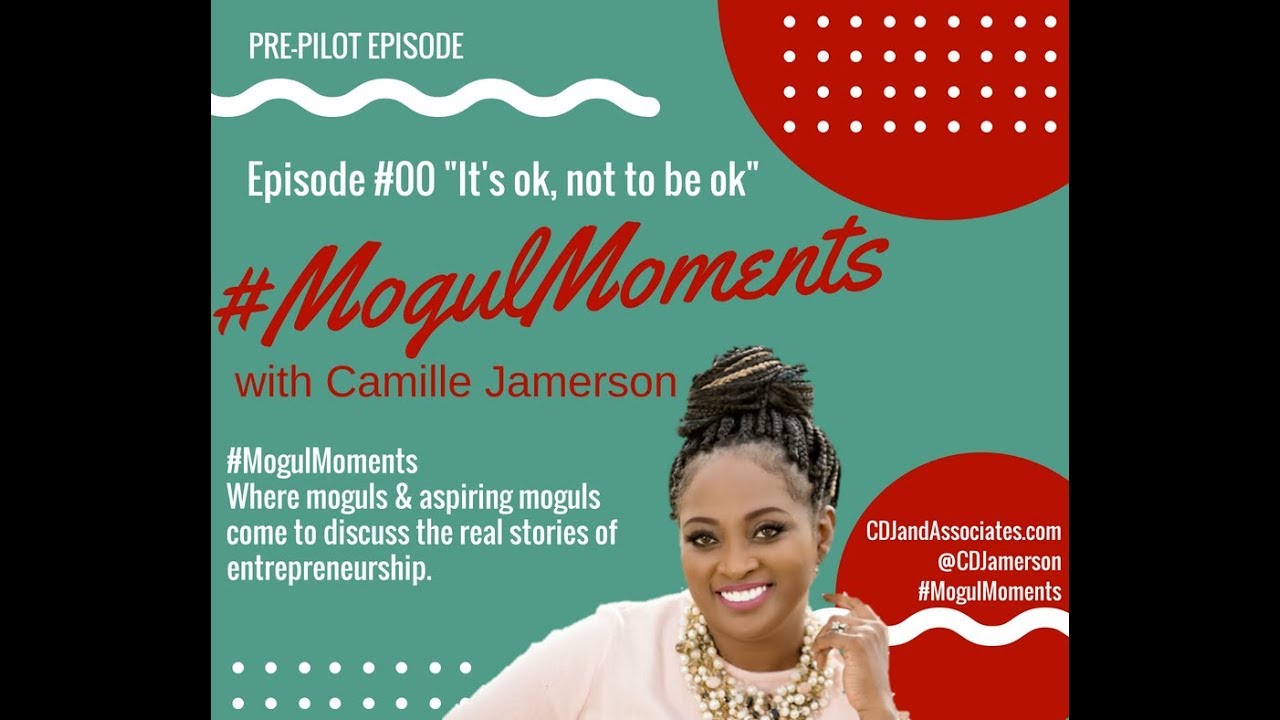
In this pre‑pilot episode of the Mogul Moments podcast, host Camille D. Jamerson (CEO of C.E.M®) brings together mental‑health therapist Rhonda Miller (Clear Intervision Counseling Service, Detroit) and author/speaker Angie Green (Angie Speaks) to discuss the pervasive stigma surrounding therapy, especially among entrepreneurs, leaders, and within African‑American communities. Rhonda explains how fear of judgment, misinformation, and media language (e.g., “crazy”) perpetuate stigma, and she outlines demographic disparities: therapy historically served affluent, predominantly white populations, while Black communities relied on churches and informal support. Angie shares her personal journey of severe depression after losing four children and her father, describing how prayer and a crisis of control led her to seek therapy, and how her book On the Other Side of Through aims to help anyone experiencing loss. Rhonda provides a practical checklist of behavioral signs that may indicate a need for professional help and describes her free‑consult model, in‑office and Medicare‑home visits, emphasizing the importance of a safe, dialogic intake. Both guests reflect on unexpected challenges in building their businesses—Angie on the hidden workload of publishing and speaking, Rhonda on the administrative side of running a counseling practice. The episode closes with resources (websites, Medicare options), sponsor plug, and calls to share, review, and subscribe.
Chapters
Hey listeners, I'm Camille D. Jamerson, CEO of C.E.M® and the Camille Company, as well as the host of the Mogul Moments podcast. This show is for entrepreneurs, leaders, executives, and business owners who want to know the real deal behind the lifestyles and businesses of upcoming moguls and magnets. So we grab moments with some entrepreneurs you may or may not have heard of, but they are movers and shakers in their own right. Every single show will offer you a peek behind the curtain and information that you can use on your journey. In today's episode, coming up, have you ever struggled with saying you're okay even when you're not really okay? Well, that's exactly what we're going to help you with on this week's show, where we will talk to mental health therapist Rhonda Miller of Clear Inner Vision Counseling Service in Detroit And we're teaming her up with author and speaker Angie Green of Angie Speaks. So hey ladies, welcome to the show. Hey, good morning. Good morning. Hello. Hey, now I want each of you to give the listeners your name just so they can kind of recognize your voice and give us a little bit about the companies that I mentioned in the intro. So let's start with Rhonda.
Well, good morning everyone. I'm Rhonda Miller of Clear Intervision Counseling Service located on the northwest side of Detroit in North Rosedale Park, and I've been a therapist for over 21 years now in mental health, and I'm excited about this opportunity to speak with you this morning and give you some more information about mental illness and again what you should expect or not expect in regards to eliminating stigma and receiving help.
Awesome. Okay, Angie, give us a little bit— well, actually, you've got two businesses going, so start with Angie Speaks and then give me a little bit about the other one as well.
Okay, and again, I'm Angie Green. I currently just started Angie Speaks because of the book that I just recently released in March of this year. It's called On the Other Side of Through: Life After Loss, and that book basically deals with the loss that I experienced of losing 4 children throughout my life. It talks about different stages of grief My second business is event planning. That's my 9 to 5, where I do— I plan all type of events, weddings, birthdays, anniversaries, any type of party you want planned, Elegant Events, we do that. We also do linen rental as well. So if we don't do your event, you can rent your items from us. So that's what I do on 9 to 5.
Awesome.
Yeah.
All right, so let's jump right in. As I said, this episode is entitled It's Okay Not to Be Okay, as it relates to mental health issues, everyday struggles that warrant getting help to manage, and why more people aren't seeking the assistance that they need. And I have found that business owners and leaders in particular have this facade of having everything together, and so seeking help is not even on the radar. But this stigma extends far beyond people in leadership. So Rhonda, why don't we start with you? Why don't you tell me why you believe that there's such a stigma with receiving therapy, and is it more prevalent with people in certain classes or certain races, and why?
Well, currently I'm thinking about stigma. Um, people have issues with feelings of being judged by others, so that's a big problem regardless of what arena you're in. Whether you're a mogul, whether you're a person on the street, it's just a matter of not wanting to feel judged by others. It's important to know that when we look at mental illness or mental health, we're looking at people thinking that we're not okay, that we're not okay with our everyday, we're not okay with taking on responsibilities, and so judgment comes into play there. And feelings of being judged is a big factor in stigma. People being misinformed about what therapy involves. People thinking they're going to be hospitalized if they talk about what is happening with their mental illness. Some issues do require hospitalization, but not as many as people may think. People are using their platform knowingly or unknowingly to promote stigma. So we have a lot of people who are in the limelight, in the media, And sometimes they promote stigma without even knowing it. So let me give you an example. About 3 years ago, I was watching the news and there was a newscaster that was working a story that had to do with an individual who had a mental illness and became involved with the legal system due to some unlawful behaviors. Well, they had a— they have panels on the show where they were talking about mental health and being aware of mental health and from nonprofit agencies. And so at the end of the segment, the newscaster basically said, "Crazy is as crazy does." Wow. So when you look at— right. And I'm sure the newscaster did not realize using that— they were using their platform to promote stigma. But that's how easily it can happen. Words have power. So we have to make sure that when we are talking about mental health, when we are talking about stigma, we are recognizing the words that we are using to describe situations. We need to really stop using the word crazy for undesirable behaviors.
Wow.
Um, the other half of that question was talking about, um, as far as getting treatment and therapy, is it more prevalent with certain classes or races of people, or do you find this stigma or this resistance to therapy across the board?
You know, those things that impact a community within a society also impacts the level at which stigma plays a role in seeking and receiving services. So marginalized communities have always been impacted due to the lack of access, no decision-making power, the belief of being less than by the majority, So you have to remember, when therapy first started being popular, it was within the affluent communities.
Yeah, right.
More Caucasians had therapists and psychiatrists. Those were the communities in which you found services. Those were the communities which you could afford services. African Americans did not have access to therapists or mental health services for a very long time within our own community. So what did we do? Well, we went to church. We talked with close family members and friends. We were very careful because most of us grew up with being told, don't put your business in the street, right?
I see Angie nodding. Conversation. So I, I, that's, that's an excellent point. And with that, let me just jump to Angie real quick because as you heard, listeners, she talked about a book that she wrote, um, On the Other Side of Through. And in that book Angie talks about her bout with mental illness under the guise of depression. So Angie, let's talk a little bit about that, 'cause that plays right into what Rhonda was just saying. When you were going through your depression, what was the catalyst that finally got you out of the bed and onto a therapist's couch? And now keep in mind, Angie is a person of faith as well. So we had our church, you know, you have your kind of faith community, but she felt the need to take that extra step. So give me an idea as to what happened that got you out of the bed and onto the couch. What provoked you to finally make that call?
You know, I felt like I was just losing control of everything. And when you get that feeling of that you've lost control of everything, it starts to just— it's like you just don't know what to do. So I said, it's got to be something. So I just started praying. I was like, Lord, you know, what should I do? I don't know what to do. Cause you know, that loss of control was not a good feeling. And I knew it had to be something better than this. And I felt like I needed to get a grip and I needed someone to help me. So I was led to call a therapist, but you know, as Rhonda was saying, you know, in the African American community, well me, I was always taught, you know, don't tell your business. Go to church, pray on the altar, leave your worries on the altar and keep it moving. You know, so we weren't never really talked to, you know, told to go to see a therapist. I said, okay, they're here for a reason. So I'm gonna try them out. So that's what made me try them out because, you know, not only was I, I felt like I was losing myself, losing grip on life and reality, you know, staying in this bed because I'm depressed, not being able to take care of my son. I knew that couldn't continue, so I had to, you know, figure out a way to get myself back some, some way together to function better than what I was functioning.
Now, a lot of your depression, of course, stemmed from, from grief. So what unexpected things did grief cause within your family? What happened during that process that you didn't expect? What, what caught you off guard?
Um, I had—
it was—
there were a few things, um, communication-wise, my husband and I, as far as, you know, marriage was concerned, um, you know, my kids, I wasn't pretty much there mentally for them, um, it was just a whole list of things that, that happened that, you know, because of my depression, I wasn't able to see everything and catch it. You know, it even got to the point where I couldn't even get up out of the bed in the morning to get my son to school. And, you know, thankfully my husband was here to get him to and from school. And it was just everyday life functions that I couldn't do. You know, with that. And it was just a matter of, you know, once I sought help and got the help that I needed, I was able after so long, even just the first day going to see a therapist, the very first session when I remember, I remember just crying so much. I said to myself before I got there, I'm not going to cry. I'm not going to pour out. I'm just going to just do the basics, you know? So I was like, okay, I get there. And she started asking me questions. And next thing I know, it just all started flowing. And when I tell you the release that I felt from it all, I was like, oh, I'm going to go back. That really helped. I'm like, where was this at months ago? You know? So it's not a bad thing. And as she said, as Rhonda said, people think it's a bad thing that you may be hospitalized. But sometimes we may be, we may need to be hospitalized. You never know the state that you're in, you know. And the way I was feeling, if they would have told me, okay, well, we need to admit you, I would have been okay with it because I felt like life was just— my life was out of control, just spiraling. I couldn't get a grip on things. So, you know, that's the best. I mean, it's the best thing ever is seeing a therapist. It's okay. It's not— it's not saying that you're crazy because I knew I wasn't crazy. Cause if I was crazy, I don't think I would have kind of like, it would have, wouldn't have clicked. Okay, well you need to get the help.
Absolutely. Okay. Well, let's take a quick break here. Mogul Makers Podcast is sponsored by CDJ and Associates. CDJ and Associates is a Midwest boutique business management consulting firm that specializes in 3 areas: strategic planning, communications and content, as well as PR and media. Visit www.cdjandassociates.com for more information. So Rhonda, with that, she said some really key things, signs that she had as far as spiraling out of control or feeling out of control. So from your experience, what are behavioral signs that would indicate to a person that they may need a consult for therapy?
I don't want people to think that this is, um, an all-inclusive kind of list per se to check off. If, you know, if you don't meet every dot on the list that, you know, you don't need help because everyone's different. But if you have— if you start to have trouble sleeping or if you're oversleeping, work-related issues are now becoming more stressful than before, you're having more emotional responses to people and situations than you used to, so you can't have a conversation without getting your emotions involved. You are using substances to make yourself feel better, or you're having anger outbursts or crying spells. You're thinking about harming yourself or someone else. You're now experiencing a change in your typical quote-unquote normal. Whatever was normal for you is no longer that. You're no longer seeing that. You're no longer experiencing that. So there's something that's out of sync. People are now starting to make comments to you about, you know, what they are witnessing about your behavior, your moods, and things of that nature. Those are just some of the signs to start, you know, seeking help. Like I said before, you know, it's going to be different for everyone, but, you know, your gut instinct should tell you too, you know, something's going on, something's different. Trust that, you know, And know that, you know, when you start to think that there's something that's not quite the same as it used to be, you know, that's you talking to you. You know what I'm saying? So it's very important to make sure that you're aware and keen and tuned into yourself. Because a lot of times we are so busy, we don't tune into ourselves and how we feel and what's going on with us because we want to make sure we're taking care of everyone else. And so it's necessary to tune in and check in with yourself from time to time and go, you know, how am I feeling? How am I doing? You know, and if something is out of your typical normal, then start asking questions, start seeking help to find some answers for yourself.
That's awesome. Now, Rhonda, I'm gonna keep with you right here, um, because someone isn't sure that they need therapy and they call you. Of course very hesitant, afraid because of the stigma, because of really not knowing what's going on with them. How do you introduce them to your range of services and how do you discern kind of what's best for them?
Well, I offer a free consult— I offer a free consultation.
Okay.
So that gives the person coming in a chance to ask questions. To see the environment in which they will be receiving services, to get a feel of the approach in which we will be addressing and presenting issues. So when I work with an individual, we go, we go within. We take— I take my lead from them, and we go within to find the answers. It could potentially help be helpful to ease some fears and clarify some misunderstandings about therapy when they come in for the consultation. It shows a person that a support is right there, right nearby, so they have that support system. I have, I have information on my website at clearinter-visioncounseling.com that provides insight into the services we're offering and my approach. The answers are within you. It's just my opportunity to be able to work with you to bring them out.
And I like the fact that you said when people come they get to ask questions about, you know, the environment, the services that they're going to be getting. And I guess that's important because of course they assume, because of what we know therapy to be, that you'll be the one asking all the questions. But it's important, I'm assuming, to get their insight and what they feel and what they think and to be able to feel free to ask questions about the services that you're going to be offering them.
Most definitely. It's definitely a very positive dialogue just to make sure that, you know, they are comfortable, because a person becomes very vulnerable in therapy. You know, they're opening up who they are, what's going on with them, and you want to be able to feel that you can trust that individual once you start to become more and more vulnerable. Because sometimes in therapy it gets worse before it gets better, because you have to start going through and processing those feelings and those thoughts, and those are some things that you could have had shut off for a long time and never really kind of experiencing how they made you feel.
Wow.
So definitely important for that open dialogue to happen beforehand.
Now, Angie, jumping to you for a second, one thing I would say when I read your book is that it offered a different type of therapy, so to speak, um, because sometimes when you're, when you're dealing with something, the thing that will make you feel better or to make you, um, just kind of get on the other side of it is understanding that you aren't the only one.
Absolutely.
That someone else has, has gone through it. Um, and that's kind of what I took from your book. Whereas I haven't experienced the grief of losing children, I have experienced the grief of losing my dad. And so really, um, taking kind of your process and understanding how it can affect so many different things was really helpful to me. So give me an idea of who, who was your book written for? Who does it help? Um, why would somebody read it?
Well, it wasn't really just for the grieving parent. Um, it also— I wanted to be able to touch everyone that was experiencing a loss in some type of way, because not only did I lose children, and like 6 months, um, before my daughter passed my father passed away. So I was really grieving for my dad. But it got to a point when my daughter passed away 6 months later, it was like, well, how do I grieve for my father? And I'm— and then now I have someone else to grieve for. It was really hard for me. So in the book, I wanted to be— I wanted to be where it helped you and whoever the person was, whoever your loved one was, not just necessarily a kid, because everyone may not experience the loss of a child. So I wanted it to help anyone that was grieving. I tried to be as transparent as I could of what I was feeling with my grief and the loss of my children as well as my father and what I went through, things that I went through, because sometimes people go through things and they're scared to admit that they're feeling certain ways. Because they think it's the wrong train of thought to have. People may think they're crazy for thinking that way. Well, I wanted to know, well, hey, this is how I was feeling. This is exactly how I was feeling. This is what I dealt with. And it's okay to feel that way. But on the other hand is how do you get from feeling like that? Right. How do you move on your— move on to your life? Living your— continue living your life without having the fear that you're— you've moved on and you forgot all about this person? How do you continue living your life without the guilt? And a lot of people deal with guilt because I know I experienced guilt just from going on a vacation my husband and children took. And we kind of like felt the guilt. We felt guilty. It's like as if we're moving on and forgot all about her, forgot all about my father. And other children that we've passed, and we're having fun here while they're gone, not grieving them. So I wanted to basically let people know it's okay to live. And how would your loved one feel that you're here grieving and not experiencing life how you should experience life? Even if they, you know, how would you be living life if they were here? And to let them know that it's okay to move on. Awesome.
Thank you, Angie. And both Angie's, um, her book and more information about her speaking can be found on AngieSpeaks.net. And Rhonda gave you her website as well as www.ClearIntervisionConsultingService.com. Um, we'll make certain that all of their information as far as getting Rhonda's services and/or purchasing Angie's book or hiring her for speaking, um, will all be in the show notes. So you'll have access to that. Now here's our extra question, guys, and this is one they didn't know about. So this is the, this is the business aspect side of it. So what is something about building your business that people would be shocked to know? Because people say, oh, you're a business owner. Oh yeah, great. But what's that myth that once you got into it, it's like, okay, this is not what people think it is. What's that thing that caught you off guard or that was harder than you thought it was going to be? Either one of you can jump in.
Let me see. The work. Putting the work in. Yeah. Putting the work in, the investment of it all. And it was just when I first— yeah, when I first started, like even with my event planning, I just was like, oh, I didn't realize I had to do all this. So then with the book launch and, um, when I first met you, I was like, oh, I gotta do all that. And I'm not a speaker. And people that know me know that I don't speak. And I was like, oh, this is what I asked for. But I didn't realize all the work that had to be put into, even from writing the book, all the work that had to be put into doing that. Till now, getting the book out, marketing and talking about the book.
Part that you love. You don't want to do the other piece, right? Market that particular product. I totally get that.
Yeah.
So Rhonda, what about you? Was there anything about building Clearing the Vision Counseling Service that caught you off guard or that was harder than you thought it was going to be?
Well, yes, most definitely, because I'm a therapist. Therapist. So all the things that come behind the scenes in starting a business and running a company has nothing to do with therapy. My mission, my goal, my dream is to help people feel better, have better lives. It has nothing to do with lost statements and invoicing and So, and I agree with Andy, it's the behind the scenes work. It is, you know, learning to be okay with making a mistake. Because every learning opportunity, you know, is not necessarily a mistake, but can be, you know. So being okay with making a mistake and doing something different. Definitely looking at, you know, what you don't know and reaching out for help from people who do know, because you don't always know what you don't know. Absolutely. So asking questions from people who are doing the same thing or similar things that you are doing. I reached out to you because you were just magnificent in helping me get off the ground.
I didn't tell her to say that.
But I know that, you know, I would have struggled so much more had I not had you help me with my grand opening. So it was just an incredible opportunity to look at, okay, I need help, and being okay with asking for help. So definitely know that it's okay when you're starting out, that it's okay to ask for help. You're not expected to know everything.
That's right.
Well, all right guys, that is it for today's Mogul Moment. Thank you so much for tuning in. I want to thank both of my guests, Rhonda Miller of Clear Intervision Counseling Service and Angie Green of Angie Speaks. Again, as I stated before, all of their information will be posted in our show notes So make certain that you tune into, uh, Angie's website where you can get a hold of her book, find out where she's speaking, and/or get her on board to speak at your event. Also, if you're someone who may need therapy, um, why don't you do a consult with Rhonda? Won't cost you anything to do a free consultation. Just get an idea of what services may be available to you. Now, Rhonda, do you just service, um, in person, or are you open to servicing, um, online?
I actually go in the homes for people who have Medicare because Medicare offers that opportunity to be able to work with individuals in their home. So as the business grows, there will be more opportunities like online therapy, but right now it is in office and in home for those who have Medicare.
That's awesome. And so that's something to keep in mind, people. So if you have a parent, um, or an, you know, an elderly loved one that you're caring for and you believe that there may be, some needs for therapy and you're wondering about how to get them back and forth, etc., this is a great option for you, especially if you're in the Southeastern Michigan area, to reach out to Rhonda and perhaps get some help, um, for your loved ones as they make the transition through aging and the different, um, mental health challenges that they may have. So thanks again for tuning in, everybody. There are 3 things I would love everybody to do. First of all, share the podcast or tell a friend about it. The second thing is rate, review, or post about the podcast on your social media outlet using the #MogulMoments hashtag so I'll be able to find it and make certain that I respond back. The last thing is to sign up to our email list. If you go to www.cdjandassociates.com, there will be a popup that will ask you for an email address. Put it in there and I'll be certain to keep in touch with you to let you know when the next Mogul Moments will be broadcast. Until the next time, this is Camille D. Jamerson. Helping you to develop a mogul mentality moment by moment. Bye-bye.
More from Camille

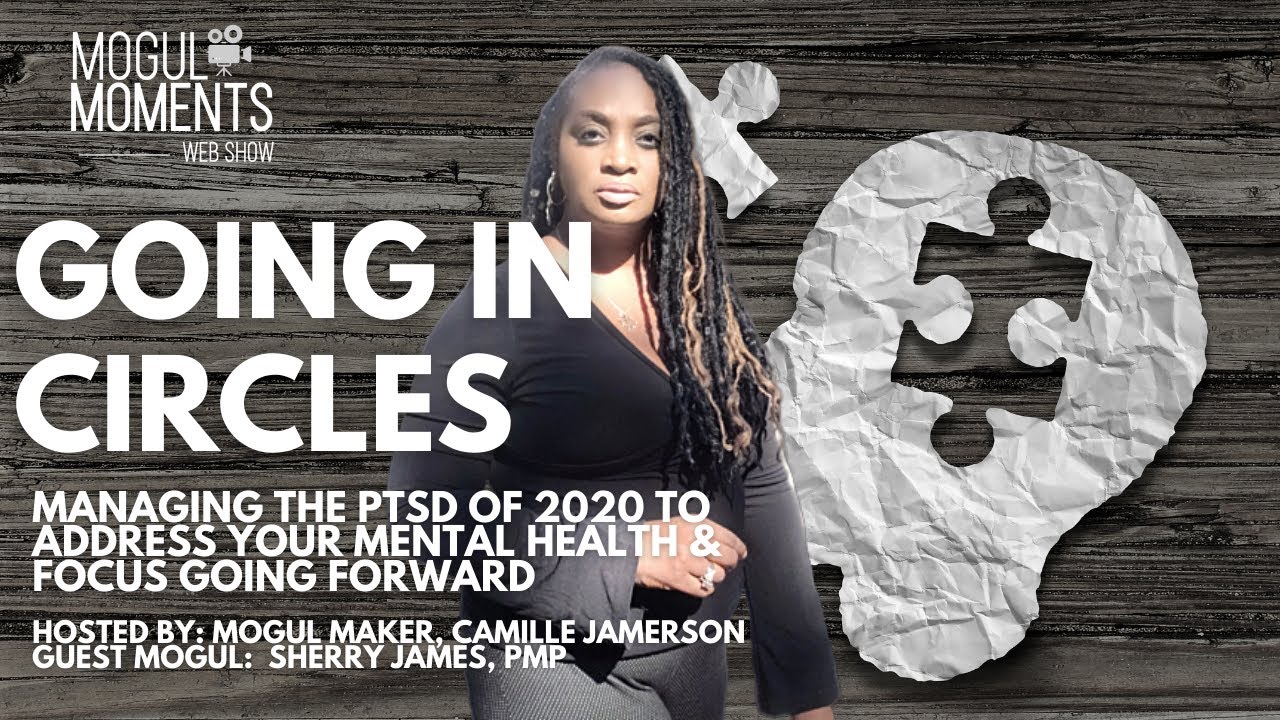
"Going in Circles" dealing w/the PTSD of 2020 | Mogul Moments w/CDJ & Guest Mogul Sherry James S4 E5


My First, My Last, My Everything | Mogul Moments w/guests Brittney Major and Jai & Angela Anderson

Escapade! Mogul Moments with Mogul Maker Camille Jamerson & Guest Mogul Tenita Johnson


