Standing Out Podcast with Camille Jamerson

Camille D. Jamerson, CEO of C.E.M. & Associates, explains how balance means choosing priorities and trade-offs, not doing everything at once. She walks through turning vague goals like "financial stability" into concrete numbers, and shares how a tweet about Black Panther caught a Wall Street Journal reporter's attention, launching her media coverage.
Chapters
This is episode 82 of Standing Out. Standing Out is a remarkable interview-style podcast with the intention to highlight women and men making outstanding contributions in their field. This podcast is generously sponsored by MeetJointly. Across the country, there are small businesses just starting to scale, get distribution, and launch in national retailers. They all share one really big challenge: reaching new customers and growing their brand on a shoestring budget. MeetJointly is a platform that connects growing brands with influencers who are ready ready to share their products and stories with their engaged audience. Today, I'd like to welcome Camille D. Jamerson, known as the Olivia Pope of the Midwest. Camille is a Senior Principal Consultant as well as President and CEO of C.E.M® and Associates. C.E.M® and Associates is a boutique business management consulting firm that specializes in strategy, branding, PR, and content. She is also the founder of a new lifestyle brand, The Camille Company, which features a behind-the-scenes look at balancing your personal life and entrepreneurial ventures. Its tagline is #LetsDoLifeTogether. Camille has been quoted nationally in the New York Post, USA Today, Yahoo Travel, Costco Connection, CEO Blog Nation, NCR, and Successful Meetings. Locally, she has been featured in Crain's Detroit Business, Hour Magazine, and Metro Times. Camille, welcome. Thanks for being here.
Oh, thank you so much for having me. It's my pleasure.
I would love to know how the Camille Company got started. Where did that come from?
The Camille Company? Well, actually, uh, with CDJ and Associates, which was the first part of my company, I started getting a lot of requests from entrepreneurs to do one-on-one type mentoring. And, um, unfortunately I couldn't do that and really balance the scope of my business, um, at the time. So my board, um, my awesome team, they kind of suggested that I back out kind of those personal one-on-one type things and make a separate entity to house those. Um, and then keep CDJ and Associates more company oriented. So that's how it was birthed. It was kind of out of necessity. A lot of entrepreneurs like to talk to other entrepreneurs. Um, I guess your show would be indicative of that, about kind of things gone right, things gone wrong, strategies, how do you balance it all, et cetera. And so that's how the Camille Company got started.
What do you find in that, because in the balance piece of it, I, because I feel like I hear that a lot as an entrepreneur myself and then just people in my community or network. We're just so busy. There's so much to be done. What do you say to that and how, How do you balance that, or do you not? Like, what, what's your take on it?
Actually, what I tell my clients and mentees alike, to be honest, there is, in my opinion, there's no such thing as balance. Um, everything you say yes to, you're saying no to something else. So really, um, understanding what you're saying yes to, what is suffering or on the back burner at that particular time Choosing and picking your priorities, that's really what balance is. It's not being able to do everything at the same time. It's really being able to prioritize and understand that the things that I'm doing right now are at the expense and cost of something else, and I have to make certain that when the season shifts that I go back and adjust to address those things as well.
So do you feel like it's helpful for yourself or for your clients to maybe get really clear on values and priorities for now and for the future? Is that like, is that where you find what you can and can't say yes to? Because I, you know what I mean? As entrepreneurs, don't we want to say yes to everything? Like, yes, I want to be on that board. Yes, I want to be on that venture. But I've never looked at it as I'm saying yes to that, but that means I truly— we have the same 24 hours, right? Like, that means I can't stick this other thing in, in a bucket right now. So it's getting clear then.
Right. I think when you— yes, clarity is going to be critical and understanding why you do what you do. So it's like, yes, are you saying yes, that I want to be on that committee because it will look good on your resume? Or are you saying yes, I want to be on that committee because you really want to be a part of change? And that's a part of who you are and what you're going to do. So I tell people to understand that you can do anything, but you can't do everything. So understanding, um, what the priority, priority is at that particular moment, there may be a season for you down the road where you can take on more, um, board positions and, um, you know, volunteer more in the community, but this just may not be the season for it. So being clear as to what the priorities are now, what it is you should be doing and why, what the endgame is for you, are critical. One of the first questions I ask a client upon engagement is, "What do you want?" And sometimes, you know, they're kind of taken aback by it, but it's an important question. It's like, you really need to be clear as to what you want and making certain that you understand that there's a price for what you want. In some cases it can mean patience, in some cases it can mean working hard, in some cases it means that something else has to go on the back burner, um, until the season shifts for you.
That's really interesting. Do you find it that, that a lot of clients or people that you talk to find it kind of hard to define what they want in a very specific way, like kind of vague, right?
Yes. Okay.
I'm like, well, well, I want to be financially stable. I want, you know, freedoms. Like, how do you drill down on— okay, well, how do we clarify on that?
Well, it's actually one of the reasons I have a job.
Yeah. Okay. Don't give away the whole secret then.
But no, but It really is, um, helping people, um, brainstorm and strategy, really get to the core of what it is that they want. And what you find a lot of times is that it's not always what they think it is. Oh, um, yes, I want to, you know, be financially stable. It's like, okay, that makes sense. And I think that's a great goal, but what does that look like? What, how much money do you need?
Right. What's that number?
What's that number? And then, okay, what does it take to make that number? Break that off. Into what you need monthly in order to make that number by the end of the year, et cetera. So it's really, like you said, drilling down and, um, helping people to see what it is that they need to do on a day-to-day basis in order to really meet the goals and purposes that they have. And when you do it that way, I think it, um, helps it not to become as overwhelming.
Yeah.
Looking at the big picture, oh my gosh, I want to be financially stable, but right now I'm under a boatload of debt and I'm still paying back student loans. It's like, okay, that's That's okay. But what strategies do you need to do Wednesday and Friday and next Monday in order to start chipping away at those goals? So yeah, it's, it's really brainstorming, drilling down, um, and giving them actual tactics and tools that they can use to hone in and, and make those types of decisions.
I love that. Like having the big picture, but then also having what do I need to do on Wednesday, right? Awesome. So I'm really impressed by this press piece. I feel like you have gotten amazing press. What is the secret? Is there a secret?
Is there a secret? Wow. You know, I— no, I don't think so. It's always one of those things that you do one piece.
Yeah.
Then that reporter calls another reporter, and then that reporter calls another reporter, or they see the article and ask, do you have a comment on this, et cetera. So it's like one thing kind of builds on another. For example, I did a tweet earlier this year saying that my family and I were going to go see Black Panther as a family, and we're all going to dress up, and we're going to do X, Y, and Z. A reporter from the Wall Street Journal saw the tweet, called me, and asked if I would do an interview about it—
Wow!
—and what my thoughts were on what Black Panther meant, and blah, blah, blah. So, I mean, even though it wasn't business related, that's just how organic some of those things come about.
That's really cool. And I think that's really important to share too, that especially in this day and age in 2017 or '18, I guess we are, um, that so much of it does happen organic like that. So someone sees a tweet, you know, and that's, that's how the next opportunity comes. Absolutely. So one thing I didn't share, but it was in your bio, is that you left a, you left a six-figure position to start, um, CDJ and Associates. Can you tell us a little bit about like where, where, where was your head and heart in that? How, like, how did that decision come up?
Well, um, I'd need to back the train up just a little bit to taking that job in the first place. Um, I took that job, um, a couple years back, and during that time my dad was very seriously ill. He was terminally ill with pancreatic cancer. Okay. So we had just gotten the diagnosis a couple of months before. They had only given us a couple of months, um, for him to live. It was just that aggressive. And during that time, everything was just in disarray. My family was in disarray. My mom was a mess. We were all, me and my siblings were really trying to band together to make sure my dad had the care that he needed, et cetera. And everything just really felt out of control. And then this job opportunity came up and I told my husband, well, I think I'm going to take this job. This is, Amazing job. It's, um, one of the things that I wanted on my resume that I didn't have at the time was global experience. And it offered that. It was six figures. It was blah, blah, blah, blah, blah, and all these benefits. And of course my wise, wise, wise husband said that, honey, this really isn't the time for you to be making big decisions like this. He said, your head is not really in the game. You know, you're really, um, just, you're tired, you know, because you've been running with your family, your dad, for the last couple of months. And, but I, of course I didn't listen. I didn't. Um, and when he hears this, he's going to hear how wonderful he is. But, um, but he really was, he was supportive, but he kept warning me that it really wasn't the time to make that decision. So I'll take the sidebar to say, never, ever, ever, ever make decisions, um, when you're in, you're in an emotional state. So I went on and I, um, took the job. My dad's funeral, he ended up passing. My dad's funeral was on the Saturday. My first day on that job was that following Monday. Wow. I share that to say that was the most bonehead decision I have ever, ever made in my life. It sounds like a lot. It was just, it was crazy, but I, it was one of those things that I felt that I could control. So that's why I took the job. Yeah. So a couple of months into the job, I realized that, um, I, I was failing miserably. Not at the job though. I was failing miserably inside because I was nailing the job because I can do that in my sleep. It's what I do. So I could function. Um, I was traveling to, um, the UK. I went to Vail, Colorado. We're doing all kinds of amazing things for the position, but on the inside I was just dead. And so, um, what I ended up doing was I grabbed my stuff off the desk and I went in the parking lot, got in my car and I called my husband and I told him, I said, you know what, I can't do this. I'm falling apart. And I mean, I literally thought I was going to have a mental breakdown because I didn't give myself a chance to grieve. I just kind of wanted to keep pushing through what was going on and instead of really dealing with it. And he said, you know what, 'Come home.' And that's all I needed to hear. So I grabbed my stuff and I was out of there. Now, I don't recommend that everybody— I really don't. If you don't have the most amazing husband like I have, don't do it differently. Um, plan— please plan differently. But, um, yeah, and so I just left that day and eventually let them know, you know, kind of what was going on with me. So That's how I ended up leaving that position. And once I kind of got my feet under me, um, I had to make a decision whether I really wanted to go back into corporate America or whether I wanted to do my own thing. And actually starting my business, um, was therapeutic for me because I was able to work at my own terms and ease back, um, into a full workload.
Right. That's— did you— as you were easing back into a full workload, because you have a team of people, right? Yes. Were you envisioning building out a full company or were you kind of thinking, hey, I'm going to do some consulting work and start there and see how things go?
Right. That's exactly how I started. It was just me in the kitchen at a little desk that my husband bought me from IKEA, you know. Oh, that's awesome. But now, yeah, it's built out quite quickly. Yeah. Started with a board of advisors. Some of them I collaborate with on actual projects, project managers, an amazing assistant, Rima. And yeah, I had no— you kind of blow up the way that it did. But it was interesting when we just started out, people really thought that the company was bigger than it was just because of the way I guess we came across. And I'm like, do I tell people that I'm just in my kitchen or do— Do I kind of go with how my brand looks right now? So that's awesome. My first— yeah, I landed my first customer because actually they thought that I was a lot bigger than I was and I was just kind of able to grow and develop from there. So it was a really interesting journey. That's really cool though.
And I feel like your story is similar to mine in that I thought I was going to do some freelance work and next thing you know, I'm getting other clients and then it grows into a full marketing agency. Um, I'd love to know about your board of advisors though. You, so, uh, you started with a board when the company started. How did you— I feel like that was such a smart, wise decision. Good job on that. How did you identify your board? Follow-up to that, were you able to pay them right out of the gate?
Okay. Um, The first board that I chose, I think it was 6 of them, 6 of them. And I picked people that I knew, people that were smart, people that were, um, experienced in different areas of business and industry and people that I knew would be honest with me. If something was stupid, they would just tell me. Um, that was important to me just starting out because in a lot of ways I didn't know what I was doing. Um, or I had worked so much for other people. It was really difficult to make that shift, um, to now think with the CEO hat on. So that was, um, the choice that I made at first. And those— but no, I didn't. I don't— my board isn't a paid board. Okay. It is totally, um, voluntary. You would think though that I was paying them six figures the way that they are on it and they are so engaged. They are so helpful. Um, even now if I do something stupid, they tell me, I got a red flag that, you know, um, and it's like I said, it's a board of advisors, so they're not tied to me legally or anything like that. Um, is strictly advisory, but they are so committed to the vision. They're committed to what I'm doing. I couldn't have asked for a better team. I recommend doing something like that or similar to that for all entrepreneurs. It keeps you accountable. Um, many of nights that I would have just packed everything up and put it in a nice little box and become housewife. But, um, I know that that team They're depending on me to do what I said I was going to do and, and be who I said I was going to be. And sooner or later I get a text, hey, how's the project going? How's this client? What do you need help with? How's the event going? And they're always there. We meet maybe 3 or 4 times a year, but we keep in touch. We have a big Facebook page where we talk about clients and projects, et cetera. So we, um, It's a great team. It's a great strategy. I recommend it to clients and entrepreneurs. And, um, eventually I told them that, you know, we're going to blow up so big, we're going to take a major vacation together, right? Be able to pay them back for all that they have given to the business. Um, but the flip side of that is that they get board experience. They get to add that, you know, to their resume. And I also get to refer them to other companies who are looking for boards who might be paid positions, right? They kind of have the experience, they can kind of look into those opportunities to boost their resume as well. That's really cool that they—
that there's a give for them too, because I think, um, I think a lot of people want boards, but then especially for smaller, maybe like gearing up for that growth stage, I feel like many of us are thinking Oh, we don't have funds for that position. Um, you know, who would want to volunteer to do that? We start, we start doing the head talk, right, of all the reasons why we can't get a board. But you just went out and did it. So we can.
Once there, the initial thing was I was going to have their tenure just be a year. Okay.
But nobody wanted to leave. Oh my gosh.
At least with this group, nobody wanted to leave. So Um, what I did though was I kind of put out a call to take in the areas that we were missing. Like we needed, um, somebody in, I don't know if it was finance or strategy or whatever. We're just trying to fill in kind of all the buckets. So I put out a call, um, for board members and there were people that I didn't even know who wanted to be a part of it. And so we interviewed them and added them, um, to the group. And it's just like one family. It's amazing process and I highly recommend it. That's— thanks for sharing that.
As we wrap up, I'd love to know what's on your radar as a thought leader that you think we'll all be talking about in another year or two from now. Like what's the trend or hot topic that you're kind of seeing emerge?
Hmm. The thing that I'm seeing a lot of is collaboration, um, especially among entrepreneurs and small businesses. I think What we have learned is that the Lone Ranger syndrome is really difficult and hard to maintain. So I'm seeing small businesses collaborate with other small businesses or entrepreneurs to create something bigger. And it could be bigger just with a specific project, or you're seeing mergers and acquisitions of smaller companies coming together to create something bigger. For example, in my industry, one of the people that we serve, one of the types of clients that we serve, are political candidates. So I'm seeing other companies, we're all kind of coming together to become like a one-stop shop for political candidates to get their branding, their marketing, their strategy, etc. So I'm seeing a lot of those types of collaborations in small business and entrepreneurial world, and I think we're better for it. That's—
I think that's really smart, for sure. Thank you so much for being here. I really appreciate it.
Oh, it is my pleasure. Thank you so much for having me. Oh, you're welcome.
More from Camille

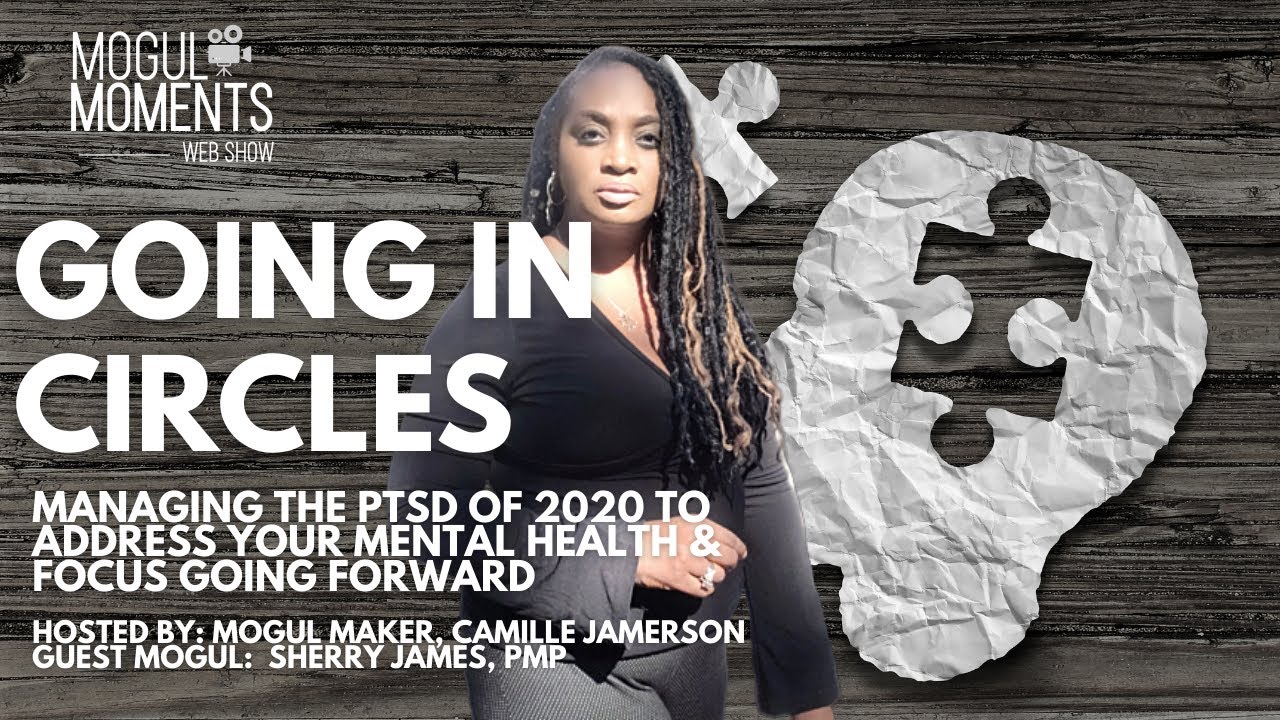
"Going in Circles" dealing w/the PTSD of 2020 | Mogul Moments w/CDJ & Guest Mogul Sherry James S4 E5


My First, My Last, My Everything | Mogul Moments w/guests Brittney Major and Jai & Angela Anderson

Escapade! Mogul Moments with Mogul Maker Camille Jamerson & Guest Mogul Tenita Johnson


