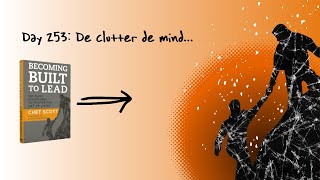
Chet Scott shares how busy people carved out time for reflection in his book Becoming Built to Lead, which includes 12 real-life stories from working parents, former military, and struggling singles who found margin despite packed schedules.
Chapters
How do you recommend people take time, create time? You were talking about the busy factor. And I agree, we're all busy, too busy. But some people might be out there saying, well, I need to put food on my table, so I'm busy, I'm working hard, I don't have time or energy to take sabbatical or whatever. So what do you recommend for people to find space to create, think, whatever it is?
Well, you know, this. And if the listener. And this is not a plug for the book, but that's where my mind went. If the listener has not read the Becoming Built to Lead book, there are 12 stories, the beginning of each of the essentials in that book. And those are real life stories of people that were really, they were all really busy. They were all doing like really good stuff and they were all really conflicted as their story would tell the reader. And they weren't all like you. They were all over the place. Some were working moms to single struggling. Others were like former military, trying to make it in the corporate world. I mean, they're as varied as we are. And every one of them had to struggle with putting themselves, giving themselves margin when there was no margin. So if you read a book, any book, what you notice with the book is there's what on it when you open a page? Becoming Built to Lead. If we had it here, we could do it. What do you know what's on the page in a book, in any book? I don't know.
They're numbers.
Numbers? Yes. What else?
Words, Titles?
Yes.
Yeah, all headlines. Subjects.
Yeah, yeah, all that. And so the book designers, if they wanted to be efficient, would have designed it where a page in the book would have been filled because you'd have to use less paper then to produce the book. Right. If it's really all that's on a page are numbers and words, sentences, paragraphs. Why not fill it up? Well, because back in the day, really way back in the day, people had the foresight to realize that the eyes get tired quicker if I'm looking at nothing but data. So they've created margins top, bottom, left and right. And the book designers said, we're going to put words only in this little space inside the margins, but you leave white space so that there's something for the eyes to relax. And yet, how many humans fill their day up with no margin? Yeah, they fill it start to finish. And they are privileged, unprivileged, fill in the blank. So what I always tell my clients is, hey, when they tell me, I don't have time to do that chat. I've got to put food on the table. And I'm like, you have margin. You're swiping your phone. Is that putting food on the table? You're watching that television. For my older Clients, you're on YouTube. Are you learning or are you distracted? Throughout the history of time, people mostly live lives of distraction. Pascal said that they don't know how to stay quietly in the room alone. And so I just tell my clients, spend a little baby step a few minutes into your margin, into your room, and write, think, reflect, slow down about what do you want to dream about? Take a few minutes, doesn't take long. And. And there's stories in the book of these people working for the man, but creating margin while they were raising little kids on their own in really tough environments. And you should read those stories because they're repeated all through history of people that did not have it easy, but they're doing great things, and they did not give themselves an out. They could have easily. And it's just right across the street to victimhood. They could have. They could have said, I don't have time, chat. But instead they said, I'm going to make a little time. I'm going to. I'm with you. My life has just been filled. Every page is filled because I've told myself I have to. That's the only way my kids are going to eat. But I'm going to take your word for it. I'm going to create a little margin and one of those stories that's in the book. She's home now with her children. She created so much margin. She has a work life from home now. She left the very system that we were in that she was grateful for, that it gave her a way to get to that. But she took it now to the next extreme, which is freaking beautiful.