Exclusive Interview with Ty Montgomery of the New England Patriots
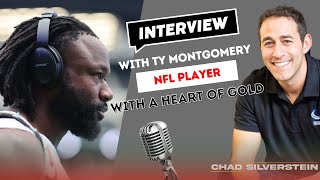
A recorded interview (host Chad Silverstein) with NFL player Ty Montgomery (identified as a New England Patriots player) covering his multi-team NFL career (Green Bay, New York Jets, Baltimore Ravens, New Orleans Saints), Stanford background, in-game decision-making (notably a corner kickoff return), personal influences (mother Lisa; Christian faith), struggles (divorce, shoulder surgeries), leadership lessons across teams, a goal-setting/process framework (outcome → performance → process), daily disciplines, his nonprofit '10%' (supporting 'forgotten youth') started around 2016, and business involvement as an investor in TLC Vegan Cafe (Richardson/Dallas, TX). Themes: discipline, faith, leadership, resilience, and transitioning from athletics to entrepreneurship.
Questions this video answers
Green Bay Packers; New York Jets; Baltimore Ravens; New Orleans Saints; New England Patriots (current at time of interview).
Stanford University.
10% (nonprofit); started around 2016.
TLC Vegan Cafe — Richardson/Dallas, Texas (with chef Troy Gardner).
Second surgery on the same shoulder (re-injury); rehabilitation timetable about six months.
Chapters
I'm never chasing glory. That's not why I do what I do. I do what I do to accomplish a goal. And regardless of what happens, that goal is not the glory. The goal is to give the offense good starting field positions. There's no such thing as tough. You're either trained or untrained. You either know how to get it done or you don't.
My brand's called authentic authority. So I gotta ask you a tough question. Why stop? Is it out of laziness? Why stop setting goals?
I want to be, and this is me. I'm always fully transparent and fully vulnerable. The times that I've stopped have come from insecurity, fear of failure, or tired of feeling like a failure. If I don't write it down, then I don't have to worry about whether or not I accomplished it.
All right, we got Ty Montgomery, plays for the New England Patriots and Ty has had a pretty impressive career. He spent time with Green Bay, spent time with New York jets, the Baltimore Ravens. Was there another team or was that.
Or Saints, New Orleans. Saints.
Saints. And I played at Stanford and I'm really happy to have Ty on today. I got a lot of questions for him. There's not many people who's been able to transition positions with running back and wide receiver and an impressive college career. And now diving is diving into the world of business with, with an opportunity that we're going to talk about as well. And a lot of people in our audience have a, have an entrepreneurship background. So I'm going to really try to ask some questions today that really kind of tailored to what people can relate to. Even though as a professional athlete you certainly have a mindset and disciplines and a lifestyle that a lot of people will never experience. But a lot of what you do and a lot of what you've experienced I would imagine can be applied to the world of work and a lot of the adversity that you've had to face and overcome and leadership challenges and also your philanthropic work that we're going to talk about as well because pretty impressive that you started your own non profit and I'd like to hear a little bit about that. So welcome to the show and I appreciate you joining me.
Thank you, thank you. Glad to be here. And I appreciate everything you said as well. Thank you for that.
Yeah, I was telling Ty before we started that I was watching this highlight film in Stanford. I was getting all pumped up watching the Taglights. Man, someone did a good job. I was watching on YouTube getting all fired up. So I noticed one thing I got to ask you right away. So I'm watching the highlights, and I even saw the one that, you know, obviously it's almost like a famous highlight of you when you were out of bounds, when you did the kickoff return with. I think it was with Green Bay, right? And you. So I'll show that while we're talking about it. But I'm so curious. One, how did you think on your feet like that? And usually when people are in a position in life, let alone in sports, you're all jacked up, you're ready to go, your adrenaline's pumping, and it's hard to focus on. Like, what would you do if. And that situation came up for you? And whoever's watching this right now is going to see this clip of it. And did you think of that before? Like, did you have that plan, if that ever happens? Like, walk me through what, how you did that.
Well, it's something that we've talked about before, just understanding the rules and knowing what can happen. Right. And for me, regardless of what I do, my mindset is to keep the main thing. The main thing and the goal is to get a big play and to give the offense good starting field position. As a kick returner, I'm never chasing glory. You know, obviously, you want to build yourself up with confidence, right? You talk to yourself before you go out there. You're like, if I get one, I'm going to get a big return. I'm going to make a big play. You know, you try to visualize everything that's going to happen, including the celebration. And that's what a lot of, like, mental coaches try to tell you to do. But that's not why I do what I do. I do what I do to accomplish a goal. And regardless of what happens, that goal is not the glory. The goal is to give the offense good starting field position. So when it happened for me, you know, the. It was against the Lions, I remember they had a kick that went right to the corner, and it was a good kick by them. So my thought process was, what's the best solution to give the offense starting field position? It's not to just take this ball and go try to make some great play. With the ball kicked into the corner, in my mind, I thought to myself, I'm going to get a foot out of bounds and get the ball at the 40. That's the best thing I can do right now.
It's incredible because there's so few people who have probably thought that way and been Able to pull it off. I mean, it was just impressive. So I just. I just. I.
It was risky. It was risky. We're being honest. It was risky the way I had to do it.
For sure. For sure. That's cool. So let's. Let's go back.
Walk me through.
Who had the biggest influence on you in your life early on, before college and a lesson. Probably one of the biggest lessons that you've learned from that individual, whoever was the biggest influence and how you carry that with you today and how you live your life.
I would have to say it would be my mother, Lisa. She is a jack of all trades. And the saying is a jack of all trades, master of none. She's a jack of all trades and is seeking to master. Master everything that she does. And that's something that I've learned from her. No matter what you do, give it your very best. Try to be the best and just put everything that you have into it. And that is the mindset that I've gone through life with. I just firmly believe because of her and what she's instilled in me, I believe that there's nothing I can't do and anything I do do, I'm gonna try to be the best at it.
Was she hard on you?
Absolutely. Absolutely. I mean, when you think about it, she had to be. If that's what she's gonna instill in me, she has to be hard on me to make sure that I can overcome anything. And then obstacles are not really obstacles. They're just something in the way, I guess. It's not stopping.
Right? So. And then kind of the same question. Think professionally now. Think in a mentorship, kind of a more of a leadership role. Biggest impact on you, influence on you over the course of your career. Who is it and why do you. Why would you pick that person?
I would have to say, and I don't say this in any, like, cliche kind of way, and I'm not going to preach to anyone, but I would have to say it would be Jesus Christ. I know Christ is not his last name, but it would be Jesus. You know, the Christ, He. During his time on earth, the things that he did. One, number one, Submitting himself to something. There is so much power in submitting yourself to something. And for him, he submitted himself to the. To the will of the Father. And if we want to just put it into different categories, we have to submit ourselves to the plan, submit ourselves to the process, submit ourselves to the outcome, outcome goal that we want to achieve regardless of what it is, if you're not submitted to something, it's hard to, to really accomplish the ultimate goal. So number one would be his ability to submit to the will of his father, because no matter what happened, he was submitted to that and only that. Number two was discipline. He had the discipline to stay submitted. Everything he did, he did it the right way, he did it the way it should be done, and he did it that way all the time, regardless of what happened and what was going on around him. And those are just a couple of things that come to mind. But.
So have you always had kind of a spiritual background growing up and everything, or did it get stronger? Did you find it? Talk to me a little bit about your path growing up. I mean, were you using that as your anchor when you were hit with adversity throughout your career?
Absolutely, and I would say all of the above. You know, even though I was raised in the church, there's still a personal relationship that I had to develop for myself. It's one thing to know everything about what you're being taught. It's one thing to know, you know, everything about a person, and it's another thing to actually get to know that person and then to actually believe what you're being taught and not just know what you're being taught. And so that has strengthened over time, and that's been a process and a journey of its own, to be honest. And it's something that I've actually held onto, especially in the later years of my career.
Is that a common theme with guys on the team? Is that a common theme in the NFL, where people have a strong faith, or are you kind of in the minority with that?
It's hard to say. A lot of times I feel like I'm in the minority with that, but there are a lot of, and not, not just, you know, in the sports world, I would say just in general, there's a lot of people that profess to believe, but then again, it goes back to, it's one thing to believe, but are you actually submitted to what you say you believe in, willing to do whatever for what you say you believe in? And that is, that's something that I had to, to figure out on my own, to be honest. And so I don't say that in a judgmental way. I say that in a, I learned that myself.
How much time would you say you spend investing in yourself spiritually?
Not enough. Not enough. I, I, I wish I could spend more time, to be honest. I, I, you know, whenever I tell people about Spending time with the Lord and spending time, you know, spiritually. When it comes to reading the Bible, I say there are, I believe, three different ways. I think I say three, but I'm just going to list them. One is I read the Bible to study something. I'm reading it because I'm trying to study it, to know it. The second way is I read it to learn something, because I'm going through something and I need to get something from this. And then the third way is I read it just to spend time. I don't go back to try to reread something I couldn't remember. You know, the time has passed. And that last one is the most crucial one for me because that's what's helped develop my personal relationship with Jesus. It's because I look at that as my time to just sit on the couch with him. I don't remember every second that goes by when I'm watching TV with the boys or when I'm playing video games with the boys. But I'm enjoying that time. And so it's the same thing. You know, when I'm reading, sometimes I just read to spend time.
So very cool. I appreciate you sharing that. So talk to me about your transition. You transition positions, which not a lot of people can do. I mean, you pull that off and that's just a rare thing. You just don't see it that often. And in the world of work, people are transitioning like crazy. You know, it could be a big time executive who changes opportunities because the rug got swept out from underneath them and he has to either make a parallel move or he's got to go to a different company, or he's got to transition careers completely and start over. How much did it feel like you were starting over? And kind of walk me through the mindset of what you were going through when you were making that switch. And how could that apply to someone who is taking a switch? And how could you apply what you want, what you went through, how you dealt with it? And how does that apply in the world of work for people who could try to. Try to relate to that?
Yeah, I would say it didn't feel like starting over for me. I mean, sometimes it's felt like I gotta climb out of something, I guess you could say, but. But something I learned in college with our strength coach, Coach Turley, and he used to say it all the time, and we had a performance news that we had to remember. And it was the idea of it was, there's no such thing as tough you're either trained or untrained. You either know how to get it done or you don't. You either gonna get it done or you won't. And so when I switch positions and I would encourage anyone that's going through any type of transition, I would just, you know, I would have this mindset, and I would encourage anyone to develop this mindset of being trained. And you don't have to necessarily be trained in the area that you're transitioning into. That's the beauty of a transition. You get to learn as you go. You get to make mistakes as you go. But are you trained in being disciplined? Are you trained in committing to the process? Are you trained in submitting to yourself? Submitting yourself to what you need to submit to? Are you trained in the areas that allow you to get the job done and to learn how to get the job done?
Very cool. Dream pick. What position would you. What's your ultimate dream to be playing? I mean, are you doing it right now? Are you where you want to be at this point in your career?
I don't know. I don't know. I think. I think I'm where I'm supposed to be at this point. You know, I try to stay away from where would I rather be, because then I don't want to. I don't want to open up the door to any sort of apathy or, you know what I mean, like regrets or anything like that. But I think I'm where I'm supposed to be. But I do enjoy the receiver position a lot. I will say that that's a lot less physical than the running back position, especially after being nine years in the league. You know, it was fun when I first did it, but now that I'm older, I'm trying to figure out how to prolong my career. Because I love playing the game honestly. Even playing special teams. I love special teams. That's a position in its own. It's a challenge in its own. You only get one shot at special teams. There's no first, second, or third down with special teams. You get one down to make a play, and it needs to be a big one.
You gotta be fearless to be doing what you're doing.
I don't even think about it. I'm just focused on what do I need to do. So I'm just having fun with it.
Okay, good. Talk to me about the different experiences that you've had on the different teams and focus on leadership for a second and tell me how different is it from going from one team to the next team from I would imagine, and I would assume maybe I could be wrong, but from a coaching position, from an owner's position, when you go into these teams and you've experienced what you've experienced on multi teams, how different is it from a leadership perspective, from what.
You feel and what you see, it's different everywhere. Every team is different. You know, the organization, the way it's ran, you know, from top to bottom.
So talk to me about something. Some of the specifics of it just.
You know, just like the culture will be different. And that's not to say one culture is better than the other. It's just that like, it would be different. And you can tell that like, okay, football is the same, but the way this business is ran is different because we are in the entertainment business. Coach of mine once told me that we are in the entertainment business and you know, we have their different companies and corporations and so each one is different and the market is different. So that's one thing. But, but everywhere I've been, it's been fun, it's been a learning experience and it's allowed me to grow in different ways.
So I hear you. It's very different. But a strong culture is a strong culture and I don't care what culture. And it could be at a company or it could be on a team. There are certain characteristics that certain influential leaders have in those cultures that make the culture what they are. So can you give me anything specific about any of the teams that you're on, something that you can share that was a great characteristic that you felt and saw that, that you felt was a catalyst to having it be a great, a great culture for you to be in?
I can give two characteristics and I'm not going to say where they came from. I don't want to do that. But I can give two characteristics that come to mind immediately. And there's definitely more that I can think of. But one is in one culture I've been in, it placed an emphasis on strong veteran leadership and it would seek to sign veteran players that exhibit leadership to help develop the young players. And I thought that that was a really cool thing and a very unique thing. And I think that was one thing that helped that organization win. Another culture that I've been in is, it is just very nose to the grind, blue collar, hard working. The way we win is we work hard. And so everything we do is going to consist of hard work. And that is what helped that organization.
Have you been on teams where you had To. There were new coaches that came in where things had to change. And you saw people having a real struggle with. I mean, I hear you say what you just said, and I think about. In my world, in the world of work, where a lot of times the veterans, they struggle to change because they. They don't want to break the habits that they've built. And. And you bring in people who are veterans from other organizations. It's hard for them to unlearn what they've learned, and they want to do it their way, and they find it hard to change. Do you see some of that on your team? Or is it like. In that example you gave me with the veterans, is that everybody. The veterans are all in, and the people who come in, who are veterans are all in, and everybody just. You just. Like on that type of a team, you have to be all in.
I would say in the. In the organization where I saw them, you know, bringing in veteran leadership, the veterans that they brought in, they weren't like, you know, just stuck in their ways. This is the only way it's gonna be done. And then they become negative about the culture that they're coming into. These are veterans that are professionals, that are what needs to be done. How are we going to do it? This is how we do it here. So we're going to get everybody on the same page. Something that I've always said to myself for a long time now is it doesn't matter if we're on the wrong page. If everybody's on the same page, then we're on the right page because we're all on one accord and we can accomplish what we need to accomplish, and then we can get ourselves on the page that we need to get to.
Right.
It's tough when people are on different pages.
Yeah, big time. Yeah. I would imagine. I mean, because you've seen a lot of different things on a lot of different teams. And on the opposite side of what you were saying, without giving anything specific about who you're talking about, what are some of the characters that you saw that were kind of just. In any culture? They're no good. You know, they're no good. And you saw it kind of have an impact.
I would say that one of the negative things I've seen is having too many. What's the way to say it? Like, having too many guys that are all trying to be leaders. And when I say that, I don't mean that everyone can't be a leader, but we all have positions and we all have roles and it's not everybody's job to be the head cook in the kitchen. So we can't have everyone trying to be the head chef. Even if you're, you know, a great cook, just. Just play a role, you know? Like, it doesn't. It doesn't mean you're not a great cook. It doesn't mean that. It just means for right now, where we're at with where everything is, you have to be able to play a role. You have to be able to follow. I feel like good leaders also know how to follow, because then they know what it's like to follow.
I would imagine the problem, though, is, is that a lot of guys who are coming in on your level, they've always have been the leader.
They've always been the best. They've always been the star, number one. Absolutely.
Taking a step back and being a follower is not something they're used to doing or have ever been, right?
And it's. And it's seen as, like, a sign of weakness for some, but it's not really a weak thing. It's. Learning how to be a team player and how to play your role is actually a very positive thing, and it's a sign of leadership.
So how do you know who the guy is that's supposed to happen as the coaches? I mean, there are captains in the NFL, right? You have a team. Are those guys. Because they're in a sort of an appointed role, kind of delegated as the ones who should be the ones who are kind of stepping in and stepping up when they need to.
I mean, you just kind of see it just kind of filter itself out, you know, throughout the off season, and then the leaders emerge. And then, of course, you know, football should be a meritocracy. And then in terms of finding who the leaders are and picking your captains, it should be a real democracy, and we all decide who's gonna lead us, and then once we do that, we stick to that. There is no, like, oh, I could have done this better than him, or I could have made a better decision here or there. Like, no, no, no, it's not about that. We all have to play our role, and even our leaders won't be perfect, but, you know, the leaders need trust. And, you know, if. When I say the leaders, you know, the people who we put in different positions, you know, we should trust them, and we got to get behind them. And like I said, we all have to be on the same page, and whatever needs to be dealt with will be dealt with, you know, amongst the team, but it's not, it's not good for the team. It's not good for an environment, you know, whether it's football or not football, to just have, you know, a lot of division and undercutting and you know, just gossip.
Right. You know, when HBO did their specials and they started kind of looking inside the teams and you saw the, all the, all the footage of like, what's really happening to me, that's very intriguing because, you know, you see it on TV and you're. It's a business. There's no question it's a business. And you see it ran like a business when they do those documentary pieces on it. And it was interesting for me when I saw how much of a role the coaches play in some of the teams and how much the players step up in others. Because the coaches are more of an introvert. They're not as energetic and outgoing and in your face coaching hardcore motivation versus, you know, more strategic and methodical. So I'm curious, have you experienced both those types of coaching units where you have them kind of in your face a little bit more on one team and then with a little bit less from the player's perspective on another team?
Absolutely, I have. I've seen both. And honestly it's, I would say that's less of a team thing and just more of, of a person thing.
Right.
I think at the end of the day, like we always have to remember that our bosses are human, our co workers are human, you know, so players are human, coaches are human and this is a business and sometimes, you know, the player might be older than the coach in this league. It's not, it's not like college or high school at this point. We're all grown men. So sometimes a player might be older than a coach and so, you know, it just all, all depends on the person. But it doesn't mean that one leadership style is better than, than the other.
Which one did you prefer? So which one did you prefer?
I don't, I don't really have a preference. I think I just prefer authenticity. You know, whoever you are, just be that and be and be that completely.
So you've dealt with some adversity, you had an injury.
Right?
So talk to me about bouncing back. Tell me about the mindset and how people can apply that in their world. I mean, like, how did you deal with it and what were you thinking at the time and how long did it take you to rebound from.
Was. I want to say it was like a six month timetable. And the thing that sucked about the injury last year was I actually had this injury in college. So it was the second surgery on the same shoulder. And it was just an unfortunate thing. It just happened. And so I don't know if this is like some rebellious mindset I have or if this is just me trying to make everything positive and action oriented. That's something else I learned from college. Quick side note, he used to always, like, whenever we would break it down, someone would say, hard work. And he would be like, what? What is that? Like, that doesn't tell you what to do. That tells you what something is. So we would always have to break it down on work hard, because it instills his mindset to go do something, not just tell you what something is. And so for me, that's really what I felt like was happening with this, you know, with this injury. It wasn't a minor setback for a major comeback. It was, here's an opportunity to go do something else. And right now, the something that I need to do is to rehab, recover, get strong. And that was the mindset that, like, I took on. You know, I didn't look at it as some negative thing that I have to overcome. You know, Something else I said, I have all these little slogans in my head. Something else I also say is like, I'm no longer going through things, or I'm no longer overcoming things. I'm getting two things. So I'm getting to health, I'm getting to, you know, recovery. I'm getting to whatever it is. I'm no longer going through it, and I'm no longer overcoming. I'm just getting to it.
So I'm teaching my kids right now. I have two teenage kids, and I teach them thoughts or things. Your words matter how you. Your mindset, right? So when you share, like your one liners, your taglines, like that one, for example, where did that come from? Why are you thinking that way? And like, how long have you been thinking that way?
It's one of those things where it didn't feel like it came from me. I feel like it had to come from the Holy Spirit. Honestly, I was struggling with negative thoughts for a long time. It just felt like so many negative things were happening in my life, you know, personal life, career. Didn't feel like it was going the way I wanted it to go. That I just got to the point to where I just said, you know what? I'm no longer going through anything. I'm getting to something. I'm on my way somewhere. I'm Going somewhere. And I just. I just stuck with that.
I love that. Have you. Have you always been a goal setter? Do you. Second, do you write them down?
Yeah, I used to write them down. Honestly, I need to get back to that. I used to keep them in my phone. You know, to be honest, I would set goals. I would write down my prayers so I could remember and check them off and, you know, give some appreciation to God. And I. I learned my goal setting when I was in college. I mean, this. Honestly, this strength coach made me a better man, to be honest. But when I was in college, he taught us goal setting and he taught us ways to set goals. There's the outcome goal. There are two performance goals, and there are five process goals for each performance goal. And the process is 100% in your control. Are you submitted to the process? Can you be disciplined and stay consistent with that? And because you do your process, it will. It should impact your performance, which is also in your control. The outcome, completely out of your control. So my goal, My outcome goal is something that I'm trying to attain, but every day I'm not thinking about the outcome goal. Every day I'm thinking about the process. And then when it's time to perform, I'm thinking about performance. And then by the time it's time to look up, then I see where I'm at.
So do me a favor, give me an example of that. It can be about anything. Just make it up on the fly, like about working out or about your success. You know, like, just so I can understand that concept. Because it's an interesting concept. Never heard that before.
Okay, so let's say my outcome goal would be to be 200. And I don't know, I'm about 225 to 27 right now. So let's say I wanted to lose weight. And my outcome goal would be I want to be £215 in a month. Like, that sounds crazy. Okay, outcome goal would be £215. My two performance goals would probably be to be able to run, you know, three miles in 20 minutes and to be able to. Let me see. Be able to. I'm just making this up. Oh, okay. Be able to jump rope for five minutes straight, no misses. Those would be my two performance goals. And then in order to be able to run three miles in 20 minutes, I gotta have five different process goals that are like my daily goals. Wake up at 6am every morning, run one mile, eat a certain amount of carbs. That would be my second one, my third one. Would be, I would say, read two chapters of a book and then I'll explain what it. Like that just comes from developing a discipline.
Right?
Like, can I do something for 20 minutes straight? Right.
Yeah, it makes sense. I mean, you're throwing out that rock. And it's funny because most people, they say 3% of the people set goals in the country. And you see these gyms get packed on January 1st, and the reason that they're all out in three weeks is because they take that outcome goal and they make that their only goal, and then it's impossible to hit that right off the bat and they quit and they stop. So I understood the concept. I do something very similar. I just don't call it the outcome and the performance, but I like that it makes sense and it breaks it down in your baby steps so you can go attack your goals. I mean, it makes sense. It's. I'm curious, say again?
It takes the control, which you can control, and it simply, like, it makes it visible for you.
Right. So my brand's called Authentic Authority. So I gotta ask you a tough question.
Yeah.
Why stop? Is it out of laziness? Why stop setting goals? Why? What? What is it? Because you and I both know how important it is to set goals. I've done.
You've done them.
But there are times where we just don't do it. And we know we should be doing it. And that's like the worst thing in the world to be doing. Right. I need to do it. I should do it at such bs, right? I mean, like, you're not doing it, period. And. And like, for me, I have a coach in my. In my world of work, and he comes and he kicks my ass. Because sometimes you need to get your ass kicked.
Absolutely. I want to be. And this is me. I'm always fully transparent and fully vulnerable. I think that the times that I've stopped have come from insecurity and have come from fear of failure or tired of feeling like a failure if I don't set this goal or not. If I don't set it, if I don't write it down, then I don't have to worry about whether or not I accomplished it.
Right.
And that's just. I mean, I think that's just insecurity and that's just a fear of failing.
Right.
I hear.
I hear that. I appreciate you sharing that. Talk to me about discipline to be at the level that you play at and just in general, your whole career. I mean, everything from your. From high school, college, and throughout you don't reach that type of level of athletics and success without having disciplines in your life. So talk to me just about maybe some of your daily disciplines. What do you do that you almost just like. It's just such habit that you don't even think about it. But the average person probably doesn't do it. Like, where are some of the disciplines that show up in your life, and do you focus on them? Is it a big deal, or is it just something you just do because you've been doing it for so long?
I think I focus on them, and I don't even think I think about it anymore. It's just a part of, like, my daily, like, conversation with myself. Everything I do, I have to start fast. I gotta wake up fast. I gotta eat fast. I gotta get to where I'm going. I gotta do what I gotta do. So everything I do, I gotta start fast. And finishing is super important for me as well. You know, when you're in Little League, you see a lot of kids when they got to do conditioning, what do they do? They wait until the last rep to go as fast as they can. But what I try to do is I try to start fast and then I finish. Something we used to say all the time in college, start fast, stay focused, and find a way to finish. So it's not about my last rep being my fastest rep. It's about being my best rep. It's about having the best technique and so on. So I start fast and I finish. Those are the first two. And then I focus on correction and accountability. I'm always looking to correct myself. I celebrate all victories, including the small ones. But when it's time to correct myself and hold myself accountable, I cannot shy away from that. And I have to be disciplined in doing that. The fourth one is attention to detail. How you do anything is how you do everything. And I, like, firmly believe that. So even the little stuff. And this, you know, this is actually. This actually goes with finishing, I believe. So. You know, for example, I'm in the weight room, attention to detail and finishing. I do my set, I do my last set, but I'm not done until I rack my weights. No, wait a minute. I'm still not done until I rack my weights, and I put the clips for the weights back in the right position where I got them from. And I'm sweet. Nope, I'm still not done until I wipe. You know, if you're in a public gym, I'm still not done until I wipe my bench off and get it Ready for the next person. As a matter of fact, I'm still not done until I'm prepared to start my next set. And then that's how I start fast. Like, attention to detail with the little things. Can't skip reps, you know, none of that stuff. And then the last one is being consistent and just being consistent in all of these things. And consistency does not mean perfection. Consistency just means what you do routinely, you know, doesn't mean you got to do it 10 out of 10 times, although that's what we strive to do, but we got to leave room for grace. So as long as you're not doing it two out of 10 times and then trying to say, well, I do it, I do it all the time, why isn't this working? Well, that's not consistency. But if you do it 8 out of 10 times, that'll get the job done. But we're going to work our way to try to get to 10.
Very cool. Very cool.
I love that. Who.
Who in the league has had the biggest impact on you?
That's tough to say because I have played with some hall of Fame players, and I've played with some great players and just some people that you really just want to learn from.
How about this? Take that question and focus it in on discipline. Who has had the biggest impact on you? When you look at all these incredible people, but when you saw this one because of their discipline and whatever it is that you were attracted to, it still sticks with you enough for you to be able to say that person.
That.
That's the person who's had a big impact on you.
Matthew slater.
And why?
16 years, 38 years old, however many Pro Bowls, and he's still one of the fastest on the field. He's still one of the most consistent on the field in his play, and he's very disciplined in how he goes about his work. I don't know if he's been doing this all 16 years. Actually, I had a conversation with him about it, and some things he's had to change over the years. As he's gotten older, his body's changed, his routine has had to change, but he's disciplined in attacking his routine, taking care of his body, doing what needs to be done. I mean, the guys, I'm not exaggerating, like, at the facility, all day, Literally all day. And he has a wife and he has kids, and he's also disciplined in who he is as a man, as a husband, as a father. And it just oozes off of him like you can see it that he is about his business, he's about being who he is. And it's not just a football player. So I imagine when he's at home, he attacks home in being a father and being a husband the same way he does being a player.
That's awesome. Very cool. All right, one more question. I want to dive a little bit off the field a little bit, but.
Tough question.
Another tough question. I like to ask these tough questions. Tell me. You can share whatever you want. The hardest thing you've ever experienced and how you dealt with it.
Oh, All right. I hope I don't start crying here, but the hardest thing I've ever experienced is going through a divorce and not being able to just be there for my son the way I imagined I wanted to be there for him, especially being like a self proclaimed man of God. And I wasn't taking care of my business. I had to hold myself accountable. I wasn't mature and I wasn't, I just, I wasn't making decisions for the right reasons and I wasn't making the right decisions for the right reasons. You know, I, I had to learn that sometimes trying to be perfect, trying to do the right thing all the time can be a detriment because you're not holding yourself accountable to actually learning the mistakes and you're also not doing the work that needs to be done in order to mature. You know, I think, you know, analogy that comes to mind is, you know, sometimes we see, we see kids that try to act older than they are and they don't really know why they're doing what they're doing. They just know adults do it. So then that's what they, that's what they do. And so when, when I went through that and just knowing how it's going to affect my son, already having conversations with him and he's only five, that was the hardest thing that I've ever had to go through. I would say I'm still learning a lot from that situation. And the way I dealt with it was literally just having to humble myself, humble my heart, humble my spirit, and go before God and just ask him what is happening? What do I need to do? How do I get through this? And he just started dealing with me on things that I didn't know that needed to be dealt with. I didn't know that I needed to deal with them in areas that I thought I was super hard working. Actually was working hard the wrong way. I was putting too much effort and energy into trying to hold up a Certain image for myself because I wanted to be seen that way and that's who I wanted to be. That I wasn't being authentic and genuine and allowing myself, grace and allowing God to do his work within me.
Appreciate you sharing that. We have a lot in common. That's my hardest thing I've ever gone through. I hear you. Let's go off the field now. So you started a non profit. It's called 10%. Is that what it's called? 10%, not 10%. Tell me about that. When did it start? How did it start? Why did it start? And just give us a little background.
It came from really doing some deep searching within the Word and just seeing a lot going on around me. And the Bible talks about tithing and giving, you know, 10% of your first fruits. And I just thought to myself, you know, we always think of money and giving money directly to a church. And I thought to myself, you know, Paul says that we the people are the church and we make up the church. And I want to do more than just think about it as giving money. I want to give 10% of myself, resources, whatever it may be, time to people. And so that's where my 10% came from. It was this idea of giving back to God. Give in a way of giving to his people in a way of just, you know, however you want to word it. And so that's where that came from. And it, it supports, we call them forgotten youth, victims of human trafficking, foster children, homeless children. Doesn't matter, really. And in short, the mission statement is basically, you know, Jesus says that if you have faith the size of a mustard seed, you can move a mountain. And for a lot of these, a lot of the youth, they have a hard time seeing what they're capable of. And my 10%, we want to strive to give them hope for a future that they deserve and that they desire, but not only hope that it's possible, but faith that it will happen.
When did you start that?
2016, I think. 2016. Somewhere around there.
Very cool. That's really cool. And talk to me about diving into the world of work, in the world of business. You went into a restaurant in Texas, a vegan restaurant.
I did, I did, yeah. Yeah. Okay. I don't know. That was just something else that happened after, after prayer and I was actually fasting and I was just being obedient with what I heard the Lord telling me to do. And it's. It's been a learning process. Again, that's, that's something else that I'd never done it before. And.
You never did what before? Fast or going to work?
Go go into business like this, like coming in as an investor with two other owners and wanting to help build something. Never done that before. But I had the confidence in myself, the faith in myself, and just really the faith in knowing that, like, okay, I'm moving in a direction God has called me to move. And it's been a learning experience. But again, it goes back to, are you trained or untrained and not. Are you trained in the area of this business? Are you trained in the area of knowing what to do here? But are you trained in the process of knowing how to learn how to get the job done, learning what to do, when to do it, and then also putting it into action as well, Learning as you go. And it's been a process, it's been a learning experience, but it's been good. It's been rewarding. TLC Vegan Cafe in Dallas, Texas, in the Richardson area with celebrity chef Troy Gardner. He's amazing with what he can do in the kitchen and with vegan food, making it, really. Making it taste like the real thing. Because I'm not fully vegan, but I just believed in this so much and believed in the benefits of it and, you know, the message behind vegan. Vegan food and what Troy wanted to do that I was bought in.
Why were you fasting?
I was fasting because I was looking for some spiritual revelation just with some things that was going on in life. And honestly, just for some growth, I needed healing in some areas that I was struggling with. To be honest, I was struggling with anger. Not like a. I'm angry at everyone all the time, but I was always angry with myself, and I didn't know why, and I had to deal with that.
Wow, you're a rare individual to be doing that. I like that. I like that. I always say people who are distinctly different, it's good, you know, not doing what everyone else does. So did they approach you or were you seeking an opportunity in business?
I approached them. And again, completely out of my comfort zone. Never before. That's why I say this had to be from God. Like, I remember thinking, like, nah, I'm not doing that. There's no way. And as I was leaving the restaurant with a friend, I just turned back around and I saw one of the owners, and I said, hey, are you one of the owners here? And she was like, yeah. And I said, are you looking for investors? And. And I said, I normally don't do this. I'm so sorry. I don't want to sound arrogant. I don't want to sound anything like that. I just love what you guys have, the product. I see you guys are struggling to keep up with these orders coming in. Are you looking for investors? And she just kind of, kind of chuckled and looked at me and was like, one second and came back with a card. And, you know, what do you know, they were literally looking for him like they needed the help.
Well, and do you get to, do you get to sit in on meetings? Do you get to. How are you updated? How involved are you outside?
Yeah, I'm involved. I'm one of the three owners, you know, partners, and I'm heavily involved.
So I'm curious how much of what you've learned in the world of athletics and focus on leadership now, because now you're going to see it in the real world, you know, in a business sense. Are you seeing similarities? Is it different? How is it different and what role are you playing in that?
I'm definitely seeing similarities. And you know, at times when we're having, you know, our meetings and we're discussing what's going on at the restaurant, or we're discussing, you know, plan of action for the future, I'm thinking about the championship teams versus the teams that weren't so good. I'm thinking about the playoff teams versus the teams that weren't. I'm also thinking about the teams that weren't very good. But, you know, I'm sure whoever listens or watches this can they can remember what I'm talking about. When we had to win six in a row just to make the playoffs, we had to run the table just to make the playoffs. We almost went to the super bowl that year. You know, are we able to, when everything's on the line, do what we need to do and just look at one win at a time, not get overwhelmed, not think about the fact that we've been losing, not think about any of that. Can we do what we need to do to still accomplish the goal that's ahead of us?
What's been the biggest struggle that you've seen or felt or experienced so far in the restaurant business that you weren't expecting to kind of deal with?
I would say finding full time employees, it's just like, it's, it's hard, like. And I didn't realize how hard that was because things always happen. And, you know, if everybody doesn't show up for the cook line, you're down a cook and that affects everything and that affects the ability to open even if someone's car breaks down or something happens and there's a personal matter that they can't, you know, they just can't make it into work or they decide to just quit or, you know, something like that.
So do you guys start, do you start having conversations about how AI and how the world of work and entry level positions are going to be transitioning out in one way or another? Do you guys have those conversations yet or is it pretty. Still pretty early to even be talking like that in your business?
Pretty early. You know, we haven't had those conversations, but we're just, we're. We're trucking along, I'll say that.
Have you seen that type of technology creep into the NFL? Is it, is it, is it talked about or is it still too early for that as well? Like just any, any of the new technology that's out today and how it's changing things?
I have not heard any conversations about it. I think I did see an advertisement for a helmet that can help with deaf players and it like provides some sort of visual. I think it looks like. You ever watch Dragon Ball Z and they had the little. The scouter and you could like read someone's power level.
Sounds pretty cool.
I think it had one of those things where it could give a visual of what's being said to them or something. I think it was through AT&T. I don't know how real it was, if it was a real thing or not, but I can see that we're heading in a direction to start doing some really cool things.
Yeah, it's definitely going to change a lot of things for sure. Do you see yourself being more involved in business? Do you ever see yourself going off on your own?
Definitely see myself being more involved in business. I'm actually learning a lot. I have some new business partners that have been teaching me a lot of different things. Some very successful people watching some classes. Haven't been able to do it as much during the season, but before the season I was tuned into a lot of things. So, yeah, business is definitely in my future and I really like learning about business, specifically like venture capitalism and helping businesses grow, investing in businesses and so on. So, you know, even just starting businesses and selling businesses, it's like all of that, like, I'm just, I'm in tune with it.
So how much of that desire of being interested would be a catalyst to you and how far would you take it in regards to coaching? Obviously, like in athletics, your coach is a pretty instrumental person Especially in the younger days as you're older and you're a veteran, it's still important, but you're going to still be more self motivated because you know, you know, you know what you need to do. You're either doing it or you're not. The coach will either have to keep you online or not you. And I know that you'll always be learning, but when you transition in the world of work like you are, and there's so much to learn, so much to learn. Could you see yourself having a coach.
Being a football coach? No.
No. Can you see yourself having a business coach to coach you?
Oh, absolutely. Oh, yeah, absolutely. I have a real estate mentor. My business partners, you know, he's actually like kind of my coach. One of them's like kind of a coach to me. I would see him that way. He's taught me some things and, you know, we've had some conversations. So I'm absolutely. And honestly, to me, it feels like it doesn't matter how I have to, to see it, you know, the analogy, whatever. If they got to be a coach, I don't care if they're a coach. Like, I don't mind being coached. I actually prefer to be coached because I don't know what I don't know.
Right.
And I know that there are things that I don't know. I'm confident in what I do know. But I think there's some quote out there that says something like it's not about, you know, how much you know, it's about what you're willing to learn after you know it.
All right, Right. That's beautiful. So you went to Stanford and I'm curious, was it hard to go to Stanford?
The hardest part was getting in. That was the hardest part. And that's what they say. I think it has the highest rejection rate in the country.
Wow.
The hardest part was getting in. Once you're in, they really do a good job of taking care of you. And, you know, obviously they do a good job of selecting, you know, the people that they want to go there. Because once you're in, they, they have, you know, a community of people that desire to be great at whatever it is they do. So if you're struggling with something, the struggle isn't because you can't do it and the struggle isn't because you don't care. The struggle is just because you just got to learn it and it's difficult.
So I'm on a kick now. A lot of the entrepreneurs I'm talking to and A lot of people I'm interviewing talking about college, and I think about my teenage sons who are going to be graduating high school in the next few years. I went to Ohio State and I wrestled at Ohio State. I probably, probably couldn't have gotten into Ohio State if I wasn't wrestling. And now they've made it so hard that you have to have, like a 4.2 to even get in, right? And so it's just so hard to get into these schools. And I've been in business for 25 years, and for me, the college degree meant zero. It meant zero for me personally. And when I hired people, it meant zero. All I care about was having the right person with the core values and the skills that I needed and the desire and the will and the ability to, like, have a growth mindset. And so for me, I'm a little biased because of just how I feel. I'm really passionate about it, and I just what I believe. But I'm curious from your perspective because, again, as an athlete, it's tough because you are treated differently. There's no question there is a different path for an athlete, especially for someone who's really good and, you know, their name is known. But when you think about what you went through in college and you think about now, what you're experiencing in the world of work, and you've got a son. So I'm curious to know, like, with the amount of online learning today, which if you're learning and you're trying to soak up and consume all this information, you know as well as I know there's never been a time in history that you cannot go online now and learn more than ever before. There are creators putting free classes and lessons. And I mean, I do more things on AI now and learn. I've done more in six months than I've done in a whole decade. Is it necessary. Is it necessary to go get a college degree?
That's a tough one. I'm gonna be careful with how I answer that. I will say this. I think that college provides an opportunity to learn certain tools that make people successful in the business world. Networking, doing the work, being disciplined, being on time, doing the things that you need to do and you have to do in order to do what you want to do. These are lessons and skills that need to be learned whether you go to college or you don't go to college. And college provides you that opportunity. It provides you the opportunity to learn how to focus when there's distractions around you. Are you going to Decide to drink a bunch of beers or are you going to decide to actually go to class? Are you going to decide to. Well, I can wake up in the morning and study, and I'm going to go out tonight and drink a bunch of beers and then everything will be fine. And it may work out. But are you going to develop the habits that you need in order to, you know, when that time comes to be able to make the right decision? And it won't be a tough one because you developed that habit.
Right. It's a great answer. It's a great answer and I agree with you. Okay, we're wrapping things up, so I got another one for you real quick. Three years from now, you and I are sitting down, having a conversation, and we're looking back at the last 36 months. What has to happen for you, specifically in your life for you to be happy with your progress?
Have I. Can I look back at the last 36 months and say that I've been consistent as a man of God in my faith? You know, again, I go back to how I define consistency. Not. Not perfect. But have I been consistent in my core values and my submission to my Lord and Savior, Jesus Christ? And have I planted the seeds in the business world in order to reap the harvest that I desire to reap? I can't have these goals and have these ideas and have these fantasies and these dreams if I'm not planting seeds in order to reap a harvest. So over the last 36 months, have I read the books I needed to read? Have I taken the classes I need to take? Have I taken the risk that I need to take? Have I started the things that I need to start, can I look back and say, I've done that? Then I would say that I've had a successful 36 months. If I'm going to look back and say, feel like I haven't done anything and I can't. I don't have a vision and I don't know how I'm going to get there, well, then I'm going to feel like that was an unsuccessful 36 months. Because if I plant the seeds, then I know how I'm gonna reap the harvest. I gotta water it, I gotta take care of it. If I got nothing to take care of and I got no vision, then no, it wasn't a good 36 months.
Very good. That's a great answer. I'm curious, is there anything that you can think of that you think, you believe that other people think you're crazy?
Absolutely. I feel like that all the time. I'll be at home and I'll just be like, am I crazy? People probably think I'm crazy. I think it's just like the way I carry myself and I'm just so, like transparent, like open book, wear my heart on my sleeve. You can look at me and you can tell what kind of mood I'm in. But at the same time, if I'm in a certain kind of mood, you can speak to me and it might not reflect the mood that I'm in. It just. It might not. And I could literally just like, just be in deep, deep thought about something that has nothing to do with. And it's gonna sound crazy when I say it. Like, this is how my mind works. Has nothing to do with what we're talking about, but it provides a solution for what we need. Like. Like, I don't know, like my brain is just always like thinking about different things and solutions and how to solve this problem and that problem and, you know, might look like my mood and it might be affecting my mood, but it's not a reflection of how I feel towards anyone or anything. Like, I'm just. I'm just trying to figure something out all the time.
I love that. I love that. Ty, I cannot thank you enough for spending time with me. I knew, researching you that I'd like you. But meeting you in person, I gotta tell you, authentic as can be and you are certainly someone who probably wears their heart on their sleeve. You know what you get when you're with you. And I appreciate it and I feel like I have a lot in common with you. I feel like I have a new friend and I appreciate that because that makes sense. The best type of an interview. And I didn't even plan on wearing the same shirt as you. It's just some kind of connection.
I don't know. I appreciate that and I appreciate you so much and just for even thinking of me and having me on. I really enjoyed this conversation.
Absolutely. We're going to put some good stuff together for you. And I can't wait to get you back on live with some other people on there. We're going to grow our community. I just launched this thing. I sold my business and I launched this out and I joined Authority magazine. So we're going to get you on their publication and I'll put you into my community and we'll connect you to it and then we'll get you back on as soon as we can. It'll be great. I really look forward to it. I wish you nothing but the best of luck. Nothing but love and health and success for you and your family and for your team. And I'll be following you.
Thank you very much. I appreciate it.
Okay, my friend.
More from Chad


Carl Banks Interview Trailer: Two Time Super Bowl Champ Talk Business and Leadership.



Ty Montgomery Interview Trailer: The Goals and Grit of an NFL Player With a Heart of Gold.





Brock McGillis Interview Trailer: Hockey Hero Breaking Barriers and Embracing Identity.
