How I Built a Company People Loved
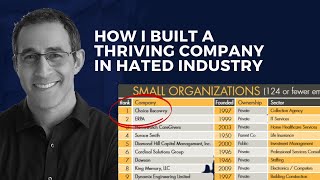
Chad Silverstein built a debt-collection company known for treating employees well, then created Restart, a program where collectors help debtors find jobs. He hired entry-level workers instead of veterans, ran leadership training and accountability systems, and learned that leading by example and investing in people made the difference.
Chapters
If you're going to run a business, you better be prepared to get knocked down hard. I've had everything from class action lawsuits to employees stealing from me, to clients pulling the rug out from underneath me. It's hard. You have to be able to, like, weather through that storm. And that's not something everybody can do. The sign of a good leader is when they can build other leaders. When you can build a leadership team that can build a leadership team and you're a leader. Kind of weird for a production agency to call you and say, we want to help you get a job. People thought it was suspicious, right? I said, just keep asking, find one, you'll find her, you'll find him, and pour your heart into that person. And she did. I have to tell you, when I read that letter that the person sent us to the entire company at our month end meeting, I'm like, we got something. This helped us become an outlier in the collection industry. Every single thing you do, every person that you touch, talk to that comes into our office, the goal is when they walk away, they cannot believe that's a collection agency.
So, Chad, whenever someone asks me what I'm up to at Restart, what we're building with this little company of ours, I always start by telling them your story. And the way the story always starts is my partner, Chad. He's based in Columbus and he owned a collection agency for 25 years. And the moment the words collection agency comes out of my mouth, I. I often notice the slightest change in expression on the face of whoever I'm speaking to. It's as if I've introduced something taboo into the conversation. So I'm curious to know, first of all, if you've noticed that too, whenever you speak with someone about your past and about the work that you did running a collection agency. And I also am curious to know why, in your opinion, the debt collection industry has such a bad reputation.
Yeah, I mean, if you felt that way, imagine how I felt. And I think for the first decade of running my company, it was hard telling people what I do. And I was always making excuses for it. Right. But from day one of starting my company, I set out to try to build the kind of company that I wanted to work in. And thank God we were able to like, flip that entire mindset, at least internally and then with all the people that my company touched, because I set out this big dream early on to change the perception of collections. You know, my goal was to make sure that we give people a different side of what negative Stereotype that they had immediately, without even knowing anything about us, they were judging us based on what we did for a living. Meanwhile, we had, like, the nicest people in the world working in our office. But, you know, there's some bag collection agencies out there, just like every industry. It just happens to be that people do hate collection agencies. I mean, we always joke because people don't.
Why, though? Why? And you say bad collection agencies. What makes them bad?
Look, it's a tough situation, man. I mean, I had grown the company up to about, I don't know, over 10,000 clients, and we had about 80 to 100,000 people every month put in collections. Hospitals, doctors, dentists, you name it, businesses. And it's a tough situation. People are dealing with financial hardship. They experience sudden job loss, and then they're hearing from a collector who wants to collect money from them and threaten them. And so, you know, it's like the last thing you want to deal with. Not only from a perspective of, like, being the debtor, but being treated like a debtor and then making that collection call. It's just a tough job. And I think people just don't want to get a collection call. And I think the numbers are staggering in America right now. I think they say, you know, like, 30 to 40% of the people have heard from a collection agency at some point. You know, people come delinquent for lots of reasons. You moved, you didn't know the bill came. You didn't know your insurance was supposed to pay, and it didn't. So it got crossed in the middle. Like there's a whole bunch of reasons, and there's a lot of people who can't afford to pay their bills, and then there's a percentage of the people who don't want to pay their bills. So you got a whole. You got a lot going on in the industry, but you get caught in that. In that maze, and you know it can crush your credit for a long time. Seven years on your credit report. That has a huge impact on your finances long term. People don't even understand how it works. And, you know, you got collection agencies that are selling the debt, and then it goes from one collector to another collector. They hear from that person, then it can go to an attorney. So it's just the whole industry just kind of doesn't have such a good feeling about it. So that's. That's why.
Right. Okay, so take me back to the beginning. I know that part of what you want to do with this show and with a lot of the content you're producing is to speak to young people in college who are maybe confused about what they want to do, whatever stage they're at. And you started this business when you were in college, I understand. Take me back to that time. How did you get involved in the collection agency that you started working for? I imagine that most people in college, you know, don't dream of working in a collection agency.
Right? Yeah. It's an interesting story, and I think entrepreneurs will benefit from this as well, because, you know, what we ended up being able to do as a company and as a team was really special, and it was a long journey. So back in college, it was my junior year, going into my senior year, I needed a summer job, and one of my friends hooked me up with her dad, who was the CEO of a collection agency in Cleveland, Ohio. I basically got thrown onto the phones after a couple hours being trained, and I just attacked it hard. You know, I think anything worth going after requires a lot of hard work. And I found out who made the most calls in the office, and I said I'd go to beat that person. And by the end of the summer, I was crushing it. And a CEO asked me if I wanted to do something with him in Columbus, Ohio, and I said, sure. And the day before I came back to Columbus, he handed me a sales book. We went out on the road. We walked into a few dental offices. He made the gals at the front desk laugh and smile. And the next thing I know, we had a couple clients. And he said, go back to Columbus and do that. So that's what I did. I went back to Columbus. I had no clue what I was doing. I mean, I can tell you I didn't learn anything at Ohio State, but I learned more on the first day. Going out on the road, walking into offices and getting thrown out of people's offices with, hey, no solicitation. Right. And it was a hard gig. I had to walk into an office and sell the person at the front desk. Meanwhile, the patients were sitting in the waiting room, and I'm talking about collections, and these are the people that are probably going to be in collections. It was hard. I mean, it was really hard.
So when you started, when he kind of threw you just out there and said, start your own collection agency in Columbus, what was that like for you? Were you just kind of wearing every hat at first and doing every possible job that needed to be done?
Yeah. So for the first six months, I just. I pounded hard. I used to go. I had made so many Cold calls. I'd go to class in the morning and I'd put on a suit at noon, I'd hit the road in the afternoon. I would go collect business cards from every medical building I could possibly find. I would go home probably at 4 o', clock, call all of them up, try to land appointments. And my goal was to let probably about two to three appointments every day that I can go out on. And I was trying to sell them to use our collection agency. When I graduated after about six months, I had about 100 clients. And then when I graduated, we started a separate company in Columbus. And that's when I started to hire a team. And that's. That's really when everything kind of really started. I had to go build a company at that point, and he offered me the opportunity to be a partner with him. He ran the company in Cleveland, I ran the one in Columbus, and we grew it together. And within five years, it just blew up. I mean, we had an office full of people and I was hiring entry level folks, I was training them, I was doing the collections, I was doing the customer service. I was doing everything, every single thing, until I could elevate and then delegate something off to someone that I hired. So I was getting a dose of pretty much everything you could possibly deal with in a startup company. And thank God I had a mentor. So I had someone guiding me about how to treat people and how to deal with some of the problems and challenges that we were up against.
When you think back to those early days, what do you think was motivating you to run out after class and hustle as hard as you did? I've listened to a lot of interviews with people who have had success and achieved a lot of amazing things. And often what you hear with these people is that there's some sort of voice inside of their head that's kind of chirping at them, saying that you're not good enough. You need to achieve more and more and more. And that's often kind of what's like pushing them and motivating them to succeed. And often, too, it kind of stems back to childhood experiences that they've had where they felt in the past like they weren't enough. And I'm curious, when you think back to those early days when you were grinding, what was that driving force behind everything?
It's still the driving force today. And when I coach young entrepreneurs, we talk about this trait that entrepreneurs have. There is a drive that you can't explain. And not everybody has it. Mine is Very competitive. I love to win, and I am. I'm obsessed with working hard and being mentally strong and not failing, and I'm not afraid to fail. And so when did that.
When did that. Where did that come from, though?
From wrestling? I was a wrestler in high school, and I wrestled at Ohio State, and I just had to learn how to be mentally tough. So, you know, like, you just. You get your butt kicked enough and you have to kind of keep fighting. And if you're going to run a business, you better be prepared to get knocked down hard. Prepared. Because I've had everything from class action lawsuits to employees stealing from me, to clients pulling the rug out from underneath me, to thinking the business was gonna close. I mean, I've had to deal with every punch in the gut that you could possibly deal with as an entrepreneur, and it's hard. And you have to be able to, like, weather through that storm. And that's not something everybody can do, and not everybody has a stomach to do it. So I think for me, I'm wired a certain way, for sure. I'm very competitive, and I'm very driven, and I like to win. So, you know, I mean, we used to have contests on our wrestling team to sit in a wrestling stance, and how long can you sit to the point where an hour in, you're shaking? And it was mental. And I just. I remember just like, I'm not going down. Like, I'm not going down, you know, and so I just. I don't know, I just always had that kind of the toughness of just, like, being strong and being a mental thing, you know, I think we're all. We're all capable of doing more than we think we can. I've been blessed to have certain people in my life along the way that have been there to push me, that I looked up to, and I was able to, like, you know, I wanted them to, like, be proud. Right. So I always, like, had, like, some father figure, in a way, mentor figure, coach figure that really, I admired that I. I wanted to impress, I guess you could say. I mean, that's. That's the truth. I was always trying to, like, you know, you know, be the highest performer.
What was it like hiring employees for you and making that transition from being someone who was running around like a maniac by yourself, pounding on people's doors, wearing every single hat, to stepping into more of a leadership role and bringing on employees to help grow the business.
Yeah. And this is really where the heart of building a culture is all about. Right. It Starts with the hiring process. And man, you know, running a company where I was physically by myself all the time having to make decisions as you know, my early 20s, I made so many mistakes. I mean, like the experiences of the problems that I made for myself with bad decisions, I look back and I had to make them because I learned from every single one of them, right? So they were. I can't regret them. But boy, oh boy, do I wish I was given some of the information that I give over to some of the people that I coach because I could have avoided so many mistakes. But it's hard because I don't regret it because that's what helped me become the leader that I became. And I always wanted to try to hire. And most people do this. I hire people like them. They want like, you know, mass attracts mass. And it was hard for me because again, no one wants to come work at a collection agency. So I was hiring young professionals, entry level folks, and I was trying to train them to run my company. And that is hard. I didn't have the deep pockets to go hire, you know, executives, hire guns. And so I was bootstrapping the company and I took, I took young professionals and I did for them what my partner had done for me and I was building into them. When I first had a team, I was in the Dale Carnegie programs. I've always been very intense about professional development and leadership programs. Early on I started with the Dale Carnegie program and then I ended up becoming one of the facilitators and I taught an after hours class with my team on our own time. They weren't paid for it. It was just to learn how to be a leader, how to public speak. And I didn't know it at the time, but those were the little things that were like building the trust and showing them that I'm with them and it wasn't some boss sitting up on a pedestal. I was with them and I cared about them deeply. Probably too much. But I think that the result of that was an amazing relationship that started with so many of them that 20 years later was still there. And again at a collection navy that at any company it's unheard of. Right. So that's what helped kind of further the efforts of building a great culture that people love to come to every day.
Can you think of any stories or examples of some of the bigger screw ups that you had when you first started bringing people on that were big learning moments?
Yeah, well, first off, I took, I'm very emotional, you know, and I, and I would take things very personal. And I think as a leader, you have to kind of separate that and you have to find a healthy mix. And there's no right or wrong answer to that. You know, leadership is just plagued with contradictions. You know, you can be one way or you can be another way. So we always say that leaders are tougher than tender. I'm definitely tender. I give people lots of chances. And I made a long, a lot of wrong hires. I didn't know how to interview people. I didn't know how to vet them. I didn't know how to do. I didn't do reference checks. I was kind of like, you know, shoelacing it. And I was just hiring people in that I thought had good personalities that would work hard. And I learned quick. And my biggest mistake was that I held onto people too long, giving people too many chances. Whereas later in my career, when I got tougher, I'd fire fast. I mean, really fast, and to the point where people couldn't get to the interview without me saying, do you have any questions? Because I knew right away, you're not going to work out here. So I learned a lot over time. And so every leader has the curse of knowledge. You don't remember what it's like to not remember. I don't remember what it was like back then because I'm so different now than I was when I first started. So, you know, I don't have that much recollection of the mistakes. I just know that there was lots of them and I learned from every single one of them. And I kept getting better every single time to the point where, you know, 20 years in, you know, I knew exactly what I was looking for, and I knew what filter I would not let the bar go under. And, yeah, it helped protect the culture, and that's how we built such a good culture.
Going back to that, that negative reputation that collection agencies have, it seems very much like when you started this, and especially when you were kind of running around and grabbing business cards, like you said, and working on your own and hustling that you were just doing what you loved and wanted to build this company. When you were hiring employees, did you notice that they were kind of nervous? Nervous is not the right word, but maybe just kind of conscious, I guess, of the negative reputation that collection agencies had. Did you have to kind of deal with that when hiring employees? Or how did that manifest? I guess is my question.
Yeah, big time. I mean, look, I had a vision early on, and so I. I lit people up and I did it by leading by example. Right. Like I told you, and I've said this many times, that we have had a company mission statement, and I expected everyone to jump on board with it, and it was a big mistake early on.
And the mission statement was change the perception of collection.
No, the mission statement was some crap that I threw up on the wall like most companies do. And I expected everyone to jump on board with it and drink the Kool Aid. And then I asked everybody what it was. Nobody knew, and I was pissed. And then they asked me what it was, and I wrote it, and I couldn't tell them. And it was because I was just trying to put words on paper. And when I got challenged by my coach to, like, don't worry about that, like, what's your dream? What do you want to do? And I started focusing on that. I didn't realize the power behind a leader with a big dream for where they're going in their business and how much that will light up other people in the office and when you encourage them to do the same thing for themselves. You know, I had to get comfortable being really uncomfortable with the fact that people weren't going to be with me forever. And I created a space where it was okay for them to be that way. We used to joke our leadership program was called Built to Lead, and I used to call it Built to Leave because we build up these guys and then they leave. And when they used us as a stepping stone. And so we got to the point where, like, it was okay, as long as you can give me your best. When you're with me, I'll give you my best. And if that's two years, I'm okay with that. As long as you give me your best. Two years. But I really encourage people to dream big because you got a soul on fire. You only need a few. You don't need everybody doing it. You just need a few people in your office who can do it. And then they light up other people. If a leader is just trying to do that themselves, blowing from a megaphone, it doesn't work. You know, I mean, a culture at a company that is strong is built with chemistry, on a team that trusts each other, and they go through hard times together and they're with you, you know, they don't work against you, and they're not behind closed doors. And so letting them in is a very difficult thing for leaders to do. It just so happens that's one of my strengths. I can just be transparent and I can let you in And I probably share too much, and it's probably got me in a little bit of trouble, but I'd rather be that way than be having them wonder, like, what I'm thinking all the time. Right. And so it's tough. It's. You know, it's hard. You know, I always say, don't want to be a leader like Ron. Get out. Get away from it. You're by yourself, especially if you're an entrepreneur, because you got to deal with everything that everyone else can never understand unless they own a company, and you're the first one to get shot in the back. And you got to make tough decisions. And the problem with being a leader and being an entrepreneur is you have to make those decisions. And when you have a choice to make and one's worse than the other, like, you know, have fun. You know, it sucks. It really does. There's times where you have to make these decisions, and it's going to hurt your team, but you got to be able to sit there and tell them and be honest with them, and so you hope that's not the only time they hear from you.
So you had written down a mission statement on a piece of paper, and you realized in a team meeting that you were kind of full of crap with it and that you didn't even know what it was. Can you tell me more about that?
We should joke and call it faux. Like, if a foe. A foe. That's, like, fake, you know? And it was me trying to find the culprit. The corporate words and terminology, you know, the technology and innovation and, like, all the words that you see, the buzzwords that people throw up on the wall.
You're saying that was in your mission statement?
Oh, yeah. It was just crap. It was such. It was so corporate. You know, you see it everywhere today. And it was the opposite of who I am. Right. And I was trying to be someone I wasn't. And it was obvious. I probably fooled a lot of people because I can do. I can do that. I'm a sales guy, Right. So I could. I could fool my team. And, like, I buy into this, but I think.
Do you think you fooled yourself, too, and, like, into thinking that that was what was expected of a company of your size?
Yeah. And thank God my company had enough trust to call me out on it, where most people.
How big was your company at that time? Do you remember?
Yeah, probably had 50 people with me. Okay. And I. I went on a rant in front of my entire company, and someone belted out, so you tell Us what it is verbatim. And I couldn't. I couldn't do it. And I remember laughing. And I had to, you know, you have to learn how to laugh at yourself, right? And so I did. I laughed at myself. And that's when I knew. And my coach. My coach is hard. He hits hard, and he's a truth teller, right? So we got busy working. I first got clear on, you know, what I believe and why, answered the big questions for me personally in my life. And then I gave everyone else in my culture the opportunity to do the same thing without pushing my views and beliefs onto them. And one of our core values was to become distinct, yet deeply connected. And we brought this leadership team in. We invested heavily in professional development, which was a big, big boost to the culture, because they saw that we cared about them, right? And we were building into them and investing in their professional growth. And I did everything from hiring eos entrepreneur operating system that completely transformed our company and gave everyone leg up. We had this built to lead leadership development program in there, and we practiced like a sports team would practice, because every team, you know, they just. Look, the problem today is the leaders who have a bad culture, they're just pointing the finger and they're pissed off everyone's not doing what they want them to do, and meanwhile, they're the problem. And so I just was open to the fact that I was the biggest problem, and I got busy working on me, and then I just started to light up other people in the office. And we were in a leadership practice one day, and it's how Restart began. And a collection agency, which was to help people get jobs so they can get back on their feet, pay their debts and get out of debt because someone had the courage to say that they have a big dream to change people's lives. I think most people would probably laugh at that when they hear an employee saying that, but I took it seriously, and I had a big dream to change the perception of collections. So the idea came up.
Can you dive into that story a little bit? So one of your employees said that it seems like as part of all of these new things that you were doing at the company, bringing in eos and really kind of challenging people to work on themselves within the company, that one person, as part of that, one of your employees said that she wants to change people's lives. Can you tell that story about how that led to restart and everything that we're working on now?
Yeah, for sure. I mean, look, our leadership program built to lead, which is Just integrated in everything I do. It's become part of who I am as a coach and as an entrepreneur and as a leader. And it's about having a strong core, knowing who you are, your identity, your belief system, your principles, your core values. And it's aiming at this big dream, and we call it your magnum opus. Like, what's your opus, right? Your labor of love. Like, what are you going after? Is it a life worth living? They say to most damaging thing you can do to your kids is to not live a life worth living. You got to show your kids what it looks like, so then you can expect them to go do it. And so I took it seriously. Like, I. I was one of the few in the program. And I'm like, I'm going to run with this. And I, I became very intense. I'm very intense. And I was obsessed with like, you know, getting my vision clear. And I worked and worked and worked and rinsed it. And I had a builder with me who helped me clarify that. And then I started sharing it with my team. And when we got together and we practiced and we would have leadership practices, people had the courage to stand up and talk to us about their dreams. And this one gal did that one day, and I was doing mine and she's doing hers. And I made that connection. And I walked in my office the next day, I said, you really want. This is a collector. I said, you really want to change people's lives? I said, today you're not a collector. You're off your desk. And I said, I want you to call as many people as you can and tell them that you want to help them get him a job. We had no clue how to do it. We had no clue what we were doing. It was just literally called. She came to me after the first day, upset because no one wanted our help. Kind of weird for a collection agency to call you and say, we want to help you get a job. People thought it was suspicious, right? I said, just keep asking, find one, you'll find her, you'll find him, and pour your heart into that person. And she did. And I have to tell you, when I read the letter that the person sent us to the entire company at our month end meeting, I'm like, we got something. And we just kept refining that process and we got really good at it. And next thing I know, all the collectors are like, sending referrals to this customer care department that we ended up calling Restart. And this was in 2013. So for years we were coming up with Our systems, bootstrapping everything. And I was just funding it, self funding it, not trying to make any money from it, just helping people get jobs. And. And it worked. And we started getting testimonials and the press started picking up. It transformed our culture. So I think today especially leaders have to find ways to collaborate and integrate different things that make them very distinct and unique. And this one for us was our. This helped us become an outlier in the collection industry. I mean, we're the only agency in the country doing it and it put us on the map and clients loved it. It was a win win for everybody involved. And then Covid hit and I had a call center. You talk about a storm hitting, like, oh my gosh, like we had to send everybody home. And that was just such a jolt to our system and the culture that I had built for at this point. This is, you know, 18, 20 years in, and we got everybody set up at home and that's when you and I met and that's when we started building Restart and I took it out of the company. And long story short, for people who don't know the story, we built our app and we launched it and now we have it live. And we're doing some incredible things now, integrating AI technology into the process. And we know how hard it is. I interviewed probably over a thousand people easily over my career. And the process to get a job is just brutal. People don't know what they're doing, and it's everything stacked against them. Automation is just crushing, you know, job seekers, where they're spamming everybody their resume, never hearing from anyone. And now we're. We're getting firsthand all the feedback from our job seekers. So everything we're doing is trying to change that. And it's interesting, my vision to change the perception of collections, which had such an impact on my culture, I see that that's kind of how I'm in business. I'm trying to now change the perception of what the job search process is, and it's been broke for a long time. And I think we've got something really special that I'm excited to share with the world, which is why one of the reasons why I sold my collection agency and why now we're pursuing what we're pursuing with restart.
How much of it going back to changing the perception of collections, how much of it do you think was a. Like something that was motivating you? Something about that stigma of working at a collection agency that was motivating you versus just something that you wanted to do to really, like, make a difference for your team. It seems like almost hearing you talk about this, that, you know, you happen to be working in the collection industry. And, like, hearing your story, you very much seem to have, like, kind of just fallen into that industry. When you were in college, you started working, and one thing led to another. Here you are running this business and building this team. How much of that mission to change the perception of collections, I guess, do you think you would have done all of this stuff regardless of what company you were working in or how much of it was a direct response?
So, you know, because I was on the phones and I was making collection calls, and I learned the business from the inside because I was doing the jobs, so. And I was nice to people on the phone, so I knew there was a stereotype, but I wasn't that guy. But when I started hiring people and building a team, a lot of people came into my company, interviewed from other collection agencies. And I learned early on not to hire anyone from another collection agency, because my goal was to do everything the exact opposite. And that was my strategy. Do everything the exact opposite. So if they have late nights and weekends, I'm doing open schedules. If they have pooled environments for commission, I'm paying people individually for what they can do.
Why do the opposite?
Because everyone hated it. They all hated it. But they were trying to get another job in collections because that was their experience. But I learned trying to hire some of them. It's very difficult to get employees to unlearn what they've learned. Very difficult. And so I like starting from scratch and then building into people and showing them from scratch how to do it the way I wanted them to do it, which I found a way that worked for me. And I figured, you know, probably egotistically, if it worked for me, it'll work for everyone. That was a mistake. But I got enough people that I did. I did train them, and I did get them to, you know, you kill them with kindness. Look, people can either pay their bills or they can't. If they can't, they can't. And nobody can get them to pay their bills. Our job as an agency is to determine who can pay versus who can't pay. And if they can't, there's nothing you can do. But the people who can don't turn those people into complaints and lawsuits. So, you know, my. My. My goal was to change the perception of collections. And what that meant and what my team heard from me was that every single thing you do Every person that you touch, talk to, that comes into our office, the goal is then they walk away. They cannot believe that's a collection agency. And so everything I set up for processes, for customer service, for everything, what we said to people on the phones, the favors we did, the laws we broke, because, like, I'm willing to take the risk to take something off someone's credit report when maybe we shouldn't, because, you know, we hear a sad story. Like, I didn't. I just. I was a little bit rebellious and I broke the rules a bit and I was in charge, so I got to do it. And things changed a little bit when I started to grow and had a lot more risk, I guess, involved because our industry is just plagued with regulations. And it's a very difficult business to be in business with. The cfpb, the collection. The Consumer Financial Protection Bureau gets more complaints from collection agencies than any other business. It's incredible. So, like, there's a reason why they're hated. So it's just. You have bad collectors who hate. And the problem is that these cultures are so negative. You put people in these call center environments with managers running around telling people what to do who've never done the job before, Right? And you wonder why there's complaint calls. People hate their job. They absolutely hate their job. And they literally take it out on people on the phones because they can get this control and power, that they're a collector, and they could, like, you know, hurt your credit. And it's terrible. It is bad. So I just. I knew that and I wanted the opposite. I didn't want anything. In fact, I used to say, we're not collectors, we're consultants. And I had someone say to me early on, well, I want to be a collector. I'm like, well, then I don't want you here. And the problem is you keep those people in your system too long and everyone's looking at you going, why are they leaving them here? Right? You know, like, I don't have to sit next to that person. Work there all day. I don't know. I was tuned into it, man. If I didn't want to sit next to that person, like, why would I want you to have to sit next to them? Most people, and especially in a corporate environment, they don't care. They're not involved. They kind of look down on the lower level employees. And that's just. I never did. You know, I started out that way, and I never. I always fought for them. And I think that's why I invested so much in their development. And it paid off. They stayed, they loved it. They were able to write their own vision for where they wanted to go. I saw some of them take off and go on to bigger and better things. And some of them became part of my leader, my executive leadership team. And when I sold the company last year, they're still there and they're in executive leadership roles. I'll give you an example, I'll give you an example of building a strong culture. And one of the things that we did really well is we hired EOs. They helped us build a culture of accountability. And what EOS does is, for anyone who doesn't know it, it helps you clarify what are the main functions in your business and what are the responsibilities in each one of those functions. And you don't build your business around people because you can't, because that person may not be there. And if you built your business around that person and they quit, then what? So you build it around functions. So if I have sales and marketing and finance, then I know what those responsibilities are, I know what the expectations are, I know what the key performance indicators are. And then I can stick the right person in that seat. And if I determine that that person's not the right person, I take them out of the seat. But if you revolve everything around that one person who knows how to do everything and then they leave, that doesn't bode so well for your company. So we were able to do that. And when we went to our first session where we clarified what our main functions are, one of my strongest employees, who was an entry level employee that came up through the ranks, wasn't in one of the boxes of one of the functions. And it was very difficult. I was basically telling one of the strongest employees in the company, you can't be on our leadership team. And you don't make exceptions for it because you're not going to have extra people in your leadership team. And man, she was a champ. She took it. She wasn't happy about it, which meant she cared, but she knew her place. She took responsibility for what her piece of the business was, which was client services. And ironically, she ended up coming back onto the leadership team as other people were moved off. And I think, you know, that's a hard thing. Most people, they'll quit. Most people, they'll complain behind the leader's back, but you've got to be able to, like, you know, get hit. And I think most people aren't strong enough to do that. And so what do they do they go and they complain? And that's the sabotage that happens in cultures and why cultures suck and why people hate their job is because there's just a lack of that strength within a team to keep what's said in the room in the room and deal and own your own problems. And I think, you know, most people are good at talking about everyone else's problems. So to build a strong culture, you got to be able to have the trust to be able to deal with it on your own and have those hard conversations and be able to weather tough decisions that have to get made because you got to put the business first, or else there's no team to be on.
Can you tell me about some of the other, like, fun things that you did in the office to keep people engaged and motivated?
Yeah. So that's where I really bought the flavor to the company, because I love to have fun with everybody. And because it became such a tough place to work, we had to protect it. And so I wanted to reward it. And I think most. Most people fail here because they're so focused on money. I like to spend money, and I like to give back to the people who are responsible for getting me to where I was. So I was really big. First off, on running lots of contests. I love to run contests. I used to call them my accelerators because, you know, it's just above and beyond your pay. And I used to get in fights with people on my team because they want to know, like, why do you have to have a contest and pay people extra money to do their job? And I'd always say, because it works and because people like money, and it's a good incentive, and you put the carrot out there, and they'll go. And so in a collection environment, I did it the opposite, like I did everything else. And I said, instead of who can collect the most money, it was who can get the best testimonial of how we change their perception of collections. You know, the best compliments from a debtor, you know, from a consumer. And I wallpapered my entire office with love letters from consumers who said, if they ever hear from a collection agency, they want to hear from our team. So, you know, that was, like. It gave me that purpose. It gave me, like, a sense of my vision was legit. It wasn't just words on a wall, it became words on a wall. But one that when I was going through hard times, I could look at, and it was significant. And I rallied them with contests. I mean, I had a pretty special crew I had an employee who came to me one day and said, chad, you know, our client in Cincinnati? And I said, yeah. She's like, well, I've come really close with the contact, and her husband's very sick, and he needs a kidney. And, like, I heard her say it. I'm like, what? See, I know she's scheduling to give the guy her kidney. Like, I had a team that was. Like, it didn't make sense. Like, I had. I had special people around me. I really did. I had a big whiteboard I used to brainstorm all the time, and I put up three pieces of paper where I paid it forward anonymously. I did three things for three people, and then I ended up going to him. I said, hey, go do that for three other people. Don't tell people. And, like, you should have seen what was going on in my office. Like, people just. They took to that type of a culture, and they weren't used to it at a collection agency, that's for sure. And it was just an unexpected good surprise that people love to be part of. And all I had to do was just light the match and flick it. And then I had the right people around me that they could just. They could just pour, like, fuel on it. And, man, I just. I would do that. And I didn't realize at the time, like, the little things. I call it my nuances. Like, I have an entrepreneurial course that I have a playbook that I give to other people, and I just had, like, a lot of little things that I think over time, they didn't stand out by themselves as a big deal. But over time, they compounded. You know, I used to walk around my office every single morning. Good morning to every person. Right to the point where when we had close to 100 people, it would take me, like, a half hour to walk around. But for some reason, that was such a big deal for people. And I remember hearing the feedback years down the road, and I. So I just. It was a discipline, you know, like, little things do make the difference as an entrepreneur. You're busy, and you're consumed with what you have to do to run your business. But when I would hear someone say something, I'd pull up my phone and I'd write it down, and it, like, a lot. And I'd put a reminder. I'd email it to myself. I'd snooze it to come up on that Friday, and I'd, hey, how'd the graduation go? Like, I just remember those. I never remembered it. I just made Notes, people's birthdays, anniversaries. I knew all of them. Like, you think I'm a superstar? Because I knew 100 people's. I didn't know anyone's. I knew nothing. I just had a system set up, you know, where I had disciplines. So those little one, those little things, they made such a difference. And, you know, I'd see people's handwritten notes that I gave them from five years ago up on their wall, and it's just like, you know, I realized those are the nuances that make the difference. And you don't have to be some crazy, unbelievable, smart, you know, entrepreneur. You just have to know how to connect with people. And there is a realness about that when it comes from a genuine, sincere place that you can't replace. And people love it and they love it and they don't want to leave it. I mean, I had to run people out of my office because they sucked at the job, but they still wanted to work at the company. I'm like, you can't work here. Like, you're not good. You don't like to make calls and you're like, at a collection agency. But they love being part of that, that culture. So when we. I was challenged by my team to enter into these best place to work awards, which I never did. I hated them. I wanted nothing to do with the public, and I just didn't want anything to do with being recognized for that. I didn't realize how much of a mistake that was until we did it. And these companies, they do these anonymous surveys. So if you're an entrepreneur and you're listening to this, do it if you can. And it was an anonymous survey every year. They give it out to the employees. You get feedback as the owner. And I didn't know it at the time, but, man, it made a difference. People were rallying to try to become a best place to work. And for 10 straight years we hit that list. And twice we won it. And it did something for our recruiting. People came in, I'm like, why do you want to work at a collection agency? Like, you guys are the best place to work. So then they'd see restarts and they'd see these things, and it just became like people were fighting to get into the culture and it was a collection agency. So I think the impact and the result of that, with clients wanting to attract to us and people wanted to do business with us, it helped me end up selling the company for a much bigger multiple than what the average was in a Collection agency because we had this special leadership team. The sign of a good leader is when they can build other leaders. When you can build a leadership team that can build a leadership team, you're a leader. And that is not easy. You got to pour your heart and soul in people, and you got to be willing for them to leave you. And, boy, it's hard. It's really hard.
A lot of what you've been talking about, I think, during this. During this chat has been that it starts from the top very much with you. I mean, before, you were talking about standing in front of your team, lecturing people about how they need to know this. This company statement that you had laid out that you didn't know yourself, and that when you realized that, that was a big change for you, and that was an example of you recognizing that you yourself weren't living up to your own standards. Everything that you just mentioned there, too, all of these little things that you were doing, it's. You know, I can imagine what that would be like to be part of this company where the CEO is walking around every single day saying good morning and really setting an example. I've gotten to know you quite well since we first met in 2020, and I know that you've been on a spiritual journey yourself. I know that at the beginning of your life and growing up, that religion wasn't a big part of your life and that you've. You've established now a discipline and that it has become a very big part of your life. And I guess I'm curious to know how much that and all of the lessons that you're learning in the spiritual component of your life translate, Translated. When you were at Choice Recovery to building the team culture, how much did the stuff that you were learning in your own personal spiritual journey influence what you were doing at work?
So I'll tell you what happened. This is a really interesting story. So when I started with Build to Lead, you sit down with this executive builder, and he asks you the hard questions about life. Have you answered the hard questions about life? And growing up Jewish and not having any religion in my background, and I really didn't know anything. I had to answer those questions for myself and for me, my journey. When my kids were born, something happened in me, and I went searching, and that changed everything for me, and it became. It became my real identity. So when I first started off as a wrestler, that identified myself as an athlete. But then I stopped wrestling and I stopped coaching, and, you know, then it became an entrepreneur and a leader. But, like, you know, that can end like that. If you don't have a team and you're not leading anyone, that's not who you are. So my spiritual journey, for me, it really became my identity and who I am. And I started down that path in 2008. And I'm completely the most religious person right now that I know, outside of the rabbis, that I'm around every day because I pray three times a day at a synagogue, and I'm who I am. I know who I am. I know what I believe. I don't push it on anyone else. But I'm very observant, and it guides every single aspect of my life, everything. And when I started wearing a yarmulke on my head when I came back from Israel a few years back, just to tell you what kind of a culture I built, when I walked into my office, I came back from Israel, I usually take my yarmulke off, I kiss it, I put it in my glove box, and I said, who am I scared of? Like, why am I taking this thing off? Like, in Israel, I was walking around proud as can be, whatever, and I answered the question. I was scared of my family, my friends, what they were gonna think. You know, in Columbus, you don't walk around, see many people wearing yarmulke. You know what I mean? Like, just not. You don't. When I walked in my office, my employee, first person walked right next to me, goes, what took you so long?
Really?
And I was shocked. Like, I was like, wow. Like. But they knew me. I. And I let them into my world, right? So they. They had been building with me and practicing, and they. We've had these conversations where my family wasn't really like that. I have three older brothers and just not so. But it's never as hard as it is. You know, I think most people catastrophize things in their head. It's always a lot. It seems like it's going to be a lot worse than it actually is. But I think, you know, I worked so hard on myself that I just had to get really comfortable with who I was. And I kind of lived by this motto that I used to hear my coach say all the time, which is, you know, I do care what people think. I just don't care that much. I'm not going to change who I am because of him or her. And it took me a long time to get to that point, but I definitely feel like I've gotten to a point where I'm comfortable with who I Am. And it's okay if you don't like me. I can't get everyone to like me, and I'm not trying to do that. I'm just trying to build a deep relationship with a few. And thank God I have that. Most people can't say that, and I continue to develop that with other people. I either attract people into my life or I detract people. But that's no different than anyone else. If you've ever been in an interview, if you've walked into an interview, if you interview people, there's this vibe you get from people when they walk in your office. You can't explain it. Sometimes it's a good vibe. Sometimes it's just. It's human nature. We judge people. So, you know, it's who I am, and I don't apologize for it. And hopefully it makes other people's lives better than I'm around. And, you know, people have the choice of whether they want to be connected to me or not. And that's cool, you know, I have the same choice to be connected to them or not. So I think I can't separate it anymore. The hard decisions I had to make about, like, not working on the Sabbath. And, like, now. I used to work every Saturday to stop working. You know, I started keeping kosher. There's no kosher restaurants, really, in Columbus. There's one place that you can go to. So when everyone was eating lunch at my office and I was buying it for them, I wasn't eating it, you know, so that wasn't as hard as making the transition, because I used to. And then I stopped. So it's been big part of the journey. And thank God I've had a lot of people around me to support me and make me feel comfortable and not make me uncomfortable and not feel uncomfortable being around me. I think. I think that's. That says something about everyone that was involved in the culture, because that can definitely make people feel really uncomfortable. When people become spiritually connected, they find it in their life, you know.
So the title of this episode is going to be something like How I or you built a company people love in an industry people hate. Is there anything that we've missed in answering that question of how you did it that you think we should touch on?
So I think, you know, again, I think to go back to what we said, I think it does start with your hiring and firing. I think leaders make a big mistake by keeping the wrong people in their culture too long. And I think if you are desperate to fill seats in your office. You make a big mistake by just hiring someone because you like them and you made it easy in their interview because you thought they'd be a good employee. So my best advice to entrepreneurs who are trying to fill seats is hire slow. And when you recognize right away when someone's a wrong fit. If you're trying to build a strong culture, get them out and don't apologize for it and be up front. And it's always easier to be tough when you start and then get more tender. Don't start off being so easy because it's always harder to become tougher. So I think the hiring process starts, and then I'd say as a leader, you have to find your playbook, your nuances, what makes you the leader that you are. And obviously it starts with looking in the mirror and getting clear with who you are and having a big vision that you can get people. I define leadership by influence. Can you influence people and can you get them to rally, you know, around your, your idea, your product, your service, your vision, whatever it is, and then encourage them to do the same thing? But you have to be distinct yourself and stay connected to everybody. And I think it's a hard thing when you're growing your company and, you know, there's distance. Created our leadership program. We had probably a fifth of the people show up to it every. Every couple of weeks. And I'm paying thou. I'm paying thousands every month investing. And people weren't showing up. And I used to get upset, like, how could they not want to come, right?
But why do you think they didn't?
I think self help and professional development, it gets a bad rap, and I think usually gets a bad rap from the people who don't want to do it.
Why do you think it gets a bad rap?
You're talking to a guy who's obsessed with it. So I don't know. You know, I can't understand it. And I don't try to because I don't care, because I'm always trying to get better. No matter what I'm doing, I'm always, always trying to get better. And I've learned that, you know, your choices have come. I called my company Choice Recovery because I like giving people choices. And I used to say, your choices have consequences. So if you choose to not come, that's your choice. That's cool. But as we grow and you don't guess what's going to happen, you can't, you know, either we outgrow you or you're so Uncomfortable because the strength around you has just gained and you haven't that you end up opting out. And that's exactly what happened. It's slow and it's gradual, but that's what happens. So this constant never ending improvement was like, that was a core value of ours. And I drove it. And so I attracted other people around me. And if you chose not to be in that circle, you know you're gonna get tagged. You know, people would say, oh, he's. They're kissing butt. They're this no, they're just trying to get better. Right. And is there a sense of that? Of course. I think it's normal. But I think I don't know why people don't want to do it. I think it's hard and takes work. So you know what, I'll tell you why. Maybe it's just because it's easier to not. It's easier to be distracted and pick up your phone. You know, you pick up your phone, you click on your stats and you see how much time every day guarantee four hours, six hours, eight hours. That's why people tell me they don't have time to come to the leadership practice. I'm like, really? Everyone got same 24 hours. You know, what you make a priority to do in your life is going to be what you do. And so people just didn't make it a priority. I think there's a time and place for it. I had plenty of people who weren't into it and then later on they were. So I think timing has a lot to do with it as well.
So if you could give one piece of advice to a CEO who wants to build a better culture at his or her company, what would you say?
So I'd say outside of working on yourself and lead by example, you have to care. You actually have to care and I think care about what other people, about your staff like to the point where I don't know if it's possible, but like, you gotta care about other people as much as you care about yourself. And that's hard to do when they don't care about you and they'll stab you in the back, they'll quit on you. You know, I had a real wake up call when I sold my company. It was not the exit that I had hoped for. On my 25th anniversary, my staff was very upset with me and it was really hard for me because I never saw that comment. Meanwhile, I've had people quit on me for 25 years and I high fived them on the way out. I brought back some of them into my company. But the day that I told them that I'm built to leave, I didn't get the reaction I thought I was gonna get. And it's still hard to even think about for me because of how much I poured into everybody and. But it's the reality of like what kind of reaction. They were upset with me, they were pissed that I was selling the company. I changed their life. You know, it's like I threw a ripple right through everybody. Everybody's careers changed and they didn't see it coming. And to be honest, I didn't see it coming until I made the decision to do it. But it was tough. It was really hard. And you find out who you're real few are when you go through those kind of things in life and you have to make those tough decisions. And I always say now when I'm not really caught off guard anymore, I'm just like normal. It's just normal. So I would say for a leader and the advice is you got to get used to feeling alone. You got to have some truth tellers in your life while you're working on yourself. People who can point out your blind spots and help build you. And you got to care about other people and you got to build in other people if you want them to rally around you and around your efforts. You got to make sure that you're building in other people around you. I think that's a hard thing to do when you really don't care that much.
Okay, last question for you. If you could give, I wrote if you could give a book to your 20 year old self. So if you could go back in time and give any single book to your 20 year old self that for whatever reason, for whatever you want that 20 year old self to know when you're going back in time, what would that book be and why?
So just off top of my head, because you're asking the question, I'd probably go back and I'd read the book that I actually read which was Think and grow rich and not because of the rich, because of the think. Because again, I think one of the biggest problems today is people are not thinking, they don't think. And I believe thoughts are things I believe you can create. You can think an idea, you can actually make it real, it becomes something, it changes how you behave and then you can bring things into reality. Your ideas, your thoughts are so powerful. And I think people miss that. In fact they're negative self talk. And yeah, I Probably wouldn't give myself any advice except go back and say, keep doing that. I love that stuff. And I still am into it, and I believe it. They came out with the secret many, many years ago, and everyone thought, oh, it's so corny. And they commercialized it, right? I mean, I literally have my whole company watch it. And there's a concept in it, though. And I think for me, and this ties back even to the spiritual sense. When things happen to you and they're going to happen and they're going to happen hard, you have to be able to react in a way that's a healthy mindset, positive, and your thoughts have to be positive. So when I had people quit on me, I remember having someone quit on me after they told me how much they love the company. The next day they quit. I'm like, whoa. Or I get that class action lawsuit slapped on my desk. For me, I'm a big believer. One of my beliefs is that everything happens for a reason. It's for my benefit, whether I can see it or understand it or not, period. And there's something to learn from it. And that switch in my mindset was the difference between me walking around my office pissed and having everyone go, oh, what's wrong with Chad? Stay away from him today. Or, hey, what can we learn from this? How can we turn this into a positive? And my first mentor, my first partner, he was incredible at that. Turning every situation optimistically into, like, an act as if it's going to be okay. And most of the time, it was okay. And I can't think of anything that ended up happening that wasn't a good situation. But at the time, felt like I was getting hurt. So your mindset and. And positive thinking, it's just. It's so critical to make sure that you get that down as a leader and that you can help others see it, because it's like wearing blinders. And that's why so many people are depressed and they're complaining all the time, right? I mean, depression's a real thing. I mean, I dealt with people in my office that were dealing with some really chronic problems that I couldn't understand. But then that's that. And people get help for that, right? There is a path for that. But then there is a very large majority of people who are just complex. They're just negative. They're just not people that you want to be around. And what they do is they attract other people. And so if you let that in your office grow, have fun trying to unwind that that's why company cultures suck. That's why people hate where they work, and you have to stay on top of that. And I think that is hard. And thank God I made that a focus, because I don't think I would have been able to work at a place that I was able to end up building and being at if I had not had my eyes on that and worked on building that. Because it is hard.
Yeah. Yeah. Well, those are all the questions I had for you.
Okay. Good luck to all the entrepreneurs building culture. Have fun. My time has passed for that, and I think you can get burnt out for sure. So I, I, I kind of sounds.
Like a hell of a ride.
Yeah. So, all right. Thanks for the questions.
All right, thanks for watching, everyone. See you in the next episode.
Bye. Bye.
More from Chad


Carl Banks Interview Trailer: Two Time Super Bowl Champ Talk Business and Leadership.



Ty Montgomery Interview Trailer: The Goals and Grit of an NFL Player With a Heart of Gold.





Brock McGillis Interview Trailer: Hockey Hero Breaking Barriers and Embracing Identity.
