Leading with Impact: Insights from CEO Adam Hergenrother
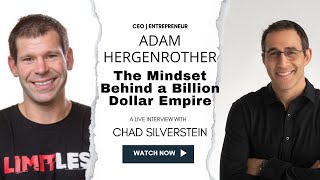
Adam Hergenrother started flipping cars and buying investment property in the early 2000s before moving into real estate and building multiple companies. He talks about the leadership shifts required as organizations scale: hiring operators, replacing founding team members, and keeping culture intact while growing large.
Questions this video answers
Over a thousand people.
Three people.
2002–2005 (era referenced for his early real estate investment).
Chapters
I mean, there's always people that are going to make the big difference in your life, and no one ever succeeds alone.
I know a lot of people that don't have someone like that in their life. And it's a tough thing because you're right, you can't do it by yourself.
When I got into business early in my 20s, I set out to be a powerhouse, right? I wanted to be a billionaire. I wanted people to bow to me. I wanted the power, I wanted the prestige. I wanted the fame. These roles that we play, we get so attached to them, we attach ourselves to them that those end up driving our lives, the search for more. Because if you play that game, the egoic game, you're never satisfied, and you will always be looking for the next thing. The problem with that is once you get to the level those guys are at and you realize I've got everything I can ever imagine my entire life, and I still don't feel any better, then where do you go?
All right, so I want to welcome Adam Hergenrother, and he is the founder and CEO of many companies. And I got an opportunity to interview Adam. We published him on Authority magazine. And I wanted to follow up because after getting all the information about your experience and your companies, outside of the fact that you have a very large organization, we actually have a lot in common. And so I was really excited to talk to you and ask you questions, and we can just dive right in. And if you could just maybe just give us a little background before I start asking all the questions that I prepared for you. But just so the people listening understand who you are. Maybe just a real quick, you know, when you started your businesses and how you got to where you are today with. With the size that it is.
Sure, yeah. And, Chad, thanks for all that you do for your magazine, for your. For the audience, and for anybody that's. That's a member of your site. Just because I know how much time and energy goes into this. And so thanks for. For adding all the value that you do to everybody. So appreciate that. You know, my. You know, everyone's got their own journey, right? For me, you know, when I was growing up, I kind of briefly get into this because it's relevant to business. I was about, you know, I was really kind of about 100 pounds overweight. I was in the drugs, failing classes, and just kind of that. That role model student that you wanted your, you know, your kids to hang out with, per se. And it wasn't even that I was like a bad kid. It's just I was lost and I was actually trying to be somebody else that I wasn't. And I really was. I would make up l eyes that were just insignificant like that just didn't mean anything and just, you know, trying to always fit in, right? And I was really trying to fit into how the mold of what everybody else wanted me to be. And so I would always be like a chameleon. And where regardless I was, it was exhausting, to be honest with you. Finally one day I came home as a freshman in high school. And you know, people have asked a lot of times, like, was there a trigger? Was there a moment? And it was, you know, I don't know what happened. You know, it's. Nature takes care of many things in our lives that we don't think about. So in this case, it. There was just this big movement that was like, this is not the life you're supposed to live. And it wasn't like a spiritual, you know, per se or woo moment. It just. It was just a feeling, right? Just. It came over me and I was like, this is. You're right. Like this. I don't want to live my life this way. And so I stayed up all night. I remember playing Celine Dion on repeat for. It was. She was popular back then, let's be clear. She was. And I, I stayed up and I was in between crying and not necessarily for like angry things. I was just like, what am I doing in my life? Type thing. And my dad worked nights and he came in and it was like midnight. He was like, what are you doing up? And I was like, I'm just not happy with my life, blah, blah, blah. And he was like, well, you know, you can, you can accept it or you can do something about it. And he shut the door and left, like, just like that. I was like, great, right? But he was, he was, he wasn't wrong. And so that's. I started getting into a little bit of visual, positive affirmations, visualizations at that time of kind of like, what do I want my life to look like? And so the next day I went to school as a freshman and I dropped all of the people that I was hanging out with. I wouldn't even call them friends because for the next two weeks they broke all my windows. They threatened me with guns. Like, it was like a. It was a big. Or cops were involved. Finally they realized is that once I was kind of out of their grip, they just went on their own world. And unfortunately, a lot of those individuals are no longer with us today. And. And there's. They weren't really bad individuals. They were just lost themselves too. And they didn't like the fact that somebody was moving outside of their group. And I got into football as a freshman, and I was. I got pretty competitive in it. So I end up losing £100 in a year. And physicality and fitness is really important to me today. That's why a part of our foundation works with kids and youth and sports. Because it really helped change my life. And it gave me the kind of courage and intensity to be able to, you know, live the life that I wanted to live. And I. I used that into. I would like to say that, like, it changed my life, like, amazingly, but, like, there were still a lot of challenges. I, you know, went through high school, and because my grades were so bad, I went through the gap program at uvm. But I'm kind of fast forwarding. We can put a pin on these things and go back to it, but let me just get through the track and then you can ask your questions. So I graduated and went into college. I. I was on a. What's called a G, which was like guaranteed admissions, but I had to get a 3.0 or better. And straight schooling does not come naturally to me. Like I am, intellectually, I struggle. Like, I can take tests, but I have to study three times as hard. And I just honestly applied myself harder than everybody else did. And I ended up getting like a three, three my first semester. By the way. There was nine of us that went into the gap program. I was the only one that made it after the first semester. Not that they're not smart. They just didn't really apply themselves. And so I ended up getting in and then I ended up graduating, but top of my class. And I was part of this in finance, this course called Advanced Honors Wall Street Seminar, which was amazing. But there was a key moment to this business. As a freshman in college. I had a really good friend of mine. He was in college, but not in college. Like, he slept in my bed basically, like, next to me. If, you know, like the roommate that didn't go to college but was there Friday, Saturday, Sunday, basically, right. And his dad owned a car dealership. And he's like, came to me and he's. I was working during college to pay for things, and he's like, hey, if you give me $500, I can put $500 in CHR. And Chad. And I think that his name was Chris. And I said, Chris, you know, do you think, you know what do you think the return is going to be like? And he said, well, I think I can get us, like, two or $300 each. And so we put this money in, and like, a week later, he came back to me and he said, hey, look, I've sold this. We each made $1,000. And, Chad, you know, the thing is, it was the first time that I actually felt leverage in my life of I never saw the car, I never saw the vehicle, and my money went in. There's all the money that I had, my bank, by the way, and I got it back. And so we just kept rotating and flipping cars, and I ended up massing, like, $60,000. As a freshman, I also learned the value of contracts because at the end of that year, he's like, at some point woke up and he goes, you're not doing anything. I don't need your money anymore. Thank you. Like, I'm done, right? And. And that was an interesting moment, but I ended up taking that money and I put it into a. An investment property as a sophomore in college. And I was still living with my brother and kind of this thing. So I didn't buy a house. I didn't, like, increase my lifestyle that much. I just bought an investment property and let me paint the era for this. For folks, this was 2002, 3 and 4 and 5, right? So, like, I literally timed the real estate market perfectly, and by time I graduated college, it was worth, like $80,000 more, right? And so I was like, no wonder why everyone's in real estate. This is like the easiest thing in the world. Like, you just put some money in, you wait a couple years, and it's like, this is. This is why everyone's a billionaire. I get it now, right? And so I ended up having to. I ended up selling that unit. That's a whole other story. And that I ended up paying a commission to a real estate professional. And I remember, like, that was as much money as I paid in a commission as I made pretty much all year. And I was like, man, I think I can do that. So I ended up leaving my job and getting into real estate. And then from there, I started building companies, right? I just, you know, leverage. I'm all. I tell people, like, I'm inherently lazy. And so if there's anything that somebody else can do, I naturally try to find a way for them to do it better than I could. Unless it has something to do with that, only I can do it. And. And so I started naturally leveraging other people. And the Way that I first started building businesses was, was contrary to how most people built a business, which was, you've got to put your sweat and equity into it. And let me be clear, I worked 12 hour days, seven days a week for the first four years of my life. So it wasn't about sweat equity. But everyone's like, you got to be the one doing everything. You know, this is a different mindset of how to build a small business versus building a big business. And it wasn't until I met Gary in 2009 that he actually confirmed how I was thinking. And then from there I just started blossoming. And you know, we've got thousands of people, you know, today into our organization and yeah. So here we are.
Unbelievable. And so how many employees do you have?
We have over a thousand people at this point. Yeah. All of our organizations.
And how many different leadership teams. Leadership teams do you report to you?
Well, there's probably direct reports. I have three.
Okay, three teams or three people?
Three people.
And then they had teams under the.
Under all executive leadership teams and stuff like that. Pretty much presidents or CEOs of companies report to me.
Okay.
And I've literally tried to fire myself from every position that I've ever had.
Have you been able to do it?
I have, yeah. You know, it's not, I made some mistakes along the way, but a lot of them. But I, I literally, I, I'm not a great operator and I, I like to be the first one in. And I'm willing to take risk and I'm willing to push the boundaries and create, take a vision and push it and direct it and charge it. And then also I love hiring really good people. And you know the funny story about this, my dad is really good with like, his hands, like in building things and construction and all my life he was always trying to get me to like build a tree for, with him. And like, I would do it for an hour and I was like, this is ridiculous. We should just hire somebody to do this. And he's like, no, no, it's part of the whole thing. And finally one day after, like, I made it, if you will, I, I, he went to me and he's like, I think I understand this. And I was like, yeah, dad, here's the thing. Like, you get so much joy from building something with your hands. I get the same joy from watching other people build it inside our organization. And I said, it's the same feeling. It's just two different ways of going about doing it.
Right, right. So that was one of the things that resonated with you. So I, I was a visionary for over 20 years and I sold my company on my 25th anniversary and I had to find an operator at the end of it so I can go start something else. When I, when I, when I was thinking about the first interview we did, I resonated with it because I know how hard that is. And it's something that people who have never experienced that can, they can't wrap their head around it. And while you're doing it and you're sending ripples throughout your team because you're changing, you're passing the torch of leadership. There's just a lot of nuances and you break through those ceilings. The complexities change. And then one thing that resonated me big time was that you realized you didn't have the right team who's going to be able to take you to that next level. So talk to me about what you experienced with that because I, I would imagine you were pretty close with people and you seem that you have that kind of personality. And so realizing that one, you're not the right person and your team's not the right person. You got to make these changes. You can make the changes, no problem. Your team, it changes their life.
Yeah.
Yeah. So how did you, how did you make those decisions and tell me what the outcome was?
Yeah, man, those, that's the hardest. That was probably the hardest part of my career in terms of decision making. I think a leader is their work. Products are decisions. And that's what separates really great companies versus companies that stay mediocre is the quality of decisions somebody makes. And the reason why nobody else wants to make them is because they're, they're hard. Right. They affect people's lives and, and I love my people. And so, you know, I grew before I sold the majority of one of my companies. I, I, for about 10 years, I was really close to all these people. We built up, we did this, this level and we needed to scale our organization. And I started bringing a, I started at first, the first actually. Interesting. Back up a second. Just telling the leadership team that they're going to be bring, I'm bringing somebody else in to be the main operator. Created way more ripples effect than I actually had anticipated. Like people were instantly texting and emailing me 1, 1 on ones like, what does this mean for me? Different level of accountability. I'm here for you. Like all of this conversation, actually I was like, look, I'm not going anywhere. Right? Like, I'm Just I, I need somebody that makes your life, life easier and also hold you more accountable because I naturally will get more into visionary mode versus accountability mode. Right? And so I need somebody that holds models, systems and, and, and, and the rest of the organization together in that, in a cohesive way. I need a real operator. And so I went and found an operator. And what started happening was this individual was doing just that. They were holding everybody accountable, they were holding systems accountable, projects accountable. And it created this, like, we don't. Well, this is the way we're doing it, right? And this whole, like, I mean, it was tough. And I realized the, the majority of our leadership team that we had built was not the right organization, the right team to get us to the next level. And we started hiring additional, you know, I brought in a, you know, a president, and then he had his own people, as you know, that they do. Right. They wanted to bring in a couple of his own people. So he started doing that. And then all of a sudden it curated this more. And so finally I sat down and I said, I was like, look, like this is just with me. And I just, just being real, I was like, I, I either am going to lose the people that I just hired, which I think are the team to bring us to the next level, because they're going to get really frustrated with other people slowing them down. And not that either team's really wrong, per se. They're just seeing the world differently. And if I don't let go of our existing leadership team, then they're going to sit there and fight. And now they're unhappy because you have this new team coming in there. And so ultimately, you know, we had to make some tough decisions of just. Well, I had to make some really tough decisions of just letting some, some of our seasoned individuals go. And I took as great care of them as I could and just let them know that we're always there and the organization's a different spot. And I also explain it with my own position of, you know, hey, they're coming in and take over a lot of what I do. And it's not just me or not just you, it's me too. Right? Because they're the ones that can, that can operate this at a different level. And I'm really excited for them to come in, but it's, you know, we summarize that in a couple of minutes. But if you're going through that over months, it's very taxing and it can be intoxicating at times, and you just have to know that business is nothing but a conduit for your personal growth.
Yeah. And I was to say like for me and it sounds like for you to having the self awareness to know that you're in the wrong seat before someone has to tell you that you're in the wrong seat is a good, is a good deal. Right. Because I was having, I was causing problems in my business because I'm not that operator and I was doing it for so long and we hit that we broke through those ceilings and those new complexities came up and they were above my pay grade. Like I didn't know how to do it and I didn't want to do it. I was frustrated and it was hard how many though. And I could tell without even really knowing that much about it. But I'm. I was a big culture guy and I would imagine you are too because you care about your people. And I know that if you look at like the military, around 100, 120 people is when they break off their battalion. Right. Because you can't keep your culture. So for someone who focuses on culture and focuses on building your people, how hard has it been and how have you done it?
How have.
Because it changes. And I don't know what it's like to have as many places you have, but I know it changes around that 100 mark. And I'm just curious to know like your journey with culture if you could just talk about it and how have you tried to kind of sustain it as you've grown.
Yeah, it's really interesting. In the beginning it was very easy because I was the. And then this is, this becomes easy, but also becomes the problem for most entrepreneurs that own smaller businesses and they can be big. I just mean smaller businesses count is everything's built on the nucleus of an individual. So like their behavioral patterns are also. Basically you hire people to kind of cater to your faults, if you will, as a leader. So you hire people and they start picking up where you slack off. So the system is actually built on individual's faults, if you will. And this is where people get stuck in them, building the nucleus. And one of the biggest mistakes I see is when people try to remove themselves, the rest of the organization doesn't know what the.
More from Chad


Carl Banks Interview Trailer: Two Time Super Bowl Champ Talk Business and Leadership.



Ty Montgomery Interview Trailer: The Goals and Grit of an NFL Player With a Heart of Gold.





Brock McGillis Interview Trailer: Hockey Hero Breaking Barriers and Embracing Identity.
