Live Interview with Tom Ryan, Head Wrestling Coach at Ohio State
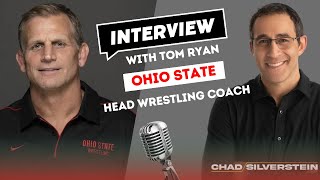
Tom Ryan, Ohio State's wrestling coach, talks about winning the 2015 national championship, raising $10 million for a new facility, and how NIL is changing recruiting. He reflects on leadership, faith, and what it takes to build a program that finishes in the top 10 almost every year.
Chapters
Toledo, Ohio State's the first ever team championship in sport of wrestling. And that was certainly the pinnacle of my coaching career. Only 12 teams have ever done that in the history of the sports.
You're a two time NCAA coach of the year. How hard is that to kind of have that dual mentality of you're trying to create a little family for yourself, you've got this tight knit group, but you're also part of the mothership where you got to follow the rules.
I'm really focused on the small things that I can control and that's recruiting the right people and hiring the right people and truly having their best interests at that. Believe in your mission and they know your belief system and they buy into your belief system. They know you're authentic and they know that what you're, what you're trying to build is an authentic way. When you do things that way, people just help. You know, they help, they want to be part of something that's really authentic and real. Anyone that's come to the Ohio State wrestling program and they believe they've arrived, you're in trouble. Listen, you have moments in time where, hey, we can celebrate this in your life, but there's always a chance for improvement. Wow.
So I'm really excited. I'm really excited. My friend Grappy is with me today. Tom Ryan from Ohio State, the head wrestling coach at the Ohio State University. Time. I looked at your bio before I came up here today and it was too long for me to spit back everything. And at the end of the day, just knowing who you are, I know your 2015 run where you led your team to a national championship for the first time was probably what a highlight of Europus and one of many to come. I would imagine that's going to be part of your opus. But I'm curious to know anything in your bio that can even come close to what that national championship did for you personally in your athletic run.
Yeah, I mean, that was certainly the pinnacle of, of my, my coaching career. But you know, I think there's a lot of, I mean, that was just an amazing weekend. I mean, amazing weekend, you know, Toledo, Ohio State to the first ever team championship in sport of wrestling. You know, I know you're a wrestler, you're a grappler, right? So, you know, you wrestled Ohio State, so you know how hard it is. And only 12 teams ever done that in the history of the sport. So there's been 120 national tournaments and you know, and, and, and 12 have won it. And coming Here to Ohio from, from New York, from Long Island. I knew that, you know, people called Ohio State wrestling the Sleeping Giant. The state's incredible. The wrestling in the state's incredible. It's kind of in the fabric of the people of Ohio, I think. And so it was a really great, great, you know, weekend to, you know, for so many people, you know. And so, yeah, it was, it was, it was, it was a highlight moment. But you know, there's also, there's just a lot of, there's a lot of victories along the way that don't get noticed. Your phone doesn't vibrate uncontrollably on every victory that you have. And some of them are, you know, they're not as, they're not as loud as winning an actual championship. But there are so many great things that happen just individually with people along the way that, you know, are moments that, you know, you'd certainly cherish.
You also, you were, you're a two time NCAA coach of the year, which is a pretty big honor. And I just know just from being an athlete and then also being in the world of business that when you see people hit the pinnacle of how high they can go, the road to get there is hard for a few, not likely a dream for most people. And it's just full of a lot of what our coach would say is a lot of pain and suffering. And there's no question that, you know, it could be a lonely seat to be in that leader, leadership role. And I can only imagine, and we'll get into a little bit because this is really going to be focused on, on leadership and how hard it is to be a leader. But at Ohio State you're talking about the 500 pound gorilla. You know, in the business world we talk about these big 500 pound gorilla, the big corporations which are just a murder to work in and to get anything done and to make changes and have to fear, you know, people making changes. And you're like literally in that system. But yet like when I been blessed to be able to come over your practice and see everything, you feel like you're in this little small little pocket that you've like created for yourself. So one of my first questions is how hard is that to kind of have that dual mentality of you're trying to create a little family for yourself, you've got this tight knit group, but you're also part of the mothership where you got to follow the rules. So maybe you just talk to us a little bit about like just the struggle of that and how hard that is and how do you navigate through that?
Yeah, I mean, you know, we're, we're one of 36 sports there. But you know, wrestling is, is, you know, one of, certainly one of the sports in the state of Ohio that really stands out is one of the elite states in the country. So you know, like, like any organization is about just people, the right people. You know, I think we focus daily on serving others. You know, the recruiting process is, is, is intense like it is in any, in any endeavor, but it's about just surrounding stuff with the right people. And I really don't, I don't feel the sense of the mothership because I'm really focused on the small things that I can control. And that's recruiting the right people and hiring the right people and truly having their best interests at heart. I mean, truly wanting to serve others. You know, I know, you know, through build to lead, it's the old, you know, give somebody, if you want to learn about a man, give him power. You know, you learn a lot about a man's character. And, and you know, at Ohio State it's just been, you know, as big as the place is and as, as, as much as we know our place, you know, per se, you know, football and basketball are king there and, and we kind of know our place. But it's just, I mean it's been, I haven't felt that.
Have you had to. And do you have a specific example of a time where you had to fight for something?
Oh yeah. Oh yeah. There's constant battles, you know, there's constant battles. And I think, you know, I think you fight with people and not against them. You know, I think, you know, just, just, you know, a new, a new complex. You know, Ohio State wrestling was training in a complex that was at one time was really nice. And by the time I got the job there it was in 2006, it was starting to fall behind out of the top 20 programs. And you know, facilities don't win championships, but they certainly help attract the elite people who I want, I want elite minded people. And I think elite minded people, when they walk in a place, they can sense whether or not it's deeply is it loved and nice things sometimes speak to. Hey, they really care about this. Look at this place. I mean they obviously care. So we have the challenge of building a new complex and raising $10 million. And my boss is really special. Eugene Smith's one of the best in the business. And he was like, look, let's, let's put a plan together. I mean, we aren't going to fund it for you, but we'll give you a piece of land and if you can get the funds raised. So that was a real challenge for us.
So let me push back, just for one thing. If you walked into a wrestling room, that was unbelievable. And within 20 minutes of seeing this team and hearing the coach, you knew. It's like the companies who put core values up on the wall, but they. You'd see right through that.
Sure.
So you can't tell me that your incredible room, which, by the way, is. Okay, amazing. It is amazing, but it has nothing to do with what you've built.
It's.
It's what you've built. I mean, you know that I know that. I. So, so I think, you know, I hear what you're saying, that it's important.
Yeah.
First impression, maybe, but like, that goes away really quick when it does.
When it does. No question. And, and to build that, to build a complex, you need people, right? You need people that, that believe in your mission, and they know your belief system and they buy into your belief system and they, they know you're authentic, and they know that what you're. What you're trying to build is an authentic way. And when you do that, and when you, when you, when you, when you do things that way, you. You People just help. You know, they help. They want to be part of something that's really authentic and real. And, And I mean, that's, that's how the building. That's how something like that gets built. It's just, it was people that. Many of them weren't even wrestlers, but they, they, they saw the vision and they saw the ministry. Really, you know, I would consider what we do, you know, a ministry. Right. To build people. And, and you know, if it wasn't for that type of. Of. Of approach, then, you know, things like that don't happen.
Yeah. You know, so let's jump into Bill to Lead. So for, For. For the people listening. Tom and I have a funny story. I went to a YPO event and Tom was on a panel with a few other coaches talking. And I walked up to Tom. I didn't know who he was really. I never met him. And introduced in the conversation, I made a comment, I said, my team practices like a sports team, and you probably love it. And you should check it out. It's a leadership program called Build to Lead. And I cannot. That was it. And I cannot tell you the day that you just walked into my office and Just walked into one of our leadership practices. I'll never forget. I still have a picture. I showed Chet the picture recently. I remember one just feeling like it was a big honor to have you in the room. I didn't know you at the time and I thought that was so cool to do. How state wrestling coach walked into our team practice. But what I think seared me the most was the look on your face as you were watching my team do what we do and watching our coach facilitate having this leadership team do what we were doing in this weird thing that we called practice. And I always explained it to people that, you know, you know, you don't become a championship team unless you practice. I mean, so why would you go to work and expect you to be a great team if you don't practice? So we gave you a taste of that. And I'd want to start by maybe just hear your take on what your memory serves as far as walking in.
And like what, I mean it was, it was, it was really a blessing that we were on that event together. And then we spoke after, for a minute. And I think if you remember, even before I went to you, there's, there's, there's some belief. I know my belief system, I'm pretty strong in my belief system and, and being around people that understand suffering is one that I just want people around me that, that whether it was, it was self induced suffering or outside induced suffering, just people have been through hard things. I'm attracted to. And I asked you also before I went to your practice, I went to a workout in the morning at Chet's place. Right. So even before I buy a piece of equipment for the team, I'll test it out. I want to know how this thing, how this thing works. Is it going to be hurt enough? Do I like it or not? So I went to the workout and I was, I was, I was amazed. I was impressed by the whole group there. Most of them were middle aged, over middle aged men and they were all tough. It was just tough like, like, you know, the, it was painful but, but people pushed through their pain and I love that. And I'm like, look, I'm going to come to, I definitely want to come to one of your, your practices, you know, at choice. And I was, yeah, I was blown away by it. I was blown away by the, and I'll keep using the word authenticity but, but it's like people were so authentic with each other. They were so honest with each other. You know, their words were, their words were to like you know the old truth in love, just sharing with each other. And I'm like, man, if a wrestling team could learn to communicate like your team was, we're going to be, we're going to be really good. It's a culture that I want to build or just having tough conversations and, and yeah, I was, I was blown away by it. I was in awe.
What year was that that you started?
Gosh, that was 2015, 14 maybe.
Like so yeah, it was the year before you won the national championship and you ended up hiring Chat as your coach. And so at the same time I'm being coached weekly. He's coming in kicking my ass and then he's coming over your office and kicking your butt. So how would you describe you before built to lead and after in regards to like what changes did you kind of internally go through and like what. How much has it helped you in a way that's been like noticeable to yourself?
Well, that's. Well, I mean there, I mean just in critical ways. One, I think it's made me a better in every way, a better father, a better husband, a better coach. I think, you know, when I explain build to lead I think one of one of the things. Well, first of all, self assessment. You as a wrestler you self assess, right? One of the beauties of the sport is that young people have an opportunity to have their life shaken up daily. Most people lives aren't shaken up that much. But in the sport of wrestling as a young person you can have it, you can have it rocked daily and you have to self assess and manage that. And it's rock daily in a safe way. You know, it's a sport. Losing isn't the worst thing in the world, right? But, but the beauty of it is that it is constantly under self review. So I think Bill to lead really made me look inside more. That's one thing. Definitely constant self esteem. But also no question, Bill to lead the way. Chet just runs just his system. I think it makes things very palatable, like very digestible things are. Things are taught in a way that, that they're just to me, they're very easy to digest and learn. So yeah, it's turned my world upside down in a really good way. It's helped my team. We're still using Build to lead. My leadership team met yesterday. We're going through the book, right? You know, Chad's book.
I met with your leadership team in the last practice when I was there with Chat. You were sick and just studs kind of growing. Check pushed Them to send each other their notes.
Yeah.
And then they were questioning each other. And it was a very different feel than I've. I've seen when I've seen the big group.
Sure.
And so one of my questions I have for you is when you see people not take to it.
Yeah.
And there's plenty of them.
Right.
It's not for everybody. Right, right. And you know, our coach isn't for everybody either. Just like you and I aren't for everybody. Well, you might be.
I don't know how many doses of Tom you can handle in a week.
How would you explain it, though? Like, what is it that people.
Yeah.
Look at therapy, look at coaching, look at self help, look at getting better, self assessed. What is it that you think they just are repelled? Why? Why? I mean, what, what, what's your take on it?
That's a good question. I think that, I think that often, often is they think they can do it, but they think they've got it. And that's a dangerous place to be. Like, I. I think it's a dangerous place to be. I'll use a wrestling analogy. It's like anyone that's come to my program, to the Ohio State wrestling program, and they believe they've arrived, you're. You're in trouble. Like, that's the beginning of the end, you know, I'm saying, like, you won four state titles and I made it to Ohio State, and my whole dream's been a wrestle at Ohio State. And like, listen, this is, this is, you know, you've never, You've never arrived. Like, you have moments in time where, hey, we can celebrate this in your life, but there's always a chance for improvement. And I love that about Build to lead is. It's just there's endless learning. This endless learning.
And I'll never forget when I was in the room and you had met a recruit who was really good, but then you looked at me and said, there's, he won't make it. He won't be on the team. And I remember thinking, wow, like, you hear these kids who have these state championships under their belt and just knowing how hard it is to be a state champ, let alone sure make Ohio State. And here you just say there's like, I just know. Like, I've seen him wrestle and I know. And it's just like, it's.
Until he changes. Until he changes and looks inside. So I think that's the big. That's the big. You know, why not? You know, why, for me, did I wait until I was 36 years old to discover whether there's a God or not. Like truly be able to be able to say that beyond a shadow of a doubt that. That there is a God. Now, I was raised in a home where there was. You would have believe in a God, but I wouldn't. I wouldn't have bet my life on it. So what was it that all these people that came to me and said, listen, there is, and you need to, you should, you should look deeper. I just wasn't ready to look. My life was going well, but I just wasn't ready to look. So why is it that some are just. It just wasn't fertile. And what is it that makes people fertile? Sometimes it's deep suffering. Right. Sometimes.
And how much and how and how and how much of it do you think? I mean, I'm sure the answer is yes to all of it, but as far as like a percentage of what you've noticed in your system, people who haven't taken to it from either the, the arrived, I guess you could say a little bit of sometimes an arrogant side of them that they think that they have nothing to learn from anything and more than they already know, but also the lack of identity and that they don't know who they are and they don't want to face it.
Yeah.
Because to get punched in the face.
Yeah.
And publicly in front of your team, which ironically is the way to build the trust that leads to performance.
Right. It's a nice. It is, it is, it is interesting. I mean, the old. You don't know what you don't know and you don't even see it. You're blind to it.
Right.
And I think in those situations, often, I mean, I don't know how you could come to a deeper understanding of yourself when you're not even aware of yourself. Right. Until something hits you that causes you to. And I think that's probably the most frequent way. I know, I know, I know. It was, it was for me, you know, and you know, I talk a lot about chosen and unchosen suffering, and there are two. Two types. And I think they're both critically important. And I think most of us at one time or another will. Will experience both.
The storm is coming.
I always say the storm's coming.
Time train is now. It's now that when it comes. Right.
Yeah.
And I think, you know, for me, one of my big aha moments after a decade of doing Built to Lead, and it's become who has become part of my identity yet the Things that I thought were my identity are no longer. I used to be this wrestler who was an athlete that used to wrestle. Then I was an entrepreneur running a business. And, like, those things, they kind of come and go as you evolve. And if you don't know who you really are at your core, it's a big problem, because you could wake up one day and be completely lost. And I think that's the cause that people find themselves in midlife crisis for, and they don't realize it.
Yeah.
Because they don't know who they are, and their identity is attached to something that's not really who they really are.
Yeah. It's funny, you know, when I was at Hofstra for 11 years coaching at a wonderful institution out in the east coast, they gave me a really. My first chance of being a head coach. I was young, and I. I'm there for 11 now I'm here for 18. But as soon as I came here, you know, because you wear the blocko, you know, there's. There's a bigger sense of, like, you have a greater right. You have. You have something more to say than you did it at Hofstra or your wisdom was. Was greater because of the logo.
Right.
You know, and it's. It's just interesting. We'll put it. We'll put a. A tag on someone in and. And declare them to be a voice of. Of an expertise of. Of some sort, and they have no idea who they are.
That's funny. And I hear you say that, and I hear that's a target.
Yeah.
Because you know, as well as I know, especially in a big system, you can make one mistake and they'll kill you.
Absolutely.
You know, and it's.
Seen it. I've seen it time and time again at Ohio State. Some of my good friends, you know, it's really not.
You know, I say it's not fair, and as I hear myself say, it's not fair. It's like, well, that's just how it is. I mean, that's the responsibility that you have is wearing.
But, you know, I mean, look, I mean, I think. I think, you know, winning. Winning matters. I want to win. I want to be successful. I want the student athletes that I coach to be successful. I want my kids to be successful, or I want long term. I want long term success for people. But the reality is, you know, hey, we won the Nationals, and now it was. It was a wonderful feeling on 2015 to win the Nationals, but. But I don't, you know, true story. Right. We win the nationals, I'm coming home from St. Louis. Was that. We want it in St. Louis. I'm driving home from St. Louis. I get home, I got the trophy. It was an amazing. Right? It was amazing. I got the trophy. I walk in the house.
You came to the workout the next day.
I had in my car for a while, actually. I would meet, you know, I was meeting friends I'd bring in, I carried around for a while. Not. Not too long, but just long enough. But, you know, the thing is, you know, the night before. So it's 11pm And Logan Steber just won his fourth national title. We're holding a trophy up on ESPN national TV, you know, again, the phone's vibrating. The next morning, 6 o', clock, we're on the bus, we're driving home. I get to my house, nobody's there. They were still coming back for the nationals. No one's there. My dogs are there, and I had to let them out. And so I let them out. They wouldn't go out on the grass. The time I had left for nationals until I got back, the snow had all melted and there was a lot of dog waste on the grass. I walked outside and scooped for four hours. You know, I filled up four bags of crap. Back to Reality is Back to reality, you know, and it's like if you're. If you know, the. You know, the reality is if you're only measuring yourself in your times of greatness or great, great moments, if that's. If that's the measure of your existence and that's the value place things, you're going to be awfully lonely. That's what I, you know, that's. It's just going to be lonely. And I don't. It was a wonderful night. It was a wonderful night. It was. It was. It was a lifetime of hard work. Right. And by so many people. But it isn't the true measure of how I measure myself. Right. Or. Or my scorecard of significance. Yes, it's on there. But there are things far greater that I measure. You know, there's plenty of coaches that win lots of championships and their marriages fall apart and their kids are struggling. You know, there are people that have been incredibly successful with business and they're alone on their deathbed. Like, that's just. You got to know who you are. You got to know what you believe. Otherwise, things get upside down fast.
Yeah. So let's. Let's shift a little bit to Opus. And before I ask you the question about vision and Opus, um, I have a question. That I always love to ask people. And I want you to think it through and. And just be as specific as you can. It's a visionary type of a question. And the question goes like this. It says, if you and I are sitting here three years from now and we're looking back at the last 36 months, what specifically has to happen for you? And think about it through your coaching. I want you to focus on the coaching part of it and your team. What specifically has to happen for you to be happy with your progress? So three years, we're throwing a rock out. We're looking back at that 3, 36 months, and you hit, hit. You hit all these things, and that makes you happy with the progress that you've made. What. What are those things?
I guess I should know that. You know, I think it's. It's continuing. I mean, I. I'm not in a place right now where I wake up in the morning and it's like, well, I wish this was happening in my life. You know, I'm just. I'm not. That's not a place that I'm in. I'm not living in that place. So, you know, I would. I mean, I don't want to say. I would like for the. For the next 36 months from now to look similar to they are now, but I want to continue to have deep relationships with my student athletes. I'd love to say I'd like to have a bunch more national champs. I'd like to see, you know, my. My. My grandchildren continue to progress as amazing people. I like to know that the health of my children or there's no issues from the. In the health of my children. My marriage is strong. You know, are there. Are there?
Are there, are there?
You know, I'd like to raise $2 million a year rather than 650,000. I'd like to get my program to a place where the family has grown and more people are supporting. Sure, I'd like to win another national championship from a performance standpoint, but I don't think any of those things would move me from a place where I am now. My faith continues to grow. I believe. I believe in a God. So I don't think there's too many things, really, that I could look at and say, well, I hope it's just. I want to continue to spend time. My brother's getting older. You know, he's two years older than me, but I want to continue to have amazing moments and times with him. His son's graduating from Ohio State this year, one just graduated. Graduated from Stanford, My son's. I mean, there's just things that I'm in the midst of, the things that I love. And it's like, you know, I think you continue to rinse your opus and look, but when it's. When it's pretty strong and you're. And you're pretty locked in on what really matters, I just, you know, I want to continue with more of what's happening so far.
Could you start that off with, like. Like, you didn't know how much. You didn't know what. They had to answer it. And you listed literally, like, probably 15, 20 things. That is really what I was looking for. And it's a combination of mile markers with your success with your team and the relationships you have with everyone, which is really cool, because it shows me that you're on that path already. And so in order for you to be happy with your progress, you want to continue doing that, which is great. I always say people are successful when they're pointing at something and they're moving towards it. Right, right. You know, again, when you paint that picture of winning the national championship and you come home the next day, it reminds me of when we're in business and we had to reset at the end of every month. And so you get this high. You broke a record, and then the next day reset. Like, we don't care what you did.
Sure.
What are you doing today? Because, like, that's a history now. And it's. It's hard to. It's hard to reset all the time. I mean, I looked. I looked at your guys's schedule over the past. I mean, you. You've placed in the top, what, last. And NCAA in the last. Since 2015.
In the last 19 years, we've been in the top 10. 17 of them.
Right.
But. But, you know, the top 10 isn't where we want to be. And you guys, we've been second six times.
First.
I'm good at second.
Me, too.
In the top. Top four, I think, eight or nine times.
So talk to me about the reset. So every year you've had to reset.
Sure.
And is that something that you. It's a struggle, and it's hard because you put all this in. You have to start over. Or does that motivate you and get excited?
That motivates me. Gets me excited. You know, we haven't been where we want to be. We want to win, you know, and. And Penn State kind of separated from us a little bit. They've separated from everybody. A little bit. So it's a constant self assessment. How can we now that gap again? You know, when we lost some, we were. We were second. In 2018, there's, I don't know, a couple of hundred matches in a national tournament that determined. I mean, it came down to one match. If we win this particular match or the champions. Now it's separated. They separated from us. So it's constant, you know, self assessment. It's constantly, what can we do better? You know, you know, how. What did we do? Why did we not get that recruit? They got this recruiter. So it's endless. It's endless. I think the framework for the most part, is that you don't. You don't, you know, throw away the blueprint. The blueprint's good. But. But. But what things can we do that will narrow the gap that has. And it's not only us with them, it's every school. They've separated themselves.
So the NIL gets introduced. Nil. For people who are listening that don't know it. It's where the college athletes now can earn income for the first time in history, where they can make money and you can be bought, you know, you can be bought. And I'm curious, when you paint your picture of an opus and you have this vision, and I always admire, like, people in your position, because an opus for work, your work, it's a lot easier to shoot for something like a national championship than to be in a business like I was in and trying to, like, come up with some big vision. I mean, it's very hard, right? And so, you know, again, I was wondering, when I asked you the question before, you know, is a national championship in there? Like, are you. When you look back in three years, like, is that, like, that's a. Of course, a goal, but yes, you want to win a national championship. And so when. When NIL kind of hits the scene and kids now are shifting because they shift at the end of the day, kids were always shifting and kids were coming. You were getting a lot of them at Ohio State because you're Ohio State and you got the tags. And then, you know, people will go to these big schools and Penn State, you say, pulls away a little bit. Why? How. And how does that just happen? And, like, how do you. How do. How do you make that happen here in Columbus? Like, yeah, what. What causes that? Is it nil?
I mean, it certainly has helped, right? Money. Money certainly has helped. If a student athlete has a full ride at one place and a full ride in 4000amonth at another place. That's a real pull. So, however, you know, there's also. There's also some. You know, for some, they're not. They're unviable. Right? It's like, this is where I want to be and it doesn't matter. And ultimately, we want people that want to be with us that are at a very high level that love Ohio State and wannabe Buckeyes. And it's ingrained in the fabric of them that for years it's been. I got involved in wrestling in seventh grade. I came to a wrestling camp at Ohio State, and there's nothing more that I want than to be there. So you're balancing. Right. You're balancing that. Right. You're balancing the ones that. That just truly want to be there. But there are some also. Yeah, I'd like to be there, but I also like this place, and they're offering me more than you're offering me. So, you know, this year, you know, our team, we have no. Nobody that's on an nil that was paid to be with us. Every guy in my team was recruited by us out of high school authentically, you know, and that's. That's a beautiful thing for us. I'm proud of that. But I don't want to stake my, you know, my, My mistake in the ground on the fact that it's always who will be. If we look at someone. I will. I will say this, though. I think that having tough conversations and being open and honest with your team is the. Is the. Is the most fundamental way of building deep trust and you. And if they, if they. If they don't trust you, if they're always questioning his motives, you have a real problem in your organization. So let's say I'll use an example of this year in the nil space. There's a couple of weight classes where we're not. We don't appear to be elite in terms of the rankings. So I met with everybody on my team in those weight classes, and I mentioned. I talked to them about a couple of men that were in the portal, in the transfer portal. And the question simply is, if you were me, what would you do? Right? And they just open conversations with young.
More from Chad


Carl Banks Interview Trailer: Two Time Super Bowl Champ Talk Business and Leadership.



Ty Montgomery Interview Trailer: The Goals and Grit of an NFL Player With a Heart of Gold.





Brock McGillis Interview Trailer: Hockey Hero Breaking Barriers and Embracing Identity.
