Do we hustle to be worthy or serve for significance?

In a Facebook Live broadcast recorded on Memorial Day, life‑and‑business strategist Charlie Hugh‑Jones reflects on the meaning of the holiday, contrasts British and American commemorations, and shares two poems that moved him. He then traces his own journey—from a brief stint in the UK Army Air Corps, through a high‑pressure law career, corporate consulting, private‑equity, and entrepreneurship—to illustrate how he fell into a "hustle" mindset that equated busyness with worthiness. Charlie critiques the modern hustle culture, distinguishing between productive activity and a fraud that steals one’s authentic self. He introduces the #DropTheHustle mantra, argues that purpose, connection, and mindfulness are more sustainable drivers of success, and offers three simple morning practices (no‑phone window, gratitude list, eye‑contact with loved ones). Throughout, he weaves in references to Simon Sinek’s "Start With Why," Brené Brown’s inside‑out story quote, and neuroscientist Rick Hanson’s research on happiness. He invites viewers to connect, seek coaching, and share their own journeys from hustle to significance.
Chapters
Hi. Hi. Abby just asked me, where's Han Solo? Just before we started this Facebook Live. Hi everybody. Thank you for tuning in this Memorial Day. It's, um, I'm really grateful that you, uh, are here on Facebook. My name is Charlie Hugh-Jones and I'm a life and business strategist. I help high performers unlock an even better, a more conscious version of themselves to be more productive, to feel more purposeful, to enjoy more resilience, and to deepen their connections with those they love. And I talk about those 4 things a lot because they're my story. So if you're tuning in this Memorial Day, thank you very much. If you're watching this on the replay. As a high performer, I know you are incredibly busy. You've got so much scheduled in your day. There is so much to accomplish. So thank you for investing just a little bit of that time listening to me here on Facebook. And if we're not already connected, I'd love to connect with you on Facebook. So please go ahead and like my page, and, you know, I'd love to keep in touch that way. It's very interesting for a Brit, an Englishman— well, I'm actually Welsh. To be in the United States where I've made my home with my wife Abi on Memorial Day. We have something called Remembrance Sunday in November. Typically it's dark, it's raining, everyone's very somber, and we celebrate with poppies because they were a symbol of the fields that were mown down in the First and Second World Wars in order for this horrible conflict to take place. But here in the United States, we have a public holiday called Memorial Day, where we celebrate those who have served. And it made me think of the question, what does Memorial Day mean for me? You know, why is this important? Why is it significant? It's— I come from a culture where we don't celebrate our military necessarily. Not, not to the extent and with the honour and with the grace and gratitude with which We do here in the United States. And that's got me thinking a lot because I usually turn to the great British poets on Remembrance Sunday for something significant, something momentous, something that's really deep. And, and this year it made me look to some of the US poets and writers and storytellers to help me connect a little better with Memorial Day. Because today I'm really blessed and privileged. I'm here in South Florida. We have glorious sunshine. Today it's barbecues and boats and, and, you know, really being grateful for those we serve and celebrating together. There's a lot of eating and drinking and celebrating, and everything else is somber. So I wanted to find something that was a little bit more upbeat, that was sufficiently serious to celebrate, but also grateful and hopeful too, because I want to participate in that. I want to be more involved in being grateful to those who've served on our behalf. So there's 2 things that I wanted to read, 2 quotes, because they really impacted me. And then I'll go on to talk to you a little bit about how that's impacted the way I think about hustling. And what that means. So, can we have a conversation? Would that be alright? If I just talk to you for a few minutes, and if you want to get involved, just leave a message, like something, show me a frown, whatever it is. Facebook Live out there, people. Just get involved and tell me what you think, because I'm really interested in what Memorial Day means to you. And then, I want to look at hustle. So this Memorial Day, these were 2 riders who really impacted me. The first is Joseph Rodman Drake. And he said this. You don't mind me reading, I hope. And they who for their country die shall fill an honoured grave, for glory lights the soldier's tomb and beauty weeps the brave. I feel goosebumps at that. That— I can almost well up, because the connection with those who have served and given Those who have sacrificed, those who stood in harm's way so you or I wouldn't have to. That is who we're celebrating today, and that makes me well up with gratitude. So that's one of the first things that touched me. And the other is this. It's from Robert G. Ingersoll. This is a slightly longer poem. These heroes are dead. They died for liberty. They died for us. They are at rest. They sleep in the land they made free, under the flag they rendered stainless, under the solemn pines, the sad hemlocks, the tearful willows, and the embracing vines. They sleep beneath the shadows of the clouds, careless alike of sunshine or of storm, each in the windowless place of rest. Earth may run red with other wars, they are at peace. In the midst of battle, in the roar of conflict, they found the serenity of death. I have one sentiment for soldiers living and dead: Cheers for the living, and tears for the dead. And that kind of encapsulated Memorial Day for me. That we are celebrating, that we are gathering together. There is fellowship and there is connection around this time to remember our soldiers right now who are serving. But also understanding the sadness and the loss that was just experienced. Even in Portland, we had those who were willing to put their lives in harm's way. So that a faith that was expressed through what someone was wearing could be expressed and not closed down by someone's closed-mindedness and hurt and anger and fear. I can't remember the names of the guys, and that's— I'm sorry for my ignorance at this moment on Facebook Live, but they served too. And we can celebrate them, and we can stand for for that freedom of expression, that freedom to be. And that's kind of— I missed that point. 20-something years ago, I joined the UK Armed Forces. I joined the military. And I joined the military because I wanted to learn to fly helicopters. It was called the Army Air Corps, and if you served for a certain amount of time, they would train you. And I wanted to fly helicopters, and it was a bit cool being the Army Air Corps because they were the Hardest, excuse me saying this, bastards you could meet. Because these guys were cool as anything, the Army Air Corps. They were the guys, the jets, they flew fast, they could fly out of harm's way. The guys who flew the helicopters were, they were the coolest dudes. So I wanted to be one of them. And I worked with my team and my platoon and we grew together. But when, when the funding was removed, For my training, and I was supposed to go to flight school, I left. I left the armed forces. So I never went off to serve. I never stood in harm's way because I joined the service. And this got me thinking about our motives, our why, my why. So I had to think about what is Memorial Day to me, and begin to explore how important that is, how I can embrace and connect here in the States with that. And Where is my service in this? Because I ran away— not ran away, but I didn't go in the armed forces because it didn't fulfill something I wanted. But it made me think about hustle, because when I left the armed forces then after university, I went into a super high-performing role. I joined one of the top law firms in the United Kingdom. And my entire life was about how do you be productive every 6 minutes? My entire day was broken into 6-minute units that were either chargeable, they made money, or they were non-chargeable, unproductive. So myself was invested in being so damn productive. Every minute of the day to charge as much as possible. And that was kind of a hustle in a way. I, you know, was busy with activity. And it made me think about busyness and hassle. And as a productivity coach for high performers now, understanding the why, understand what is driving me. I had to go through 20 years of figuring this out. So If there's anything I've got to say that might be helpful to you, you can have it. 'Cause it seems like hustling now has become a badge of honor. You know, how busy can we get? How much activity can we generate? You know, we're over here, we're over there, we're doing all sorts of things to hustle. And hustle has become, in celebrity culture, it's become this great, I said badge of honor, but in my book, busyness, because I had to go through being so busy that I lost so much of life and connection and family, in my book, busyness is a lack of addressing your fundamental why and purpose. So, I just want to— is it okay if we talk a little bit about hustle here? In England, we have this phrase. It's called ducking and diving. And, you know, it's come from sort of the East End of London. So you can imagine the kind of Jason Stathams that— any of you seen Lock, Stock and Two Smoking Barrels? You have this whole idea of ducking and diving, you know, involved in many different activities, especially ones, many of which, that are not quite honest. So that's the phrasing of ducking and diving. And here in the States, we've had Hustling, the idea of hustling. And it's a similar sentiment. The idea of, well, the actual definition, and as a recovering attorney, you know, I go to Attorneys Anonymous, words and meanings and definitions are still part of my kind of structure and makeup. So when I think about people using the word hustle and how cool it is to hustle, you know, this hustle, one definition is a state of great activity. Okay? And it's often used in the phrase the hustle and bustle, which is often about confusion and overwhelm. It's also used principally in North America. And you remember the film American Hustle? This kind of is the whole thing. It's— the hustle is being used as a fraud or swindle. You are getting hustled. Someone is a hustler. They draw you in and then you get defrauded or something. And we're celebrating hustling now because we're thinking it's about sweat and hard work. Now, If success is just measured, if the definition of success is how many hours can you put in, how much money can you make, then hell yeah, I was successful. 160% of target, making hundreds and hundreds of thousands of pounds, which translates into even more dollars, as an attorney. And I spent 10 years becoming really, really good at managing me and managing my clients. Before, I had to wake up and smell the coffee and figure out that I achieved everything in my 10-year plan that I wanted to become a partner in one of the top law firms, and I lost one of the things that was most valuable to me— my marriage. So then I spent another 10 years figuring out how to do so many other things. So I stopped being a lawyer. I learned to be corporate effectiveness consultant. Okay. That's a coach who understands business and helps organizations be more effective. So innovation and entering new markets and doing all these amazing things really, really well was something that I learned to do and to teach others. But, um, we get these messages all the time from Western society because it's not something that just I feel. I know you feel it. You know, everything says, go hustle, go do more. You know, even our leisure time, even Memorial Day. And there's an irony here to me doing a Facebook Live right now. I bet you're thinking it too. You know, everything is a metric. Everything is measured. And even our leisure time, we have humble brags about how little time we have to spend with families. You know, you have this idea that I'm too busy to take a day off. And when I take a day off, I've got to cram in these activities. The greatest lesson that I learned that unlocked me from this was about learning how to stop, to drop the hustle. Now, there's no judgment here. I'm not saying for some people they don't need to work 2 and 3 jobs right now. There is a roof to keep over your family's head. There is car payments and mortgage payments to make. There is food to put on the table, and it isn't coming from just one job because it's not enough money. So I'm not talking specifically to you and saying, stop the hustle. No. And I've been there too. There have been times when, you know, when I first started, you know, I'm in the privileged position now that I don't hustle and I don't have to hustle, but I have, I have had to do those hours. There was a time when I was at law school, I was working in the, um, working for a company in a mall, and I did the unloading of the trucks. So it was early mornings, you unloaded the trucks, you put all the inventory in the back of the store so it was ready. And then I'd go off and work for an engineering company as their sort of business development lead. So I know what it's like that you have to do this. But I'm talking to those of us who Still keep hustling after we've made our first couple hundred thousand. I'm talking to you where you were figuring out today, wow, the phones aren't going, I can get this much done, and the family won't miss me for a bit. And then you wonder why the connection with your kids isn't so deep, or that acerbic, yeah, well, if that's how it's going to be, from your partner. Or your spouse comes out. That's who I'm talking to, because I've been there. So the hustle, and you know what the hustle is? When I said the hustle is like a fraud, it's us. It's, it's us that we are defrauding. If you're into the hustle, if you're just keeping going with this busyness, this activity, then— oops, I'm doing the wrong thing here— then it's you who you are not being honest with. I had to be honest enough to stop, you know, the fraud and the swindling of myself was that I was not connecting with who I was. I was a high-performing attorney. I became a management consultant. I became the head of a division of a global Fortune 500 company. I then— that even that wasn't enough, so I went into private equity, and then I've had 4 startups, and all this activity and intensity. Yes, I had the privilege of learning so many lessons about productivity, about doing more with less, about engaging teams, about harnessing behavior and habits and attitudes of people. And the one blind spot I had was me. Because if I could do more, I could be more significant. And a friend of mine, fabulous, just met her recently, so it's a new friendship that's just growing, posted something on Facebook yesterday that was So powerful. Um, it really impacted me and I had to write to her about it because she posted a Brené Brown quote. And this is the Brené Brown quote. So you still with me here? Is this okay? Good. Thank you. You either walk inside your story and own it, or you stand outside your story And hustle for your worthiness. Now just let that sink in. It's taken me a lot of years to begin to practice that. And I say practice because we are all works in progress. If mindfulness and yoga and the things that have transformed me over the last 5 years and equipped me more and taught me more to be able to share and have more to give to you. That's what I practice. So you either walk inside your story and own it, or you stand outside your story and hustle for your worthiness. So the question that I've had to ask myself many, many times, and the answer is— has just been crystallizing a little better over the last 5 years, is why am I doing this? Simon Sinek has a fantastic book called First Start With Why, and his TED Talk about understanding why and meaning for our actions was the second— well, for a while, I don't know where it is in the charts right now, but it's the second most popular talk on TED because I know you are like me. You can be so high performing, you can be meeting all these goals, you can set even higher stretch targets, you can work more hours, you can outperform everybody. And so many of the motivational quotes that we get on Instagram and Pinterest, and I've put them on Facebook too, about, you know, I can outwork somebody else. We haven't stopped long enough. And that was the transformational piece for me as a high performer, as somebody who people would ask to come in And get their shit done for them. How do you transform the division of this company? How do you get this to market quicker? How do you— they'd go ask Charlie. We always say, you know, if you want something done, give it to a busy person. But busyness no longer serves me because I no longer— because from that I can't serve my purpose. And I said right at the beginning that I help people be more productive, get Getting more done in less time, getting more done with less resources, but it's never at the expense of the second piece, which is feeling more purposeful. Because I spent years trying to find my purpose in hustling. Is that resonating for you? Is it— do you get that? I spent years trying to find my purpose through hustling. It doesn't have to be like that. You're thinking about tomorrow, the emails that have stacked up, and you've already been through them so that you can land at your desk at 8 o'clock tomorrow morning, or 7:30, or 7 PM before anybody else, and it's already overwhelming. You are feeling that. I know because I was there. You're already thinking about how you're going to make that excuse. On Thursday because you have these client meetings, and then on Friday you have that presentation that you have to make to win that new business. And you haven't spoken with the family yet, and you haven't talked to them because you know what it's going to be like. You know how that's going to feel. You are so busy just keeping up. I do a lot of work on happiness, and that's okay. Just just know that is okay. That is what we have all been trained to do. But you have to step out of it sometime. I can help you be more productive without hustling if if that's you, if you are feeling that, if this is resonating, and I know it is for some of you. That's why you're still on listening to me, this English dude in America speaking through Facebook Live. Just private message me and we can chat. I can help. I've been there. And I am more productive now without the hassle— sorry, without the hustle— than I have ever been. I'm inspired by my wife, Abby. Those of you who know her, you, you know why. This noble, incredible, light-filled, heart-centered woman. Who is a professional, who is one of the top independent recruitment consultants in her field, and she models every day in front of me and for her clients that it isn't about the hustle. Yes, you have to do prospecting. Yes, you have to make those calls and do the cold calling and build relationships. But not at the expense of peace and wellness and purpose. Not at the expense of connection with others. She models that every day because Abby gets more done in 4.5 hours every day than most of the people I ever worked with in New York or San Francisco. Less hours can mean more money. But let's just be clear here. I know you struggle with this because I struggle with this. If I have more money, I can just— if I just make more of the payments, if I— oh, you know, if I have that slightly nicer car, I'll impress more clients. If I get the 4,000 square foot house— no, I want 5,000. We have 5,000, 6,000, 8,000 under air here in Florida. If I just do that, then I'll have time with the family. Then I'll have time to stop. You know what? You can have both. Abby models that, and I do that every day. And the tools and the techniques and the strategies to do that are learnable if you're coachable. We have blind spots, those of us who are operating at such a level. We have taken advantage of the education system, or if it's not the education that took you into a certain profession, It is your grit and your determination and the way you're gonna get shit done, 'cause nobody else will. 'Cause your success relies on you. Well, no, it doesn't. All your success is built on other people and in a web of relationship and connection. And the longer we hustle and don't maintain those connections and don't build those connections and don't deepen those connections, the more at risk we are. Of being lonely, of feeling isolated even though we have a house party around our pool today. Even though we've got that place in the Hamptons or that place down in the Keys and we're just trying to make time to go there and the family goes without us. Yeah, you— yes. Mm-hmm. So you can be productive without the hustle. As I mentioned a few minutes ago, I love studying happiness. Not just joy, but happiness. What is that contentment state? I, up until the last 5 years, have never been content. Those who knew me saw it as an enthusiasm, an appetite, a drive, an ambition. But inside, in me, that lack of contentment Was really loud and really painful. I was driving in my Mercedes E-Coupé to work, partner in a law firm, and 3 mornings out of 5, for no reason at all, in the middle of that commute drive, I would feel like crying, and I didn't know why. There's no loss in the morning. There was no— there was nothing in particular that triggered it. It was my essential self trying to tell me, Charlie, what the frick are you doing? Excuse me, you almost got the F-bomb. Maybe next time. When we're closer friends, you know? And it was me trying to talk to the rest of my hustling, busy, professional self to say, stop. You need to stop. You need to connect with your essential self. You need to find a way to, to do the discovery, the due diligence on your values, to know what is really important for you. Don't adopt somebody else's or the culture around you, because we get those given to us. What's really important to you? And what's your purpose? And I wasn't doing that. I was just Being successful, quotation marks. So, the reason I study happiness is because I had to figure out how do I stop in the midst of busyness, in the midst of the hustle, to connect with my essential self? How do I excavate, do this Indiana Jones into myself to find out what are the values that are there, and how do I do something every day that's aligned with them? How do I distinguish the fingerprints of purpose that have been on my life. You know, so all the activities that was built to serve people, to help people, to move people and connect with people. I love that, but I get to do that now. I live 200 yards from the beach. The ocean's just behind me. I am married to the most incredible woman I have ever met who models conscious professionalism. And I get to help people be more productive, feel more purposeful, enjoy more resilience, and be more deeply connected with those they love. I get to do that every day now, and I wouldn't be if I wasn't ready to listen and stop. So, this idea of being more productive without the hustle, I'm gonna start a hashtag. I think this is it. I'm gonna start a hashtag, #DropTheHustle. Now, you with me on this? This is gonna be fun. Find it on Instagram. I'll drop it on Facebook too. But you don't need to hustle to find purpose. You can be more productive without the hustle. You can have more meaning without the hustle. There's this one quote from Rick Hanson. Neuroscientist, a guy who studied what does the brain do when we are experiencing happiness? What's the difference between contentment? He studied, you know, those who practice mindfulness, those who have joy in their world as a constant, irrespective of the shit that they go through. And he has this amazingly profound statement that says this: you can never get enough of what you don't really want. We don't really want more goodies, more toys, more cars. What we want is what they'll bring us. We want to feel whole. We want to feel content. It was like he was writing to me. No matter how much money I made, no matter how many VCs I convinced to invest in projects, When I don't stop and connect with my essential self, when I don't pause to be mindful of my values and am I doing an activity that is aligned with those values and helping people, when I am not doing one thing a day that resonates with my purpose, I feel overwhelmed. I feel anxiety. That dark shadow of depression, yeah, that can come back. And I had a revelation last week. Last week I was at an amazing conference in Orlando. Maria Andros, props Maria, you are awesome. If you're watching this, thank you so much. She had to stop me in a conference and hold a mirror up to me because as a coach of high performers, my blind spot Was that I wasn't focusing on my story. In trying again to feel worthy, I wanted to go to a place where I was going to serve people I thought most needed my help because it was going to feed my ego if I could serve them. I made it like a ministry rather than a business. And I wasn't stepping in To— I wasn't owning my story, and Maria called this out in front of hundreds of people. And it was a wake-up call, an aha moment for me, that the moment I stood outside my story, what was really me, my purpose, why I'm here talking to you, helping you now, not somebody else that I'd constructed an avatar, a particular segment. It used to be You know, head of connected life for McCann Erickson. So that was all about in marketing figuring out the segment and the micro segment and how do we trigger that emotional connection in that story just to move those people to buy that product, to appreciate that service, to have that experience, to build a brand. I was walking away from my story to try and be worthy to somebody else, and I forgot That I'm only version 2.0 talking to you if you're at 1.0 trying to figure this out. And that was a wake-up call for me. So I'm inordinately grateful, Maria. Thank you. And I can now move forward. But I had to pause yet again and have someone. So if you haven't got someone in your life that holds up a mirror to you, go find them. There are thousands of coaches out there. If you like my style and you like me, head on over to my website, www.charliehughjones.com. Find me on Facebook, Facebook Unlocking the Best Version of You. Follow me, friend me, private message me. I would love to have a conversation to help you be more productive without having to hustle, helping you You know, instead of hustling to find worthiness, you can serve and be significant. And that feels so different. So if you're struggling just trying to find time in your day to stop, let me just give you 3 tips just as I wind this up, because I've been on long enough and I want to go out and keep continuing enjoying Memorial Day in the sunshine. 3 tips. In your morning. It's as simple as that. Just switching something up differently in your morning is enough to begin to give you space. You know what number 1 is? You probably get up early already. You're probably already doing this. Don't look at your phone for the first 45 minutes of your day. If you look at Tim Ferriss's book, Tools of Titans, if you, if you look at the stuff that Craig Ballantine or Michael Hyatt or all these people Talk to you about. One of the biggest spaces you can create in your day is to decouple yourself from that master, which is your trained nature that ping, what messages have I got? What have I missed overnight? That phone. Put it aside for 45 minutes. That's number one. And 2, just stop and find 3 things you're grateful for in that morning. It only takes about 4 minutes to do that. Just to stop, have your coffee, and find 3 things for which you're grateful. It might be 3 people. Just stop and remember them. This is Memorial Day. This is when we're remembering those who serve, for whom we're grateful. And I'm connecting that to you right now. Remember that step 2? Find 3 things you're grateful for. And write them down. And three, look into the eyes of your kids. Okay, if you have them. If not, look into the eyes of a significant other and just pause. Not super intense and weird like you know, but just give them your attention. Pay attention to how they're feeling, how they slept, what's going on. Don't just get into the usual routine and bang bang bang bang bang. It's about being conscious, being mindful. Just those 3 things are enough to begin to give you space in your day, to keep you connected, to help you feel purposeful, and to get you being productive. I've got loads more tools, tips, strategies. Reach out to me if you're interested. I'd love to hear from you. I'd love to hear your stories of journeys from being a hustler to being someone who's purposeful and significant. Because you can be more productive without the hustle. I promise you that. So that's it for me. I am really grateful that we got to spend this time together. Thank you. If you're watching on the replay and we're not connected on Facebook, I really would like to connect with you. Please go head on over to my page, Unlocking the Best Version of You. Follow me. That's great. I would love to hear from you and your stories. And if any of this has resonated with you, private message me. I would love to hear from you. Thank you, Charlie. And if I can help, I will, because that's my purpose, helping high performers unlock a better, more conscious version of themselves. So that's it for Facebook Live. Thank you for your time. It's been fun. I hope it's been, you know, this conversation's been okay. Um, and I'll catch up with you on the next Facebook Live in about a week's time. Thank you for your time. Bye. Be well. Until then, bye for now.
More from Charlie



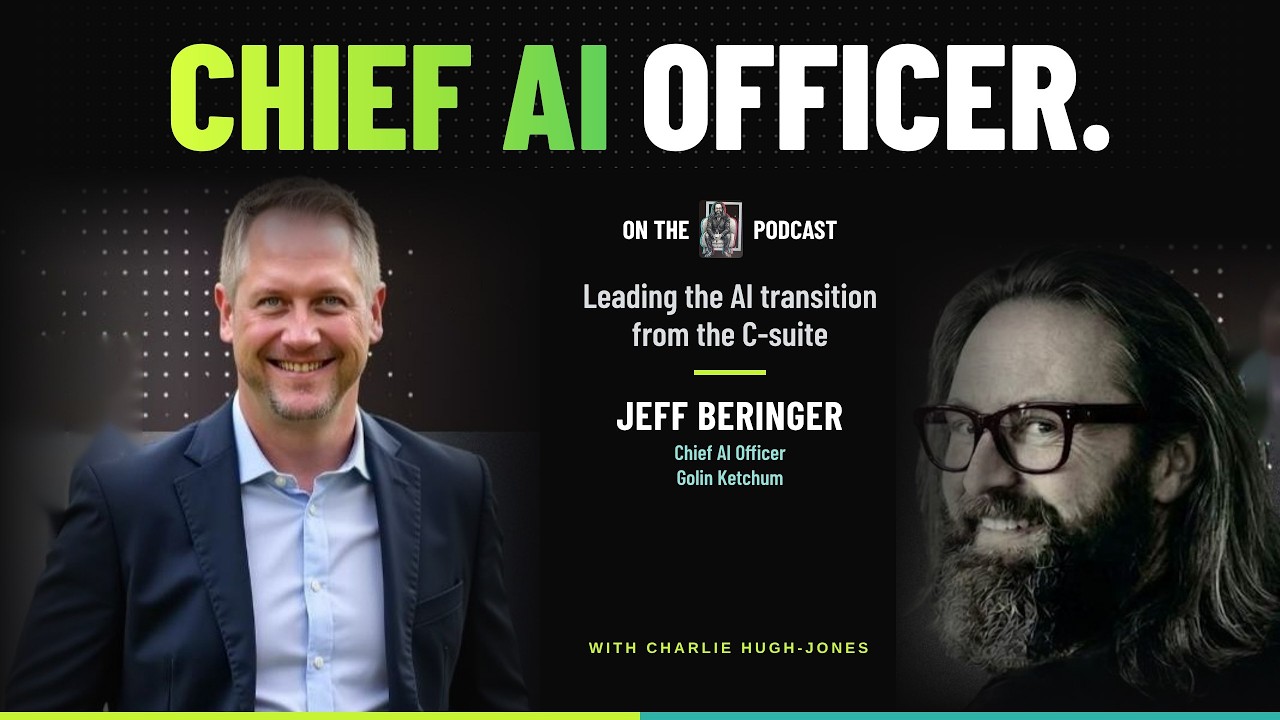
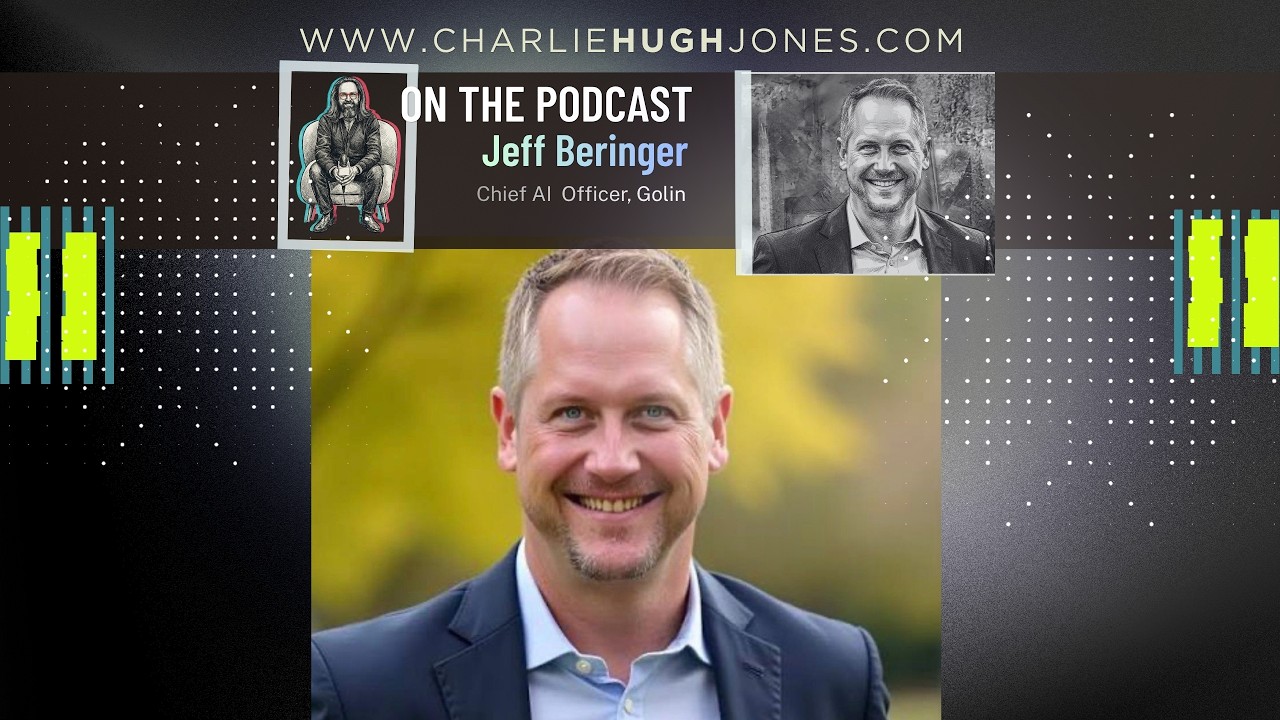
EP01: Intelligence Augmentation: Who Do Leaders Need to Become? Jeff Beringer | Golin Ketchum

Intelligence Augmentation (IA) It’s not just a phrase. It’s the human dimension.