Elevenses with Charlie - Is your to-do list your kryptonite?
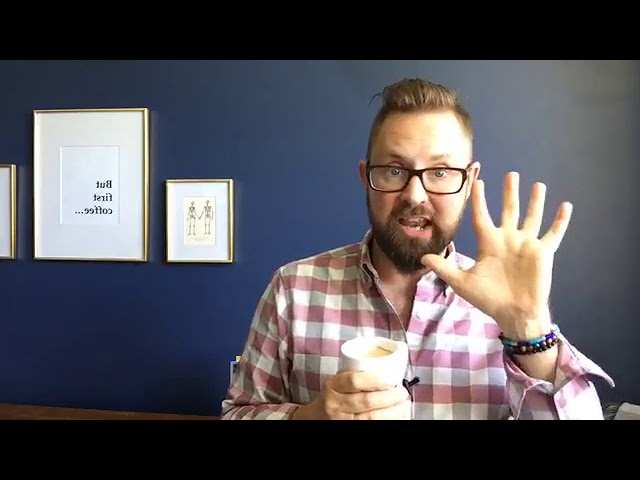
In this 15‑minute Facebook Live episode of “Elevenses with Charlie,” life‑and‑business strategist Charlie Hugh‑Jones explores how traditional to‑do lists can act like “kryptonite,” draining energy and reducing productivity. He argues that the problem isn’t the list itself but the lack of scheduling, timing, and prioritisation. Charlie introduces five concrete principles to turn a list into a productivity engine: (1) schedule every task; (2) work backwards from a fixed end‑time (e.g., leaving work at 5:30 pm); (3) plan the entire week, not just the day; (4) do fewer things but do them well; and (5) protect deep‑focus blocks. He explains why scheduling creates control, reduces cognitive load, and lets people say “no” to lower‑value work. The episode also includes a short, guided 15‑minute reflective exercise – two 3‑minute timed prompts with breathing – to identify activities that boost energy versus those that act as kryptonite. Charlie wraps up with a call‑to‑action, inviting viewers to book a free strategy session, follow his content, and apply the principles to become more purposeful and resilient.
Chapters
I'm Charlie Hugh-Jones, and this is Elevenses with Charlie. How you doing, folks? It's between 11 o'clock and 11:30 this Thursday morning, and as I promised yesterday and on Monday, I'm starting this new series where I'm aiming to get online to do a Facebook Live for you, with you, between 11 and 11:30 each day. It's called Elevenses because in England, One of the breaks that we used to get was at roughly about 11 o'clock. We'd been working from 8 o'clock to 11, and traditionally treats were served— cookies, cakes, you name it— at 11 o'clock. These treats were given, and it was called elevenses, and people knew that that's what was going to happen at 11 o'clock. So for the time being, until we decide to change it or someone tells me it really makes no sense or it's too quirky, This is Elevenses with Charlie. So join me, cup of tea, cup of coffee, get yourself a treat. The idea is that I want to give you some value, something that I've learned, something that I've worked through with some of my clients or, or in a masterclass or private session with people that I can share with you that will help you be, in this series, more productive. And yesterday we were talking— well, Monday we were talking about the power of no. Yesterday we were looking at some strategy around that and saying 1,000 nos to get to the right yes. Today, we're looking a little bit behind that curtain, a little bit more about the why behind a no. How do you create the criteria to help you say that no to get to the right yes? So, you with me on this? That's great. There's going to be some banging in the background. It just turns out today that there is construction going on in the the condominium directly above us. There's lots going on in the building, but usually at the far side. Today it's happening upstairs. There's banging. No, the roof isn't falling down. The sky is not falling, but it may spill into the microphone and hopefully it won't distract you too much. But welcome to 11s with Charlie. I'm really glad you could join me and I do hope you get some great value out of this. So I titled this today, Is your to-do list your kryptonite? Now, for any of you who don't know what kryptonite is, maybe you've come across the cartoon, the comic character Superman. Surely you have. Kryptonite was a substance that leeched all the energy out of him and made him weak. So, one of the things I was talking about with a client yesterday was around things that gave them energy and things that took energy away from them. This got me thinking about— Is your to-do list your kryptonite? Because is that never-ending list of things you put on your to-do list that you think, I must get this done, or here's an order in which I must get it done, is that leeching energy away from you, making you feel weaker, and in turn reducing your productivity? So that's what we're going to answer today. And we're going to give you some strategies later on, right at the back end of this live, probably around minute 12, 13, might be a bit earlier than that, some strategies to help you counteract the potential effect of your to-do list being like kryptonite for you and weakening you rather than giving you a really firm platform, giving you real confidence to go and make those decisions and use the power of no that we've been working on this week to make sure that you get to what matters most. Sound like a plan? Good. So, what is it about to-do lists? Well, to-do lists don't have any power in and of themselves. I'm sure you know this. It's a list of things Maybe you've done some prioritization and you've said this is more important than that, and so you've got a relative idea of the importance of the tasks. But possibly your to-do list doesn't say how long a task is going to take, what the deadline for that task is, the relative amount of margin you need for error around your to-do list. That's where schedule comes in. To-do lists can be kryptonite Scheduling can be the opposite. It can be incredible fuel for you. Having confidence in your schedule, flexibility in your schedule, is something that is going to be really empowering for you and help you be more productive. So I just want to talk about that for a minute. Scheduling allows you to confront the reality of all the tasks. If you look at your week ahead of you and you've got a to-do list and you decide when you're going to fit things into your schedule, you've had to ask the question, how long is this going to take? When does it need to be done by? Rather than just be a line on a list, you've had to ask those questions of the task, and that helps you grasp and begin to get a sense of control on what's on your to-do list. So you schedule it so you get a better picture of what you're going to be able to do. And then as you begin to look at your schedule, you can see what the fixed points are and what the movable points are within your schedule. There's this great TEDx talk by, I can't remember her name. If I do remember it, I'll put it in the notes underneath, which talks about time being fungible. You actually give time to things that you have to do and matter rather than time controlling you. So with that concept in mind, which might be a little bit difficult to grasp, You can manage your schedule. You can't manage time, but you can put things into your schedule with margins. So I challenge a lot of my clients to begin to start their week on a Sunday night or first thing Monday morning to plan what do they want to achieve across the whole week. And you need to take the to-do list that you may have had, and the to-do list is a great reminder to take things out of your brain, which reduces the amount of energy it takes up. That's great, that's a first step, but it's only a A first step to capturing some tasks. Looking at scheduling, you have to be able to determine, like I say, the scale of a task, the relative importance, when you can fit it in your schedule. So there's some other principles that I want to talk to you about to help make your schedule be the opposite of kryptonite. How can it give you energy? How can it release the burden of energy? How can it be the opposite of a to-do list, which can make you feel overwhelmed, can make you feel— Overwhelmed. Frustrated, can sometimes, you know, end up with confusion because which task should I do first? I forgot there's 27 things on my to-do list just for this morning. When do I do it? So start with scheduling. If it's in your schedule, you are going to give some priority to it. And if it's in your schedule, you've already said no to something else that's in that same place. Now let me give you a real good example. If you assume you're going to go home At 5:30. Wow, I mean, that might be super early for some of you. It certainly used to be for me when I was an attorney and I was working in a firm in the City of London. Going home at 5:30? No. Okay, well, let's assume I'm gonna go home at 6:30. Work back from that. What do I have to get done in the day? If I don't have a plan, if I don't put some kind of measure in there, I haven't got a why behind my reasoning to schedule. Yesterday I said I'm going to give you A little bit of a— some tools to determine your why behind the power of your no. And this is it: I'm not going to work past 6:30. Or it's not I'm going to not work past 6:30, I'm going to, you know, go home or be somewhere else for a time and then maybe continue working later on. That's what I did as an attorney. I wanted to spend time with my son Samuel when he was 2 and a half, 3 years old. All my compatriots everybody I was competing with for promotion, you know, stayed as long as they could. But I had a great supervisor called Catherine Ibbotson who showed me that you can be a mega high performer, that you can be selected for the partnership track, that you can deliver for your clients as long as you set firm boundaries. So she modeled for me the power of no because she had a son exactly the same age as me, Sandy, Not me, same age as my son Samuel. And she wanted to spend time with him, to do tea time with him, to do bath time with him, to do bedtime with him, and then continue. So if you mark your schedule, I want to go home at this time, and work backwards from that around your tasks, you can begin to schedule work in. But don't do it just for one day because you need to be able to process across a whole week. So assume you're going home 5:30 or 6:30, whatever it is, and plan your day backwards. Make sure you make a plan for the whole week, because if you don't make a plan for the whole week, things are going to creep up and drop in. One of the recent studies showed that people who were most satisfied at work were people who felt they had control over their time, and scheduling deliberately with a plan is one of the major factors that gives people a sense— it certainly gave me a sense of control over my time. So plan backwards, plan for the whole week. The next bit, when you look at your to-do list, is around doing fewer things. Now, at the moment you think you've got 101 things that you need to do now. When you actually begin to ask the questions of those activities, When do I need it be done by? How, you know, how long is it going to take me to do it? And you begin to put them into a schedule. You've immediately raised your consciousness, raised your degree of attention to all the tasks in front of you. May I have a sip of coffee? Which allows you to process them more effectively, more deliberately. And that will enable you to begin to get a sense of the tasks that not really necessary. Perhaps you can delegate to somebody else. Now that's going to be another live, other training I'm doing for people. But firstly, don't just have a to-do list, schedule things. Then when you schedule work back from a particular fixed point, like wanting to go home at 5:30 or 6:30, work backwards from that. The third thing I wanted to say was make sure that you schedule the whole week, not just per day. So start and get an overview, like a story arc. You need to know where it's going over the week. The fourth thing was do fewer things. What are the things that you have to do, must do? Find a priority around them and do them. The next thing is when you schedule work, don't schedule tons of tasks. This is the last, the fifth thing. Fifth thing, don't schedule lots and lots of things all in rapid fire. Create space to focus deeply, because all the research shows that if you stay on task, if you stay on task and you work deeply, you're more likely to Achieve more. You will have a greater sense of well-being. You will deliver the task quicker than if you break it up into too many bite-sized chunks. So focus on one thing until it's done. Okay? So make that kind of space. We do have times when we naturally have more energy in a day than others. Most of the research seems to suggest that it's morning. It's about 90 minutes to 2 hours after you have woken up. So if you've got a particularly hard task, an onerous task that's going to take a lot of brainpower, the horsepower of your intellect is going to be taxed to get this done, focus on that first and do it. Get it done. Don't wait till later on in the afternoon. Don't wait till meetings have interrupted it. Schedule it in. Make sure the people who are likely to impact your schedule know that you've scheduled that time in and it's protected. I do a lot of work with clients helping them make space for things that are important for them but never— they never get to on their to-do list. And scheduling something in and letting the people who are going to impact your schedule, whether that be a personal assistant, whether it be other colleagues, whether it be your boss, knowing that there is a boundary, there's an edge, there's a no to them interrupting you. Make sure you turn off your email, put your phone on silent, whatever it is, create that space to work deeply. So there you go. There's 5 things to do to move from your to-do list being your kryptonite that releases— sorry, that reduces your energy, that leeches energy from you, makes you feel weak, and all your productivity superpowers have gone, to now being able to use your schedule instead of your to-do list to create space, to create energy and momentum, to protect focus and allow you to get more done in a week. Now, That's all I wanted to say today. I hope that's been of some use to you, but I want to leave you with an exercise. This is something, you know, they were principles that you can choose how you apply them. This is an exercise which will give you one thing just to help you manage what's important from your to-do list. I wrote it down, so I need to refer to my notes just to make sure, because this is a seminar that I was giving recently on productivity, and they were looking at a particular strategy. They wanted me to help People figure out what was important and what wasn't. And I gave them this particular tool. And one of the things that I was trying to show people was, don't do this immediately. Make space for it first. You know, I always said, don't do this exercise today. Schedule 15 minutes. So using that scheduling that I told you about, using your no in order to create space. Do this tomorrow, an upcoming day. Write it in your calendar. Give yourself a 15-minute margin beforehand to work up to it. So So you've got some wiggle room, 15 minutes the other side as well when nothing is scheduled. It's called a margin. Margins are incredibly powerful. We'll talk about those another time unless you've got any questions. And then when that time has arrived in your schedule, just stop. Put everything down, your email, your telephone, your mobile phone. People know you've got space. You've scheduled just this space, 15 minutes to work on this exercise. And just stop and breathe. This is absolutely crucial. This stopping and breathing, it may sound simple, but what it does is it reduces cortisol levels, it creates a sense of calm, it allows your mind to automatically reset and focus. So do it. Just take 8 breaths slowly. I teach my kids a lot when they're being reactive to count to 10. It's the same thing really. You're just using a tool to quiet and calm your mind down so you can focus. Really intensely, and it's, it's really effective. So try it. So take 8 breaths, and then start a timer for 3 minutes to reflect on this one question. And this is the question. You ready for it? What handful of activities are responsible for the disproportionate number of your successes? The times when you feel good, or when you don't care how long it takes to do something? Remember, you're spending 3 minutes doing this. That's all. Your timer Countdown, bang, bang, bang, bang, bang, ping. Okay, when the timer's done, write down a couple of short sentences about what you found out when you asked yourself that question. Now, go ahead and set your timer for another 3 minutes. This whole exercise takes under 15 minutes, like I promised you, but set it for another 3 minutes. Don't start it yet. Do the same thing with your breaths. Take 8 breaths in. And then out. This centers yourself, gets your central nervous system poised for doing the exercises. Fabulous. And then set the timer for 3 minutes and answer this question: what handful of activities absolutely bomb your productivity? You know, what drains your energy and leaves you feeling empty? Empty. It's that kryptonite feeling I was talking about with your to-do list. So spend 3 minutes just thinking about it. Don't write anything down yet. And when your timer pings at the end of that 3 minutes, write down a couple of sentences about what it was. Now, remember I told you to wait to look at this? So don't do it the day I planned, wait for the next day. Look at your schedule the previous day and compare those 2 lists of the things Things that you— made you feel energy, got into a sense of flow. It didn't matter how long it took, you enjoyed doing them. That was the answer to question 1. And question 2 was what bombs your productivity, makes you feel exhausted, reduces your energy, wears you out, can't wait to get over with. Okay. You're looking at the schedule from the previous day. What could you have done differently? How could you have rearranged your schedule? What modifications could you have made to do more of the things that you uncovered and you discovered in answering question 1? And then secondly, looking at your schedule for the previous day, what things could you have reduced, eliminated, moved to a different spot on your schedule? The previous day that was uncovered and discovered by you in answering that second question? You know, it's really interesting. Not only do you now know what's good for you and what gives you energy, so the opposite of your kryptonite, you've also figured out what matters. But then you've also begun to figure out what you could have done differently. So the trick now is to take that tool, that little set of 2 questions and 3 segments of time and go and apply it to the scheduling that I suggested you do right at the beginning. And that's it. So what we've got is 5 things that you need to do to stop your to-do list from being like kryptonite. The first thing is schedule everything. The second thing is assume you're going to go home at 5:30 or 6:30 and you've got a Y for your nose throughout the day. 3, make a plan for the entire week, not just for the day. 4, do fewer things but be really, really good at them. And 5, there's this phrase, do deep work. Focus on one thing. And I suggested that your cognitive load, how well your brain and your intellect works, is maximized 90 minutes to 2 hours after you've woken up. So if you've got a task that you need to start that needs a lot of concentration, try and do it then. first when you're looking at how you schedule. And be rigorous. Use the power of no in your schedule in order to make sure you get to all these tasks. You will feel more productive, you will be more productive, you will feel more confident, and you will carry more energy throughout your week if you do those things. So, the question I posed you at the beginning of this morning's Elevenses with Charlie was, is your to-do list your kryptonite. I've shown you ways that it doesn't have to be. Try them out, let me know how you get on. Put comments below if you disagree or you've got some observations on anything I've said. I know it's super simple and it feels like common sense, and that's because it is. We all function in similar ways. We have different nuances and different contexts, but we do. And there are many, many productivity writers and speakers and Studies that have shown this stuff works. The real trick is actually doing it and putting it into practice, and that's often why people work with a coach or a life and business strategist like me. So if you just joined me for this live, or if you are now joining on the replay, welcome. Thank you for tuning in. I'm Charlie Hugh-Jones. I'm a life and business strategist. I help high-performing individuals and entrepreneurs unlock a better, often a more conscious version of themselves, to be more productive, to feel more purposeful, to enjoy more resilience, and to connect more deeply with those that matter to them. So if you want to get in touch with me, private message me, or head on over to charliehughjones.com. And why not even book a free 30-minute strategy session with me so that you can find out exactly where you are right now? Figure out what the goals are, a particular goal you want to achieve, and learn some steps to be able to get you there. And we can do that just in one call and take some positive action just in that first 30 minutes. And you'll get a sense of what it's like to work with me, and you'll walk away with some value. Head on over to YouTube, youtube.com/CharlieHughJones, and there's some resources there on how to make great decisions on, on all sorts of things. Or stay right here on this Unlocking the Best Version of You Facebook page, because more content is going to be shared daily. That's it from me. I'm going to finish my coffee now. It's Elevenses with Charlie. Thank you for joining me. I look forward to seeing you in the next Facebook Live, or indeed at one of my seminars, at one of my masterclasses, or even if you become a private client of mine. I'd love to see you. So until then, bye for now.
More from Charlie




EP01: Intelligence Augmentation: Who Do Leaders Need to Become? Jeff Beringer | Golin Ketchum

Intelligence Augmentation (IA) It’s not just a phrase. It’s the human dimension.