Charlie Hugh-Jones explains how fear's physical signals—racing heart, adrenaline, heightened awareness—are actually assets, not weaknesses. He offers a four-step framework: recognize the fear, accept it, befriend it, and ask "what might go right?" Apply it to decisions, relationships, and ambitions.
Chapters
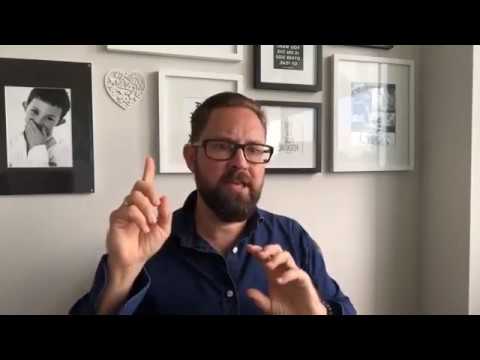
Well, good morning again. Hello, I'm Charlie Hugh-Jones and this is Elevenses with Charlie. About an hour ago, I screwed up big time because I did a whole Facebook Live, nearly 30 minutes of it, only to find out afterwards that I had done something really silly. I had plugged my microphone into the wrong socket and therefore anybody who watched was only seeing me gesticulate and talk and And make a fool of myself, maybe. But I needed to reshoot this. So hopefully if you're on the video now, you will actually hear what I'm going to say, because this is a really— I don't know why I've been thinking about this topic for a while, and this is a really important video that I'm making right now. And I am a little bit nervous. Yes, some people see me speak and see me get on stage or see me at corporate events, or they see me on Facebook Live and I still get nervous, and you're going to find out why in a few minutes, because this Facebook Live, this 11s, is all about fear and why fear can actually be your secret superpower. It may be your secret superpower. So I want to introduce you to somebody first. I met a young man a couple of months back. I was on a flight. I was on a plane, and I often have the most amazing conversations when on a plane. I'm sure you do too. I'd love to hear some of your stories of what's changed in your world because you caught a particular flight, sat next to a certain person, had a certain conversation. Mine was I married Abby, my wife, who I met— that a call just interrupted this Facebook Live. It appears that we're going to have all sorts of disruptions to this That's it. That's it for today. I never thought calls could, but they did. Anyway, have a wonderful flight. I met my wife on a flight. I was that annoying person sitting behind her kicking her seat. Not really, but you can hear the story another time. But this flight, I want to talk to you about the 2 open seats that I had right next to me. Melly and Leon, my youngest 2 kids, were supposed to be flying with me and they couldn't for one reason or another. So on this utterly packed plane between Dublin and Manchester, of all places, There were 2 open seats, and there'd just been an announcement on the tannoy. And you know, you get on a plane and you hear them talking and you've heard it before, and so it kind of barely registers. But they said something about an allergy and they weren't going to be serving nuts on the plane, and please could anyone not open bags. And, and then one of the air stewardesses comes up to me and asks me whether I minded anyone coming to sit in the 2 seats next to me. And this is where I met Brandon. A young boy. 8 or 9 years old, comes in, you know, very tentatively, and you could see he's utterly frightened, comes and sits next to me. He's got a, one of those surgical masks around his face so you can barely see him. He's got a cap on, there's a bit of eyes poking through, and you can see the whites of his eyes really bright. And as he sits down, you can see he's shaking, you know. And I'm wondering, oh, is this a kid who's afraid of flying? Cool, I'll, you know, I'll help put him at ease. I'll do what I usually do, make conversation. But something even deeper than that was going on today that I didn't know about. Brandon's mum came and sat down next to him, and as she put her handbag, her purse, down beside her, it sort of fell open and 2 EpiPens fell out. And she picked them up and said, don't worry, Brandon, I've got these. We're going to be fine. And she grabs hold of his hand, and he clutches it tight, and you can see all the white on his knuckles. This kid is more frightened than I've seen a kid before. I've got 4 children and, you know, I've been through times when they've been scared of things and I've been at other events where I've helped other kids, but Brandon, something was really going on here. And his mum told me that he had an anaphylactic reaction. He was almost fatally allergic to peanuts. He had this allergy. And what had just happened that had scared the living daylights out of this young boy was that someone right next to him in the seat by the window had just opened a bag of peanuts. Now, opening a bag of peanuts for Brandon was not like you or me or someone with a slight intolerance or allergy where their skin's going to break out in hives or they're going to start sneezing or their eyes will run. For Brandon, it almost always meant hospitalization. And being in this metal tube where he couldn't get out, where the air was being recirculated around, so any particles from those packets of nuts would be recirculated and could attack him at any moment. He wore a mask. So Brandon was utterly terrified of his allergy. Brandon and I managed to get talking after a little while. He, he managed to, you know, with a clatter, and soon he managed to get his seatbelt done, he fastened in, and he's grabbing hold of the armrests really tightly and his shoulders are bent forward and his head's down. That kind of protective, you know, scared, closed-in feeling. And I could just sense how distraught this young kid was. You know, I began to make conversation, or try at the very least, tell him that I'd, you know, I've got a boy, sorry, a girl his own age. Melody's the same age as him, boy a little younger. And I wondered, you know, had he seen the latest Marvel movie? I think it was Infinity War, and I wondered whose favourite character it was. And just a chink in his armour just began to open when he started talking about Spider-Man. That that was his favourite Marvel character and he loved the new Spider-Man. And I said, wow, what do you love about Spider-Man? He said, you know, he's got all these superpowers. He's really strong. I said, cool, what kind of superpowers has Spidey got? And got him to describe them. So, Brendan relaxes, you know, maybe 5% from this utter closed down, and we begin to talk about it. And I said to him, this is as we were just taxiing along the apron, I said to him, Brendan, did you know you've got a superpower and it's a secret? And at that moment, kind of, his head lifted up a little bit. He was more curious. Because we'd just been talking about Spider-Man and he's utterly scared and closed down, and I told him, That he had a superpower. And he began to get curious. I said, I reckon I can see you're pretty scared right now. And he goes, yeah, I am. I said, tell me a little bit about what's going on for you. Tell me, how does it feel? And he began to say that, that, that he felt a real tightness in his chest, like something was pushing down, like a really huge weight on his chest, making him breathe more deeply. I just got Just got interrupted again by another telephone call. He was taking deep breaths, and that his heart was beating faster. It felt like it was racing, and da da da da da da da da. Okay, I said. Do you have any energy in your arms? He says, yeah, my hairs kind of stick on end, and they begin to to to make me hyper aware of of the air temperature and everything. And and sometimes I sweat, and and you can hear me. I'm speaking faster, and my mind just goes really really fast. Although I'm just I said, that's scared. I said, but do you know what? I don't think you realize that some of those sensations are exactly what Spider-Man experiences. You know, Spidey's super Spidey sense, when you see it in a movie and all his hairs stand up to make him super aware of what's going on. Well, that's happening to you. And I bet your friends don't know it, but right at this moment— What? Your superpower is showing itself. And Brandon says, okay, what's going on here? I said, okay, let me tell you. Right now, your lungs are expanding to get as much oxygen as possible into you, and your heart's beating faster to be able to push that oxygen around your body to your muscles super, super effectively so they get more oxygen. Oxygen, so they can operate at a higher level. So you know that energy you're feeling, that buzz? That's all your muscles getting ready to go. You know your hair's standing on edge? That is your spider sense, your spidey sense just beginning to figure out what's going on around you, to get you even more aware than you possibly thought you could be of everything that's happening around you, and sensing energy, and sensing noise, and sensing temperature. And you know how your mind's racing? That's because it's beginning to spin up super fast so it can react. And I said, right now, Brandon, you can jump higher, run faster, react quicker, outthink any of your mates at school. And Brandon looks at me utterly amazed. He's, he's, what, really? I said, that's exactly what's going on in your body right now. Some people think that's like a panic attack. Other people know it's like a fearsome warrior about to go into battle. into an arena like Spidey fighting Thanos. He's ready. Everything in his person has just got him ready. So your fear, your being afraid right now, is actually your secret superpower. And with that conversation, amazingly and really gratefully, Brandon began to relax just a little bit more. He was still scared, he still had every reason to to be scared. Don't please get me wrong in this Facebook Live that I'm saying he shouldn't have been scared. No, but he needed to be more aware and more in control of what he wanted rather than be a victim of all those sensations that were assaulting him. And he began to reframe what that was. And I got a wonderful message from his mum a couple of days later when he was back in school. He'd been telling all his friends about how he had this superpower that they didn't have. And I And he'd begun to come out of himself. He'd begun to, to, to stand more on his truth and understand that he might have a peanut allergy that had made him be scared, but actually that had also given him a secret superpower. And that's why I want to talk to you today about fear and why fear could also be your secret superpower. It is certainly mine. Regularly when I get up to speak and I've got a keynote invitation or I'm doing some training somewhere and, and And I get— the first thing I tell people is, yeah, I'm a little bit scared about this, but do you know why I'm scared when I get up to speak? Because I have all these sensations and they're just like yours. My heart beats a little bit faster and, you know, my breathing comes a bit more quickly and I feel energy in my chest and my forearms. It's because 2 things are actually going on. One, that fear, that scaredness, begins to tell me that what I am about to do is important and matters to me. That's the first thing fear does for me. And the second thing it does is it tells me I'm ready. I am ready for the questions, ready to read the room better, ready to sense the energy, ready to connect more deeply, ready to be more vulnerable so people can see that I'm just like them. There's no guru here. This is just— Me figuring some stuff out that I can share that might be helpful. So yeah, I always understand that I have some degree of fear or some scaredness before I speak, even for this Facebook Live, this video that I'm recording right now on fear. I messed up earlier. And often we have a fear of being an imposter, people finding out that we're not as good as we think we are, or, or we don't deserve to be where we are. are, or we didn't deserve that promotion, or a partner's going to find out that we're not as good-looking as they thought we were, or, or whatever it is. Actually, um, our doubt that we have in those moments, like my doubt before I speak— am I good enough for this— actually comes from some of our deepest desires. And that's really important to begin to understand as We explore why fear can be your and is my secret superpower. Because you know what? There's this sentence, this phrase, this bumper sticker that you may have come across that says, the only thing to fear is fear itself. And actually, I really want to challenge that. I don't think that is good for you or for me to believe that. I don't think we should be scared of fear itself. I think we need to become more comfortable with it. I'm going to go through some steps how we can do that in a few minutes, because, because the opposite can also be true. I have a little poster up here, a little picture. You can't see it. It's just that one there which says, everything you want is on the other side of fear. And that is true. That resonates for us because it is true. You know, we are born Fearless. Did you know that? I bet you did. I mean, when you think about kids getting into trouble because they've got no sense of fear yet, that's actually true, because our minds at that developmental phase are designed to be curious, to take in information, to wonder, and to see magic, so that we're attracted to this amazing world that we've been given to experience. And, and the first few years of developmental cognition and everything for kids is all about Input, input, input. I want more. I want to taste. I want to feel. I want to touch. I want to experience. So that they grow. So that their minds develop. But at some point, that curiosity, that magic, that wonder somehow gets knocked out of us. And actually, it happens at quite an early age where we suffer some kind of pain. You know, we put our hands on the stove and touching things, ah, oh, I'm going to get hurt. And we don't keep doing it. We learn to not our hand on the stove and then not touch things because they might hurt us. Or our parents say no to something we want and we begin to learn that, that no, we can't have everything. So not only do we experience physical pain or physical harm, we experience mental and emotional pain or harm. And our mind begins to start checking itself and going, ah, maybe I should have learned something here. Maybe that's not going to work out. And we start asking this question as young people, As kids, okay, what might go wrong here? Now, we spend a lot of time creating a culture that says fear is something that is super negative, and actually I do disagree with that phenomenally. The way we respond to fear is negative. Fear itself is actually potentially your secret superpower. I know I'm saying that a lot because I want to help you reframe this because it had to be for me, and so much of what I do with people, helping them unlock the best version of themselves is getting over themselves so they can step into the unknown, so they can explore something they've not done before, so they can get a perspective on a challenge or a goal or a desire or a dream that allows them to go after it. And it takes managing fear to do that. So that's what this video is all about. So, so why is it that we develop this this, uh, mind tool that begins a cascade of hormones and a physiological response? Well, because your and my mind, it is super amazing. It's really, really impressive. But it is a tool. Just hold that thought. That's really important you get this. Your mind, my mind is a tool, and its primary role is risk management and problem solving. Now risk management means it needs to figure out what the threats are and then begin to plan how to get away from them or avoid them harming us. And that's a super amazing and powerful tool that we need to have. The problem is my mind doesn't know the difference between a saber-toothed tiger, an Instagram post of all my friends at a restaurant that they forgot to invite me to, or my mother-in-law. Apologies, mother-in-law, you are amazing, but It's, it's kind of funny. Our mind doesn't know the difference. And as we've developed, um, uh, this sense of fear and how our minds operate, our fear has become ever so more complex. Not only do we get the primary physical sensations of heaviness, energy in our chest, heart beating faster, sweats for some people, uh, deeper breathing or shallow breathing, whatever it is, and this whole alertness. We also get some of the secondary, sometimes paralysing emotions that come from fear. Guilt, or despair, or shame. They're really, really complex, and unlike some of the primary emotions like anger or elation or things like that, that flower up and then calm down really, really quickly, fear can turn into something lingering that can even haunt us. You know, guilt, I look at it as kind of a mix of fear and joy. Despair is often fear plus sadness. And shame— wow, shame, so debilitating for so many people— shame is fear plus disgust. But what worsens this for a lot of people— I'm just going to explore this for a few minutes, so bear with me. I am a geek when it comes to how we function, and that's what inspires my curiosity to go and explore and find out what's really going on and find tools that help us address it to unlock the best version of ourselves. So if you let me just geek out here on this to help you see why fear often operates. Fear often gets exacerbated, made worse, amplified by anticipation, by our imagination, which again is a phenomenal tool. You see, anxiety is like imagination fueled by fear. What might go wrong? And so anxiety is kind of like this, this projection into the future of the thing we don't want to happen happening. The fear of being exposed, the fear of being rejected, the fear of being abandoned, the fear of making a fool of ourselves, the fear of whatever is it, it is we think is going to happen in the future. We bring all those emotions into the present, and that fear becomes anxiety. So surely there's something we've got to be able to do that can help us better manage that, because our fear isn't negative. Our fear is a tool. Our fear can be our secret superpower, and I want to talk you through how that is. Would that be okay? Next few minutes, we're going to use 4 steps to help you better manage fear and harness Your fear as your secret superpower. I need a drink. Thank you for joining me on this video. It's, it's a topic that's been burning in me for a while, and I talk about it a lot, but I haven't done a, a video on it yet. So hopefully this is helpful. If it is, please leave some comments down below. If you know people who are struggling with fear, or you know there's a dream that they have, or there's something they want to be or something they want to do that they keep getting in their own way and Fear keeps stopping them, then please share with them the message that's in this video, or just share the video itself with them, because I'm sure it would be super helpful. And I'd be really grateful because that's how I begin to fulfill my mission and my purpose in this world right now, which is to inspire and equip people to be the best version of themselves. And harnessing fear, fueling their imagination with hope is One of the primary ways with which I show people how to do that to unlock the best version of themselves. So we've just had a bit of a discussion about what fear is. We're born fearless. We learn to fear. Fear isn't negative itself. Fear actually is feelings and sensations, cascades of hormones that prepare our body to do something. And we often talk about the fight or flight response because that's what our body is getting ready for. Manage this threat, get out of the situation, avoid harm. And often it's the unknown that fuels that for us. But it's always down to interpretation, how we frame it. It's a mental model because all those sensations, you know, the sensation of the hairs standing up on our arms, the tightness or energy in our chest, the deeper breathing, the sweats, the heart beating faster, our mind beginning to spin up. All those things, you can look at them on one hand and say, wow, that sounds like a panic attack. Or you could say, these are the same emotions that are getting me ready to perform. Whether it be somebody on the one hand who's experiencing stage fright and paralysis and isn't going to go on, and somebody who's so wound up and buzzing they're dancing on their tiptoes about to go on stage, they're experiencing the same physical sensations. They've just learned how to reframe what's going on. So let me tell you a few things about what you can do to harness fear as your secret superpower. 4 things. Well, the first thing is to recognize your fear. Your fear is there. We try and shy away from it, stay away from it, begin to not visit that place because fear is uncomfortable and everything that comes with it can be really damaging and paralyzing. So we try and keep it at arm's length, hide it away, but actually Sometimes we find it difficult to recognize that that's what's going on. We don't pause long enough, we just react. So the first thing I want to tell you to be able to do, or show you how, is to recognize your fear. Ask questions in the moment as you begin to sense something, a little trigger. Oh, something's going on here. What does my fear look like? 2, what does my fear feel like? 3, what does my fear sound like? Now, we all experience fear in different ways. I've described some physiological sensations that my nervous system begins to appreciate, but there's other stuff goes on. The way we begin to see fear as a dark force, as a wave, as an energy, as a color. There's all these other things that actually go on in our, in our psychological makeup, and we have to learn to recognize that fear. In the first place. So that's step 1. Step 2 to harnessing your fear as your secret superpower is to accept your fear. I talked about how fear mixed with other things can create these secondary emotions that can be paralysing, but I've also shown you that fear is part of your makeup. Fear is part of who you are. Fear is a tool in your arsenal to manage yourself well, to keep yourself safe, to To make decisions. You know, Tim Ferriss does an amazing— he's talked recently about having, rather than a to-do list, a fear list. And I'm going to tell you why that's super important recently. Fear is becoming more talked about. And as we do that, we've got to figure out how we recognize it, but then too, how we accept it more. Because that's a choice. Accept your fear. That's step 2. And step 3 is to befriend your fear. You know, your fear is one of the things that will be with you the whole of your life. Mm-hmm. And, and some people would talk about fear as if it's their closest friend because it knows the deepest secrets. You know, sometimes we talk about friends that they know us better than we know ourselves. Actually, our fear does. Our fear knows what our desires are. That's where doubt comes from. Our fear knows our true selves. It knows who we want to be and gets triggered in situations where that might be at risk, or there might be a threat to us not achieving that. So, so, you know, fear is something we can befriend. Once we've recognized it, once we've accepted it, we can then begin to understand that it's here To help. Remember I said your mind is a tool? Its primary role is risk management and problem solving. Well, fear is a subset of that, helping us be who we are meant to be on this planet. Now, it doesn't feel like that when you're stuck, when you're paralyzed, when all these things are happening, but it's true, and I'm gonna show you how right now. It's here to help you be who you really are, because those deepest fears, those fears about Will I be rejected? Oh, I don't want to go across the room and talk to that person because they might reject me. That's because you fear rejection. Oh, I don't want to get up on stage and speak because I might make a fool of myself on something that really matters to me. Oh, this really matters to me. You see, when we befriend fear and we begin to understand that it is here to help, we can begin to ask some more powerful questions. And I've got 2 questions to, to help you right now. See, as we begin to befriend fear and we begin to understand it's here to help, we can then ask our fear, what is it you're trying to tell me right now? Yeah, that's a, that's a proper question you can ask. What is it you're trying to tell me? And sometimes we have to distinguish between 2 things that are going on with fear, the ones that are rational, Yes, this is real. This is realistic. This is happening now. I need to do something about it. And the irrational. The rational fear, that's actually something we need to avoid and deal with and address. And the irrational fear, which is just there because, because we've built up some imaginary problem in the future that's gonna happen. You see, 90% of our fears never come true, and yet we spend so much time Ruminating over them, worrying about them in anticipation, having this anxiety about them. Never have I got up on a stage and someone's stood up and said, what the heck are you doing there? You don't know anything. Most of the time when I get up on a stage or I do a video, someone comes back after and says, thank you for sharing that. That was helpful. And you see, my, my entire being is to inspire and equip people. Therefore, when I get up to speak or open my mouth or do a video like this, I'm trying to give something away that I want to help people so badly. And part of my fear is that it won't do that, that anything I share will not be easy to connect with or digest or implementable. And I ask myself this question all the time: how can I help people take action today? Will what I share today make a difference if people are willing to do something? Can I connect with people so they're willing to accept something I say, because it matters to me. So when people— so, so I've never been embarrassed getting on stage. I got embarrassed earlier today doing a Facebook Live with zero sound, so people just saw me doing all the hand gestures and talking away. But ultimately my goal is to help people, so when I talk, it's to do that. So my fear of making a fool of myself has not really manifested itself. I can make a fool of myself in many, many other ways without it being about getting up on stage or talking. publicly. But we have these fears. Is it rational, irrational? The other thing is, is the fear our own, or is it one we've inherited from our parents or somebody else's? I had somebody the other day who was talking about who, who had run their own small business and didn't want to work in a big corporation because they believed they would get lost, or people get lost in big corporations. And this was about a transition in a job and an amazing career opportunity, and somebody going, I don't want to work for a big company because You always get lost in a big company. And I began to help them explore, was that true? Is it realistic? Is it rational or irrational? And they thought it was rational. Okay, cool. Is it your fear or is it somebody else's? I said, when did you last join a big corporation and get lost? And she went, hmm, never. And that realization that actually she'd picked this up from reading from another friend. I said, has this been your experience? Is this everybody's experience in a large corporation? And she went, Well, now that I think of it, no, it isn't really. Her irrational thought, or her rational thought, but somebody else's fear was prohibiting her making a decision to join this company that was going to explode her career and her ability to serve huge numbers of people. And she was stuck on this one thing: you get lost in big corporations. And I said, that doesn't have to be true, does it? And she said, no. So as you befriend fear, you learn what's it trying to tell you. You figure out whether it's rational or irrational, whether it's yours or someone else's, you can begin to deal with it. And then the 4th step to harnessing your fear as your secret superpower is to reframe it. Just like I taught right at the beginning for Brandon, when he began to see that all these physical sensations were just his superpower beginning to show itself in a situation where he could be powerful and not be the victim. Where he was ready for action rather than him shrinking into himself. And like me understanding when I speak, on the one hand it tells me that what I'm about to speak about and what I'm doing is significant and important, matters to me and everybody there. It also tells me I'm ready. I have the intellectual flexibility. I have the readiness to do what I'm going to do right now. We have to reframe our fear. So where could you do that today? Because Now that we've talked about fear and we've talked about all the things that it comes from, we've looked at how we don't have fear as we're born and we begin to— we ask these questions, what might go wrong? The challenge I want to put to you today, now knowing all this stuff, is when you look at that thing that you are scared of, that decision you are shying away from, that relationship you don't want to start, that job you might not want to take, That business you're not ready to step into that is your dream to give you and your family freedom and serve those people where you want to make a difference that you're shying away from. What is it? Sorry, the question I'm trying to get to is, is what might go right? How do you get into that space where your imagination is fueled? With hope, because actually most of those fears never manifest themselves. So you can start asking the question, what might go right? And practicing and rehearsing that time after time. So 1, recognize your fear. 2, accept your fear. 3, befriend your fear. 4, reframe your fear. What might go right? Because it's just as likely as what might go wrong. In fact, it may be even more likely as you begin to open yourself up. So that's what I wanted to talk about today. I hope it's been helpful for you and you've got something out of this video. You began to realize that maybe, just maybe, your fear could be your secret superpower. If you want to talk about this with me, please head on— please either private message me or leave a comment below or visit the website charliehughjones.com. I'd love to hear from you. If this has been helpful, please leave a comment below. And if you think somebody you know who's struggling with fear or anxiety might be a little bit inspired and a little bit equipped to do something because they— because of some of the things I've said in this video today, then please share this with them. I really appreciate you spending the time watching this video and listening to me. This is me fulfilling my mission. This is me doing what I am called to do right now, which is to inspire and equip you to be the best version of you. So again, thank you. Appreciate your time. I'm Charlie Hugh-Jones. This is Elevenses with Charlie, and I hope you have a phenomenal rest of day. I'm going to leave it with this. You've got some new information. You have perhaps learned something or recognized something or, or had something you already knew or suspected turned into a very conscious front-of-mind, top-of-mind thought right now. Do something about it. The question I challenge you with right now is, so what are you going to do in the next 24, 48, 72 hours with this new information you've got to make your world be different? Because fear can be your secret sauce. superpower. Thanks for watching. I'm Charlie Hugh-Jones. Until next time, bye for now. Bye for now.
More from Charlie



EP01: Intelligence Augmentation: Who Do Leaders Need to Become? Jeff Beringer | Golin Ketchum

Intelligence Augmentation (IA) It’s not just a phrase. It’s the human dimension.