10 Books That Changed My Life This Year
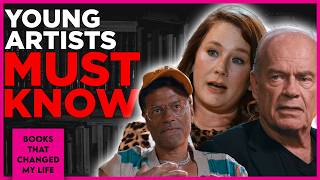
Chris Collins counts down his top 10 books of the year, each one paired with a guest who explains how it changed them. The picks span genre and theme, touching on identity, purpose, art, and social issues.
Chapters
We love books.
We all know that books are magical. You've had some sort of book have an impact on your life in a positive way. And when I started the Syndicate X Library, that was the spirit of it. The community and the sharing of knowledge, the learning and constantly improving and the show that we do in here, Books that Changed My Life, gives us a little insight into how people came into contact with the book. And it transformed their life in some way for the better. It dramatically flipped their trajectory in a way that is almost magical. It's that kind of time of year that we can reflect on what's happened in 2025. And so I've put together a list of of the top 10 books from books that changed my life this year that I think you're going to want to add to your reading list. And hopefully the books will have the same impact or influence on you that they did on the guests that were so gracious to come on here and share their stories. So the top 10 from this year's books that changed my life. Let's get started. Kicking off the list at number 10, I have Dune by Frank Herbert. This book needs no introduction. When it came out in 1965, it changed the landscape of sci fi forever. It's got politics, religion, ecology, culture, history and philosophy, all set in one of the most exciting and detailed fictional worlds ever created. Eric Brene brought this on the show and he spoke to the importance of Dune in his life. It made me feel as though I had a deeper purpose as I went through this metamorphosis from young man, 16 year old Paul Atreides, to whatever I'm supposed to be. It made me feel as though there is much that I don't understand yet. But I know that there's greatness in me and I need to just utilize the gifts that I know are real within me. Dune by Frank Herbert. Number nine, the Hitchhiker's Guide to the Galaxy by Douglas Adams. You know, this book Originally was a BBC radio show, but in 1979 Adams published it as a book and it was an instant hit. And it's kind of easy to understand why. The book is hilarious. It's sci fi, it's absurd, absurd. And it says some seriously powerful stuff about politics, bureaucracy and the meaning of life. And I spoke to Mercedes Bryce Morgan, the horror film director, about this one and how it changed her life. She made an interesting comment about how important absurdity is in art. Check this out.
I find everything absurd. I think that's probably why I said I laugh at Horror movies where I think people pretend, like, when you become an adult, you know what you're doing, and then you become an adult and you realize that no one knows what they're doing at all in every sector of life, because everyone's doing it for the first time. And you can do something, you can learn a little bit more, but then you'll have a new experience that you don't know. And we love to have answers because it makes us feel very comfortable, but we're just grabbing at what we think is maybe the best answer based on our experience of the world.
Number Eight is the Sum of Our Days by Isabel Alonde. So Temby Locke came in with this book. Our conversation has stuck with me since. So inspirational as a wife, as a mother, and just as an incredible human being. You can't help but be inspired and moved by her story and how she navigated different situations. It's beautiful.
The Sum of Our Days made me believe in that. I had a story, possibly to tell about a profound loss, and it gave me. It cracked open what memoir could look like, because it's a letter, it's a recollection, it's memory, it's in person, in moment scenes. It's this beautiful quilt that is so rich, and I think I loved the sum of all of its parts.
So, number eight, the Sum of Our Days by Isabel Allende. Number seven. We wish to inform you that tomorrow we will be killed with our families by Filip Gorevich. It's about the genocide in Rwanda. And it's really hard to believe that, but millions of people were killed because of their genetics and their beliefs, and they were killed by neighbors and by family members. And if you want to understand how easy it is to get a bunch of people to dehumanize, torture, and kill others, the recipe is right here in this book. And it's not something that we talk about because it's almost too hard to put your head around, and it's not easy to process or understand. But in this recipe is terrible leadership, leadership that divides people and promotes hate. And in our country, we have that leadership on both sides of the aisle right now that it's more important for them to win and be right than it is to talk about what we all have in common, which is we're humans. Brian Crano, the director, picked this as the book that changed his life.
It made me believe that we're maybe not the best we could be. It made me believe there's a lot of work we can do to be Better personally, individually, and certainly in groups. Certainly in groups. That violence is really the fundamental way that humans communicate.
It is so relevant to today in the world that we. We live in. And if I was to describe it, I would say we got to stop around. And if you don't think that what happened in Rwanda can happen here in our country, I highly suggest you read this book. It will change your perspective. Number six is the autobiography by Alice B. Tous by Gertrude Stein. So Melissa Manchester brought this in as the book that changed her life, and I understand exactly why. It's incredible. First of all, it's really not an autobiography about Alice. It's an autobiography about Gertrude Stein. There's a little flip in there, little deception, which makes it more interesting and entertaining.
The book really was a North Star for me because it showed me what. What kind of life is possible as an artist. And in that she was in a moment where everybody who was about to create modern art was unknown. And she and her brother started collecting the unknown Picasso and the unknown Matisse and buying their paintings for maybe $20, which was a fortune for the artists who were also poor. And everybody was hearing about each other for the first time. I mean, it was just. It was a roadmap of the kind of life I wanted to have.
You know, Ernest Hemingway said he learned everything he knows from Gertrude Stein, and she lived in a time in the, you know, early 1900s where she was hanging out with Matisse, Picasso, Duchamp. I mean, it just was a renaissance of art and freedom and fun and, you know, all kinds of stuff. I don't know what was more interesting, Melissa Manchester story or this book, but they're both incredible. You know, one of the things that I love about doing books that changed my life is I'm introduced to books that I would have never heard of otherwise. Oftentimes books that have sold millions of copies. And there's just so many good books out there, it's hard to, you know, know them all. And number five is one of those books. It's Convenience Store Woman by Sayaka Murata. This is an easy read. You could, you know, take it in over a cup of coffee. And it really speaks to the fact that a lot of times in life we feel awkward and like we don't fit in. We don't know where we belong. And the hero of the book, she works in a convenience store. And, you know, she's good at that. It's her world. She knows that world. But there's a lot of pressure from the outside to Get a different job to get married. And it, you know, it just kind of fun insight into the awkwardness of life and belonging and meaning that, you know, really resonates. And I'm very grateful that Mike Drucker picked this as his book that changed his life.
As much as I have no similar experience to a Japanese woman working in a convenience store, it was one of the first times I've seen a main character react. Certain ways I've reacted, you know, throughout the book, she's almost confused by people being worried about her. You know, it's not like, yeah, yeah, yeah, I know I'm supposed to do this thing. It's more like. But I don't understand why this is important to. And that's something I've felt throughout my life when people are like, you know, like, I have no problem with kids, but when someone's like, why don't you have kids? It's crazy. I'm like, I just. I don't have that in me. And so I don't understand how to even respond to you, really, because it's not like a. It's not like an off the. It's not like a fun response, like, I just like partying. It's more like I do not have the mechanics in me to know and explain that to you. And to see a story about someone who's under that pressure and sticks to her guns in a way that everyone else would find stupid or insane or self defeating meant a lot to me because I saw in that character someone who was like, no, I'm going to be myself, even if it's the dumbest thing anyone thinks I could possibly do.
Something I'm always looking out for are books that transcend the genre, that don't follow the typical format and structure in a way that's beautiful and kind of transcends. You know, it becomes a piece of art in and of itself that crosses dimensions, really, in a way. And then you also have this thing in life where a lot of times we feel like something is not complete or is undone. It needs to be finished in our lifetime. And that brings us to number four, which is Karen by Kelsey Grammer. And this is about Kelsey's sister that was raped and murdered when he was young. And literally, he, later on in life got a message that he needed to tell her a story. And the way that he writes it and the way that the story is told is not only brave and courageous, but it's a work. It's a work of art that would inspire any of Us. It's beautiful. Kind of beyond my ability to put it into words. And my conversation with Kelsey about this book was very inspirational to me and informative because he's so smart and so well spoken and he's a beautiful human being that, you know, is.
Is.
Is very, very rare. He also inscribed this for me. And it, you know, it means a lot that he came here to the library, but he said, chris, what a surprise and an inspiration to meet you again. With love, Kelsey Grammer. We. We had a. Incredible conversation.
I enjoyed many days, but there was always something holding me back. There is a book Where Angels Fear To Tread by E.M. forster, one of my favorite writers. He describes the voice of an English tenor unable to soar as an Italian singer might. The English voice is lovely, but never fully given over to emotion, as if there is a frog in the throat holding it back. A bit of phlegm blocking it, choking it just a bit. It's like that all my life since Karen died.
Number three is the Bluest Eyes by Toni Morrison. You know, Toni Morrison eventually won the Nobel Prize in literature, but this was her first book. It was published in 1970, and as far as first books go, this might be one of the best ever. It tells the story about Pecola Breedlove, a young black girl who is convinced by the world that she's horribly ugly, which is a terrible thing. But by the end of the book, Pecola is convinced that she actually has blue eyes. I got to talk to Cece Rice. This was the book that changed her life, and she really summed up what Toni Morrison is saying about beauty.
It allowed me to see myself as the main character, even if I wasn't beautiful, even if I wasn't smart, even if I couldn't speak up for myself that my imagination was worthy enough to be explored and that I could spend time there and that that would be something worth having even if just for myself. And that was big for somebody like me at that time who didn't really know what I was going to become. But I knew I had a lot of imagination and I knew that my interior world was something special.
You know, most of us struggle with self esteem, image, confidence. This book's a good one for any normal human walking this earth. Sometimes the guest that we have on books to change my life is more interesting than the book. And in this case, I would say she was my favorite guest of the year. She was so fun, so charismatic and interesting and smart. She knew more about the books in my library than I knew about them. Nuts. The book that she picked to change her life was Cloud Atlas by David Mitchell. This book takes place over hundreds of years, moves time back and forth, takes a bunch of stories, flips them, throws them, drops and picks them up. Incredible. But not as incredible as my conversation with E.A. hanks. But number two, Cloud Atlas.
The reason I chose this book is that it gave me a workable vocabulary to describe what I consider evil, which is the continued dismissal of human dignity and joy to prop up the great fallacy that is the natural order. I think all evil, on some level, uses this fantasy of the natural order, the way things should be. That is the great excuse for every. Every crime that's committed on an ungrateful grand scale. And that it is so revolutionary to think that I might be one person trying to do good in the world. I'm just one drop. I'm just one person trying to do good. But what is any ocean but a multitude of drops?
The biggest reason to read this book is because E.A. hanks recommended it. So take it from her. So In a year 2025, we will put out over 52 episodes of books that changed my life. It was hard to come up with the top nine, but it was really easy to come up with number one because this book stands on its own. I will say that it's another book that never would have come into my world without Nyasha Hatendi introducing us to it. And the number one book is Invisible man by Ralph Ellison, a book published in the 1950s. The title, the Invisible man, gives you a little insight into civil rights and the. The way that Ellison weaves a story together and the perspective is. Is something everybody should experience, especially the lovers of books. And reading.
It was the first time I felt, while reading a book, that I was seen in a way that spoke to who I was at the time and who I could become. And it gave me a clear path in a way and an understanding that happened at that time and in that moment. And had anything else been different, I don't think it would have had the same resonance that it did. But I'm so grateful that I did have that moment because it really changed my life.
I will read you a little excerpt from the prologue. And that is invisibility, to which I refer occurs because of a peculiar disposition of the eyes of those with whom I came in contact. A matter of the construction of their inner eyes, those eyes with which they look through their physical eyes upon reality. It's about perspective in the way we see things. And the Invisible man, number one Ralph Ellison's Invisible Man. So 2025 has been a blast. Thank you so much for hanging out with us. Those are the top 10, from my perspective, of books that changed people's lives. Remember that if you have more than two books, you have your own personal library. Please post in the comments what your top books were for this year. I love reading that and getting introduced to books I might not have heard of or just somebody confirming my low self esteem that you loved. A book I loved also is always really, really fun too. But I'll see you very soon. Hope you have a Happy holidays and 2026 is just around the corner.







