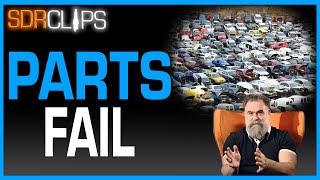
Short YouTube clip by Chris Collins (Service Driver Revolution) describing characteristics of effective and ineffective parts managers and how those behaviors cost money. Key red flags in this segment: parts managers who avoid engagement, long gaps between inventories (example: "it's been three years"), visible disorganization, and technicians complaining about parts. Collins also describes a healthy parts–service manager relationship (mutual accountability, service protecting parts margin) and closes with CTAs to subscribe, call 8333 Ask SDR, and visit offers.chriscollinsinc.com.
Chapters
The very first thing that you notice about a good parts manager is they will be excited to see you. And then they will want to know what you know. So what are you seeing out there? What are people doing? They're, they're curious. They want, they want to hear different ideas. They want to hear how other people are doing pay plans, how other people are, you know, doing their, their personnel count, how many runners versus counter, how they're doing the inventory, perpetual inventory, that sort of thing. And then you can tell right away, the parts managers that aren't good.
They avoid you, don't they? They avoid you. But also when you're going through and you're like, when's the last time we did an inventory? Oh, it's been three years. Like, you can just tell by the way that the place looks, how disorganized it is. Stacks of stuff.
And then when you interview the techs, the techs kind of know, like.
Yeah, parts will be their number one concern. Yeah. And it's, yeah, it's always the speed of the leader, the speed of the team. So the parts manager usually attracts people like themselves that wants to avoid.
You know, people. And so then you just have a bunch of people avoiding people.
Yeah, that's great. I love it. So when you think about the mix of the parts manager and the service manager, what do you think are some keys to, like, the healthy relationship between the two?
I think it goes both ways. Right. Like a good parts managers in the morning shift meeting. A good service manager is worried about the parts manager's special parts or special order parts, the SOPs. Right.
A good service manager is helping protect the margin in parts. Yeah. Not, not eroding it, not attacking it and not using it as an excuse. A lot of times, you know, we encourage parts managers to come to our master class when you sign up for coaching, but.
They often don't. But service managers will go back and help increase the margin in the parts department from what they learn. Because all ships rise. Right. Parts can be very healthy and service can be healthy. Thanks so much for watching this clip of Service Driver Revolution. We're uploading new stuff every day, so make sure you subscribe and click the bell icon so you don't miss out. If you have a question you'd like us to answer on the show, call 8333 Ask SDR and we'll answer your question on the show. That's 8333 Ask SDR. For special deals on our books and training, head over to offers.chriscollinsinc.com that's offers.chriscollinsInc.com I'm Chris Collins, and I'll see you in the next video.