5 Easy Ways For Your Service Managers To Build Customer Service Skills (Service Drive Revolution)
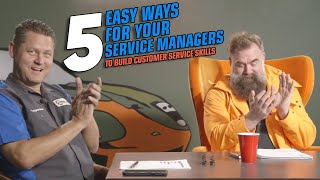
Chris Collins and Jeremy O'Neill share five ways service managers can build customer service skills: building genuine connection, role-playing customer interactions, prioritizing relationships over being right, observing front-line work, and hiring the right people.
Chapters
Foreign.
Welcome everybody to service drive revolution where we are starting a revolution in our industry from the inside of. No longer is service forgotten about the guys in the back that nobody talks to. Service is now sexy and the most important department in your whole business. And so we are going from service advisors that are order takers to service advisors that are customer collectors. We're going from service managers who come in every day, grab the cat by the tail, get tossed around, thrown everywhere to service managers that are in control of their departments, know how to get results, are leaders of men and women and are coaching their kids basketball teams or soccer teams or football teams. Having a quality of life, being a better spouse, being a better friend because you're not so stressed out and you actually have some time to have a hobby maybe. Absolutely have a hobby.
There is life outside of the service drive. Right.
Spouses are thanking us everywhere for taking beat up service managers that are all stressed out and making them happy, giving them peace. Work life balance.
To some degree, work life balance is very important. Absolutely.
So welcome to the big show, you guys. I just got back from a coaching meeting. This is my trusty sidekick here, Jeremy o', Neill, the one and only. He brought props today that we're going to talk about.
Absolutely.
We have a couple things we're going to go over today. We're going to talk about the comp winners for last month. I know it's a little bit late, but we're going to go over those and we're going to talk about a subject that is near and dear and very relevant to our industry right now. Five easy ways for your service managers to build customer service skills. Five easy ways for your service managers to build customer service skills. But first, let's talk about your trip.
You went to SEMA and Daytona International Speedway.
Daytona. You did a class or workshop there?
Yeah, we did a class on all day Saturday. Class. The Four Pillars of Service Advisor Success had about 200 shops in attendance at the speedway. So it was an eventful week. Got to take my 12 year old son Landon with me. First time he's traveled with me on business. And if you haven't done that, I encourage you to take your kids with you on a business trip because you really, you know, flush out their character and.
What do you mean flush out their character?
Well, you know, if they just like to watch YouTube all the time or anything else or if they're actually going to help you work, carry the bags or.
Hey dad, did you make him work?
Of course I made him work.
What'd you make him do.
I made him drive the rental car.
He's too young to drive the rental car.
Well, not in an abandoned parking lot. I mean, this is not.
Oh, he showed me a picture. He did his first donut.
Oh, it was so much fun. Absolutely. Yes, yes.
And he's 12.
He's 12? Yeah.
Yeah. See, I wasn't doing my first donut when I was 12, but.
Well, you know, those of us on.
The high desert, parenting, I guess.
Well, it's just opportunities, right? We drive it.
How do we go from we make him work to we're letting him drive like a crazy man?
Well, it is work. You see, he's got his career path laid out for him. He wants.
You can't even say that with a straight face. It is for all of you watching this and not listening. You can't even see that with a straight face.
All right, let me try that again. It is work. You see, he has his career path laid out. He wants to be a race car driver. So it's. We're practicing early. It's totally fine and legal.
How did the advisor training go?
Advisor training? Training went really well. If you've never been to Daytona International Speedway, I highly recommend that you go. It's a fabulous setting. We actually rented out some suites there with the Automotive Service association of Florida. They did their inaugural event and it was a huge success. They had a lot of shops. Over 200 registrations came in and it was a great event. Technical training, management training was just an awesome day. And then on Sunday, we got to tour the track as well. So it's really neat scap from the.
Pictures you showed me. Maybe we can put some of those up.
Absolutely.
Put this up on YouTube.
And don't forget about Sema. Sema was awesome.
Yeah. How do you see anything cool?
There's always. I mean, SEMA is just amazing. There's. For me, it's the networking. I love to network with a lot of the industry professionals there and also a lot of shop owners and service advisors as well. And did a role play with Carm Capriotto on Thursday morning at 7am so that's coming up. So it's going to tie into what we're talking about.
Carm Capriano.
You don't know who Carm Capriotto is?
I do not.
Well, he's in the. He does a podcast called Remarkable Results Radio in the aftermarket world. So for independent repair shops, Remarkable results. Remarkable results.
How does he quantify that?
Should we call him and ask him?
Have you got Remarkable results. From him.
I always get remarkable results.
But from him, from.
Well, yeah, listen. His tagline is listen to learn one thing. So.
So it's kind of vague. It's kind of like remarkable results if you want to go find it yourself.
If you do want to. But the information is there. Right.
So why don't we change the name of this podcast to like better looking Service Managers or something? No, because this is Better Looking Advisors.
This has a deeper purpose. Right. Surface Drive Revolution. Right. Which topics today? There's. There's a lot of great things.
How was, how was the podcast like? What'd you guys talk about?
Oh, we just. Honestly, we just ripped right into three role plays. It was really.
Role plays.
Yeah.
You dressed up like a teacher and he was the student.
French maid would be more like it. But no service skill building, you understand?
Oh, so he's. He's putting real content on there.
He is, yes, absolutely.
Okay.
Yeah.
So what'd you guys role play? What skills?
I did a. I was a service advisor and I took an incoming lead on a Honda timing belt. Quote customer calling for price on a Honda timing belt. And you did.
Somebody was like, ring, ring. And you're like, hello, this is Jeremy.
Well, I don't answer the phone that way.
What are you wearing? I'm wearing a timing belt.
It's a great day at Freedom Auto Repair. This is Jeremy. How can I help you?
What are you wearing?
Shoes?
No, a timing belt. Thought we were role playing.
Sorry, I'm a little slow today, guys. Forgive me. A timing belt.
Did you see any cool cars there?
There's a ton of cool cars there. What the favorite thing, if you've never been to sema, is to go and look at the Ford. Has a paddock with the. It's open. It's for drifting. They have the trucks out there with a jump. So they do about three or four times a day.
This drifting thing is really catching on.
It is. It's. It's fun. It's exciting.
I'm gonna have to go watch.
Absolutely. We're going to put. We are gonna have to put you in a car and let you drive.
No, no, I just want to watch. Okay.
Down.
Just voyeurism.
It's definitely worth it.
You like to. Well, obviously you're teaching a kid to do it.
Yes.
Does he want to be a drifter?
He wants to be a drifter and free ride. Mountain bike rider. Downhill.
That's pretty good.
Off road. Race truck driver.
I think drifting is less dangerous than the downhill mountain bike isn't it.
Yeah, the downhill mountain biking thing is absolutely fun.
I've had a couple friends that spend a month in the hospital doing that.
Yeah, it's, it's very terrifying.
But whatever.
Shoulder, something snap your spine too. So it's pretty, pretty easy there. So. Yeah, seema. There's a ton of cars. If you've never been, it's definitely worth the trip out to Vegas.
Yeah, but did you see like televisions and rims or like any crazy modifications? Like you hit a button and it transforms into a cigar bar?
I just, what I saw is how technology is just pushing the envelope in the auto industry. And if you go back three or four years ago to where we're at today, it's, it's, it's changing and the shift is happening and it's going to happen with consumers as well. So we're seeing the digital sales process, we're seeing AI, we're seeing all these advanced driver assist systems. Everything's coming together to shift this industry in a massive way.
Oh, that's at sema.
Oh, it's all there. Oh yeah.
I thought SEMA was just modified cars.
Well, you have SEMA and then you have Apex right next. Oh, so there's two shows kind of within one. And what is it does all over at sema? Apex is gonna. Can I, can we pause? Can I look it up real quick?
No, just if we don't know, we don't know Apex. But I know that that's like where mock and BG and like tools and stuff like that go.
Yeah, Apex is the aftermarket show of sema. Basically. It's.
It's tools.
Yes, it's tools. It's everything aftermarket.
It's the suppliers.
I believe it's put on by the Autocare association. So.
And what, what is it?
Aac, Apex?
Apex, aap. Apex.
Yes, Apex.
We. Okay, that's fun. I should.
So you're going to drift?
No, not at SEO.
You're going to drive.
I want to drift. Really?
You don't. You just want to watch?
Yeah, I'm not, I'm not. I don't need that. You need that.
Why do I need that?
Cuz you have like an empty thing in your soul that you're trying to fill constantly with that sort of stuff. With adrenaline. You need adrenaline. Like why don't they.
Just because people like adrenaline doesn't mean they have an empty spot in their soul.
It's a proven fact that people that are chasing something like that, that's dangerous and crazy are trying to fulfill something.
Not just the need for speed, just to go.
Yeah, that's fulfilling something.
Yeah. But it doesn't mean you have an empty spot in your soul.
Yeah. It means that you have a hard time just sitting with yourself quietly.
Well, I could do that, but that's boring as hell. Yeah.
You have a hard time sitting with yourself quietly.
I do not have a hard time sitting with myself quietly. I can do it right now.
Yeah, that. That makes for a great show. That's what. And most people are listening. They're not watching. So they wouldn't be able to see.
Why you were so insightful on that side of the.
No. A lot of people compare me to, you know, Jesus.
Okay.
No, I don't know. I just don't. I don't like. I don't like that stuff really that much. I'm not, I'm not a.
Well, I appreciate. I appreciate watching those drifting guys, like the guys that like, can park, parallel park without parallel parking, Right? Like, they're going 70 miles an hour, they hit the E brake and all of a sudden they're in a parking.
Spot just like that.
Yeah. Like, I. I think that's amazing, but it's not. You know, that takes a lot of practice. Actually, you know what it is? It isn't all. All joking aside and whatever. What it is, is like, I get obsessed with things. So, like, if I take on a hobby, like, I don't like to lose and so I get obsessed with it. I don't really have time for that.
Okay.
And so I try really hard to control what things. Like, for example, poker. Like, I've played poker. I've. I don't even know a lot about poker. And I win just about every time I play poker. And a lot of people say, like, you should go play poker, like, you know, Internet and stuff. But I would just get obsessed with it. And then I don't have time. I don't have time for the stuff that the other stuff I'm doing. Like working.
Correct.
Right.
The revolution.
Yeah, the revolution. I'm trying to start a revolution. So that's why, like, I'd end up in Vegas and then I wouldn't sleep and I'd be tired all the time because I'd be up all night playing poker. I would lose and then I'd want to win, and then I would watch videos and hire tutors and hiring coach crazy. Like, for a while I was trying to get really good at craps and I literally was going to put a like full size craps table in my warehouse. Balanced with a stage. So I was flat, so I could hire somebody and just practice. And they pushed me the dice back because, you know, the form. And then I just caught myself, and I'm like, forget it. And I stopped playing craps.
The better return on your investment of time elsewhere. Correct.
I don't know. I've won a lot of money at craps. Yeah.
I'm. I'm not good at craps. I'm not good at poker either, so. I don't play poker, so. That empty spot, my soul I spend.
You're really not good at it?
No, I. I'm horrible at poker.
Why?
I just. You don't care, probably that.
Have you tried to win at poker?
Not really.
No.
No.
I mean, yeah.
Then it's probably because you haven't really taken it seriously.
Anything you wanted to get good at.
Well, you could. Right? But I have. I have enough.
You'd rather drift?
I'd rather drift and go fast on a bike downhill. It's good because the soul is fulfilled when you're doing eight miles an hour on a mountain bike downhill.
While you were at.
Daytona.
Yes.
Where is Daytona?
It's in.
Florida. It's on the east coast of Florida. We were.
Both were in Florida.
We were both in Florida at the same time, probably. We flew into Orlando.
You're a little bit further away, right?
Yeah. Or north.
Wait, I think I've been to Daytona then.
Yeah. Okay. Well, while you were in Daytona, I was in Miami. We had our. Our east coast coaching meeting.
How did that go?
So for the first time, instead of doing a hotel, because, you know, when we have these coaching meetings, you. We usually would get a hotel. We'd rent their conference room. You pay like $40 a head for lunch.
Yep.
That's basically a bologna sandwich. That's late. It's like 45 minutes late.
18 for a cup of coffee.
Yeah.
Yep.
Like 500 for a gallon of coffee or whatever. That's terrible, too. That tastes like 711 coffee, basically. And so I was like last time when we did it in Dallas, and, like, the conference room was a mess. Like, nothing worked out. I was so frustrated. We had our little recap meeting after with my. With the coaches, you know? Right. And I was like, man, what if. What if we. What if we thought. Rethought this whole thing and instead of using a hotel, we rented a big house, like a big mansion. And we all stayed in the house. We get it by a hotel. So the coaching group can stay at a hotel, but they can Uber over to the House. Instead of doing the, you know, hotel food or their catering, we can hire in a private chef. And I bet all of it would be cheaper.
That's awesome.
And so we tried it, and I don't know that it was cheaper. It might have been break even or. Or about the same, but the experience was way better. So we had a private chef. Everybody was in the house. They all, you know, came the first day at nine and the second morning at eight. It was amazing. Private chef cooked for everybody. It felt a lot more intimate than a hotel. It was weird because everybody's sitting around on couches and in chairs and, like, it had a huge, like, grand room where everybody was. Was in this house. And the.
We were talking about it after. We kind of need to change our content a little bit because we were doing content maybe that was more suited for the hotel where you're standing in front of the room and everybody's lined up like a classroom.
Right.
And this was more like communal.
Okay.
And so I think more interactive conversations. It felt like it fed to that. It was. It was interesting.
Well, does that go to the principle of if you want to master a skill, teach it? So was it more where you guys were having kind of open dialogue and open conversation versus one person in front of the room leading?
Yeah, that's how it felt. Yeah.
Interesting.
I know, is this felt more communal.
As a service advisor or service manager put in that role. I think I would take a lot more out of it if it was, you know, more interactive. I mean, face it, a lot of people daydream, you know, I don't. Because I can't sit quiet with myself for a few minutes. I just have that gap I have to fill. So I'm always doing something, but there are people that, you know, they. They can't stay focused. So if you're talking, they're multitasking, doing other things. Sounds like you're on something there.
Yeah, no, I don't. So now I don't know how we do it, because we want to have the next one in Dallas. But the houses in Dallas are kind of in the suburbs, and they're not by hotels.
We could call Jerry Jones.
What would we call him?
All right. We might be able to borrow his Cowboys fan. Am I a Cowboys fan?
America's Team.
I'm not even going to answer that. I mean, I don't want to, like, polarize half of the audience here. So we're trying to get viewership, right?
They don't. They don't care.
Yes, sure they do.
There's more cowboy fans than probably anything.
True. What are we talking about today?
First of all, we need to talk about the comp from last month. I'm sorry, everybody, that this is so late, but to explain to anybody that's new to the program or just remind you if you're not in our coaching group, what this is is we have software where the service advisors are benchmarked against each other in five or six categories, depending on the group they're in. And then the managers are graded on their average advisor's performance in the comp. And then everybody in the comp has an alias. They have a nickname or an alter ego. And so every month we have winners in different categories. This means these are the best advisors in customer pay, labor, sales, total dollars, parts and labor, customer satisfaction in selling, wild cards. Which wild cards? Tests or alignments and the maintenance items and sometimes tires, things like that. It means that they are.
The best in effective labor rate. I'm trying to remember what the other categories are, Something like that. But they are the highest performers in those. Every category in the comp is weighted equally, and there's a ton of advisors in the comp. So this isn't an easy thing to win as an advisor or a manager. It's actually really, really hard and a big deal. So I would love to talk about last month's winners. So in the American comp, the top manager, Jeremy, was Bread and butter.
Bread and butter. Now, what's funny is.
Bread and butter was at the coaching meeting and he is married to a manager in the comp. Just so happens she is running another store. That's his competition.
And it was fun because when she got there, I was like, wow, you let him win. And she was like. She was a little tweaked that he had beat her, which is kind of fun. But I guess maybe the. The comp could affect marriages.
Yeah, absolutely could.
Second place is Mauricio. Good job, Mauricio. Second place in the American comp. Now, the advisors in the American comp, first place is old guy. Let's give old guy hands.
Second place is Carlos bows to me.
Third place, the closer. Good job.
Fourth place is Uncle Rich. Good job, Uncle Rich. And fifth place is Dingers 15. Good job, you guys.
In the Japanese comp, the top place manager is chief Grady. Good job, chief Grady. And second place is Levi Johnson. Good job, Levi.
And then the advisors for the Japanese comp, first place is lucky Luciano.
And second place is Boost Life 29.
That sounds like a drift drift car driver handle.
And Then third place is Tone Loke. Fourth place is Foster. And fifth place place is Thorny. Good job, you guys. Top advisors in the Japanese comp. And then highline comp top manager, AKA the monster in Illinois again. Good job. He rock the monster top advisors in the high line comp is. Wow. Mike. Good job, Mike.
Mike is from Virginia, from checkered Florida Flag. Good job, man.
Awesome.
You. You beat Mo finally.
And then second place is Rover dog. In third place is Mo. Mo Money.
Usually Mo wins that.
So he got beat twice. Sorry, Mo. Yeah, point that out.
But come on, Mo. What's going on, Mo? And then in import, highline top manager again is Monster. Good job, Monster.
And then the top advisor, Amish gangster. Good job, Mitchell. Second place pierogi pusher. In third place, Big Mike. Good job, you guys. There's a lot of them Illinois in that from. Even from different dealerships too. But crazy. It's crazy that this one dealership downtown has a lot of mafia influence in their nicknames. What do you think that's about?
Mafia? And then the Canada comp top manager is Maverick. Good job, Maverick. Maverick, an elite member in our elite group and always an assassin. First place advisor, Michelin man. Good job, Michelin man. And second place, Wolfman. Good job, you guys. And then in Asian zing top manager is Jeff. Good job, Jeff. Jeff's, I think, a new winner. Great job. And then first place advisor is Josh. Good job, Josh. And then second place is P. P. Good job. In the Asian zoom. So good job, all you guys.
Excellent job, guys.
Hard work. And we're. We're super, super proud of you for doing that.
Absolutely.
And then the topic we had today was five easy ways for your service managers to build customer service skills.
We have some thoughts on this, don't we?
We do. I love the five easy ways. Let's face it, service managers and the revolution is all about making their life easier. Look, we don't want to spend all day long, you know, putting effort into making this happen. So if it's easy sounds like a process. We can possibly.
Got a little Canadian twang a little.
Bit going on there. Absolutely. Yeah. So let's talk.
Do they say process in North Dakota?
They kind of say process parasites, something like that. Kind of half and half maybe.
I don't think that works.
Your favorite one here is number four, right?
Yeah, no, it's not my favorite one.
Oh, why not?
They're all equally weighted. I love them all.
These aren't your kids, Jeremy.
Come on. Let's start with number one.
Number one. Okay, so five easy ways for service managers to build customer service skills. This is how do you build a culture of customer service in your department? Right. And so the first one is pet the dog. You got to teach everybody to pet the dog, from the cashiers to the advisors, even to the techs. And it's an easy thing to do. The pet the dog video is up on YouTube. You can watch it. It's free. Anybody can watch it. I have people from all kinds of industries tell me that they use that video with their employees to talk to them about how to really connect with people. And, you know, that's where customer service starts, is by genuinely caring about the people that you're, that you're helping. I think a lot of times we think too much about selling customers and not understanding that the selling part and service is easy, Right. It's, it's the connection that we have with the customer that's important. If we really have our customers best interest at heart, they. They have to replace their brake pads. They have to maintain it, right?
Yes.
So it isn't really selling. It's just being a friend and making sure that they come to us more than anything else. So understanding that connecting on a deeper level and really getting to know customers in the context of what they care about, not what we care about, that's the most important thing. So that's number one.
What is. I think the other important part here is to create a business and a culture that is going to deliver that experience. Experience. And the biggest thing here is creating that trust, right? Yeah. And having all about trust all the way from your top service advisor to even a newbie service advisor, all the way to the cashier to make sure that they're petting the dog every step of the way and continuing that trust within the organization so the service manager doesn't have to do as much work or worry about where the car is in the transaction. It's, it's, it's on autopilot. It happens.
And then number two, it seems to be a theme with you.
Role play. Role play. I'm wearing a timing belt right now. What are you wearing?
Dirty. Dirty chair.
So here's, here's what's interesting.
What does your wife think about all this role playing you do everywhere? Was your wife with you in Daytona?
No, she was not.
Was your wife with you at sema?
No, she was not.
So she, she didn't see the role playing sema?
No. But she did you tell her? Well, no, she understands that the more.
How many guys were Going to strip clubs and doing all that at sema.
No, we don't do that.
No, no.
That's like. Like you with adrenaline sports. It's a waste of your time. Strip clubs for me are a waste of my time, money. Just don't do it. I've been married 21 years.
Plan to be a role play with some weird guy with a podcast.
I will. Absolutely. Yes.
Okay.
Yes. Well. And I have permission for my wife to role play because she understands the more that I role play, the better my skills get. So it's about skill building. Right. Saying. Right.
So a couple role plays that maybe we could suggest. One is just having a morning shift meeting with your advisors and role playing, petting the dog. Those basic skills.
Well, I think that's important for the service manager to really show and display what's important about petting the dog for the team, because every single person is going to have their own personality and spin on it.
But.
But what is the drive and the main focus of the business in the dealership? That's where we want to go. And that's where you set the. Set the stage with the team meeting. That's great.
And then one game we like to play with the advisors is the smile game. So Mario came up with this. One of our coaches and what we do is we watch the advisors with the customers, and if they can get the customer laughing and smiling at the customer car, we give them some sort of raffle ticket or five bucks, some sort of spiff. But they have to get the customer smiling and laughing at the car. And so we call it the smile game.
Excellent.
Before they sit them down or bring them in or whatever. And that's a fun couple hours, you know, in the morning to do with the advisors because it kind of sets a tone where, you know, it's contagious. Like if other customers are there and they see other customers having fun, they see that the environment is fun and that people want to be there. It's contagious, right?
It is. Absolutely.
Just as much as if people look miserable and they don't want to be there, that's contagious. And it makes people uncomfortable and they can't wait to get out of there. So, you know, role playing, that sort of thing. Also role playing with anybody in customer service. Anybody that's answering the phone, if you can record the phone calls and play them back if you have that ability. Didn't she play me funny phone call once?
I did, yeah.
What was that?
Funny phone call. Customer calling for a price on it.
Was obviously nobody had been role playing.
Never. Right. What's interesting right now is what you're talking about are the. When you're looking at building that trust and the circle of life within the customer circle.
Jeremy, if you're listening to this, Jeremy's drawing a circle on the desk.
Drawing a circle on the desk, everybody. So many people, when they hear the term role playing, they're going to go towards sales skills. Like, like, let's practice the sales objection. Right. But what Chris is talking about, I hope you guys understand this, if you do enough of the right things and you build trust and you focus on helping the customer, your sales objections magically melt away. You have to deal with them, right? Yeah, absolutely.
Well, I mean, a lot of times wouldn't you say that sales objections are the customer saying, I don't trust you?
Oh, absolutely, yeah. They're the easiest way for a customer to get out of the conversation and leave.
Yeah.
Because they don't want to do business with you. Absolutely.
No, that's a good, good point. I totally agree. What other kind of role play can they do? You can role play with the technicians too.
You can tell me more about that. What would you role play with the technician?
Well, like, you know, when we do instant inspection, we have the technicians inspect the cars with the customers there.
Okay.
You, if you have the technology, we're sending the customers videos. You can role play those videos with technicians where they're inspecting the cars on video. I think a lot of times we just take that all for granted. But how they look, how their stall looks, how messy it is, all that stuff matters. So playing some of those.
Yep. Practice makes perfect there. Absolutely. So, yeah, listening back to phone calls. Absolutely. What about making sure customers don't do the walk of shame? You know, they.
Oh, yeah. So the active delivery.
Active delivery, Absolutely. Absolutely, yes. Role play. You should role play every aspect of the business there. Even the after the sale, follow up, whatever you're doing there, whether it's a phone call or you're sending out text messages, make sure that everything is on point and that you're actually practicing it. Practice makes perfect.
That's good. So, yeah, there's a lot of aspects to role play and the other thing.
Too, the biggest return on investment a service manager is going to get on building customer service skills is going to be coaching and leaning his team team and in the role playing. And if you need help with that, we've got a great product for that with our coaching programs.
Good point.
Absolutely.
I thought you'd like that number three, I think that this one might be.
One of the most important. In fact, I was talking to somebody about this just a couple days ago because I think the key to good customer service starts with one thing, and that's stuff. Stop wanting to be right.
That is huge.
A lot of times when a customer issue falls on our desk, it's because an advisor wanted to be right. They didn't want to win.
Regardless, whenever you have a customer issue, it doesn't matter if you are 100% right. If the customer perceives that something was not right, you've got to fix the customer. You've got to fix the relationship first, and you got to put the relationship first. So, yeah, I agree. You can't. You have to stop drawing the. Stop putting a line here. And alienating yourself from your customers and wanting to be right all the time is not. Not going to win.
No, I. So I had a conversation with the. With the manager the other day, and it was like his average ticket was like 800, right. And customers were coming in on average every like, eight months. Like, a little more than. A little less than twice a year. Right. So you see a customer almost twice a year every, what, 14 months. So every 14 months, you're getting $1600 from the customer.
Right.
And you want to be right about $100?
No, no. Right. But that was the conversation. I'm like, you just never. You never want to be right. Just let it go. Like, it's. And also just think, too, about the time and the stress and all that. Like, one thing is, if you're trying to be right with the customer and you're trying to convince them that you're right, first of all, at the end of the day, they're gonna go away. They're not gonna come back most of the time. Second of all, you're gonna be super frustrated. And so the best thing to do is just not. Not even try to be right. Just listen, apologize, and then fix it. That's it. There's no reason to be right whatsoever. And in any situation.
Absolutely. We. I had a situation this week with a customer on that, and she. Instead of coming back to us, she took her car somewhere else. And then that other shop inevitably told her that we screwed up by not doing something, and totally not true. What? You know, what they had claimed that we didn't do?
What did they claim you hadn't done?
We changed the power steering pump, and they claimed we didn't flush the system. You know, which. I mean, it's. It is what it is. You know, it's if you have an issue in the vehicle. And my concern was this. Why didn't you give us a chance to make this right for you? Well, she had her reasons, but I felt myself bristle and you know when that happens, right? Like, and I could tell, I was like, okay, well, no, I'm right. Yeah, absolutely. And then I made a comment to her, and she goes, oh, so you're firing me as a customer? And you never want to hear that, right? I mean, yeah. I mean, all of us in the industry, we want to fire customers every single day, especially the bottom 20. Right. Let's just fire everybody and get more of the top 20. Right. But at the same time, there's fallout damage from that. If I had said, yes, I'm firing you can't come to my shop ever again, what could she have done? If I don't satisfy her right there and make her feel that she was heard and understood and that we fixed the problem, where is she going to turn to voice her frustration with our shop online?
Yeah.
The worst place you could do is.
Know, go on Google.
I don't want a one star review out there. So I had to take my personal ego, set it aside, and be like, look, forget who's right, wrong, or indifferent. Let me help her and get the situation resolved. So I simply asked, I said, what would you like to see happen here? And she said, I just want an apology that you guys didn't do the job right. Well, okay, if that's how you feel, I'm really sorry that you're in this situation, you know? And that was enough for her. So just asking sometimes helps in not having to fix it, which so many men love to do, right? Fixing things, it's sometimes what we do. But not wanting to be right and just helping the customer out.
That'S a big one.
Painful lessons we learned in business.
I think that that one applies to a lot of things.
It does, absolutely.
The next one, and your favorite one.
Take off seat belt.
Take off the seat belt.
And what do you mean by that?
I mean that if service managers want to build a culture of customer service skills, you got to get out of your office, you got to take off the seat belt, get out of your chair and go out and wander around. You got to pick up the phone and call some customers. You got to be out there, talk to the shuttle drivers. Whenever I come into a service department to fix it, it's odd how the cashiers and the shuttle drivers and the people on the front lines Know more about what's going on. They know more about how we're disappointing customers than the manager does because they're on the front lines. You're not going to learn anything unless you get out there and get on the front lines and talk to some customers. Randomly walk up to customers and say, hey, how's it going? You know, and you know when you eat like in a high end restaurant and the manager comes around, how is everything? Right?
Yeah, absolutely.
Do that. Be like a mater d, like walk around, get a, get, get a sense of how people are being taken care of, what the mood is, listen to how your advisors are talking, listen how the phones are being answered, all of that stuff.
So what percentage of the day would you say that a service manager should take the seat belt off and go out? Are there a couple different times during the day that you find you get the most impact for the time investment?
Whenever your peak time is. Right.
Rush hour, so 9am because you can.
See if your system systems are breaking down.
Absolutely. I think the mornings are key. Absolutely. And then also a couple hours at least. Well, you know what it's like, right? So when I was at it, you.
Know what it's like.
I had no idea we were gonna get here.
This is a special day, everybody. This is awesome.
You know, it's like 10 o', clock. You turn around to the competing advice. I shouldn't say competing, but your fellow advisors on the floor and they're gone. Right. So there's these patterns that advisors fall into as well, which is sometimes just they get their cars in and they're gone. They go do what they want to do. So taking the seatbelt off and seeing what your team is doing is absolutely key for sure.
And then the last one, number five of the five easy ways for your service manager to build customer service skills. The culture and the skills in your department is learn to hire.
Most of the highest paid CEOs on this planet spend over 80% of their time doing what?
Hiring.
Recruiting. Recruiting talent. If you hire the right people for the right position, they will be self managed, they'll be self driven and they will get you the results that you want. If you have the wrong hire in that position, there isn't anything you can do to crack the whip or push, push them. Look, if you feel like you're having to push your team, you might have the wrong people. And one of the things I like to do in some of the classes that I teach, especially when it comes to hiring and team management, is I ask somebody to Write down the one person that they know doesn't fit on their team. And then what they don't know is the next question is, who do you need to fire on the team? And then the next question is, when would Monday be a good day to let that person go? So we just kind of set it up and we push people, you know, outside of their comfort zone. Because if you have a vacancy, you're gonna have to bring in somebody good. So I agree. Learning to hire is key, and that's a skill, you know. How have you learned to hire over your career?
Well, okay, so it depends on the position. Right?
Right.
Because, like, if you're hiring for support, which would be like cashiers, shuttle drivers, porters, that sort of thing, most of the time, the best way to hire them is in a group interview.
Okay.
And we, we show you how to do a group interview in depth on our, on our training platform. But a group interview basically is where you have all of them show up at like 10 o' clock in the morning, right? You have a sign in sheet.
Okay.
You know, who's late, who's on time? And then you, you bring them all to a conference room. You're like, hey, we're doing a group interview. And then you have a couple questions that you would ask. My favorite questions in a group interview setting is. I just start with like an easy one. Like, what, what's the last thing you posted on Facebook?
Oh, okay.
Just because it's, it's a, it's an icebreaker. And then the second question I like to ask, and granted, some of the people here at our company have other favorite questions from the list of questions that we have that we give you. My favorite second question is, who's your, who's your favorite boss you ever worked for and why?
Oh, nice.
Because I'm looking for people that say, like, oh, a boss that pushed me, not one that left me alone. So the. And why kind of gives you an insight to somebody who likes to be pushed. But the thing about a group interview that you start to notice is you notice personalities when you have, you know, 8, 10, 12 people in a room, around a table, you see the people that clam up and aren't comfortable in a group setting. And then you just see the people that shine. And if you, if you discipline yourself to only bring back for an actual interview, the people that really, really shine, which is usually only one or two. So the one or two that really, really shine in the interview, bring them back for a real interview. You'll start to get people that are, you know, they're comfortable being in under pressure situations, are comfortable with customers, that. That sort of thing. And they usually have a better personality. So for those positions I try to hire for personality.
Oh, absolutely.
Because you're not going to make people happy.
Well, no. And you, you know, one of the things you talked about in the, in the role playing is the game of smiling. Right. Getting your customer to laugh, getting your customer to smile. That's a. Well, I shouldn't say it's a skill. That's an innate talent that people have and it's really hard to train that. One of the hardest things to train, whether it's customer service skills or service advisors, is the ability to be likable and to build trust. And those people in those positions need to have. Have that built.
Yeah. And you know, a good question when you bring them back to interview them is.
You know, how have you used your sense of humor, personality to get out of a tough customer situation.
Nice.
Or to deal with an unhappy customer or to solve a customer's problem or something like that. And if they can't think of their go to and their personality or whatever.
Yeah.
They, they can do to really, you know, lighten the moment. They might not be suited for that, but you got to get good at interviewing and asking questions that really give you an insight into their behaviors. You want specific examples of how they've dealt with difficult customer issues, how they've used their personality or their skill set to, you know, exceed a customer's expectations.
So out of the. So these are five easy ways for your service manager to build customer service skills. Hiring the right team. So would you. If you were working with a new client right now, one of the things would you have them go through and analyze their current staff and then spend a certain percentage of their time finding the right people?
Yeah, I mean the one. So the one thing that we have there too is so on the advisor side we have the comp. Right.
Right.
So you can see your bottom. If your bottom advisors. Bottom bottom out of a thousand advisors.
Right.
Then that you know, the Jack. We teach the Jack Welch system where you. That 20% constantly has to, you know, be moved. And if you always move the bottom 20%, what you'll see after a couple years is your old top is the new bottom. So if everybody, you know, if the bottom was the advisors were writing 50,000 in parts and labor sales and the top was 100,000, now your bottom will be 100 and your top will be like 175 because it just moves up.
It's constantly moving and improving. Absolutely. Yeah.
It's talent. Like you got to look at it kind of like building a football, you know, sports team. Like you can't beat talent. The best advisors get followed by the best techs. The best techs know the best advisors. It all goes hand in hand. It does that rich get richer kind of a thing, right?
Absolutely. So learn to hire. That is key. Absolutely.
So just to recap, number one was pet the dog. Number two was role play, but not in the way that Jeremy role plays like in a, in a business type thing. Not dressing up like a man, not wearing a tiny, not playing teacher.
And thanks for pointing that out. Absolutely.
Number three is stop wanting to be right and start wanting to win. Number four is take off the seat belt, get out of your office, wander around, see what's going on, listen. Listen to some phone calls, listen to some conversations. Randomly walk up to customers, scare the hell out of them and be like, how's it going today?
And then number five is learn to hire. So that is the five easy ways for your service managers to build customer service skills. Pretty fun.
Absolutely.
That was, that was good stuff. So anything in closing, we have online training.
We do have online training. We're working on a big project right now.
Jeremy just recorded like 50. How many videos, Kosh? 55 videos or something.
45. I thought he just did 45 in one day.
That was in a two day period.
In a two day period.
Yeah. We.
So that's advisor training for food. Four independent shops coming out. Then we're going to do shop owner training. What are we going to call the shop owner 1? Millionaire.
Millionaire shop owner.
Millionaire shop.
Yes, absolutely is coming. Also.
It'S interesting I, the feedback I've gotten from advisor fix and the just my little, my little piece of the world there. There's a big demand for online training. I've gotten more since the first episode. I've gotten more pings on, you know, what do we have for on demand? And I, I think a lot of it in the independent world is, I'm just going to say a number. 50% of the advisors that are in an independent repair shop, the owner of the manager is not sure they want to keep the advisor or if they're a good fit. And so then they turn to training. Right. To see if the person will make the leap. But the challenge with a lot of things that are out there is it's the, the price point to send somebody across the country to go into a Class, they don't really want to invest that money. So I think there's a big demand for on demand training and with the technology, with the things that we have here, it's definitely engaging and no, I.
So you know, the, the independent guys in our regular coaching, we're going to move over to your thing and they're excited. I was, I was talking to a couple of them last week in Miami and that's going to be fun because, you know, our stuff is more dealer based so it's going to be specific to them.
Yeah. And it crosses over and one of the guys, Tom Ham, he has a shop up in Michigan, but he lives in Florida, so he's an absentee owner. He's done a fabulous job with.
People are stealing from him.
No, they're not.
He's can't watch his shop.
He's got cameras everywhere.
That doesn't do anything. You're gonna watch in real time. Everything.
However his. The point to my story was I, I'm not trying to be right. I'm just.
What's his name?
Tom Ham.
Tom, they're stealing from you.
No, they're not.
Anyways, I did about a year worth of work with his advisor Greg and then he did some other training as well. And it, it works really well. And I think the online training, there's a huge demand for people want it and you know, we need to.
Oh, your online training is great. Like great. Like I learned stuff from it too. Like. No, it's really good.
The revolutions beginning.
Yeah, no, it is. We're making some good content. It's fun.
Absolutely.
We're having some fun. It's fun feeding off of you too.
What's that? It's that it's the, the emptiness of my soul is. That's what you're feeling? We're bringing you over to the.
That really bothered me, didn't it?
No, it didn't. Because I know my soul.
You want to talk about it?
I don't know.
Come on, tell us.
What.
When did you want to get you first start feeling the empty emptiness? Well, at what age did you feel the emptiness?
Well, it depends on you.
And then where in your body was it when you felt it?
It depends on your beliefs of, you know, whether it's past life regression or multiple lives or how long your soul's been around. But I'm a very old soul. I've been, you know, in this universe and I've had many lives. So as far as.
Let's just talk about this life.
Let's.
When was the first time you felt the emptiness?
Probably when I Woke up at 4 and I was on the street with.
How old were you?
Four years old.
Four years old?
Yeah.
And so since you were four, you've been carrying around the sack of potatoes on your back.
An emptiness that you can't fill. Where did you feel it when you were four? Do you remember? What part of your body can you feel the sensation now?
Just right in the center.
Right in your ch. That's right. Oh, that's deep.
Yes.
That's in your heart, your lungs, everything. It's all there. So you were four?
Yeah.
What happened when you were four? Do you want to put your feet up?
No, I don't.
Do you want a pillow?
I'm good.
What happened when you're four?
Honestly, I don't know. I just chose that number.
Oh, you're not making it up? Yes, I was serious. I'm trying to fix.
You have an emptiness in my soul. It's fine. People are different. Right? You know, the. The true adrenaline junkies who, like, jump off of buildings, they don't have a link to the fear. Their brain does not pick up fear, doesn't recognize fear at all. And that's more of a biological thing than a psychological thing.
Yeah. So. I don't know. You think it's fear?
Yeah.
See, for me, I. I don't believe. I don't believe that it's fear for me. I believe that it's rational. The. Does the risk outweigh the benefit?
Well, that's because you're very smart and you're calculating.
Okay.
But I don't think it's fear.
Well, let me ask you this. Would you go outside, up to that 100 story building, throw a parachute on a base jump.
No. For nothing. What. What is the benefit?
Right. So there's that. That's really.
Risk versus the benefit of the experience isn't enough.
But now let's talk about fear, though. When you're standing at the top of that building, you're looking over, what does your body feel?
I have a parachute on.
Yes.
Well, if I fell, I have a parachute. That's what I would feel. I'm just doing the math, okay? If I didn't have a parachute, I would get back.
I. I think we. We could try this. We could do another service drive revolution.
Have you ever seen those YouTube kids that, like, fall off the Grand Canyon and all that, trying to get selfies and videos and stuff? And if any of those. What do they call those guys that do the. The wingsuit guys? Yeah, the wingsuits. What is that called?
I think it's called wingsuiting.
How many of those dudes have died? Almost all of them.
Yes.
And so what's the experience of that is worth dying? Please explain to me how that two minutes in the air is worth dying. You gotta get up early in the morning, hike up a mountain, pack all that stuff. Yes. And then you jump and you die.
But there's a certain percentage of people on the planet that would never do that because they recognize fear and they're like, no, I'm not going to do that. So a lot of the extreme athletes don't have the recognition of fear. They just don't feel it in their body. And it's just you may have part of that because if you don't have a fear of heights, you know, you don't get that tingling sensation. I do. I. When I'm up high, like, oh, I'm back. And even if I had a parachute, I still feel the fear. Very, very much so. Then that, that's different though than what we were talking about earlier, which is my soul. Right. And the, the emptiness in my soul. Alleged, or I don't know if I'd call it alleged, but.
No, but doesn't you. You don't think that somebody who is doing something that risky just for the experience isn't trying to compensate for something somewhere else? There's an out of balance somewhere.
I don't think there's an out of balance. I think to some people, there's living your life to its fullest. And whether it's playing soccer or playing football or baseball or organized sports or extreme, you know, doing an extreme sport. There are some people that look at life and say, I'm not going to take a corporate job, I'm not going to live a boring life. I'm going to live every day to its fullest and go out and do things. And that's just part of what they do. And there's a part of my personality that is that way. Like one of my best days ever in my life, I remember was a Tuesday morning. It was about 10 o' clock in the morning. I had my dog with me and I was racing speedway motorcycles at the time. And I went out to San Jacinto to my uncle's practice track and I ripped off a couple laughs. And I was sitting in there having a ice cold drink.
Drink.
And this is back in the day. No, ice cold.
Like a beer?
No, like a energy drink. But this is before Red Bull came Out like, this is like in 93. It was like a long time ago. Yeah. Cup of ice water. There we go. How's that? And I looked around. I'm like, everybody else is working except for me, and I'm doing something that I want to do. And so that was. That's part of it is that drive to do things that are extraordinary. And I'm so happy. I have a trust fund to fund those things for me.
And if you don't get that joke, his trust fund is his customer database.
Absolutely.
His rich uncle.
Yes.
Is that what you meant?
That is what I meant.
Okay. I. I think that people listening get both of our points, but I think that you could be extreme in sports that aren't dangerous versus things that could cost you your life or a little bit different.
I. I can agree with that.
Right. So especially now that you have kids. You need to be responsible, Jeremy.
Well, Chris, I am responsible. Why do you think I wear the proper attire when I do this stuff? Right. No, you gotta have the proper.
Is that your dirt bike?
This is my mountain biking helmet.
So everybody that is listening and not watching Jeremy is putting on a Seattle Seahawks uniform or his dirt biking uniform.
Now we're ready. Right, Troy Lee, we're ready to go.
So is that a Troy Lee helmet or a fox helmet?
This is a fox helmet. Yeah.
And it's bright pink and fluorescent green.
Yeah. You can see a picture on. On the website. Right. But now we're ready to go. So you take the proper precautions. And then at the end, there's nothing better than high fiving at the end of a run. And you had a good run. That's it.
Cool. Well, thanks, everybody for tuning in, and we will see you again next time on Service Driving Revolution.
I was. I was talking to a couple of them last week in. In Miami. And that's gonna be fun because, you know, our stuff is more dealer based, so it's gonna be specific to them. Yeah.
And it crosses. Crosses over. And one of the guys, Tom Ham, he has a shop up in Michigan, but he lives in Florida, so he's an absentee owner. He's done a fabulous job with.
People are stealing from him.
No, they're not. He's.
You can't watch a shop.
He's got cameras everywhere.
That doesn't do anything. You're gonna watch in real time. Everything.
However, his. The point to my story was I'm not trying to be right. I'm just.
What's his name?
Tom Ham.
Tom, they're stealing from you.
No, they're not.
Anyways, I did about a year worth of work with his advisor, Greg, and then he did some other training as well. And it works really well. And I think the online training, there's a huge demand for. People want it and, you know, we need to.
Online training is great. Like, great. Like, I learned stuff from it too. Like. No, it's really good.
The revolutions beginning.
Yeah, no, it is. We're making some good content. It's fun.
Absolutely.
We're having some fun. It's fun feeding off of you too.
What's that? It's that. It's the. The emptiness of my soul. Is that's what you're feeling? We're bringing you over to the.
That really bothered you, didn't it?
No, it didn't. Because I know my soul.
Do you want to talk about it?
I don't.
No. Come on, tell us. What. When did you. When did you first start feeling the empty emptiness? Well, what age did you feel the emptiness?
Well, it depends on you.
And then where in your body was it was you felt it?
It depends on your beliefs of, you know, whether it's past life regression or multiple lives or how long your soul's been around. But I'm a very old soul. I've been, you know, in this universe and I've had many lives. So as far as.
Let's just talk about this life. Let's not deflect.
When was the first time you felt the emptiness?
Probably when I Woke up at 4 and I was on the street with.
How old were you?
Four years old.
Four years old?
Yeah.
And so since you were four, you've been carrying around the sack of potatoes on your back. An emptiness that you can't fill. Where did you feel it when you were 40?
Remember?
What part of your body can you feel the sensation now?
There's right in the center. Right.
Right in your ch. That's right. Oh, that's deep.
Yes.
That's in your heart, your lungs, everything. It's all there. So you were four?
Yeah.
What happened when you were four? Do you want to put your feet up?
No, I don't.
Do you want a pillow?
I'm good.
What happened when you're four?
Honestly, I don't know. I just chose that number.
Oh, you're not making it up? Yes, I was serious. I'm trying to fix you.
I have an emptiness in my soul. It's fine. People are different. Right? You know, the. The true adrenaline junkies who, like, jump off of buildings, they don't have a link linked to the Fear, their brain does not pick up fear, doesn't recognize fear at all. And that's more of a biological thing than a psychological thing.
Yeah. So I don't know. You think it's fear?
Yeah.
See, for me, I, I don't believe, I don't believe that it's fear for me. I believe that it's rational. The. Does the risk outweigh the benefit?
Well, that's because you're very smart in your calculator.
Okay. But I don't think it's fear.
Well, let me ask this. Would you go outside up to that 100 story building, throw a parachute on a base, jump.
No. For nothing. What. What is the benefit?
Right, so there's that.
That's risk versus the benefit of the experience isn't enough.
But now let's talk about fear, though. When you're standing at the top of that building, you're looking over, what does your body feel?
I have a parachute on.
Yes.
Well, if I fell, I have a parachute. That's what I would feel. I'm just doing the math.
Okay.
If I didn't have a parachute, I would get back.
I, I think we, we could try this, we could do another service Driver evolution.
Have you ever seen those YouTube kids that like fall off the Grand Canyon and all that, trying to get selfies and videos and stuff?
No parachute on.
And if any of you of those, what do they call those guys that do the, the wingsuit guys. Yeah, the wingsuits. What is that called?
I think it's called Wingsuit.
How many of those dudes have died? Almost all of them.
Yes.
And so what's the experience of that is worth dying? Please explain to me how that two minutes in the air is worth dying. You gotta get up early in the morning, hike up a mountain, pack all that stuff.
Yes.
And then you jump and you die.
But there's a certain percentage of people on the planet that would never do that because they recognize fear and they're like, no, I'm not going to do that. So a lot of the extreme athletes don't have the recognition of fear. They just don't feel it in their body. And it's just, you may have part of that because if you don't have a fear of heights, you know, you don't get that tingling sensation. I do when I'm up high, I'm like, oh, I'm back. And even if I had a parachute, I still feel the fear. Very, very much so.
So.
And that, that's different though, than what we were talking about. Earlier, which is my soul. Right. And the, the emptiness in my soul. A legend or. I don't know if I'd call it a legend, but.
No, but doesn't you. You don't think that somebody who is doing something that risky just for the experience isn't trying to compensate for something somewhere else? There's an out of balance somewhere.
I, I don't think there's an out of balance. I think to some people there's living your life to its fullest. And whether it's playing soccer or playing football or baseball or organized sports or extreme, you know, doing an extreme sport, there are some people that look at life and say, I'm not going to take a corporate job, I'm not going to live a boring life. I'm going to live every day to its fullest and go out and do things. And that's just part of what they do. And there's a part of my personality that is that way. Like one of my best days ever in my life, I remember was a Tuesday morning is about 10 o' clock in the morning. I had my dog with me and I was racing speedway motorcycles at the time. And I went out to San Jacinto to my uncle's practice track and I ripped off a couple laughs. And I was sitting in there having a ice cold drink. And this is back in the night, no ice cold.







