5 Things You NEED to Know if Your Business is Reopening (Service Drive Revolution)
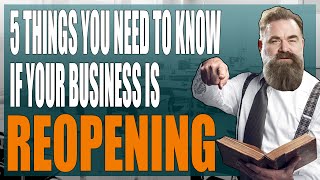
Chris Collins and Jeremy give five practical tips for businesses reopening after shutdowns: dial back aggressive sales tactics, keep safety visible, prioritize customers, document your systems as feedback loops, and keep morale high. They use an oil-change example to show how to turn customer feedback into better processes.
Chapters
Five landmines to avoid. Number one.
Too aggressive.
Aggressiveness, yeah. Do you know what happened to me this week? So remember a few weeks ago I had a client that wanted to buy a car. This is right at the beginning of the shutdown. And I had the car picked out for. We went online, I even had the stock number for the dealer. We contacted them and they told us what? No, I can't sell you a car, we're closed. Well, that customer went and bought another car at another dealership literally 200 miles away. Guess who's been blowing up my phone for the past day?
That dealership.
That dealership. They didn't leave a voicemail. They called me four different times and I could see the caller ID that it was them. And it irritated me almost to the point of breaking my relationship where I don't want to talk to them and I can be a great source of business for them. So my message is this, as you come back and you have all this pent up energy and you want to be aggressive and you want to call people and you want to just get all this stuff going, slow it down, be strategic. And remember, Kris, what's the first thing that we should be focused on? Should we be focused on our sales goal or should we focus on how we can help our customer?
Serving the customer, that's what business is all about.
Absolutely. So solving a problem for the customer, dude, that's great. How many problems do customers have right now?
A lot.
A lot of them are going to say, well, I don't need my car because I'm not really driving. But you do need your car properly maintained and ready to go because you don't know when you're going to need it. So let's get ahead of that curve. There's a lot of problems that we can solve. We can be very creative and strategic. So I would say think through what you want to do. Don't just go into activity and be aggressive. Let's be a little bit more strategic and be helpful.
It's good.
Task number one.
Number two, the tsunami syndrome.
That'S. Do you feel where we're at right now with all this, with what's going on? Like, a lot of people are letting their guard down. You know what happens when a tsunami comes? What happens right before the tsunami hits? Where does all the water go?
Out?
Out. And what are people doing?
It's calm.
Yeah, it's calm. Right. So people are out running on the beach. Like, wow. I'd never noticed the tide was this low before. Little do they know that the second wave or the big tsunami wave is coming, and I think that's where we're at. So we can't let our guard down and go back to normal. I think as advisors, we need to do a better job of stepping up our game of disinfecting the car, doing our part with, you know, wearing our. Our mask, being prepared, washing our hands, wearing gloves. But protect the customer's car. Use floor mats, use seat covers, use the steering wheel cover. This is a great. You know what's funny is we just talked about not being able to pet the dog. You want to know where you can really hit a home run with customers with petting the dog? Do that in the beginning. Ask them if there's any area of their car that they want special attention to. Show them that you're putting the seat mat in the floor. The seat cover, the seat, the floor mat, and the steering wheel cover. And then when they pick up their car, what do you do? You walk them to their car and you take all that stuff out, make sure it smells nice and clean. And then, you know, you can do like a no contact high five. So there's a lot of things we could do right now.
So don't get the narrative. Make customer safety and safety of everybody around you the narrative.
Yes.
People will be attracted to that.
Yeah. So now's not the time to let your guard down just because it's calm and things appear to be normal. They're. There's still stuff coming we gotta be prepared for.
Yeah. And also, I think it's. It's important to. To be the company, the person, the service drive that. Even though, like Jeremy said, it's calm and the water's out and it looks like the tide's low when it comes back. When there. If there's another flare up and it comes back, you are the company that was safe through the whole thing and protected everybody and didn't get caught slipping.
Absolutely.
Because they'll remember forever if you got them sick.
Yes, they will for sure.
You don't want to be the one in the news like, hey, yeah, we traced all. We traced these hundred people getting Corona back to Jeremy Motors service drive. Right.
So my friend Chris Cloutier in Dallas, Texas, says you don't want to be the shop that gave them Covid. You do not want to be that shop.
Man, this cigar is incredible. I don't think it was oversold. It's really smooth.
Save me one for next year.
Makes me want some tequila. Yeah, we'll smoke one on the hundredth episode.
All right, I'm totally down and it's.
Little too so it's not a huge commitment. Number four, reestablish your systems.
So you're a big systems guys, right? You love systems. I mean, the best businesses have really good systems and processes in place. Now's the time to reevaluate your systems and make sure that you have really good, rock solid systems built. And there's never been a time in human history that has been better for reinventing yourself. So right now, look at your systems. Find ways to get better, faster, connect at a deeper level, but just go back through and revisit your systems. You know, one of the things I did the other day, I took out a post, I went to the store and I bought poster board and some pencils and I was having some really deep frustration here at the shop and I drew out my org chart and I just wrote down, you know, who's responsible for what. It really helped me see where our systems were failing and we were able to create new systems out of that and make the business better. So from a shop owner service manager perspective, you can do that. But from a service advisor, Kris, how would you look at your systems and building better systems For a service advisor.
The, the thing about systems.
That you, that you kind of want to understand is that it's a feedback loop. And so what you have inside of a system is a process of doing things and then you have the outcome of that process. So let's say I, I used to think about this when I was an advisor. The way that it was set up in our drive was we had these 29, 95 oil changes on Cadillacs or, and if it was 30 minutes or it's free. And so the, the thing with the way the process worked is all the oil changes, the 30 minutes or it's free coupons were put into advisor 99 and then all of those were divided between all the advisors. So it affected your hours per row bonus. It, you know, if the thing was for the other advisors, if they left it in 99, they kind of like had this weird thing like, oh, it doesn't affect me because it's in 99. But those numbers were divided up and calculated into your, into your numbers. Right. So I, I, I thought about that as a, as a feedback loop, a system. So we're marketing and we get lots of customers coming in off of this because 30 minutes or it's free. And so the 30 minutes started when we wrote the RO because sometimes we'd have lines out, you know, out to the street. But like, so now what. What happens when I greet the customer and I write the ro the clock's ticking, right. And what's the process? What are the steps that. That sort of thing? So when I would give it to the quick lube techs and they would give it back, there were. There were never. There was never anything written on the inspection sheet because they weren't vested in it. They didn't care. They didn't really have any. There was no upside for them to recommend work. The whole thing they were thinking about is, I'm gonna get in trouble if this isn't done in 30 minutes. Because they would get yelled at and they would get in trouble if we had to give one away.
Right.
So their priority isn't inspecting the car. Right. So what I would do is I'm like, well, they're not. Not only are they not vested in inspecting the car, they. They don't really care. Who cares? Well, my team leader, Todd, cared. So I would ask Todd, I would say, Todd, whenever I get one, I'm going to point at it. You're going to go inspect it. So I got my team leader to come over and inspect, you know, anyone that had 30 plus thousand miles on it that, you know, needed to be inspected. And just that little change in the process because I looked at it as a feedback loop and I looked at like, I'm riding oil changes and there's no work to sell. And these cars are leaving here and I know they have a hundred thousand miles on them and they need work, but they're going to come in on a tow truck. When we could tell them now, now, do you think customers, when they get an oil change done and three days later they break down because the belt breaks or something happens, do you think that they blame us?
Oh, absolutely. My curve was.
Yeah, we were just in there. They don't know. They don't know the difference between a quick lube tech and a team leader. Like, it's. They don't care. They know that they were inconvenienced, late for work, and now their car's broken. And we were just in there a couple of days ago. Right, right. So all of this is a feedback loop. Right. The feedback is. I had a couple of those. I didn't have a lot, but I had a couple customers that were like, hey, you just worked on it and now it's broken. And the cars have their high mileage. They're older cars. A lot of our customers who Riding Cadillac in Washington state, a lot of our customers were snowbirds, so they go to Phoenix or Palm Springs in the winter. So their cars would sit for a long time. So belts, tires, things like that, you know, would, Would, Would decay. So that's. I always looked at that as a system and a feedback loop. And the, the important elements are to understand that there's a process that you can document. Like Jeremy was saying, there's an org chart, there's a process. And if you document that process like I. I was doing on paper, I was like, okay, it's 30 minutes free. I got the quick loop tech. Oh, well, the quick loop tech isn't really vested in the inspection. And you look at the outcome of your actions. That's the feedback loop, right? The outcome of what we're doing, the process. And is the outcome what we want? Well, the outcome wasn't what I wanted. I was just riding all these, these oil changes and nothing, you know, not selling anything. And then the customers were upset that they left and, and something broke. So that's how I would approach it as an advisor is I would look at everything you do as a process and as a feedback loop. And is the outcome of that process what you want? If you're writing 25 customers a day and you're taking shortcuts, step back and look at that process. Well, maybe I would make more friends. I would take better care of my customers more. We'd have better retention here in our little service drive. If I didn't write 25 and I only wrote 15, that's a feedback loop.
Or just think of your numbers. If you could continue doing 25 and double your numbers. Yeah, that is a feedback.
So it's a feedback loop, right? A system is a feedback loop.
It is, absolutely. I bet if you went back and tracked your numbers at that Cadillac dealership, the faster you got the inspection of the customer, the more they bought. So if I can get my inspection done in 15 minutes and we're mate was making a presentation while they finished the oil change versus 30 minutes. There's a big difference.
Psychic.
Yeah, absolutely.
I'm not joking. So the, the quick lube techs were right next to me. They were right across the drive for me because it was an inside drive. And I literally, when. When my team leader, Todd would go over and inspect it, if there was stuff, I would just walk the customer over and show them on the car.
Perfect. The oil change hand.
This is a, this is a chapter in, in the book I'm writing. I lead you Follow.
Nice.
The dharma of leadership.
Awesome.
Feedback loops. Systems.
Perfect. Awesome. So that's number three. Reevaluate your systems right now. Make sure that you update and refresh them.
Quattro senior is numino. Quattro.
That was number.
Number three was customer first.
Oh, did we talk about that?
Maybe we skipped it.
I think we skipped it. So, hey, this is 3A, 3B or 4. Whatever you want. What is it? Customer first.
Yeah, Put the customer first.
Okay. What? They all know that. Come on. Why do we have this on the list here?
So what was number one idea? Are you making fun of my idea?
No, I'm just throwing a rhetorical question at you. Number one was harness the aggressiveness. Right?
Control aggressiveness.
Yeah, Control aggressive. Now, customer first. I'm sorry, do you want to recap real quick?
Number number one is control aggressiveness. Number two, Tsunami syndrome. Number three, Customer first. Number four, Reestablish your systems. And number five. Drum roll. No, no, no, no, no.
You can't go there yet. We didn't talk about number three.
Oh, number five. So good.
But hold on. Let's just give them a quick 30 second blip on customer first. You can't put your sales goal first. Put the customer first. Helping and finding a way to be a problem solver. And you'll see how that works.
About the customer. It's all about you. Take care of yourself.
No, put the customer first.
You'll always. You'll always be busy if you worry about yourself.
Come on. Go read that vinyl record in the corner that Zig Ziglar wrote about. What? Help enough people get what they want, and you will get what you want. So there you go. Put the customer first. What's number five?
Have fun.
Have fun. Absolutely. You have to have fun, right?
A little levity. Understand that? It is what it is. We can only control what we can control. So have some fun in the process. Make go out of your way to make your. Your fellow employees your customers day. Be have a mindset of service and have fun. Don't be so buttoned up.
Let loose a little bit. For sure.
I think you could work on that. Jeremy. I feel like you're a little buttoned up.
Feeling a little aggro today. It's okay. I'll let the negativity wash off me. I'll be stopped.
Watching all that conspiracy trump stuff. You might.
Dude, I don't watch it. I write it. I am the creator of it.
I don't know what that means.
Means that I'll just sit at home and watch Netflix. That's all.
Not Netflix. You're. You're listening to that weird Internet radio that you can only get on the Internet because YouTube and everybody banned it.
I'm their ghostwriter. I write for them.
What do you think of Alex Jones?
Who?
Alex Jones.
Drawing a blank here.
Too far left for you.
Too far left for me? Yeah.
Alex Jones is too far left for you.
Yep. I don't. I'm telling. I don't listen to the radio or anything like that.
Okay. Thank you so much for watching this clip of Service Drive Revolution. Now you can catch the full episode on YouTube, iTunes, or Spotify or wherever you consume your podcast. If you have any questions, go ahead and post them in the comments below. Make sure you subscribe and hit the bell icon so you're notified when we post new episodes. I'm Chris Collins, and you can find me on Facebook and Instagram at Chris Bulldog Collins. And I'll see you again on the next episode.







