A Conversation With Top Business Coach David Meltzer | SDR #206
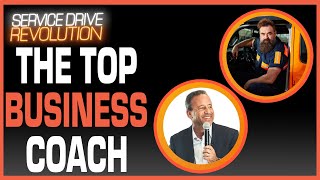
Chris Collins and Christian Lafferty talk with business coach David Meltzer about coaching, the automotive industry, and entrepreneurial strategy. Meltzer shares insights on leadership and business approaches, with humor throughout the conversation.
Chapters
Welcome, everybody, to the big show today. We have a special guest for you, Dave Meltzer, who's one of the top 100 business coaches out there. We've had him speak at one of our events previously and he's doing it one coming up, which we're going to talk about. But he's incredible. He's got a show on Apple tv, all kinds of stuff going on. And we're also going to talk about something fun in the news. The gift that keeps giving from the Ford Motor Company. A lot of people loved our role play where we're out of it. Yeah, we should.
We.
Maybe we'll do more of that. I don't know. But I'm Chris Collins. This is Chris Joan.
Hello, everyone.
Lafferty, because he's been making people laugh.
For centuries before he was born. That's right.
It's genetic. So that and much, much more coming up on this episode of Service Drive Revolution.
Welcome to the show, everybody. I don't know if you guys notice and if you're listening to this, I will describe in great detail. Christian is sunburned. He's a tomato specifically for him. Roma tomato. You know what the Roma tomatoes are?
The little. They're kind of oblong. They look egg shaped almost.
You look like a Roma tomato.
Beautiful thing.
He comes in this morning and he's like, well, my convertible all weekend. I know I look a little bur.
I did say that. I don't know if it's showing off like that. Yeah, I was out all weekend as.
A matter driving your convertible around Southern California.
Went to the beach. Everything stereotypical about having a convertible in Southern California, I did. I actually, I went to a park. It was pretty awesome. And then I saw this lady and her kid and the kid was, you know, chewing on a calculator. So I go to the lady, I'm like, hey, I don't think your kid should be chewing on the calculator. And she's like, don't worry. He's just crunching numbers.
That's funny. That's funny for many reasons, but one is who has a calculator anymore? Yeah, it's great. I love the segue. Thank you very.
I think I had you going for a sec.
At Ford, quality is now problem one.
Instead of quality is job one.
Quality is no longer job one. It's problem one. I thought that was genius.
I loved it. She clearly doesn't work for Ford.
No, I don't think that she's a fan right now, but they've been. I think we reported this on previous episodes that there was a big recall that happened and now they've fallen down in some of their quality rankings. Expeditions navigators recalled because.
They sometimes start on fire when they're in park. I don't know why that would be an issue.
Oh, really?
Yeah.
Let's see. We had the. Oh, another one, the Mustang, the electric Mustang. They recalled 49,000 of those because they also have a tendency to overheat and when the thing overheats, it shuts down and stops running. Yeah. So in the first seven months. This is going to blow you away. For seven months of the year, Ford has had 46 separate safety recalls on 6.8 million vehicles.
Wow.
You know, there's, there's a silver lining to all of that.
Oh, I love it.
There's a big silver lining. What's that silver lining that Ford service departments are going to be busy.
Yeah.
You're going to need to staff up a little bit. If you're a Ford store.
If you're running a Hyundai or a Kia service department, they don't break.
Well, they had some engine issues, but that's about it.
But for the most part.
Wow. Ford's doing a good job of keeping service departments busy.
Thank you for keeping us in the news. It's good stuff. But man, I tell you what, you.
Gotta be really aware of that. So we do have our coaching on demand.
Webcast.
Yeah, some. We started pre Covid. Yeah.
We used to do these in person. We've gone to half in person, half virtual, kind of coming out of COVID I don't know, would we ever go back to all in person or would we stay half and half?
Well, I think that there's, there's so much value to each one. I love the in person because we're out there, we're rubbing elbows with the clients, which I think is a ton of fun. But what I've noticed is our attendance is amazing for these things. We get a ton of people that are able to tune in that wouldn't be able to travel across the country and you know, airfare, hotels, the whole nine. But they can just plug in virtually and we give them a bunch of great information in a fairly short amount of time. But it's funny to me how fast. Like it's a three hour thing. It's funny how fast it goes.
Yeah. Packed with content.
It's wow, two little breaks and the rest of you do it one more time. Yeah, that's good.
Goes by. It's like the wind. We're excited about this conversation we're about to have with Dave. Let me, let me kind of read Dave's bio a little bit and then we'll get him on and we'll ask him some questions. He's a great guy. So Dave Meltzer is the co founder of Sports One Marketing and formerly served as CEO of the renowned Lee Steinberg Sports and Entertainment agency which was the inspiration for the movie Jerry Maguire. Dave is a top 100 business coach, executive producer of entrepreneurs number one digital business show Elevator Pitch and host of the top entrepreneurial podcast the Playbook. He's a three time international best selling author. His life mission is to empower over 1 billion people to be happy. The simple yet powerful mission has led him on an incredible journey to provide one thing.
Value. The message he is here to deliver today is be exceptional, be extraordinary.
So we just learned something. Everybody on the webcast is going to get his book for free. How cool is that? It's really cool.
It's going to increase the attendance even more. Oh, you know what I was wondering too.
What's the opposite of irony?
Oh.
What?
Wrinkly.
That's funny. You laughed. Okay, let's go to our conversation with Dave. This show we're really excited to have you and you're gonna be speaking at our coaching on demand. What do we call that, like a virtual meeting?
Virtual meeting.
The virtual meeting, it's only for people on or on demand or in our coaching group. So we can't talk about everything. But the topic you're gonna be talking about that day is game day decision.
Making, which is, which is exciting. And we've been watching your activity on social media and you have a two minute drill on Apple tv. Could you tell us what you've been up to with that?
Yeah. So I've been blessed to develop content for Apple. They've asked Martha Stewart and myself and some others to develop entrepreneurial content. And so I have a pitch only show. I've previously executive produced the elevator pitch for Entrepreneur Media and Entrepreneur magazine. And the one thing I've been frustrated with with a lot of the entrepreneurial shows is that they have a facade of funding, including the show that I executive produced. This facade of funding isn't I think doing entreprene entrepreneurs any favors about really how to get funded. So I took a step back and developed a show that I think is very relevant and realistic, allowing people to learn how to pitch. And so of course giving them a two minute limitation provides a little bit of extra pressure and entertainment value. But in the end the Advice that the world's greatest thought leaders and entrepreneurs give to the entrepreneur are invaluable. And to be able to amplify that on Apple TV has been a godsend. And some other content that I have is office hours, where I leverage the billionaires, millionaires and entrepreneurs once again to give their business advice to entrepreneurs. So whether it's Sadhguru or Deepak Chopra or Brett Favre or Austin Eckler or Ed Mylett and Grant Cardone, everyone's sharing their perspective on how to make a lot of money, help a lot of people, and have a lot of fun.
Yeah, that's awesome. So when you say funding, you mean that, like, for example, on Shark Tank, most of those businesses never actually make the deal, they never get the investment.
Yeah. Most funding shows there's still a due diligence process and obviously it's for tv. So they're taking tidbits from what the process is, and they really don't teach you. The most important part, which is 80% of raising money, is in managing and developing the expectations after you know, that pitch. And so I wanted to get some quantitative value to the entrepreneur to help them along and accelerate their statistical success in their entrepreneurial journeys, especially in selling or raising money.
Yeah, it's interesting too, like how on Shark Tank, a lot of the guys that I know that invest in businesses and go out and find that they have a system. So when they invest in somebody, they're pulling them in and mentoring them, they're teaching them leadership, they're giving them access to their network of people who do SEO or retail or whatever it is. And so they kind of come to the table with a bunch of solutions when they invest, which I think is kind of left out of Shark Tank in those sort of shows.
Yeah, that's evolved. Right. Most investors want to participate by being an accelerator, to be an incubator, to be a launch pad and especially leverage, which is my superpower relationship capital. The, you know, years and years of being kind to my future self, doing good deeds, being of service to others, so that I'm one degree of separation of a community of sponsors, people who want and know other people to help and also power sponsors, people that can make decisions and help others themselves.
So what, what changes are you. Are you seeing in business and leaders right now?
There's always uncertainty in the future, but what I see today, because of technology, because of the economy, there's an extraordinary pressure of adaptation. The entrepreneurs always have to have a common denominator of a desire that they must Be what they can be. But now, beyond emotional intelligence, there has to be an adaptability intelligence because things are moving so quickly. And what I see changing in the business is those entrepreneurs, business people that are able to look at their skills, knowledge and desire and find out how they're aligned with. Supplementary or synergistic to a certain industry, career or job are the ones that are doing the best to take advantage of three things. The adaptation of the markets, which are accelerating, understanding who the market makers are, which is ever changing and accelerating. And then most importantly, believe it or not, the simplest, most obvious component is what I call knowing the margins. There's so many people, because of the accelerated change that get so busy working, they forget to make money. They get stuck into an obsolete or an unadvantageous industry career job, and things have changed so quickly that they're just so busy going through the motions. And this is from the top of the company down, they get so busy working, they forget to make money. They haven't analyzed where the margins are.
Yeah, that's funny, the whole thing, actually. I don't know if you'll remember this, but there was a quote that you gave me a few months ago. It was about the illiterate of the 21st century. Do you remember this thing?
Oh, yeah. The illiterate of the 21st century won't be those who can't read and write. It'll be those that can't unlearn, relearn, and then unlearn and relearn something to that effect.
Which reminds me of the change that he's talking about. That's exactly right.
You know, what we see, Dave, in our travels is that for a long time a lot of.
You wouldn't really call them leaders, you would call them middle managers, really, because to me, leadership means something a little bit different. But they're managing closed loop systems. And so a closed loop system by nature encourages very little variance or change. Right. Because it's just like follow the steps to the sale or follow these steps, and if you just execute on that and create accountability in the system, then you're okay. But in a lot of ways, the changes that are coming are completely blowing that up. And you have to, you have to find revenue in other places. Sometimes the revenue isn't in the front anymore, it's in the back. And so you got to lower your prices and your margins in the front to have a back end, which is follow up and a great customer experience and that sort of thing.
We're seeing that a lot. Where Guys are very discouraged with how much change there is because they're just, you know, they're against change by nature. It's just built into their, you know, to the way that they functioned. Yeah.
And I think that's where, you know, understanding daily practices in business and these daily practices allow for the flexibility of a very important antidote to either feeling overwhelmed or procrastination, which are the two interferences between productivity, accessibility and gratitude, which is necessary for productivity. And of course, engagement. And engagement is the key common denominator that I look for because regardless of someone's skill set, if I can get them engaged, I have about an 80 to 90% increase in my productivity because there's such lack of engagement in business today. And so I use these five daily practices so that people can understand what's important to them within the context of what's important to the business. So every day, having them review. This is what I think we want in the future. Notice I said I think giving an element of radical humility. This is what I think I want in the future, determinative upon what I need to do today in that trajectory, who I can help with what I want and who can help me, which is very critical because a lot of people aren't asking for help, which also runs itself into the realm of wellness. But if I know what I want, who I can help and who can help me and how best to get that done, I now have the confirmation of engagement, which is prioritization, which is, you know, lending towards that book in front of you. The game time decision making is that those people that know how to prioritize have the antidote to procrastination as well as feeling overwhelmed. When you know what to do now, 100% of the things you do now get done, you have not only statistically improved your success exponentially, but you also are more effective because most people remain engaged when they know how to prioritize, especially during change, because they know exactly how to reprioritize if they already know what's important to them and the trajectory of what they think is important to them in the future.
Yeah, it's great.
I think a lot of what we do needs to shift the paradigm or counterintuitively look to something that's a little bit different. Most people, especially in decision making, are living in a zero sum game. You know, they. They literally think that the more I give, the more I receive. Everything's a trade or a negotiation, that when I receive, somebody else is losing. And a lot of the decision making process is one of value add, meaning that there's more than enough of everything for everyone. And if I'm making my decisions in a mindset of abundance, that there's more than enough for everyone, I'm capable of asking for more, receiving more. And if I'm capable of asking for more and receiving more, I then can give more. And it's counterintuitive because we all been taught this old quid pro quo of life, the zero sum game of the more you give, the more you get. Well, that's really not true. The more you receive, the more you can give. And the more you receive, the better you make people feel who are giving. Because we all know giving is the closest to love and truth that we could become. So when we allow others to experience giving and we receive and allow it to come through us for others, instead of living in a world of to me where things are punishing me, I'm now living in a world of through me where I am now being protected and promoted at all times.
That's very, very profound. I love that. It's great stuff. Cool. Well, thanks, Dave. We'll see you in a couple days and we look forward to it. Thank you. And everybody else listening, thanks so much. We'll see you next time on Service Drive Revolution.
Thanks so much for watching this episode of Service Job Revolution. We're uploading new stuff every day, so make sure you subscribe and click the bell icon so you don't miss out. If you have a question you'd like us to answer on the show, call 8333-ASK SDR and we'll answer your question on the show. That's 8333-ASK SDR. For special deals on our books and training, head over to offers.chris collinsinc.com that's offers.chris collins inc.com hi, I'm Chris Collins, and I'll see you in the next video.







