Andrew Bustamante: CIA Spy’s Tips For Understanding Human Nature
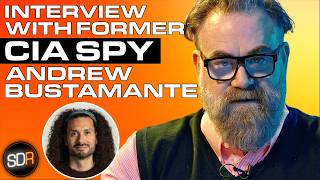
Andrew Bustamante, a former CIA officer, explains how espionage techniques work in business and personal relationships. He argues that leadership means people choose to follow you, that vulnerability builds trust, and that charisma without substance is dangerous. HUMINT tactics like building proximity and testing vulnerability can ethically create rapport and influence.
Chapters
Welcome, everybody, to the big show today. We have a guest that is going to be doing a workshop for our elite group coming up at our Top Dog event. And he's also going to be speaking on stage at our Top Dog event. It is Andrew Bustamante, who is a former covert CIA intelligence officer, decorated combat veteran, successful consultant to Fortune 10 companies, and just a wealth of knowledge and insight into human behavior. He was very generous with his time in this conversation, and we go pretty deep. And you're gonna want to put your seatbelt on for this one and get ready. But that's what's coming up right now on Service Drive Revol.
What is your definition of leadership?
Leadership is difficult. My definition of leadership is when you can do something and people want to follow you. When they're doing it because they want to do it, then that's leadership. And I don't think that everybody can lead everybody else. We end up convincing ourselves that we're a bad leader if people don't follow us. There's lots of people out there that won't follow you. Because if, according to my definition, if you're only leading the people who want to follow you, there's plenty of people who don't want to follow you. Right. And they're never going to see life through the same lens that you see life. They're not going to see the battlefield, they're not going to see the opportunity, they're not going to see the. The objective that you see. So it's like the Spartan 300 story. Not every Spartan went up against the Persian empire. It took 300. Those 300 were all volunteers working against the promise or working against the decision of the Senate at the time. And they were led because they wanted to be led by the person who was leading them. And that's what led to their success. Right. Granted, they perished, but their memory is their legacy has lived on and will live on forever. So my definition of leadership is if you can lead the people that want. If people follow you because they want to follow you, then you are a leader.
What would you say the most important ingredient, or the three top ingredients are in getting people to follow you?
Being authentic. Right. Being genuine and sincere is what gives people trust to pursue the same thing that you're pursuing because they believe that you and them are aligned. Right. There's a lot of what human intelligence, not human intelligence like brains, but human intelligence. Spy work, like spy world stuff is called intelligence. Humint is called human intelligence. And that's secrets that come from people. A lot of the human intelligence operations world is based around fabricating authenticity in order to capture the attention of somebody who has secrets. And then that loyalty that they develop to you because they follow you, because you're their leader, that loyalty is so powerful that they end up compromising the secrets that they were trusted to keep. But for you, you're not being genuine. You've just created an artificial Persona and you've managed your authenticity so that they believe you are who you present yourself to be. That's what being undercover is really all about. It's all about having the opportunity to fabricate a relationship, simulate a relationship, specifically to get intelligence so that you can keep Americans safe. That's. That's the secret sauce is in making it seem authentic and real. If it seems. If you're disciplined or if you're courageous or if you're strong, those things all work too. But the real magic is someone who's disciplined and strong and courageous, authentically is what makes people follow them.
How would charisma fit into that? Or what is your thought on charisma?
Charisma is an interesting thing because charisma is something that gives us familiarity. Charisma is candy, right? Charisma is sugar. If somebody. If. Yeah, if somebody is good at what they do and they're genuinely good at it, you don't need charisma. If someone is truly authentic and you just like them, how many friends do you have who are not charismatic, Right? I'm sure you have plenty because you're just. They're a real person. They're a genuine good person. They're a genuine. They see life the same way I see life. They care about the same things I care about. They're kind of a. I have a friend who I call a social hand grenade, right? Edwin, a good buddy of mine. He's a total social hand grenade. You take that guy anywhere, he is going to say something that pisses half the room off.
You always need that guy with you. You always need the guy that'll do that or jump on the table or drink too much. It makes it more fun. I always try to make sure I invite somebody like that whenever there's something going on.
But I would. I mean, I'd follow Edwin into battle any day of the week, right? He is an authentic, genuine person. Now, when you have that authenticity and charisma layers on top of it, that's a powerhouse. But when you have somebody who has no business being a leader, but they also have charisma, that's a dangerous combination, right? That's diabetes in the making right there.
That's your soda pop and your, you know, all of your sugar laced sauces and all the stuff that's causing weight issues in America right now. Right? That's sugar with no substance. The same thing happens in leadership. Someone who's no substance in all charisma is a dangerous person.
If somebody isn't getting the result they want, then the person they are isn't the person to get that result. Like, you fundamentally have to change the person to change the outcome.
And a lot of people struggle with that idea that if the outcome I'm getting isn't what I want. We're so.
You know, there's so many things attached to our identity and we're so locked in that we have a hard time reinventing who we are in that sense. And so from the outside looking in, how would you explain to somebody how to reinvent themselves? Right?
Yeah. So there's so much wisdom in what you just said, right? Have you ever heard people say, like the definition of insanity is doing the same thing over and over again? And yet that's. You're exactly right. People see they're not achieving a certain result and they don't want to do the work or they're afraid to even consider that there might be something fundamentally flawed with them as a person right now. So then they try to externalize it and find blame somewhere else. That's why everybody hates their boss, because their boss is always the one holding them back. Boss isn't the one holding you back. The boss may be a contributing factor in the fact that you're not hitting the result, but it's not the only factor. The boss is a manageable factor once you're willing to do the work on yourself. One of the things that CIA teaches us is that we have these.
We have these.
Skills or preferences, right, that we're born with, that we are not born with, but they developed in us when we're very young. We don't even realize they're happening. Right. For some people, they're really good at problem solving. For some people, it's a creative vision. For some people, it's a desire for learning, whatever it might be. And we, we don't value them because they're so natural to us. My son is really good with color. He can look at a picture and then take a blank sheet of paper and he can recreate the same shades and colors and palettes and everything. Right. He doesn't even realize it's impressive. He's nine. I look at it. I can look at a picture of Superman, and then I can have a black and white picture of Superman, and I cannot remember what part of the suit is red, white, blue, or yellow. I just know they're in there, but I don't know where they go. I have to reference back and forth. It's just. It's super hard for me, right? When you don't value the talent that you have, you tend to throw it away. But then what happens is, as you get older, that talent, even though you don't value it, it keeps coming back to you, right? And then you get it again. You're good at speaking. Well, what's that going to be? That doesn't help me get. That doesn't help me in algebra right now in 10th grade, so whatever. And then it comes back and it hits you in the chest or it hits you in the forehead when you're in 12th grade and you're like, I'm good at speaking. Well, that doesn't get me a date to prom. So you throw it away, and then it comes back and hits you when you're 19 years old and you're like, you just keep throwing these talents away, but they keep coming back because they're ingrained in you. It's what you're good at. You can't throw it away. It's wired into you. So CIA teaches us that you have to trust those talents and recognize those talents are essentially your competitive advantage in the game of intelligence. Because the game of intelligence is just the game of life with higher stakes. You're not just making friends to make friends now. You're making friends to steal secrets. You're not just going for a walk to the grocery store, you're going for a walk to the grocery to see if somebody's following you. So it's just higher stakes. But you. You learn how to become the highest version of yourself when you embrace these talents that you've been devaluing your whole life, and then you start taking them on and owning them. So a lot of times, to get back to your point, fundamentally changing yourself often just starts with.
Accepting what you're good at. And instead of devaluing it because you think everybody's good at it, guess what? Not everybody's good at everything. Not everybody is good at the same thing you're good at. So let yourself be good at it. That will fundamentally shift you, which will fundamentally shift the result. You're good at two or three things. Own it. It's going to change the result. We worry that Changing ourselves is a lot of work. Not realizing that sometimes it doesn't take a lot of work at all to experiment with the way that you're naturally wired. Just let it happen.
What if the things that you're good at fit into the situation you're in?
I think that's a valid concern because oftentimes the situation that we're in is a situation that we've been led to. Right. Other people have driven us to the place that we're at. Mom and dad drive you to college. They encourage you to get a degree that's in the hard sciences so that you get a responsible job, so that you do whatever. I'm sure you remember, everybody had advice for you when you were going to school, or everybody had advice to you when you were getting your first job. For my wife, it was her grandmother and her mother insisting that she got a degree in accounting. Just become an accountant.
You'll always have a job.
You'll always have a good salary. You'll always be in need. Right? So there's plenty of clients that I have now who come from financial backgrounds. They're investors or they ran.
Investment portfolios. They're accountants, they're CFOs, and they're miserable. But they did what other people told them to do, and now they're professionals and really skilled in this job that they just don't like. Right. It's not fulfilling, it's not challenging. It's the same thing, literally. Because numbers never change week in and week out, day in and day out. Right. So they can't shift themselves to love where they are because it's a completely different target. Where they actually want to be is somewhere else. When they shift who they are, they will get where they want to be. Now, does that mean that they have to leave behind everything they built? Absolutely not. Right.
Do you remember ever being in a bad relationship? Like having a girlfriend?
Yeah, for sure.
Guys, can't we answer yes so fast? Right. So.
Do y' all remember I see her face. I'm sorry to be the one to bring it up right now.
I mean, I'm to blame more than she is now. You know, looking back, it was more me than it was her.
But inevitably, what happens, especially when we're young, we're dating the wrong person. So what do we do when we break up? We date someone who's the total opposite of the person we just broke up with.
Right.
That doesn't make any logical sense. If you think about it, you were dating this first person for a reason. There was more about them that you liked than what you didn't like. So really, if you compare it to, like, shooting a gun, you're just 5 or 10 degrees off of the target. But instead, when we break up, we become so emotionally invested that we're like, I got to go in the complete opposite direction. So the same thing happens when we try to reinvent ourselves. We're like, oh, my gosh, I'm an accountant. Oh, my gosh, I'm a CFO of a $5 million business. What have I done with my life? I need to go back to ground zero. I need to. To reset everything and start all over again. And I'm going to go become a monk, or I'm going to go volunteer myself to whatever. It's what I tried to do when I left the military. I tried to go into the Peace corps to go 180 degrees different. Right? What I didn't realize and what many people don't realize is you're already 90% of where you want to be. You just may not want to be the CFO of a $5 million company, but all that education and experience that you developed, you can become an entrepreneur on your own. You can become an advisor, a strategic advisor. You can become a consultant. There's all sorts of places that you can go where you now leverage the skills that you've developed and leverage the natural talent you already had.
So let me give you an example. I want to come back to the girlfriend thing, because that's a question I have a little bit later on.
So I was very introverted as a kid. Good at fixing businesses, but very hidden behind the scenes. I didn't, you know, there was never a meeting where everybody got together and I was giving a rally speech. I ended up running a big $300 million company. I would have my manager speak. I was never. If I ever had to give a speech, I would break out in hives. And I read a book by the former CEO of IBM called Even elephants can Dance. And he talked about how he. He was an introvert. And so I grabbed onto that. I was like, hey, you can do it and not be out in front sort of a thing, right? And then I used to be in this group of these eight guys. It was kind of like a mastermind. And it was the greatest mastermind because we met once a month, but you had an hour to talk about whatever you had going on in business, and then everybody would give you their input or their ideas, and you had a mix in the room of, you know, Different. Different people. One guy was really good with the Internet. One guy was good with insurance and finance, and. And, you know, my best friend kind of to this day, I met him. I met him in that room. But we. We were getting together, and they were talking about how he had done a presentation on tear sheets, which is an old advertising.
Kind of, I don't know, strategy where it looks like somebody tore out a newspaper page, folded it up, and wrote a little handwritten sticky note on there that said, like, hey, Chris, you should check this out. J. They were called J letters. And he did a whole presentation to this room of 500 people about it. And I said to him, I said, why were you doing that? I thought you were in a different industry. Like, why are you doing that? He goes, I was just practicing public speaking. And I said, oh. I go, I hate public speaking. And he looks at me and I go, it's not for me. And he goes, and he looked right at me and he goes, you better get over it. Because I don't know anybody successful, they can't walk up in front of an audience and get them to believe what you want. And in that moment, I decided that I was going to get over it, and I reinvented myself. And now people pay me to go speak. And so am I unhappy? No. I mean, I'm very happy when I go out and speak to a crowd and I affect them in a positive way. But I had to reinvent, and was I naturally speaking or not? I had to put a lot of work into it, and I still put work into it, and I'm still trying to get better because inside I kind of know that if I don't put in the work, I'm going to get caught. So I have to put in the work. And so that's a reinvention of something that wasn't natural. But I can affect more people in a positive way if I'm good at this thing that, you know, it's the. I mean, there's tons of jokes about how public speaking is keen to death, or what is that Seinfeld joke? That most people would rather be dead? So the guy giving the obituary would rather be in the casket. Right. I mean, that's. I can relate to that. Like, I've felt that. And so don't you think that there are certain things, there has to have been things that you maybe weren't naturally good at, but you had to reinvent your frame of those things, and then you had to practice them in order to succeed, and.
It wasn't making you unhappy or happy. It was just something necessary in the path.
Yes, I would agree with what you're saying. I would also to put some of my own vocabulary into it. Right. I would say that another way of talking about the word reinvention in this example is a reframing. Right. You.
Unless I don't understand it, you still.
By default, don't get excited to public speak.
No, no, I do now.
You do get excited now?
Yeah.
So then, yeah, you've totally reconnected.
It took a while, but.
So that period of time was you reconditioning yourself, creating new neural pathways, creating new preferences for the act of public speaking. That's all work that you did. The thing that started you on that road was that one conversation where somebody you trusted said, you better get over it. That moment was a reframe. You already knew you wanted to be successful. You already knew that you were successful at the time. And now here's someone saying, if you like, this thing will hold you back from the success you could have. When you looked at public speaking through that lens, it was a new frame. It was a whole new way of considering the problem. And now all of a sudden, it was a problem that you wanted to resource tackle and overcome because you had rationalized your way to understand there's a larger purpose, a purpose that's larger than the discomfort that comes from public speaking. And even now, when you talk about it just a second ago, what you're talking about is maximizing your impact. That tells me that what you were thinking to yourself was, it's not that it's going to hold me back in terms of dollars and cents. It's not that it's going to hold me back in terms of how I define success. It's going to hold me back because there's a larger impact that I could have if I get past this fear of public speaking. And that was worth the work to recondition yourself.
Yeah, but I had to go out a thing that was part of my identity that I had held onto is, you know, I don't need this thing. And I had, you know, I'd made that a part of my identity. That I was an introvert and I didn't like being out front and I justified it and made all kinds of reasons why that was my narrative. And yeah, like you said, in a moment it was. It was held up and I had to look at it again. Right?
Yeah. And that's what's awesome. Right. When you look at a pyramid dead on, you just Think it's a triangle. It's not until you start to turn it that you realize there's so much more to it. Right? It's a three dimensional object. It's a pyramid. There's not three sides, there's 12 sides. Right? It's a much more elaborate and complex thing. And that's before you even start to wonder how it's engineered. But what ends up happening is so many of us look at something, look at old things in our lives, and we just see the triangle because it's the same way we've always seen it. Until somebody comes up and holds it in front of your face and says, that's not a triangle. Like here, just stand over where I'm standing and take a look. It's a powerful thing to have someone help you reframe. The reason that people like you and I have success in business is because we're not. We're not only gifted in what we've done with our own business, but we're able to help other people reframe what they're doing. And some people connect with others. Like some. I have had multiple people tell me the same thing. Sometimes I have to hear it five times before it clicks. Sometimes it clicks just because of the person it's coming from, because they say it a certain way or they give me an example. That's different. Right? You have a talent of teaching people to reframe how they're thinking. I don't know if you acknowledge that or if you own that. I sometimes still resist it when people tell me, andy, you say things, and sometimes I just get it after you say it. I don't take credit for that. They're the ones doing the work, but I have to at least acknowledge the fact that I need to keep talking. If I can help one person, then how many more people can I help?
When you're trying to make friends with somebody or connect with somebody in the CIA, is charisma that sugar? Is that not a tool that you pull out of the toolbox?
Absolutely. Absolutely. That's something you pull out of the toolbox. And in large part, it's because charisma is lacking in so many people. Because for many, many people out there, charisma, like sugar, is something they like to be around, but they themselves either lack the confidence or they lack the social experience, or they lack the comfort to exercise their own charisma. So then what ends up happening is, especially in human operations and human intelligence operations, you go after a target to carve them out of their Social realm, right? Part of the way that you increase the loyalty between people is by cutting them out of whatever social context they have. You take away those options, but you do it in a way where they don't realize that's what's happening. And then what ends up the byproduct of that is without other people to lean on, they just become closer to you. And as they become closer to you, then their own natural personality, their own natural charisma starts to show, right? And you want to see someone's charisma? Ask them about their family. Ask pet owners about their pets. Ask parents about their kids. Ask people about their favorite show, their favorite book, their favorite food.
Boom.
Their charisma comes out. Their smile gets easy. Their eyebrows go up, right? They just start to talk. And they'll talk. They'll say the most amazing things that are truly charismatic, endearing.
Entertaining, humorous, because that's something that they know well and they're passionate about. But it takes proximity to make someone consistently charismatic, unless they have the practice to turn it on or off like a light switch. So for us, we use it as sugar to carve them away from their existing friend groups, their networks. And then as they get closer, we use their charisma and as almost like a way of reinforcing that they're with the right person. Because what ends up happening is when somebody makes you feel good, you become loyal to that person because you start to feel like that person is the reason you feel good. It's like sugar again. You see what I'm saying? It works the opposite way, too. When you're around someone who doesn't make you feel good, you start to think they're the reason you don't feel good. That's why so many divorces happen. But when you're around somebody who does make you feel good, or when somebody asks you questions or shows natural interest in you, that triggers dopamine in your cerebrum. It triggers a dopamine rush. It makes you feel like you're special. It makes you feel like you're important. When you're not with that person, you don't get that rush. So then you come back to that person to get that rush again, and then, boom, you've got an addiction, a connection, loyalty, whatever you want to call it. You got power in that relationship.
And would you say that the most.
Important.
Tool is making people feel accepted? Is acceptance the most important part of that? Because everybody wants to be accepted. And when you feel accepted, then you open up.
Yeah, It's Vulnerability. Vulnerability is the word that we use. That's the most important part of a human intelligence operation. Finding where someone else is vulnerable and then being able to go into that space and have them be comfortable with you in their vulnerable space. There's three lives that all people have. We were already kind of touching on one of the lives earlier today in our conversation. We all have a public life, we all have a private life, and we all have a secret life in our public life. That's the life that we all put a lot of effort into showing everybody. Right. This is my public. What I wear, how I do my hair, my Instagram. Yeah, Right. That's my public life. What I talk about, what I show people when I go down the street and I'm in a public setting. This is.
You're never posting your worst moment.
No, exactly. Right. You also never post, like, you're barefoot when you have a blister on it. Right. You don't ever show weakness in your public life. Now, your private life is a life that only a small circle knows. Right. Like your fiance knows if your feet stink when you take off your shoes, but most of your employees don't.
Right.
My closest friends know that I love 1950s musicals. Most people out there, except for the people who watch this, will have no idea that I like 1950s era musicals.
Can you name a 1950s musical for me?
Just out of context. So Singing in the Rain, Top Hat. Right. There's some fantastic musicals. White Christmas, these fantastic musicals from the 1950s. My wife and I bonded over them. That was our shared vulnerability that led us to get married. She was embarrassed and I was embarrassed, and somehow it came up and I was like, you like 1950s musicals? And she was like, you like 1950s musicals'? And then, boom, we had a date and ended up making out all the way through a 1950s era musical.
Nice. So you sometimes when you're walking around, like, let's say you're. You're making breakfast for your kids, you feel like just breaking into song?
Not necessarily because I can't sing if I break into a song.
But it makes sense to you that somebody would just be going through their day and then break into song? Because that's my problem with musicals is it's like all of a sudden I'm walking through the grocery store and then I'm dancing and singing. I can never make that suspension of belief.
I don't necessarily watch them and think that they're real. I like them because the music is happy, the storylines are happy, things are upbeat. The feelings are deep, and I'm not a big feeler. I don't have a lot of high and low feelings. I tend to have kind of a very whitewashed emotional existence myself. I have had low moments, and I have had high moments, but they're years apart. So what I like about a musical is they take you on this journey through the music, right? So it's not because I believe that somebody's gonna step outside after they got their first kiss in a pouring rainstorm, and then they're gonna dance and throw their umbrella around. I don't think that. But I do love that. No matter what mood I'm in, if somebody turns on the song Singing in the Rain, it makes me smile. It makes my wife tap her foot. It makes my oldest son dance around in the living room. He recorded a video for me when he was like, 7 years old where he's singing the Singing in the Rain song, and he's acting it out with his little Superman umbrella. Just did it on his own. I was traveling, and he was like, mommy, I want to do something for daddy. So she hit record, and, you know, he did his rendition. But my point is, that's all private life stuff.
Vulnerable.
Vulnerable to a select few right inside your private life. This is where you have your closest relationships. In your public life, you don't have a lot of close relationships. You might have friends, you might have acquaintances, but there's still people that don't know that your feet stink and people that don't know what movies you watch when you're home alone. In your private life, you make really close, powerful friends, but you don't make spies. People don't tell you their deepest, darkest secrets just because they're friends with you in your private life. That happens inside of a secret life. We talked about shame earlier. Your secret life is where you hide your shame. Your secret life is the thing that even the woman or the man that you take to bed every night doesn't really know what happens in your secret life. If there are other people in here, they are so trusted that they're like family. They're closer than family. They're like compatriots to you. If there's anybody even in there. When you want to turn someone into a traitor, you have to get into their secret life.
So what are the tools to move them from close group of friends to secret life? I'm gonna guess one would be telling them something that you shouldn't tell them. Being vulnerable first. Would that be one?
So it all ties to vulnerability exactly right. And then there's different tools of vulnerability.
You can share shame.
You can share shame. You can. By the time you've walked somebody from public life to private life and you're starting to get close to secret life, you. You're also able to assess, meaning you're able to kind of read what they might have. Have you ever been friends with somebody who you thought might have been gay, but they didn't come out with it? That's one of those areas where you can be like, if you really want to dig into a secret life. For a long time, homosexuals had to keep that in their secret life, right? I've had friends when I was in the Air Force Academy, that was at a time when it was still don't ask, don't tell, and you could get kicked out if you were gay and all sorts of stuff. I had friends where I suspected they were homosexual. And I knew that at any given moment, I had a close enough relationship that I could have gone up to them and I could have been like, look, man.
I wonder if you're just not into girls or you're into boys. And if you are, I still love you, man. You're my best friend. I just want you to be happy. If there's something I can do to make you happy, just tell me. Tell me what that thing is.
And now, if they admit to that, now you're in their secret life. So then how do you do that.
With a target out in the field?
Because everybody has a secret life. Everybody has shame. You just need to find what that shame is, right? For some people, that shame is the fact that they've had an affair. For some people, that shame is the fact that they've stolen money. For some people, that shame is the fact that they're closet alcoholics. For some people, that shame is all sorts of different things, right? And it's not always things that you have to be shameful of. Some people are ashamed of teaching people to reframe how they're thinking, right? I don't know if you acknowledge that or the fact that they're not in love with their current spouse. That's not something to be ashamed of. But for them, they are. Maybe because of their religious background, maybe because of their parental upbringing, they're ashamed of it, right? But if you can read a relationship, if you can read a person over weeks or months, watching them interact with their spouse, watching them interact in their private life, in their public life, and then you come up and you think that you got it right, if you dig into that vulnerability, right? And you say, hey.
Sometimes I don't like my wife, man. I married her. I made a promise to a lot of people, but sometimes I really don't like her at all. And then they come back and they're like, man, I totally understand. Tell me more, right? And then you're breaking into that secret life. It's not because they should be ashamed. It's because they are ashamed. And if you can be vulnerable with somebody and help them feel less shameful, you're winning incredible loyalty from them. Because guess what? There's only one other person in the whole world they can talk to about it now. You. And that's something that we carry to bed. If anybody's ever been in your secret life, you know exactly what I'm talking about. There's, like, something that's heavy on your heart. You're like, there's only one person I can talk to about this, right? And then you think about them constantly. And when you get your chance to talk to them, it's like coming home again. That is what we simulate to create, like, that artificial relationship in espionage is to get people to tell us those secrets. It's not healthy. Don't think for a second I'm trying to advocate that we should all do that, but that is what we do.
Well, I mean, I do think that it is applicable to customer service and leadership in the sense. I think one of the things that made me good early on is I was just curious about people. I wasn't curious about the car. I could care less about the car. In fact, if they asked me about the car, I didn't know how to answer their questions right, because I wasn't a mechanic. And so for me, I was more curious, like, oh, where are you headed today? Oh, I work at Microsoft. Oh, what do you do over there? Like, and it was natural. I wasn't doing it for any other reason. That that was just how I think. Like, I'm just genuinely curious. So I think that that has many applications, but it crosses over to if you want to serve a customer and the exchange of value isn't just money, or you can actually, you'll get more money if that exchange of value has an element of real interest in the customer authenticity. Because otherwise, you're just selling a commodity, and then somebody else can sell that cheaper. They can make it cheaper. And so I think it's very relevant in that sense.
I agree with you. I'm gambling my entire family's financial legacy on my belief that the tools that we use in espionage are relevant in business. We've built a business that models it. We teach people how to use it. So I am completely with you. Your whole point about using it in customer service, using it in sales, using it inside a corporate structure just to move up the corporate ladder, right? Because if you can get into your boss's private life or your boss's secret life, if you even understand the concept of working a human relationship to your benefit, now, you're the first one on the docket for promotion. You're the first one on the docket for a raise. You're the first one on the docket for expanding business in the next county over or fixing a problem somewhere else in the country. Because you are able to manage the relationship. You're able to use vulnerability and authenticity and turn that into actual value.
Yeah, you said it earlier, but the stakes are higher. One of the things that makes Jocko's first book, and I know he co wrote it with somebody else, but his first book so great, is when you're reading that book, there's leadership lessons in there, but you're like, hey, if Jocko makes a mistake, people die. If I make a mistake, we have to have a meeting. You know what I mean? And so there's an authenticity to that. And then there's also.
It's iron sharpening iron in the sense that these tools have to work where in business.
Everybody isn't always motivated by an outcome. Sometimes they're motivated by just protecting their same in politics, right? They'd rather protect their. Their territory that actually make a difference. So, yeah, that's. I mean, that's special and it applies. So kind of. So let's take that a step further. The thing that I have learned and kind of figured out is that one of the.
Biggest hindrances to connecting with people or leading people is judgment. And there's a. I've heard people say the saying, if you judge, you lose, in a sense.
And that has to be true for what you're doing, right? Is you don't want to judge, you just want to understand true.
Right?
And how do you practice not judging? And maybe you have a skill set where you never really were.
Judgy, but I can tell you that is not the case for me, I think. And then the other part of that, I guess, is judging and its relationship to patterns and scripts in a sense that, like, if I go see a doctor and he's dressed in Miami Dolphin hot shorts and a tank top, that that's not a doctor. I Need a guy in a coat with a stethoscope.
Right, right.
And so.
And in a sense, part of the reason why you were successful in the CIA is because you fit into a certain thing. And then people, they weren't challenged or they weren't judging you, you weren't sticking out Right. In that way. And so a lot of times we will. If somebody's insecure so they come off really strong, we will meet their, their aggression with aggression instead of trying to understand it for what it is. If somebody has trauma, we will, we will address the outcome of that trauma, but not the actual cause of the trauma. We're not usually looking at the cause of why this person in front of me is acting this way. We just go right at the symptom and that's the judgment, I guess.
Yeah. So when you talk about judgment, this is a super rich topic to talk about. Right. What a judgment is, is it's a conclusion. Right. So let's move from the word judgment, move into the word conclusion, because that's what we're doing when we judge. Right. We're reaching a conclusion based on limited information. This person is in Miami Dolphins hot shorts and they're not wearing a stethoscope. I have concluded they're not a real doctor. Right. That's essentially what we're doing.
And then I get a little dopamine because.
Yeah, you feel like you feel powerful. Right, Right.
And in a sense, you get addicted to conclusions, sort of.
But what ends up happening, what you're not realizing or what some people don't realize, is that you're falling into a pattern of human survivalist behavior. Remember we talked about being cavemen? Cavemen wanted to go outside of their cave, look around, and in the distance they see a boulder with fur on it. So then they're like, that's a saber toothed tiger. I'm staying in my cave. Right. It's a survival instinct. Those snap judgments, those snap conclusions are a tool that are outdated. We used to need them to keep ourselves alive. We don't need them anymore. But we have evolved technologically and socially faster than we have evolved biologically. So now we have these judgments and snap judgments and conclusions working against us. So what CIA trains us to do is something called assessment. Assessment is essentially a never conclusive loop of information gathering. Right. So you sit with somebody and you're taking on all the same information, but you're not reaching any conclusions. This person's talking aggressively. This person seems angry. Like their body language is this. Their verbal language is this, their tonality is this, the word choice is whatever it might be. This is all assessment data. So instead of reaching the conclusion that they're insecure and pompous or reaching the conclusion that they're a jerk and I need to defend myself, instead, we just continue looking for more information. You seem really upset about this. Can you tell me why? What about this makes you so frustrated? Because now people are going to give more information. The game in intelligence is a game of information superiority. You've heard of air superiority, littoral or maritime superiority, ground superiority, weapon superiority, strategic superiority. This is information superiority. The person with the most information wins the battlefield. So we keep ourselves from reaching conclusions by creating constant assessments. Now, what you learn today and what you assess the situation to be today can be totally different tomorrow. Because between today and tomorrow, new information has arrived. You see what I'm saying? So when you give yourself the space to make constant assessments, you're constantly collecting information. The secondary effect of that is the other person never feels judged. Right?
Which then they give you more information.
They give you more information, and they have a positive experience with you, which makes them want to be around you, which creates loyalty to you. Just like we talked about earlier. Because everybody else they're talking to, guess what everybody else is doing? Judging them and making them feel judged. Right? The superpower to judgment is twofold. One, when you don't judge, the person you're not judging naturally becomes more comfortable around you, and they build more trust in you. The second thing is that's the superpower is, you know that they don't get that anywhere else. Everybody else in their life is judging them. Their own freaking mother is judging them. Their own dad is judging them. Right. You're the only person that's giving them permission to just be themselves. And you're showing natural interest and curiosity in them. It's why you dominated in your job earlier when you were saying that you just had a natural curiosity about people. I bet that included people who walked in angry and people who walked in happy. You were still naturally curious. It's hard for people to resist.
Yeah. And I think I was even more curious when you asked somebody like, hey, where are you headed today? I don't know. They wouldn't tell you. It was even more fun. Like, you know, and those people end up being the ones that won't shut up in the end, right? No, it's great stuff.
Awesome, man. That was a great conversation. Thank you.
Thanks so much for watching this episode of Service Job Revolution. We're uploading new stuff every day, so make sure you subscribe and click the Bell icon so you don't miss out. If you have a question you can like us to answer on the show, call 8333 Ask SDR and we'll answer your question on the show. That's 8333-ASK-SDR. For special deals on our books and training, head over to offers.chris collinsinc.com. now that's offers.chris collins inc.com I'm Chris Collins, and I'll see you in the next video.







