ANDREW BUSTAMANTE: Science Fiction, Business, & the CIA
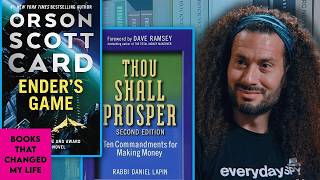
A long-form interview between Chris Collins and Andrew Bustamante (Air Force veteran, former CIA officer, co‑founder of Everyday Spy and co‑author of Shadow Cell) about books that shaped Bustamante's life—chiefly Ender's Game and Thou Shalt Prosper—and how those works influenced his views on leadership, ethics, business, and personal trauma. The conversation also covers risks of AI for covert identities, stages of childhood brain development (as taught at CIA), reflections on creativity and art, practical business lessons (client selection, pricing, ethical capitalism), and recommendations for other reading. The tone mixes personal memoir, tactical/organizational insight, and practical business advice.
Questions this video answers
September 11, 2025
$4,000 a month
42 years old
300% each year (for three years)
Talisker (from the Isle of Skye)
Chapters
This time on books that changed my life. We should start this off by pointing out that you are not currently alive.
This is a part of the problem.
With AI Is there something in the marketing department at the CIA?
I wonder if there's some floating cover information that the agency put out there.
It's going to be hard to sell.
Your book if you're or easier. Part of the reason AI is so dangerous to a clandestine officer is because it comes across all of the information, not just the easily accessible information. When you know that you are terminating another life, there really is a moment where you realize that that life has survived up until this moment and that life has experiences and memories that when you take a life in that moment, they're not your enemy at all. They're just another living creature that reached a precipice, reached a point in time with you. And now their time ends.
War is something different than what everybody perceives it to be.
Even when you're fighting for your life in a gunfight, once you win the gunfight and you see the bodies, you.
Realize like we have more in common than we have differences. And we're killing each.
Because by the.
Time you're 41 years old and you've got 13 years of service under your belt, you start asking why.
Okay. How did Ender's Game by Orson Scott Card and Thou Shalt Prosper by Rabbi Daniel Lapin change your life?
It gave me a.
Welcome to the Syndicatex Library where we love books, especially books that have changed lives. We're joined today by a special guest and a friend. He's a veteran of the Air Force and c founder of Everyday Spy and co author of Shadow Cell. And for the first time ever, he's talking about not one, but two books that have changed his life. Ender's Game by Orson Scott Card and Thou Shalt Prosper by Rabbi Daniel Lappin.
We are so excited to announce the books that Change My Life website. We made a way for you to show your book pride and that you love books. We hats, tees, hoodies. Check it out. Link in the description. Everybody needs a self help hat. Please welcome to the show Andrew Bustamante. We should start this off by pointing out that you are not currently alive.
When we went to Google you. Do you know that?
No. This is a part of the problem with AI it's. It's right about everything else.
So is there something in the marketing department at the CIA that they wipe? It's going to be hard to sell.
Your book if you're or easier but this is, this is awesome. So hopefully somebody fixes that. Or not.
Or not.
Or not. But that's, that's gonna.
Nobody's brought. Nobody's told you that.
Nobody's told me that. But now I want to look it up.
It happened over and over again. It wasn't a one time thing. Really? Yeah, because they did it the other day and then they go, hey, you know that Google says he's not alive and it'll show me.
And then I wonder if there's some floating contradictory information from like cover information that the agency put out there versus real, like real time information. Because there's some confusing stuff online about me. You can see where my cover identities and the backstopping for my cover identities have confused AI because AI can consume everything. So whenever an agency officer goes undercover, they create backstopped cover legends. And part of that backstopping includes changing dates, falsifying records, whatever else that live on the permanent Internet. So when you change someone's diploma.
For cover preparation reasons, it can bleed through and confuse current day records. So we'll see a lot of this with AI. Part of the reason AI is so dangerous is because to a clandestine officer is because it comes across all of the information, not just the easily accessible information.
Right. That's one of the things that scares CIA about AI. One of the reasons CIA was using AI so early on in their, in their operations. Thank you, ma'. Am.
So you ordered this, which is scotch, correct? I will tell you, the last time I drank scotch, I was in my 20s and I got in a. That's the last time I got in a fight. Like a fist fight.
You don't have to get into a fight this time. Oh, that smells so nice.
Oh, man, there's a lot going on there.
So the whisk. Oh, that is so good. So kudos to you and your team. This is a Talisker. Talisker is a Scotch from northern Scotland from an island called the Isle of Skye. And one of the flavors that you're tasting, I'm sure, is like that smoky flavor that's created when they burn peat. Peat moss. They burn peat moss to help flavor the whiskey during the distilling process. And some scotches have a very strong peat flavor. Some have a no peat flavor because some scotches don't use the peat at all. But this particular region, it's kind of known for that peaty taste. But when you come across one that's got this like a glorious color, the right amount of that peat flavor, but still with Other complexity without having that alcohol burn.
Yeah, there's a lot going on.
This is an excellent, excellent scotch.
And I'm so glad you can tell somebody really cares about what they're making. For sure, there's a craft craftsmanship in that.
And if you think about it, I mean, this is a. When you get up into northern Scotland.
There'S, there's not a lot of resources. So the time and effort to make something is not easy like it is in many parts of the United States where resources can be wasted in an experiment up there to make something like this might take 15 years. So you don't, you don't want to screw it up in year one if you know it's going to sit for 14 more years.
Yeah, that's, that's real art.
So I couldn't imagine a better place to have a really nice glass than a.
Almost makes you want to have a cigar. What do you think of the library?
The library is amazing, man. I mean, from the time that I met you and you first started talking about this place, I knew it would be amazing. But being here is totally different. And I had a chance to show your library to my family. And two of the people in my family, my wife and my, my oldest son, are huge book people. And when a book person interacts with a library, it's different than when a non book person interacts with a library because I can just see it in their face that they see something even richer and more than I see.
Yeah, you pointed out something too. Is like if I came in here, I'd want to be alone. Because it's a lot.
It's a lot. It's a lot. And it's kind of like human beings have this need to self preserve. And part of self preserving is hiding your true interests, your true, true interests. So when you go to open a book, you're attentive to who sees me open the book and who sees the title and who sees the COVID And you've got. Who sees what page I'm on. And in a place like this, if you're alone, you can really get intimate with the book. But if there's somebody sitting with you or if you're with somebody now, that intimacy is, is kind of cut short. You never know. Would I read three pages? Would I read two pages? You've got this book over here with Dali in it, and Dali is one of the few painters I know and a painter that I really appreciate because I used to live in a city that had a Dali museum in it. And I would go every few. Multiple times a year to the Dali Museum. And it just became this thing that of all the artists out there, he's one that I could appreciate because I had so much access to him. But even as I was sitting there, I was like, oh, I feel like I have to only flip through three or four pages because I can't make Chris wait 30 minutes or 45 minutes.
That's part of when it would take hours, really, to.
To appreciate it, to consume it.
Totally need space.
Yeah.
Yeah. The thing about this, too, is that I'm a big fan of, like, the printed book because I have a general distrust for E Readers and Kindles, in a sense. And I feel like that is an easy way for people to change history or to change the narrative. Like, interesting. We have a common friend that, like, there are things you can do with those to change.
You know, what people are reading.
Absolutely. Where.
When it's printed, that's it.
Like the Catcher in the Rye is the Catcher in the Rye.
Yeah.
And you can't ever change it.
You can't rewrite history.
And movies, I find, are similar because you can't change the movie. So whether you like that part of history or not, there's no tearing down that statue. It's going to be there forever until you choose to censor people from even having access to it.
So I do kind of feel like the.
More I collect, even if they're not books that I'm reading currently, I'm kind of preserving history in a way.
Absolutely. And I think that the honoring the book is the sense that I get in the Syndicate X Library.
Yeah. We love books.
We're fans of books. It's so clear. It's not like when you walk into a public library and there's just piles of books. There are no piles here. I mean, where books are stacked on another book, there's a purpose and a reason, and that's something special, man. That's something that makes this a cool place. Yeah.
You asked me what my favorite section was, and I. I would have a hard time. What is interesting is when. When it started out where I just brought all my books here and kind of unpacked them, the. The largest section was art, but most of the people that come here come here for business. And so there was no interaction whatsoever, which is why we made an effort to build, like, the presidential part and, you know, different sections.
I'm finding that there is a connection that people don't appreciate between art and business.
Yeah. But when you try to Teach them. It just takes too long. They either get it or they don't. I agree, but it's a. A lot of times it creates a block between somebody when you start talking about it, because it's. It's just too, too, too far of a leap.
I mean, when you talk about art to somebody who doesn't speak art, that's. That's like speaking about any topic to somebody who doesn't understand it. So I agree with you there. But one of the things that I'm very much appreciating in my own journey as a businessman is discovering art in business and discovering the business of art, but then also just discovering art for art's sake. Like, art is special, and I never appreciated it as much as I do now.
Who are your favorite artists?
So when it comes to most forms of art, sculpting, dancing.
Painting, I don't have a long list. There's the ones that I see that I love. There's the ones that I see that I don't understand. So I know I like Dali, but I don't know why I like Dali. I know one of the things I liked about Dali that I learned from the museum is he really did master the classical forms first at a very young age, just to get people to understand he was good at art. And after he kind of mastered the masters and showed his instructors, his teachers, his professors that he knew what he was doing, then he delved into his own format, his own style. And that's a story that I really appreciated. And it's a story that's kind of countercultural to what we are, what we tell our youth now. We tell our youth now. They can skip steps like, you don't have to. You don't have to go to college. You don't have to learn the old way. You don't have to. If you don't like math, don't learn math. Like, there's this weird undercurrent where we're teaching people that they don't have to master the basics. They don't even have to master what the masters have taught us. They can just skip to the end. And what I like about the Dali story is he showed that if you are truly talented, you can master what the world understands to be mastery quickly and then apply that as you make a revolutionary turn. And I don't think that that's unique to Dali. I'm pretty sure that Picasso was the same way. I'm pretty sure that Michelangelo was the same way that they showed they had a mastery of the basics before they went on to create their own arts. I don't know if that's true or not.
Yeah, like Picasso especially. So there's a museum in Barcelona that's the Picasso Museum. And it starts off like that very first painting he did of communion that his. I think his father started or his father let him finish it. But it's just of communion in this Catholic church. You know, beautiful, but very realistic. Like it's a reproduction of reality. And then as you go through the museum, he gets more and more abstract and he comes more into his own, and then you get into the Cubism and.
But you can see that the evolution came through work. Like, he was painting every day. Like, a lot of work helped him develop his style. And it's the same thing with Dali is a lot of work and struggle is the creation of who he became. He didn't arrive like Picasso did not arrive at Picasso. He started and evolved, but there's, like, seasons in his work that, you know, stack in a timeline where you can. You can just sell, like, you know, in the beginning. And Picasso was worried about it, but photography was coming into play, and people thought that would replace painters. So, you know, because painters would get hired to do a portrait of somebody. Now you can take a picture. Why do you need a portrait? And so you just see that Picasso's portraits became more abstract but more identifiable to him in a sense. Like, you can tell it's a Picasso, but it didn't start that way. Like, anybody could have painted that first one.
That's really interesting. It's also interesting to imagine a time when we thought pictures would replace paintings.
Oh, yeah. Like AI is going to replace this. Like that always happens, you know, that some. And, you know, some creation is going to replace everything. And.
Yeah.
What it ends up doing is, you know, exactly the opposite. It creates new opportunities.
Yeah. Or it's. It does create new opportunities, and it creates a chance for people to augment, advance, explore in a new way. That's how I. I'm. That's how I'm looking at AI personally. I know that's not how everybody looks at AI, like you said, but it's really kind of shocking to think of someone like Picasso. It's also shocking to think of how many artists were not famous in their lifetime and they had no idea the impact they were going to make until long after they were gone.
Yeah.
How many of them went broke? How many of them survived off of patrons only then to. To never know the impact that they made.
Yeah. Well, it's crazy to think that you could pick up a Picasso for, I don't know, whatever a couple thousand dollars is now at some point, you know? And then it just evolved. Like when I was in Barcelona, my friend that was kind of taking us around said, there's a story there about when he would go out to dinner. People would ask him to draw something on the napkin, and he would. And then they would say, will you sign it? And he goes, I'm buying dinner. I'm not buying the building.
That's funny.
So he would draw something for, you know, for them. But to sign it was a different thing.
Wow.
So what has your relationship been with books?
It's been actually a difficult relationship with books.
Really?
Yeah. When I was younger, I did not like to read at all. I was not born a reader. I don't like to sit still. I am a natural extrovert. So when I take time in quiet places, I end up falling asleep. And that's what happened to me with books all the time. So.
So if you were assigned to read a book in school, it was torture.
It was torture. And for many, many years, I wouldn't read the book I was assigned.
You'd get somebody to summarize it.
Yeah. Find some kind of shortcut. Right. One of the shortcuts I found when I was in, like, late elementary school, early middle school is I would read the first and last paragraph in a chapter, and then if it made sense to me, the first and last paragraph, if it made sense, I'd kind of make up how they went from first chap. First paragraph to last paragraph, and then summarize that in my little, you know, one page essay. If it didn't make sense to me, then I would kind of flip through looking for keywords from the last paragraph and try and see in the story where it happened. So there were a lot of classics that are assigned to young kids that I skipped through that way. And I mean, everything from, like, Pride and Prejudice, I skipped it. Emily Bronte books. I skipped them like they were just Hemingway books. I would skip my way through all these assigned readings until I read Fahrenheit 451. And for whatever reason, Fahrenheit 451, I read the first paragraph of the first chapter, and then I read the second paragraph, and then I read the third paragraph. And then before I knew it, I kind of read most of the chapter, and I was like, this. This is interesting. So then I kept reading it, and then I. And that took me into this very, very Brief season of reading entire books.
How old were you?
Maybe 13, maybe 12. Somewhere in there, school teachers would know whatever the assigned, assigned age is for that, right? But that's how I read Animal Farm. That's how I read Fahrenheit 451. That's how I read the Old man in the Sea. That's how I read the Odyssey. Because I started realizing like, wow, there's really something here. If it, if it captivated me more than being bored during a period of time, then I would read it. And I remember sitting. It's so funny, man. I just remember sitting. We had this picnic table in my, in my backyard when I lived in Pennsylvania as a kid. And it was out in the middle of the sun, no, no shade, no covering at all. And I just remember sitting on that picnic table, my butt falling asleep in the middle of the summer when you should be out with your friends with Animal Farm, reading about talking pigs and donkeys and seeing the compare and contrast with communism as I'm reading it, right? And just continuing to read even though I knew there's a stream that I could be playing in and there's friends I could be playing with and there's all this other stuff. But. But the books were an escape. And after reading a handful of those classics, I talked to my mom because my mom was an avid reader. And I talked to my mom about the books that she reads. And she read a lot of the pulpy fictiony stuff that you could buy off the bookshelf. And then she became kind of my gateway drug into Dean Koontz and Stephen King and Michael Crichton back before all of their books became movies. So I was reading Jurassic park before I was watching Jurassic park and I was reading about these incredible stories and adventures that were contemporary but in these page turning novels. Whereas Animal Farm is not a page turner, right? Not like a Dean Koontz story about a special operator and a dog, right. So there is just this cool transformation that happened when I was in my early teens and it happened naturally. And I think that's the part that is so powerful for me. My dad used to try to force me to read. My stepdad and my stepdad and I had a very contentious relationship. But he used to force me to read because he thought reading was a sign of intelligence. And since I didn't read, that made him feel like I wasn't intelligent. So I have this horrible memory of being like 9 or 10 years old. And my dad forced me that summer to read Moby Dick and He took me to the library and he got me this book. And he's like, you're going to read this book from COVID to cover before it has to go back to the library. Which was like 30, 21 days or something like three weeks. And I remember holding that big fucking book, and I opened it up and I read the first line. They call me Ishmael. And I read the next two or three lines, and I was lost. And if you've ever read Moby Dick, that is dense, heavy, like beautiful prose, but that is heavy reading. And I was lost. I was lost after the third or fourth sentence. And I remember just crying and begging to not have to do this and fighting. And that shaped my opinion of books for many years until I found my way into other books. So for a long time, for most of my childhood, I didn't like books. I didn't want books. I didn't want to be around books. And when I thought about them, they caused me stress and discomfort.
Yeah, that's an interesting style of parenting.
My dad was full of interesting styles.
Of parenting because, yeah, that's not an endearing way. So then what happens as. As you become an adult, you go into the Air Force. Are you still reading? Do you read books on strategy? Does it change the next.
The next big step for me in reading really happened when I came in contact with Ender's Game. And that's one of the reasons it's a book that changed my life. I saw reading as Entertainment. So Fahrenheit 451 and Animal Farm, I had to do book reports on them like we all did, but they were still, like, fun more than anything else. I was like, oh, I just have to find something to talk about in the book so I could talk about whatever the. The way that the pig didn't like the horse. And that's good enough for an essay. I didn't take anything deeper from the books. And then when I got into the pulpy fiction stuff with my mom, that there's nothing to take from those books, right? It's just. Just an adventure, just an escape. And for me, escape is what I needed when I was that age, when I was 13, 14, 15, escape was. Was the thing I needed.
So I kind of know what escape is like when you're a kid, as an introvert. What is escape like when you're an extrovert? So because isn't that the opposite of what you're really seeking or what fuels you?
Sort of. I would say that extroverts and Introverts are really primarily differentiated based off how they get their energy. Introverts get their energy by being alone. So you sit in this library four or five hours, and then you come out ready for the world. If I were to sit in this library for four or five hours, I would come out taxed. I'd come out like, I need to go. I need to go to a bar, I need to go to an outdoor psych. I need to go somewhere where I can suck energy from the people around me. Whereas for you, people around you suck the energy from you. So the introvert extrovert dynamic relates to what the book is about more so than to the fact that it's reading. So for me, high adventure books are invigorating, whereas you can see yourself in it. Whereas introspective reference books, textbooks, learning books, books that teach you something, are work because it's just me grinding through the book. So that made it very easy for me to get into the pulpy fiction stuff, because everything is larger than life, and I feel like I'm larger than life. And escaping for me meant escaping my house. It meant escaping my stepdad, escaping my mom and my two sisters, and escaping the trap that is being 15 years old. And for those of us who felt trapped at 15 years old, you know exactly what I'm talking about. You have no car, you have no money, you have no authority, you have no power. Somebody else still tells you bedtime. You can't control the remote control or the dial on your tv. Like, it was hard. So books gave me the opportunity to pick who, where I wanted to go when I wanted to go there, who I wanted to be. And I was the kind of person back then where it was like, I open a book, I read the back cover, I read the front cover, I read the first page, if it wasn't interesting, next book. Like, books were almost disposable. They weren't special. They were just a form of entertainment. And then when I read Ender's Game, I was probably about 18 or 19 years old. I was actually already in college, and I read it on my own, which is what made it so special.
Who introduced you to it?
I actually don't remember who introduced me to this book. I remember that it was a signed reading when I was in middle school and I skipped it. And people talked about how much they loved it. And then when I was in college, I was at the Air Force Academy. I had a number of friends who also were talking about the book and talking about it because it's the Air Force Academy. The book is about cadets in space, in combat. So it resonated with multiple people who are my friends. And I was realizing, like, holy. Like, everybody read this book. Everybody was touched by this book in some way. It's cool. It's spacey, it's Air Forcey. Maybe I should actually figure out what the hell it's about. So I went to a Barnes and Noble in Colorado Springs and I paid my own money to buy the book. And. And I sat there and I read it. And I knew I've never associated myself as a reader. And yet there I was again in college, on my own time, choosing to sit on the floor and read a book. And I could feel just like I felt on that bench in my backyard, I should be out trying to get laid. I should be out. Like, I don't get much free time at the Air Force Academy. I should be out doing something fun with it. And instead, I'm sitting here reading. And that was what that was. One of the things that made the book so powerful to me is I was like, whatever it is that I'm reading right now is so powerful to me. I'm not doing anything else.
So what are you feeling at that point in your life?
I'm feeling. Yeah, it's so. I don't talk about this very often, so I appreciate the question. I was really in college. Like, I was a student, kind of a shitty person. I had a shitty attitude. I was decent at certain things. I was pretty good at sports. I was good at foreign languages. I was good at Chinese language, which is what I was studying at the Air Force Academy. But I was not a good person, and I didn't really like myself very much.
Did you have a lot of friends?
I had friends. I had some friends. But frankly speaking, the friends that I had fell into one of two buckets. They were either kind of shitty, like me, also shitty students, also shitty attitude, kind of just trying to survive. Not shitty people, just at a shitty time in their life. Or they were really amazing people, and I was just blessed to have them as friends, right? The people who always lift you up when you're down, the people who always try to help you. The people who somehow just seem so good at everything that they're kind of annoying. So I was blessed to have friends at all. But those were the two types of friends that I have. What I didn't really have were close friends. I kind of had friends of convenience and then friends of necessity. And that was how it worked for, like, 99% of my friends.
What was making you so mad?
There was an element of me feeling trapped. So when I left home in Pennsylvania, my parents had saved no money for college. They never assumed I would go to college. They didn't assume I was smart enough for college. But they always told me, when I turn 18, I have no more. I don't have a place to stay anymore. I have to move, I have to leave. So they were like, you either get a job and go live on your own or you join the military. But you're out of the house, you're not renting to stay at the house, you're not going to community college and having a part time job and living here. You have no home after you turn 18. And that was just what they thought was good parenting, right? It's my stepdad and that's him borrowing from what he grew up with. I didn't really have a college option. I always just planned to go to the military. And then when I qualified for the Air Force Academy, which wasn't an easy thing to do, but I qualified for it with my grades and with my, with my performance, etc. I saw, I saw an escape, the escape that I was looking for, the escape that I was reading about, right? And I was like, oh, let's go, let's go join the military and have a job afterwards and get a great education. Let's go. I knew nothing about it, nothing about it. Didn't go visit campus because my parents couldn't afford it. Didn't read about it because that would involve reading. Didn't look, didn't do anything. I just went and I was like, it's going to be hard. I like hard. We'll be fine. It was such a bad fit for me. Military academy life was such a bad fit for me in so many ways. And I was so immature and, and wildly unprepared for the responsibility of that place that rather than look at myself at 18 years old and realize my own shortcomings, I just blamed everything else.
You externalized it.
Exactly. So I had to stay in my mind. I had to stay because I had no place to go back to. I couldn't go home, I couldn't quit. I would have no place to go. And I had gotten into this very challenging, very hard school. I was making the grade, it was a low grade, but I was passing semester to semester, so how could I leave? So I ended up just feeling trapped, like I just had to put up with it. I had to push through. And that, that for me, I'm the kind of person that when I feel trapped, nothing good comes next. When I feel trapped in a bad relationship, nothing good comes to that. When I feel trapped in a bad job, nothing good comes of that. And that was the same way with college. So I didn't try. I tried to survive. I didn't try to thrive. I didn't try to do well. I didn't try to make good friends. I tried to live up my weekends. I tried to, you know, get laid in as few steps as possible. I tried to, you know, cheat and break as many rules as I could in as little time as possible. And I always. That's. That's where my effort went. Instead of into learning what's the least.
Amount of steps to getting laid?
Well, there's. The least amount of steps comes when you have money. Because when you have money, it's usually just a phone call to a friend who knows of a guy that you can call to get a girl. Like, that's kind of the cheapest way to getting. That's the fastest way and the fewest steps that I've ever seen in my life. But when you're an Air Force Academy cadet, like, there's. That's the downside, is there. There really isn't such a thing as a work. It's work.
Yeah, that's what I assumed. Okay, so what is Orson trying to tell us with this book?
So I think there are lots of things that Orson Scott Card is trying to tell us with this book and with the Ender's Game series. And I will say that I read the. I read some of the additional books in this series, and none of them touched me like Ender's Game. But I think what I read in this book was. It was permission. I saw permission. I saw the military industrial complex that is at the center of this story gave permission to people to abuse children in order to win the protection of the earth, essentially. Right. It's an interplanetary battle. There's a conflict with these growing aliens, unbeatable foes. And they tried traditional military tactics that didn't work. They tried traditional military strategies that didn't work. They tried, you know, experimental stuff. It didn't work. So somebody came up with the theory that the only way to beat this alien race was basically to start tapping into the talent, the unlimited potential and creativity of children. We in the modern day would never think to do that. We would never think to use children for our own ends. We live in a world that values innocence and holds these Things to be almost sacred. But what Scott. What Orson Scott Card does in this book is he's like, if we were. If we were at risk of extinction, would that change our idea about children? And that's what they did. They start to. They start to weaponize children's imaginations, children's creativity, and they. They basically start sending children into space to train, to become soldiers. But in parallel to their training, they're also actively engaging in military operations. That permission was powerful to me. And then inside the story itself, you see these moments where people are cheating, they're breaking the rules. Especially Ender himself, Andrew Wiggin, the lead character, he's so smart and so young. He doesn't understand the larger contexts of rules and obligations and expectations. So he's so simple because he's a child that it really does boil down to, here's your mission objective. Accomplish that mission objective. And he does so oftentimes by breaking rules, by cheating, by undercutting, by taking advantage of someone or some situation or some technology. And that's what makes him so genius. And that's what makes him both loved and hated by his peers, by the hierarchy, by the structure, because he's essentially justifying, giving himself permission to do things that nobody else will do because everybody else is busy following the rules and following the obligations and following the expectations. So at my point in life where I felt trapped in a community that was rule followers, a highly structured military academy existence where all I wanted to do was cheat, to break rules, to the fewest number of steps to getting laid. All I wanted was the shortcut. And here's somebody who's the star of a book, who's the star of the story, who's changing the academy that he's in, who's changing the military that he's in, who's shaping the future for the world, and all he's doing is breaking rules and pissing people off. It gave me permission to think. I don't have to be angry all the time. I can just piss people off, do it my way, piss some people off, and maybe I'll be as good as Andrew Wiggins.
It's genius in the sense that he's regressing to when we're the most free and innocent. Right before all the adults and all the insecurities and everything else that happens in puberty.
Right, right.
Is going back to that point where anything's possible, where you think you can be an astronaut, you. You know, you can dream anything.
Yeah. It's, you know, there's something powerful I, I don't know where I heard it or I read it, but when I, when I was becoming an adult or becoming a parent, somebody said to me that bad people are built, all kids are good. There are no such thing as bad kids. But bad people are built, and they're built by the perversion of good kids. So what are you doing to ruin all the good things in a kid and turn them into a bad person? That's really what it is. And that's exactly what you're saying. The stacking, the stacking of trauma and the stacking of expectations and the stacking of twisted beliefs and rules and value sets, and we just break good people as they grow to turn them into something that we don't like in the end.
Yeah, I did this thing with AI maybe 3 weeks ago now where I have this thing built that has.
IAM leader in there and it kind of works off of that. And I asked it, the AI asked it, what are the 20 most common behavioral cascades that have a negative effect on people? And it gave me the top 20. Of the top 20, I had 14.
And it was in your personal life.
Yeah, and it was, it was a very sad moment. Ones that I didn't have were almost inconsequent. I had all the bad ones, like the ones you wouldn't want to have. You know, it's crazy how those behavioral cascades, like you can just point out, like, oh, that's why I act this way, or that's why I'm uncomfortable in these situations. Is it all started back when I was between 3 and 7. Like that time is crazy in the sense of how we're programmed. And 30 years later, it's still affecting you or 40 years later. And yeah, it's so fragile.
CIA teaches us that the brain goes through four evolutions, four growth processes. And the first is zero to three. And from zero to three, children learn everything. They have no way of discerning what they're learning. They just learn. They learn it all through their five senses because that's pretty much all they have. So they see lights, they hear sounds, and it's all coming in. The next break happens from three to seven. From three to seven, children still learn everything, but they can start to control more the avenues for learning, the senses for learning. So now they can become focused on something and they can ignore something else, which is how your 5 year old can focus on the TV and ignore you, whereas that 2 year old wouldn't be able to prioritize their senses. So from 3 to 7, children are prioritizing their senses, but they're still taking in everything. From seven to about 14, you start to be able to discern your favorites. So you can still learn everything, but you start to show favoritism towards the things that come easier, are more interesting, are more enjoyable. So now you learn math or you learn history because you like history and you ignore math because you don't like math. You still have the capacity to learn everything, but you're literally choosing history over math. But then from 14 to 25, in the fourth phase of your, your brain processing, your being, your brain growing in that fourth phase, you actively stop yourself from learning certain things, so you block them off. So if you're hyper religious, you stop learning anything that doesn't, that doesn't ally with your religious beliefs. If you are hyper nationalistic, you stop learning anything that doesn't ally with your nationalistic beliefs and community. And if you're, if your dad's a hunter or if your mom's a quilter or whatever else. Like you get deep into whatever you are choosing to be exposed to and you're blocking everything else. From 25 on, your brain doesn't really grow. You can change it through neuroplasticity, but it takes effort. The natural growth cycles have already happened. So what's fascinating to me is that after learning what I learned at CIA, because CIA teaches us to target people who had trauma from three to 14, those phases, those years where they couldn't not learn it after 14, you can kind of unlearn it. You can block things out. Like, there's a difference between somebody who's sexually molested at 15 versus somebody who's sexually molested at 11. There's a, there's a cognitive difference in how they process that information. So for intelligence collection purposes, you're looking for the people who are essentially abused or traumatized between the ages of 3 and 14. Because you'll be, if you can tap into that trauma, you'll be able to take the most control from them because that's elements of their brain that are almost hardwired that they can't share with anybody else. Learning that at CIA gave me a whole new perspective on this book, because the children that are being used in this book are between the age of 8 and 12 in that sweet spot. Whether Orson Scott Card was, was using any kind of modern science when he targeted that group as the primary population, or whether that was just something intrinsic to him, he just understood that that is a group of children that are maximally Creative, maximally trainable, maximally motivated. I don't know. But it was just wild to learn the science so long after realizing the fiction that I had fallen in love with.
How do you. So how do you read that in somebody?
There's a number of different ways. First of all, most people who had trauma in those ages don't show it. It's not shown overtly. They don't walk around with sad faces. They don't, you know, hide in their closets. That's not really what you see. Generally speaking, when you find people that had trauma between the ages of 13 and 14, or, I'm sorry, between the ages of 3 and 14, you're actually looking for the opposite of what you would expect. You're looking for people who are highly accomplished people who are hyper motivated, people who are hyper people pleasers, people who are hyper energetic because there's a break in their cognition that makes them feel like they can do something to either escape or make up for the trauma that they had then. So you're looking for people who are, who are movers and shakers, not people who are sitting with a beggar's cup in front of a store on Main Street.
So that's an interesting realization. So in your personal journey, that realization that a lot of the reason why you're so motivated to be an entrepreneur and work hard and appear a certain way to appear successful or, you know, whatever it is that you're trying to project, but it's intentional and you're working really hard to do that, whether it's fame or money, that sort of thing. Have you come to terms with that monster behind you that's chasing you?
Yeah. It's a humiliating fact when you wake up to the fact that you are successful because you were shattered at a young age, when you realize that.
Dad didn't love you enough or mom didn't pay attention to you, or who knows what other terrible things may have happened to you. When you realize that your success now is tied to that trauma, then it's like a terrible feeling because part of you wants to be rid of it, but part of you can't get rid of it. And part of you celebrates the fact that you had it and somebody else didn't.
And also, like you said, we're so old that it's hard. It takes a lot of work to change now.
Correct? It takes a lot of work to.
Change now because it's automatic pilot almost.
For it's, it's, it's wired right. It's like trying to how are you going to update the wiring of your house without ripping it all out? And then if you do rip it all out, what. What? Is your house still going to be as good as it is now? Are you changing something? Are you ruining something? Are you breaking it somehow? So, for me personally, there's. There's a piece of me that has come to really appreciate the fact that I grew up in the conditions that I grew up in. And I can honestly say I wouldn't change it. So you reframe it, because rather than framing it as making me a victim, I'm framing it as they did what they thought was right. And because of what they did, because of what my parents did that they thought was right, I was able to make it into what it is now. Had they done it differently, I wouldn't be where I am now. Maybe I'd be better. Chances are I'd be worse and better and worse. I'm literally calculating in terms of dollars and cents.
But the question's more about the stuff in the dark.
I would say that there's an element where I have not come to terms.
And I am still trying to process through how I want to deal with it, what I want to do with it, because.
Holding onto it doesn't do anything. Releasing it is very difficult. Recognizing that my motive, like my ambition and my courage and my tenacity is tied to the trauma that I had growing up. It's tied to what my dad did to me growing up. Whether it was abusive words or emotional abuse or physical abuse or whatever else. Like recognizing that there's a piece of me, that my independence comes from my mom choosing to say the things that she said and do the things that she chose to do in defense of my stepdad and not supporting me and not backing me up. Like, recognizing that I could complain about those things or I could accept that they were what they were. And now how do I move forward with it? There's a part of me that doesn't want to continue being ambitious, and there's a part of me that doesn't want to continue building wealth and building fame and building notoriety, because it's just celebrating that. So there's a part of me that wants to just disappear. Really, what it is, is I want to build something that is.
Separate from me so that the thing, on its own, can grow independent of me. And I'm hoping that what that will do is allow me to have the space to go into my own world, go back onto my little backyard picnic table and process through My own opinions on my own, rather than having everything tied, rather than having my financial health and wealth be tied to my own drive that comes from my own traumas. Like, I'm trying to decouple the two and build a company that can scale and grow on its own, where I am just like an, an outside bolt on rather than the core of the company.
I think of all, all of the ones that I've come to terms with, that's the, the last one that I haven't figured out. Like, I'll give you an example. Like, okay, so my dad left when I was two months. My stepdad left when I was 13. So, you know, going, going through two father figures, leaving the, you know, the message is that I'm not enough. I'm not worth sticking around for, right? And so then later on, you want to be controlling in relationships or you want to bail as soon as it gets good. You don't know what you. You thrive on relationships that are tension and like. But if it's good, you figure out a way to sabotage it or bolt or run that. I don't know. I figured that out in my 30s, right? I figured out that it's about collaboration. It isn't about control and that sort of thing. And so a lot of them, like, I can see, like, oh, I figured that out. I figured that. Yeah, that was hard, but I figured out. But the last one on my list is that career one and that running from something, you know, and it's like our mutual friend Mike and I talk about this stuff a lot is like, he pointed out, he's like, you know, there was a time where you're like, oh, if I just made this much a month, I'd be happy. And then, then it's like 10 times that and I'd be happy. And then it's like 10 times. And it like, at what point is it just about running from something versus quality? So, I mean, how much do you really need?
My wife and I talk about this all the time because we're, we're fortunate enough to be in a place in our business where our financial needs are safe. And it's really just a question of how much work do we want to put in to reach the next number. And all the way back to when we were still with CIA, we used to talk about, what's the number? What is the number? What is the number when you're happy, what is the number when you're satisfied, when is the number when you don't worry anymore.
And for us, our Number hasn't really changed that much. Our number has been $4,000 a month since 2017. That is the number. $4,000 a month pays for a decent house, pays for a car, pays for food, and keeping kids healthy with something other than junk food. Right. It doesn't take a whole lot of money to reach something sustainable. And $4,000 a month projected over 10 years, 20 years, 40 years, again, still isn't very much. Right? That's $100,000 a year over 10 years is a million dollars. I mean, our company makes a million dollars in six months right now, so we don't have to worry too much. If you're calculating it based off of money, the challenge becomes, when you're wired by trauma, money comes second to impact. And then you start thinking about impact and what kind of impact you can make, what kind of change you can make. And what responsibility do you feel like you have to your employees? And what responsibility do you feel like you have to your followers, your fans, your consumers, your customers, however you want to talk about it. And that impact becomes the thing that drives us. And then you can't measure impact easily. So you start measuring the impact with the dollars and cents and you're like, oh, I'm making $10 million a year's worth of impact. I'm making 15 or 25 million dol million a year worth of impact and making $100 million a year worth of impact. I'm changing the landscape of my industry. You'll never escape that if you're trying that. You may not even realize that that's become your kind of villain. So what I find is the question that I've started asking myself since leaving CIA. Because when I left CIA, I realized I was running from responsibility. I was running away from CIA and military and national security. Like, oof, it's a lot of shit to carry. So I started asking myself, well, what am I running towards? And I was very blessed that when my first child was born in 2013, I realized that he was my opportunity to make an impact. And the only impact that I really cared about was giving him a childhood that was almost the antithesis of my childhood. Giving my daughter, who was born in 2017, a childhood that was the antithesis of my childhood. And the conversations that I've had with my wife was, hey, if we give them a blessed, loving household, are we not just going to turn them into complacent, boring, non tenacious, non ambitious adults? And our, I mean, we still haven't proven it out yet, but our Opinion is, our hope is that giving them a loving place to grow up and giving them support and giving them compassion and giving them all the things we didn't have isn't what creates that ambition and tenacity. What creates the ambition and tenacity is the learning along those years, not how you are treated during those years. For you and me, what we learned came from how we were treated. There was no separate, bifurcated difference between what your parents were teaching you and what your parents were doing to you. For me, it was all one and the same. What they were teaching me is what they were doing to me. Whereas for our children, we're trying to separate the two. What we're doing to them is separate from what we're teaching them. We're giving them love and teaching them responsibility. We're giving them empowerment and teaching them courage and hoping that that will play out in the end.
Yeah, in a sense, it's self esteem.
Yes.
Where I had very low self esteem.
And if you had it then and you're past it now, that is a tremendous amount of work. But what I find is a lot of people who are our age and successful still have imposter syndrome, still have low self esteem. They don't say it out loud, but after a couple of these and a safe space, they start to admit, like, yeah, I don't really feel like I'm handsome. I don't really feel like I'm fit. I don't really feel like people like me. I feel like they just. They like me for my money. They don't like me for myself.
Do you feel that way?
I feel like people. I feel like people are interested in me, not because of me. They like the fact that I'm former CIA. They like the fact that I'm a brown guy on YouTube. They like the guy that I. And they like the fact that I'm, you know, running a business. They like the fact that I'm online. They like. They like something first, and that kind of keeps them from ever being able to tap into.
What do you think the, the first.
Thing is CIA, Really? I think the first thing that people see in me is CIA. And then they. They view me through their own lens of CIA. I like CIA. I don't like CIA. CIA is cool. CIA is evil. That's the first.
Kind of algorithm that goes through their head whenever they recognize me as me or when they hear that I am from CIA. Because I have neighbors who have never met me before or I have neighbors who don't know who I Am. And then when they ask me what I do and I'm like, oh, I run a digital company, they're like, oh, what's your company do? And as soon as it says everyday spy, what do we do? We teach spy skills. As soon as the word spy comes up, then they're like, oh, that's interesting.
So I'll, I'll tell you. My, my journey with you was not that I'm glad. So my journey was CIA was probably, you know, co star, but your, your ability to explain things and like kind of you as a teacher was what attracted me. And then when I met you, you are the most charismatic person I've ever met. You have the ability to.
Important. You're, you're always on like I've never seen somebody as attentive, smart. And whether it's genuine or not, it certainly feels genuine when you're shining your light on people.
There's a level of sincerity to that for sure, because I don't have to be artificial anymore. CIA teaches you how to do that in a very artificial way where you have to shine your light on everybody. I like that term. And conserve resources in the process. Because what you're really doing is you're trying to find the cockroach that's going to help you steal secrets and commit espionage. So they teach you how to make everybody feel good in a room. But what I found is that when I left CIA, that same skill set, that same process for making other people feel special had real value for real relationships. And then I didn't have to have all these artificial relationships. I only needed to have real relationships and I could choose which relationships to engage in and which not to. So, you know, when I met you, I was excited to meet you. You had done incredible things on your own. It was very easy to just be myself with you. But there are lots of people out there who, it takes work to shine a light on them because you're not genuinely interested in them as individuals. Because on whatever reason I feel like.
The way that you do it though, you find something like, I don't know, I always think there's something interesting about everybody. But I will say that your example has made me work harder and not pull up or, I don't know, you could say lazy in a way. But I've, you know, I've had tons of speakers at my events. I've never seen somebody work that hard. And I remember asking you what you know, what you were doing in the sense, because you were only obligated to show up and talk on stage. But you came to all of the mixers and events and genuinely, like, made friends with people in a way that was very selfless. And I think the. The example that I took away from you was that selflessness. There has to be an element of being genuine, because there's no way you would be that selfless and that attentive to other people if you genuinely didn't care about people.
Agreed.
And that would be the thing that I found most attractive about you way more than CIA.
Well, I appreciate that, Chris. And I think that speaks to a lot of our relationship together, is that I don't feel like I don't matter. I feel like you care about me as a person. I feel like you care about my wife and kids, who you've met. I feel like you were, like, you're genuinely excited to spend an afternoon together. And that's. That's a very special feeling for me because there are a lot of people that. That that's not the case, that they're looking for a story. They're looking for arm candy. They're looking for something else. I've been to plenty of speaking engagements where the organizer restricted me from their people, kept me from working with the crowd or being in the crowd or going to sec, like secondary and tertiary mixers and social groups. And I never understood why. But that's just the difference between how you treat your. Your clients and how other speaking engagers or speaking engagements treat their clients. You want what's best for your whole client, and that's kind of how I am, too. I know that I want what's best for my clients. So if I'm your. If you're my client is speaking engagement, then I want to pour myself into everybody at your speaking engagement. I want to make sure that they get the maximum value from your collaboration with me. But there are some places that are like, oh, no, no. I want you on the stage and I want you off the stage, and I want nobody to have access to you because I want them to feel like they need more, and the only way they can get more is by coming through me.
Yeah, that's. That's the way to do it, too. Yeah. I mean, I know. And you probably know this too, is when you have events and groups like we have, they get more out of the breaks and the lunches and the time they spend together than anything we do on stage.
Absolutely.
And so it's an important thing to really, you know, intentionally create those environments where people can make friends, make connections, and they they feel like they belong because so many people that are leading stuff are, you know, they can't talk to their employees. Sometimes their spouse doesn't understand. And so those sort of environments are a place where they can actually talk about stuff that they normally would be embarrassed to talk about, or it's just off limits.
And it's your chance to model behavior. It's one thing to stand up on a stage and say, here are the four steps to creating influence. It's something completely different to stand on a stage, say, here are the four steps, and then get off the stage and start exercising. The four steps in the crowd where people are watching you do it and other people are engaging you while you do it. And then other people are asking you, hey, did you just do what you taught us to that guy over there? Right. And that's when we talk about lessons like, like when I taught your group about the four Cs to building influence. And the first step in the four C process is consideration. You're considering the other person's point of view. You're putting yourself in their shoes. There's no better way to teach that than to have somebody standing on the outskirts watching you consider somebody else. In a discussion where you say, oh, you've been in this job for 25 years at the same company, like, is that good? Is that bad? Do you ever think about leaving? Do you feel like they appreciate you more or less after 25 years? Like that level of consideration, it becomes very obvious to somebody on the outside watching. Whereas the person that you're actually having the conversation with may not even realize that you're practicing the four C's at all.
Yeah. You know, watching you do that has been a huge inspiration and just the point of the selflessness, because, you know, anybody who kind of does that understands that you're, you give a piece of yourself. But you, you, you know, you were at another level. And I, you know, I learned a lot by watching that.
I'm so glad.
And then you get more back, for sure.
You get more back and you get, you learn on your own. You learn how to refine your process, you learn how to improve your process. It's real time practice of your own process. So you really do. When people talk about you get more than you give. I think that the selfish truth behind you get more than you give is that you get all the new experience, all the current testing information. You get all that too.
Yeah. And also very impressed with how you practice what you preach. That's not a common thing. A Lot of people, like, teach an idealized thing, but it's really not connected to any sort of reality in everyday practice where your teaching and your example are mirrors. Like, you're practicing what you preach firsthand and you can watch it, like, then, you know, it just connects.
I try. I try to make that be true. I always have my mistakes like everybody else.
Oh, yeah. But I mean, overall, like, yeah, we all do. Like, you know, we're all clowns, too. But.
Kind of back to that thing about success is I do think one thing that I pay attention to more is the feedback from people versus the money. It means way more if you can make a difference in somebody's life and actually, like, change something that puts them on a. On a different path that's positive or just help them believe in themselves or what, you know, whatever it is that we can do as you get older has way more value than the revenue.
As you get more successful. For sure. Because here's the thing that I think the. The truth, at least as I see it, is if we weren't able to put food on the table, we would worry less about what people believe in changing their lives. We would worry more about making minimum sales to get food on the table. So as you have success. That's part of what I was saying, where we focus on the impact. And then how do you measure impact? It's hard to measure impact. How do you get the feedback from people? It's hard to get feedback from people. So I completely agree with you. It's just one of those things where that's why success never seems to be achieved, because there's always more. There's always more impact you can make. And then how do you measure that?
Okay, I'm going to go through this book a little bit and just kind of point out a couple parts and get your thoughts on it. So Chapter four, the launch with Enderman. We have to strike a delicate balance. Isolate him enough that he remains creative. Otherwise he'll adapt the system here and we'll lose him. At the same time, we need to make sure he keeps a strong ability to lead.
So you're in the middle of a discussion between two senior officers. I think this is earlier off in the book that you don't realize they're military officers when they're having this conversation. And you can hear them plotting about how they have to shape the environment that this child leader will be in. This child talent will be in. Creativity comes from isolation. I think you know that probably more than most people, because you've done incredible creative feats. You have to be alone to tap into your creativity. We talked about it earlier off camera when we were talking about how, or even on camera, in order for people to really enjoy a book, they want to be alone because you don't want to have to put in filters to how you're enjoying the book. The same thing is true for your creativity. We all explore our deepest creativity when we are alone, when we are isolated. But like they said, we also have to make sure that he recognizes he's got an obligation, a responsibility to lead. That means you kind of have to put him in a group where he's. Where he recognizes there isn't somebody else that he wants to follow. And that's one of the difficulties about leaders. Leaders are born, but they're not born from the. From, you know, the birth canal. They're born from the environment. And in the environment where there's nobody you want to follow. For the people who are destined to lead in that environment, they realize that they have to step up and be the leader different than the person who wants to take charge and who wants to be bossy. That person isn't paying attention at all to the environment. That person's just trying to bulldoze the environment down. The person who actually observes and recognizes I'm the best suited for this. There's a gravity there, there's a. A humility there, and that makes them a leader. And I think that's what they're trying.
To create for Ender and kind of the difference between the need for power and control versus the need to accomplish a mission.
Yes. Because, you know, when you, when you read this book, and I encourage everybody watching to read this book, if they haven't already read it, if they have read it, reread it. Because rereading it as an adult is a completely different experience. But he's not a happy kid. He's a sad kid. He's not a popular kid. He's an outcast. Like, in many ways, it is the sad, emotional person who feels like they're on the outside that has the most potential to do incredible things. Because they'll never be trapped in the norm. They'll never be imprisoned in the conventional way of thinking. They are already built of what it takes to make them amazing. The problem is that you walk down the street in any city in America and you're going to see the outcasts and you're going to see the awkward and you're going to see the introverted creatives, and they're like, they're kicked to the side. They feel awkward, they feel weird, they feel rejected because they are. Because nobody has put the effort into them that this leadership team puts into Andrew Wiggin.
Yeah, it's very intentional. Okay, then I'm going to jump ahead here and I'll just read this and then tell me your thoughts. So I'll put it bluntly. Human beings are free, except one. Humanity needs them. Individual human beings are all tools that the others use to help us all survive. That's a lie. No, it's just a half truth. You can worry about the other half after we win this war.
This is really getting into the rationalization of deception and the rationalization of controlling information. CIA teaches us that there's four types of lies. All four lies are 100% permissible in pursuit of espionage. White lies.
Lies of omission, lies of misdirection, and bold lies. White lies are the little lies that we tell all the time. Somebody's got bad breath. You don't want to hurt their feelings, so you're like, so you don't talk about. Or so you. You say that their breath smells good. That's a bad example. But you know, it's the. It's the girlfriend who makes cupcakes that don't taste good, but you tell her that they taste good. That's a white lie. The bad breath example. Your friend has bad breath. You don't tell him he has bad breath. He asks you, does my breath smell bad? And you just kind of omit yourself from the conversation. Like, that's fine, right? That's a lie of omission. You're omitting the truth. Then you have lies of misdirection. Lies of misdirection are what we see every day in the headlines where we emphasize one part of a story, but not the other side of the story. That's your. When they say that's only a half truth in the passage, that's a lie of misdirection. You use half the truth to misdirect them in one direction rather than giving them the whole truth. And then you've got your bold lie. And your bold lie is what everybody associates with the lie. It's a complete fabrication of the truth. So here in this passage, you've got this incredible point where they're justifying how it's okay to use kids as a tool to fight their enemy, to protect humanity.
That is an allegorical comparison to what I saw at CIA, where CIA uses anyone and everyone to protect national security. To ensure the long term security of the United States. Whether that means you're manipulating Americans or whether that means you're manipulating foreigners, or whether that means you're manipulating currency, whether it means you're putting out disinformation or misinformation. Everything in pursuit of protecting American interests is fair game.
So ethically flexible towards the mission.
Exactly right.
Did you ever struggle with that?
When I was at the Agency, I never struggled with that.
No.
I never struggled with that idea of moral flexibility because I drank the Kool Aid, man. I was in the America. Yeah. I mean, if that's not what our mission is, then what is our mission? To make the world a better place. Well, making the world a better place may not mean protecting America long term.
Okay, this is the beginning of chapter eight, called the Rat Colonel Graf. The games have always been run fairly before either random distribution of stars or symmetrically. Fairness is a wonderful attribute, Major Anderson. It has nothing to do with war.
Our lead character, Ender, demonstrates his skill against his competitors. The leadership wants to expedite his skills, his shaping of his skills. So they start creating unfair challenges for him. And he, and they want to see if he's going to adapt to a new, more difficult environment or if he's going to collapse. Is he going to about it being unfair or is he going to step into the ring and dominate anyways, even though the fairness has been lost? What's really cool about this passage as it compares to our everyday life? We all believe in fairness and equality. Like we, we preach about how everybody needs to be treated equally and fair, and that's not the case in reality. None of us want equality, none of us want fairness. Because if something's truly equal, that means that they're taking an opportunity away from you to give it to someone else just as much as they're taking an opportunity away from someone else to give it to you. What we really want is equal opportunity, equal access to opportunity. We want an equal first chance. But once we've earned what we've earned, we don't want anybody to take that away from us. So here in the school itself, in the military academy, the school people are saying, hey, fairness is kind of the bedrock for what we believe in. And the Major is saying, no, you're not understanding. That's what you've been conditioned to believe. You've been conditioned to believe that fairness matters. I'm telling you, fairness doesn't matter. And the reality is winning the war matters. The mission matters. The mission matters more than anything that you believe is fair, man. When you project that onto where our world is right now, onto what promises are being espoused to Americans right now. And from presidents to Congress people, to parents, to principals, we're all being told something that is just a condition that at the end of the day there's a mission that will supersede our ideas of justice and fairness. What's that mission for everybody? It's a little bit different for some people. That mission is Samaritan dominance. I literally sat through an hour and a half long, a 90 minute presentation by a senior CIA officer and the entire presentation was just about American supremacy. American primacy. American primacy, that was the theme. America has to be the prime strength, the prime superpower. It has to be number one. Has to be. Because if it isn't, you name it will follow next. Right. If you, if America isn't first, then somebody else will be first. If America isn't first, then American children.
That's not a new concept.
Not a new concept at all.
We could trace that back quite a ways.
Yeah, exactly. But the difference is what I learned in that CIA classroom is not what's learned in colleges around the world. It's not what people are talking about in high schools. It's not what your parents are teaching you at the dinner table. American primacy is not what we teach. It's not what we preach. American primacy, it's not what most people.
Believe because most people are disenchanted or if you talk about people in school, our school system is producing unpatriotic.
Low self esteem, inconsistent. Like, you know, people feel like they're starting way behind and other people have a head start.
And, and what I'm saying is just that's an example of how the mission is so much different than, yeah, the staff. The mission is different than the soldiers. What would happen? I mean, if you put aside all the politics, imagine how powerful it would be if the educational system started teaching kids from like second grade. America has to be first. Instead of this idea that we're a global community and we're global citizens and you know, we need each other. Like instead of teaching that, teaching them the truth that hey, America has to be first. If you want the maximum opportunity, the maximum GDP per capita, if you want the maximum education, if you want to have the maximum security for your kids and your kids kids, imagine if we could teach kids that. But we don't because we're still creating something from the 1960s.
Would, would you. And I agree with the, with the idea that our schools are vitally important to the future of this country.
100%.
Why don't we prioritize that?
That's.
Why is it so inconsistent?
It's because again of the mission. Because the mission for a politician is to get reelected. Well, who reelects you? People who are over the age of 18. More specifically, demographically, people who are over the age of 50. People whose children are already grown. Those are the majority of people who show up to vote. So a politician's target is talking to people who are over the age of 50 and everybody else just follows suit. Whereas the people who care the most about education, generally speaking, are people who have a child in the educational system. Once your children are outside of the educational system, you start to have other priorities.
Okay, I don't think this is intentional, but I do think that this is part of the, you know, the architecture of it is if you have people that have learned helplessness.
Right.
So they feel like no matter what they do, they won't get ahead, the American dream doesn't exist for them. The outcome of learned helplessness is externalizing control. People that have an external locus of control are way easier to control through fear, narratives, blaming others. Right. It's easy if you're conditioned to blame luck, God, fate, the government. For me to tell a story about somebody in the government and divide the audience.
Correct, correct.
And so the lower the self esteem, the more learned helplessness or helplessness that exists, the easier it is to control the crowd. But also the more unstable the crowd is and the more heavy handed you have to be after a while because the, the same thing doesn't work the same way. You have to up the fear, you have to up the consequences in a sense. Right, Right.
Over time, I would agree with you. The only thing that I would, I would challenge a little bit that the only thing that's a little bit more nuanced is that the more learned helplessness, the more unstable.
Yeah, that's what I mean. You gotta be heavier handed.
So I agree that you have to be heavier handed, but I don't necessarily think that the one leads to the other. I don't think that more learned helplessness makes it more unstable. Because the trick is making people feel helpless and accept that they are helpless. It's like if you go to an old folks home, if you go to an old folks home, they don't really have. There's not going to be a bunch of riots when you don't serve applesauce at the right time.
Right.
They've given up their They've accepted their state, they've accepted their helplessness. And what every authoritarian around the world really wants is a population that accepts that they are helpless. Because that truly puts the locus of control in an external hand where now I choose which of you helpless bots gets to join the military. I get to choose who has a chance at going to college. I get to choose who's going to be an Olympian. Right. And now all of a sudden you've got China and you've got North Korea and you've got Iran, where it's just they're picking who they want. Right. The challenge with a place like the United States is that you don't have such a homogeneous sense of helplessness. The American dream is still very much alive for a lot of people, even if they do have an external locus of control. And it's that hope, it's that ambition, it's that belief that there could be something more that makes it a little less stable here. Because now somebody's passion for the American dream could be enough to get them to organize a protest, start a riot, carry a gun, shoot somebody in public, who knows what. That instability partly comes from the fact that we have learned helplessness and the belief in the American dream.
Okay, would we agree that there's a lot of smart people that know how to address that?
Yes.
Yeah.
And that they're, and they're either not taking action or not being allowed to take action because we, we can fix what we have. We can fix the problems that we're facing.
We could raise really patriotic people high self esteem, you know, humans.
Absolutely. And you know, so you use this word patriotism, and I think it's the right word. I think it's the right word. But I have to say that there was this incredible passage I read in a book called Left Hand of Darkness by a famous sci fi artist or famous sci fi author named Ursula Degin. And she wrote this passage in the book Left Hand of Darkness, that one alien race is talking to another talking to a human race, and the alien race is teaching the human ambassador that nationalism only exists with fear. Even though people talk about nationalism as if it is associated with hope and passion and desire. Patriotism is really centered on fear because people only really become patriotic when they're afraid of losing something they have.
Well, and I would say in my.
Developmental years, the Cold War and the fear of Russia created patriotism in a sense. Is that what you're referring?
Exactly right. And I think that that is what isn't.
9, 11. Why you went in the CIA.
Exactly. So the war on terror, taking the war of the enemy, securing America's borders. Like all these things are what especially what many, many kind of, I'm going to call them cheap conservative voices, non intellectual conservative voices, pulp conservative voices. What they really use to promote this sense of patriotism is fear. Fear of people crossing the border, fear of illegal immigrants, fear of fentanyl, fear of invasion. That's what they use because it gets people, it gets people activated, it gets people emotional. But if you go just a little bit deeper, if you get a little bit more intellectual, you'll realize that patriotism can live separate from fear. Patriotism can be a value set. It can be a desired end state. It can be an honorable ambition to be proud of who you are and what you stand for. Not because you're afraid of somebody taking it from you, but just because you've pressure tested it, you've evaluated it, you've, you know, you've done the hard work to say I do believe in this personally and then promoting it. That's the kind of patriotism we all want. That's the kind of patriotism, the patriotism that could change our country. But with so many cheap voices out there, it's like, it's like having good whiskey buried among isles of bad whiskey.
Yeah, so he believed. But the seed of doubt was there and it stayed in. Every now and then sent out a little root, it changed everything to have that seed growing. It made Ender listen more carefully to what people meant instead of what they said.
It made him wise realizing, accepting the fact that what people said and what people meant was a hard lesson for me in my own personal life, especially in those formative years between 13 and 25.
Like trust.
Yeah, like trust. But also it sounds so.
How genuine.
Yeah, it sounds so stupid to say it now as a 45 year old man, but when I was 15, I believe that people said what they thought, they said what they meant. And I didn't understand why you wouldn't say what you mean. Right. Why would my dad say this or my mom say that or my friends say this or her dad say that or the teachers say this other thing. Why would they say anything if they didn't mean it? And I was either a late bloomer or I was just thick headed, I don't know. But for many, many years I didn't understand the difference between or the purpose behind why somebody would say something they didn't mean. Why not just deception? I understood lying. But I mean, why would you say you love something, if you don't really love it, why would you tell a white lie at all? So this passage is a great point because what they had to do is they had to take a nine year old child and wisen him up quickly. So they had to find a way to systematize a maturing process that was, that was not normal, not natural to a nine year old. So they had to start putting him in environments where he couldn't trust the people around him. So it's such a great book because they plant people in his team that don't want to help him. They put him on other teams that want to work against him. They start planting him in these situations that are not only.
Objectively kind of mathematically difficult, but also psychologically and sociologically difficult, just to force this evolution in him, to get him ready to that warfighter status they need him to be. And reading about that was empowering to me because it was showing me that this is what we do to each other. This is how the world works. As much as this is a fiction novel, the lessons are so real. We will lie to people. The seed of doubt does grow in us and it, it makes us doubt people we don't have to doubt. And it also keeps us safe from people we shouldn't trust. And then you start to believe that seed of doubt is more helpful than it is hurtful.
Ender must believe that no matter what happens, no adult will ever step in to help him in any way. He must believe to the core of his soul that he can only do what he and other children work out for themselves. If he does not believe that, then he will never reach the peak of his abilities.
Another great example of how we're, we're seeing the way that the military industrial complex, the military is shaping Ender to be a leader in the future by taking away his safety net, by taking away any outside sense of justice. That's what they mean when they say he can't feel like any adult will ever step in. He has to feel like there is no backup plan. There is no hierarchy of fairness. There is no set of rules beyond what he sets in motion.
Is that an effective way to train?
I wouldn't say it's an effective way to train in reality, but it is a very effective way to get people to execute operations. The way that you get suicide bombers to strap a vest to their chest and run into a church or run into whatever else you need them to run into is to make them believe that there is, that they are the ultimate power in their own decision making, that there is no higher authority, there is no greater structure, even though it was the greater structure that radicalized them in the first place. So it's an intentional mis. Misrepresentation of reality. And that's what they're. Obviously, there are adults, obviously there are generals and commanders who are shaping the war. But they needed to make sure Ender believed there wasn't.
In the moment when I truly understand my enemy, understand him well enough to defeat him, then in that very moment, I also love him. I think it's impossible to really understand somebody and what they want, what they believe, and not love them the way they love themselves.
This is a passage that will resonate with anybody who's ever had to take another life. Whether you've taken another life as a vet killing a dog, or whether you've taken another life as a soldier shooting a gun at close range or dropping a missile from a drone, when you know that you are terminating another life, there really is a moment. It's a brief moment, but it's a moment where you realize that that life has survived up until this moment, and that life has experiences and memories and values and family, and it's touched other things, and it's been to certain places. It's seen things that you haven't seen. If you're a hunter and you shoot an animal, like, yeah, you celebrate the fact that you're. You have a giant rack of antlers and you killed this, you know, giant animal. But you also realize, holy shit, this animal has survived in the wild for two and a half years, four years, seven years, whatever. And you realize how hard that is for that animal to have lived in these conditions. And you just took its life in a second. And that's what I think the author is getting at. And I think it's so poignant that to my knowledge, Orson Scott Card never killed anyone. But he understands that point, that when you take a life in that moment, they're not your enemy at all. In that moment, they're just another living creature that reached a precipice, reached a point in time with you, and now their time ends.
Yeah, that's deep.
Have you.
Have you ever read that book on killing?
No. I've heard of it. I've heard of this book. I'm pretty sure one of the places where I heard about it was from a Navy SEAL friend of mine who.
Yeah, it's a seal, I think, that wrote it, who.
Who was referencing the same situation for them, that even. Even when you're fighting for your life in a gunfight. Once you win the gunfight and you see the bodies, you realize like, not.
Only that, but like they go through their wallet and see the picture of their family and their wallet. And like, you know, in, in that moment, a lot of times the soldiers kind of start to feel a little bit like whoever's making these decisions in a room somewhere, we have more in common than we have differences. And we're killing each other. And it's a sobering moment because there's a conflict that starts to happen there.
Absolutely.
Because of the humanity.
And there's. This is one of the reasons why again, anybody listening who knows what it's like to take another life, they also understand why killing is a young man's game. Because it's so much easier to say yes to a mission to kill when you're 29 years old or 32 years old or even 35 years old. Because by the time you're 41 years old and you've got 13 years of service under your belt and somebody's like, hey, we're going to do a raid, you start asking why? Isn't there a better way to do this? Is it really worth putting lives in jeopardy to, to check out this bunker? Can't we use some other resource? Can't we fly a satellite or a recon plane? Like, isn't there some other way to do this? Rather than. And those kinds of questions start to break down the military structure that is required for that execution, that flawless, consistent execution over time. So that is a big part of why people retire at about the age of 44, about the age of 38. If they start military life at 18. Right. That's why the military system is a 20 year career.
Yeah. I think about JFK in that, in that he was a vet and he saw it. And then when he was president, his approach was one of empathy and understanding that war is. War is something different than what everybody perceives it to be.
And the challenge there is that if your enemies don't have that same empathy.
You'Re up against a difficult enemy. If you are empathetic in the face of an enemy that is aggressive, you're losing. You're losing.
Yeah. It's a chess game.
Yeah.
Okay. How did Ender's Game by Orson Scott Card change your life?
It gave me a brand new way of looking at my feelings. It gave me a new way of considering certain things that I believe to be true, like fairness and fair play and equality. It challenged those things which I was already battling with as a. As a teenager. And it gave me a new way of giving myself permission to break rules, think outside the box, and piss people off along the way. And that helped shape my entire career.
Man, I love it.
Okay, second book. And this is a tall order that I'm. That you're doing two books. I'm sorry about that. I love it.
I just hope everybody else loves it as much as I love it.
Okay, so tell me where you were When Thou Shalt Prosper by Rabbi Daniel Lappin came into your life.
So this is a recent book for me. I was about three years into running my own company. I was 42 years old, and. And a business mentor of mine who was a finance guy who had made millions in the finance world. He was somebody I always took my business challenges to, my ideas, my thoughts. He's the one that introduced me to Dan Kennedy. He's the one that introduced me to.
Have a Dan Kennedy section here in the library.
Russell Brunson, he's the one that connected me with. With some of the greats in the. In the direct to consumer market space. And, and three years into our company, we had grown 300% each year. And to maintain that pace, to maintain that growth, I was working my tail off. I was writing copy. I was showing up on podcast appearances, I was speaking in engagements. I was everywhere all the time. I actually came out here to visit you very shortly thereafter.
And.
And you even mentioned, you even gave me the. The warning, the brotherly warning of, hey, this pace is going to get old. This pace is not going to be scalable, which I took to heart right away. But that's where I was when he handed me this book. And he was like, you know, what you need to understand is that the business you're creating adds genuine value. And when you're creating something that adds genuine value, you don't have to feel guilty about it. You don't have to feel like you are a public servant anymore. You have to recognize that the value you are adding is a contribution. And that contribution comes with a certain contribution margin that you need to be willing to accept. You can charge more for your products, you can charge more for your time. You can literally cut your work hours down and force people to fit your schedule instead of flexing all the time to fit other people's schedule.
And that was the complete opposite of what you thought when you started your own business.
Exactly. I thought that. That I was still very much the public servant mentality, the military and CIA mentality of America first people, first mission, first. Right? It was never about creating a lifestyle for myself that was also sustainable and convenient and comfortable. It was always about, what do I have to do to feed this beast? And he was just like, there's a book I need you to read. And this is the book that he gave me. Thou shalt prosper. And he said, this is a book I need you to read because it's going to answer the questions you don't even realize you're asking yourself. And it's written by a rabbi, and I'm a man of faith, of Christian faith. So he was like, if there's any doubt that you have that the lessons you're learning are in some way contradictory to your faith, what better person to learn from than a Jewish rabbi?
And so how did it change your perception of business?
The number one thing it did is it showed me that there is a. If not biblical, there is a inherent benefit to business. Business is not evil. Business is not bad. Making profit is not villainous. It doesn't turn your customers into victims and you into an aggressor. All of that framing is just misunderstood and kind of miscommunicated media stuff that when you create a business that truly adds value to a subset of society, that subset of society is happy to pay you for the value that you offer. And even better, in a bull marketplace where multiple people are competing to add value, then you know that your pricing is correct if people buy your product at your price. So that removes all the guilt and the nasty, sticky, dirty feelings that come from salesmanship, from business management, from administration. Because if you're willing to offer something at a price and other people see the value, they will pay the price. And if they pay the price and they like the product and they feel like they got a fair price and a fair product out of it, what business, what better can you do? And there's nothing evil about that, no matter what you see on TV or no matter how many CEOs are turned into bad guys in superhero movies, he.
Says, right here on page 38, he says, clearly the business of TVs businessmen is crime. In fact, this is the only occupational group on television that is disappropriately involved in crime. Even television children get the message that business professionals are evil.
Exactly. And that I think to a certain level, if we grew up in traditional American television and we become business people, even salesmen, we feel dirty. Like, we feel like there's something we're doing that's wrong. And I can't tell you how many adults I've spoken to that really do honestly say, and honestly believe that they feel like they should get for free. After reading this book, I can look at them and be like, you're crazy. Before I read this book, I was like, yeah, I guess I can kind of understand why we should get that for free. Yeah. If we have really clean water, everybody should really get the cleanest water. Why should Fiji make money for selling pure water? Why should Perrier make money for selling bubbly water? Like, we really should just give it away for free. I can kind of understand your point. But then when I read this book, I was like, no. They put effort and time into making a product that's superior to the water that you have locally. There's a utility, a public utility that gives you clean, drinkable water. If that's good enough for you, then drink the clean, drinkable water. Nobody's forcing you to buy Perrier, nobody's forcing you to buy Fiji. Nobody's forcing you to buy.
Yeah, most people are excited to you. Yeah, they love doing it.
And you know what? And when I'm in an airport, without fail, I buy some kind of high end PH balanced drinkable water.
Me too.
Because I want to feel good for whatever reason I'm on the plane for.
Tastes good.
It tastes good. It tastes good. It's convenient. It's sitting there. You know what's, what's consistent from city to city across America? Branded bottled water. You know what's not consistent from city to city across America?
Good tap water.
Exactly.
Example here in Los Angeles.
And when we came here, my family's here for a week to talk to different people and to do different client meetings. And I was like, we got to get good water because we can't. You can't just drink the water out of the faucet.
This is a very strange double standard. Zero tolerance for real or perceived financial wrongdoing, but infinite empathy for sexual wrongdoing. Again, you can see that the American culture condones almost anything in pursuit of sexual, but tolerates very little in pursuit of money.
I think this was such a powerful passage to me too because it talks about the moral kind of imbalance or inequality, especially when you juxtapose it against primal needs on a, like a primal, personal, human level. We know sexual abuses are wrong. We know stealing is wrong, we know lying is wrong. We know all these things are wrong. And yet we constantly practice this tolerance for them, whether it's. Whether it's criminals who get a second chance after abusing women. Or men or children. Whether it's, you know, our widespread acceptance of porn, whether it's whatever else it might be. In this example, he's talking about like sexual. Specifically, he's talking about faith based, religious, sexual requirements and how there's always forgiveness for those. But if you make money, if you're profitable, if you're winning in your industry, and that's just aside from if you actually abuse people in your business. Right. You are immediately condoned as evil or wrong. Right. If you man in the United States, it's shocking. I just sat at dinner with a good friend of mine who I love dearly, who I trust, who's been my friend for many, many decades and listen to him go off about capitalism and the wrongness of capitalism and the abuse of big business and all this other stuff. And I'm just sitting there and I'm hearing him talk truly like aggravated about this scenario, about the situation. And in my mind I'm thinking he needs to read this book. But I'm also thinking that that is an educated, successful middle manager that I'm talking to. And if he believes this.
How many more millions, tens of millions, hundreds of millions of people must also believe that you're just inherently evil if you run.
A business, kind of, if you make a lot of money, the assumption by a lot of people is that you cheated or did something to get there. Yeah. That you had some unfair advantage. Now growing up like we did, like it's kind of, you know, it's something I, I will stand up for in the sense that I don't think anybody handed us anything.
And I think if anything we. When you grow up abused, you don't want to abuse others. You want to find a fair, equitable way of, of dominating. You don't want to be second best, you still want to be the best, but you want to do it better and more efficiently and more ethically. And that's what I love about this book. The, the center of this book is ethical capitalism, ethical business. Because I will be the first one to admit there are plenty of non ethical businessmen out there and there are plenty of non ethical businesses out there and there are plenty of people who, who do cheat and steal to get to the top. But those are much fewer.
Yeah. And they usually don't have staying power.
True.
They, they come on and you know, they burn hot. Choose your friends and customers carefully. Anytime someone is about to tell you the secret of life, you should interrupt and ask how long it will take to tell you the secret of life. If he or she answers anything under three years. Don't waste your time. That was great.
It's nice, right?
Yeah.
That's where I love the fact that the book is part like sermon in addition to business wisdom because that's just, it's very powerful truth when you have. And the piece that I really focus on here, the piece that transformed my business, was choosing your clients, choosing your customers. You have to be very, very picky about your clients and your customers and whatever standard you use to pick them. Hold to that standard, but have a standard. Don't just take anybody at any time. This has been something that I've been actually teaching my own administrative staff who handle my emails and my social media requests and my public speaking requests because like, they'll bring me stuff all the time. I had a, I had an offer come in recently from History Channel to be on a television show and they offered me an honorarium of $550 a day to go be on their show to do a basically a 12 hour shoot with them for $550. And I told my assistant, I was like, you can write them back and tell them that I'll do that for $2,000, but not for $550. And she went back and she sent them the message and they came back and they were like, we understand that Andrew's time is valuable and whatever else, so we'll do it for $750. And then she came back and she was like, do you want to do it for $750? And I was like, I told my assistant, I told you $2,000. You tell them $2,000. And it's not negotiable because I can make in a day of work more than $2,000 on my own in less than 12 hours. So why would I go take time out of my schedule to go do their shoot for less. And she was like, well, they told me that they have a very limited budget and that this is the best they can do. And I was like, that's fine, then we won't do business with them. So she sent them the email and they came.
Are you still like, how do I ask this? Are you still happy with the TV stuff you've done?
I'm happy with the TV stuff I've done, but it's taught me a lot about how to handle the TV stuff and the film stuff moving forward.
Yeah. Because most people think that stuff pays, but it doesn't, it doesn't, doesn't pay. And it's a lot of work. And you got to dedicate, like, I don't know, you got to fly to Utah or wherever you got to go to do the thing, and you're there and you're away from your family. Even 2000 seems very low. I wouldn't do it for two.
I know. I. Well, I think part of the reason that I still say yes is separate from just the money, obviously. It's because I also feel a certain. Especially with the History Channel, which is an A and E network channel. I know the executives there. I've done enough work there that I know the executives. I want them to succeed. I understand their fiscal realities. I also understand that they have a hard time finding good faces for tv. So I can either. I can try and charge a fair price, which for me, $2,000 is acceptable. I will leave my family and leave a day of business behind and work from my phone to do a shoot in New York for one day for $2,000. That's fine. Because I also know that with that, I will be helping the executive in charge of programming succeed. I will be helping the executive in charge of unscripted succeed. I'll be helping these people who I know succeed. And what am I going to do otherwise? Am I going to try and over the coals for seven?
You have a connection with them now.
Yeah.
When you are so important in determining your own success. Modifying the real you for maximum effectiveness is what ancient Jewish wisdom advises its devotees. An entire body of ancient Jewish literature called muzar, which means redirecting, teaches how to be different rather than merely how to act differently. You two need to build a kind of spiritual prism through which you can more clearly see yourself without being distracted by the glare of your own ego.
Earlier in our conversation, you were complimenting me about how consistent I am on stage and in person.
You practice what you preach.
That's what this passage is talking about, in my opinion.
Why do you think people struggle with that?
Because I think what we're taught conventionally is the opposite, that you're supposed to have a stage Persona and a real Persona. And I can't tell you how many podcast interviews I've been on where the podcaster is one person when the camera is off.
Oh, yeah.
And completely different when the camera is scary.
I've had that happen before where you're sitting there, small talk, the cameras go on, and then you assume there was some sort of chemistry, and it turns into, oh, no, we only talk about these three things.
Things.
And their voice changes. Oh, it's nuts.
It's funny. So I'll tell you a real quick story. So Lex Friedman, who's a giant name in the podcasting world. So I went to Lex's apartment, where he has a studio to record with him in 2022. And he opened the door, and he had no tie on, his shirt was unbuttoned. He walked handshakes and, like, smiles. And he was nice, and he was friendly. And I pull out my phone to get a quick selfie with him, and he's like, hold on, hold on, hold on. I'm not ready for that yet. And I was like, oh, okay. Maybe he just means he has to put on his tie and jacket, right? His. His Lex Friedman outfit. And he's so much fun to talk to, and he's so easygoing, and he's so, like, friendly. And then he gets on his suit, puts on his tie, and he's like, okay, let's take the picture. And I get the cold face.
The character.
The character. And then we start the interview. And the character in the interview is not the real man at all. The real man is completely different than that. But it was really powerful to me because I was. I saw it firsthand. And at that time, I didn't ask why the character was different. What I've come to start doing as a podcast with various people is I asked them, why is your character different? Is it because you're trying to connect with your audience? Is it because you're trying to protect yourself? Like, what is it that drives you to have a different character? But that's what I take away from this passage is that people believe, for whatever reason from grade school acting, that they have to be a Persona, that whoever they are is not sufficient enough to be a success. So it's a mask, and it's a. It's a fabricated mask that you're making based on what information makes you think that you're making a better Persona than who you really are.
Yeah, it's crazy.
Okay.
Thou Shalt Prosper by Rabbi Daniel Lapin. How did it change your life?
This was the book that gave me what I needed to succeed in my business in a way that I had never seen before. It helped me make more money in less time. It helped me make more money with more people. It helped me to process through my own guilt and doubt about being a business owner in a way that no person I'd ever talked to had been able to do.
It's great. Besides these two books, what are some other books that you would recommend?
There are so many. There's A book I'm reading right now as I prepare for. I'm preparing for a new fiction project that I want to write. And I'm reading a book called Save the Cat, which is actually a screen write, a screenplay writing book that was recommended to me by one of the best screenwriters in Hollywood that I know as a friend, along with Sid. I think his name is Sid Field. He also wrote a book called Screenwriting, which is also on my list of things to read. Next. But those books have been just fantastic to me. There are some books by virtually unknown authors that I've been reading recently that are really good. I was referencing one earlier, a book called Jonah man by Chris Narvosky, I believe his name is. Or Narzowski. But Jonah Man, J O N A H M A N is a really cool piece of literary fiction, modern literary fiction that explores three men at the end of their careers and how they handle it differently being at the end of their career. And then they juxtapose that against the child who's at the beginning of his career. And I really like that because as somebody who's in middle age, I'm reflecting on the past and planning for the future and it was really a fun way of looking into those differences. Right. Science fiction. I'm still reading things like Ursula De Guin. I'm doing a lot of reading about the process of writing. So Stephen King's On Fiction is on my. On my reread list. I've already read it twice. They're just the amount of books out there that you can learn from are just fantastic.
That's fun. I can't wait to read what you write.
Thanks man.
Cheers. We are so excited to announce the Books that Change My Life website. We made a way for you to show your book pride and that you love books. Hats, tees, hoodies. Check it out. Link in the description. Everybody needs a self help hat.







