Andrew East on "The GAP and the GAIN" || Books That Changed My Life
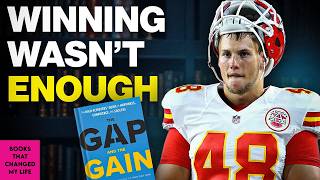
Andrew East, a retired NFL player, discusses how Dan Sullivan and Benjamin Hardy's The Gap and the Gain shifted his mindset from focusing on what's missing to celebrating what he's achieved. He and his wife track twelve life categories with monthly reviews, use gratitude letters and future-self exercises, and define commitment as choosing one priority and saying no to everything else.
Chapters
Fall 2021, someone recommended I read this book called The Intentional Father. It's not a fun read. It's like a workbook more than anything by John Tyson. In it, he gives you different exercises to do, but he has you do something where you write a letter to your dad just saying all the things that you're thankful for that he did for you, despite whatever mistakes that he surely made. I wrote this letter to my dad, gave it to him. You're looking at the gain of what he gave you and not the gap. Thanks for this, man. This was really fun.
So the big question, how did The Gap and the Gain by Dan Sullivan and Dr. Benjamin Hardy change your life? Hmm. I'm Chris Collins and you're watching Books That Changed My Life. This week we're joined by retired NFL player and author Andrew East, and he's here to talk about the book that changed his life, The Gap and the Gain by Dan Sullivan and Benjamin Hardy. Stick around to the end where we sit down with Andrew and his wife Sean to talk about their new book, The Courage to Commit. What is your favorite presidential biography?
I mean, Teddy Roosevelt's is the most fun. Like, that guy was an adventure seeker, and I just resonate with that. Washington was amazing. Lincoln, I think, is the GOAT as far as Oh, I mean, his wittiness. I love— the guy was so quick on his feet, um, it seemed. And he was so like, yeah, strongly gentle. I don't know, like, whatever that paradox is— servant leadership, strong but gentle. Like, it seemed like Lincoln embodied that. But I love all of them, to be honest, because I think they're reflections of whatever is going on at that period of time in a country. And it's kind of cool to get a glimpse of, hey, this is the leader at that moment, and what does that tell me about that point in history?
Did you read the Lyndon Johnson?
Uh, did part of it, but yeah, those things are big boys, just like Teddy Roosevelt's, the 3-volume. So I have not read all of them. No, clarify, I'm working through them.
What is your, uh, system for acquiring books?
Well, first of all, I gotta give you major kudos, dude. This place is immaculate and amazing and organized. It is so fun to— this is like dream to be here. So, uh, it's like a total hands-off jealousy that I feel like, man, that's inspiring to me. This is so cool. I want this because it's impactful. Um, I did not like reading books until I was probably like 27. I did the whole school thing, did all the, the—
so you read the books in school you had to read, but you didn't like it?
Yeah, it never stuck to me. And I think it wasn't until I had a mentor who put us through this very strict monthly meeting where we had to read a book, write notes on it, come prepared to discuss it, that I started reading books that applied to my life, that I felt like I could actually implement the things they were talking about. So then I just started making my way through some of those, accumulated some of those, and then—
well, wait, who's the mentor?
Josh Axe is his name. He's—
what were you doing?
I was a young gun. I was trying to figure it out. I was, I was in the NFL bouncing around, not having success. He kind of took me under his wing and was like clarifying and encouraging in the sense that like, hey, if, if you want to do the NFL, put your head down, focus on it, you could do it, you have the talent, based off what he'd seen. But if you don't and there's— you feel like there's something else out there for you, then let's learn and like let's try to equip ourselves. So he was— he's been massively impactful to me. I'm a big, I'm a big fan of mentors.
And then every month you would read a book together? Oh yeah, yeah. And so you would read it and then just get together and discuss it?
Me and a group of, uh, it would be us two and then maybe 8 other guys. We had to sign a contract, and I was like offended the first time he sat me down and was like presenting this to me. He's like, you're gonna sign this contract, here's the terms of this group, your wife's going to sign the contract saying you agree to never miss a meeting It's like a— it was a 12-month term.
How do you present that to your wife? You're like, I'm joining this cult, honey.
We were both— yeah, dude, that's what it felt like. We were roasting.
I can't— I won't be able to talk to you for 3 months.
And we— oh man, uh, we signed in. Oh yeah, we, we had probably 2 weeks of discussion, and we were like in disbelief. We were appalled, kind of offended. No way we're gonna do this. And we sat through, we're like, okay, well If we're going to be serious, we like the idea of a men's group or whatever, you know, it's like, oh yeah, this is, this could be really cool, a mentorship group. I know you're in a masterclass and it's like, but you're only, you're only going to get out of it what you put in. And so if you sign the contract saying, yeah, I'll show up, it's like, it should be obvious, it should be easy. And the piece of paper is just reflective of that. But I had not—
are you paying to do this?
No, free, free. It's just like He wanted our presence.
Well, that's— that is one thing when you do those kind of groups is when it's free, people usually— so the contract probably makes sense in that context.
Yeah, that's fair.
Yeah, because if you were paying, you'd read it because you're paying to go.
I highly agree with you there where it's like, man, if you have some— if you have some costs associated with this, like you're— you're going to be bought in more.
So what was the first book?
It might have been The One Thing by Gary Keller. Great book. And then, I mean, we're year 7 now.
So you, you read it and then you guys get together in person?
Yeah, everything kind of goes around, shares their takeaways.
Can you tell who didn't read the book?
Yeah, you get—
yeah.
Do you— oh yeah, yeah.
I had to send them out. Or is the contract not really solid?
No, people get cut.
They do?
Oh yeah. If you don't— if you, if you miss a meeting without some— yeah, see you later. It's like kind of cutthroat, but it's massively impacted me in a positive way.
So it's 12 books a year? Yeah.
Okay.
And I could be wrong. You started this at 27?
Yeah, yeah, it's been 7 years.
And then what was the book that you were like, oh, I'm a reader?
So the book I wanted to discuss today was The Gap and the Gain. Benjamin Hardy and Dan Sullivan have written several books together. Uh, one of them was Who Not How. Which is an amazing book. The Gap and the Gain is another one. It was the first time where you're like reading and you're like, oh my gosh, I— this is a concept that put words to what I'm feeling or give some attempt at a solution to a problem that I'm feeling. And it was like, I can do something with this. And this is like a tool now that's in my toolkit from learning this. That I can proceed with life and like maybe flourish a little bit more. And so yeah, a couple of his books have, have been hugely impactful and it feels like relatable to my, to my life and journey as an entrepreneur.
So it's a fun thing when you like kind of fall on a book like that and then you're like, oh, because sometimes you feel like, oh, this is like a secret that I've found that you would only find if you read the book.
Isn't it? I, I, it sounds so dumb to say, but it's like, books are cool, dude.
It's so, it's so fun to convince me.
Oh yeah. But you know, Kobe Bryant talks about, um, walking through life and the world kind of becomes your library. Like, when you know one thing so deeply that you can start connecting almost anything to it, where it's like, okay, I play, I play football, and now I can I can take concepts from this book about perspective and change how I'm approaching my practice the next day. It's like everything becomes connecting and it's like, it lights up the world and brings so much color to it where you're like, I can't get enough. And so now I just, my hobby is I read books and I play ping pong. That's pretty much it. So that's it. And I hang with the kids.
So. It's a good hobby. So where did you grow up?
Indianapolis, Indiana.
Oh wow. Yeah. Colts fan?
Oh yeah, baby. Peyton, Marvin Harrison, Dwight Freeney. Those were the days.
Oh yeah, they really were. How many siblings?
I'm the middle of 5. I got 3 brothers, 1 sister. It was a highly competitive, highly adventurous, probably way more tilted towards the boyhood than, than like my sister's, you know. Girl upbringing, but we did mountaineering. We would go to Boy Scout camp. We would— my dad put us in cycling, like competitive national cycling competitions at age 10. That's why I got these ridiculous thighs that I, I can't outgrow. It's like we were doing track races and it was all a healthy competition. Um, it was a blast.
Yeah. What did your parents do?
My dad played, uh, played football in college. Um, my mom was a cheerleader there.
Where did you— where did your dad go to college?
Purdue.
Purdue.
And my parents were actually high school sweethearts. Then, uh, they got married. He ended up building homes. He was like a contractor and did that. Uh, but he was like a visionary dude. That guy, he was a constant student and really sparked in me that curiosity of It took, it took a while for, for it to hit me, but I, I feel like, uh, I've tried to carry his curiosity with me.
So did your dad read a lot? Did he have books around?
Gosh, we did have— I mean, we had like a little bookshelf. Um, I don't remember him like— yeah, yeah, he read all the time. I mean, but it was more like books about concrete, or he would know random things about architecture. But, and I'm like, I'm looking at this stuff Oh, it's so funny. I remember we'd go to job sites and there'd be like some machine there.
He's like, oh, you see that there?
That's a Wood-Mizer. It's built in 1942. It's a Swedish thing. I'm like, Dad, how the heck do you know that stuff? But he just like loved all that kind of random little nuances to what he did.
So yeah, how would you describe yourself as a kid? What kind of kid were you?
I was kind of a Lone Ranger, the middle kid, you know. We're not getting the most attention. That my, my two rowdy older brothers got that, so I kind of kept to myself, loved sports. All I wanted to do was play football. Um, I had like a group of friends that we'd always get into ridiculous adventures. We would take like, we would make a road trip video and it would be an hour-long drive, but we would stop at the bathroom and do like tours of the, of the gas station. It was like just dumb, you know, we'd just make, we'd just make fun out of mundane situations, which I think was the best way to live. So.
Yeah, that's funny. So, uh, and did you play any other sports?
Yeah, we did all— we did swimming, basketball, baseball, football, rugby, lacrosse, anything we could get our hands on, cycling.
Was there a moment where you just decided like, I'm gonna make football the thing?
I had a coach pull me aside and he was like, Andrew, I think you could play Division 1 football if you if you just like focused on it. Um, that was in high school. I continued to play all the sports. It was not— back then you didn't need to just pick one thing like, like you, you need to specialize nowadays. You got like 4-year-olds trying to get Division I scholarships. You're like, what are we doing? I feel like we're missing the point of this thing. But, uh, I loved playing all the sports. And then it was, it was about then when that coach pulled me aside that I was like, ah, let me, let me just like, uh, reorient my, my life towards this a little bit more.
And so what changes did you make at that point?
Um, man, in my free time I would edit my highlight reel for football. I would, I would look at what drills I could be doing, be working on physical, like, fit the fitness side of it, trying to get physically prepared, gaining weight. I reached out to every Division 1 coach over the course of a couple months and like emailed them my, my highlight tape. And I was like, I'm gonna make this— if this is a possibility, I'm not going to leave anything on the field, uh, to chance. Like, I'm gonna, I'm gonna put it all out there and give it my best, my best effort and try to make this happen. And it ended up working out. Not my time.
How many emails did you send out?
120. That's how many D1 schools.
And how many replies did you get?
10. 9 nos, 1 camp invite from Vandy. I went down there that summer and they left the door open just enough for me to kick it open and say, I'm here, baby, not going anywhere.
So yeah. And so then you go, you go there and what happens?
I went to the camp. It was crazy. Like, I was like a pretty good high school football player, not amazing. So it ended up taking this crazy series of events for me to end up at Vandy and get a scholarship. Uh, there was a, a recruit that Vandy had, Rayjon Bennett was his name. He was out of Atlanta. He had like a handicapped little brother and a mom who was, who was dating someone, and this boyfriend broke in middle of the night, started shooting around, and this football player, Rayjon, jumped this, jumped in front of his little brother, took a bullet It was like national news. I remember seeing it. It was like Vanderbilt's best recruit they ever had just got tragically murdered. And then I get a call a couple weeks later. The coach is like, we want to offer you this spot that's now open. It's like crazy roller coaster of emotions. Dream come true under tragic circumstances. This guy was an incredible leader. He wrote this, this, uh, poem called Strength. And like, then I'm, I'm just some nobody rolling in here, like, in Rayjon's spot. So it was like, uh, it's kind of daunting. I did not like my time at Vanderbilt the first 3 months. Coach retired, new one came as an interim coach, tore my hamstring, I was injured, failing classes, like, legitimately. I was trying to be— trying to study engineering, battling, dude. I had was just not having a good time. So I almost transferred, but then I had a mentor who was a senior on the team said, give it, give it 6 more months and see what, see what you think. So I stuck around there and then ended up turning out okay. I think I still have started the most consecutive games at Vandy and ended up 2-time captain and love it there. We still live in Nashville and are part of the university in many different ways. So I'm glad I stuck to it.
What, what changed? What turned?
Some of it was psychological, you know. It's like, um, the gap in the game, the perspective of real— like, it's so— it's amazing how quickly you acclimate. For my whole life, I wanted to play college football like my dad, you know. We used to wear his helmet around the house. As kids and like pretend play college football. It was amazing when I got this opportunity for like a week, and then you acclimate to it, you get into it. Oh man, it's hard. I gotta wake up early, coach is yelling at me, class is tough, and you just kind of like forget about the 15 years of you dreaming about this thing, you know. And I think a mentor shook some, some perspective into me. And then I realized— so the, the mentor shifted your perspective as far as like pulling me out of that urgent moment where I was like just zoomed in way too far on my own trials and tribulations, you know, like, oh, woe is me. It's like, it's not about me and how hard my morning workout is. How about you start thinking about other things, you know, like Dude, get involved. Start, start engaging with this thing. Get out of survival mode, we used to call it. Like, you're just showing up, getting by. It's like, engage with the thing, dude. Freaking show up and enjoy the workout. Dominate the run. Start encouraging your teammates. And then you're like, oh shoot, now I'm hurting less. It gets my mind off of my pain. I'm seeing that I can actually maybe even in the smallest way encourage somebody else to get through this pain, whether it's a workout or having trouble with class. And then you're like, sweet, I could do more of this. I'll stick around, see what can happen.
So in a sense, kind of like one is the commitment to it and then the other part is the community. What comes from that?
You start understanding that I'm either going to be draining to this team, or I'm going to be additive to it. I'm either going to be pulling something out of this and like depleting it of resources, or I could be filling it up. And I didn't want to be the guy that was draining the team, you know, like showing up whining and complaining. That's contagious. Or you could show up and say, all right boys, it's 4 AM, this sucks. But game on, you know, like, let's make a little mini game about it. Let's, you know, we— there are ways to have fun. And it's amazing to me. I mean, it's so cool to see a guy like Tom Brady go to a team like the Tampa Bay Buccaneers, and just that one element of hope or perspective or newness takes a losing culture to a winning culture. And it's like, um, you know, we do beekeeping. I don't know if you've ever seen crystallized honey. I know, I know, I'm like random right now, but when, when they crystallize honey like that, they start with one little crystal that kind of spreads. It's like, uh, it's like super freezing water. You ever seen where they like, where they smack the bottle and it turns to ice? It's that same thing where it's like, man, The negativity is contagious. You start with that one crystal of negativity, spreads like cancer. But so is a positivity. And it's like Tom Brady can walk into a losing culture, snap it to a championship just like that. It's like, dude, let's go! Anything's possible. This is sweet. It gets really exciting when you start approaching things like that.
So then what happens? College is a fun experience from then Forward.
Yeah, we end up having pretty good success in college. I ended up graduating by the grace of God, by the skin of my teeth, made it through. What was your, uh, civil engineering? So I wanted to build wells in a third world country. I ended up graduating early, got my MBA on like a 3-2 program. So I was still playing football, going to graduate school, and then the Chiefs give me a call and they're like, hey, this job is yours for as long as you want it. I was a long snapper in the pros, which is like, you know, you're getting 8 plays a game, rare you get hurt. All you have to do is be accurate and consistent, and you could do it till you're 45. And I was like pretty good in college, so I showed up and I just had— I just got wigged out. I couldn't— it's almost like the yips, I don't know, like in golf, like I just was ruminating on this. And I, I'd done long snapping for 12 years, never had this. Showed up in Kansas City and I was like as good as I was in middle school. It was, it was atrocious. And so I just fell apart, crumbled, uh, got cut after 3 months, sat on the couch, was a sad, lonely guy for a while. And then I was like dating Sean, my wife now, And again, I was like, I can either be draining us of, you know, am I contributing to this team that is our relationship, or am I draining it? And so after a couple months of— I like signed up to be an Uber driver, was kind of just like moping around watching Netflix. I was crushing through like some great shows, to be honest. Silicon Valley, Veep. Not reading, I'll tell you that much. And then, uh, And then I, I got hooked on— I had a friend recommend like, hey, you should look into making videos. You might really like making YouTube videos or something. That was 2015. So I fell in love with this culture online of like, how do you edit a video? How do you make one? What's the hardware? Like, what, what software do you use? What camera are you using? And then I was like, oh dude, life is the— it's the Wild West out here, dude. We can start making plays and I don't have to be waiting on this next call from a coach. To give me a chance to play again. And so I started making videos, and then I kept getting opportunities from NFL teams. And slowly my focus went from make— like, I need to make the NFL— to actually just like, I like making videos about me trying to make the NFL. And so, so that it was kind of like a fun transition period as those intersected. And, and then I ultimately signed 8 different pro contracts, 9 different contracts with 8 different teams over the course of 5 years, and then ended up getting in an accredited season with Washington and made a lot of, a lot of lifelong friends, lifelong memories, and got exposure to like great leadership, great culture, amazing coaches. And it was like, it ended up being super fascinating. That then launched me into like wanting to learn about psychology. And that's why I just finished my, uh, my PhD in psychology. So it's, yeah, it was like a really fun series of events that I didn't see coming where you're like, oh baby, here we go, just rolling with the punches.
Who is the, who is the best coach leader that you experienced?
So leadership in college football and college sports is so different than leadership at the pro level. There is such a different amount of autonomy that the the players in the locker room expect or desire. Definitely in college, you have to be more prescriptive and demanding because it's young kids who don't yet have the discipline. And the pros, everyone kind of understands like what the situation is. I'll never forget, I had this realization that there are, there are people like me who were in the pros, and then there were professionals like Tom Brady or Peyton Manning, who— they are professional football players. I was not a professional football player. I was talented enough to make it that, that far, but, um, I didn't have the habits of, of one. But the best leader— I mean, I played for Jay and Jon Gruden, played for Jack Del Rio, Andy Reid. He might— as far as professional coaches go, I'd say Andy Reid was the most impressive. He had this aura of playfulness about him, but he was an expert, obviously. He had high— set high expectations that were like very clearly shared and everyone knew. But like his pregame speech, I'll never forget, it was my first preseason game and he gets up there and he says, he says, boys, let's go out there, do our thing, and everybody's getting cheeseburgers afterwards. And you're like, you're like, what? Okay, all right, I'm ready, let's go. But, you know, it's like he just— if you are prepared and you are ready, then a little motivational speech isn't gonna make that much of a difference, you know? Like, you're either ready or you're not, and it's not going to be fancy words that make the difference.
So when you say he was an expert, was he a great teacher?
I didn't have— it's not like he's speaking into me, or like I was one player on a large roster, so our interactions were few and far between, but you can tell the type of manager he is and the, the way he leads the coaching staff that then I interact with. It's like a trickle-down effect, you know. It's like if, if he has high standards, high expectations, so do his, his assistant coaches, and so do the weight coaches, and then thus the, the players do too. So it's just, it's the aura, you know.
How did you meet Sean?
Like I said, it was a competitive household. My dad played football, then he got into Ironman. He started the Clydesdale division, like, for heavy, heavy heavyweights in endurance sports.
What's up?
Uh, anybody over 220, you can enroll in like marathons or triathlons in the Clydesdale division, the big boy division. And my dad was a big boy, he was like 240, so he got into triathlons. The cycling was a part of that. My oldest brother, who was like 5'10", like a bit smaller and daintier than my other brothers and I, he got into cycling. Became a pro cyclist. He was a freak athlete, to be honest. Made it to the Olympics. They ended up cutting his event right before, uh, 2012 Olympics, so he still went to that Olympics. Bumped into Shawn at a road cycling event. She was just so happened to be looking at going to school at Vanderbilt or Stanford because she had just retired, and my brother was like, hey, my My brother's a football player there, he'll give you a tour. So your boy shot his shot and we did it. We got the job done, dude. We gotta slow down.
Wait, so how, how is this introduced to you? Like, I met this girl and she's thinking about going to Vanderbilt and she wants a tour?
100, dude.
So actually, is it an email, a call? How does he do it, dude?
Since we're in this context, Sean will tell you this because it's hilarious and like so out of place, but their conversation was largely dominated by a conversation about a book which was Atlas Shrugged. Have you ever read that? Yeah, by Ayn Rand. I don't know how my brother is, is very much eclectic like that and will just start random conversations with people about capitalism.
Um, yeah, there's a deep message. Yeah, it's highly accurate, really.
It's deep. Yeah. And so they were talking about that, and I think they were just like sitting next to each other for a couple hours.
Is your brother single at this point?
He had— no, he had a girlfriend.
Oh, okay.
But he hooked me up. I had zero social media accounts, so I started a Twitter after he told me. He was like, hey, I met Sean. She's looking at going to school at Vandy.
I started— you know who she was?
I— yeah, I know who she was. And, uh, so I started a Twitter account, shot her a DM. It's funny now that we spend, you know, we make so much content on social media, and I was previously like anti-social media, but that's how we got to know each other. And then I took her on a tour, took her 9 months.
Wait, wait, so you shoot her a DM and she says—
well, I did.
She responded.
I mean, I, I could be smooth with words, Chris. I, I like— I wrote a poem.
Let's share with the audience how you do this to get into the DMs. Hey baby, what's going on?
Hey.
Baby.
No, it was, it was something like, heard you met my brother, apologies for his rough conversational topic, uh, topics. If you're ever looking to get a tour of Vanderbilt, I'd be happy to indulge. And she says she's there tomorrow, give me your number. And then I started—
phone number?
Oh yeah, yeah, yeah. And then I called her, which she did not call, not text.
Yeah.
Yeah, I mean, you know, it's— you got to be unorthodox if you're trying to get attention sometimes.
I agree, but I think most people would go to the text. I know, but the call probably is the right move. Yeah, well, clearly was the right move.
Squeaky wheel gets the oil, dude.
So, so then you call her. How long until she comes to tour?
2 months.
Oh, so you're talking for 2 months?
Yeah, not like every day, but how often? Um, no, sorry, sorry, sorry, I have my— we called and then our first day was in Los Angeles. We went to the Grove. She was on Dancing with the Stars. It was my bye week at Vanderbilt. I just so happened to have a day off. She had just so happened to have too much wine the night before my birthday, shot me a late night text, said, want to come to LA? She did not know it was my birthday. This was midnight of my birthday. Of a weekend that we had a bye week in Vandy, which— so like, if it was a normal weekend, had no free time.
Did you expect this? Like, had you guys been flirting?
We had that one phone call and then I didn't hear from her for weeks.
And then come to LA.
So I, I'm in my 7 AM, 7:30 class or whatever. I'm like trying to make sense of how did she know it was my birthday and how did she know it was a bye week.
Twitter told her?
No, she didn't know. It was a coincidence. And I texted my dad like, hey, should I go to LA? He was like, I just bought you a flight. So I just left my class, flew out to LA for 24 hours. I guess I was not that smooth because after that date, uh, it went dark for 9 months. She didn't talk to me. What?
But okay, what was the date at the Grove like? By the way, that's an odd place to take a girl for a date.
I was not in charge of the day. I'd never been to LA, never been on a plane by myself. Yeah, I'd never drank alcohol. I drank— it's my 21st birthday, so we had a, uh, Shiner Bock was my first beer. My brother was there, she had a friend there, so it's kind of like a, you know, a group hang. Casual. I thought I was being hilarious, dude, and I didn't, I didn't crack a smile.
How many drinks?
Bro, I know we didn't, we didn't get rowdy like that, but I didn't crack a smile to the very end of the night. So I was like All right, I'm not into this girl if she, if she can't appreciate humor.
Because she wasn't laughing at your jokes? Was she just all business?
She was pretty, uh, locked in on like, you know, she was doing Dancing with the Stars, so the— yeah.
Can I give you my impression of, uh, girls like your wife? Yeah, they like have a checklist. Okay. And like, I don't know, it's like, I want a husband, I want kids. Like, there's like a checklist kind of.
They're very like organized and they're thinking about that checklist on day one, you think?
Like, just like, no, but eventually there's a checklist. Like, yeah. And dudes, we're just not like that.
I'm a simple guy.
Yeah. Like, we're like, you know. Yeah. So you, you're at the Grove, you think you're funny, she doesn't think you're funny, and you kind of think she's just a little cold.
A little cold, not into me. But then at the very end of the night, I got a smile, and I was like, oh baby, that's an angel right there.
That's all you needed.
That's all I needed. So then I started writing them poems.
Uh, wait, for 9 months she doesn't reply to your poems?
Yeah, but then the last one is my final take. I was like, if she doesn't respond to this, I'm out. And so then that was May 2013, Indy 500, and, uh, we met up again, and then it was game on.
So you knew she was going to be in town, or she said she's going to be in town?
Uh, she was Grand Marshal of the Indy 500. I've been to like 25.
And if you see this in the paper or something— yeah, yeah, yeah. And so you hit her up with a poem. What was the poem?
I don't remember. It was something about persistence.
I wrote a poem about persistence.
Yeah, but it could be a good poem about—
was it romantic at all?
Yeah, about how If football's taught me anything, it's about you got to stick to something, persevere in spite of struggles you might be having. I don't know what the exact words are, but I send her this and I was like—
so funny, that kind of segues to the booking I put together.
Yeah, exactly, exactly. Yeah.
Um, okay, so you send this and are you, are you kind of half joking when you send it? Are you like serious?
I had other irons in the fire relationship-wise, if you know, I was— if you know what I'm saying.
Were you writing them poems?
No, I'm a one.
Okay, so this is a— I mean, you're putting in some effort.
Yeah. Yeah. Okay. I did not expect us to be talking about this.
You send it and then what happens?
She responded, dude, which was like—
What did she say?
Nice poem. She said, let's meet up tomorrow. I have like 10 minutes that I can meet outside.
10 minutes?
Yeah. So, dude, and literally she came down for 5 minutes. And I guess I did it for, like, it's a poem. No, the 5-minute meeting. Oh, the poem got us to the 5-minute meeting.
What do you do in the 5-minute meeting?
I don't even know, dude.
Just yourself.
Yeah, I know, it's—
you're just saying, hey, how are you doing?
We did not cover that much ground conversationally in 5 minutes. Yeah, so I don't know what happened.
But so after that 5 minutes, you're inseparable, or what happens?
Went on another— she came down to Nashville the next week, spent the week there.
Did you invite her?
And then I— and then I brought her to my brother's wedding the next month.
So you manufactured a reason to get her out there?
We were just hanging, dude. We was like—
it was casual.
It was like magic, you know? I don't know if you ever felt that. But you're like, this is the only person I want to be with.
And so what point do you talk about the relationship or it being something?
I had to read a book about 5 months in called The Meaning of Marriage by Tim Keller. You ever heard of this? No. That book changed my life. I mean, it said—
your introduction to the idea of a relationship is her reading a book?
5 months in? We have been, we have been talking for 5 months.
Okay.
And I was like, at that point, this is either going to be the woman I marry, or we're both wasting our time. So let's see if we're on the same page. And if not, it's nice knowing you.
How long does it take her to read the book?
That's a good question. I think it took about 6 weeks. We read it together.
Oh, but you'd read it already. Yeah. So you talking about it as you read it? Yeah, yeah, yeah. And then what's the outcome you were hoping from that? What conversation did you want it to spark?
Alignment on an understanding of what marriage was and insight as to whether we could both help each other towards that understanding.
Okay, what is— so what is marriage according to that book?
Oh dude, it's the highest stakes relationship, man. I mean, it's like, it's the most— it's a, it's a covenant. It's tough to get into and designed to be difficult to get out of as well. Thank goodness. You know, some people are like, all right, what a mess it is. It's like, yeah, it should, it should be. It should, it should be so difficult that you want it it challenges you to stay maybe just for that one extra moment to say, I don't want to have to go through all this thing. It's like, yeah, because it gets sloppy sometimes. Did you start having kids? You start having late nights, no sleep weeks on end. You're like, it is not reality. It's not the honeymoon phase euphoria that you feel and those moments of, of the early dating, you know. So, uh, it's like, it's like a serious responsibility to be the most influential person for another person. And are you going to be selfish with that and say, I'm gonna, I'm gonna morph this person, my partner, into something that serves me? Or am I going to put myself aside and say, hey, we're gonna serve the team. I'm gonna serve you, we're gonna serve the team. It's not about me, holy, you know.
It's such a great sales technique to get her to read a book on marriage in the sense, and then you're talking about it as you go because then the final conclusion is if you agree on everything as it goes, then the only option is to get married.
What is that? Is it Plato's method or Socratic method to get people to say yes to things?
Yeah.
Yeah, I wish I was—
Was that intentional? No, I didn't. You were just trying to say like, hey, if this is an option, I take it very seriously and I need to make sure you share the same ideals.
Yes.
Okay. But it is a great sales thing too. How many poems did you write her between the Indianapolis 500 and her having to read this book? Did the poetry stop or did it pick up?
Well, I still write her poems. And then all throughout dating, I wrote a poem. By the way, I'm not trying to say, yo, your boy's a romantic. I don't think any girl Who cares?
It's the thought, right? Like, the thought is what matters.
I would write poems after moments. I— it was kind of like a way to capture different moments in our relationship. So it would kind of be like, one was at the lake. It's the first time I took her to the lake, which I had— was formative to me as, as like a man. So I was like, okay, this is, this is a big thing for me to have you here. This is like my sanctuary and I'm letting you into it. And like, how do we respond in this situation? How are you? How did it— so it would be like little moments like that. It was probably— I probably wrote her 30 poems in a year.
How long after finishing the book do you get married?
2 years. Got engaged, were engaged for a year.
How do you propose?
Spur of the moment, bro.
So you actually use shock and awe? Back up into him. Shock and awe. Oh man, does she have— does she have any idea you're going to propose?
No, no, I did not have an idea. Let me just— I'll give you the short version. I was in Kansas City, second year, second month of my rookie year, bought a ring there in Overland Park, Kansas City. Thought I was gonna wait until the season was over to propose. And then I got the ring in the mail, and I sat down and had lunch with, with a mentor of mine. And he was like, you should— why are you waiting so long? You're gonna wait 4 months to do this? 5 months? You just do it the next memorable moment that you get. And I was like, well, Sean's throwing out the pitch at the, at the Cubs game tomorrow. He was like, do it then. And I was like, okay, well, this feels last minute, but let me see if I can make it happen. So I started making calls to— she was up there with USA Gymnastics. I finally found a number for her point person who put me in touch with the Cubs guy, um, Jim, Jim Oberowski, I, I think is his name. He's still, he's still working there, but he was like, yeah dude, uh, I'm gonna give you a call back tomorrow morning, which is when the game was, and let you know if we can if we could pull this off. So I didn't know I was proposing until like 3 hours before. I get a call, he's like, game on, we could do it. I got you a jersey with, uh, your last name on it to give her. And so she went out there, threw the first pitch, did a little handstand, and then I walked out there and she was like, Andrew, what are you doing walking on the field? Get out of here. And then I dropped the knee and she freaked out. And then I was so nervous though.
Oh my gosh, I can't imagine.
Yeah, it's a good memory.
How long did it take her to say yes? Did it feel like 4 hours?
No, no, the lead-up to that game, like the nerves you feel— oh man, it's so fun. It's simultaneously like dreadful, and my palms are sweating, and you just like—
is she asking you like before, like, what's wrong, are you okay?
She thought Usually I'm like a vibe guy, like I'll be present, and I was just so shook at what was about to happen, trying to like sort through all the details. I don't know if all the details are taken care of. I'm trying to coordinate with people and she was like annoyed at me, and then, uh, and then she's like, oh, now I understand why you're acting so weird. So worked out all right.
Yeah, that's— do you, uh Do you agree with that advice? Why wait? Was that the right thing to do?
Yeah, it worked out. It worked out. It worked out. So I— to me, it's like, what more could you ask for out of a proposal than having pictures to remember it by and having, uh, a fun moment to, to share vividly that you, that you'll remember forever?
What did the crowd do?
The Crown. Oh dude, it was a big moment. It was like, yeah, everyone was clapping.
That's a pattern interrupt. Yeah, I think nobody expects that.
I never thought I would do a stadium proposal though, you know. It kind of felt like, uh, I don't know, generic, but it worked out.
Yeah, I think the, the surprise is probably the— yeah, best part of that, right?
Yeah.
So, um, how does this come into your life?
It's all about perspective, dude, and I'm grateful to have learned that through several repetitions in my life. Um, but this book, The Gap and the Gain, is all about understanding that where you are right now in this moment, you may have ambitions in your personal life or in your professional life or whatever genre of your life that you're seeking, that you're striving after, working towards. And that's great to have. I think it's noble to have ambitions like that. But don't get caught up in the gap that still exists between where you are and the ambitions that you have yet to achieve. That's like torment to only measure yourself in what you have not yet done. And I think, you know, people talk about the hedonic treadmill, or the goalpost keeps moving every time I achieve this. Or, you know, like, in all I want to do is play college football. I made it there, realized I was kind of good, moved the goalpost to playing pro football. It's like I got a gap that I'm, I'm continuously keeping between me and what I want to achieve. And it's important to understand that there's also If you turn around, a gain, uh, ground that you have covered, growth that you have made, a place that you came from that you were not previously at, at some moment in time. And I think if you have the right perspective and you're able to give yourself the grace and measuring yourself against the gain versus the gap, as the authors prescribe it, it extends your runway. It makes it way more enjoyable. You can stop and smell the roses. And, uh, it's like a, a perspective of encouragement rather than letdown of like, dang, I haven't done this yet, I still got this meat on the bone. It's just a different way to live life.
And so when you came across this book, and you did it in that book club mentorship, right, what was going on in your life?
Like, how were you feeling bounce around the NFL, felt like the gap was huge between me and this, this new goal I had of I want to play in the NFL. And we read this book and I realized, oh my gosh, dude, I've— look how far I've come. It's amazing. I'm learning all these different things. I, I realize I, I can now edit videos and I'm good at this YouTube thing. There's other things in life and Yeah, sure, I still have some, some unchecked boxes in this world of football, but I have so much that I've gained. And it's like, and then it takes the urgency off, the desperation, that white-knuckling of like, I just gotta— one more thing, I, I gotta achieve this. And I think that's— it kind of cannibalizes your end goal more than helps you towards it in so many ways.
So in the book The gap is where you are now and where you want to go. Yes. The, the space in between. Yes. But the gain is what you've accomplished on that journey.
Where you are now and where you've been.
Where you've been. Yeah. So acknowledging what you have learned or accomplished.
Yeah, yeah. And it's like that fine line of being content but not complacent. It's like understanding, coming to terms with, yes, there's still things I need to, to do and I want to do, but not living in that. Understanding that, yeah, gosh, you've come a long way. That's, that's a beautiful perspective to have.
Yeah. Okay, let's go. Um, so in the intro here, it reads, high achievers are particularly prone to being in the gap. For instance, research shows that CEOs are twice as likely to have depression than the general public. Entrepreneurs are prone to substance abuse as well as depression and suicide. Even after some massive victory, their mind quickly goes to the next unreached achievement.
Yeah, I'm sure you felt that. I mean, as soon as you can find out you can do something, then you're like, okay, sweet, let me do more of that, let me do more of that, let me do more of that. And it's like Next thing you know, you're in this abyss of, of goals that you have yet to achieve, and, uh, it can be, it can be a dark place.
Yeah, there's, there's kind of an interesting thing about entrepreneurs and friends that I have that you notice is like there's usually always some sort of an addiction that goes with it, like sex or alcohol or drugs or something, and then there's this thing inside that is the broken part of you that is the reason why you're achieving so much, but you're running from something. Yeah. And, um, it's funny because if you fix that thing that's broken in you, then you don't have the drive anymore. So it's a, it's a weird game that you play.
That's not— surely that's not the only motivation. You know, surely it can come from a place of overflow rather than running away from whatever demons are in your past.
Explain overflow.
Of like, um, I, I'm flourishing, I can pay, I'm building this because it's purposeful, not because I'm in pain.
The thing that has to happen for that to be okay is the, the entrepreneur has to stop and be okay with the silence first. Like, they have to be okay with themselves. And most of the time they're running so fast to not be alone with themselves. There's that saying, like, everywhere you go, there you are. Yeah. And so I think to be content with the overflow, you'd have to come to grips with some things.
Where are you at with that?
Me? Oh, I'm pretty happy. It's a good way to— I like, I like silence.
That's the overflow. Like, you're doing this because it's like, oh man, this is great, it can be impactful. You're building your businesses because you can help someone struggling. You're not doing it because, right, I'm sure there was a point at the beginning where you're like, oh yeah, I need to find something that can make money and pay my bills. And then you come to realization like, dang, I'm actually helping people. This is fun. This is good. That's a— I think that's a way more powerful motivator with a way longer runway than trying to outrun your demons.
Yeah. This next one's about the pursuit of happiness on page 5. Yeah. Happiness is not something you pursue. Happiness is not somewhere in the future. Decades of scientific research is clear on this point. Happiness is where you start, not where you finish. So good. Unpack that for me.
Oh, well, there's a quote right here that I resonated with. It said, "There is no way to happiness. Happiness is the way," by Thích Nhất Hạnh. And it's like, it's the style. That you're approaching things with. The achievements do not lead you to contentment or happiness. You can start there when you have nothing around you that you've built and understand that there's beauty in that. And then if you have that style and approach and perspective, even when you've built something beyond your wildest dreams, you're still happy and content. And it's not this, I'm treading water just trying to achieve the next thing. I think about this with our kids. We got, we got 3 kids. I used to want to travel the world, dude, like just experience all of the cool adventures and see the sights. And oh my gosh, so beautiful. And at some point I realized if I can't be If I can appreciate this random Tuesday afternoon sitting in the playroom with my kids, I'll never be able to fully appreciate sitting at the edge of the Grand Canyon looking out at that. I'm like, you have to, you have to practice the stillness and the, and the presence, you know. It's, it is a practice. That's how that quote reads to me.
I like that. Yeah. So on 19, this brings up a highly nuanced and crucial distinction. You can want something and be 100% committed to that thing without needing it.
Desperation is not a great place to be. You ever met somebody who only wanted to get married? Like they're dating and all they want to do is find their spouse and it's like the thing that that takes away from them achieving that goal more than anything else. It's like, yo, you got to chill out with this. You can't just start the first date with talking about how bad you want to get married. It doesn't leave room for any other conversation, you know. Happens in entrepreneurial world too, where it's like, oh, you got some young hungry kid who wants to build something. If they're just destroying everything in their path trying to like get there I know your nickname's the Bulldog, so I'm curious how you balance this, but like, it can undermine— that, that desperation can undermine more than help. Yeah.
And I think you, when you're young— I know for me, I got the nickname Bulldog when I was younger.
Yeah.
And I would run over people. And then as you get older, you figure out other ways to accomplish something without the collateral damage.
Is that possible to start without the collateral damage, or you think it's a trajectory?
Oh, I'm sure. If I had been raised by better parents or a mentor or something, I just wanted to succeed and I didn't want to be poor. So the only way was through. And yeah, there's plenty of people that had better examples that Yeah, you can, uh, you can do things in a different way, but I didn't know.
Yeah, I think joyful commitment— I mean, that's kind of why we wrote that book— is important. This is fun, Chris. It's like our own little book club.
Yeah, I want to start a book club, but I want to be more like a motorcycle gang. Okay, you want to read this one on 37?
Yeah. A statement used to describe social media in the Netflix documentary The Social Dilemma is, if you're not paying for the product, then you are the Expounding on this idea, Jaron Laner, a computer scientist and virtual reality pioneer, stated the following in The Social Dilemma: That's a little too simplistic. It's the gradual, slight, imperceptible change in your own behavior and perception that is the product. And that is the product. That's the only possible product. There is nothing else on the table that could possibly be called the product. That's the only thing there is for them to make money. Changing what you do, how you think, who you are is a gradual change. It's slight.
Kind of sinister.
It could be, but you could also gradually change for the better too. It's like, there's a quote that says, uh, everyone, everyone ends up somewhere. Some people end up there on purpose, you know. Sean and I get a lot of slack for being so highly regimented with— we have, you know, daily check-ins, weekly check-ins, monthly check-ins, annual goals. And like, you know, you ever use it? You ever lose the whimsy of life? Like the spontaneity? Like, I know myself too well to know that if I don't have structured time, I'm going to drift towards being irresponsible and drift towards mindlessly scrolling on my cell phone. It's like, I want to gradually change towards something I'm intentional about. So yeah, I It's interesting.
What's, what's your thoughts on this as it pertains to parenting? Like, how are you going to handle social media with your kids as they get older when they come home from kindergarten and other kids in kindergarten have iPhones and they're like, Dad, I want an iPhone?
I mean, it's so interesting, the context matters. So like, I think if it's normalized in the school that your kids go to, then it'll be, it'll be tough to swim upstream against that. I think it's more trendy now for schools to be a little more intentional with this and to have rules around phones to make it less normal for a kindergartner to have phone. Sean and I's approach has always been like prepare rather than shield. I know it's, it's tough in the world of social media where they're monetizing your attention. It's like, how can you prepare for that psychology. But, um, I don't know, I feel like it's just, uh, it's better to titrate little concepts of things to prepare the kids for rather than try to, you know, hope that they never get introduced to it and then they binge it on their own behind your back later.
It's a tough one. Mental subtraction. The results are clear. Mental subtraction is one of the most effective Science-based techniques for boosting gratitude and happiness. Indeed, research shows that imagining the absence of a positive event in your life has more powerful effect on you than simply looking back on that positive event. Likewise, imagining the absence of an important person in your life can be more powerful than simply appreciating the fact that they are in your life.
I love this. There's a Stoic practice called the negative visualization, which is this. It's like, uh, it's, it's like a way to spark gratitude of, oh my gosh, I'm so glad we have these books, you know. Or imagine if I didn't have these books that I've read. It's, uh, it's exactly what he's describing of like, man, it shows you that your glass is half full and you can kind of always do this sliding scale of Oh, well, at least my glass is only half full, right? Well, at least you have a glass. It's like you can always have one thing lesser that you might not have that makes you appreciative for what you do currently have. Does that make sense?
Yeah, I, I kind of have a, uh, approach to that when, um, things aren't going right, is there's always somebody who has it worse off than you.
Yeah. Yeah, 100%.
Is that the same sort of thing?
I think it's similar. To me, it's like the— it's the same kind of outcome of gratitude.
So yeah, yeah. And what that kind of does is it shifts you to then think about what is good.
Yeah. Or yeah, imagine if I didn't have all of these things around me.
Okay, this, this next quote, will you read it?
You are 100% disciplined to your existing set of habits. Are you being intentional with, with what you're doing with your time, where you're— what habits you have? Because they are habits, you know.
Like, a lot of people's habits are on automatic pilot, and they feel like they have no control over it. But if you want a different outcome than the one your habits are getting you, you can change your habits, right? Yeah.
And it doesn't have to be some massive facelift on the beginning, or like you change everything. I tweak one little habit, settle into that, get it normalized, and then you could tweak another. I mean, that's been— Sean and I do this annual goal setting thing, and slowly over time, the, the difference between where we are and where we want to be, like year after year, has closed. And it's like so fun where you're like, actually, life is great now, let's just stay on this course. We don't need to shift anything major now. Like, we're slowly on this pendulum getting a little truer to our sweet spot. Like, we're right in the pocket. And I think if you do that with your habits, like, slowly start hemming them in, you can end up in a really exciting place.
How do you guys go about setting your goals? Like, is it a yearly ritual?
Do you— we measure everything, dude. Everything we measure. There's like 150-something things how many date nights we did, how many times we hosted, how many nights we spent with friends, uh, how many workouts we did, how many times we cooked at home, whatever. Like, we have this whole slate of things that we've broken down into 12 different categories, and then we go through and we say, hey, we only did 20 date nights last year. I would like to be as connected to you as possible. So let's do one every single week. So we're gonna put 52 as our aspirational goal. And then like, for us, this just that quantitative perspective on things has helped us kind of remove the, the guessing game of it. And you're like, okay, let's tweak this, let's tweak that. We spent too many nights with friends, we need to spend more time as a family. Let's dial that back from 6 times a month to 2 times a month. And it's like, and you don't have to be tally marking everything, but you, you kind of inherently know, okay, we're over-indexing on Friends this month, so let's rein back a little bit next time, you know. And it's been super helpful.
That's great, I love that. Your brain has evolved to forget games. Human beings are works in progress that mistakenly think they're finished. The person you are right now is a trans— is as transient, fleeting, and as temporary as all the people you've ever been. Dr. Daniel Gilbert, Harvard psychologist. What do you think about that?
I read that like, I mean, we're still in flux. I still got to be disciplined about the habits that I'm forming. And understand that I'm still being formed by them. Even if I have all the good habits in the world, you could drift into survival mode, or like, the work's not done yet until coffin's closed, you know.
When you, when you guys are reviewing your yearly goals, how often do you check in on them? Every month?
About once a month.
Yeah, once a month.
And then we'll like, like halfway through the year, kind of just sit down and like pull it out and spend 30 minutes going through like how we, how we clock in towards these goals.
So on page 111, Josh Watskin, the former chess prodigy and author of The Art of Living, always asks himself this one question every 90 days: What did I believe 3 months ago that I no longer believe today? He uses that question as a journal prompt and truly reflects on it. His goal is continually be less wrong. Mm-hmm.
I mean, what's the definition of wisdom? Is understanding how relatively little you know. You know, it's almost like, it's like a humility of understanding that I have these tightly held beliefs. Maybe I have these habits that I'm proud of. I think they're good, but like, let's just keep chiseling away and like always be kind of poking around, seeing how we can improve, because you could be wrong. You know, there's like, uh, Freakonomics. I don't know if you've ever come across their content or books, but—
oh yeah, I love their podcast.
I love it, dude. They had this one—
I love stuff that's just like facts.
Yeah, they did this one thing where it was like, what's one thing that you've changed your mind on? And it's like all these experts, PhDs, top people in their field, and it's like, well, I can't— like, I've been doing this for a long time, but it turns out that there's not two sides to your brain. Like, there's not a left and right side of your brain. It's like, really? Oh shoot, well, that's kind of like a highly popular concept. It's like, this neuroscientist is saying that. You have to be able to always admit, like, hey, maybe, maybe there's room that I'm wrong, and there's a humility in that.
So Can you, can you think of something that you believed 3 months ago that you no longer believe?
Ah, uh, it would be marriage related. I thought that at our 10-year anniversary, which was about a month ago, we'd surely have it all figured out. Like, you know, we're, we've been doing this a long time. And boy, was I wrong. So really, it's like, it's like a good gut check though, because what is it you don't have figured out? Oh my gosh, dude, it's like, there's always new situations. And that could be discouraging to say, why is this still so hard to be married? Or it could be like, oh, fun. This is still a work in progress. I still have something left to learn. I still have something in me that needs tweaking to bring us into better alignment. And we have become less wrong over the last 10 years, hurt each other in more— in less egregious ways, you know, whereas before it was like, oh shoot, that was really wrong of me. And let me not do that again. And you start to whittle that in. It's like this sanctification that happens, but you still have work to go, you know. In marriage. So what was something you've been wrong about?
Been wrong about? Yeah. Oh my gosh, is the question been wrong about, or is it, uh, that you believed? Yeah, I guess that's the same thing, right? Yeah. Uh, the thing that comes to mind is just dealing with my parents getting older and how you kind of think that they, uh, you know, they're gonna be here forever, and then I don't know. When you start to get older, you decline pretty fast. I'm constantly disappointed by stuff too. Like, I'm disappointed by the healthcare system. Like, the healthcare system, when you get older, only wants to treat symptoms. They don't want to treat the human. Mm-hmm. Like, it's funny, up by— I have a lake house too, in a lake childhood and that whole thing. And the closest grocery store there is Walmart. Then at 9 o'clock when the pharmacy opens, there's a line of people for their insulin. And it's like nobody there is teaching people how to eat or how to be healthy. They're just giving them their insulin. I don't know. It's a long conversation, but it—
I have a challenge for you. Speaking of books that changed my life on this topic, Fall 2021, someone recommended I read this book called The Intentional Father. It's not a fun read, it's like a workbook more than anything by John Tyson. In it, he gives you different exercises to do. We have kids, so it's kind of like preparing you for the father process. How can you be the best kids— best father to your kids? But he has you do something where you write a letter to your dad just saying all the things that you're thankful for that he did for you, despite whatever mistakes that he surely made. Just write down, Dad, thanks for doing this. I know you tried hard here and you stayed up late here and you worked extra hours so I could do this, and you took me to— I wrote this letter to my dad, gave it to him in fall 2021. December, he died spontaneously from a heart attack out of the blue. And for me, like, it was humbling because you're like, man, you don't know when the time's coming. But thank goodness I left it all out there. And like, I didn't— I had nothing left to say. It was all but all a bunch of thank yous. Wow. And, and you write down all the, all the things you're grateful for, and then it starts becoming— you're looking at the gain of what he gave you and not the gap of why he fell short here. Yeah, whatever. And you're like, oh, frick, dude.
That might be the best, best explanation of this book in some ways. Yeah, yeah.
So do that though.
Okay, all right. Not writing my dad a letter. Oh, okay. Like, I met him like a handful of times. He wasn't great, but I could write my mom one. I'm sorry to hear that. My mom did a great job. Yeah, that is an interesting thing though, to think about, um, what perspective changes we've had or what we've learned. Because there's a certain reward to that, that we're constantly getting better. Yeah, right. Okay, the next one I highlighted here on page 160. This is actually how you know someone has healed from trauma. They genuinely view their past experiences as a gain. They can honestly say that they're grateful for the lesson they learned from them. There's no— they're no longer incapable or worse off because of an experience they had.
Bro, just, just went through this psychology course on like therapy, and one of them is cognitive behavioral therapy, which is reframing the events in your, your past. Whereas like previously, maybe you saw it as some trauma that, that crippled you from growing in certain areas. You like reanalyze it you tell the story, you go through it like, okay, well, let's— what do we learn from it? And it takes the edge off it and it makes it— it turns it from purely a negative into like, oh, okay, well, that led to this, and then now you're here and you said you're thankful for that. It's like super powerful, dude. And like, in marriage, uh, you know, the Bible story where Adam is given a helpmeet in Eve. Like, another way to define that is a beneficial adversary. Eve was a beneficial adversary to Adam. In my marriage, I used to feel that adversary part a lot, not the beneficial part. I used to be so frustrated and confused why Sean didn't see things my way, my perspective. I'm only seeing reality, this series of events, through my conditioning of whatever past I've had and connotations that I, that I have with this. But then you're like, oh wait, she has a perspective. It's so helpful that I have this more full picture of what this is. Maybe I was pouting about my NFL career and, oh my gosh, woe is me, and then I had a mentor come share a different perspective, and it like, it can really pull you out of that. Rut that you can get in if you're just riding solo, you know. So I love that concept.
Okay, you want to read this one? Yeah, sure.
It's a quote from Bianca Sparacino: Trust me when I say that one day it's going to hit you, that you woke up happy, that you're smiling for no reason, that your hands aren't shaking anymore. One day you're going to remember what it was like to be you a year ago. Or 3 years ago, or even a week ago. And you're going to be so glad that you fought. You're going to be so glad that you kept going.
Mm-hmm.
There's this exercise that someone challenged me to do. It's like, in parenting, you can get overwhelmed by like changing diapers, crying baby, why aren't they sleeping? It's like, imagine you're 80 years old. You get to go back in time to this moment. And I was— it almost brings me to tears thinking about it. It's like, there's so much to be grateful for, dude. Like, I know that life is tough in so many different ways for so many different people, but good heavens, man. Like, there's also so much beauty around us. It's amazing. And it's like, if, if you can really just stop and appreciate that, that not even— maybe you don't even need to see the exact things that are beautiful, but if you can understand that there is beauty, it's like hopeful. It's amazing. And whether you're— it helps you through parenting or through marriage or through building your business, it's like, dude, you gotta understand that there is some good in this, you know?
Have you, have you always been able to pull up that perspective?
No, no, it's been a series of mentors. It's been a series of things not panning out in my timeline. The college scholarship that I didn't get, the NFL career that didn't pan out like I wanted it to, that you're like, oh dude, what if I would have made the NFL? What if I would have still been on the Chiefs right now? I'd been 10 years into a career not having— maybe I wouldn't even be into books yet because I didn't get cut, which led me to YouTube, which made me like— which helped me need another mentor in that phase of life, which led me to the end. You're like, so it's been a series of things that you get practice reps in, and you're like, oh shoot, okay, this next disappointment stings a little less because I understand it's all part of the journey, baby.
I think that's an important thing for, for viewers to kind of understand, because I think a lot of people perceive somebody like you who's very positive and has like this energy about them that's very like forward-thinking. And, you know, you're focused more on the opportunity than the negativity of things, which is contagious. But I think there's this like thing that we do where we think, oh, that's how he's always been, like he was born with that. And what you're saying is, no, it's work. Like, you had to work at it.
Yeah.
And a shift in perspective happened along the way, right? Yeah.
I'm not trying to be annoying with like optimism or saying like, oh, there's gain everywhere, there's beauty everywhere. It's like, to me, I've just, I've just gotten kicked in the gut so much so often. Freaking dad died, lost my job in the NFL 8 times. I'm not frolicking, skipping around, seeing rainbows all the time, you know. It's like, but in order for me to get back up and try again, get back up and say, okay, what's next, I'm ready for it, like, this is— I don't know, maybe it's a coping mechanism, but it's been helpful to me.
Well, yeah, and I think the, the reason why you stick to it is because what you've learned and I've learned is that when you shift your default setting to the positive side of things, you get more positive. It just works out better. Yeah, we're not— you're not doing it because, um, it's an experiment. You're doing it because you've learned over time that, uh, that's a better place to be.
Yeah, I had a Boy Scout leader one time say that positive boomerangs— you want to be throwing out positive boomerangs. If you throw out a little bit of optimism, positivity, it's going to come back to you. Not like in a karma way, but it's just like, dude, it has ripple effects. It's like that crystal, you know, it's a seed.
Yeah, it's good. And to answer your question, if you're still playing for the Chiefs, you'd be coming off a terrible season. You're paying your quarterback $50 million a year, which is like the bulk of the salary cap. Yeah, you don't even know if he's coming back on time for the first game of the year.
Um, I would have won. So this is the gap. If I was still playing with the Chiefs, or, um, oh my gosh, I'm not playing with the Chiefs anymore, I, I could have won 3 Super Bowls. Dang gone, I could have made X amount of money. Daggone it. But shoot, do I— would I take a Super Bowl? Would I take 3 Super Bowls or 3 kids? Now, freaking, you know, I don't know if we would have had kids the same.
The Super Bowl is the answer, right?
I did leave that up to interpretation then. No, that's, uh, that's funny.
Yeah, right. I mean, have you seen Brady with all those rings?
I know.
Yeah, it's ridiculous.
Yeah, but it's unwieldy at some point, you know.
You can't walk out in public like that, you holding your hands like this all the time, just showing off.
Thanks for this, man. This was really fun.
So the big question: how did The Gap in the Game by Dan Sullivan and Dr. Benjamin Hardy changed your life.
It's all a matter of perspective, and there's, there's multiple ways to interpret the reality that you're living, and it's a choice on which one you're going to choose.
What are you going to do with the, the psychology? Are you gonna really— are you gonna start seeing patients?
No, I got it because I was like, shoot, we're writing a book. I don't want to be slinging hot takes. People reading advice that maybe they actually take, I better freaking know what I'm talking about. And we got this podcast we've been doing. I'm like, uh, this is a responsibility. So it was more of a—
maybe it's that—
that's just born out of some deep-seated insecurity or self-doubt that I have. But I was like, people are gonna be listening to what I have to say.
I should—
I should like dig in a little bit. So it was good.
That's great. Anything else you want to talk about?
How long— how long can I stay here?
As long as you want.
That's awesome, dude. Well done. I'm a fan. Appreciate you having me.
Good knowing you. Well, we share the love of books. Now enjoy the conversation and learn how to slow down. It's time to talk to Shawn and her husband Andrew about their new book, The Courage to Commit. The Courage to Commit. How did this come about?
We had been asked to write a book for years, and people wanted a book on marriage, and we would laugh because we're 10 years into marriage and still have no idea what we're doing. But at one point, we started talking about what would a dream book for us look like, and it wasn't necessarily what anybody wanted publisher-wise, but we wanted to write a science-backed, emotion-backed book about something that we've felt very strongly about, which was commitment. Kind of like diving through the idea of and exploring the idea of the word. And it took us 4 years to write, but it has become something that we are truly in love with and believe wholeheartedly in. We think it's what has brought us success in our sports, in our marriage, in our parenting, in our business. And it feels very countercultural these days.
What was the moment when you knew that was going to be the book? Like, what happened?
It was a really fun process. It took us about a year to settle on the topic of commitment, and for us, our favorite books that we read are kind of explorations of a topic, and for us, this was something that we had interacted with in our own personal life that we could tell stories about, and things we've done well with it, things we've done poorly with it. And it took us really that long to see that this was a through line between athletics, business, relationships. It's like, wow, when we do this well, our life is more joyful, it's more calm. We're able to like build meaning in a different way. And when we do it poorly, there's so much internal frustration and like dissonance. And so the moment that it hit, it might have been after we read the book, The Anxious Generation, where it was like, you know, Jonathan Haidt in that book talks about all the options that we have with swipe right culture, and he gives prescriptions for young kids in school, like what could be some solutions to this anxiety that we're culturally experiencing together, and I read that, and I was kind of like, Well, what about, what about us who aren't in school anymore? And what about us who have kids who are younger than this book? And can we apply certain lessons through this book that helps alleviate that anxiety? And to us, this is what our solution has been.
How did you guys do it together? What was that? What was the process and what was it like?
A mess. An absolute mess.
She wrote all the good parts and I wrote all the parts to edit it out.
It also took us about a year to figure out how to write because we would go, we would start to write something as like a blended voice. And it took us a year and probably more therapy to figure out that we have very, very different voices. He comes from a very analytical, statistical, data-backed side. Everything has to be facts for him. And I come from very emotion-based, you know, my thoughts, how I reflect on them, how I feel about them. And after about a year of frustration, we ended up separating them completely. So I technically wrote half the book in my voice from emotions, from feelings, from memories. And then he wrote the other half of the book with all the research and all the data points and the statistics to back the thoughts of it. But we thought it was fascinating that every time we would write chapters, we both believed the same thing, but we're approaching them at such different angles and found it to actually be a beneficial part of the book, which is fun.
Cool. Yeah, that's probably the best outcome for the reader.
Yeah, right.
It's—
I hope so. Yeah.
Did it, uh, did it really put you into couples therapy?
Oh yeah.
What, what— so what was that first session like with the therapist? We're trying to write this book.
Well, it's all about forgiveness because, well, you can imagine how poorly our arguments go when she's coming from the emotional side of things and I'm coming from the, well, this is what actually—
yeah, yeah.
And it took me, uh, 9 years of marriage to understand like Oh, both are good.
Again, it was such a long process trying to perfect this book. We were very hesitant. We wanted to put out something we are so proud of and that we really believed in. I feel like there's a lot of fluff pieces out there, and we didn't have— that was not our intention. We wanted actual depth and meaning in a book that we put out. So around the 2-year mark, we actually brought in a third writer. Who did a lot of like the research behind it and brought in a third voice to kind of blend the two, which helped. That kind of came from therapy.
Yeah, that makes sense because the book seems really well researched.
Yes.
And so you had somebody kind of assisting with that?
Yes. As low IQ folks ourselves, we needed someone to bolster ourselves.
He also has a doctorate in psychology, so a lot of the A lot of the statistics and stuff came from him, but we brought in a research writer to actually give, to write it all out in a way that was completely owned by where we found the research and where we found the data and make sure it was scientifically bulletproof.
It was such a fun process. And I know you've written books. I'm curious if you resonate with this, but when you sit on a topic for a long period of time like that, it almost became the only way I saw anything else I read or anything else I watched. And so I was like, it was really fun to, kind of just aggregate and curate different stories, studies, ideas, and, and see if it, if it fits with our concept. And so it was, I mean, it's a long process. There's a ton of studies that I thought would make the cut. Yeah. And be relevant. But Sean was like, this has nothing to do with what we're talking about. And so, uh, fortunately we had a little teamwork.
The amount of times he would read another presidential biography or some memoir and he'd be like, oh, this is a great thing to put in our book. And I'm like, no, we don't need that. We don't need another Abe Lincoln quote and another—
maybe we should just have a companion book that is like all my additional thoughts.
All of your side notes.
Yeah. And people will be like, you can just do that online.
We could. Because there is a discovery process that's second to the book that's kind of fun.
Oh yeah.
And I think you probably enjoy that process a little more than you. Yeah, you want to get it done. He likes sitting in it and learning.
And it could have easily been a 1,500-page book. Yeah, which would be so beautiful. You had so many wonderful arguments and additions to it. But at the end of the day, when we want a reader to, to get through it, you're better at saying no.
Yeah, Sean is.
Yeah. Yeah. Okay, so let's talk about commitment. Okay, what does it mean?
As we define it, it's, uh, it's sticking to something. It's, it is understanding what means the most to you, why you were placed here, what treasures you have, passions that you're exploring, and saying no to other things that allows you to say yes and commit to that one thing that ultimately I think is, is a truer form of freedom than what we often confuse as a culture, which is like this idea that freedom means we can do it. I want to do anything. I want no boundaries. I want no constraints. And that leaves you in a— you're drowning in options, you know. And so it's, it's just saying, saying yes to one thing and putting the blinders on to the rest.
Why do you think people struggle with that today besides all the options?
We talk a lot about decision fatigue in our book, how in a world and time where there is so much noise and so many opinions and so many voices, at any given moment I can scroll on Instagram and look at 500 new hobbies I could take up. I think people are getting really exhausted with having so many options that they don't know where to start or how to start and how to kind of drown that out. And over the course of like the process of our book, we bring in a lot of thought leaders, a lot of psychiatrists, psychologists, and people who have really, honed-in processes and systems to finding out what your true values are as a human, which should be different than the person next to you, and how to create an environment around you where finding direction and making choices is no longer exhausting but like, um, exciting.
And it's also— it's not a glamorous process. It's not as viscerally exciting to stick with something for a long time, but One thing that struck me is, you know, people talk about compounding when it comes to finances, and you just gotta let time do its work and kind of have a vague understanding that, okay, if I just invest this over the next 40 years and the stock market does its thing, I'll look back and, you know, it'll be wonderful growth. And that's not a fun process. That's not, that's not like spending it or buying the new thing or whatever, but I think that idea applies to all areas of life, whether it be fitness or nutrition or business. It's like there's always some shiny object that pulls you away from that compounding process, that pulls you away from the excitement and the meaning that comes from depth. And it's like it's so enticing to, to get drawn towards that as opposed to staying in that process.
Do you think your guys' experience as athletes uniquely positions you to speak about commitment?
Yes, but I also think we have proof of concept. And I think a lot of people would argue, "Well, I don't have what you have in order to commit with something or stick with something long enough." But I think it's just because they don't have proof of concept yet. And so we try to, for lack of a better way to say it, dumb it down to give people proof of concept in approachable ways that they can do easily at home over the course of a week or 2 weeks or 3 weeks to give them proof of concept so that they can stick with something larger and more meaningful as it grows to be bigger.
Were there any things that you guys left out of this book? Writing a book can be very vulnerable, especially if you're sharing about your personal life and past experiences and things like that.
Was there anything that you decided in the end to cut out besides all my nonsense, unapplicable ideas? I think we, we, we reached a point where I think we distilled the best stories down.
Yeah.
Um, and we— I mean, it's such a gut check because some of the best stories are, are the ones that hurt the most. So, you know, I, I pride myself on being a professional in the business world, you know, I want to be impressive in that, in that way. And we told several stories of how our failure to stick with something well forced us to like close certain businesses. And that's, that's always so painful because when you're launching businesses and you're telling your friends and family about them, people are asking about it. It's like, that's the exciting part. And it's way harder to say, actually, it didn't work out and we failed at this. And so we tell a couple of those stories in there, but I feel like we tried—
again, trying to mix so many different things. We're reading— we're technically writing a self-help book, but we're also writing it from an approach of being two very vulnerable people. So we tried to share very vulnerable stories that make it a human book that people can relate to. We obviously don't know everything, and we haven't figured it out, but we've caught on to a trend that seems to be working well, and we didn't want to write the book in a sense of like, we know this is like the hack for success and the hack for life, and the— but we can show you all these stories that kind of are pointing it in the right direction.
Um, you don't know everything.
Nah.
But I don't know. I don't— I can't come up with anything where we're like, oh, it's too much, we gotta leave that out.
Who— so who would be the ideal person for me to give this book to?
I would say someone feeling overwhelmed. I feel like there's, there's many different facets. We talk about parenting, we talk about marriage, talk about business, we talk about, um, the commitment obviously over the overarching thing. But we've always said, you know, if, if you're just graduating from college and you're unsure of where to start because there's so many options in the world. This would be great 'cause it kind of gives you direction. For us, I'd say this book and the concepts in it changed our life the most 4 years into marriage, getting ready to have our first kid. That's where kind of this concept flipped our entire life on its head. Yeah, I feel like we wrote it in a way where anybody feeling anxious, lost, not having purpose and fulfillment in life and need a little direction.
Yeah, I would say anyone on the verge of or in the middle of a major life transition, so like graduation or about to have a kid or maybe they're reconsidering their career, those can be overwhelming phases of life, and I think our goal with this is just to give people a little perspective and encouragement.
Intentionality.
Yeah. Yeah, there's a lot of kids graduating college thinking, oh, AI is going to replace my— yeah, my— oh man, career. And yeah, it's an interesting time with that. What is the biggest takeaway that you want people to get from this?
I hope people walk through some of the exercises we give them in the book. There's a, there's a ton of practical kind of working items for readers where we talk about how we come and came to our personal values and our family values, how we created our goals that we do every year. It's our favorite thing we do. But I would say the broader takeaway beyond that is I just remember when I was in the middle of the NFL and bouncing around from team to team to team, feeling really discouraged and not sure what was next for me. I was stuck not because I chose wrong in certain ways. I was erring because I wasn't choosing at all. And I think if we can encourage people to say, hey, You're waiting for the, for the best option to present itself and to like, you know, present itself with neon signs and be super clear. But really what happens is there's a ton of good options that are right here in front of you. Choose one of those and make that the best. Whether it's a business or a relationship, it's like you are in charge of cultivating this thing, you know, it's not going to just show up on your doorstep. Well-packaged like we're so used to. It's like it takes some, some effort.
So that's great. So in Chapter 5 on meaning, there, there's a part you guys talk about that I love. So it says, because here's what we've learned: in a world of infinite options, not choosing is still a choice. It's just a choice that guarantees you'll stay exactly where you are. And I feel like people miss that indifference is still a choice. Sitting on the sideline is still a choice. Not having an opinion is still a choice. Not doing anything is still a choice.
Yeah.
We have had the pleasure of— we've hosted a podcast for 7 years where we interview couples and we get to know like their relational dynamic. Or we interview single people who— and get to know, like, this idea. And this is just one area, um, but in the relationship world, we hear this same story over and over and over of you have a middle-aged single person who all they want is to get married, but yet they can't find that perfect person. And they've gone in and out of relationships that were beautiful, but there was one thing that just wasn't perfect about it. And so they're waiting for that perfect person to come along. And I think it's a great example of, at some point, that weight and that choice of, I'm just gonna wait for a better thing to come around that's easier, more perfect, more shiny, will actually paralyzing— paralyze you to ever make a choice at all. And you're going to wind up 20 years down the road saying, why didn't I just stick with the first one in the first place? And we're trying to prove that if you stick with it and make it the best choice, it can actually be really impactful.
There's an interesting part in here where you guys write letters to your younger selves. How hard was that?
Um, really hard, but really funny because like it puts you back into where you were, where we were.
Yeah, those were based off of, uh, Sean was in the middle of a life transition. I was going to school at Vanderbilt, about to graduate, in a transition myself, and she was thinking about moving to Nashville.
This is like 2 months into dating. I was gonna uproot my entire life. He did not ask, by the way, for me to do this.
So I wrote this big email talking about how, hey, don't move here just for me, and, and our letters are kind of based off this email interaction that we had. So I sent her this email thinking that it was a good form of leadership or something like setting expectations. And she clapped back and she was like, "I would never change cities for you. I'm not moving for you." Anyways, it was like a fun, it was really fun to reflect on that time of life. Yeah. But yeah.
I remember that time of life though, and writing these letters to ourselves. I remember having the thought even at that age, so I was 21 at the time. And I was in a huge transition. I was coming out of gymnastics and kind of in that, that transition or comedown period of going from elite athlete to just normal person. And I remember we had been dating for 2 months, and I remember thinking, if I'm gonna give this relationship the best chance, I gotta, I gotta go all in on it. I can't live on the other side of the country. I can't be traveling the world solo and just like see him every couple months. And I scared the crap out of him, and I said, I'm— I am moving everything to Nashville, and we're just going to do the relationship thing, or at least I am. And it was terrifying. And so these letters are this idea of we're writing to ourselves, like, don't be afraid of this. If it doesn't work, it's fine, but at least you know you tried. And it worked out just fine.
TBD. But yeah, 3 kids later.
Uh, that's— yeah, that's funny. So what about, uh, when you commit to something and it doesn't work?
Great, at least you committed to it and found out. I feel like, um, we wrote an entire chapter on Necessary Endings, or quitting, which is probably— it was the hardest chapter for us to write because how do you write an entire book on commitment and then teach people to quit something? But we believe that every yes means no to something else. And if you have truly committed yourself to something and gone all in and it doesn't work out, it should be celebrated because at least you can move on to the next thing knowing you gave it your all. And you won't ever have wonderings or think thoughts of, well, what if I had really tried? Would it have succeeded?
We were trying to massage through this paradox of like, okay, we believe that sticking to something is where all the fruit in life lies, while also understanding that we don't want people reading this and like just bashing their head against the wall when things not— when the business isn't working, and And then also not cutting things off or pruning things from their life when they need to walk away from something. So it was really, I think, important for us to talk about this process of, well, how do you know if something is still worth sticking to? And so we talk about different things like mentorship and getting outside voices and perspectives, people who know the space or the person or your situation and can say, hey, no, this is just a tough time you're going through. Stick through it. Or if, you know, if you get a chorus of people saying, hey, this is toxic, this is not good, you're destroying everything else in your life by sticking to this business, then maybe, yeah, maybe it's time to hang up the cleats. But yeah, we talk about this idea of pruning, which I think is important for people to realize that there are opportunity costs to everything.
So you guys are probably learning this, but when you write a book, I forget what the stats are, but it's something like staggering that like only 15% of the people that buy a book actually read the book.
Yeah.
Yeah. Is that the stat? And then of it, it's mostly females that read the book. Kind of, kind of disappointing when you put all this work into something.
Don't tell us that on launch week.
People, people are going to come up to you and they're going to go, oh, I got your book. And you'd be like, what do you think? Oh, I haven't read it. That's going to be the majority of what happens. Yeah, because you're all excited, right? Like, you, you, uh, you wanted to share what's in the book. Yeah. But to a lot of people, the accomplishment is buying the book. So I love what you guys did in the very end of the book. You say, "P.S. If you made it all the way through the book, you've already proven you can commit to something." Exactly. "See, you're better at this than you thought. Now go forth and stay in some rooms. We'll be cheering for you from ours." You know, in, uh, One book that I wrote, I actually put my personal email at the end.
If somebody got through it?
I said, if you get through it, email me. And people still to this day will email me.
That is awesome.
But it was just because nobody reads a book. It is just funny. So I love that.
Thank you.
It is a great ending.
The whole— exactly what you said. We are finding— I have had the privilege of writing fluffier books before. Where I wrote like a nonfiction book for kids when I was younger and a memoir, which is absolutely comical considering I was 16 when my memoir came out. But this feels really scary to us because we actually care about everything in it and we worked really hard in doing it. So hearing the statistics and even knowing it, I'm just like, I really hope someone reads it and— takes away something that helps better their life.
Yeah, I mean, the people that need it will read it and it'll be great, but of 100 books that you sell, it'll probably be 15 people that actually read it. Yep. It's just how the business works. Oh yes, it's a— it's an interesting little thing. Um, well, congratulations on doing this, and you probably gave a piece of your soul to finish this.
We did. We've said, I'm not sure we'll do it again.
Yeah.
And then now you're already thinking about the next one.
No, no, we, we poured our heart and soul into this thing, so we're just trying to get through the launch of this thing and, uh, recover.
Yeah, recover.
Yeah, yeah. Well, I think it's gonna go great.
Thank you. Thank you.
It's very kind.
Thank you.
We are so excited to announce The Books That Changed My Life website. We made a way for you to show your book pride and that you love books. Hats, tees, hoodies. Check it out, link in the description. Everybody needs a self-help hat.







