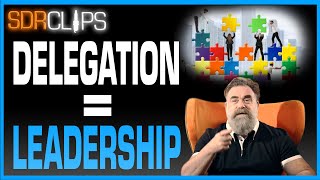
Chris Collins explains why service managers who do all the work themselves fail. Effective leaders delegate, set goals, and coach their teams instead of playing every position like a bad NFL head coach trying to be both coordinator and quarterback.
Chapters
The thing that I think time management for me is best explained when I look at, like NFL head coaches. Right. So you think about an NFL head coach and during the game, like, I think a lot of service managers do this where if they were the NFL head coach, they would call the offensive plays, they call all the defensive plays, they'd make sure that nobody was hurt. They'd be, you know, work in the special teams. But the truth is, is that the best NFL coaches, the head coaches, they don't do anything during the game other than they're kind of just monitoring from afar. But who calls the main plays in the games? Right. The coordinators, in some cases the quarterbacks that are 45 years old. But.
I think that.
Are you saying that Tom Brady calls his own plays?
If I had to guess, I would say yes. I think he calls his own plays.
I don't think he does.
Okay, I respect that. I think you might. But.
I think one of the last.
Quarterbacks to call their own plays is Peyton Manning.
Oh, he loved to call the opportunity.
I'm sure Tom doesn't call his own plays because he used to. He argued last year with Leftwich a couple times on the play calling.
Yeah, you could see it. Okay.
Now he might audible out of everything.
Yeah, I think that there's a lot.
There might be one thing in the ear and he says another thing.
I could totally see that. But when it comes to the head coach's job and their effectiveness, it's all in the prep. Right. So when you think about, like high level activities for a NFL head coach.
What do you think those are for an NFL coach?
Yep.
High level activities.
Yeah.
Getting.
Getting the right players, personnel, I think is number one. And then the, the culture and the belief that they can win. Right. Like, I mean, not just because I'm a Seahawks fan, but the Seahawks did play above their weight limit because of the culture there, not necessarily the talent.
That's right. And I think that that's the great thing, and it supports something that we say all the time, is that if you have a strong leader and a great system, you don't have to have the best players to get a really good outcome. So that's why I always kind of think about that. And then the other thing, and then I'm done with sports analogies, is, is you know how for a long, long time they had player managers in baseball? Right. Like Pete Rose is probably the last person that you can think of that was a player manager. But since 1950, how many player managers do you think have won the World Series. Zero. Absolutely zero.
Because there's been player managers in basketball too, I think.
Oh, I forgot about that. Yeah, you're right.
Jordan did that.
I don't know that Jordan ever coached his own himself, the Wizards. I didn't think he was the coach. I thought Collins was the coach for a long time, but maybe he was the Wizards. Yeah, the Washington Wizards. Collins went back and coached the Wizards when Jordan went there.
You don't win a championship being a player coach.
It's just not possible to do both roles. So that's a really good example or maybe a good thing for, like our service managers out there. Like, if you're managing the department, if you're dispatching, if you're the warranty administrator, if you're the service advisor, if you're the. If you're the shuttle driver.
Your leadership skills are probably lacking would be my guess. So just kind of think of that. I think I've shared this before, that as a manager, I connected my identity when I first started out with all the tasks. I don't know if you remember that, but I was always happy. I was the guy they called when the alarm went off and I was the snowplow guy, which is always a funny story to tell.
I remember more sitting in your office when you were a manager and you saying inappropriate things. That's mostly what I remember. I don't remember anything about tasks.
Good thing that hasn't changed much.
That's funny.
That's what I remember.
I had my ego.
A little office on the end, the little glass bar.
I love that. You know what's funny is it started out that I was in the manager's office, was a fishbowl right by the waiting room. But I loved sitting at that office right on the drive.
Okay, let's recap.
Yeah.
We launched a coaching element for you to help you find and recruit technicians. How to build a culture, how to grow your own tax. We are very close to being sold out on that. DM us on Facebook or LinkedIn if you want more information on that. My point of view on time management is that it's a symptom to a bigger problem. And that's that you don't really have clear goals or if you do, you're not committed to them. It's a lack of leadership because other people are throwing things at you and you're doing their work for them. Right. So it's poor leadership and it's value of your time more than anything else. So when we talk about time management, I would focus on those things versus getting better at doing more stuff because you can't grow a tree in a room full of junk. The more stuff you do, the less efficient and effective you get. There's that saying slows fast. Good stuff. Thanks, everybody. We'll see you next time on Service Drive Revolution.
Thanks so much for watching this episode of Service Job Revolution. We're uploading new stuff every day, so make sure you subscribe and click the bell icon so you don't miss out. If you have a question you'd like us to answer on the show, call 83 Ask SDR and we'll answer your question on the show. That's 8333 Ask SDR. For special deals on our books and training, head over to offers.chriscollinsinc.com now that's offers.chriscollinsInc.com I'm Chris Collins, and I'll see.