Before You Watch Wuthering Heights.... Watch THIS
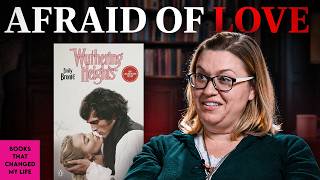
In this conversational interview, host Chris Collins talks with writer Mickey Dodger about the books that shaped his life, especially Wuthering Heights, and how early reading experiences—from his grandmother's Harlequin romances to a first‑grade reading device—impacted his view of love, obsession, and identity. Mickey recounts his blue‑collar upbringing in Georgia, his supportive but unconventional family, and a pivotal third‑grade teacher who encouraged his academic curiosity. He describes his day‑dreaming nature, his discovery of classic literature (Bronte, Aeschylus, Virginia Woolf) in the library, and how these works introduced him to complex emotions like rage and self‑less love. Mickey reflects on his realization of being a lesbian, the way early romantic fantasies ruined his relationships, and his evolving understanding of love as a spectrum between self‑less agape and controlling obsession. The conversation also touches on his screenwriting interests, favorite old movies, and his current perspective on helping others versus focusing on his own life. Additionally, Mickey shares reflections on growing up as a Gen X child without modern technology, his thoughts on revenge, fate versus intention, belief in an afterlife and spiritual presence, and the cultural storytelling traditions of the American South, illustrating how personal memory, family, and regional heritage shape his creative voice.
Chapters
My grandmother had a reading obsession. She would buy every Harlequin romance she could find.
How do you think reading those young affected your relationships?
It ruined them.
Love and obsession. In seventh grade, you hadn't been in love yet. Right.
It made me afraid of it. Probably going to get me in trouble. But I didn't hate Heathcliff for what he did.
In trouble with who?
Everyone who wants people to be perfect.
Those people don't watch this good.
But I love you.
What is the line between love and obsession?
If I have to be your. Your murderer so that you will haunt me for revenge. I don't care why you come back. Just be here. If you make me miserable, it's better than being without you. That gives me chills.
Once you have your heart broken, you.
Start to be more discerning. Oh, shit.
Because it hurts so bad.
Yes. Now I think what a shallow.
You know what I mean?
We didn't have Heather. We had hay. And it was the breeze and the cicadas and the clouds. And we didn't have a lot of stuff. But the little things are just perfect. And I'll never forget. And that was the happiest moment.
It's beautiful. Big question. How did withering heights change your life? Please welcome to the show Mickey Dodger. What did you order to drink?
Diet Dr. Pepper.
See, I heard a rumor that you were having like a cocktail.
Listen, I filled out that questionnaire at 1:30 in the morning. Thank you so much. At 1:30 in the morning, thinking. And that is my favorite drink. A French 75. Like, that's it. But then I realized we're doing this at 10:30 in the morning. I didn't want to be boozy at 10:30.
Is there anything better than day drinking, though?
Not for me, because then I sleep.
Oh, yeah. You got to take a nap.
Yeah.
It's still fun.
I'm too busy. Yeah.
It slows you down. So this book is interesting in the sense. Think about this. It was first published in 1847 in London. First time here in the US was 1848. But she did it originally under Ellis Bell.
Under a man's name. Yeah.
Yeah. And she never really saw the success of the book because she died before it really started to go.
Died young. Yeah.
Crazy.
I need to preface this whole thing by saying this is one of the books. And this was really, really hard for me to choose a book my. I can't. Like. I went through my bookshelf thinking, well, this changed it in this way. And this changed it in this way. I tried to Go to the book at my youngest point that made me think differently about stories.
And we're going to seventh grade, right? You were in seventh grade?
Seventh grade, yeah, yeah, yeah. I could barely figure out what this thing was trying to say, you know, then. But it really enthralled me with the forbidden love and the unrequited love and then the revenge of not being loved back, I think, is what really spoke to me about this. And it's as influential, if not a little bit more than the book. But it's a book that changed my life, not a play that changed my life. You know, these two together were kind of like hand in hand pair. That kind of blew me away around seventh grade. Probably too young for it, but I also had to read it again, you know, to figure it out when I got a little bit older. But I knew that it was a different kind of story than I had read up till then. You know, I was reading the school books and all the required reading. Killing Mockingbird, all those that Harper Lee. Those were all great for my age and they were great morals and morality tales. And then I. I found this one in the library and I was like, what is this?
Were you kind of an old soul?
I would like to. You know what? Maybe when I was younger, I used to think I was an old soul. Now I think I'm a baby. I think the older I get, the more I realize, the less I always thought I knew. So 40 years ago, I would have said, about this age, I would have said, oh, I'm an old soul. Now I'm like, you just got here. Like, all of this is new to me. I think we're born inherently with things we know in a sense of how to. Some of us move through the world. But I don't know as much as I thought I did, for sure.
Well, I love that you had a hard time with that question, because it's funny when people turn it on me and they say, well, what book changed your life? It's like, I do that. Well, where do I start? Yeah, there's so many. So we're kindred spirits in that. What other ones were at the top of the list?
Okay, this is silly. But it's not silly, though, because I really. I really thought about doing this and I chose Wuthering Heights because, honestly, I'm just going to be honest with you today, it felt more literary than the one that really. This makes me look smarter than A Dog Called Kitty, because A Dog Called Kitty was the first. I was thinking like the first grade and I almost brought it and I was like, don't be a child. Bring something a little more grown up. And I should have. It was in the first grade and we used to get like 30 minute reading or first and second grade. Ish, 30 minute reading breaks, you know. And I picked it out of a box and found it. And it's. It's about a boy. It's a little bit red fern, a little bit yellow. Where the red fern grows yellow. What's the. Oh my God. Why am I blanking on the other dog book that's so brilliant. Old Yeller that I'm like some yellow dog. The Old Yeller. And this one is kind of in that vein and it is. I really wish now that I had brought it. It's about a boy on a farm who calls, he's got these cats on the farm and he comes out to the barn, he's like, here kitty, kitty, kitty, kitty. And a scrawny little starving dog kind of peeps his head out from the bay hail. And the dog is scared, but he comes and gets a little bit of food and the little boy comes back the next day and here kitty, kitty. And the cats would come and the dog would wait until the cats were gone to eat. So he answered to Kitty. So he became best friends with the boy and he, you know, he saved the boy and the boy saved him. And I remember being so young and every day when we got to our. I could not wait for reading time and I would. And they wouldn't let us take the books home. We had to put them back in the box. So I was desperately afraid every day that someone was going to get my book and I didn't know what I was going to do about it. So I would stay awake in cold sweats at like 7 years old thinking someone's going to get my book and I'm not going to be able to read it tomorrow. But luckily I did because I started tucking it away because I'm a nasty little thing and I wasn't going to share. So I would like put it under the box and I read it in class, in my class until I finished it. And it's got this really wonderful arc of how the dog saves the boy. And I didn't know stories could do that to you. When I was reading Green Eggs and Ham, you know, like, because that's about where at home it was a Green Eggs and Ham and you know, I didn't know a story could be a story like could make me stay up at night, wanting to know what happened to Kitty. And that. That's really. But I felt a little infantile bringing that in, but I should have brought it because it's really the one. And I looked at it last night and I was like, oh, Mickey, just take it in. I was like, no, my God, it's a first grade book. But it did. It blew me away. And there's a. I don't think anybody's going to run out and read it, but you should read it to your kids. What really, really stuck with me about the book even then was they get lost in the woods. And when you realize how much Kitty's love would defend his best friend, you know, and the dog was a boy named Kitty. And they find a pack of wolves and they get a. The boy gets attacked and he just. And it's this little terrier dog that just tears at them and is gonna die to save the boy who saved him. And I'm in. My little heart was just like, how. What would a dog really do? And he. And he lives, but he's, you know, ripped to shreds. And the boy has to get rabies shots. I mean, it all goes through it because, you know, so it's. It's just like, crazy. It's a good book. It's a good book. It's a good book.
So is the. Is the event there that. That made you fall in love with storytelling?
I was always a daydreamer, I think. Like, I always was telling stories in my head before I knew what they were. I was always daydreaming about. I don't. This is so silly. Living in the clouds or, you know, some grand thing happening. Someone walking in my classroom and saying, you know, like, Mickey, we need you for blah, blah. But they always came from, like, you know, a story or something. So I was always daydreaming, and I think those very quickly became not stories centered around me and centered around other things. And I think that's when I became a storyteller, because I think stories about myself are not necessarily imaginative because I already know what's happening. Do you know what I mean?
Yeah.
If that makes any sense.
Were you a good student?
Yeah.
You were.
Hold on, let me think about that. I had a teacher, Mrs. Campbell, who saved my life when I was. God, I'm going into it. So when I was in this time, around this time in the first grade, I don't remember when I started reading. I was an only child until my sister Kim came along when I was around 4. And so I would spend a lot of time by myself. But. But it's not bad. It's not bad. It was really great. I had wonderful family. But I. At some point, mother or my grandmother got me one of those little reading things where you. I don't know if you remember them, but it was what leapfrog is today. But I don't remember the name of the brand, but you would run the pen along it and it would read to you and help you learn to read. And I was doing that really early. And then I went to school already able to read, but not wanting to do any of that dumb tracing and work and stuff. So I didn't and I wouldn't. And they called my mother around. By the time I got to third grade, I don't know why they were still passing me, because they had her do a test thinking that I was needed to be in a special class, that I wasn't learning that. And then she's like, sit her down and see what she can do. And I could do all the work. I just wouldn't because I would rather be daydreaming.
Yeah, that makes more sense.
Yeah. Sitting there just like, oh, man, wouldn't it be cool if flowers could talk? Oh, my gosh. And then I would be like this whole story about flowers talking. And that's what I would be thinking about all during class. And it would annoy me when the teacher would call my name. It would annoy me when she wanted me to do something because I've got going on in here that was much more interesting than what she was trying to tell me. And I'm not saying emulate that. I'm not saying that's good. I'm just saying it's what it was. So when I got to third grade, my teacher, Mrs. Campbell, who absolutely changed the direction of my life, realized that I could do the work. And she. Instead of, I don't respond to negative reward, I respond to, if you believe I can do something, I will kill myself trying to do it for you. If you tell me I can't, I don't do reverse. I will go like, okay, well then never mind. You know what I mean? But she's. She said, I know you can do this. I know how smart you are like that. And so I wanted to. I wanted her to be proud of me. So I went through all of my first grade books, my first grade workbooks, my second grade workbooks, read everything, did all of the work and got to the. I was think I was working in fourth or fifth grade books by the time I finished third grade. Because she was just like, go. Yeah. She was like, she's not. She does get it. She's bored. She's bored. And I'm not saying I'm brilliant, because I really caught up with myself around this, around the seventh grade, you know, it wasn't like, oh, my God, I'm so smart. It was like I just was. You know, I did that stuff earlier before I got to school.
But she believed in you and she believed in me.
Yeah.
And changed your trajectory.
I think so.
Yeah.
Yeah. And she said it's okay to daydream. Just, you know, when you. When you finish your work, you get to do what you want to do.
Yeah. I was a daydreamer, and I wasn't a good student at all, but I was smart. I just.
Yeah.
None of it. I don't know, none of it interested me.
Yeah. I just kind of pulled it out at the end so I could pass. But I was never like a straight A or I was a straight get buyer, you know, just so I could. So you get it. I'm a daydreamer still.
So where'd you grow up?
Georgia.
Georgia. And what did. What did your parents do?
My stepdad was a mechanic.
Where was your real dad?
He was around. He was a land developer for a while and just put in elevators for a while. You know, we're. We're solidly blue class. My mother worked at General Motors on the assembly line, you know, back in the day. So we're solidly blue collar, not blue class. Blue collar. Yeah. Not. We're blue collar. We were blue collar growing up for sure.
So you. What age did your mom marry your stepdad?
Early enough that I didn't even know the difference. I would think I was like two or three.
So would your dad come pick you up and take you at times until later?
8.
8?
Ish. Yeah.
And so stepdad was kind of your dad.
Yeah.
And then your. So your sister was from my stepdad. From your stepdad. Yeah. And so, like, mom's working, stepdads working.
My grandmother was everything she raised kind.
Of helped raise you.
Yeah. Well, my. I was born when my mom was just turned 17. She was pregnant when she was 16, and she. I was literally born in an unwed mother's home called Florence Crittenden Home for Girls. Like, that's where I was born with the promise that I would be given up for adoption, because that's how you get into those places. And then she changed her mind at the last minute. And so I was with my mom and my grandmother, who was my mom's mom. And, you know, not. They didn't have much of anything. They couldn't afford a baby. But they figured it out, you know. And then my aunt, my mom's youngest sister, who's 11 years older than I am, kind of took me under her wing. And I was her baby sister more than I was her niece. It was more like I was the youngest. And she is the reason, I think, that I was reading so early and I was talking and playing because she used to come home from school with her homework and do it with me and teach me how to do the things she was learning in school. So it helped her learn and it helped me learn too. That was like a baby doll to her. So I'm really thankful for her too.
So I think being a daydreamer, were you attracted to the creative side of things? Like, did you love painting or that sort of stuff?
Yeah, I'm not that great at it, but I did. But I would always rather I.
What were your interests?
Stories, Just making up stories, thinking about stories.
What about TV and movies and stuff like that?
Oh, yes, I loved Doris Day. I would wait for the Doris Day show to come on like it was because we had tbs. Okay. So we were really lucky that Ted Turner was from Georgia, in Atlanta. And he was a passionate or. I don't know if he's still here. I hope he's still here, bless him. A passionate lover and defender of old movies. And now I will credit Ted Turner with my obsession with old movies and old books and things. Because we had TBS on the UHF channel in Georgia because he owned a little. What became, I think, CNN later. But TBS was Turner Broadcasting and It was on UHF, so it was on channel 17. I remember all of this. And we had the little tube tv.
The rabbit ears and the aluminum foil.
With the foil and all that stuff. Yeah, I'm 53, so I've got a good, like vast.
We're the same age.
Oh, hey.
See, I was thinking you were younger than me.
Well, thank you. I appreciate that. I do live in la, so we get lots of laser treatments and so I. But I would rush home from school. I would just get home in time to see the Doorstay show, which when she got off that bus, you know, have you. Do you remember it? Oh, my God, Dorsey. Amazing. She would get off the bus and she'd sing, you know, que Sera. And she's this girl in the city. It's a Very Mary Tyler Moore. Ish. Before, or maybe a little bit before. It was in the 60s, 70s. I mean, it was in the 70s. I'm like, I'm not 10 years older than that. It was in the 70s. And there were reruns, I believe, I'm not actually sure. But then the Brady Bunch would come on. So I would see, sit like in front of the TV and watch all those. And then. And then he showed a lot of old movies. So that was Katharine Hepburn and Jean Harlow, who's my absolute favorite. And the writing in those movies. I know we're here to talk about books, but I got to tell you, the base in movies is why I'm a screenwriter. First, the dialogue in those old movies, they had nothing but words to tell a story. And now we have all of the special effects and the action and the big explosions and the car chases and I love them. But there's something about telling a story with only word, only dialogue and some action like you're chasing somebody across a yard or something like Philadelphia Story where a lot of it happens in the backyard and it's so much fun. And there's something about putting those stories together and the way they're put together to me really blew my mind the way they could bring life alive like that. And then I would turn to books at the same time. And then since we're being totally honest, I would. My grandmother had a reading obsession and she used to go to the five and dime and you know what a five and dime is and a lot of people don't. It's like a 99 cent store. But it was just a bunch of junk. And they. She would buy every Harlequin Romance she could find. This is like the basis of my. My writing style is Agamemnon meets. Or Aeschylus meets Emily Bronte meets Harlequin Romance. Like that's the blanket that made me. My writing style so lofty. Epic love stories, but they're definitely love stories. And so I would sneak in once I read all my kids books and I didn't have anything. I could only check out a couple of books at the library at school at a time. And then she had a rocking chair, a little wooden rocking chair that she sat in all the time. And I mean she was working, but she was always a grandmother somehow. And she was my age. And I think of her at my age at that time, with her gray hair and her curls, you know, and it's like she looked 20 years older than I look now. But it was the Same age, which is crazy to me the way we've changed. She had that big grosch, that ratty brown paper bag full of harlequin romances and those dog eared ones because every woman in town had already read them by the time she got to them, right? So it's like, and then there they are and I would just grab one. I was much too young to be reading those things. Much too young. But it did set a foundation for the way I tell a love story, which is completely impossible. But I believe in impossible love. Because those God damn books.
How do you think reading those young affected your relationships?
It ruined, ruined them because it's not a realistic view of love. So for my first 20, 30 years, I'm looking for that. And I would say by the time I realized I was a lesbian, I was like, well that's okay, let's stop with the Prince Charming. Even though I love to write about it, that's not what's gonna happen in my life. And then it got a little more real when I got older. But it was hard, it was a hard adjustment to be like, that's not the way the world works, little one. This is actually much more realistic on how the world works, I think. And the fact that Emily Bronte knew it when she was freaking 18, you know, back in the 1800s, where have I been? That's where I start thinking. I thought I knew things and I didn't, you know, I was very much sheltered in a lot of ways in that sense, I think.
When did you realize you were a lesbian?
I should have known it a whole lot earlier. When I would stare at certain girls pictures in my yearbook, I'd be like, oh, you know. But I think I knew a lot earlier than I said because I was in. It was a different time. I was in the south and in the 80s 90s. Well, I mean, the first time my best friend, I kissed my best friend. That's always just the girl's story, you know what I mean? 17, probably, maybe a little older. I think I was still holding out for that. Oh, it's just not the right guy. I just haven't found the right guy. You know, I will, I will one day and he'll come and sweep me off my feet. And it was not, it was not what happened. So I was like, I'm feeling all these feelings for a girl, so. And I wasn't totally confused about it, but like I said, it was a bit sheltered and we, it wasn't as open back then. I think this Is what I like, really. If I could have. If I could. It was a. It was a time. It was like, in my life where I was like, if I could have what I wanted, this is what I would have.
Were you able to verbalize that?
No.
How long until you could verbalize it?
I waited till my grandmother died. Not for any reason, because I don't think she would have been judgmental about it. I really don't. I think she would have teased me mercilessly in a very funny way. Do you know what I mean? She would have had all kinds of things to say about it. And she. I think she knew. I think everybody knew because I didn't hide it. But I wasn't. I also wasn't really dating. You know what I mean? So I didn't have a reason to trot my ass out and be loud and proud about it. My sister did, though. Like, when she decided she was. She brought her to Christmas and everything. It was really funny. But Julie's.
Did she do it before you?
No, no. She's 10 years younger than. Well, you know what? I never made an announcement. I just kind of. Okay. You know, And I would bring someone around, and they was like, oh, yeah, okay. Okay. We knew. Julie comes in to Christmas dragging Shannon, who she's married to now, along with her and goes, oh, by the way, I'm gay and this is my girlfriend Shannon. And it's just like, everybody goes, oh, Julie. Okay. You know. Cause. Okay. She'd already been married twice, though, to men. So it was like. Okay. I was much more subtle about. I just kind of let it be. I don't. I'm not a bold pronouncement kind of person, I don't think. I just kind of let people figure things out. I don't hide it, but I don't run around as a. Today I'm wearing my rainbow shirt. Just not for that reason, just because it looks good with this sweater. But I will be over here doing my thing. If you want to pay attention to me, you're welcome to. You're welcome not to pay attention to me. I don't care. So that's kind of.
I think there's a little connection in. The more repressed people feel, the more they want it to be a big deal.
I can see that. Yeah. It just depends on my mother was.
How you feel about it.
My mother. My mother was so damn cool, you know? Like, she was the girl when she was, well, 16 and pregnant, but before then, she was the girl who was, like, the badass at school and wore a dog chain around her neck and had no prejudices or biases or. Very inclusive, very accepting. She can give a. When you're poor, you don't. You don't have time to give a shit about that shit. I'm sorry you're having to bleep a lot, but that's just the truth. And she. And when you're. When you're poor, you. I'm telling you that doesn't matter, but if it does, your priorities are all up. Here I go. See? I'm sorry about the language.
So in seventh grade, like, are you popular?
I would say I wasn't like, the loser. I wasn't non popular, but I was not homecoming queen, But I was friends with them. I was kind of friends with most everybody, but I wasn't like, I would say once I got to high school, I was the party girl. So I was more popular then, but I wasn't. Everyone knew who I was, but I wasn't like in a clique or anything.
Do you have close friends?
Yeah, yeah, a couple. A few. Yeah. And they're still my friends today, which say everything. They're still my best friends. My friend John L, she grew up. We grew up across the street from each other when we were 4. And I still talk to her like we're still Jon L. Well, her dad. Her dad was John. And her aunt, My. Her mom was my Aunt Betty, you know, because she and my mom were best friends. But, yeah, she was named after her dad, John L. And his name was John Button. But I still super close to her. I'm still super close to my friend Kristen, who was my best friend, one of my best friends in high school. Like, I talked to her. I made my friends and I. When I make my friends, I make my friends, you know, And I love them forever. So.
So how does this come into your life?
This. It came in the library. It came in me looking for something bigger than I had read before, and I kind of happened upon it. And I had a hard time, too, deciding between this and Jane Eyre, between Charlotte and Emily. Like, if you had me, if you had to pin me down and make me pick my favorite Bronte. And Anne is brilliant, too, but they both have a different way of writing. Tragedy, I think. And Charlotte's to me, is more longing. I mean, this is definitely a book full of longing, but it's also full of anger. And I don't see as much anger in Jane Eyre. I mean, it's there, but it's not so on the Surface. And I found this, you know, in the library. The same way I found Aeschylus, which is so weird in an anthology because once we got to public library or sometimes the public library. This Aeschylus was in the public library. This was in school. School, yeah, in junior high. Because we are starting to age up, you know, the reading at that time. But I just found these on. Eventually you have to read this or you did. Then I just got ahead and I can't promise you that I didn't see it on a reading list. I don't know. I really don't. I don't know that I went looking. I may have gone looking for it because it was on a 9th grade reading list or something. And I decided to get ahead of myself. I don't. I really can't tell you that. I don't remember.
Did you start reading it in the library or take it home or do you remember?
I always open up in the library to see what something's about.
Keep going.
But I also never read it before.
You check it out.
I don't know where I would have. Oh, yeah. Oh, yeah. Before I check it out. I mean, before I go get. Oh yeah. I sit down.
Because you can only have so many checked out, right?
Exactly. So I would sit down at one of the tables and decide. I would read the first few pages and can I put this down? I don't even think I put that much thought into it. Talking about these things makes me think about these things, which is really. It's good for me. But at the same time, I float, dude. I float through life without paying it. I mean, I pay attention, but I don't think about the whys a lot of times until someone asks me, and there always is a why. I just don't necessarily focus on what it is before somebody asked me to focus on what it is. But I would definitely sit down and read the first few pages and decide I can't leave without this book. I have to know what happens next. And it was usually I would read until, you know, I would be picked up from school or until the bus came or whatever.
So for somebody who hasn't read the book, kind of the first half of.
The book is the half that everybody knows and realizes. And my writing, my screenwriting partner, Tobias wife Elizabeth was like, you better read the second half of that book again because you've forgotten the. That goes down in the second half. And everybody, I think everybody does. Because you think of Heathcliff and Catherine as this, you know, lovelorn couple. Who can't be together because of class issues and race issues. And it's happening on the moors of, you know, Scotland or Ireland or wherever the fuck they. I think the Scotland. And it's like the heathers and all. You see them on the cliffs and all this stuff, right? You get these images and how he was brought home as an orphan, raised alongside, you know, Catherine. And they. He's been in love with her since the minute he could breathe, basically. But he. But he could never have her, so that. And she loved him back. But then you get older and it's obsessive and it's ugly and the anger that it causes. To me, this story and at the time even represents every. The way love can really you up in a way that the Harlequin romances were not giving me, because I was reading those too early, like I said. And this kind of stuff, this obsessive thing where he burned down his life and the lives of her, everybody, her children. Like, he was awful to them because he was mad. And that kind of stuff doesn't happen in a dime store romance novel back then. So this was an introduction to real literature to me, I think. And an anger that I didn't know.
It had a depth.
It had a depth and it was an anger I didn't know how to feel or that existed because I'm a little bit light and fluffy in a lot of ways. So this was. I. I really was turned by this because it exposed me to an emotion that I didn't know. Not necessarily the story itself, but to an emotion that I didn't know. And as I was reading Clyde, I call it Clytemnest Agamemnon. But Clytemnestra is of that story and that feminine rage that she exhibits because her husband has sacrificed. This is. I'm going to Aeschylus now. Because they were hand in hand. That's why I had to put on my. I'm like, I have to. I have to talk about two. Because the way that we have the male rage in this one, that Heathcliff can't have what he wants no matter what, and by the time he thinks maybe he can, she dies. You know, it's just that. And I love. I think what's.
What's that emotion that it exposed you.
To rage and the way that you can take it out on people and the way that love can turn really ugly.
How did that change you? Did it make you more.
It made me curious and it also made me think about things bigger than the world. I Knew because my family is very supportive and very loving and. And then I got to see. See a little bit of that going on in the. You know, how like I'm trying to think of as, as a child, like, and I consider myself a child in seventh or eighth grade. I think especially now I think of those as children. They're children to me, maybe not to them. They're 14. They think they're adults. I certainly did, but I wasn't. I knew that I wasn't as a grown up as I thought when I read this book. If that. See that you're making me think why I'm like, I will get. There's an answer. But I knew that I was not a grownup when I finally read this book. And it was like, oh no, honey, you don't know anything about life. You know. But then I could recognize it in other people. So it kind of gave me a Rosetta stone kind of, you know, like you don't know what you're looking at till you get the map of what you're looking at, if that makes sense. It was like a legend on a map that said, oh no, that's what this is. And then I could see it. So it made me really want to find other things like it that would teach me more about the human condition and human emotion. The world's illusion. Have you read that? That? I think it's Jacob Wasserman. I think it was written in the early 20s. That is another book and if you haven't read it, Chris should read it. I think you would like it. It's another one that changed me a little bit farther down the road because I got into 20s, but I got into books, old books. Like I, I love them. If, if you ever get around to reading this, you'll see some of this in some of the. The language in there. It is another book that really shaped me on societal change. Like, it's about a millionaire Christian and he's a millionaire and he's born with all the privilege in the world and he lives the bon vivant life, you know, he's loving it. And then he meets this guy who tells him there's basically shows him there's a world you don't even know about. And it's under you and it's so far under you that you don't even see it. And so Christian makes. He goes to find this alley, you know, this kind of life that lives in dark alleys where the poor people are. And to me, as a child that spoke to me Because I would have been in one of those. I would have been in that situation. I was never the, you know, well off. I never lived up here, you know. So he discovers these people. He realizes he's. He realizes his privilege. And it's a time that we weren't even. I mean, they were totally talking about that at the time. But I think we went through a lull with 70s, 80s, 90s, where everything was like, oh, my gosh. And then now we're getting back to class issues. And so he decides to give up everything, all of his wealth, to live like that and. And to live a real life. And so he ends up. It's really good. He ends up. It's a lot of lessons in there about class issues and the privilege you don't know you have until. And he voluntarily takes it away. And his friends are like, what are you doing? Are you crazy? And then he falls in love with a dancer and he. There's a prostitute in here. It is a.
Do you mean stripper or dancer?
A dancer. Back then it was in the 20s. But yes, she was a. Because the prostitute. The. The dancer was more of his. Elevated. She was more up there. Eva, I think her name was. She. She was more of this class, but, you know. But the prostitute. What. I can't remember her name. I want to say it's Karen, but I don't think it is it really. That's who. He. He ends up caring for her when she's sick and, you know, dying. And then that friend is murdered. It's. I don't want to give away the whole book if you wanted to read it, but the last hundred pages is like chokehold. Who Killed Dennis?
The theme here is kind of like love and obsession. Right.
I keep going away from this book. Isn't that funny?
I'll bring it back. Love and Obsession, I think. Seventh grade, I think. So you hadn't been in love yet, right?
No.
How did it change your view of love and obsession?
Made me afraid of it. Yeah. It made me really very afraid of love, now that I think about it. Yeah. I avoided it like the plague after that. And then being gay on top of it and not really realizing that was what was going on. I very much. And maybe now that we're talking about it and that I'm older and can look back, maybe I identify with Heathcliff because I couldn't have what I wanted back then.
Yeah.
You know. Cause I very much identify with Heathcliff, and I did then with that yearning and that angry. Angry longing that.
Why you weren't angry?
I don't think so.
I mean, the way you're explaining it. I mean, you would know if you were angry.
I think.
I mean, a lot of people.
No, I know. I think. I don't think I was angry then. I think there was a bubbling resentment, though. And I think anger and resentment are two different things. I think resentment lasts longer, you know? But I do think I probably identified with Heathcliff so much, and even I didn't. I don't. This is probably going to get me in trouble. But I didn't hate him for what he did.
In trouble with who?
Everyone who wants people to be perfect. Yeah. And not make any bad decisions.
Those people don't watch this good.
But I love you.
We would disappoint them.
Heathcliff is a horrid, horrid person to everyone in his life after.
He's the hero and the villain.
He's the hero and the villain. But is it that he's an anti hero? He's a real anti.
But isn't that all of us?
I mean, I hope so. I hate to think that someone's perfect.
Yeah. I mean, we're also all conflicted.
I think so. I know I am all the time.
But, I mean, two things can be true.
Two things can be true. Three things can be true. I think that I sympathized with Heathcliff. As horrible as he was being in that second half of the book after Catherine was gone and he was torturing her children and, you know, making their lives miserable just for existing because they had a different father. You know, all that stuff, I. I felt for him. I hurt for him in a way that probably isn't cool today. You know what I mean? But I did sympathize with the villain because I knew how much he loved her and couldn't have her. And that broke me for him. Does that make sense?
Yeah. What's now being an adult and having all the experiences you. You've had?
I'm adult in age only.
What is the line between love and obsession? Have you ever been obsessed?
Oh, God. I stay obsessed. I stay obsessed. I get fixated like you wouldn't believe. I think it's paper thin for me. Wait, wait.
How can it be paper thin?
The line between love and obsession?
Yeah.
I think because I. Okay, so I'll talk about the love I have for my goddaughter, Finley. I'm obsessed with her. I. And not in a scary way. I think about, where was she doing? Is she happy right now? When I'm not With her, is she like I wear my love?
I don't think that's the obsession in here. No talk about the obsession in here.
Okay.
That's more adoration, I think.
Could be. So the difference between love and obsession, I think one come. Okay, I know what you're asking me now. The difference between love and obsession, in my opinion, is. And I love Finley. And you're right to redirect me, because I'm not. You're right. I love her. I want her to be happy and safe. I think obsession is particularly for this book, is if I can't have it, no one can. I will destroy it.
Yeah, burn it down.
Burn it down.
That's an unhealthy.
That is unhealthy.
So I've ever experienced that.
No, no. If I have come close, I have steered myself away from it, probably because of the lessons of this book. Do you know what I mean? This book sticks with me in ways.
No, it really has, which is why.
I ultimately bring it back to. This is seventh grade.
You're pretty impressionable.
Yeah. And I'm glad I found it then, even though it was probably too early for me to be dealing with.
You're already reading Grandma's trashy novel. So.
I mean, come on. They were good. I'm like, I don't know what turgid means, but they were in the book, you know? And I was like, that's the kind of books they were.
Just explain what love means to me. Yeah.
Real love or romantic love or. Real love to me is absolutely selfless. And I know it's cliched and it's hackneyed as hell to say I love you more than myself, but I think until a person can love someone more than themselves, they don't know what love is. That's my opinion, because it is.
Can that be romantic love?
Absolutely. 100. Yeah, yeah, yeah. 100. I think with romantic love, though. You do. I don't want to say expect, because I don't like expectations. But you do expect something back. In romantic love, you expect the same kind of love to come back to you.
So there's a control element.
There's an expectation element.
That's control.
You think so?
Well, yeah.
Really?
Well, let's just say hypothetically.
Yeah, no.
You and I are dating.
Okay.
And I expect you not to date other people. That's a form of control.
Is it, though, if I don't want to date other people?
Yeah.
Okay.
It's an expectation.
It's an expectation for sure.
There's other people out There. That date. And they like. They don't have that.
They don't expect anything from the other.
I mean, there's. Yeah, there's. I mean, because, you know, relationships come in so many different varieties. Right?
They do.
So love is in some forms a control function, right?
I guess it can be.
Well, tell me what you think. You don't see it that way?
I think that starts to me leaning into the control part. Leans into the obsessive. Because then if you don't do what I want, it starts to be a sticking point. And is that love anymore?
But it could be boundaries.
Could be boundaries. I know. That's the thing. It's a give and take.
But it's a spectrum.
It is. But if you want me to talk about love. Love. And the most selfless. Like agape love. Like the most selfless love. If we're going to go Greek, that's agape, right? Agape eras. Yeah. Agape is the selfless love. Right. The one that no matter what I want, you are the most important thing. There's a Shakespeare line that I love so much and I can't think of the play right now. And I don't know the exact line because I'm not that good. I'm not going to quote lines back at you. But there's a moment. It's a sonnet. It's not a play. It's one of the sonnets. And he. I read poetry. I love it. And he says to the effect of. I don't know the actual line, but he basically says in an argument, I will take your side against myself. That's what love is to me.
You'll betray yourself.
He would betray himself. Yeah. And he says that. And I wish I knew the line. I'm not that elegant or that. That smart to remember the line. But I've never forgotten the sentiment. And it's always stuck with me that he literally says he's telling in a sonnet how much he loves her. And one of the lines translates to. In basic English, too. Even in a fight, I would choose your side over mine. And that to me is love.
And you've felt that. I felt it deep and romantically.
I think that's the same. It depends on. It depends on how much. What do you expect of the other person? How much control you want to have. I guess, yeah.
I mean, not. I guess everybody doesn't feel that way. Some people might feel, yeah, that towards.
Family, but not towards a romantic partner. And I think. But I think that kind of love easily becomes obsessive. You know, when you're to the point, back to this.
Where's the line?
Back to where's the line? And that's why I said I think it's paper thin. Because that kind of truly selfless love, if you're always. Then it means you're always thinking about the other person and you're always wanting. What and when does that become a little cuckoo?
Is love external or internal in the sense of do you have a choice or is love bigger than that and you don't have a choice?
I write generally about love that is bigger, but I do think you. Absolutely. I think as a young person, love is. You don't have a choice. I think the older you get, the more choice you get in it because you're starting to manage yourself a little bit.
Well, I mean, what you're saying is once you have your heart broken, you start to be more discerning.
Oh, shit.
Because it's so bad.
Yes, true.
So you, you, you always had a choice.
Yeah.
You just aren't as careless with it. Because it hurts.
Yes.
So bad.
That's right.
And so then you become more discerning.
More discerning.
So ultimately your opinion is it. It is a choice.
It is a choice.
You just get smarter.
You just get smarter. Yeah, I think, I think the initial attraction is not a choice. I think the initial spark is not necessary because who decides who we're attracted to? You know what I mean? I'd like to say I have a type, but I've never really had a type. It just depends on. I know I always think I have a type. Yeah. Physical type, for sure. That start. And it's based on my genome.
I have a personality type.
I have a personality type. I want. So if there's a physical type for me, because my young, you know, Gene, I love Jean Harlow. I think she's the most beautiful thing that ever lived. But at the same time, you get the right woman who walks in the room, no matter what her physicality is, if she's got a certain quirk or a certain thing that sparks me, I'm like, I'll be right back, Jean. I'm going to talk to this girl, you know, so somebody who would do, I don't know, some silly, like dress up in a costume and go somewhere. And I love that kind of thing, you know, so it just depends. But I think the initial spark, back to the point, is my opinion. This is just my opinion. For me. For me, the initial spark is unconscious and unavoidable.
It happens but you describe that as attraction.
Yeah, Attraction.
But what you do with the attraction is a choice.
That's the choice. Yeah, that's what I was going to say is, I think as we get.
Older, they have to. They have to hit certain things. Like, you have to kind of ethically align.
Yes.
Like there's. But when you're a kid, you don't think about that.
No, it's all about the feelings.
Yeah. And when you're writing a story that isn't interesting.
Right. That's not interesting.
I mean, you tripped over a banana peel and fell in love is a way better story than.
Yes. And I couldn't help myself and I went down the rabbit hole. But there are very like. Okay, so this brings to, say, Mrs. Dalloway, another one of my favorites, Virginia Woolf, where the whole story is about what a woman's reflection during the day. She's creating a party and she's making a party. And her reflection on the little things in life and are they as important. She used to think they didn't mean anything. But is that where real contentment and happiness lie? You know what I mean? That is an adult book about those things and the choices that we make. But there is the big emotion with Septimus Smith in there, who ends up. He's the guy with. They call it shell shock at the time, but ptsd, you know, he's got the dramatic rollercoaster part of the story where he. I don't want to give anything away, but it's. Mrs. Dalloway. It's published in 1925. If you haven't read it, read it. But, you know, I think he jumps. Right. He has been to war. It's right after the World War I's over, and he's there to see a psychiatrist. And he ends up. He doesn't want to be institutionalized so much that he kills himself rather than be put in an institution to deal with his shell shock, which is now known as ptsd. But he jumps. Doesn't he jump out of a building and land on a spike or something crazy? Isn't that the way that. Do you remember it? So she's reflecting on that. And I think the adult version of what we're talking about is a Virginia Woolf novel where she's very into the subtleties of making choices and being adult and being. Finding the contentment in the small things and dealing with mental illness in a very subtle way. She's brilliant.
Yeah. Like, for me, something that is important is being able to just sit with somebody in A room without having to fill it with noise.
That's it. Yeah.
Like just enjoying somebody's energy.
Yeah.
Without having to work.
Yeah.
That is comfortable.
Yep. I love that.
But that's an energy thing.
That's an energy thing.
And a lot of people, like. And sometimes it's not their fault. Like, they just have trauma from being a kid or whatever makes them nervous, any. Any sort of silence, they take it on. Bonkers, you know?
Yeah.
And then, you know, then the question is, can you. Can you influence that or, you know, or do you, like, fix some. Fix some uppers? Do you like to fix people?
I used to see you get older.
And then you're over that too. Right. But it was fun when you were doing.
Was fun when it works. Yeah. It almost never works because everything. Yeah.
With. With romance, with work, with relationships, everything.
Yeah, yeah, yeah.
Now people have their own free will, and it's.
Yeah.
And if they wanted to change, they probably would have already.
Exactly. It's not going to be for you. And you don't get to be the hero in a cape that comes in and saves the day. That was a hard one for me to learn, because I want to help and do things, but I'm like, I don't have time for that anymore. You're your own problem. And I'm not dismissing people's problems. I will jump in and try to help, but it's not the way I live my life anymore. I don't look for that in order to make myself.
Yeah. I think when you're young, you're attracted.
To that 100% Romeo and Juliet. I mean, when you're young, everything is life or death, I think, even when it's not. And ironically, it's the time when you feel like nothing could ever happen to you, that you would never die. Like, I'm the most immortal I'm ever gonna be when I'm 14 and 15, because death is so far on the horizon. You know what I mean? But at the same time, everything is life and death, even though death doesn't really exist.
You know, what's so funny is, like, I noticed this earlier in life, but how many women married a guy in their 20s that they had kids with, and he was a terrible, you know, kind of a different kind of person, then they get divorced, then she marries the kind of more beta guy that then raises the other guy's kids?
That is.
And so when, you know, they wanted the fixer, they thought they could. They thought they could tame. Yeah, they could tame this guy.
Yes.
And it didn't work.
What is that?
And then the other guy raises the kids. What is it for the guy that couldn't be tamed, who's out, you know.
Yeah.
Writing a novel in Barcelona.
Yes. Chad versus Brad. Classic.
So funny.
Yeah.
But I noticed that pretty young. Like, that pattern.
Yeah.
Was pretty common, I thought.
I don't think girls notice, especially in.
Our generation, because we're the generation where the parents didn't stay for the kids.
Oh, no. I mean.
Well, that's why we're called weird kids. What are we called? The generation Y or whatever.
Gen X. Gen X. We're Gen X.
And we were the first one that had a name because our parents didn't stick around for us.
No, we raised ourselves. I mean, I was.
Our grandparents stuck around for our parents, but our parents were like.
And if we were lucky, our grandparents stuck around for us. But did you get.
Oh, yeah. Well, I was raised by my grandpa.
Me too. Grandma, did you get kicked out of the house in the morning to go play? And you couldn't come home till dinner and, like, you're gone. Like, if you broke your arm. Tough. There was no cell phones, nothing like that. We were gone. It's gone all day. Come home. We. We. Our parents would stand outside and scream. So it echoed through for us to come home. Like, there were no cell phones. There were no guardrails for us growing up.
Yeah. I mean, that's a different subject, but I almost think that was better than what you got now with these kids on the screen.
100. We're very.
This generation now will be raised by AI.
I think it already is being.
Yeah, yeah. It's nuts. And the dopamine and they're. They're addicts. I mean, we're all addicts in one way or another, but.
Well, it's funny because I was thinking on my way here, and I'm not trying to, you know, diss any of the younger kids, but I actively. And this is something stupid, made my watch face analog. So I always remember to look at it and know what time it is instead of having it told to me. I don't want to see numbers. I mean, I like seeing numbers, but I'm like, remember how to tell time?
Well, I remember when we were kids and the calculator was going to ruin everything.
Oh, my God. And it kind of did. Yeah, it kind of did. Don't ask me to do long division these days. I don't even remember how I could figure it out. I probably could. I know the bracket.
Yeah.
How Many times. Yeah. But if you get a long division.
I mean, if you had a nine in there and a three. I know that that's three.
You can figure that out. Yeah.
So then I could build off of that.
It's long division. That gets me now, though. Yeah. Okay. That could do it.
Tell me about revenge. Revenge and how much have you had revenge?
I want revenge so badly, but I think it's damaging to your soul, so I try not to dwell on it.
Have you ever done it, got revenge and then realized how satisfying it is?
No, no. I'm trying to think. Not yet.
It might be satisfying.
It's going to be satisfying.
I don't know, but I'm just speculating.
I like to do that.
If you're repressed.
Yeah.
It might feel good to get it out. That might be the little shadow self.
Oh, I have a big old shadow self that's waiting in the shadows for revenge. Maybe. Maybe. And I don't know that I'll like it, but we'll see. And I may not. I may not get to find out. This is okay. So I really think. I don't believe in fate, but I don't not believe in fate. I don't believe in a guiding hand, but I don't not believe in a guiding hand.
I don't not believe in aliens, but I don't believe in it.
But I don't believe in it, but.
I've never met one.
But if one comes, I believe, but I do.
I'm open to it.
I'm open to it. And I do see coincidences and I do see patterns and I do see doors close when it's good for you and you didn't realize it. I've seen those things happen in my life.
So how much of that is fate versus intention?
I don't know. I honestly. I honestly can say I don't know if the magical part of me wants to say, of course it's fate and the intention parts of me wants to go, well, I subconsciously chose that because. But I really do believe in a magical magic kind of substrat, I guess, substrate of, like, this mesh of things that happen only because I've seen it and there have been. I. My point being, I don't know that I'm ever going to get revenge because it might damage me and I want to be a good person. And maybe in my wanting to be a good person, I'm never going to get the revenge that I lust after because I do think it puts a dark spot on your soul if you can't handle it. And it. And particularly, honestly, if you enjoy it, then I worry about you even more, you know, Then I think, well, oh, my God, you liked that. You don't see that you actually hurt someone. Does that matter? You know? So I think really, a lot of it comes back to this here.
Yeah, I think that's a healthy perspective.
Well, I think, too, if Kathy had lived, he would not. He may not have taken his revenge out on the people that she left behind. You know, he would have just tortured her for the rest of her life. But she tortured him right back. And that was. The difference is they had a very codependent, torturous relationship with each other.
Can we trade? So you go to page 66.
Okay. Don't get the expression of a vicious cut that appears to know the kicks it gets are its dessert and yet hates all the world as well as the kicker for what it suffers. Exactly. Revenge hurts you as much as it hurts the other person. That's. And there it is. And that is true. I like that.
Go to 93.
I like that. It's. It says desert, though. But I think it's supposed to be dessert.
Yeah, that one caught.
Look, that's why I paused on it, because it could be desert, but it feels like it should be dessert, so I switched.
Could just be slang, kind of like.
But who knows? We didn't live back then. Where are we going?
93.
Then I put her through the following catechism for a girl of 22. It was not injudicious. Why do you love him, Miss Kathy? Nonsense. I do. That's sufficient. By no means. You must say why? Well, because he is handsome and pleasant to be with. Bad was my commentary. And because he is young and cheerful, bad still. And because he loves me. Indifferent. Coming there. And he will be rich. And I shall like to be the greatest woman of the neighborhood. And I shall be proud of having such a husband.
Worst of all, when you're in seventh grade, what. What does that mean to you?
I'm trying to remember what it. What it would have meant, because obviously it means something so much different for me now. But going back now, I think what a shallow be.
You know what I mean?
And I don't remember if that's what I thought then or if I thought, well, that's what I should be looking for is to be. Cause sometimes these books lead you. But Nellie then says, worse still. So you've got your conscience talking to her, telling her, no, that's bad. So I wouldn't have Thought that that was the right thing to want because Nellie here says so.
There is an element of mimetic kind of bias to it.
Right.
Of, like, this is how it should be.
Yes. And that's what Nellie's saying. That's bad, but it doesn't negate. That's what Kathy wants. You know, she can say that's the worst of all reason. She goes, yeah, but still, I want that fancy dress. You know, I want that big house. And then, of course, he goes out and gets it all. And she's this book. Oh, I'm sorry.
Go to 110.
110. Well, we must be for ourselves. In the long run, the mild and generous are only more justly selfish than the domineering.
Do you agree?
I think there is something to be said for being too good because it makes other people. It's being inferior. So you can be superior, if that makes sense. And I really hate that. I hate someone who's so good because they're just trying to be good. Because then why are you really trying to be good? Is it to be better than me or is it to. Because you really are just a good person?
I would say that that is a cousin to the control that comes from love.
I agree.
They're very similar.
Manipulative, kind.
Yeah.
It's dangerous because it makes people.
But it's common.
It's very common.
And it does come out of insecurity.
Yeah, for sure. This is in my book. I quote this. This is my favorite part.
Oh, really?
This is my favorite part of this book. This is where I think Heathcliff is at his most vulnerable before he turns to rage, where he's begging her to stay, even as a ghost. Don't leave me. It's in here. I believe. I know that ghosts have. Okay, let me just preface it. She's dying and he's come back and he's gone to do all these things to make himself the person that she wanted. Am I remembering this right? And he comes back and she's dying. And he is so angry that she's going to be gone. And he says, I believe. I know that ghosts have wandered on the earth. Be with me always. Take any form. Drive me mad. Only do not leave me in this abyss where I cannot find you. Oh, God. It is unutterable. I cannot live without my life. I cannot live without my soul. I want to back it up a little bit, too, because I feel it's very important, if you don't mind. I know you highlighted it, but what leads into that is when he says, you said I killed you. Because she dies of, you know, him torturing her. Not physically, but, you know, haunt me. Then the murdered do haunt their murderers. So he's willing to take responsibility for her dying if she will just haunt him. If it takes him saying. And this goes a little bit back to. And it's obsessive, but it goes back to the Shakespeare to me, the sonnet where he says, I will take your side against mine. He says, if I have to be your murderer so that you will haunt me for revenge. I don't care why you come back, just be here. If you make me miserable, it's better than being without you. I. That gives me chills. That's what that whole passage means to me.
It's super. It's super romantic.
Oh my God, isn't it? And as a young girl, this blew me away and I. But I wanted to.
I love the dysfunction of all of it.
I love it. And the codependency of all of it. And yeah, but the murder do haunt the murderers. That's. That was so important to me to realize. In that line is where he's saying, you can think the worst of me. You can think that I actually killed you. If that's what makes you angry enough to come back and haunt me just so you're here, make me miserable, just do not leave me. That's the best. This is the best passage in the book. And it's.
How do you. So how do you incorporate it here?
Okay, so the relationship between Elizabeth and Patricia in 1925 is of an Irish servant, Patricia, in an upper crust American New Englander. And so Patricia has. And it's never really spoken to, but Elizabeth is reading her Wuthering Heights and she's reading this passage when. And it's in here and it's in the book because it's my most important passage from this book. She and I love that you picked it out. She's reading to her and they're in bed and she's reading and she gets to this passage and Patricia starts crying. And this is a strong, strong young woman who's voyaged across the ocean to be in America where she's still treated as a fourth class citizen. But it's better than starving to death in Ireland, right? So. And then she gets here and she's in love with this girl she thinks she can't have. So. And she says, my heart is breaking for Heathcliff. Hope is a fool's folly. I know why. Why Heathcliff aches so. Because he cannot have what he wants. And she reads her that, and she's reading that passage when it all breaks through and they talk about how much they love each other. So it's. This passage is very much present in the book. I quote it directly.
Yeah, that's fun.
Oh, if God would give me strength to strangle him in my last agony, I'd go to hell with joy. That is the only ultimate in revenge. And I think that's what leaves the mark on your soul. You know, you'd rather get the last of someone, and that's what you do with your last bit of strength, is make someone else miserable to make yourself happy. But that makes sense to me.
But you wouldn't let yourself go there.
I don't know. I haven't given the opportunity. I've been given the opportunity yet. I don't know. I might. I think it depends on what the revenge is for.
I'm sure you've been given the opportunity. If it was your context.
Maybe. I don't. I haven't gone there. How about that?
Yeah.
So I don't know how bad the revenge has to be. Like, are we talking about avenging, you know, the murder of a loved one? Yeah. I'd go there in a second, you know, and go to hell with joy. Taking someone down. But for earthly, like, these reasons, I don't know. I haven't gone there yet, I'll say that.
294.
294. He said the pleasantest manner of spending a hot July day was lying from morning till evening on a bank of heath in the middle of the moors with the bees humming dreamily among the bloom and the larks singing high up overhead and the blue sky and the bright sun shining steadily and cloudlessly. That was his most perfect idea of heaven's happiness. And mine was rocking in the rustling green tree with the west wind blowing and bright white clouds flitting rapidly above. It's very. Mrs. Dalloway, those two come together here.
I think, what is your perfect day?
It wouldn't be dissimilar. It would not be dissimilar to that. I think when I was younger, my perfect day would have been something very dramatic and exciting and fun. And now, being older, the little things are just perfect. The perfect breeze and the perfect. I'll tell you, okay. I have. I had one of my younger sisters when I was younger. We were. And I remember this all the time. And now I remember it being older, but it weirdly changed me in a way. She was a baby And I was young and we were in a hammock outside. And she fell asleep on my chest. And it was summertime and she was like one year old. This is a per. This is. And I think about this. It's funny, I think because I'm a writer, because I'm creative or whatever. I think about those moments. Like, what was my. If I were. If I were strapped in an electric chair, this would be the. This would be the moment.
Do you even think about?
Yeah.
So how old were you?
10 or 11 maybe. Maybe 12.
Georgia.
Yeah.
Humid, hot, miserable.
So she was. We were in a hammock. I think. I think about leaving the earth now more than I used to. And these moments mean so much. And it's so stupid when I tell you what it is, like why it affects me so much. But we were in summertime, in a hammock. The cicadas were singing and we were in our summer clothes, so my chest was bare. And she was lying on me as this little baby. And we're swinging and she fell asleep and we. I laid there and I was. I. I just lie there awake because I didn't want to move her because she was so sweet, cuddly. And then when she got up, when she woke up, you know, she was so. One side of her face was red and her little hair was sweaty. You know, the little hair that she had. And she looked at me with the biggest green eyes, like mine and this smile. And then I looked down at my chest and her little face was imprinted right there where she had been lying on me. And I'll never forget it. And that was the happiest. My wife. That was it. I'm a SAP. Sorry.
No, it's beautiful.
I know, but it was like. But if I were dying, that's. That's going to be the one. And I don't think it can be topped. Cuz her just little. Her little face was like imprinted on me. I cried like this then.
Yeah, you cried then.
Oh, yeah. I'm emotional.
Yeah. I was gonna ask like, isn't that love, though? That's love.
It is.
And the innocence of her.
Yeah, it was super special.
Yeah, this. Yeah. Babies too, are so soft.
She was so trusting and.
And it was me unaffected, right?
Unaffected. It was nothing. Nothing bad had happened yet to her. And to change the fact that she was pure and we had our dog was like in the hammock with us, like down at my feet. That was it. That was the moment that when I die. I know that's the moment I'll go back to. That's what's going to. Yeah.
Have you ever written about that?
I've never talked about it, no.
It's beautiful.
That's something I keep to myself until today. But that's it. That's it. That's my memory. And I was young to have it. And do I w. Do I hope for something that supplants that? No, I don't think it gets much better than that. Even though I had the moment very, very young, I think it sealed me in a way that made me think of love in a different way, because it's just. She's imprinted on my. I love her. I love all my family. I loved her already. But that something about that moment was. And it was exactly what is described in the book. It was. We didn't have Heather. We had hay, you know, and it was the breeze and the cicadas and the clouds and between those two big trees. And we didn't have a lot of stuff, but we had that. Does that make sense? You know, and there was a tractor in the background and the dog there with us. And it was my perfect day.
And innocent.
Yeah. And just happy. And I think that's why Mrs. Dalloway speaks to me in a lot of ways as an adult, because she's thinking about those, shouldn't I want more? Shouldn't I have more? Shouldn't I? You know, but in the end, it's those small things. I think that's the way I interpret it. Anyway. Mrs. Dalloway is a. You know, much smarter people than I have interpreted it on deeper levels. But I look at as a. As a book about small things.
Is there anything else from the book?
Well, you nailed it with the haunt me, I cannot live without you. I cannot live without my soul. That was it. That's the moment from the book. And you. We got it. Yeah. And I will do.
I will burn it all down.
I will turn myself a demon just to get you in some form to stay with me. I will turn myself into a demon to try to get you back here. And in a way, I think, and this is my interpretation, it may not be. It may be someone, like I said, much smarter than I, but in a way, I think he does all those horrible things at the end to try to get her to come back and take revenge on him for what he's doing to the people that she loved, you know, to her children. And I don't know that explicitly says that, you know, but in a way, like what else is going to taunt her to come back? I don't know. It might say it. I don't really remember it that well. To know if it goes explicitly into why he's so horrible or it's just because he's driven to madness because, you know, he wasn't able to get what he wanted. But in my interpretation, in the Romantic interpretation, he's almost doing it so that she will come and destroy him from the grave.
Yeah, you have. You have to. You have to connect that or impose that thought on it. It doesn't.
Then I imposed it. Yeah.
Yeah, but it's a natural line. What?
It's a natural line. If you go Back to page 2:14 or wherever it was when he says that, haunt me. Do whatever it takes. I will be the mother. Means you will come. Yeah.
Do you. Do you believe in an afterlife?
Yeah.
In what sense? Like, are we going to heaven? Are we.
I don't know what sense. I don't even know if it's an afterlife. I believe there's something bigger than us, though. I can't imagine that we are. That we're it. And I can't imagine that aliens are it. You know, people will go, oh, aliens are bigger than us? Yeah. Okay, great. I just. I feel. I feel movement at times in my life that is not human. It's not earthbound. I feel things bigger. And that's just my experience.
Do you believe that you could talk to your grandma?
Yeah. Really feel her all the time.
How do you. How do you find that window?
I just do. And I can. I think. And it could be. Listen. It could rationalize it by saying I knew her so well, I know what she would say, and I hear her voice, but at other times, I feel like I hear her out of nowhere. And it's not like a voice gets a nudge and I get senses, and I just keep her with me all the time, I think. Yeah. I just feel like she's around. I've smelled her in times when she shouldn't be there. You know, she's been gone since 2006. And I will walk into the house and smell her.
When you say smell, like, did she wear a specific cologne or.
She did. She wore something called Spellbound. It's really hot. It's an old lady perfume now. But. No, I'm sorry. It might be wonderful. Somebody's wearing it this beautiful. But I love that scent. You know what I mean? No, I do. I get so worried about offending somebody, but I will smell that. Or just her you know, the people that you are around, they. Humans have a scent. That's how we're a pack, you know, and animals know their mother scent and babies know their mother's scent.
But you. So have you smelled her here today? No. In Los Angeles?
Yeah.
And was she ever in Los Angeles?
Never. Yeah, never. But I know it. And sometimes I'll look over my shoulder because I'll feel like I'm like, oh, hey, Granny. You know, it just depends. Just depends. But I do feel like there's. And that's just my opinion, not forcing it on anyone. My experience for myself has been that there's something bigger.
I mean, on the. On the flip side of that, like from her point of view, she invested a lot in you. And that investment, like through love and through the example and through her care for you, lived on after her.
Yes.
And so there is an afterlife, just in the sense of whether or not you believe the love she.
That's right.
Gave you lived on. Maybe it's love could be that we experience.
Could be. Because even the kids and we. My family, loves in such a particular way, in such a deep way. We're so lucky to have each other. Because even the kids who are born now after, you know, 10 years after Granny's gone, and they know her because we still talk about her and they talk about Granny and they're two years old, you know, but she's here if we keep her alive. So that could be. I. I don't speak to what's real because I won't know until I know.
Right.
But I don't discount anything.
Why do you think people from the south are better storytellers? And they seem to love a little deeper. What is it in the South?
Lots of ghost stories. I think there's trauma there that's bled into the earth in a way that's not in other places. And it's not. We all have our traumas, but there's a eternal trauma somehow that I feel like is there. Like I said, it's bled into the land. It's seeped in. And I think. And probably realistically, in the boring answers, probably that's. Cause some really great storyteller came from there and they passed it down. You know, we sit around the kitchen table telling stories. Like it doesn't matter if you're a writer or not. If you're down there, you're telling some. You're telling stories, you know, just. Do you have capability or whatever to put pen to paper and make it a story? I just think it's bred into us somehow. And I think repression has a lot to do with it. Like say in Tennessee Williams or who's another one of my favorites. He's writing about these women. He write. God, he wrote women so well. But you know, he's southerner and there was so much repression around that time, you know, with what the life he was living and the life he. But he, he didn't care. You know, he flaunted. He didn't care. But there are many people who couldn't. And I think, I think repression is a kettle on boil. And eventually it, it blows. And really good stories come out of that, I think. But I can only speak for being a Southerner and maybe that's why.
But it does seem like the best storytellers come from the South. Like it's. And it's just when you go there, like people just are great at it.
Like they're naturally good. That's what I'm saying.
You never laugh as hard.
No.
Or, you know, you can walk into.
A roadside, you know, grow like a little gas station with a two pump gas station that still has analog dials on it. And you're going to get the best story from that old man in, in that shop.
Yeah. You're just, you're just.
And it could be a story about he grew tomatoes and that story could be hilarious. And he's so funny. I also think that as a rule we believe in our ghosts. We don't deny them. We don't. We let them live among us. I think like say my granny or whatever we hold all that old stuff. Things never die down there.
Why?
Oh my gosh, that's a hard one. Because I don't want to speak for all southerners, but it is different. It's a hunt. It's so different. Yeah, it's so different.
Like I say that to people that, that like grew up here all the time that have like opinions. And I'm like, you should go live in the south for a year. Like you don't understand it.
No. And I hear a lot of opinions so different.
Like, you know, there is a level of like ignorance kind of.
Yeah.
But that doesn't tell the story.
There's an ignorance about worldly things, but what they know, they know. And it's a deep human condition. Very. I know Grapes of Wrath happened on the west coast, but it's very Grapes of Wrath in a way. Steinbeck is a lot. I see that, that kind of poverty. And I think even if you weren't.
No, but I Think the. The repression, too, is a thing. Like, people are very polite.
Yeah.
But that's. That's only, you know, a quarter of the story.
If it's even a quarter. Yeah. Because you get them on the porch.
Yeah.
Church with a drink in their hand and.
But there's a certain civility to it that makes everything a little easier.
Yeah. It's a glide. There's a glide. We don't like a bunch of drama, but we love a bunch of drama. It's really a die. It's really.
But it has its time and place.
But it has a time and place. Yeah.
Yeah. Like you said, it's on the porch.
It's on the porch, but it's not. Not in public.
Yeah. No, it's fascinating.
Well, thanks for having me.
Yeah. This was. This was really fun. I'm glad that you brought your copy, but it did. Big question.
Yeah. Can I have it back?
Oh, yeah. Big question. How did Withering heights change your life?
This feels like it should deserve a big answer. I don't know that I can distill the last hour and a half into a sound bite of how it changed my life. I think it is still changing my life because I've discovered things about it today that I couldn't put words to back then. You know, looking at it through the lens of an adult, a real adult, not just a. I think I'm grown up, but I think it opened me to emotions I didn't know yet existed, probably when I was too young to know about them, but it did make me explore them in other things. Is that a good answer?
There's no.
I don't know if that is the answer.
There's no right or wrong.
Yeah. Made literature accessible to me when I didn't know this kind of literature existed.
Would you have been a writer without this?
I don't think so. I think this led me to and. And Agamemnon. I'm still going back to Aeschylus because reading plays was massively life changing for me. The way that with just dialogue, a story can be told with just dialogue. Because in novels we get the emotions, the descriptions in a play, what people say create the story, only what they're saying. That was incredibly instructive to me. So I think a mix of both. Both. I think I needed them both to unlock that key. And no, I don't think I would have been. I probably would have been a storyteller, but I don't know that I would have been a writer. Does that make sense?
Yeah.
Because that like you said, every Southerner is a storyteller.
Oh, yeah, yeah. Not. Yeah. Not as a. Not as a career. They just naturally are.
Yeah.
It's great. Well, thank you for doing this.
Thank you.
I had so much fun.
I had so much fun.
I could talk to you all day. Yeah, well, you can come back and do another one.
All day. We get to real secrets and that's the fun. I gotta tell people some of those before I lay them out on tv.
Gotta call a couple people.
Thank you so much.
We are so excited to announce the books that change my life website. We made a way for you to show your book pride and that you love books. Hats, tees, hoodies. Check it out. Link in the description. Everybody needs a self help hat.







