Bone Lake Director on THE HITCHHIKER'S GUIDE TO THE GALAXY
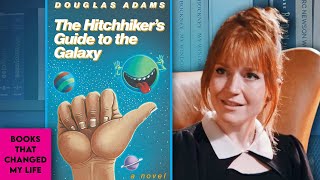
A recorded interview on the Syndicate X Library channel where host Chris Collins speaks with filmmaker Mercedes Bryce Morgan about the book that changed her life: The Hitchhiker's Guide to the Galaxy by Douglas Adams. Mercedes explains how the book helped her accept life's absurdity, influenced her coming-of-age, and shaped her creative outlook; the conversation also covers her reading habits, hometown (Tehachapi, CA), taste in horror, filmmaking (her new film Bone Lake), and practical production details (filming locations and tax-incentive driven decisions). The tone is personal and reflective, mixing book discussion with career and cultural observations.
Questions this video answers
Tehachapi, California (a small town in the Mojave Desert).
About 20,000.
Around 15 years old.
A tattoo of '42' (reference to the answer to life, the universe, and everything).
About two a day.
Chapters
This time on books that changed my life.
When I was a teenager, I kind of had this coming of age moment where I had felt into this deep depression because I realized I don't know what the answer to anything is. I don't know what happens when I die. And everyone has all these different ideas and everyone's acting like everything is happy and okay and normal and it's not. I kind of turned to goth and emo culture to say, look, these people are wearing their sadness on their sleeve and they know something's not okay.
Did you dye your hair black?
I almost did though.
Almost. Do you think the absurdity of the universe is meant to be an allegory for real life?
I find everything absurd. That's probably why I said I laugh at horror movies.
I'm scared of horror movies.
When I was younger, I kind of went through this judgmental phase where I thought, not everyone's realizing this. And then I tripped on LSD and gained a lot more empathy for other people.
So take LSD and then read the book.
People pretend like when you become an adult, you know what you're doing and then you become an adult and you realize that no one knows what they're doing.
What do you think is more important, the answer or the question?
We love to have answers because it makes us feel very comfortable, but we're just grabbing at what we think is maybe the best answer.
Do you ever come to a conclusion?
Yes, but no.
So no.
The answer is so unsatisfying.
Well said.
Yeah.
So the big question, how did the Hitchhiker's Guide to the Galaxy change your life?
It changed my life because it made me feel.
Welcome to the Syndicate X Library where we love books, especially books that have changed lives. We're joined by a very special guest today. She's the director behind Fixation and A Spoonful of Sugar. She's a real book lover and her latest film, Bone Lake is in theaters today. She's here to talk about the book that changed her life, the Hitchhiker's Guide to the Galaxy by Douglas Adams. We are so excited to announce the books that Change My Life website. We made a way for you to show your book pride and that you love books. Hats, tees, hoodies, check it out. Link in the description. Everybody needs a self help hat.
Please. Welcome to the show Mercedes Bryce Morgan. Hello, Mercedes. Is that your copy?
Is my copy.
Can I see?
Yes.
So you learn a lot about somebody by looking at their books.
That's true, but I will say this is not my original copy. Because my original copy fell apart because I read it so many times.
Really.
So my original copy was probably. I had it for 10 years and my brother and I read it so many times it just started to disintegrate. So this is a new one. So sadly.
So how old is this one?
So this one is probably a year or two old. Oh, okay. Now it looks older.
So you're not. You don't highlight or mark them up?
I don't. Well, some books I do. This one I've just read so many times. I'll just flip to a section and go, okay, I'm going to start reading here today.
This is our little.
Cute. Yes, I love it. What section? Do you have anything in particular highlighted or sectioned?
Oh, yeah. So I have. I have notes kind of going through them, but you can see a towel.
It says, is about the most massively useful thing an interstellar hitchhiker can have.
Where's your towel?
Where's my towel? I left it at home. I should have brought my towel. Oh, my God.
I got you a towel.
Oh, thank you. And then this is my towel for today. Now, I was not prepared until now.
I felt like you would have. You would have had a towel.
Also, you match your towel with the all black.
Oh, yeah.
Oh, yeah. It's a very fashionable thing. Yes.
Designer towel.
Fantastic. And let's see another one. Teasers are usually rich kids with nothing to do. They cruise around looking for planets. They haven't made interstellar contact yet and buzz them. I think that LA is full of teasers. Yes, definitely.
Oh, yeah, it's fun. What did you order to drink?
I ordered a Diet Coke because it is what fools my life all the time. And so I wanted to have my comfort drink.
How many Diet Cokes will you drink in a day?
I mean, I'm not. Some people are like 10 or 20. I'm probably like a two a day. Oh, so not that crazy.
But no, that's not crazy at all.
Yes.
So what is your process for reading? Do you have, like a place you read?
Yeah, so I'll actually read everywhere. I'll bring books, like books and baths with me. I'll put them in like a Ziploc bag sometimes or bring them to the beach. And some people I know love to take very good care of my books. And I can tell how much I love a book by how much I've destroyed the book by kind of just picking it up and leaving it open and bringing it everywhere with me.
So the more destruction is, the more love.
Yes. Which I don't recommend for relationships, but I do for books.
Yeah, makes sense.
Yeah.
Everywhere you go, you'll. You'll take them?
Yeah, definitely.
Do. Do you read, like, in the morning, in the afternoon, evening?
I feel like I'll read whenever I have a second or just need some comfort. And I originally started reading because when I was younger, my friend and I. That's kind of how we bonded is we would read books together and talk about them, and we even. We had a race to see who could read Harry Potter first. And so we would sit and just read for eight hours together. And she would beat me, usually. But that's kind of just how my love for books came about.
Do you. Have you dabbled in speed reading?
I've been told I'm a fast reader, but I haven't. Yeah, but I don't know if I've dabbled in speed reading. Can you explain what. Dabbling in speed?
Well, there's, like, classes you can take or, like, you know, for me, I think the first time I ever experienced it was like a cassette series of, you know, how to. How to speed read.
Yeah.
And it never worked for me. Like, I'm a slow reader. And I also like when I leave a book and I come back, I gotta start back.
Yeah.
Like a couple pages to remind me of where I am. And I love that process. Like, I. I am not looking for shortcuts.
Yeah. Yeah. I feel like it's a different type of reading. It's either reading every single word and taking it in or going for more of an experience. And I feel like certain books I'll be a slower reader on, and then certain ones I'll just want to take in as much as I can to get to what's coming next. And it's different experiences.
Yeah, it just depends on the author and the book and what the intention is.
Yeah, definitely.
Yeah. Do you read before you go to sleep?
I do sometimes. That's how I used to fall asleep when I was younger, but now I also. Because I'm a movie director, I also need to take in as much movies as I do books. So I'll usually watch something before I go to bed.
So you'll watch a movie before you go to bed? How many movies do you watch a week?
I probably watch a movie every day or every other day.
Really?
Yeah.
And mostly in the evening.
No, I'll. Sometimes I'll wake up and I'll watch a horror movie while I'm eating breakfast and then continue it during lunch and then finish it during dinner, really any type of movie. But it really doesn't matter to me what I'm starting my day with. As long as it's something that wakes me up and jolts me into the world, that's fun.
Yeah, yeah. I'm not. I'm scared of horror movies.
I get that lots of people like.
You, you can just watch them every day. Like, you know, so my, my experience with horror movies is, you know, because I'm older. You, you actually went to the theater when I was a kid and my friends were all going to see Hellraiser.
Yes.
And I went and saw Hellraiser and I had nightmares for months.
Oh, no.
And I was, I felt like I had seen the devil. Like that movie was so scary.
You know what's so funny with me with Hellraiser is I consider that movie a comedy because for me, the experience of watching it is I like to laugh at how absurd it is the whole time. And so I think maybe that's why I enjoy horror movies, because I have considered them comedies a lot of time. Like there's very few that actually scare me. But I also understand. How old were you when you watched Hellraiser?
Fifteen, probably.
I mean, yeah, yeah, that would be scary for a 15 year old.
That was the end for me. Like after that, like, just couldn't do it.
Yeah.
So how do you, how do you make that connection between them being funny? Like, I don't get that. I feel like murder is funny.
I feel like I would define humor as our body's ways of telling us that things are okay. So a lot of times a setup of a joke is someone trips and falls and we get scared, but then we realize that they're okay and so we're able to laugh at that. And I feel like a lot of horror movies, specific horror movies is you're seeing that happen, but you realize, okay, I'm in this safe environment and I'm comfortable, but I'm allowed to kind of get it out in this way. And so I think that's kind of how I make the connection.
It's a good coping mechanism.
Yeah, exactly.
What are the horror movies that actually scare you?
The horror movies that actually scare me is when people themselves are being terrifying. So I would say funny game scares me. Because if someone were to actually break into your house and terrorize your family, that's a real thing that could happen. That's scary. Or I say hereditary recently, not the supernatural stuff in the end. But the thought of what would you do if your kid accidentally killed Your other kid, what would you do? And that is horrifying. Can't laugh at that.
No, no.
No.
But name the movies that like your top three scary movies.
My top three scary movies.
The Holy Grail.
I would say that eighth grade, even though it's not a horror movie, is one of the scariest movies to me. Because being an eighth grader, being a kid and not knowing what to do with your life is terrifying and very relatable. I would also say that a ghost story is scary because death scares me and kind of related to this. Not knowing the meaning of everything is terrifying to me. And then probably nighthouse for that same reason. Yeah.
So where did you grow up?
So I grew up in Tehachapi, California, in the middle of nowhere in the Mojave Desert.
And then what's the population there?
The population there is probably 20,000. But there was one high school. And the town exists because there's a prison there that most people. My friend's parents would work at. And that's kind of the existence of the town.
That's the basis of the economy.
Yes, exactly. Spaceships and prison.
What did your parents do?
So my dad was an astronaut, astrological engineer. And so he did spaceships. And so that's why, like top secret stuff, not top secret stuff. His motto was, I will not make anything that kills people, but I would love people to be able to travel to space. And so he did Spaceship 1 and Spaceship 2. And so that's why we left out there. And my mom was a math teacher. But what's funny is they're kind of, I would call them the Burning man type of scientists and mathematicians because they.
Did a little lsd.
Yeah, definitely. Yeah. Which is probably why I found this book in their bookshelf.
Isn't it funny that that kind of. That generation of your parents were really, really smart, but also like, were open to other things? Like they were more open minded.
Yeah, definitely. I think it's probably, you know, we see that in every generation. But that generation's version was we're the hippies who were going to be told that we have to do the relationship escalator and have this type of life. But also there's a rebellious streak to them.
Yeah. Like coming out of the Vietnam War, there was this like kind of reset where they challenged authority in a way.
Yeah, exactly.
And they were like, oh, that doesn't have to be that way.
Yeah, yeah. And I think every generation kind of flip flops of whether they're rebelling or they're tired of their parents rebelling. And so then they rebel in a different way. And we just will continuously see that through.
Kind of ying ying and yang. What were your interests as a kid growing up there?
So as a kid, movies and books and that's mainly what I did with all my time to stay sane.
So was it, was it kind of a lonely existence?
Yeah. Oh, I was an incredibly lonely kid. And so I think that's kind of where I found solace is to know, okay, there's more ideas out here instead of just this very small town with this close mindedness and. And it made me feel a relief to know that there was other people out there thinking these grand things that there was more to escape to.
So you spent a lot of time alone reading or watching movies?
Yeah.
How early was the horror movie?
I actually, I came onto horror movies later because I wasn't allowed to watch them. But my parents didn't know what types of books that I was reading. And so I actually read more R rated books as a kid than movies now.
Aren't books almost scarier?
Oh, because you're creating your own images. I mean I read Coraline when I was in third grade and it gave me nightmares for two years. And that's kids horror.
And you like that?
I loved it. I mean now I do. I think when I was in third grade I didn't. But I also read Wicked when I was a kid and I think most people don't realize that the original Wicked is very spicy and like there's a lot of politics and gender dynamics and sexuality in there and I learned a lot from that. That is not included in the movie or the play. But I recommend for reading as a seventh grader.
And did you always have the sense like I, I grew up in a small town.
Yeah.
And I like knew like I was getting out of there the second I. In fact I was 17 and I left like I couldn't wait to get out of there.
Yeah.
And so did you always know that the second the door opened you were. Yes, you were out?
Yes. I so relate to that. I feel like it's the biggest motivator where I'm like, if I do well, I can leave and go find like minded people. And look at us now, we're in Los Angeles.
17 year old selves.
Mike, my cousins who I love dearly, but they're still there. One time asked me, they go, why, you know, why didn't you work in the shipyard or whatever? And I was just like, I had to think for a second Because I was like, that was never an option. Like I never thought.
No.
Like I, I was gone.
Yeah.
Like I was just like, man, yeah. If I could turn 18.
Yeah.
I won't. You know, back then, like you think I'll never come. Now I go back and I'm nostalgic a little bit.
But what do you think that was for you?
It was the close mindedness and.
The. I always have had like a distrust for authority. And in small towns the hierarchy and the authority in the good old boys club is pretty rigid.
Yeah.
And people's thinking is very rigid. And I've always wanted to experience other opinions and other cultures and be surrounded by. That's probably another thing is there isn't a lot of talent.
Yes. Yeah.
In the talent that's there is kind of squelched.
Yes.
And there is like here in la, like in every different category. Like just think about food. Like you could go out to a restaurant where there's a chef doing something that nobody else is doing or just doing it at a really high level almost every night of the week.
Yeah.
And then the writers and like the music, everything.
Yes.
Is, is inspirational because you just.
Yeah.
You know, you're surrounded by people who are doing incredible stuff at a high level.
I think a lot of his other people who left their small towns and.
Oh yeah.
Oh my God, I have to go do this. And I have to be the best at it. And I like it because in a small town it's very easy to be the best at something. In here, I feel, I look around at my peers and I go, everyone's fucking amazing. You got to keep up. And I love that feeling.
All my friends are from the Midwest.
Yeah.
That moved here. Yeah.
Yeah.
It's rare that somebody is actually from here.
Yeah.
And actually this is a generalization that probably isn't fair. But most of the people that are from here are kind of jaded and weird in a way. But. Right. If you went to Hollywood High School.
Yeah.
You're a little more jaded than the average bear.
It seems a lot of people I know, like that had to leave and then choose to come back. Back. And I go, okay, I can understand that choice because you need to own your decision of what you're doing.
It is funny though that like people that grew up here that have never experienced the Midwest.
Yes.
Or other parts of the country and they think this is America.
Oh, totally. Yeah. It's a culture shock.
This is not America.
No.
At all. It's not even close.
Yeah. But I, I Always love people calling something a real life experience because everything's a real life experience. Life being hard is a real life experience. But also being in a place where you are just kind of given everything that's that person's real life experience. And I just think it's really interesting how we. We call something real or not based on the suffering, which I think is very relatable for all people. But I just think it's fascinating that we call it that.
It's fun. So at an early age, were you fascinated by storytelling and.
Yeah, yeah, definitely. I mean, I would play with my Star wars action figures and make these whole worlds for them and I would get very upset sometimes. Cause I go, this person died or this person just had a kid and they didn't know this was going to happen. I got. I would get very caught up in it.
Are you very, very empathetic?
Yes.
Do you feel things very deep?
Yes, I do. Yeah. I mean, one of my favorite words ever is saunder, which is realizing that you're experiencing other people's stories and that you can relate to everyone as kind of the protagonist in their own stories. And I feel like that kind of captures how I feel is just kind of. I love seeing other people and being able to empathize with that and then wanting to show that to other people and tell them about it.
What's the energy exchange in that?
I think it's kind of like being in an interview in a way. Like, you're very good at it. Just for me, talking to you is. It's kind of relating to people on something you share and kind of what I call heart holding, where you can kind of tell someone, you can tell me anything and it's okay. I'm not going to judge you. I just want to. Want to listen to what you're saying. And I think that's. That's kind of the recipe.
Yeah. And in a sense, like, who am I to judge? Like, I'm a mess.
No, exactly. Yeah. But a lot of people do judge.
Yeah.
Related to themselves a lot.
Yeah. It says more about them, really, because we're all just trying to figure it out. Yeah. We need a lot more empathy. I think we're way more common than we are different.
True.
But that is one thing here in LA too, is people are very affected and like very culty in their opinions.
Yes.
And I always. I'm always like, I'll talk politics or religion because you could change my mind. Like, I'm not.
I want people to change my mind. If someone Changes my mind. I go, that was a great conversation.
Unfortunately, people usually can't change my mind because they don't know what they're talking about.
That's true. Yes. They're just in the cult to try. Yes, I saw the cult section. Yeah.
Oh, yeah. I'm fascinated with. With that and human behavior.
Yeah.
But yeah, most of the time you realize very quickly they're just in the cult.
Oh, totally.
And they don't really have an opinion. They haven't thought through it.
Totally. I don't think people sometimes realize it until afterwards that they' in it or ever do. It's an extreme experience to come out of that or into it, which is kind of what we were talking about with small towns of realizing that or not.
Are there any good horror movies about cults?
Midsommar is a great movie.
Mid tomorrow.
Midsommar. Midsommar, yeah, it was a movie that came out recently, an ariasty movie. It's basically what if you were to go through a relationship breakup but you were brought into a cult? And how do you escape the cult while wanting your partner to be there for you? And they're not. Yeah.
I love that.
Yeah. How about. Are there any good cult books or movies that you'd recommend?
So I pulled a couple books to.
See kind of what you thought. So have you read any of the Joust Merloo Delusions and Mass Delusions?
No.
Or Rape of the Mind?
No. But that is an enticing title.
Yeah.
It makes you stop in your tracks and go, what is this book?
So Rape of the Mind. So his writing comes out of the Holocaust and trying to understand like how people can do that to each other or being different.
Yeah.
The other thing that he, he kind of said is like after it was over and they put some of the people that had committed the worst crimes that like ran the concentration camps on trial and they come out and they're like 5 foot 2, 100 pounds and like nerdy.
Yes.
And they're not like these huge like menacing monsters that you think.
Yeah.
Like they're just people that would be working behind a desk, killed, you know, hundreds of thousands of people in a sense. And they don't. They don't look like what you think they should look like. And so that's part of his fascination too. But yeah, he like even he talks about in Rape of the Mind how some of the prisoners would turn on their own people for the admiration of the guards.
Yeah.
And just that, you know, that need for approval and acceptance.
Yeah.
That we have.
Yes.
Yeah.
Yeah. I feel like if every. Most of what I deal with my job and with other people, it's. People have this insecurity, and if we could get rid of that for everybody, everyone would be a lot better off. But that's. Obviously, we're still having all these issues, so no one's figured that out yet.
Yeah.
Yeah.
And the contradiction, too, that a lot of people have.
Self esteem, that doesn't allow them to accept the thing that they want. So they want approval and acceptance, but they're walking around like porcupines, totally pushing everybody away.
Yeah.
And that contradiction in human behavior is fascinating, too.
Yeah. It's usually the people who are very secure are not the ones who are doing that all the time, but it's people who are insecure have been doing that a lot. Yeah.
So you can see my highlighting.
Yes.
Yeah. I mean, it's very much written from. From the perspective of a, you know, psychologist trying to understand.
Yeah.
He uses man's great gift of adjustment to bring him to slavery. Every man's inner core of feelings and thoughts has become. Has. Has to belong to the leader. Yes.
No, it's crazy.
Yeah.
So this one's for you. And if you like that, then maybe you'll get rape of the mind. Hopefully it'll start something.
Thank you.
And then have you ever heard of the person in the situation?
No.
So what's fascinating about this book and just in, you know, in your. What you're doing with creating emotions in others, you know, is.
Most of the time we attribute outcomes to the person, but it, you know, universally is the situation. And they start off in this book with the example of the NFL draft and that your success in the NFL has way more to do with what team drafts you than your talent. Like, if you end up on the Browns, like. Yeah, it's going to like, Tom Brady became Tom Brady because he was drafted by these coaches that, you know, were a match and they created an environment for him to succeed. But had Tom Brady been drafted by the Buffalo Bills, it probably would have been a different.
Yeah.
Outcome. And so it's just how we attribute things, because we're human, we're biased, in our opinion that it's the people that create the outcomes, but most of the time it's the situation.
Yeah.
And then the people.
Yeah, that's so interesting. I mean, it's. The universe is uncontrollable. We're kind of just plopped into it and we kind of just have to make the best of it and bring our towels is basically what it is.
Yeah. And try to put ourselves in a situation that hedges the bets for us, I guess.
Yeah, definitely.
I mean, I did that once I bought a business and I was so good at fixing businesses that I thought, oh, I can fix anything. And then I bought one and it did. It didn't work out.
Yeah.
Like, because the economy crashed at the same time.
Yeah. It's out of your control.
Yeah. And it was my fault because I over, you know, overshot what I was capable of because my past experience, I hadn't really had any big failures. And then.
Yeah, no, definitely.
I attributed the success to me not paying attention to the fact that the market was always good.
Yeah.
And then when the market was bad, my thing didn't work as well.
Oh, totally. Yeah. You love to be like, it was me did it. That's why this worked out. You have to be ready for when the right time happens, usually.
So how old were you when this came into your.
I. I think I was probably about 15 years old when that came into my life.
And who introduced it to you?
I found it on my parents bookshelf. And so that's how I discovered a lot of books is they just happened to have a lot of books.
This is kind of a hippie book.
It is a hippie book. Yeah. And so I discovered that there was also, like, the Moon is a Harsh Mistress. I also discovered on my parents bookshelf, or Wicked, like I mentioned, or the Art of Body Watching were a couple of the books, but this one obviously has come away.
Wait, what's the Art of Body Watching?
It kind of looks at all the different parts of human anatomy and how they've evolved throughout time or just why different cultures have different things with different parts of our body and what that means and kind of just examining that.
What was your takeaway?
My takeaway is that we. We think that we're unique individuals who think something and then we realize it's just our culture that's telling us that things are a certain way and that you can go somewhere else and someone can think the opposite thing of you, and that's their basis.
Yeah.
Yeah.
That's funny. Do you think your parents planted books?
I don't think they planted it, but I was born in such an open household. I think they just were. The thought was, have at it. Yeah.
So you pull this off the shelf, you start reading it, and then what's your first? Like, oh, this is me.
Or yeah. So I think to kind of give the lead up to that experience. I was a very Shy, quiet kid who grew up in this town that we talked about, which was a very close minded town. And I felt like when I was a teenager, I kind of had this coming of age moment where I had felt into this deep depression because I realized I don't know what the answer to anything is. I don't know what happens when I die. And everyone has all these different ideas and I don't know. And everyone's acting like everything is happy and okay and normal and it's not because we don't know what we're doing. And I didn't feel seen in that way. And I kind of turn to things like goth and emo culture to be. To say, look, these people are wearing their sadness on their sleeve and they know something's not okay, but no one's recognizing it. And so I felt like when I started reading this book, I thought, oh my God, this is someone else who gets it, who is also searching for the meaning. But then what happens is they don't know what the meaning is. 42. And that's an answer that isn't very fulfilling. But that's okay. And everyone can kind of find solace in that together because we're all going through that experience. So it was a big moment for me to tell me that everything's okay and it's okay that we don't.
Did you dye your hair black?
I didn't dye my hair black. I almost did though.
Almost?
Yeah. Yeah.
Why didn't you?
I was told it would be a shame. It would be like throwing paint on the Mona Lisa to get rid of my red hair.
Who said that?
An aunt of mine said that even though I really wanted to, but I did wear all black clothing.
What kind of music did you listen to?
I mean, My Chemical Romance was my favorite band of all time.
You're a lot younger than me.
Yeah.
So no. You didn't have a Cure face.
I liked the Cure, but it wasn't as die hard for me as them.
Okay, so when you, you start reading it, what is your overall perception of the style? Because it's written in a different style.
Yeah. Okay, so one of the most, I think, technical genius things about the way that this book is written is they're able to. Douglas Adams is able to go and talk about all these little different ideas and put them in there and take you on all these tangents. But the reason why it works is because he uses tension to go, this thing is about to explode and leave you there, but then take you off in this different Direction. And so while you're going off on the side quest, you know that this thing might still explode. And so then it makes you want to come back to it. And if you'll notice that consistently happens, every other chapter is there's something catastrophic and then we're going to go have some fun and then come back to it.
Yeah, it's an interesting kind of. It creates an interesting tempo, too, right? Yeah, there's a tempo to it.
Yeah.
So the book kind of like, is making fun of bureaucracy in a way. What are your thoughts on that and in relationship to kind of the world we live in now?
Oh, totally. I think. I think it's genius. I think that Zafa Beeblebrox is kind of like what we're experiencing a little bit right now. And I think it's what we've kind of seen with a lot of politicians where you realize that this person is ridiculous and they're there for the cameras and they might not know what's going on or care what's going on, but they've kind of been put in this place of power. And so everyone just kind of goes along with it. And I think it makes it timeless and current at the same time, which is what I think a 10 out of 10 book or movie does.
Yeah.
Yeah.
What do you. What do you think about that in relation to what we have today?
I think it's 100, what we're going through right now. I think a lot of people either agree with that or maybe haven't noticed it yet and are just start noticing it now, hopefully.
Why do you think people don't notice it? Why do people. Why do you think people don't notice that we elect people to do something and then they never do the thing they said they were gonna do? I mean, nobody ever brings that up.
Yeah. That kind of relates to what you were talking about in the other book, right. Of why do people realize they're in things or not, or why do people realize they're in a cult or not a cult? And I don't know, because I feel like if I had the answer to that, I could solve a lot more problems. Do you have a theory on why that is?
I don't know. It frustrates me, I'll tell you that.
Yeah.
I don't understand, like, I don't understand how we lose perspective of the things that matter. Like, just, for example, good schools, like. Yeah, we don't talk about it, but, like, the one thing that you kind of have to have for a society to Work is every kid needs to have the opportunity and you need to kind of have the same opportunities. So like the kids in Brentwood get away better experience than kids in. In other communities.
Yeah.
In the schools are more, you know, it's dictated by the income level of where you are, not that you're a kid and everybody should have the same opportunity.
Yeah.
Which then creates this disenchantment, which then creates this anti. Kind of. How would you say? Like anti patriotism. Yeah, in a way.
No, exactly. I mean, to give an example, the school that I grew up in, you know, there's a curriculum that people have to teach. But for example, I took AP Bio and our biology teacher taught us, you know, I don't think evolution is not real, but I'm forced to teach it to you. And kind of that was the approach to the lesson and. Or even I feel like if I was going to talk about anything I learned in this book in class, I would get in a lot of trouble growing up. And I think we're seeing that even more now than ever of just seeing books taken away from schools and just. It's just not there. And kids are not learning what they should be learning.
And also, like, I have a section here. I don't know if you saw it, but it's not like a lot of the books in there are how the education system was created. It was created by the Rockefellers. It was to elevate people in a sense, but also it was to, you know, build factory workers like recess and lunch. It all is, you know, patterned after that. And so kids aren't doing that anymore. Like the, the way that schools are giving the kids the curriculum does not match how kids learn. No, it hasn't evolved.
No. And a lot of teachers are passing kids because they have to, but it doesn't necessarily mean they should. But that's better than a kid not having a high school degree, because that would be worse.
Yeah, we end up treating the symptom, not the cause.
Yeah, definitely.
We should be able to develop schools that kids. We find a way to inspire them to be better, to inspire them to learn, not they have to sort of a thing.
Yeah, exactly. But I think that's a lot with Gen Z is we're seeing a lot of people who are kind of fed up by the system that's been created to them. It's a younger generation than me, but I think it's just really fascinating of people who are being hired as Gen Z are asking their bosses, why are you making me do this? Why are we doing this in this way? And we kind of talked about every generation being a reaction to the lack. And so I go, what do we do with that? And what happens to the next generation? I don't know yet. But we're currently people. We're fed up.
Yeah. We don't seem to learn the right lessons.
No.
Is there one answer to life, the universe and everything?
42.
Oh, you have a tattoo.
I do have a tattoo. It's one of my. I only have three tattoos and it's one of my tattoos.
What are the other two?
The other two. This is a breakup tattoo where we decided we were breaking up, but we still love each other. And so we had to get this together. And then this is another current relationship tattoo.
That's your current relationship?
Yes. Yeah. And it's kind of. We made up our own cult symbol of our two person cult where it's the cult called. It's just called our relationship. But no, this is also relationship matching tattoos for both of these. But it's that we get to experience philosophy and work and play together, and that's very special.
Work and play.
Yeah, because it's very rare to find a person who can experience those three things. Usually you only find one or two, and we found all three. And so.
So you work together?
Yeah, we work together. She's a producer. She's produced two of my movies.
And is that better or worse? Sometimes better.
But we, we got together after we started working together.
So that's why you already had the work relationship.
Oh, yeah. Or else that would be. That could be very messy.
You already have that mutual respect.
Yeah, exactly. There has to be.
Okay, explain how you break up with somebody but get a tattoo. What was that conversation like?
We're. We're still best friends and we consider each other family, but it was. We love each other, but as partners, we. We disagree too much or there's just different ways we want our life to go, but we don't want to throw that away. And so we made a to do list where I helped her move out of the apartment, we found her a new place, and one of the things on the to do list was getting a tattoo together.
So do you think the absurdity of the universe is meant to be an allegory for real life here on Earth?
Yes, I. I def. I think I find everything absurd. I think that's probably why I said I laugh at horror movies where I think people pretend, like when you become an adult, you know what you're doing and then you become an adult. And you realize that no one knows what they're doing at all in every sector of life because everyone's doing it for the first time. And you can do something, you can learn a little bit more, but then you'll have a new experience that you don't know. And we love to have answers because it makes us feel very comfortable. But we're just grabbing at what we think is maybe the best answer based on our experience of the world.
How do you approach that internally when you're in a leadership role like directing? And the absurdity of what you just said, like the contradiction, how do you like work through that?
I think it's because it's not about the answer. It's about the answer that works best for your life or for the creative project because everything is so unique and different. Like for example, if I'm making a movie, there might be 10 different ways to shoot a scene. But what feels best to us for what this is as a overall whole? And it will be its own special thing. Because I don't necessarily believe in absolute truth, but I believe in doing what's right for other people around you ethically. And your experience in your life.
Yeah. Like even the way you're describing that, you're describing it as a collaboration, not a top down dictatorship.
Yeah.
You're saying us.
Yeah, because I want to create art that other people can enjoy. And I, I personally, some people might just create art for themselves and go off. That's amazing. But what I purpose purposely want to do is create it for other people. And I feel like that's what this book did for me, is it made me laugh a lot.
Does adopting an alien perspective help artists.
In any ways?
Yeah, I think we have to see things outside of ourself to be able to understand ourselves more. Or else we kind of become too stuck in our own tunnel vision. And so I think that's very helpful. And I think really good storytellers are able to look at someone different from them and tell a story from their perspective as though it is their own. You don't notice the difference because it feels so true to the human experience.
Yeah. And kind of the disassociation allows you to analyze it in a different way, right?
Yeah, exactly.
Yeah. What do you think is more important, the answer or the question?
Definitely the question. The answer is so unsatisfying through and through. But even though I say that I'm still human and I would like a good answer, but I know I'll never get that.
So read that for Me.
Okay, the argument goes something like this. I refuse to prove that I exist, says God, for proof denies faith, and without faith I am nothing. But, says man, the Babel fish is a dead giveaway, isn't it? I could not have evolved by chance. It proves you exist, and so therefore, by your own arguments, you don't. Oh, dear, says God, I hadn't thought of that. And promptly vanishes in a puff of logic. Oh, that was easy, says Man. And for an encore, goes on to prove that black is white and gets himself killed on the next pedestrian crossing. Most leading theologians claim that this argument is a load of dingo's kidneys. But that didn't stop Oolong Kulfid making a small fortune when he used it as a central theme of his bestselling book. Well, that about wraps it up for God.
Does God exist?
All I can claim is that I don't know anything. So I think that he might exist for some people, and I think if that helps them in a way that doesn't hurt people, that's amazing for them. But for me to claim I know anything would kind of be putting myself on too high of a pedestal.
So kind of, if somebody hasn't read this, just kind of explain the book as you've experienced it.
So the book is about a simpleton who realizes that his house is going to be bulldozed, but he realizes it's not just for a highway, it's to create an alien hyperpass, and Earth is going to be destroyed at the same time. And so he goes on this wild experience quest throughout the galaxy. And meanwhile, you learn, you question the purpose of life, the existence of God, the existence of yourself, and everything that has ever been, all while trying to find the answers for life, the universe, and everything.
And do you ever come to a conclusion?
You learn some answers, but you maybe question whether those answers are satisfactory.
So, no.
Yes, but no.
Yeah, well said.
Yeah.
Okay. And so the big question, how did the Hitchhiker's Guide to the Galaxy change your life?
It changed my life because it made me feel okay about living. It made me realize that I could laugh about my existence and know that I am powerless, but take power in the fact that I am that way and that everyone else is probably going through that same experience as well.
Did it help you break out of your shell, in a sense, and relate to other people? Because the stakes weren't as high?
I think that was the first part of my journey. I think the first part of my journey was realizing that there's other People out there that are having this crisis. But I think that when I was younger, I kind of went through this judgmental phase where I thought, not everyone's realizing this. And then I tripped on LSD and gained a lot more empathy for other people. And so I would say if anyone's going through a coming of age, I would recommend both parts of that because I don't think you should have one without the other.
So take LSD and then read the book.
Or. I mean, my experience was reading the book and then taking lsd, but I think maybe experiment and find out what works for you.
How did you get lsd?
A friend at a festival who handed it out too casually, but then I reckoned with it.
And so you just popped it?
I did.
You were at a festival?
I was at a festival.
Were you camping?
No, I was at. It was FYF festival, which no longer exists in downtown Los Angeles. But I'd recommend people taking a lot more care with it.
So you took LSD downtown?
I did take it downtown and it.
Was a good experience.
It was. It was good in the fact where for months afterwards, I became a lot nicer of a person and a lot more empathetic to people. But in the experience, I felt like I was having my world ripped apart. And I also had bedbugs at the time. So that is also a bad combination when taking lsd.
Terrible combination.
Terrible combination. Do not recommend.
What is it in the experience that. That made you have that sort of empathy?
It's interesting because things are cliches because everyone says them. And even though it sounds like a cliche, it's true.
Can I guess what the cliche is?
Yeah, please do.
Everything's connected.
Yes. Yeah. But it's cliche because that's what people experience. And so I realized, I go, if other people are going through the same experience as me, who am I to say that I'm different than part of the human collective?
So feeling connected to the world.
Yeah.
That's so interesting, though, because I've never thought of this before, but the thing that we want as humans more than anything else is to feel connected.
Yes.
And then when you feel connected, you actually develop more empathy. It kind of makes sense.
Yeah, it does.
The less connected you are, the more judgmental you are. Because you are in fight or flight, in a sense, because you don't have anything to grab onto.
Exactly. Yeah. And I think for a lot of people out there, I. I feel for them because that's very hard to be an experience where you don't feel connected to people and you push yourself away from people. And I feel like if people would open themselves to it and allow it, what's. What's worse is never opening yourself up to that. But if you try, then maybe you might find that in your life.
Yeah, that's beautiful. So as a director, what have you learned over time about people and casting people? What do you look for when you're like, hey, we're gonna spend two months or three months together making this movie? What are the things that you've learned about casting and that process?
Yeah, I think that bad acting is acting how you think a human would act in the experience of something. So if you think someone would gasp at this point or turn away at this point, whereas good acting is actually living the experience in your body at the moment. And I think we as humans are very smart. Someone doesn't have to be a moviegoer to know what's good acting or bad acting. We can see when someone is being what we recognize as human or not. And so I think that's a huge part of the casting, is finding that.
What about the people you surround yourself with? How do you. How do you go about determining whether they're a fit or not?
Yeah, a lot of people I've worked with, I've worked with for 10 years, some of them. And so I think it's really finding your community and sticking with them through going through really intense things. And so I think it's that. But it's also just people really, really caring because what we do is very hard. And if someone doesn't want to do it, that's okay, but that's probably not the right person to go on the journey with.
If I was new coming into one of your projects, what is it that I would learn by the culture of the team that you, that you have.
About being able to be your own creative voice and speaking up? Because I don't like people that are just yes men. I want people to bring their own ideas to it. But also knowing that you're going to be put in an environment where a lot of is asked of you and so bring yourself fully and be ready to be asked.
A lot of what do people, new people coming in, what do they usually struggle with the most?
I think that when you know someone really well, you develop a shorthand with them. And so I think that I would say 80% of problems are usually communication lapses. And so I think it's just. That's just about knowing someone and getting to know someone better.
And so that's. To your point? I'm speaking up.
Yeah, exactly.
Communicate, talk. Yeah, yeah, yeah, That's. That's fun. What are you working on right now?
So I have a movie coming out in theaters called Bone Lake. I know you don't like horror movies, but it's a funny one. And killing.
It's funny.
No, I don't think killing.
How many people die in this movie?
I can't answer. That would give things away.
But more than one.
Yeah, it's funny in seeing people make good or bad decisions about their life and then have to deal with the consequences of that.
But. Yeah. And so you can find it in theaters in October. And so that's the next thing.
Is it done? Are you done with it?
We're done with it. Yeah.
That's gotta be a pretty good feeling.
Yeah, exactly. Yeah. And it's. It's erotic thriller, so it's for also people who like an erotic experience.
Nothing funner than eroticism and death.
It makes it. You know, it is. There's a lot of driving force of humans. So.
No, I'm gonna have to. I'm gonna have to watch it because just the way that you have this ability to frame it, like something completely different than my experience as a kid with Hellraiser.
Yeah.
I gotta go back to that and see if I'm.
Yeah.
If I'm wrong.
Yeah.
I'm traumatized from being 15, but I'm a different person now.
Yeah. Thankfully. I don't think this movie will traumatize you. No, no, I don't think so. That's not the intention behind it. It.
So you're going to go. You're going to go promote it, do all the work?
Yeah, exactly.
Do you. Do you like promoting something more or making something.
I like making something more, but I. I'm excited about promoting it because I'm excited to go talk to someone about something that took us years to make. But definitely, as an artist, I go, okay, let's go play. That's the. That's the.
Go make something else.
Yeah.
What are you reading now?
So, I'm reading the Creative act by Rick Rubin, but it's kind of about the process and being able to keep making things and where you find inspiration from that and keep putting things out there.
Did you see the art piece we did on that book out there?
No, I didn't.
When you walk out. Oh, I'll have to. We deconstructed the book and then did a charcoal drawing of him.
Hell, yeah. Amazing.
It's. It's Fun. That's good. What would. What would you say your top five books are?
My top five books are obviously Hitchhiker's Guide, Candide by Voltaire, One Hundred Years of Solitude. I have to throw a Harry Potter book in there because it was my childhood, and. And I probably. I probably have to say Wicked because it was my. Also another coming of age for me.
Yeah.
Yeah.
Skin. This was fun.
Yeah, this was fun. Thanks so much for having me.
I hope I inspire something with that book.
Yes. I'm very excited to read it. Thank you.
In your position, it's interesting because you're dealing with humans, but you're also telling stories. And so it's all connected.
Yeah, it is all connected. Yeah, definitely.
I wonder if anybody would ever do a movie about a group of people making a movie that's a horror movie.
I feel like that has to have already been done, really? Probably. Yeah.
It's funny because just that genre becomes bonding, I think, for people.
Totally. I mean, we went through. On the last day of our shoot, we went through a storm, and we had to stop filming or else we would have lost some of our crew members. So the act of making this movie was as intense as the movie sometimes. Yeah.
Where did. Where did you film it?
We filmed in part in Georgia, part in la, because we had to recreate our boats on the lake after a real storm hit us, and then part in Rhode Island.
Oh, wow.
Yeah.
What is it the kind of the marketplace now of movies not being filmed here and being filmed somewhere else? Are you faced with that?
Oh, 100%. It's really sad, actually, that people aren't filming here as much, but it's really about tax incentives. And so when those change, people will come back. And, you know, it's hard for me and other people because I have to move away from my home for a couple months whenever I go film a movie. And I also would love my own economy to be stimulated. But even more so than that, people are not even wanting to film in the US Anymore. They're taking movies overseas. And so I do think it's something that really greatly needs to be looked at, or else we'll just lose it.
Completely in the U.S. explain to me how those economics work in the sense that, like. Like, what would a budget be for a movie? Like, how many million?
Totally. So, I mean, it. It depends. It varies by movie. But when we look at tax incentives, the way we choose where we film is, we go how much state will give us, how much money back for us to be able to make this movie. So is it a 40% tax incentive? Is it 30? And we choose our filming location based on that.
So. But explain how that works. So let's say you're filming a movie that's $10 million, and you say, I'm gonna film it in Georgia.
Yeah.
They will give you 4 million back.
Yeah. Basically, the producer could explain it way better than me.
But how do those incentives work? Like, how are they giving it back? Are they giving you the actual money? Or is it.
Yeah, you do get money back from spending there. Yeah. So if you're making a $10 million movie, you don't actually have $10 million. You have a fraction of that. So you might have six or seven million dollars, and then you're able to make a $10 million movie because of that.
Where's the other three million?
It's coming from tax incentives.
Oh, I see.
Yeah. Yeah. But that's why it matters so much.
It's huge. And so if you were to film the $6 million movie here in LA.
What is it that makes it more expensive here? Is it the liability is.
It's the tax incentives are only for bigger movies. A lot. And then it's also just. Things are more expensive here is a huge part of it.
So hotel.
Hotel location catering. Yeah. Someone in another state might go, oh, my God, of course you can go shoot in my house. That sounds great. In la, people go, we're tired of it.
We're going to want $100,000, a lot.
Of money to go film in our house, which understandably. So.
Yeah.
You just.
People here are jaded. Right. Like, even just taking pictures, people are like, I want you to pay.
Which I also understand. I don't. Hold it again.
Yeah. But in other parts of the country, people are like, no.
Exciting. Yeah, yeah, yeah.
Does it cost like 20% more here? 25.
It depends on the budget of your movie. But it's, it's. It's so much more so because you lose millions of dollars in the tax instead of when you're a smaller movie, that it just makes it not.
Yeah.
Possible.
Well, it's funny too. Like, even just with, like, TV shows, everything, they're filming them out of the country.
Exactly. Yeah. People will fake things as LA and just shoot exteriors in la.
Yeah. It's nuts. Like, the amount of people that are out of work here is. Is starting to get scary.
I know.
And people are leaving.
I know.
Like, we had. When we do events here, the reason why we built this kitchen is so we could have a chef come in and cook. And she moved to Atlanta because her husband works in tv and that's where the work is.
I know, it's sad.
Yeah.
All my friends are being affected. It's awful. Yeah.
I wish we could figure it out. It seems like we're like, it's almost like, too late.
It feels like hopefully not. I feel like thinking like that maybe never actually helps things. So sometimes it does, but I'm like, let's keep trying.
Well, thank you for doing this. Super fun.
Thank you so much.
We are so excited to announce the books that Change My Life website. We made a way for you to show your book pride and that you love books. Hats, tees, hoodies. Check it out. Link in the description. Everybody needs a self help hat.







