Books That Changed My Life: Alicia "Ace" Easter & All About Love
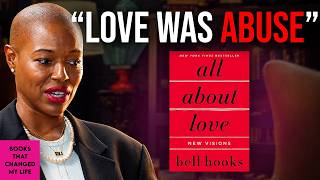
A recorded interview between Chris Collins and Alicia 'Ace' Easter discussing how the book All About Love (by bell hooks) influenced Alicia's life. The conversation mixes personal biography—childhood in Baltimore, moving to Atlanta at age 10, family instability, witnessing and experiencing abuse, losing her mother at 19—with reflections on love, healing, storytelling, and a short guided meditation led by Alicia. Alicia describes how the book helped her reframe love, heal from trauma, and change relationship patterns after a long engagement ended.
Chapters
What book are we talking about today?
We're talking about All About Love.
It's All About Love.
You ordered champagne.
That's how it rolls.
It's very classy.
Cheers. Cheers.
What do you think of the library?
I love it. Like, love it, but also, like, it's so inspiring because I love books and I have a library.
My mom died when I was. I shut down. And then you have this moment where it's like I am either going to. I'm gonna lose myself or I'm going to get my together and take my life back.
We love talking about books that have changed people's lives. Like, had such an impact that they are different after reading the book. And our special guest today is Alicia Ace Easter. The big question, how did All About Love change your life?
All About Love change my life.
Should we start with the guided meditation?
Absolutely.
Okay, so our intention here is to inspire others.
Okay.
With your story. So go ahead.
All right.
Sit up tall. Sit up well, like a nice, freshly bloomed flower. Take a big breath in. Feel your belly expand.
And then exhale. Sigh it out, Let it go.
Start to slowly bring your palms together and briskly rub your hands together, generating some prana, some heat.
Purpose connection.
And then slowing it down, slowing it down. And then maybe taking your hands where it's easy to reach and allowing your body to feel that warmth. Maybe it's over your heart. And inhaling.
Sigh it out. Let it go.
Namaste.
Goosebumps.
Me too.
I love it.
I love that. I didn't know that that was going to be happening. That's amazing.
It's a great way to start.
It is a great way to start.
What book are we talking about today?
We're talking about All About Love.
It's All About Love. That is. I mean, that's life, right? Life is all about love. Life is. For, like, a long time, I wasn't really sure what love meant or what it was or the representation of love.
Was always present for me in my home growing up. But I definitely have been on this, like, mission in my life to figure out, okay, like, what is love? Is it okay, I give you this, you give me that. Is it, you know, in college years during my major, for the first time, what quid pro quo was. And then growing up, I was like, oh. Or when I learned that phrase, I said, oh, that's how it felt in my family. Very quid pro quo. You do this for me, I do that for you, and I give you love. And then it's like this back and Forth with at least one member of my family, not my mom, but love, I mean, and that's when it's formed in your childhood, right? And I said that when I was talking to someone, or may have been like, when I was, you know, writing you all about this, about how everything is formed at home, everything. And then it's up to us to be on this, like, guided journey, if you choose to. Because sometimes it can be really overwhelming to find the meaning for ourselves and not just like have it spoon fed to us any longer. So it could be one way when you're little, but then if that doesn't suit you, you as you get older, which a lot of times there's going to be transitions in life and whatnot, then it's up to you to accept it and kind of discover it on your own. And so that's what this book has been for me when it was recommended to me six years ago. And yeah, so it guides everything.
You ordered champagne.
Well, that's how I roll.
It's very classy.
Very classy.
I did.
Do you like day drinking?
I do enjoy a little day drinking.
I was like talking to a friend about, you know, having.
Being that, you know, a day where we're like, let's imagine a day where you're off, you're not at work, what do you do? And I was like, okay, so am I not allowed to think about work? Because then I was like, okay. And then also, what's it like to have a day off? And then I said, well, you know, what I would do is I would grab a book, I would take myself on a nice lunch and go somewhere and perch up and read a book at lunch and have a glass of wine, glass of champagne, like, whatever. So that's how I roll.
You just described the perfect day.
Cheers. Cheers.
Mm.
You guys do it right here. I'm not surprised though.
What do you, what do you think of the library?
First of all, I love it. Like, love it. But also, like, it's so inspiring because I love books and I have a library. Thank you. I have a library in my place and I moved last year and so I had to downsize and I moved to like a smaller space and so I had to downsize and my friend was over. She's like, you have a lot of books. And I said, well, yeah, doesn't everybody? She's like, no. I said, oh, that's unfortunate, because who do you talk to when no one is around, right? And for me, I've been. I'm such a Seeker of information, a seeker of knowledge. Since I was very little, I always had, like, a lot of books. And my mom, I was always like, you know, would drop me off the library and that be where I'd hang out if I'm not playing sports or anything like that, because I played sports all four seasons. But books have just always been such a dream. A way to, like, kind of escape and kind of discover. I used to want to be a teacher, and I said, I don't know how I'm gonna be a teacher or what that looks like or what that means, because I used to have my little cousins would come down and stay with us in the summer from Baltimore, come down to Atlanta and stay with us. And I'm like, okay, I'm the teacher, you guys are the students, and here's our book that we're gonna be reading today. And I can't remember what book it was or where I got it from. No. Was it a. It was something that was pretty advanced for where I was in my life, I feel like. But I was like, okay, we're gonna go through this book and we're gonna analyze it and we're gon. It was so funny and it was so fun that they kind of sat there with me and let me kind of go through this and fast forward to where I am now in my life. I'm not a teacher in a classroom per se, but I do get to teach yoga and I do get to teach kids, so it's pretty exciting.
So how old were you when your mom started dropping you off at the library?
I was. Gosh, we were in.
Baltimore, so knock. Pratt Library, like across the street from Commodore Rye elementary school, number 27. I'll never forget it. So I was definitely elementary school age.
Was it big, the library?
Oh, it's huge.
What were the sections that you gravitated towards?
I think that I always like to go to, and I still do now. Like, I like it was mystery and mystery.
Even as a kid.
Even as a kid, mystery. And then also reading the stories of others because I like the section that you have here in your library, storytelling. And I perked up a little bit in that area because I love a good story and I love spending time with people who know how to tell a good story. And I love crafting a good story. I'm in marketing. And so also, you know, storytelling is everything. And so Even in my 60 minute yoga class, I would be. That's. That's a story to tell, right? So, yeah. Anything about people's Lives I just always found fascinating. And when I saw, like, your section also on movies, I grew up loving movies, too. We didn't have a lot of money growing up, so sometimes it would be. We choose between having, like, cable or having a house phone. And I always like, well, let's keep a house phone. And kids who are watching. A house phone is when it's a phone at the house where people would call and you'd have to be there to pick it up. There was no texting or anything. And then we would just get movies, or we'd go to the video store and get movies and whatnot. So that was always just, like, fascinating to me. Just the ability for people to take something from either here, whether it had been a book before or a script, and put it and tell a story and for us to watch it and take it in.
Did you always have this beautiful energy?
I think so, yeah. Yeah.
Even as a kid?
Yeah, I did, actually. I love to tell the story. When I was born, I came out of the womb with a to do list. It was like, we got stuff to do. We got people to see. People need to see me. I have a message for them. But, yeah, I've always. I've always been this way. I'm the older brother. He's two years older than me, and he has three kids. And one of his kids, she's seven, and she's like my twin flame. She came out hot and ready, just like me. And so it's funny, like, engaging with her and sitting with her. She's seven, and it's just, like. It's fun. And it just reminds me of myself when I was little and how free I was to be myself and to be me not. And, you know, and there were precarious moments that were unfortunate, where I kind of shielded myself and had to protect myself. But for the most part, I'm really grateful that I never lost my childlike wonder and zest for life. I mean, that's my. My jam.
Did people always gravitate towards you?
Yeah.
Were you a natural leader?
Yeah, I'd say so. I always played sports. When we moved to Atlanta, that's when I started playing organized sports. But when we were in Baltimore, it was, you know, just kind of out playing. Okay, Everybody, all the cousins, all the neighbors, we meet up, we play out in the road. Out in the middle of the road. We, you know, someone would turn fire hydrant on. We play in that regard. But I always felt like I. Even though my brother's older, I felt like I Kind of was like, alrighty, I'm the leader here. I'm in charge. And he's also a very, like, opposite energy of me and very, like, more.
Stoic or more, I would say, or pessimistic?
No, not pessimistic at all. He's very stoic, I would say. Yeah, he's. He's truly optimistic and a really great father and husband. And he's an educator. He's very, like, observant. And he doesn't talk much, but when he does, it's like, oh, okay.
Yeah. Fun.
Yeah.
The topic of love is fascinating because I think that most people misunderstand love. And this will be great to unpack just kind of your childhood a little bit. So you grew up in Baltimore and then moved to Atlanta at What age?
At 10.
And what was the catalyst team moving?
My mom's husband, he'd gotten a job transfer.
So not your father?
No, not my father. I didn't grow up knowing my dad. So my mom was, like, raised my brother and I, and then she got remarried, and then he got a job transfer. And that moved us to. That moved us to Atlanta, which was hard because that I moved from this place where all my cousins were there, my grandmother, my aunts. Like, we had a community, right? And my mom was one of six siblings. So pretty big family. And everybody kind of met up at my grandmother's house. Most families is the grandma's house is the matriarch of the family. We meet up there. And then moving to Atlanta, it was such a different experience. It was. I went from Baltimore. Have you been to Baltimore? Many times? Very black city. To Atlanta, the suburbs. Not the Atlanta that is, like, present now, but Atlanta, the suburbs was very different. I was like, you know, one of five black kids in my class. And it was a culture shock, to say the least. And so I think in that moment, what happened for me was I started to quiet myself and quiet my voice and quiet this natural zest of life that I have. Because I was like, where am I? I'm so different than all of these people. Even just different socioeconom and everything. And also dealing with, like, tumultuous experiences at home. Right. And so kind of navigating that. And then I think that's why I love books and love stories and love movies and love kind of putting pieces of, you know, making up things about people that I don't know, making up stories about them and kind of putting them in my little, like, Lisa Frank diary, like, writing that all about and whatnot. I Think that's what was my saving grace when I was growing up was the ability to escape, like, a lot. If I'm not playing sports, if I'm not at school, if I'm not at a friend's house, I'm at home doing my best to find a way to, like, quiet the noise and quiet the chaos that was happening around me. And it was always storytelling. It was always some sort of art endeavor as far as, like, drawing, writing, and reading. For sure.
What was going on at home that was pushing you into that?
It was a lot. It was a. I'm a survivor of. My mom and my ex stepdad would fight a lot. And my ex stepdad was extremely abusive physically, emotionally. It was tough. Cause I think, like, I was.
Nine. Eight or nine. Either eight or nine when he came into our life. Right.
And still in Baltimore.
Still in Baltimore. This is in Baltimore. And then it was just.
Did the abuse start in Baltimore?
Yeah, it started in Baltimore and witnessing. And I think that also it's really the imagination of children. And I think that I have this vivid imagination and this vivid memory to where I used to. That's another reason why this book was, like, helped change my life, because it really helped me to heal and see that. Just because I have these memories of the abuse that I witnessed and the abuse that I experienced myself, or even when I read about people being in abusive situations, that the same thing that, you know, she'd experienced or bell hooks had experienced in her life as well. Reading that and being able to say, okay, it's not as triggering anymore, because it was bad. I mean, it was really bad. You would think, like, when people meet me and they learn about my story, that I just had this, like, perfect upbringing. And even if that is the case for some people, I've come to the realization that nobody really gets out of childhood unscathed by just even a little bit of, like, drama. But I just know that I was shocked in the way that I've been able to be who I am today based off of, like, what I experienced day in and day out and what I witnessed my mom go through and what I witnessed her really to accept. That's why I said, as far as, like, learning what love is at a young age and seeing what I thought, I thought love was abuse. I thought love was, well, you have to stay because you said you married this person. I thought love was physical abuse. I thought love was like, okay, I'm gonna beat you, and then tomorrow I'm gonna buy you a present, you know, that's why I talked about the quid pro quo sort of situation. And that's not really the.
Full meaning of it, but it's. That's what I thought love was. Love was like, okay, if I hurt you, I buy you a gift and you have to forgive me. I beat you because I love you. And that's not the case at all.
So was that the kind of person you attracted for a while in your personal life?
Yeah. I mean, not a. Not a. I think what I attracted most was someone who I didn't have to get really close to and I didn't really have to trust. And I never really felt safe with because I grew up thinking, I am never gonna be my mother in a situation where she can't leave because she can't afford to. I am never going to be able to. I'm never gonna rely on a man to take care of me because if he decides one day that he wants to treat me like shit, I need to be able to go. And so what I attracted was, like, someone right to here. And then that's not really who I am. I wanna go deep with people. I wanna go deep. I wanna get to, like, the meat, the bones with you. But I couldn't even really trust myself. I hadn't even really. When my mom died when I was 19.
I shut down. I buried. I mean, I was a freshman in college. And I was like, we're gonna go ahead and bury that. Okay, great, let's go ahead and get through these four years. Let's get a job, let's move on.
Were you just numb?
Oh, I numbed and I numbed. But unbeknownst to me, subconsciously, I'd had practice throughout my whole life, right? Because I'd go to school and I'd have to be quiet. I'd have to keep secrets. I'd have to, like, be like, oh, yeah, things are good at home. Or my mom. A good mask. Yeah, a good mask. So for a long time, that's what I attracted is people who also were wearing mask and trying to figure it out on their own. And. Yeah, so I haven't had a lot of romantic relationships in my life. And when I do. When I do let my guard down and I'm disappointed, it's like, immediately like, well, see, see, you know, this confirmation, this confirmation, this. This sound in the back of my head, or this. This voice that is like, see, you thought you were worthy of. And you're actually not. So it's navigating that too. Navigating. That worthiness aspect that again, going back to like, why All About Love was like, oh shit, I wish I'd read this before I got into my relationship that I was in for six years. And the catalyst for me picking up this book was it was recommended by one of my teachers, Imani Cohen, and, and she recommended this book and I was like, okay, great, I just broken up with my fiance. And I was like, I don't know what I'm going to do. I'm out here in L. A. I've never been so.
So unpack that a little bit for me.
Sure.
First, were you in abusive relationships?
I was not in physical abusive relationships.
So you, you, you made a decision that was never going to happen.
I made a decision that the physical was.
What about mental?
Never. Okay, so then there's a nut. So then you learn like, you learn that oh, in addition to. It's not just physical. The physical is what sometimes you.







