Books That Changed My Life: Alyson Gorske & Just Kids - Patti Smith
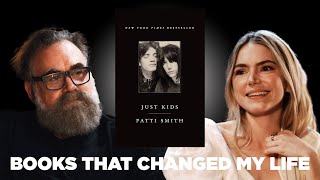
Alyson Gorske, a military kid who grew up moving between postings, discovered Patti Smith's Just Kids around age 20 and says it gave her permission to be an artist. She owns three copies, including one signed, and credits the memoir with shifting her spirituality during a period when she was struggling with substance use and searching for direction.
Questions this video answers
Around 2010 (she recalls seeing it in Target when she was about 13).
About 20 years old.
About 21 years old.
She owns three copies; one is signed.
Chapters
So the book we're here to talk about, Just Kids, Patti Smith, did you have any sort of perception or thoughts on that you were giving up your dad for the country?
I remember my dad calling me, and we were FaceTiming when he was in Iraq, and he said something about a bullet had gone through the roof of his. Not a trailer, but whatever those were called. When you're a kid, your experience is only your experience, and you don't know any different. I'm like, oh, dad has to go to war, dad. But that's dad's job. I just, like, never allowed myself to get emotional about that stuff. We would, like, laugh it off, and then in hindsight.
Like, that was scary.
We love talking about books that have changed people's lives.
Like, had such an impact that they are different after reading the book.
Welcome our special guest today, Allison Gorski.
I was nursing a lot of wounds from childhood that I didn't know I was nursing. I was so removed from my reality, and that's exactly what I wanted.
So the big question, how did Just Kids by Patti Smith change your life?
Hi. Nice to meet you, Allison.
Good to meet you, too.
What do you think of the library?
It's pretty cool. It's really cool. It's.
It's a lot. I'm impressed. Oh, we have the same copy.
Yeah. I'm so curious about yours, though. Do you highlight? What do you do?
I don't. So I have three copies of this book. She signed this one, which is why I brought it.
Oh, wow.
I was thinking, I was like, maybe I should have brought the one that I had written in and stuff, but I don't know. I was 20, so it was probably.
It always kind of tells more about you. Like, I'm always curious how people actually do it because I kind of devour books and I put tabs and highlights, and so when I see other people do that, it makes me feel not as crazy, maybe, sometimes. Do you have a lot of books at home?
I do.
Do you have, like, stacks or what does it look like?
I don't have stacks. I have a bookshelf by my bed. I've gone through phases of, like, purging certain types of authors and moving and getting rid of a lot of books. So right now it's very, like, very feminine, for lack of a better. Like I was saying when I saw the Bukowski collection, because Bukowski was, like, my favorite in high school. Like, I was. I was like Bukowski and Hemingway, and I was so especially Bukowski because I had really Bad acne in high school. I loved him for that. And I loved, like, the feeling of being an outsider. Then I got older and I started reading Virginia Woolf and I. And like Anaya Snin, and I started to, like, resent writers like Henry Miller and Bukowski and, like, their misogyny. So then I threw away all of my Bukowski, which. Which now I'm like Alison. It was very juvenile feminism because I was just. I was very reactive and I couldn't see the beauty in the time and his beauty. But anyway, my bookshelf now is above my bed. It's probably mostly women writers. And, yeah, it'll probably go through another purge. I tend to get rid of books or give them away a lot.
And then. So the book we're here to talk about. And the fun thing about this show is that I get to learn about books I didn't know or I hadn't read before. So it's great for me, but just kids. Patti Smith. And I'll read kind of the intro on the inside. It says it was the summer Coltrane died. The summer of love and riots in the summer when a chance encounter in Brooklyn led two young people on a path of art, devotion, and initiation.
Yeah, she's so cool.
We have something in common. You moved around a lot when you were a kid.
A little bit. My dad's a general in the army. And you would think that I would move because of my dad, but I didn't. I. When he was deployed to war, my mom just kind of, like, would wig out. Like, we were living in D.C. or like the. Out the Virginia outskirts. And when he left, my mom kind of wigged out. Was like, I need to be in the country because my family's from Texas. And so we moved to, like, a very small, small, small, small town in Virginia. Like, there were 25 kids my grade, and then when my dad. So. But that was during middle school. So that was like a p. Pivotal move and time in my life. And then my dad came back and he moved to D.C. and I moved in with him. And so going from, like, small town Virginia to D.C. where I was, like, thrown into, like, a public school. And like, you know, it went a school of, like, thousands, literally. So I didn't move a ton, but I feel like moving in middle school and then in high school, I feel like it was such pivotal times that it felt like a lot of moves, but it was only, like, a few.
So were mom and dad separated?
No. There was a time where they didn't live together, but they weren't separate. That's. I don't know.
You don't understand.
My parents are very like, my dad was raised Catholic and like, they're very Southern in a lot of ways. And their marriage was always.
Awkward but buttoned up.
Yeah. Yeah. Like, I never saw my parents fight as a kid or like, or they were very much like. And my dad's like very. I mean, he's very like militant, for lack of a better word. And that's not a kid's business. So I never knew even when I was in high school and they weren't living together, but. Yeah.
Did you have siblings?
Yeah, I have an older brother, so.
He kind of went through the same experience.
My dad was in Iraq and then.
Kuwait and then Kosovo for years when my brother was in high school. So my dad, when we were living in the south and then by the time my dad came back, my brother had, had moved to New York. He wasn't really in the house when things were kind of changing up and stuff.
Did you have any sort of perception or thoughts on that you were giving up your dad for the country? Like, how did you think about that?
Yeah, when you're a kid, your experience is only your experience and you don't know any different. I'm like, oh, dad has to go to war. Dad. But that's dad's job. Again, my family wasn't. It's not that we weren't sentimental, but there wasn't a ton of room for emotion. It just. Thank you so much.
Oh, they made you latte Art. Look at that.
So cute.
A little heart. The question is, you gave up your dad for the country.
And I never really thought of it like that until two things. One, I was given a military id. I always grew up having military ID and like using it for discounts and stuff like that. And to go on base. But we never lived on base because my mom hated. Even though if we did live on base we would get the general's house, that would be great. But my mom, just like, she was a. I love her, she's a beautiful woman, but she's kooky. She painted our 200 year old house purple when my dad left. She just never wanted to be confined by rules. So he never lived on base. But my point being is I had a military id. And then when I moved out to California and it was just everyone in Virginia or on the outskirts of D.C. kids had military IDs all the time or young adults that were still under their parents health insurance and stuff and no One like said anything because it was. Just assumed it was probably your parents, especially if you're a woman. But then I moved to California and people would thank me for my service every time I handed them and I'd be like, thank you for your. And I, sometimes I would be too shy and I was super shy when I was younger and I would, would be too shy to correct them. And then I told my dad that it was happening and I was like, I feel so guilty like every time they thank me for my service. And he was like, well, in a way you did. Like you gave up your dad. Like in a way you did serve your country by giving up your dad.
Totally.
I had never. I was like, ow. No, that was just. But then I was like, yeah, I guess in a way that I did, but I never really thought it affected me. And then recently I've been really getting into these tiktoks where like soldiers are returning from home and like they're being filmed. Like they'll surprise their kids at school or like in the middle of a karate. I don't know what they're called, matches or something. And the dads will kind of just come in and you just see the kid melt. Normally they're young. I found myself like addicted to watching them, the, these reuniting videos and I was like. And I, I cry. I was like, I guess it did affect me a lot more than I ever allowed myself to because I think like I remember my dad calling me and we were FaceTiming when he was in Iraq and he said something about like a bullet hole had a bullet had gone through the, the roof of his. Not a trailer but whatever those were called. I just like never allowed myself to get emotional about that stuff. We would like laugh it off. And then in hindsight I'm like, that was scary, you know, like I didn't know if he would come home. And I guess I did give up my dad a little bit and I'm just glad he came back.
And there's a level of responsibility that a general carries that.
It'S not a part time thing. Like you don't really have a day off during war.
Yeah. My dad recently retired and when he did retire, I remember we were all terrified because like the army had been his identity. He joined the army as a means to pay for college and then it ended up being this thing that gave him esteem and gave him purpose and gave him structure, which his childhood completely lacked. He did, he did so well in that structure because it was maybe what his Childhood self craved. I don't know. I don't want to pathologize his. His career choices, but.
But it makes sense.
Yeah, but it makes sense. When it came to retirement, we all were like. Like his whole purpose is the identity. Identity. The, the time he has to get up in the morning, the way he has to cut his hair, the way people address him and the way he's dressed. It's been so structured. And now for that to be taken, not taken away, but to go away, who is he going to be? And he's so much happier and it's so beautiful to see because we grow.
His hair out and start wearing. No, no, no. He's like going to dead concerts.
No, no, no, no. My dad thinks like, pot is the devil and like, he's so. I love him so much, but he's. He's very, like, he's buttoned up. He's pretty cliche for that, like, for, for his career. Yeah, he's. He's really relaxed and it's been so nice to see. And we didn't know that it would, you know. He loves koi fish and adores my mom and.
Did your mom paint the new house any color?
She has not. But she's.
Is that what he loves about her? Is that she's like a free spirit?
Yes. Yes. I don't know how into astrology you are, but my mom is a Libra and my dad is a cancer and he's so structured. My mom is just this, like, kooky. She's a poet. She's. Make a decision, can't make a decision. She's very into, like, beautifying things. Like everything is very. In an eccentric way, but in a very, like, I think attracts my dad to her because he, you know, he's so rushed.
Yeah, but not. I'm experienced with Libras. Not super grand, grounded in reality. No, like a couple feet off the ground.
Yeah.
And don't, don't try to pull him back down.
No, no, no, no, no, no, no, no, she's not. But she really instilled in me my love of reading. Like, I remember being a kid and my mom like coming downstairs after my bedtime, which was always 8 o', clock, but I'd come downstairs and my mom would be like, have a bottle of wine next to her and she'd be kind of reading like this because she'd be a little drunk, but she'd be reading these mystery novels. And I always saw her reading and I always liked. So I think she really instilled. In me, like, a love for literature. And she was obsessed with Oscar Wilde, who's also a Libra, and she loved mysteries and. Yeah, she really, like, fostered that.
Was your dad a reader?
No. Which is interesting.
He had to have read war books. Right?
You know what's so interesting about my dad is he's not very, like, interested in the military, like, or he loves history, but not even particularly like, war or presidents or anything like that. He loves. He's obsessed with Egypt and the Mayans and the Aztecs. Like, he likes that aspect, but I think. I don't know if it was a way to, like, bifurcate himself from his work or to protect himself or maybe to not compare himself, I don't know. But he's not. He's never been interested in war books or anything like that.
Oh, so you're. You're the new kid. A couple times. What does it feel like to be the new kid coming from a small town to a big school? Were you shy?
I was so shy.
Do you remember it?
Yeah, I was. Hell, I was like.
I went to four schools in one year.
Whoa.
In eighth grade.
Whoa. What's your star?
I was the new kid four times.
That's crazy.
It was. Do you want to guess?
A Leo?
No.
A Scorpio?
No.
What's your sign?
Capricorn.
Capricorn. I love Capricorn.
I'm not radianting Capricorn.
I guess you kind of are. How does this need to change?
My energy.
Yeah. Yeah. Well, what's your rising? Maybe that's it.
I don't know. I'm at the end of it. Some. The 13th. January 13th.
Okay. You're January. All my experiences are with December Capricorns.
But, yeah, new kid four times.
That's a lot.
It was easier the third time.
Did you like the attention?
I like the attention from girls. I didn't like the attention from guys who wanted to beat me up because I had attention from girls.
Yeah.
And at that point in eighth grade, everybody's so full of testosterone, they want to fight, and I didn't want to fight.
Yeah.
And so it was. I mean, I never felt like I fit in anywhere.
Yeah, me too.
I was just doing it because I had to do it. And I was trying to, you know, survive. It was interesting. In high school, I got voted funniest. And I remember when they told me that. That I was, you know, in the yearbook, voted the funniest. I was like, what?
Yeah.
I'm not funny because I'm funny. This is survival.
Yeah, I'm just trying to get somebody the defense mechanism.
Yeah, you just gave an award to my mask, basically.
Yeah.
So I started off in Mexico. My parents were missionaries. When I was 13, my stepdad ran away with a girl from the church in Mexico and left my mom and I in Washington, where we were from. My mom had been a missionary for most of my life. She didn't have, you know, he left us with nothing. So we bounced around. We didn't have anywhere to live, and my mom was trying to find a job and a career and all that. So we lived with family, we lived with our friends. We lived with this house that this church had that was a conversion house. Do you know what that is? Where they would pray the gay out of people. So we lived there, like, oh, yeah, it was quite an experience. It was dark. It was really dark. Miserable. Everybody was miserable. And that is very sad. No acceptance.
Yeah.
No empathy whatsoever. Was very like.
Are you religious? No.
Are you?
Yeah.
I mean, you're spiritual or you're religious?
Well, I grew up without religion. My parents really don't. My mom's pretty. Pretty atheist. And my brother was. Was. My brother's gay. And so he rejected. And also living in the south. And I thought there was a very, like, a type of religion that you either were. There's a quote.
Who says it, he's from the same town as Harper Lee. He wrote Breakfast at Tiffany's and that in cold blood. What is his name? Capote. He has a quote where he's like, when you grow up in the south, you learn very young. You either are or you aren't. Like, you're either with them or you're not. And so it's very like identity defining to grow up in the south, because, I mean, maybe that's true for everywhere, but because I'm from the south. And I resonated with that quote because I was like, oh, when I was young, I, like. I went vegetarian at 10. And I knew I didn't. There were things that I didn't agree with when we lived in that really small town. And I felt very other. And I thought religion was one of them. And because my parents didn't really enforce anything or instill anything in me, I didn't grow up religious. But when I got older, I started. I read that book A Return to Love by Marianne Williamson, and it's kind of like a spiritual translation of this book, A Course in Miracles. And it's. It's. It uses a lot of biblical stories, but to replace God uses the Word love, because God is love. And through that understanding and not taking the Bible so literally, I was able to, like, respect it and love it and get curious about it and find religion for myself that my family really doesn't have or even have. I shouldn't say it, but respect for it, and then being in Los Angeles, it's a very, like, devoid, or people judge Christianity, and I just don't. I think it's kind of beautiful. And that's what I love about this book, too, is Patti Smith is like. She reveres Catholicism and the beauty and the traditions in the ordinate robes and things, but is also drawing tarot cards and talking about her astrology. So it's so cheesy to say, I'm not religious, but I'm spiritual. But I. I am.
Makes sense. I mean, the world's a better place if people love and believe in something.
Yeah.
You know, turn the other cheek.
And I also just think it's human. Like, we. It's. We crave narrative. And, like, once I allowed myself to be like, I believe in a higher power. I believe in God, I was just like. Like, oh, my God, I don't have the answers. I don't fucking know. I'm not. Because there's a thing in 12 steps that's like, either you believe in a higher power or you are a higher power. And once the ego believes that you are the center of the universe or that you. You know, that's when things can get dicey. But I love it.
Dicey is a good way to describe it. Like, we're so great, that we are God. It's pretty funny.
Yeah.
How old were you when this book came into your life?
When it came out, it was like, in 2010 or something. And I remember being in Target and seeing it, and it wasn't this cover. It was the black and white cover of, like, a photo booth picture that I think her and Robert took on Coney island or something. And I remember seeing it and being like, I'm gonna read that book one day, but not now. And, like, knowing it. And that's what makes me believe that, you know, time isn't linear and it's an onion. And, like, because it was like, my body was like, that, that book's gonna mean something to you, but not in this moment. And I've had that with other books.
Like a little synchronicity kind of.
Yeah. Or just like, a feeling like, just like my future self just kind of like. Or like, those feelings, like, I don't know. It's just a feeling, like, when you see someone and you're like, I know you. But I had that feeling in Target with this book in 2010, when I must have been, like, 13. And then it came back into my life, I think. I read Kim Gordon's book, and I really enjoyed it, and I was looking for another, like, rock star book, and then I found this. And she became, like, my spiritual grandmother or mother. Like Patti Smith, I feel, like, guided me at a time. It's the only tattoo I have. I copied her is like, the stick and poke that she got. But she just, like, changed. She changed my life. She changed my way of thinking. She changed. I feel like it was the permission slip from the universe that I could be an artist, as cheesy as that sounds. And I was 20. 21. I was 21 when I got the tattoo, so I was 20 when I read the book.
So it was like, seven or eight years later.
Yeah. Yeah.
That's a long time.
Sorry. I have long winded answers. It's my Gemini rising.
I'm super curious. It's great. What made you decide at 20 or 21 to pick it up? Did somebody give it to you? Say anything?
Someone definitely didn't give it to me. I don't know. I think it was just one of those books that was so popular that I was just. And I didn't remember it. And then when I was reading, I was like, I remember having that memory of Target, of being in Target, but I don't know. It was just one of those things. I was very into autobiographies at the time. I feel like I was always looking for advice, and I read a lot of. But. And this is what I was talking about a friend with the other day. I was like, there's such a difference between, like, an autobiography and then, like, a memoir. And I feel like it's rare that celebrities are able to, like, merge the two. Like, one is very much an art form and the other is an autobiography, which is just like, this is my life. This is what happened. Whereas a memoir can be poetic or can guide you or has something to say. And I feel like Patti did such a good job of merging the two mediums. I don't know if they technically are two different mediums, but they feel like that. I was reading so many autobiographies at the time. Like, mostly comedians autobiographies and, like, some rock stars, like, just, like, the really famous ones. Um, but this one was the one that was, like. That shook me and felt like art and like the closest thing to a novel that a, that an autobiography or memoir had been because it's like poetry.
If you go back to 20 or 21, kind of describe yourself at that point, like, what's going on? What's going on in your head? What's going on in your environment?
Lost little baby, lost little girl. It's so crazy because I'm 29 now and it's so funny how much changes. Like how, like I had a 24 year old asked me out the other week and I was like, you're a child. Like, you have no idea how much growth happens in your 20s. Like. And he was like, I'm not that much younger. Like, you know, like. And I was like, no, you're a baby. Like the, the amount of growth that's gonna happen in your 20s is insane. So when I think of like 21 year old me, I was smoking an insane amount of weed every day. I was sharing a one bedroom apartment with my best friend. I.
I wanted to be an actor, but I was embarrassed and I had no idea how to go about doing that.
How are you supporting yourself?
I was working at Stout Bar and Grill and Starbucks because they offered health insurance.
You were bartending waitress.
I was hostessing.
Hostess.
And I was. And then I was the waitress. I'm a terrible waitress. And then a barista.
What was your perspective on life?
Survive? I was nursing a lot of wounds from childhood that I didn't know I was nursing. I really wanted to have fun. I was, I just wanted to like and not have fun. And like, I just want to have fun. Like, have fun and like, I'm fucking. Life is hard. I'm sad. This is scary. I'm a nobody. I just want to like, breathe. And I was going out a lot and. Yeah. Just. It's so weird to think of 21. I don't know.
Were you smoking a lot of weed to escape?
Yeah.
When you say smoking a lot of weed, like, how much weed, like, would you wake up and smoke?
Yes. Like, I was a dabber.
Yeah.
Dabbing. Yeah.
It's like crack.
Yes. I can't believe it's so disgusting. And I, because I couldn't. And I like to talk about it because I think weed is addictive and people don't like to admit that. I mean, maybe it's becoming more popular to talk about it now, but back even just a decade ago, people were like, it's weed. Like, you know, who cares? Like, you can, you know, you can do anything on me. And that was really My perspective. Then I was like, I'm not a drug addict, but in reality, like, if you're dabbing every day like, you're a drug addict. And I was so removed from my reality, and that's exactly what I wanted because I was escaping things. I was never sober. And when I was, it was so uncomfortable. So I got sober.
What was the. The indicator that you'd gone too far? Like, what was the realization?
Well, I was also an alcoholic.
So how much are you drinking at the same time?
It's not how much I was drinking, it was the way I was drinking. So, like, I would drink before dates, like, get drunk. I would.
Because you were nervous.
Yeah, like, really nervous.
So it made you more social.
It made me more social. It made me more brave. I would drink the four school. I just. I drank medicinally. And so I wasn't like, blacking out, but I was like, was it like a shot?
And then like, okay, I'm ready. Yeah, I'm ready for school. I'm ready for this date.
It was like five shots. Then I'm like, I'm ready.
Five.
Yeah.
Okay. That's nuts.
I know. That's why I got sober. I was crazy.
But, yeah, you probably had a pretty high tolerance if you were doing five shots, I would guess.
Yeah. I mean, it's such a blur. It's so crazy because looking back on that time, I'm such a different woman now. And I was such a baby. And that's what. And people do like to, like, I don't want to say, like, diminish or discredit my sobriety journey, but people like, you were a kid, like, everyone drank that much when they were 21. And I always say, like, it's not the amount, it's the way I was doing it. And it was the escape, it was the medicinal aspect of. Of it.
Where was the line where you're like, okay, I gotta stop?
The thing is, is, like, there are a lot of lows.
The last one.
Lows. Yeah. But the last one, it was mostly like, I just didn't respect my craft anymore. Like, I was. I was. I had done a movie, and it was a low budget movie, but I was stoned the entire time. And I kept going out to my car. And when I rewatched the movie, now I'm like, I am stoned. That entire movie. That was pretty scary because I was like, oh, I'm. I have no respect for the thing that I say I love more than anything. And it was almost like I put my respect for My career above my respect for myself. So it was like, I initially got sober for my career because I was like, I'm not going to amount to anything if I. If I continue to be a pothead. And that was kind of my low. I was realizing, like, it's. Weed is insidious. They say it's like death by a thousand bunny kicks. Like, it's not like you're going to crash your car out or sleep with your best friend's boyfriend or do something horrible like that type of low. But it's a low where you're just like, my life is. Is. Is dull. And I'm. For me, my life is dull and I feel numb and I'm not excited and I'm depressed, and if I continue on this route, that's going to be my whole life. So it wasn't a low, like a crash and burn low, but it was a low, like, strategy. Yeah. Just like, this isn't going to be good. I don't want to be a mom that's, like, addicted to weed or, like, a wife. Like, I was thinking about my future and I was like, oh, I got to stop.
Stop. And so then cold turkey.
Yeah.
Even the drinking.
Yeah.
Wow.
I just was like, you didn't go.
To rehab or anything? You just.
I think on rehab, I didn't. I. That's where I like spirituality, really. I believe in higher power because I asked for help, and I feel like it was given.
Have you helped other people?
Yeah.
What is, like. What is your approach to it like? Or let me ask you in a different way, what is the difference between somebody who gets control of it versus somebody who doesn't and it keeps torturing them? What is the difference?
Yeah.
It's not a difference of willpower. It's not a difference of intellect. It's not a difference of, like, moral aptitude. It's a difference of luck. It's like, the reason we're born in America and other people are born in situations that aren't as. It's a difference of, like, I don't know why. And that's what sucks. It's like, you can't gift it to someone, but it can be gifted to them, as cheesy as that sounds. And I think.
So you think the person is powerless?
Yeah, I do. And I know that's so antithetical to your Capricorn nature, but that's where I really believe in. They say in 12 steps, guilty as charged. Yeah. They say in 12 steps. I don't know exactly. I should be able to quote this, but it's something about constitutionally unable to be honest with yourself is the difference between people that get sober and the people that can't. And it's that ability to lie and to deceive yourself that keeps you from not getting sober. And I think that thing that, like, lit me up and that thing that was like the light bulb moment, I can't. I can't say what it was. And that's where I think it was a higher power, my future self or whatever, that did it for me. But the thing, it's the same thing. Like, you can't make other people sober. You can't. Like, I've helped people get sober, but they say, you know, lead by example, lead them to water sort of thing. Like you, you can show them how it worked for you, but you can't get them sober. So I've helped people by getting sober myself and like, showing how much better my life got. And I can guide someone to a meeting or to spiritual books that changed my life, but I. You can. You can't do it for people. And you can't give them that light bulb moment. It has to. And often they can hit lows. I've had friends die from addiction. When I was 21, actually, I had a friend die. I've had two friends die from it.
From drinking or what, heroin.
And one he just took Xanax while drinking beer and didn't wake up. Yeah.
Have you ever tried heroin?
No.
Me neither. I'm chicken. Capricorn. Chicken. Okay.
Annie Smith was really against drugs. She's a Capricorn.
Yeah, she's kind of.
Sorry.
She's kind of a badass.
Yes, she's cool.
Okay, I'm gonna read some, some excerpts that I've highlighted from the book.
Okay.
And then you just tell me what comes to mind. Okay. Later, he would say that the church led him to God and LSD led him to the universe. He also said that art led him to the devil and sex kept him with the devil.
Oh, Robert. Sex kept him with. See, my brain just goes to like, what A Scorpio. Cuz he's a Scorpio. I don't know if I agree with him, but that sounds like his prerogative. It also sounds so young.
What would, what, what would you. How would you reword it? You want to read it again?
Yeah.
Later, he would say that the church led him to God, LSD led him to the universe. He also said that art led him to the devil and sex kept him with the devil.
I think. I don't know if I'd reword it, but if I'm to break down what it means for me, like the church leads you to God leads you to a higher power, leads you to structure and understanding and a moral guidebook. And that there's beauty in that. And then the universe is this thing you can't define as this thing. And this thing that's very personal to everyone. And maybe LSD awoken him in that way to things that couldn't be, things that can't be written into a Bible or written into text. And so maybe the different. Maybe lsd. I don't know. I don't know the difference between the two. The difference between God and the universe. To me, they're the same.
Do you think God is a male or female?
No, I don't think God has a gender.
No.
No way.
Genderless. Have you looked at Robert's stuff?
Yeah. Robert Mapplethorpe?
Yeah. When we were researching Here they go, oh, you have a Robert Mapplethorpe book at home? And I'm like, yeah, I have it at home because I'm scared that somebody would be offended.
Yeah. Because it's pretty sexual.
Have you seen it?
Yeah.
There's a lot of pictures of Patty in here.
Yeah.
But there's also a lot of crazy stuff, which kind of surprised me the first time.
I think that was this thing. I think Robert was so desperate. You know, it's referenced a lot in the book. Like, he wanted to be famous so badly. And I feel like he knew how to shock people.
He's an artist, for sure.
He definitely is.
Okay. My love of prayer was gradually rivaled by my love for the book. I would sit at my mother's feet watching her drink coffee and smoke cigarettes with a book on her lap. Her absorption intrigued me.
She talks about prayer being her. I forget the way she worded it, but it was like her first, like, introduction to, like, creativity. Because she didn't like the Lord's Prayer, it scared her. Something about, like, the idea of not being. Waking up alive or whatever is in the Lord's Prayer. And so she would. She'd start to pray to God about things. Like, she'd start to get creative and.
Write her own lyrics.
Write her own lyrics. So I understand, like, that. That being her first form of storytelling. And then it quickly being followed by a love of books. But it also is escapism.
Doesn't this sound a little bit like what you described with your mom?







