Books That Changed My Life: Brian Crano & We Wish To Inform You That Tomorrow We Will Be Killed...
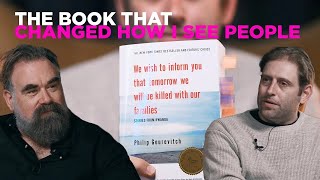
Filmmaker Brian Crano discusses Philip Gourevitch's book about the 1994 Rwandan genocide, which changed how he understands violence and propaganda. A play in London led him to the book, and Crano reflects on how ordinary people became perpetrators, the role of radio propaganda and identity papers, and what genocide means for parenting and civic life.
Chapters
A million people died.
And a million other people watched them die.
How easy it is to get people to kill their neighbor. Like, how. How thin that line really is.
It's that everyone who participated is crushed under the weight of this violence.
Because it happened in China, it happened in Russia, it happened in World War II. That's a common ingredient in this recipe of genocide, right?
Yeah.
Welcome to the Syndicate X Library, where we love books, especially books that have changed lives. Our guest today is Brian Crano, and he's a professional filmmaker and an amateur woodworker. His latest film, I don't understand you, is available on streaming platforms. Now he's joining us to talk about the book that changed his life. We wish to inform you that tomorrow we will be killed with our families. By Philip Garovich.
Truly. Extra.
Yeah. What do you think of the library?
It's awesome. I mean, I like to think that I dive into something pretty heavy, but. This is too much. No, it's great.
Do you get. Do you have a hard time with hobbies? Like, if it's a hobby, it becomes.
An obsession, becomes a job. So I have a. Right before the pandemic, my husband was like, you don't do anything but work. You don't do anything that you enjoy. And I said, that's. And then 24 hours later, I was like, you're right. And so he was like, what's the best thing you ever did? Just do that. And when I was 25, I picked up a guitar, thinking I should do something I'm bad at. I'd like to. I only do things I'm good at. I want to try to be bad at something. And I started playing. It was terrible, but I got obsessed with, like, the shape and construction of the instrument. So in like, seven days, I bought eight guitar. Like, bought and returned a guitar. Every morning, afternoon, you know.
So I was watching the trailer for your movie that you and your husband did.
Yeah. Called I don't understand you.
I don't understand you. It's hilarious. The trailer, like, so funny.
Thank you. Waitress. She has two children already. She's underemployed. She could be these potential fathers. She wants to place with a queer couple, a lesbian couple, whatever. You know, just a bunch of information. Like sort of free surface level information. There's been no exposure to drugs or alcohol, you know. Would you like to apply for this? Oh, thanks. Circumstance. You send your stuff about your family. She reads that if she likes it, you guys get on the phone. We hadn't applied in, like, six months, and Then right as we're about to go, David was shooting a movie, I was at home. We both got this one and like both had a weird feeling about it and we're like, maybe this is the right one to send in for again. Start over, essentially.
What did the sheet say?
Nothing interesting. I mean, nothing. No, nothing out. Yeah, just feeling. And then we sent it in and two days later we had matched with this woman, and that's the mother of our son. We went on this trip and the whole time, the first time we talked to her was like set minutes after we'd landed in Italy. It was so tense and we were.
How far along was she?
We had six weeks about.
Oh, wow.
To till he was born. And so, you know, we're there and we're like, you're so emotionally open because you're like the thing that happened before could happen again or some other terrible thing could happen. And there's a reason that you get a nine month window, you know, and lead up to having a kid. And we didn't have any. And like, you know, we didn't have a crib or a anything. We had nothing, you know, so we're like, okay, should we just bail or what? And then in our kind of the chaos of that feeling, I get us stuck in a ditch on our actual anniversary in like the sort of Hills have Eyes part of Italy. And we're both like terrified that we're going to get killed or abandoned or left for whatever, you know. And that's where the movie came from. The pandemic started. We had. Our son was born, he was cool, you know, simple potato. We had nothing better to do, so we just started writing together. And we. Not even with the direction because we're like, we don't know when the business is going to happen or if it will ever happen again. And. And so we just wrote what we wanted to write and made each other laugh and kind of made fun of each other in this fun way.
And yeah, it kind of has that vibe.
Yeah, yeah, it was loose and fun in a super cool way.
Are you proud of the way it turned out?
It's so idiosyncratically us and it's also like such a love letter to our kid and all of our, you know, we made it with people we love too. And they, we all had our kids there who were all young and it was just like this process where you're like, we're living in Rome for six months with people we like. We're making this cool movie with a bunch of, like, really passionate Italians who are, like, fired up about it. I think it's so funny. And it was like, this is, like. This is the best it gets. You know what I mean? Like, this is not. Not that it wasn't work. It's definitely work. But it. You know, it was a real. It was a real. It was one that you're gonna be like, oh, this is gonna be something to top this. It's gonna be real hard.
Did you play a big part in the casting?
Yeah, of course. Yeah.
Is it hard to cast yourself?
No, no, no. Come on. You just go, like, who's the funniest guy? And get him. You know? But it was like. It was interest we had. You know, when you're doing that stuff, if you like actors. I went to acting school. I went to theater schools. All my friends are actors. And you end up with this kind of, like, real love of those people. And you. When you're in this moment, you get these lists, and you dive into who you think would be great. And especially in this movie, they're in every scene together, the two of them. So you're like, they have to be perfect. They have to. You have to want to watch them together. So we got Andrew first, who's amazing and so funny. And we knew he was kind of the one that we wanted. And I had heard this podcast where Nick Kroll was talking about how freaked out he was to have his first son. And it was like, oh, if he reads it, he's gonna understand what the movie's about, because it's about that. You know, it's about the fear of being a parent and what you would do to get your. To take care of your children. And he was so kind of broken open in the same way that we had been. It was like, oh, he'll be great. And, you know, and now our. Our two children are like, besties, and so we get to hang out all the time, and the kids are hilarious. And, you know, they were tiny when we did the movie, and now they're, you know, like real boys who wrestle and jump in the pool and swim. And it's like. It's very weird.
Yeah, I hadn't thought of it as. It's kind of a tribute to your son in a way.
Yeah, totally.
When do you think he'll get it?
I think he gets it now. I mean, in that it's like.
How old is he?
He's five and a half. I mean, I think he. Like, he can. He's in it. He's with A little. He's in it for a minute at the end of the movie, and he got to see himself on the, you know, big movie screen, and that was like, something wild for him. And he, like, knows he's in a movie with Nick Kroll, and he, like, hears him in cartoons and he'll be like, oh, Nick's in this movie, huh? Like. Like the one we were in, you know, so it's like, it has some meaning to him. Like, he'll know that we love him. We look, you know, we. That this was a five years of work about how much we pursued this reality as a five years of work about how much we pursued this reality as a family.
He's gonna have an incredible relationship with movies.
Yeah. Like, yeah, he already wants.
He's. Yeah, he's an actor or something.
Yeah, he wants to do him. He's like, when we told him we're doing another one, he's like, can I work on it? And you're like, yeah, what do you want to do? And he's like, I don't know, maybe I'll write it. And you're like, okay, we should learn how to write. You know, like, literally write. Yeah.
Where did you grow up?
All over the place. My dad, within what he did was very well known, which was being a social psychology professor. And he realized that if you're in public ed. Higher ed, the only way to make money is to take a new job because you get a bonus. So he did that every year, my whole life. So I went to, like 16 schools and all over the place, which was very useful for what I do now in terms of being like, here's a new group of people. Go say, hi, this is your family for two months. You're going to make something, and then you're going to move on, and you have to do it again and again and again, you know, so it's like there's a sort of tell a story quickly, tell who you are quickly, introduce yourself, and you know what you're about in a simple, direct way.
Did you get good at being the new kid?
Yeah, loved it. And also had this real sense that everything that was happening was not that important. You know what I mean? I'm like, I'm in fifth grade. I'm not going to know these people in two years. It's like, let's have fun and not make anything too serious. And. And. And it was also good because it was all over the world. And I was like, oh, everybody has a taco. Everybody has a pizza. Everybody you know what I mean? Like, everybody has a thing that they love. Chicken nuggets.
Yeah.
And it's all good. And everybody loves their kids and wants to be chill and you know, like, go jump in a body of water. You know, it's like, it's all the same. The important part of the experiences are who you're sharing them with, not where you are when you're doing it. Something like that.
Was there ever a place that you wish you could have stayed?
Yeah, I would have loved to stay in London. London.
I loved it. And I was there in grad school. I was going to do playwriting after I started that. And my mom got sick, or she had been sick, but got sick again here. And then was. I was like, okay, I'll come back. Because it seemed, you know, very dire. And then I landed and I gave up my apartment, landed in la, and she's like, I'm better. Haha, you know, of course.
So does mom play that trick on you a lot?
Yeah, yeah, a bunch.
So how does this come into your life in London?
Actually, so I had been in drama school at Lambda and early.
So you're in your early 20s?
Yeah, I'm like, probably 22, 23. And I still am, somehow.
I'm seven.
Yeah, exactly. I'm going backwards. You would go to class and then you would go see plays and there was all this new writing happening and you would go, I would see probably three, four plays a week when I lived there, because you go as a student, cheap. And there was this play called the Overwhelming by this guy, J.T. rogers. He's written some stuff subsequently that's really good. Oslo, this play and other things. And the play was about Rwanda. I didn't know anything about the play. I'm just, oh, it's. There's a ticket, I'll go. And the lobby was decked out with a bunch of information about the Rwandan genocide, which I knew about only by name. And the play was intense and crazy and had a lot of the factual information that's in this book. And then I came out of the play like I'd been hit in the head with a brick. You know what I mean? It was like, it shook me up so much. The book was for sale in the lobby and I picked it up and I read the book and it changed how I thought about the species. So that was 25ish years ago. And so it's like it was 2006, just 20 years ago. Yeah. And, you know, I don't know how many things I've read since. I don't know how many plays I've seen since, but I remember it. And I remember, you know, being in that. I'm an innately happy person. I'm innately pretty level. I can find joy and amusement anywhere. And I tend to be optimistic. And reading this book and understanding it and understanding it in the context of the time, having just marched about Iraq and having just. You know what I mean? And having left, ostensibly, the country because of the Bush administration, being so hateful to gay people, being so militant because of all of the sort of profiteering that was going on around violence, having left all of that to try and escape into this world of, like, art and theater and roll down your spine and, you know, make a loud noise and cry on cue and be a horse and do, you know, do all of the silly you get to do at drama school and read great plays that are. That become kind of. They sort of lose what. There's. What they are, right? Like, they become like a totem of a great play. Hamlet. We all, you know, you could ask any. Any dip who's never seen it. Yeah, it's a prince. He's up and he kills everybody. You know, like, there's a understanding of what it is. And then this is. This is like, no, these are just ordinary people hacking each other to death with machetes. And there's something that's so low to the ground about it, and there's something about it that was so institutionalized that it just. It was like, oh, right, if we're capable of this. After all of the other atrocities, the one that I was most aware of was, of course, World War II. When my dad, going back to my dad, one of his random jobs was. He worked for the British Navy when I was a kid, and his job was as a scientist to go around to all the other European capitals, meet with their scientists and share, you know, we're doing this kind of work in England and you're doing this in France, and maybe this. Maybe you and you could be put together, whatever. And my dad is this bright guy, but he didn't like children's book people being so militant because of all of the sort of profiteering that was going on around violence, having left all of that per se. And so he would just read me what he was reading as a child. And what he was interested in as we were traveling through the European capitals was World War II. And all of the. That, you know, led up to it and followed it. And so as a 3 to 10, 5 year old, whatever. He would read me like the last 10 days of Hitler and you know, books about the war. So these stories of like atrocities and killings had been in my head my entire thinking life. Right. And I had known so much about that and so little about this, despite not being, despite, you know, that kind of again, overwhelming horror. Not being something that particularly that I shy away from necessarily I'm interested in, but I just didn't know. And you have forces that use television, radio, message and very simple messaging to message to under educated people that a group that lives among them is bad and needs to be eliminated. And that goes on and on and on and seems like a pretty strong business model.
So just the title alone stops you in your tracks.
Right.
We wish to inform you that tomorrow we will be killed with our family.
Yeah.
And so kind of set the book up in a sense is you have two kind of, I don't know if you call them tribes, but you have the Hutus and the Tutsis.
Right.
And even though they're kind of the same, that somebody succeeds in.
Making them feel different.
Yeah. Intermingle, which is the.
If you want to take over the world, you got to have an enemy.
Right. And again, I know nothing about this outside of this book. So if it's incorrect. Yeah, fair. I'm just a dumb theater kid. Like the way that it's presented in the book is no white man had been inside rwanda until like 1930 something they arrive. There has been, you know, peace and violence and peace and violence as there has been everywhere since the dawn of the species. Right.
And by white we mean British and.
French and Belgian and German. Right. So like all of these sort of European colonialists poking around in, you know, some are in Uganda and kind of peer in that way and some come in from whatever side they're on and that. There's a lot of French in the book and I speak no French and I have no information. You know, like I have a real self consciousness about my idiomatic lack of French. But in, but in this case while there had been these two groups that had lived together and sometimes the Tutsis had power and sometimes the Houthis, you know, all of a sudden.
This colonialist idea kind of hits and it's like, wait, what if, what if you guys took power from those guys? And then that begins, you know, decades of actual real terror and violence and subjugation. Which is again, I think probably when I read the book for the first time and thought about it in a more narrow Way I probably to my now shame, thought about it as like, well, this is outside of a Western context. Could this have been just the exploitation of these tribal differences or could there have been some real animating idea? And then the more you read the book and the more you get the sense that of. Of course not. You know, like human. It's just human.
Does it happen in China? It happened in Russia. It happened in World War II.
Yeah. Syria. And, you know, I mean, it's happened everywhere and it happened here, Native Americans and whites. And so your rival has something that you want to take and you find a way to take it. And the interesting. The thing I think that struck me so much about the book was the writing of the book. There is a tension that I can feel in the way that he writes. I'm sure maybe this occurred to you as well, which was. The voice of the author is at once journalistic, but also incredibly personal. There are times, there are scenes that he's talking about that he cannot be ambivalent and factual. Always, you know, when he's talking about going to these churches that have been left as, you know, sort of totems to the dead and their bodies on the floor who had. Have been there since 93 and somebody else steps on a bone and you hear the crack of that and it's. You know what that feels like. And he has. And it swells in him this rage that this person did that to this victim. Re. Victimized this victim. And then he does it and you're like, ugh. I mean, that's the human experience, right in two seconds of just going like, how dare you desecrate this crunch. You know, and that's it. That something about the immediacy of the writing and his urge to leave Manhattan and book parties and the New Yorker or whatever, you know what I mean? Like to go out of an office to leave delivery food to, you know, to fly around the world to look at this thing and really look at it and spend years looking at it and years thinking about it and still 25 years later rereading the book for an audio thing for Audible, you know what I mean? Like that this is just. There's shit that's in his brain that he's took on and, you know, there's a lot of books and some people will have read this and some people won't, but he's still going to walk around with this till he's dead. There was just something about the kind of focus required, the witnessing of that that I found so Interesting. And his point of view as a Westerner with very limited understanding walking off the plane sort of gives you access as a reader in the same way. I don't know anything about this. I don't know anything about. You know, there's a line in late in the book about, like, he stand. There's some guy he meets. Is standing in sandals made out of old tires they cut up, and you're like, ah, like that's where we are. After all this violence and after all this looting, and after all of these Europeans have come in and taken all this money and, and all the local pillaging and the political dynastic, what was it all about? You end up with the promise that you're going to have all of this power, and you end up walking around in fucking sandals made out of old tires. So there's just like, a lot of pieces of it that are. Are so telling about our own nature, our own. Our own will for power, our own desire to have. To feel agency, to feel strong, and to resort to the most basic level of communication we have, which is violence. So I think all of that, that monologue is why it stuck with me.
So to just kind of. For the audience to kind of understand is. And we're just, you know, I guess, in a sense, summarizing. But the Hutus end up killing, I don't know, a million, a million of the Tutsis, and to the point where, like, if you were a Hutu and you wouldn't kill them, you would be killed.
That was the threat. Like in Germany or like in Russia, you have to tell on your, you know, you have to give up your friends, you have to give up your wife, you have to give up your, you know, and whatever your kids. The, The. The point was, they would call the tootsies cockroaches. There were phenotypic differences that made them easy to spot, which.
They were tall and skinnier and.
Yeah, they were. Had thinner features or something. Yeah. And longer. Longer features. And then the, The. The. The government, the Hutu power government, which was setting this all into action, did what Putin has done, did what many people have done, which is to stage violence against their own people, to then start violence against their target.
Manufacturing a point of view.
Yes. That if.
Like a magic trick in a sense. Like where you, like, I think you're referencing where Putin faked a terrorist attack.
Correct.
And then the people like, oh, yeah, we gotta go.
Yeah.
And then what invariably happens, just like with 9, 11 or anything, the people start to lose their freedoms because you gotta watch and you gotta. There's an enemy out there. So let me see your phone.
Like, yeah. Everybody had to have their papers which define them as Hutu or Tutsi. We've heard that before in every one of these conflicts. Right? Show me your papers.
COVID Vaccine.
Prove. Prove. Prove what you are. I wish everybody had the whole history, right? I wish that we could look at this violence as business. I wish that we could look at it as political adjutant and power grab and all of that. And I wish that we could kind of connect the dots of all of them and react differently. Because the most, maybe the most powerful thing in the book is the Hutu people who did not participate. Like Paul, the hotel manager, who, Who Hotel Rwanda. The. The movie with Don Cheadle is based on. About his life. He just sort of said, no, he just sort of said, you. I'm not. No, I'm not killing anybody. And I'll bribe you or I'll cajole you or I'll tell you. I. But I will not give an inch that to your point of view, that it's acceptable and that could have killed him and maybe killed others that are not alive in the. To tell their story in the book. But that this, that simple reaction of going like this is insane. Like, at some point you need to just have people be like, the. Are you doing? You know what I mean? Like, this is crazy. We're not. We're not killing anybody in this hotel. And I have a phone and I'll call the outside world and I'll tell them who you. I'll tell them who you are. And we grew up together. And what the are you talking about? And that level of, like, that even though this problem is an enormous problem, right, that this one guy couldn't solve, he could solve it there in that six feet around him or whatever.
In a sense, it's the same playbook, right? It's the same playbook that Stalin used. Mao is that the Tutsis were the uppity ones. They were the ones that were wealthy and looked down on the Hutus. And so the Hutus, they'll take from you. Yeah. And so that's a common.
Ingredient in this recipe.
Yeah. Of.
Of genocide, Right?
Yeah. And they used state radio. They used.
They told a good story.
Told the story. They falsified news reports. They, you know, all of the things. An alien invasion.
There's a great quote in here that actually is a book we did the other day.
Oh, yeah.
Have you read the Invisible Man?
No, no, no.
What's great about this show is that there's books that have sold millions of copies that I've never heard of, but people come in and you're like, wow, how did I never hear this book? Invisible man is one of those. But so it says, beware of those who speak the spiral of history. They are preparing a boomerang. Keep a steel helmet handy.
Right.
We experience that now, where I don't trust the news. I don't trust either side.
Right. Well, that was interesting reading this now and an exceptionally liberal person and reading about how Clinton ignored it because of what had happened in Somalia. Eighteen soldiers, American soldiers, had been killed in Somalia a year before, and there was no political desire to go in to Rwanda and to risk American life to stop what they knew to be a genocide. And you have these people who at the time, you'd think, like, oh, that's my side. That's my group, but they look the other way. And Madeleine Albright, who is the Secretary of State, whose whole political or whole like, story was based on being a refugee of World War II, you know, is standing by while one side of her mouth saying, like, we'll never forget. We'll never. We'll never allow these atrocities to happen again, while literally, slow rolling, Aiden, and help to stop this thing that they knew was happening. And you have that kind of sense of the life that is meaningful to any organ, to any government, is only what they choose it to be. Right. Like, it is not these people's lives. And they knew it, which was the tragedy of it. Like, they felt it at the time. Like, oh, our lives are not meaningful to the outside world. That's where you get these letters, like the title of going back to the title of the book. They send that letter, we'll be killed tomorrow with our families. And the response is, well, then you're gonna die. We can't help you.
Oh, it's worse than that. The one pastor says God no longer wants you here or something.
Yeah, yeah. I mean, it's brutal.
Brutal Pastor.
Yeah.
You're a part of his congregation. Like, that's a. The. The religious part is interesting too.
Yeah. And as like a father of a five year old, there's a. There's a big chunk about, like, teachers killing their students. And you're like, that's. Yeah.
And the girls that wouldn't turn in.
Yeah, they wouldn't. The end of the book, there's a group of girls. And this is after most of the genocide, there kept being these kind of like aftershocks. Of violence that would go on, you know, back and forth. And this group of murderers shows up to this girls school and says, okay, split up Hutus and Tutsis. And they say, you, we're Rwandan. So instead of just killing one or the other, they kill all of them. That sounds heroic to say, but they were doing it for their own dignity. There wasn't anybody watching, There wasn't anybody there. So you have that element too, of this sense of you have these people betraying a sort of human decency, a human morality for nothing. And then you have these other people standing up for themselves also for nothing. I wish I had the passage. I should have written it down. But there's a great piece about like the relative value of each of those actions being about the same. Like the cost of giving up your soul one way or the other kind of the same.
It's interesting too, in the ingredient for a genocide. Power is the thing, right. Like we live in a world where we still allow people to make power more important than the outcome. Like what power does is it gets you caught up in a narrative that you're different. And what nobody really realizes that we're way more similar than we are different.
Right.
And we're not talking about the similarities. We're not talking about just basic schools for our kids and the stuff that, you know, if we could raise kids that have high self esteem and a good education, sure. Like, they wouldn't be susceptible to this.
Yeah.
But no, we don't want. The worse the schools do, the easier it is to control the population because the more they externalize control.
Yeah, I mean, I think it's. I think that my kind of foundational belief about the species is like, we would kind of do anything. Like our first instinct is to create bureaucracy. And that is kind of the same that once started, like, oh, we need to.
There needs to be lines. We need to have a line and you need to go and get a form and to make sure that everybody has the same.
Slow it down.
Yeah. And once you start doing that, it becomes very easy to manipulate any of those processes, you know, for an advantage. All of the people in this tragedy were promised fractionally more than what they had. And they were willing to take a Chinese 80 cent machete and hack people they knew to death with it because the radio told them to do so. And you're like, once you understand that that's possible, it really changes and levels out what you're willing to participate in or believe about heroism, about victim blaming. I mean, all of the different aspects when you approach any tragedy or any kind of large human suffering. I think the book does a really good job of not exploiting the victims of violence in some kind of weepy way and. Or in some kind of way that's meant to make you feel their tragedy emotionally. I think it's very good at making you think about it critically. For me, about. Yeah.
And it's, it's not the first time like this. This recipe has been used over and over again. And with what's happening in our world, you. It feels like we're closer to that than anybody wants to acknowledge and we're willingly walking the plank.
Sure. And then you're, you're. The side that you're forcing against is always the minority side. Right. So this doesn't work in the reverse Robin Hood, 9 to 1, Hutu to Tootsie or something like this. The one the 10% are not going to kill. The 90% doesn't work like that. So now you have a. You have a minority that's being targeted and being. Being propagandized against constantly. They had, they had newspaper. They made newspapers that looked like the real newspaper. So again, this is in the 90s. No Internet, pre Internet yet. Right. But they, they took the regular newspaper, they made a new one and they just filled it with about. These people are coming to take you all the time. Right. They're going to take your kids, they're going to kill your wives, they're going to your women, they're going to do all this. And that was a. And if you are moderately literate or not literate, and it's being read to you, but the colors are the same and the layout's the same. And, you know, so there. It's all of the tricks of the trade, right. And they're getting that directly from the. The children of the French prime minister. And, you know, all of these people who are coming in to profiteer off this.
Well, yeah, the French and the British are kind of funny in how they.
Yeah, yeah.
They help sides.
Yeah.
Yeah. So here, here's a quote I think is pretty interesting. Humanity's struggle to conquer nature, the pygmy said fondly, is the only hope. It is the only way for peace and reconciliation. All humanity won against nature. He sat back in his chair with his arms crossed over his chest and went silent. After a while I said, but humanity is a part of nature, too. Exactly. The Pygmy said, that is exactly the problem.
Right. There's another one later in the, in the story where he's talking to a survivor and they're talking about the difference. He's Grayevich, the writer is telling him about this book that he's just read. And then the survivor goes, you know, that's the nice thing about fiction is it ends. Our story doesn't end. We have to keep living in this. You know, now you have the Rwandi's tourism board advertising on soccer jerseys, you know, in the Premier League, and spending this money to try and do anything to attract people to this country, where the number one thing that anybody knows about them is that they killed a million of their friends and children.
Here's a part of this that I think is. Is interesting, and let me give it context from my personal experience.
Right.
So during the Floyd riots, things were kind of locked down, so there wasn't a lot of movement. But I would walk around downtown for exercise, to get out, get fresh air, and I come across a couple guys on bikes that are yelling, kill Whitey. And I'm alone. And now these guys on bikes are saying, kill Whitey. And I'm in a situation, and I'm thinking, wait, the reason why I live here in LA is because I don't agree with that.
Yeah, right. Yeah.
But they see a white guy with his knee on somebody and I'm white, And they. There's probably a series of events that have happened that they feel misunderstood. They feel like they don't have opportunity. They feel judged when they shouldn't be judged, whatever it is. And even though I'm feeling like we're on the same team, like, I don't want that for them, I would fight for them not to have that. I'm white and I'm in that bucket.
Sure.
Like, I represent that thing.
Right.
And both sides are wrong, and both sides are right in a sense.
Right.
But they're moving to violence in a way. You know, does that make sense, or.
Are they moving to protect themselves?
Well, I'm not a threat to them.
Like, I'm.
Yeah, they're a threat to me all of a sudden because I'm now the hunted.
Right. What happened?
What happened to me twice. One guy in a car, too. The same sort of thing. Like, kill whitey. I don't know. I was very upset about it because it's interesting how the p. You know, when you're bullied, you end up becoming the thing that you hated.
Hurt people. Hurt people. Right.
Yeah. So the bully becomes the bully, right?
Yeah.
That's a funny thing about human nature is, like, the person that is the most judgmental, really, probably is the person that wants approval and acceptance the most but hates themselves the most. Right. That's just the human experiences. There's this inherent contradiction in a lot of what we do and a lot of what we say.
Yeah.
We say things because they're the right thing to say in the moment, we think, but they're not what we really believe.
Right. Yeah. I mean, I feel that. I feel that as a gay person, you know, that's. For most of the time of. For most of my life in this country felt very much unsafe or at least unstable about. Like, there are places I can't or won't go. And that's most of it. You know what I mean? That they're like. When my husband and I have driven across the country, there's parts of the country where you're like, we will not stop here. Like, we cannot do it. And even though I sort of present, I guess, more kind of traditionally masculine or, I don't know, can pass maybe, is a better way of saying it.
The vulnerability of that even just the energy. Right.
Like, the energy of it is something that is just in conflict and is going to burn a lot of energy.
Sure.
To confront.
Right. So I totally understand what you're saying in terms of. You go like. So the times that we've been hassled, like in New York or in la, you go like, hey, this is my right. Like, you don't get to come here and you don't get to go to the West Village and call people to their face. That doesn't work. This is our place. The reason it's good is because we're here. You know what I mean?
So the byproduct of that, though, is community in a sense. Right. So it says genocide, after all, is an exercise in community building. A vigorous, totalitarian order requires that people be invested in the leader's scheme. And while genocide may be the most perverse and ambitious means to an end, it is also the most comprehensive.
Yeah.
And so, in a sense is like, in your experience, if you're pushed into a community where everybody there feels like they're not understood and everybody there feels like the other side is judging them or looking down or taking opportunity from them.
You.
You can't get this job because of the color of your skin or because of your life's style, choice, whatever it is, then there's an inherent community that is built of people that are the persecuted that then want revenge. They want retaliation, in a sense.
Right. Yeah. Or.
Or they can not Always. But they can.
Yeah, yeah. That. That. That. The narrative flip flips. Yeah. And you. And there. There's a. There is only so much rope.
And so what is the fix to that? Because, like, just as a. As an example, like, I grew up in Seattle and, like, I've been called a breeder before.
Yeah.
Because I don't fit in in a certain bar or whatever. And so what is the fix to that thing where we focus on. We have more in common.
Yeah.
If. If. It's back to the thing of if. I live in LA and I couldn't wait to get out of a place where I felt like everybody was too white. And I want diversity, and I want to celebrate.
Talent. I want to be around talent. I don't care about color of skin or anything else. I just want to be around people that are creative, that have a passion and give a. About the thing they make. The thing that's attractive to me is people that give a. About the thing they're making. If I can experience something, I'm like, wow, whoever did this had an attention to detail and really cared about this thing. I will go to the end of the Earth looking for that.
Right.
How do we change society? If you had a blank piece of paper, and we could change it in the sense of this never happens, but we find common ground before we find our differences.
And we stop persecuting people and forcing them into a community that invariably. There's going to be a backlash. There has to be. Well, if I'm saying I'm better than you because of something, at some point, you want to stand up for yourself. At some point you want relevance, you want power, you want authority.
I mean, I guess that's the fundamental question of the book, right? Is like, are we capable of moving beyond this kind of violence as a species, or do we have to wait for the robots to try it? You know what I mean? Like, is this programmed? I look at my son. He doesn't give a shit about color. His friends, the. You know, he met a kid at camp who had two dads. Me and my husband are, like, amazing. This guy's got two dads, just like you. He's like, yeah, whatever. You know what I mean? Didn't even. Neither of them cared, you know? And all four of the dads are like, hey, this is pretty cool. Let's have them hang out more. You know what I mean?
Yeah. The older we are, the more that's our thing.
Sure. And, like, to him, it's like, do you have cool Transformers and, like, do you. Are you good at telling scary stories? And do you like ghosts? And everywhere I've been, everybody wants to hang out with their kids, watch their kids, do something cool. Gymnastics, run, play soccer, swim in the lake. Like, I mean, I think in a weird way, the less engagement you have or the less In. The less of yourself, you give over to these bigger narratives that are being pitched at you one way or another, the. The easier it will be to kind of have a real transactional experience with. With someone with whom you have differences. Because if you're not participating in some narrative that these guys are trying to kill you or. This guy voted for Reagan. So he. You know, my dad is a, you know, very staunch Republican or conservative. Like. Like I said, I do this woodworking in my job. I don't meet conservative people. I don't have access to them. They do not exist in my world. Right? In my work world, when I go to the wood store, they exist, and they're surprised to see me as much as I'm surprised to see them. And then we can just talk about making some drawers, and it's fine. And then I can talk about my kid, and they might ask to see a picture, and then they'll say, see me and my husband with our son. And they may have some notion about what that is, good or bad or otherwise. And they can tell me if they want to, and if it's pleasant, I'll engage. And if it's not pleasant, I'll tell them to go themselves. And it'll be. You know what I mean? But, like, it'll be on a really simple level, like, we can meet. I guess what I'm trying to say is if we can meet each other where we are, you know, where are we? Where are we? The same. I want to make a drawer. You want to make a drawer? I got cool tools. You got cool tools. I got this transformer. You got that transformer. Like, how can we be as unaffected by a bigger identity, a bigger narrative than what is happening now? Like, what is happening now in this moment between two people? We sit. We're at a taco shop. We can talk. We're watching the soccer. We can laugh. You know, we can make fun of each other in a. In a way that's fun and generative. As I'm hearing myself talk, I'm like, does this sound just like sort of buy a lake house and opt out and. Which feels weak in a way, when you're. When these. When this is happening also, which requires attention and witnessing and work and effort. I have found a lot of relief in. Personally, since I've had my son, I've had a lot of relief in relieving myself of the. Or opting out of a lot of the opinion and identity that I had opted into before.
And is that because you. The creation of a child makes you feel like we're more similar than we are different, or what is it that changes?
I was. I didn't want to be angry all the time because you didn't want to.
Project that onto him.
I couldn't demonstrate it right. In the same way. I couldn't. I didn't want to pattern that.
Yeah, you don't want to get it on him.
And then. But. But I'd done that my entire adult life. I'd been politically engaged. I had been anti war pretty much across the board, anti violence pretty much across the board, and pro gay rights pretty much across the board. And all of those things can make you very upset because there's a lot of people who don't want me to have a family or son and will and are working towards that end. That's happening here and that's happening some other countries. And then there's a lot of places on the earth I could go where nobody gives a. And where the. Where the society is collectivist and they're interested. So, for instance, we went to Denmark right after. Do you know this soccer player, Christian Eriksen? He had a heart attack in the. In the Euros a couple. A couple years ago on the field, running around, kicking the ball, falls down with a heart attack.
I think I read something about that, but I'm not familiar.
He doesn't die in about a week. The country of Denmark, which is, you know, the size of la. Let's say there's a. Every park and field, there's a defibrillator installed just in case. Cause we give a shit about this. Might. Yeah, it happened to this famous guy on television. We all watched it. We all had an emotional response. But if that happens to your husband, who's cheering on your. Whatever, get the paddles and do it. We went there for my husband's birthday. It's, you know, the city is like the population of Silver Lake. There's a hundred parks and the society is old and it's had time to kind of work out the kinks and figure it out. And it's very homogenous. And that must be easier. Right? And that's a. That's an easy criticism. Yeah. If everyone agrees with everyone, it'd be easier to do this be easier to cohab it. But there was something about. We were there for like 20 days. There was something about being in a place where everybody like very visibly cared about everybody else in these small ways. Oh, you let, you left your. Do you want to, you know, just simple human action, right? You left your bag. I'm going to stop, I'm going to chase you down the block because you left your thing. You might not need whatever, no trash, no, you know, like whatever. Just a sort of sense of like we all, hey, we all live here, we all want it to be great. We should all put in a little more of ourselves. And that means they payload of tax and they get free schools and free hospitals and everything works. And it's frictionless to get around that place and to, you know, we had our kid and his nanny at the time and we're like, yeah, go in and see. There's gonna be no trouble. You can go do whatever you want. I know there will be no trouble. And you couldn't do that here. And we lived here. I've lived here for 20 years. Yeah.
Not that this is the opposite of.
What you just described, right. I went up. So my mother has cancer. For a long time she has asbestos cancer. Right. Which the government has now made legal again, I guess, even though it just causes tremendous pain and death and suffering. But it's profitable. If you make asbestos and if you give them money, they'll take it, right? So we went up to the hill because she goes up there every year and talks to some 24 year old aide and says like, hey, asbestos is really bad and here's why. And here's how the asbestos companies did the same playbook as the cigarette companies did the same playbook as the whatever and.
To see how it operates.
Oh, you know, here's somebody has walked into a room who's theoretically a person of power. On the way in, they're told three sentences about what they're here to talk about and they shake hands and they, you know, have a concerned demeanor and that's it. That's the extent of their participation in the problem. And then they're going to go in the other room and take the money from the people that are hurting these people. Because that's again, what you're talking about. It's like if, if you can figure out a way to disambiguate.
Moral choice.
Or even a sort of reasoned way of governance that is nonviolent, that is optimistic on some level that understands that this is our nature, but tries to better it. If you can figure out how to do that, that's rocket fuel. Yeah.
And it looks at the person as a human, not as a potential profit.
Yeah.
Or revenue stream.
Right. Or of a victim or a problem that they're going to have to solve at a later time.
Yeah.
You know, I mean, I think that that's.
Part of this. The saddest part of the book to me, in a way, is the sort of aftermath of this thing where no one has gotten what they were promised. Right. So it's not just that they did all of this violence. It's. They did all this violence in the name of a bullshit idea that was never going to profit them. Nothing that they were told that was going to be better became better. Everything became worse. And they have to live with that for the rest of their lives. Hacking your neighbors to death with a machete is not something that is wiped away. And the only way that they tried to get away with it was to make everybody do it and to erase a population. And if you can. If you can. If we can all take.
Something away from this book and this kind of systemic violence, which is like we've talked about, goes on and on. It's that whatever is being let whoever is trying to get you to engage in this way, trying to get you to hurt other people or take from other people, you lose. You lose as much. You may be alive, but you lose as much as you. As what you took. Maybe more. Maybe more. Yeah. And. And, and so really well said. The. The sadness of it is, is not just that everyone died. A million people died, and a million other people watched them die. And it's that everyone who participated is. Is crushed under the weight of this violence.
Yeah. And to me, how easy it is to get people to kill their neighbor. Like, how. How thin that line really is.
Yep. I remember during Katrina, I heard this story. It really stuck with me that a guy shot his uncle with a shotgun for a gallon of milk because he was thirsty. And it had been. He'd been without food for like three days. It's like that's how far away you are from doing grave harm. On someone is two days hungry. And here you have a population that was hungry all for a long time.
Yeah.
And. And was willing to. To do whatever it took to. To get out.
So the big question. How did we wish to inform you that tomorrow we will be killed with our families? Change your life.
It made me believe that we're maybe not the best we could be. It made me believe there's a lot of work we can do to be better personally, individually, and certainly in groups. Certainly in groups. That violence is really the fundamental way that humans communicate.
Unfortunately.
It's great.
This was super intense. I wish I picked something fun. I don't know.
I love these kind of conversations. I feel like nobody wants to talk about this stuff and it's driving me crazy.
Yeah.
Top five books.
Oh, God.
Your top five favorite books. Oh.
Christopher Marlow's Edward ii. The play about a gay king and his weird boyfriend moving into the court. And the power struggle that that was about. I read that when I was very young and it was thinking through, first of all, incredible language, incredibly written play. But yeah, seeing sort of like a queer character of tremendous power was interesting at such a young age when you had none and no agency and no power. I wish I should have thought about this.
I know I threw it to you at a pretty heavy, heavy moment.
What else is.
Sometimes, like, if I do that, sometimes I get a really honest answer that wouldn't have happened previously. And then sometimes it's too much.
Much. Yeah, I'm just throwing. I'm trying to.
Throwing more on.
Think through the other ones. There's a great book about the AIDS virus as a virus. And it's, it's, it's. It takes away the stigma of the disease being a gay disease because it tracks. Epidemiologists track the disease back to like 1900 and track it spread through history. And it's this really interesting way of looking at the history of the modern last 120 years through a virus. And I will Google what that is called and look it up. My dad wrote a book about minority influence called Minority Rules, which is a cool book about how minority groups affect majorities. So that would be one.
Plug for the dad. And then how many is that called Minority.
That was five. It's called Minority Rules.
Yeah, he's written a lot of books. Most of them sort of textbooks and chapters and articles and stuff. But he's a good writer. Minority Rules by William Crano. And then should do a funny one.
Something light. I was trying to think of the Star Child book. Read that to my son. It's so beautiful. It's such a beautiful book. Yeah.
Well, thank you for doing this.
My pleasure. Thank you all.
I'm going to give you. This is my book that I wrote on leadership.
Awesome.
So it's two books.
Thank you very much. That's really cool. Yeah, I've seen this before. I didn't realize. I didn't connect that until I saw all the copies in the hallway. Yeah, that's awesome.
You'll get a little insight to my approach. But it's written for outcome, not for just being a book.
Right. That's awesome. Thank you so much.
Thank you.







