Books That Changed My Life: Brian Munroe & The Secret Letters of the Monk Who Sold His Ferrari
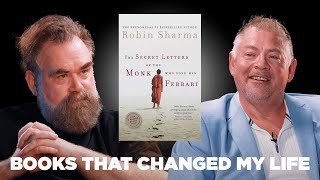
Brian Munroe credits Robin Sharma's The Secret Letters of the Monk Who Sold His Ferrari with turning his life around after a divorce and addiction struggles. Around 2011, rereading it multiple times, he rebuilt his relationships and coaching practice using the book's ideas about authenticity, fear, and small daily habits.
Chapters
So you're in this purgatory?
Yeah.
And then is that when you saw the book in the bookstore?
Towards the end of 2011 into mid-2012, I'd read the book three times.
Three times?
Yeah.
What did you order to drink?
Oh, I ordered an Old Fashioned.
Well, they take the old fashions very serious here.
Look at that.
What do you think of the library?
Big book of cigars right here. Look at that. You come here and you can't help but be creative.
My dad was always one that always speak the truth.
Do you think that that influenced your parenting?
I would say the first half of my parenting when I still lived in Canada, yes. And then something broke, something switched, something just turned off.
We love talking about books that have changed people's lives. Like had such an impact that they are different. After reading the book, our special guest today is Brian Monroe. How did the secret letters of the monk who sold his ferra you change your life?
Did you bring your copy?
I did.
Are your highlights in there?
My highlights are not in there, cuz this is the copy. I'm leaving.
Oh, and thank you so much.
You only get a paperback now, so I had to kind of source.
Yeah, that's what we have.
Okay. You got to. Yeah.
So thank you. You brought me a book and you brought me some cigars.
Yeah.
And this is. This is a little variety pack from Davidoff. Big fan. So what. What I have is a. A selection for you. So we have the one. Oh, yeah, if you want. And then this is. This is from a little island out.
Off the coast of Florida just 90 miles from Miami. Yeah.
This is a. An experience.
Yeah.
If you don't want to do this one, you can take it with you. And then these are just a liner snack.
It's one of those. These are the Monte Crist. Oh, yeah. Yeah.
Nice. I think I'm gonna go with the Monte Cristo. Okay, thank you.
Then I'll do the same.
Yep. What do you.
What do you think of the library?
Fantastic. It's just, you know, you. You come here and.
You can't help but be creative when you're in the space. Right. It just. Everything from the, from the books to the lighting from.
What did you order to drink?
Oh, I ordered an Old Fashioned.
Well, they take the Old Fashioned very serious here.
I can see that. Thank you.
There's been like literal fist fights about whether we do.
Yeah.
Thanks, baby. When you're helping entrepreneurs, what is the common thing that you have to fix?
I usually walk into a lot of stress and anxiety and Just, you know, kind of addressing that is the first thing that I have to look at. Process and systems.
Either gives them a headache or they just don't get it.
It's wild that, you know, I hear people say all the time, well, I'm. I'm a visionary. I just don't want to think about that. I can't think about that. My brain doesn't work that way. So. Okay, I get that. So we'll. We'll work around that.
What is that or what have you learned about that, Laura? Like, you know, let's say there's somebody who's really good at writing a book and speaking in front of the room, but they're not good at the fulfillment of whatever it is or workshops and hiring and that sort of thing.
What.
What are the gaps that you help them close, or.
I want to find out, first of all, is there somebody on their team that actually is good at that, that they're. That they haven't recognized or they don't realize that, hey, you know what? This. This person over here is your, you know, your opposite. That's stuff that you don't like to do. They. They love to do it, so give them a chance. Otherwise, that's usually then a hole that has to be filled by somebody or some, you know, hire that out or something like that. So if they're. If they do truly want to be on stage, you know, creating the content, delivering the message, but then behind the scenes, they don't want to take care of that, then we have to find somebody that can do that kind of work for them. And obviously, I try to look internally first to see, hey, is there somebody that can fill that? Just in all, you know, all fairness to them and to the organization? You know, I'm thinking about a manufacturing company right now where the CEO, he was having some system problems in that, and he was that type of person that just loved to be out there, loved to be, you know, with his people and all that kind of stuff. And. And I went to one of his plants one day, started going around and talking to the. The people there, and found out, you know, you've got some really talented people. Do you know about this? And some of it he did not. And just simply by recognizing that and then telling them and then watching him, you know, give them a little bit more responsibility. Well, a couple of things happened. One, he got what he was looking for, but the person, you know, all of a sudden they're being entrusted with more, and there was no immediate pay raise or anything. Like that. It was just, I'm trusting you with more and then you're doing more. Thank you.
And all ships rise in a sense.
Yeah, yeah, yeah, yeah. This, you know, the person I'm thinking about in my mind right now, they weren't necessarily driven by money, but as soon as you told them what a good job they're doing in front of others, they lit up.
So you grew up in Canada?
I did.
What part?
Peterborough, Ontario. So hour and a half east of Toronto. Stayed there till I was 22 and then into Ottawa for 18 years.
What. What kind of childhood did you have there? Were you like the typical Canadian? Like you played hockey on the pond in the back and looks like your teeth are all there, so.
They are, yeah. I never took it hockey. My dad always made sure I had the. I had the full helmet on. But, yeah, I play. I started playing when I was six and played till 16. And even then at around 15, 14, 15, it's getting very competitive. And that's when I kind of knew my hockey career was coming to an end rather abruptly.
Was no longer social. It was very serious.
It was very serious. And my goal scored from the, you know, the first 10 years was like 25% of what the average kid was doing in a season.
Make it the hall of fame?
No, no, it was.
I was.
Bless my parents for putting up with me for all that.
What did your parents do?
So my father is long haul truck driver.
Oh, wow.
And interestingly enough, for probably when I started Grade 6, Grade 7, around that age, he would drive into the U.S. so he was what in Canada they called a U.S. trucker. So he would take loads from Canada and he would be stateside the whole time. So at a young age, I started traveling into the US with him. I got to experience, you know, being there. And I can remember being 16 years old, I've got my newly minted Ontario driver's license. We crossed the border. He drive. He's like, I'm getting tired. I need you to drive. Dad, I'm not licensed. Nah, nah. You just show him your Canadian license. You'll be fine. Just keep it in the lanes and, you know, just silly things like that. But I got to experience a lot of the US as, as a young teen just by going with him.
Were there any conversations with your dad when it was just you and him in the truck like that that you remember that influenced you?
Yeah, I would, I would say my dad was always one that always speak the truth. He was a real, real God about speaking the truth. Those Those conversations come up, we would. We would have conversations about, you know, school and stuff like that. And he was really. Back then, he was really big on, like, if you told a lie, there's two things he really didn't love. He didn't like if you told a lie. The other thing he didn't like is if somebody flipped in the bird, those are the two things that would just drive him off. Like just nuclear. Yeah.
Did you ever flip him the bird?
No, I never did.
Yeah, there was.
I had seen what happened.
If you did, what did your mom do?
So my mom was, for a lot of years, the secretary of the church that we went to. And then when I was in high school, she bought an appliance repair business.
It's random.
Yep. Very random. Yep. And ran that business for probably 15 years. Yeah. Before she decided to pack it in. Now they're both retired.
Do you have any siblings?
Yeah, brother two years younger than me. Sister two years younger than him.
What would you say was the thing that you took away most from your dad?
I would say just.
Respect. Be respectful to people. My dad was always respectful of people. It didn't. It didn't matter who. Who anybody was. I never understood it when I was young, too, There. There was times when, you know, he would do things, go out of his way to help somebody or something like that, and I never got it. And I can remember kind of feeling almost embarrassed sometimes at times it's like, oh, dad, why are you doing that? But he would just do that. And it's just something I've kind of learned from him. No. Along with the, you know, always tell the truth and don't flip anybody. The bird.
Have you tried the dream?
I am about to right now. Just put that in there. Yeah.
Yeah. They do a good job.
Do you. Do you think that that influenced your parenting?
I would say yes to a point. There's a reason why that book came into my life at a point when I. Where I was at. And so I would say for the first part, I would say the first half of my parenting, when I still lived in Canada. Yes. And then.
Something broke. Something switched. Something just turned off.
And was that for the better? No, no, no. For the worse.
Yeah. Yeah, it was. It. I just started to spiral into a dark path where I thought production was all that mattered.
And by production, you used to be making money.
Yeah. Just going and going, doing anything to do.
What do you think was the driver of that?
I, you know, I've thought about it, and I honestly, I don't really know, because it was not the way my parents were.
Well, you didn't grow up poor. You're middle class, right?
Yeah, yeah, middle class. But I, you know, I would say we didn't have any great financial training or financial example. My parents would take good care of us and things like that. But you know, probably the best example I would give is when we were teenagers, they decided that they would go into a lot of debt to put a pool in. But their reasoning is I'd rather have you and all your friends at our house knowing you're all having a great time than you're just out somewhere else.
Because they were worried he might become a cripper of blood or something.
I don't know, whatever the Canadian version of that is.
But there wasn't a real cat. Like for me growing up a missionary's kid and living on faith and wearing donated clothes and like kind of the humiliation of it all was. There was just a switch that said I'm not going to be poor. And then that became my North Star for a long time in, in an unhealthy way too, I think. But there wasn't something like that for you. It just was, you were just, it was just the default setting.
I think it was just a default setting that kind of happened. Like. And then I can remember when I first got married going through a stretch where money was extremely tight and then it got a little bit of taste of it. And I can remember one day looking at my wallet, seeing a hundred dollar bill in my wallet saying I'm never going to carry less than a hundred dollars cash with me ever again. I could, I can.
How long until you didn't have a hundred dollars?
Well, that was coming out of, I would say from that point onward I was, I was okay to do that.
You never regressed.
I'm trying to think. No, I don't think I did. And I, and sometimes.
Great.
Yeah. Sometimes I wonder if that's part of what was starting to go in my head.
What were you doing then?
For.
For work.
So what I, what had happened is I had just left retail sales management, you know, great training, but doesn't, didn't really pay. And I had just started a contract with a telecom company doing project management. I didn't know I was doing project management at the time until someone explained to me later. But that's what I started to do. And all of a sudden I started making contractor consultant money and that's when the shift happened. That's when all of a sudden in a couple Years I was moving into a different home and things were progressing. And how old are you at that time? I am 25. 25.
And how many kids do you have by 25?
By 25, I have my daughter in a couple years, and by 29, I have my son.
And by 29, are you doing pretty good?
Yeah, I'm doing pretty good, yeah.
By the standards of the time. By that time, I'm living in Ottawa. I'm working for Nortel Networks, who's obviously no longer in business. But at that time, I think in a city of 900,000 people, almost 70,000 people reported to that campus. So it was huge. And during that time, also, that part of just outside of Ottawa known as Kanata was dubbed Silicon Valley North. Everybody's there. Nortel was there, Mitel was there, US and Alcatel, all the big players were there, and people were switching departments within the organization for $10,000. Signing bonuses within department, like within the same kind of VP group, just switching a department. It was just. It was ridiculous.
Chaos.
Yeah, it's just ridiculous.
So you're driven by money. You must have married young. How old were you when you married?
I was 23. 23, yeah. And had dated for six years. Met in high school.
So you were serious?
Yeah, for a while.
So then you're. You have your second kid. What H. What happens after that?
Second kid comes along and I think things are going well, but that's when the real production mindset kicked in. Things of the business were doing. We're doing pretty good. I was.
Was that sparked by turning 30?
No, I never. I've never been one to really. That put my age to something like that. Like turning 30, turning 40. No, no, I. I've never been like, I'm 30 now. I've never been like that type.
Man. How good are these cigars, right?
These are fantastic.
It's not too big of a commitment either.
No, but this is. This is a good one. Been to the factory where these are made, so I'll digress for two seconds.
Back in 2018, I had probably my fourth or fifth cigar ever. First one was.
On our wedding night with Stacy and I, and I, you know, I wanted to be kind of cool and we had a nice dinner and I'm like, let's. Let's go outside. We're in South Beach. We got married in South Beach. And I said, let's go. Let's go outside and get a scotch and a cigar. She's like, you sure? I'm like, yeah, I want to do It I shouldn't done that. Fast forward 2018, I have another cigar and I actually enjoyed it. And I get fascinated with them and I started reading a little bit about them. And I sign up for a cigar sommelier school, and I become a cigar sommelier. And then I'm invited to the master's program, which is training in the Dominican for four days. And then it's part of the pro cigar festival tied on afterwards. So after the training, Stacy flies into Santiago and we go to the festival. So we've been to Davidoff, and so I'm probably about one of 12 master cigar saw mates in the US and two. Two of us are in Vegas and he's a good friend of mine now.
So what's the test like for that?
The. That the test was sitting in front of the gentleman who is the master blender of Laura for 35 years. And we're sitting semicircle and everybody's given the same cigar. And we light up and we start smoking and we get into about the 1/3 point of it. And then he just looks at each one of us and asks, now, the bar you have at home, you have three thirds. What would you pair this cigar with? And we had to describe what we would pair with and why.
And based on our answer, that was the test.
Yeah. That's fun. You have your daughter.
Yep.
You're focused on making money.
Focused on making money. Things are going well. I thought things were going great until things were not going great. I was doing a lot of traveling. So in the later 2000 years, I think from about 2006-10, I was doing a lot of speaking engagements on trouble projects, rescuing recovering trouble projects. Not quite at the organization stage yet. Focus more on the projects. Why is your project off the rails? Why is it behind schedule? Why is it over budget? Why, what's. Why is the vendor pissed off with you? Where. Where's the misalignment happening? So I'm doing a lot of talks on that. I'm traveling a lot. And so I'm traveling a lot, making good money. And then slowly without realizing it, basically just disconnecting is the best way I can describe it. Disconnecting from my wife at the time, disconnecting from my kids at the time, disconnecting from anything up here.
We had basically when we got married, that was kind of almost the last regular church attendance we ever did or any kind of religion. And so I was just disconnecting. And I was starting to become really unhealthy, Started packing on weight, all that Stuff.
And then why is that? Did it sneak up on you? Or was there some. Was there an event?
You know, there's. I can't. In my mind, I can't come up with an event. So I have to think. It just snuck up on me. I just slowly, just a little. Just hotel after hotel, conference after conference.
Just like, I used to have a personal assistant.
Yeah.
That would load my refrigerator with like what I wanted. Because if I was home Saturday, Sunday, I didn't want to go shopping and dry cleaning.
So that's where.
Yeah, he would do all that. And there were. There were weeks where he would. Everything that he put in my fridge on Friday, he would throw away the next Friday. And I was home like two. Two days a month for a while on the road. And you start to lose. It's the same thing when you're in a band and you tour. You start to lose perspective.
Yeah. You just. Exactly.
It was kind of the same thing for me is I was fixing businesses on commission.
Okay.
And so, you know, the most important part of it was the beginning. So you'd be very hands on to create momentum. And you couldn't leave that to chance. Once they had momentum, you could back off a little or put one of your people in there.
Right.
But I was the only one with the alchemy to create the momentum.
And then when you back off, you're now creating momentum with somebody new.
Yeah.
Because this just keeps.
And you get addicted to that. Like, you feel like a cowboy that comes riding in on a horse and you like, get in a gunfight and you're, you know, you're a mechanic for this one thing. But this one thing. Nobody, nobody else can do that thing. Nobody else would do that thing. Right. In a sense, yeah. It had to be similar for you.
Like, it was. And it was also to the point that I used that. That's what allowed me to write my work visa to come into the US When I decided to leave Canada. You know, when you. When you leave Canada and you come in to the U.S. if you're coming in under a TN work visa, you have to. There's certain categories. First of all, you can't just, you know, I can't be a soccer coach and come into the US As a soccer coach. There's only certain categories. So management consultant is one of the categories. But you have to prove that what you do, you're either you're kind of an authority in the. In the space, or nobody else is. You're not going to necessarily special. It has to be special. So I did that on Project Rescue and.
Same thing going that way, by the way.
That's what I've been told. Yeah.
Yeah.
And you have to just prove it. And that's. At that time in my life. That's. That's what I did.
So it just snuck up on you.
And then it snuck. It's not coming. When did you.
When did you become aware of it?
I would say it was towards 2009. Rolling into 2010, I realized that something was quite. What? Something wasn't quite right, but I just didn't know what. By the fall of 2010, I knew.
Right away I had been. There's parts of me that had been missing.
Life, you know, and then it just started to kind of fall apart at that point. I remember on the, like, on one of the last meetings I had with my ex before leaving the country, she said to me, she goes, you know, we probably should have separated, you know, eight, nine years ago.
Yeah. Among some other words. But, you know, other choice things. But, you know, I can. When I think back that far, I'm not seeing it back that far. But of course, I'm the one on the road. I'm the one doing all the doing. I wasn't the one being at home and trying to raise kids and take care of school stuff and, and all of that. I just thought, hey, you know, they've got money to do what they want. The kids were in private school, all that stuff. And I thought that's what my job was to do. Totally. Just didn't realize that there's this whole other side of, of that. And, and were you drinking a lot.
Or was it mostly eating?
It was both.
It's hard to.
You know, it was, it was. It was cocktails and wine and stuff like, like that. It wasn't a lot of, like, I've never wanted to go out and just get hammered or I wouldn't do that. Never had a problem with it. But it was, it was steady. It was. It was steady enough that it started to pack weight on.
Well, yeah, because you don't. Usually don't work out when you're on the road that much. And so you'll have a couple drinks and yeah, it's only a couple, but then you're not working out and it, it's how you get to sleep.
Yep. Or it's a couple cocktails and then it's a glass of wine with, with. With a steak or something, and then you're like, okay, that's all.
So, so it comes To a head, you have that conversation. How do the kids play? Into that.
I'll back up a little. Before that conversation.
I started. I started seeing someone towards the end of 2010, and I also knew that my wife at the time was doing similar. So that's how I kind of knew this. This was messed up. Because I'm not the type of person that, had things been really great, there wouldn't have been an opportunity there to even do that. And I.
How did you know she was seeing somebody?
I had had a couple people tell me and kind of.
And you never asked her?
I didn't ask her until, like, right at the very end.
Because you didn't want to know?
I. I don't know whether I didn't want to know. I kind of. I kind of already knew. Like, there was enough, like, these people that are telling me I trusted them already.
So how did it feel?
Numb.
Yeah.
You're kind of pissed off, and then you take a step back and you're like, but wait a second. I'm not happy either.
And, you know, I should have been. I should have manned up, really. Ultimately, I should have manned up and ended it.
I'll tell you, that describes my situation is manning up. I didn't man up.
Oh, I didn't either.
And then it just became passive aggressive in a way.
Yep.
Where it's like, well, she's doing it. You can.
Yep.
You know, and.
Yep.
Yeah. Back to your dad's thing about the truth. The truth was very far from my reality. Yeah.
And massive guilt during that time. And all during that time, I would say the end of 2010, right through 2011, right into. Towards the fall of 2012, I did not talk to my parents or my siblings because of shame. I have to. I have. Looking back on it now, I'd have to say, yeah, it has to be that. I just.
How are you doing financially through all this?
I was okay.
What are divorces like in Canada, financially?
They can actually be. They can be rough, but they. But there's a lot more positive pictures on them than there are negatives. Like, I will say. I will give my ex credit on that. Like, yeah, we did the typical fighting over certain things and. And, you know, sticking it to each other once in a while. But ultimately, I bet you all total. Neither one of us spent more than five grand to divide everything, because it was. It was. I was on a mission to leave the country.
Because the person I was seeing lived in the US So I. I wanted out. She wanted certain things, and I was willing to say, yeah, you can. You can just have that. And it went kind of back and forth. In Ontario, you have to be legally separated for a year before you can file for a divorce. And even when it came down to that paperwork, but we both mutually agreed to backdate that. We're like, yeah, let's just move it. Let's just move it forward. Let's just put this date on it. And that was fine.
The only time things got a little weird is when the kids were involved.
How old are the kids at this point?
So the kids are 14 and 10.
So how do you tell them?
I don't think I ever told them, but they knew, so she must have said something.
I remember telling them, though, that I was leaving, like, leaving Ottawa and. And that. But I don't remember telling them, hey, yeah, we're. We're not.
We had been told to him since how that affected him.
I have not actually asked him that. No, no.
Can you kind of tell just by your fatherly instinct?
I think it bothered my daughter a lot more, which makes sense. She was the oldest one, and she went. She went through some times where she blamed me, and there was periods of time where we weren't talking for a while and I had to give her space. And my son went through a rough period as well, too. And, you know, I don't know whether I. I've never actually asked him if some of that rough period had to do with, you know, not having two parents around the whole time or not. But he ended up basically getting kicked out of his house in Canada for a while and had to live with us in the u. S. For a bit.
How old was he?
He was 15 because he celebrated his 16th birthday with us.
We were living in south Florida, and he just needed. He needed a father figure.
I. I would like to said that, but then he. He got into Florida and he did okay for a little bit, but then he started backsliding into his, you know, his. His ways. And.
We. I was doing a big contract in Georgia, middle Georgia. And I. I saw the opportunity. Hey, let's. Let's leave the Florida, south Florida lifestyle. Let's move to the bible belt. Let's move up to, you know, the middle of Georgia. And so we did. And of course, he was not happy with that. And three weeks after moving, we woke up one morning and he wasn't. He was gone.
It's 16.
Yep. He basically. He basically called an Uber. Middle of Georgia, called an Uber, went 100 miles up to Atlanta, hopped the plane back down to Fort Lauderdale to be with his friends for a bit. And I said, hey, you, I'm your sponsor here in the US You're Canadian. You can't stay. You got to make a choice. You either have to come back or you have to go back to Canada. He chose to go back to Canada. And I remember one of the. But three or four days after he arrived back in Canada, I had a conversation with him, and he was probably one of the hardest conversations I've ever had with him because I remember telling them it was like a March or April time frame. And I'm like, look, if you're going to have to sleep outside, at least make sure you do it under a bridge so you don't get any dew.
What?
Yeah.
Because mom wouldn't take him back.
Mom would not take him back. Now, she did end up getting him into an Airbnb for a few nights. That's. That's, you know, so at least he wasn't sleeping outside. I, as much as I wanted to help, I really couldn't. From where I was at normal, was I really in a position mentally to do it. I was still, you know, upset that he left. And he ended up basically getting back with somebody he had known, a gal he had met earlier before he left Canada. And.
She was an angel. She just. Her and her family flipped him, really. Yeah, he is. He is 180. He is. Works for a bank now. He's like, yeah. Put himself. Wrote himself out of high school, put himself back into college, did a Canadian college, university program, dual. Dual program. Graduated from that.
Do they. Are they married?
They're not married yet, but they're.
Do they have kids?
They don't have any kids, but they have just bought their first house that'll be finished build in March. Wow. So they're pretty.
So.
So both, both the kids are doing amazing.
During that time that you didn't talk to your parents, was it your dad you were worried about talking to or was it both of them?
I think it was everybody, because I shut out my parents, my brother, my sister. I shut them all out for like three years now, about two.
So where's the low? Where. Where's the bottom?
So the bottom.
Does the bottom happen in Georgia?
The bottom for me happens in January of 2012.
So January 2012, I am in the US and I am on a date and we're having a great time. And she just says, enough. You've got to go back to Canada and figure your shit out.
What was prompting that?
I was leading this, this Double life, I would say I was coming into the US and being.
Is this pre. You talking to your wife?
Yeah.
Okay.
Yeah, this is. This is. Yeah, this is. This is just when separation had started, actually.
So the girlfriend is feeling like this can't go any further until you deal with the wife.
Absolutely.
And so she drew a line.
She drew a big line, Big, hard line.
And that was the bottom for you?
Going back and then realizing that I have to man up now I've got to figure out what I'm going to do in Canada. She's not talking to me anymore. Stateside.
I know in my heart that's who I'm to be with. Without a doubt. I've known that for a long time, but I've just been lazy and weak and not on the fence, but weak on the fence, like, just like, trying to man up.
Yeah.
So that was. For me, that was the hardest part, because it wasn't a matter of. For instance, in the book, at the end, towards the end of the book, he fixes his relationship with his wife. Well, for me, it was, I need to fix my new relationship because that's where my future is. So that's. That part of the book. That's what he was speaking to me about. That relationship. The other one I knew was gone. And I knew that by that time we had both known. We really should have been split long time ago. We grew apart, and we're different people. But I was chicken shit. I just. I kept saying, I don't think my kids are going to, you know, they're not going to love me if I leave. And she's like, no, they'll still love you, but you got to go figure your shit out. That's what I did. And she wouldn't talk to me.
So you're in this purgatory.
Yeah.
And then. Is that when you saw the book in the bookstore?
I had saw the book. I think when I got to that point, it was on my second read of the book during the. Towards the end of 2011 into mid-2012, I'd read the book three times.
Three times?
Yeah. That was the second.
How many books have you read three times?
The only other book that I've actually read that many times is another one at Robin's books, the 5:00am Club.
Oh, really?
Yeah, in the 5:00am club. I've read it three times and listen to the audio four times. Just because the person that narrates it does a fantastic job and the lessons are solid in it.
Wow.
And for me, they're A reminder. So I go back to that one, but that one three times. And it was that second time, the second read, I'm going through there, realizing very quickly.
So the first time it didn't have the effect that the second time did.
Correct.
Because your situation had changed.
Yeah. I was still trying to play the fence. Right. I was still.
Isn't that funny?
Yeah.
How the same book has a different effect when you're in a different point in your life?
Yep. Yep. Yeah. I was still on the fence, kind of in Canada, doing my thing, going to the soccer games, kind of being dad a little bit. Not a lot, but a little bit. Showing up, but, you know, arguing all the time, grumpy, working, working late, all this stuff.
Maybe feeling sorry for yourself a little.
Absolutely, I was. And then I would roll in for another speaking engagement in the U.S. we would connect in the U.S. and I just felt like as soon as I. It's like as soon as I crossed the border, it's like I could be myself.
And then. And then I started realizing America. Yeah. But then I'm like, well, then I started realizing I don't know who I am anymore because I spent 30 by the time, like, 38 years being this person, and I'm coming here, and I'm feeling a whole different way. I'm a different person. But is this the genuine me, or was that what. Or what. Who's. Who's. Who's.
So you'd read the book already? Did you know that the book was the answer and that, you know, needed to read it again? Like, you're like, I got to go back to this. This is what I need.
I don't think. I don't think it hit. I don't think it hit me like that. I just remember going back, seeing the book again and going, you know, there were some lessons. I need to read this again. There was an emotional attachment to it. That's the best way to say it. There was an emotion to it. I didn't really know why I needed to read again. There was just a draw to it. And I put it again. It's interesting because it's like the second of that. It's. It's like the second book. It's not even the first one. Right.
Have you ever. Have you ever talked to Robin about it?
Not personally. About that book. I did. I did tell him I was going to talk about it here. And there has been a couple other things that I've read of his rate recently that I was doing some coaching with somebody I used One of his principles, and it really just turned this person in such a positive. I. I reached out and said, I've got to share this with you.
What was the principle?
The person was dealing with ptsd. And it was just the principle of making. It's similar to what's in here, but making the small changes, but making changes that will add up over time to something greater. And so I just started working with. With the gentleman and said, hey, you know, why don't we just make a small change in this. In one of your habits? Okay, we did it then. We did it again and again and again. And then a month later, he's like, yeah, this is. This is really working. So I just thought I'd reach out to Robin and let him know that. So.
So you go. So you go back to the book. What's the first thing that. That, like, hit you? Going back to it?
Principle number one. The whole thing of being off the fence. Yeah. Get up. Being authentic.
Oh, okay.
Being authentic.
And then what is his definition of authentic? Or how do you get there?
It's just being who you really are. Like, don't.
What did that mean to you at the time, though?
Well, to me, it meant figuring out, is the Canadian version of Brian, who's the real Brian, or is it the. You know, the newly. The guy. The guy that wants to come to America. Is that. Is that. Is that really the Brian? So that really got me thinking, well, who. Who am I?
And then was the answer in between?
No. No, the answer was pretty clear because, you know, I can. I can tell you, like, I've been. Well, 20. 2012 is when I. At the end of 2012 is when I came into the US and the first times my kids came to visit after I had moved.
They went to Stacy and they said, dad's a totally different guy. He used to yell at me. He used to get angry. You could see he get all red. And his. He's totally different. And then that's when I started to realize that that is actually the true me. You know, I'm not this rage monster that I was. You know, I. I was pretty bad.
So that when I look back on it now, that's one of the. That's one of the things that it's. It is tough because then I. I feel like, you know, why. Why wasn't like that before?
Oh, yeah.
You know, that you're like, you know.
The good news is you learned.
Yeah. Yeah, exactly.
That's all you can do.
So what is that recipe to becoming authentic?
I Think it's.
Has to do with not hiding anymore behind anything, any kind of, you know, mask that people like to wear, any kind of facade. It's just, hey, this is, this is me. This is who I am. Love me or not. I think that too many people are trying to impress other people. And I think that when I was in Canada and I was starting to, you know, be that person I was, there was people I was trying to impress. And I realized that I don't need to.
And it was also just looking at what's. What felt more comfortable for me.
And is that humility?
A little bit. What are the other ingredients?
Like if it's a, if it's a cup of humility, what else is in that cake?
Transparency in communication. I used to always kind of beat around the bush a little bit. Now it's straight line, straight, straight transparency and communication. Learning to listen for what's not necessarily being said, like just. And trying to put yourself into somebody else's shoes for a moment when they say something and get curious as opposed to getting angry. Like we, you know, we get angry sometimes really fast. It's like, well, wait a second loud. And I just ask myself a question. Couple questions of curiosity first, and then I'll see if it's even justified that I need to get upset. Half the time it's not. Because half the time if you ask yourself the question, well, why did that person just say that? But if you think about it for a minute, usually you can come up with a pretty good answer.
So those were some of the things for me. Just being transparent, being open, honest. Back to what my dad would teach me. No more lying.
Because, you know, for years it was just a big lie.
You know, it got to the point where, you know, some of these visits in the US were not associated to a speaking engagement.
So there was lying, cover up stuff, all that stuff that just makes you feel icky.
Yeah.
You know, when you're doing that. But then I would come here and we'd be on a date or something and I would just be like super relaxed also. Just like it's like this massive weight. But.
After a while she called me on it. You got to go figure that stuff out because you coming here, the super weight, while you're still kind of hiding.
Yeah, you're right. Which just shows you her level of self esteem that, you know.
Yep.
She wasn't willing to accept being second fiddle, which is good, right?
Yeah. Oh, yeah, yeah, yeah. She had, she had boundaries. Yep. Yeah. She had a short, short marriage. And then raised our oldest as a single mom for years. All the years while I was doing that, she was single mom. So now we're blended family. So our oldest is 30, married, and we have three grandkids.
That's awesome.
Six, four, and one.
What's the second lesson in the book? So being authentic is one.
Yeah, being authentic is one. One of the other ones that stood out to me is just being willing to address and conquer fears. Because going back to Canada and trying to man up was scary.
And so I'm going back and I am attempting this really scary thing, and she's not talking to me anymore. It was like, don't text me, don't call me. Like, nothing, Nothing. End of. End of January. And.
I had to do something was scary. And I still failed.
I still failed. I did not get it right.
In what sense?
In the sense that it was the middle of 2012, and I'm. I had just been working with a company in Wisconsin and I boarded a flight to head back to Canada, and I get my Dear John letter in an email.
She manned up before I did.
Like, okay.
So I'm got, you know, a flight to Chicago, Chicago to Ottawa to figure out. Read this email a bunch of times and figure out what that's going to mean. And. Yeah.
So she knew you were coming back?
Yeah, yeah, yeah. Because I, I had. I had. You know, at that time, we were. We were doing one of those, hey, we're not living. We're living together, but not together.
And she just kind of verbalized.
Yeah. She said, no, we're. We're now done with this completely. No more of this. I want you kind of out of the house. And, you know, I don't want you. I don't want you to take the house away from the kids and just all, you know, the stuff that we had to work through.
And a lot of it wasn't really unreasonable, especially because of where I wanted to go. I didn't want to be in Canada anymore. I wanted to leave. So it made some of that actually easier. I just regret now not being the.
The first one.
The first one, yeah.
What is he. What does he say in the book about that?
We like to spend too much of our time in what's comfortable and familiar. And while I wasn't comfortable anymore in Canada, it was still way too familiar, Way too familiar. And that's what was just keeping me back. And. And, you know, you're not going to stretch, you're not going to grow, you're not going to do anything until you step out of that. And most times stepping out of that is scary for a lot of people, what you do. So, you know, was I comfortable? No, it was horrific. But it was routine. It was routine. It was like familiar. It was like, oh, okay, I get that. This, it's, you know, going to the same place for dinner by myself, you know, go. That kind of stuff. Seeing the same friends once in a while, it was just so routine.
Any other big takeaways from the book itself?
There's, there's a couple of the ones that have, have hit more. I wouldn't say more recently, but kind of after that is you get in there and he, he talks about living a life of kindness. You know, that we need to be kind, we need to be willing to learn from people that, you know, we. That whole adage that I can learn from anybody, I can learn a lesson from a janitor if I'm the CEO of a company. Like, we've, you know, usually see memes about that kind of stuff online and things like that whole idea that I can learn from people by showing just genuine kindness. The other big takeaway once I was on what I'd call a recovery path was the idea of this. Small incremental changes, positive steps forward will equal or add up to big shifts down the road. And then one that I still struggle with even to this day is just, you know, the idea of you can't. True, you know, loving people. I'm not going to say loving herself because I was on Tuesday's call when we were talking about the self love conversation, but loving, loving people and just, just. And just for who they are and that I still struggle with that. I get judgy.
And I don't like, there's times when I, I'm judgy and then I step back from it. I'm like, I didn't have to be like that. Especially if it's somebody. I don't know if it's in the public, you know, maybe I.
Well, this morning going through tsa, I've taken the belt off, I've taken it and I'm still setting the alarm off and my pockets are empty, except I have business cards now that are on poker chips with a QR code and everything like that. Well, I didn't know that inside of a poker chip there is a little bit of metal and I'm getting a little bit agitated by the fact I'm going back and forth. They're like, well, you know, what, what do you. Is it the shoes? We take the shoe, you know, all this stuff. And I get through and it's all done. And the first thing Stace said to me just, were you still nice to them though? I'm like, I could have been nicer. That kind of stuff.
You could have requested the cavity search.
Well, I was getting close to. I said I was close to asking for the pat down.
There's nothing more humiliating than tsa. They treat you like a five year old kid. You feel like you're back in trouble.
And it was fairly quiet until that point in the airport. And then both lines are like backed up because I'm the guy going in now. Yeah. She's already.
That one will test you.
She's already through and watching this going on and shaking her head and I'm like, yeah, so I have to work on that one. They kind. I, I see them hand inand the kindness and the, and the love and people and that I still have to. I get too judgy. A lot of times I look at somebody or I still like to yell at people when I'm driving. I don't know. It doesn't. Sometimes I think it makes me feel better, but it probably really doesn't.
Yeah. I've worked on that one a lot. I've. I've definitely re.
Well, I wouldn't say that I'm. That I'm finished, but I've made a lot of progress in reprogramming my automatic pilot.
Yeah.
And I think that the realization that most people just want belonging and acceptance.
Yeah.
And the people that are the rudest are the ones that need it the, the most. And there's just a lot of empathy in that.
Yeah. And that's, I've read stuff about that recently and it's, it's so true. It's. It's. And you forget that. That the person that's the rudest to you is probably the person that's hurting the most in, in the situation.
And it's automatic to meet them with resistance.
Yep. Yep. And it's easy. That's. That's an easy reaction. Yeah.
It's unconscious almost. You just.
Yeah. Taking a step back and just kind of being, just bringing it down a little bit and being nice. That takes work. So still, still working on that one.
And then just the whole idea of being present in a relationship, that was the one thing though that I, you know, end of 2012, things are shifting and I just thought to myself, I'm never going to disconnect in a relationship like that ever again. And so that was One thing that I had to.
I came to terms with, I made it daily part of my life.
I'd like to think I'm still succeeding in that.
You made it a priority.
I made it a priority. But even, even as. As close as three years ago, it was costing me though, because I was so focused on that and making sure that, you know, work and my relationships and everything are going good. I was still disconnected in spirituality and mindset, and it was almost £300.
Wow.
Yeah. And then I had to make a shift and realize, okay, let's just take a step back for a second. There's our body, there's our minor spirituality, there's our relationships, and there's our business, and there's four dimensions. I'm not one dimensional or two D. Four dimensions going on right now. I need to be watching and balancing and leveling up on all of them through just daily habits. And that came from the 5am Club.
The idea of just get up, elevate your morning, elevate your life, get up, do certain things to get started, make them a habit. And that's been a game changer.
That's great. So what is, what is your wristband? It says live by a code.
Live by a code.
What's that mean?
So Live by code is the name I use for coaching program that I do with men, specifically on those four domains. And it's just the idea of we have to stand for something and then code. I break that down. I just basically the C is consider your possibilities, what you want to do in your life. O, organize those domains.
D, design your version of A have it all lifestyle by E, eradicating scarcity and working towards abundance in those domains.
Clue.
That's great. I just. So some of the, the coaching I was mentioning that the gentleman with the PTSD was taking him through that. That kind of program.
And so it's just. You just coach men.
Yeah, it. I, I'm not doing it as much now because I've had a bit of a shift and I felt that I've been kind of called or told to shift a little bit towards business owners, entrepreneurs that are in a spot where I found myself, where I thought production was everything. And I was so focused on business, so focused on business problems, the stuff that was on fire, that I was ignoring all the rest of the stuff, the family, the mindset, the body. And so now what I'm looking to do is just, you know, work specifically. Let's. Let's figure out these organizational challenges, let's fix the systems or the process of the talent or whatever knee here so that we can get that stress and anxiety down. Because I need you to see that there's other areas of your life and then these same companies, if they're on a path to exit or if they're on a path to growth, if, especially if they're on a path to growth, they're like, okay, in three years, I want to be this, this and this. And we start working towards that. It's like, great. This leadership team, who do they all need to be as people to still be the leaders of your new vision? So I really started to blend that concept in with the.
Breakdown, in with the corporate fixing the corporate challenges. We'll talk about leveling up as people on one day and we'll be, you know, talking SWAT and SIPOC the next day. The next day.
Have you written a book?
I have not yet.
Why not?
I don't know. I haven't yet. The only thing that I've come close.
Is it on your radar?
It's been on and off my radar for a number of years back.
It seems like that. That would do two things. One would be really fun, but yeah, it would be a great way to communicate with people.
I would. I think I would find that if I tried it right now, it'd be too textbooky and I need to figure out a way to get where my heart's going at as well too. It's. It's not just. It's not just about systems and process. It's also a people. And so I'd have to figure out where I could hit it. I would bet I could help you with that. I appreciate that. Closest I've come recently is I basically wrote my own version of a business operating system. I studied Traction, Empire, Pinnacle, Systemology and Get Scalable. I went through all of them and realized every single one of those authors, programs, companies, they're all speaking best practices and things that are in all kinds of books, you know, everywhere. Everyone's talking about it in different flavors all over the place. But they packaged it in their voice for their audience. I thought, well, I could do that. And so I did. I put together a program and you know, now I'm looking to.
How are you getting the clients?
Well, I'm just starting now, so I just. Yeah, within the last month I created a funnel for. For. For that particular program to, to show people what it's like. And now what I'm doing is I'm working with or I'm approaching companies that look to help Other companies either scale or exit.
There's a big, that exit thing is a big business.
Yeah, yeah. And that's where I'm finding some, some traction right now in that. Because my dad wanted me to explain to him the other day and I said, okay, dad, here, here's. Let me break it down for you. I said, I'm like, I'm like a general contractor that works with a select few realtors.
For their clients. They're trying to get higher value to sell the house. The realtor says, you got to rip that carpet out, you got to put hardwood in. And I know a guy, I said, he's like, okay, now I get what you're doing.
Yeah, you're the mechanic.
I said, I'm the mechanic. I'm the operator. I'm the. I'll go in and I'll do that. And.
I use the system to kind of get them thinking of what needs to be done and then we discover where the holes are. So if I get into an organization and they got deep financial problems, I'm going to look for a partner that specializes that I'll cross it at the 100 foot level. But if the problem is at the 10 or the 1 foot level, I have to get somebody that's just focused solely on that in there. The other idea I thought about writing on is comes back from my past working in trouble projects and realizing that there are a lot of people out there that are assigned to work on a trouble project. And it's not their fault or their problem that the project's in trouble.
But how would that feel? Going home every night and you're consistently part of a losing team.
What's that doing?
There's probably a big audience for that. And one audience would be the project managers, because that's a whole cult in and of itself. We've hired project managers a couple times and that's a gift. But project managers always seem like they're trying to improve and learn.
And so I think you'd have two audiences for that probably.
Yeah. And project management has been the core of what I've done. Of all the things I've done, Project management's been at the core of it for the last 25 plus years.
Yeah, it's great.
And just the whole. That there's an art and a science to it.
Is there anything else you want to talk about?
Oh, just trying to, I think. Yeah, I want, I want to. I want to kind of wrap the.
Wrap the story. 2012 comes and goes. I finally, I move out. I do I do the right things and I'm still not talking. You know, we're not. We're not talking. She doesn't want to talk to me. And then in August, I get this text message.
And I'm reading this text message from, you know, from the US it doesn't make any sense at all. It's like this garbly message and I respond back, are you okay? And a few days later, I get a message, actually, no, I wasn't. I was actually really sick. I had a fever. And I think I texted you, like I said, well, since I got your attention, I want you to know I did. You know, I know what I want. I know what I don't want. I know what I want. You know, can we start talking? And we did. We started talking.
And did you need to be alone before that?
For a while I did, but I don't do very well alone. Even when I was alone, I would still often have, you know, my son would come and stay with me for a couple nights and stuff like that, just so I wasn't walking around the house by myself and that. So. And then once that conversation started, well, then I really felt like I wasn't alone. Like I was there by myself. But, you know, with FaceTime and stuff like that, you can have conversations. And so finally I got the invite, saying, hey, you know, I'd like to come and see you. And yeah, it's, it's. It's time income. You can come and see me. So it was October 30, 2012. I left Ottawa about 5pm to drive from Ottawa, Ontario to Solomon's island, southern Maryland, and drove all night, kind of said our hellos in the middle of the night, went to bed, and got up the next morning. It was Halloween 2012. And I said, I know what I want to do, so will you marry me? She said, yeah. So then it's kind of. Then from there it was like, went kind of more strategic. All right, how do we. How do we get Brian into the US Full time? That's when it's all started to build.
Well, she played. Yeah, she played a big part in that, right?
She manned up the most out of all the players.
It took. It took a little bit, but it, but it was, you know, I shouldn't say it took a little bit because she tried to man up a couple times earlier, and I kind of beat it down, said, no, no, I'll take care. I'll take care of it. I'll take care of it. And then it wasn't until.
That was it. Go. What do you.
Where do you guys live now?
We live in Las Vegas now.
Vegas, yeah. It's great.
Yeah.
So, yeah, we did. We did some moving around just because of, you know, the way things are working when you. You know, when you get a work visa, you got to go wherever you can get to work. And that took us into the Twin Cities, St. Paul for two years. Now, as a Canadian, I was pretty good with it. But as a gal that spent most of her summers in Southern California, she didn't realize that minus 25 was actually.
A temperature that'll hurt your feelings that cold.
Well, it does. Yeah.
So how did the Secret Letters of the Monk who Sold His Ferrari by Robin Sharma change your life?
It changed my life because it came at a time when I was lacking any kind of principles or guidance. And that book just goes through. It takes a broken man on a journey. It takes him through a journey to discover those principles. And as I was reading this, it was like. I was. It was like watching myself go on this journey. You know, he goes around the world, and he meets with people, and they teach him, you know, they teach him the lessons of living an authentic life, you know, being, you know, not being overcome by fear, being kind, all the different lessons. Takes him on a journey of that. And I felt like that was me the entire time. And when it got to the end of the book and he was starting to repair his relationship for me, I knew what relationship needed to be repaired. And it wasn't the past one, that that one had served its purpose. You know, I got two beautiful children out of that. It's. It served its purpose. I had to repair the relationship that led me to the marriage I have now, to the new family I have, and.
Yeah, that's beautiful. And to the dad I am now. To the. To all those kids.
Yeah. Husband and dad, right?
Yep. And. And Papa B. To the grandkids. So, yeah.
Your job is to spoil the grandkids, right?
Well, I gotta get beat out of the gate on that one. I think Mimi spoils them the most. Yeah.
It'S great. Well, thanks for doing this. I know you are. You already have. I am leader. But we'll give you another one that you can give away to somebody.
Oh, thank you. Appreciate that. Thank you.







