Books That Changed My Life: Brittany Axelson & The Alchemist
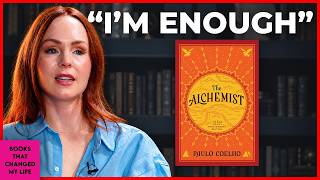
Brittany Axelson talks about reading The Alchemist during a major life shift: ending an eight-year relationship, turning 35, and starting a new job. She connected with Coelho's idea that 'the fear of suffering is greater than the suffering itself' and the concept of a personal legend. She got a tattoo reading 'I am enough' to counter her perfectionism and fear of failure.
Questions this video answers
Eight years.
Since about age 16.
She read it over about a month, reading before bed most days.
Chapters
Kind of give me a sense of where you were in life before the book entered. What. What was going on?
Gosh.
You ordered sparkling water. Sure.
So what do you think of the library?
Oh, my gosh. I've never seen books like that. I mean, this would be a dream library. Been really trying to work on, like, leaving limiting beliefs behind about my.
How does suffering play into it?
The fear of suffering is greater than the suffering itself. Yeah. And that really hit home.
We love talking about books that have changed people's lives. They've had such an impact that they are different after reading the book. Our special guest today is Brittany Axelson. Okay, so the big question. How did the Alchemist by Apollo change your life?
Gosh.
I was told I have to show you my tattoo.
What is it?
I am. Oh, that. You like the.
What made you want to do that?
It was like I wanted it right there and saying that. So, like, whatever I needed in the moment, which is kind of like the alchemist book, but I am enough. I am. Yeah.
So it's like, oh, that's great. Did you see all the I am books?
Yeah, yeah, I did.
That's great. So what do you think of the library?
I mean, this would be a dream library.
So a little Narnia. So you. You ordered sparkling water.
Oh, thank you.
Gracias. Oh, wow.
You've got, like, different editions.
Cheers.
Cheers.
Yeah, there's a bunch of different editions.
Is that coffee?
I'm kind of going for it.
Feels like. Feels like bourbon.
No, it's just coffee. Coffee tonic is. Is what it is. Which. Which version did you get? Is it very similar to that?
Actually, I had, like, a special edition art version of it. Oh, yeah. But this is the one that I have, like, on my vision board.
What else is on your vision board?
Gosh. A lot of travel. There's art. What else is on there? This year I want to get organized. So, like, a lot of. I have a book on there.
2024 or 2025.
2025. You want to go? Started early. Yeah, I thought starting right. Like, at the New year, you kind of want to go in with, like, intentions, and it takes a little more time to figure out your New Year's resolutions. So I kind of started in October. How I want to start the year.
Off, I start right now, usually.
Yeah, yeah.
And then we print them out and put them on the mirror so we can look at them every day. Oh.
Yep. I got one by my bed and in my car.
That's great. Where. Where on there. Do you want to Travel to.
Gosh, I've got a whole list. So I've been to about 30 countries already.
Wow.
So there's like half that I want to go back to, like Amsterdam and London and then new countries I want to do. Gosh, I'd love to go to Jordan and Egypt actually, to see the pyramids. It's always been a lifelong dream to see the pyramids, which is something funny. And the alchemist is. That's his dream, his personal legend. Yeah. Honestly, I'd go anywhere. Mexico City's up high on there. But that's. I guess my personal goal, legend, would be to travel the world.
Where's your favorite place that you've been so far?
Probably Japan.
Oh, really?
Yeah. Japan is so dope. It is so cool. And it's like so different than anywhere you've ever been. It's like an assault on the senses and like a good and bad way. And my dad actually speaks Japanese. He worked for a Japanese company and he raised us with like Japanese influence. So maybe there was just something, some synchronicity. Synchronicity in there. Why I liked it so much.
What did dad do?
He was a VP of the Port of Los Angeles or one of them. So he worked in like shipping and he was working on automating the port before he retired.
So. Did he work in a port in Japan?
No, it was just a Japanese based company. So he would go to Japan frequently because they always had a head. The head of the company was always Japanese, so. Or the president, so. But it was based here. Did you grow up here, Pedro? Orange County.
Siblings?
Three brothers.
Older, younger, all younger.
I'm the oldest.
Oh, wow.
Yeah.
How was that?
You know what? I loved it. I really wanted a sister and I didn't get one. And I'm so happy. I didn't really. Boys are a lot easier. And actually I have four girl cousins and my mom's brother married my dad's sister. So it's like we're. We have the same genes, so it's like brother, sister, brother, sister.
So I feel like I got kind of both.
Do you have kids?
No.
Do you want kids?
I think so.
You think so?
Still undecided? I think so. I have a lot.
Walk me through the process.
I.
What tips you either way?
Well, I think it's different for a woman. I mean, you're giving up a lot initially to carry the baby and just that initial period. I've always been very career focused. I wanted to be independent and travel and so I'm not. It's like, how would that fit into my life? But I also love children and I would love to be a mom. So I'm kind of like them. Yeah. Undecided. But there's a lot more options now, so I can freeze eggs. I can figure something else out to prolong that period of thinking.
Yeah. What made you independent?
Oh, I'd like to be independent. I think if I have a child, that would be my whole world. So you're just connected and rooted to something, and I still want to have the ability to explore, I guess.
Would you say that that's the thing that makes you feel most alive is exploring?
Yeah, I would. Exploring experience. It's like connected to living for me, like living a full life.
Is it connected to creativity?
Oh, for sure, for sure.
Yeah.
Yeah. You get a lot of inspiration from exploring. And I think why I even connected with this book so much is because I've lived too much in my head and I just wasn't seeing anymore. I wasn't like, looking around and being in my body. And I think I wasn't able to get inspiration or figure out what finds joy or my joy is. Or what energizes me. And so this book, it was like, look around the world for the omens. You know, what's the world trying to like, knock on your door does a.
Good job of that.
It does. If you really look, you're like, oh, my gosh. You know, you just start to see things again.
Yeah. So you're the third person to do this book.
Yeah. It's so funny because I got the videos. Like, I was looking at past videos, and the first one was the Alchemist. I was like, oh, great. But it is. Is great because you can read it over and over again and get something different.
No, there was a while there where I'd read it every year. It's such an easy read. It doesn't.
Oh, yeah.
So it's a two cup of coffee read.
Two cup. I like that.
Maybe me too. But it is. It's. It's easy. And you do get something different every time. But you. You always kind of walk away with like the feeling of being in the moment, like you said.
Yeah.
Like looking at the things that you are overlooking in a way.
Yeah. It's funny because it was written for children, I read, but I feel like children are already connected and they're themselves and they don't need this book like adults. Yeah. Or we're just never grow out of being children.
Yeah. I'm just a big little kid.
Or you Just have to unlearn. That was another big thing that I took from this book was just the unlearning or unbecoming because you become. I become all these things that I don't serve me anymore. So I was like, okay, maybe I'm stripping away more than I'm adding.
So how long ago did the book come into your life?
Oh, it's so fun. I literally finished it on Saturday, so.
Oh, really?
I read it. Yeah. Probably was reading it every day or night before bed for maybe a month. I took my time with it.
Is that how you like to read before bed?
Yeah.
You just take your time?
No, usually I read very quickly, and I've noticed just in general, I'm doing things too quickly where I'm not absorbing it as much. So it's like, okay, I'm gonna. I'm slowing everything down in my life.
Yeah. Like, people talk about speed reading, and I'm always like, that sounds terrible. No, I don't want to take my time. Like, I'm not. The book works for me. I'm not in a rush.
It's so true. Yeah. But when you're, like, living, like, high speed, you just start to. You're reading, you're doing things that don't need. Require you to be high speed. I will say I'm. I'm always, like, on Audible, and then I read a book, like a hardcover Audible. I do have, like, on 1.5 speed, so I do have it a little faster.
See, I can't do that. People do that with podcasts, too, and I don't get it.
It's like a. I don't know, the auditory versus, like, the visual.
I just never feel like I'm going to hurt. I don't know. I feel like even with books like that, when I pick it back up, I have to go read, like, five pages before to remind me where I am. I don't know. I like that process of, you know, going back and then forward and back and forward and sometimes reading something a couple times, setting it down and going for a walk and coming back and thinking about it.
Yeah. Yeah. I think that's probably the proper way to read a book. Do you make notes in it, too?
Oh, yeah. I make a mess. I'm a highlighter. I'll write, you know, with a pen, too, if there. If it's that kind of book. It depends on the book.
Yeah.
I also will start books on Audible, and then if it's really good, I order the.
Oh, yeah, I've done that.
Paper and Then like, sometimes there's this book recently about how art affects us. And I was in the first chapter. Oh, no, she way too many cool things and facts already. And I have to order it and start highlighting. Like, I didn't want to get too far ahead.
What book is it? I want to read it.
Oh, it's so good. I'm halfway. I'm halfway through. But like I said, I started with audible and then.
Then I got the hardcover. I also like hardcovers too.
So it's called your Brain on Art by Susan Maxman, Ivy and Susan Maxman and Ivy Ross.
Looks like I understand what we should do with it. Oh, that's a pretty book. Okay.
It's so great. Like, she goes into so many things you wouldn't expect with visuals, sound environment.
Oh, wow.
Like, stuff that fascinates me, like creating experiences, you know, for people. And art is an experience in a lot of ways and there's a lot of depth to it.
So that's why you like Marcel Duchamp.
Love Marcel Duchenne.
His art is an experience.
So kind of give me a sense of where you were in life before the book entered what. What was going on.
I was, I would say I was like, at the beginning of trying to like, personal growth. So I was been really trying to work on, like, leaving limiting beliefs behind about myself of like changing my way of thinking and living at a higher.
What sparked that?
Gosh, I wish it had happened years ago. Therapy.
Timing, going through a breakup. It was like on the verge of a breakup, an eight year breakup.
And the breakup took eight years or you were in the relationship.
I was in the relationship for eight years. So it was just like almost a decade. So it was. I also turned 35 recently and like, a lot was like, Most people say 30 is like this big gam. Was like 35 for me was like, oh, I've got to like, really step back and reevaluate.
30 was for me. 30?
Yeah.
I had a really hard time at 30. But 35 is when it hit you.
Yeah, really hit me.
So what happened with the breakup? Like eight years. And why didn't it work?
You know, I think we ended up for me, it was more of a companionship rather than like a relationship.
What's the difference?
Or. I don't know. I feel like I had put work, I put other things before the relationship. So I needed to reevaluate where I wanted to go, who I wanted to be. I guess I wanted to figure out who I am and what I want to be.
And.
And I was having a hard time doing that with someone else and having to make sure I think and care for them, because I was.
Did you feel like the relationship didn't make you better?
It made me feel safe and I didn't want to feel safe anymore, if that makes sense.
Why not?
Because I've always been a very cautious.
You're trouble.
I've never been trouble. So I was like, oh, man.
Oh, it's time to be trouble now. I'm 35.
35. I know. Late bloomer.
So it was. Because it was just routine and easy.
Yeah. I think I had grown a lot. And so I wanted to figure out maybe what else I wanted to do. I wanted. And it's with another person. You have to Very much. I guess I wanted to be a little selfish, you know, you can't do that in a relationship. It's especially. And especially after eight years. It's. You have to kind of. You're like, okay, are we marrying, having kids? What are we doing? And I, I didn't know.
Did he know?
I think he's at a period too, of growth and figuring things out and career changes and. Yes and no.
Who started the conversation about breaking up, you or him?
It was mutual.
Like, you're just having dinner one night. No.
Well, I mean, there'd been problems and such or just like things that didn't feel like they were working anymore. So it'd been a gradual thing. And it's actually been a really beautiful breakup because we've, like, talked more about things that we never were unsaid for a long time. Now it was like we're reconnecting better now that we don't have the pressure of being together. So it's interesting.
That is interesting.
Yeah.
So you feel closer to him now than you did before?
Yes, I feel more peaceful about it. We also have a dog too.
So do you share the dog, like, back and forth?
Yeah, we will. 50. 50. Yeah, he's definitely our. Our 100 pound pit baby always.
How's that. How's that custody gonna work out?
That's a good.
Who's gonna pay child support on the dog?
50, 50. We're very equal.
Who does the dog like more?
Oh, he's a mama's boy. He loves his women.
You have an unfair advantage.
I do. It's. I don't know if it's a female energy thing or what it is, but he love. He does love his dad, but he is definitely, if I take him home to my parents, he won't walk with My dad. He'll only walk with my mom.
Really?
Yeah. He's a very interesting dog.
That's cute. So what was going on career wise at the same time? What are the parallels?
I just hit my three years and so I felt like I had gotten in a good rhythm of.
Knowing what I knew and wanting to expand and feeling confident. So. And what I did and finally found a job that I find super meaningful, that I adore who I work for. I love storytelling. I love the industry I'm in. I felt.
What were you doing before that?
Well, it was. It was Covid. So I was potted up with a couple people and I've worked in fashion furniture production. I've kind of been all over. I hadn't found. And career was always something that was very. I'd always really wanted because I found work and purpose gave me meaning. And I hadn't quite found the fit yet. And so it just felt very. I guess it's like a peaceful time. Too peaceful. But room to grow was when this book kind of found its way to me.
What is the magic that you brought to those other jobs? Like you are. I'm guessing you're the kind of person that can get stuff done when other people's kit.
Actually, I would say I'm quite resourceful.
So that's kind of the thing that you bring to the table. Even if it's not fulfilling for you, you play a role in the company where you get stuff done.
Like in my previous jobs.
Yeah.
I would say this job is the one that I really found that I was a very capable person. So maybe that idea cemented in this job and the other jobs. I guess I just learned how to work and work hard. Maybe.
I guess the other jobs just paid the bills. This one feels like I would do it if I didn't have to.
Oh, wow. Really?
Or I would. Yeah. There. It would be the job that I wouldn't.
Yeah, I know.
Yeah. The money wouldn't matter, right? Yeah.
That's great. So you're. You're going through the breakup. You're. Have you been. Had you been in therapy or was that.
Yeah, I've been in therapy probably since I was 16, so different forms. So it's always been like, how many.
Different therapists have you had since you were 16?
Gosh, a lot.
Really? What makes a good therapist?
There are definitely good and bad therapists. And I've been lucky to have mostly good therapists. Gosh. I don't. It's hard to define. I think it's the Person who. Very unjudgmental, but that you end up growing with. There's a lot of therapists that I don't think people change at all that they've seen. If you're not, like, kind of changing or realizing things about yourself, I don't think I would say they're not the fit for you.
So progress is. Is measured by change and growth, in.
A sense, I guess the ability to look at your shit too.
So does the therapist need to be honest?
Yeah. And I would say a good therapist doesn't tell you what to do. They kind of guide you.
Guided discovery.
Yeah. Yeah, exactly.
Would that be your parenting style, Guided discovery? Or would you be like more of.
A. Gosh, that's a hard one.
How was your mom?
Very strict and controlling. And then she, like, since I'm the firstborn, I'm the guinea pig. So they're working out their parenting style. And then by my little brother, she was much more laid back and.
Let things go with me. So that's probably why I was much more of a control freak. And, you know, also she was very anxious and I think overwhelmed with four kids. So that maybe plays. And I'm like, why do I want kids? You know, do I want to? So, you know.
Yeah, that makes sense. Four is a lot.
Four is way too many.
Maybe two. Maybe two.
Yeah. One or two. You know, one.
And I was an only child. One is one. You always wish you had a sibling.
Oh, you do. Okay, that's good to know. Yeah. I love siblings, especially when your parents go. You have each other. And I'm quite close with my brothers, so would be. Don't know where I would be without them.
So who recommends the book?
A friend did. And I've. I mean, over the years, so many people have recommended this book. And I just had started it and then I didn't finish it. And so I don't know.
It starts slow.
It starts slow. I think that's yes, because, you know.
I had the same experience. I heard, I bought it. I started it. I was like, this is. I don't get it. And then I had a friend come back from a vacation. He goes, I read the Alchemist. You have to read it. And I was like, really? And it was somebody I really respected.
Yeah.
And then you kind of gotta chunk through that first part. It's all set up, but it starts slow.
Bento or. There's a lot of lore around this book of how meaningful it's life changing. And then you're like, okay, you know, but then it comes.
Like, once it comes, you can't put it down. Yeah, yeah.
As a quote that you could, like, live by.
So who's the. Who's the friend? Like, what. Did they know you were going through something or.
No, it was. Yeah, just an acquaintance that was. We were talking about favorite books or books that had changed lives and, like, was one of the two that were his favorite books or that he. That he always kept. So I was like, oh, you know, I've been told to read this so many times that I should. Maybe this is the sign that I should read it. And it's like a thin book. And I thought, okay, that is nice one. Before bed, a couple pages. It's not overwhelming. Big book. Because I had read Atlas Shrugged recently, and that was such a. It's such a meaty book.
That's a weapon.
Yeah. And I was like, okay, I need something, you know, a little different. And, yeah, I was.
How long did it take you to read Atlas?
So I did that one on Audible and it took, gosh, it's what, 40 hours? But I. I got really into it, so I was reading it in my car when I was brushing my teeth. It took me maybe, like, two weeks.
Oh, that's. That's quick.
Pretty quick. I like, when I'm in a book, I'm. I just walking around the house with my phone on.
So you start reading it and then what's the first, like, oh, this. This is good. Or this is what I needed in.
In the Alchemist, I think had to do with suffering.
It was either suffering or it was the personal legend where the universe is conspiring. When you're on your road to your personal legend, the universe is working with you and for you. And you are also the universe and part of the universe. So. Helped with the idea of letting go of limiting beliefs and trying to manifest and meditate was very. That felt like it was speaking to me because.
Did you feel like you were separate from the world in a way?
Yeah. I think I was living too much in my head. So I wasn't. You know, you're not rooted if you're not in your body. You're not like, your feet aren't on the ground and connected. So it. Yeah, it was like a grounding. And it was also this idea of having a conversation with the universe and letting go of control and being open to receiving.
So, yeah, I was even, like, meditating with my hands out. Because you're, like, receiving one. Yeah. So it was that.
And then how does suffering play into it?
The fear of suffering is greater than the suffering itself. Oh, yeah. And that really hit home.
How does that hit home? Like, what does that mean to you?
Well, I think everyone's scared of suffering. I think it prevents.
What is suffering in your, like, firsthand experience? Like, what is the suffering?
So, gosh.
Firsthanded. Like, there's so many little things. I think limiting beliefs that I've believed or have stopped me from, like, living a full life have been. Is a form of suffering.
What are those limiting beliefs?
Fear of failure that I'm not.
Is that because of Mom?
Yeah. Maybe the idea of, like, consequences, like, oh, there's a consequence if you fail, and. But I think.
Is it also about appearances?
Maybe a little bit. Yeah.
Like, you wanted to be the person that didn't fail or fail.
Gosh. Yeah. I think you just. I think we live in a culture where we hear success stories and we hear. We don't really hear about the failures, and we don't. It's hard.
He's posting that on Instagram. No, actually, though, sometimes people do, but it looks like a hot mess.
So you really only heard.
I don't want to hear that your dog died. I'm sorry your dog died, but you're ruining my day.
Yeah. Or the sadness or. But those are the times of personal growth or the learning times and opportunity times.
And I just wanted to get past those times. So I think, like, I'm like, okay, if I can live in those times, sit in those feelings.
So being a perfectionist is a limiting belief? What else?
Actually, that is, I am a horrible perfection. Perfect perfectionist.
Does that keep you from starting stuff or finishing stuff?
Probably finishing stuff. I'll kind of start stuff and then get scared and back off and. But, yeah, letting go of perfectionism or figuring that out has been a big. A big challenge or a limiting belief I needed to let go of and just, like, living the journey and liking the journey. The journey is the destination.
The book is great for that.
Yeah. Like, I was like, let me get to the destination. And then what else can you know? And then you don't remember or you haven't lived it. So, yeah, failing well is something I'd like to learn and be okay with.
Have you figured that out? Cause it's a hard one.
No, definitely not.
I'm gonna say, I don't know that I have that figured out either.
Still. When I mess up, I'm like, you know, I beat myself up once. That voice is like, oh, no. Okay, what could you do better next time? What did you learn. Okay, let it go.
What other limiting beliefs?
Oh God, there's a list. And then when I'm asked about it, I can't remember exactly what. That I'm not good enough.
Why would you not be good enough?
Maybe insecurities, self worth.
What do you think that comes from growing up?
Maybe society. Things that I took on from the world that maybe necessarily it was maybe how I understood the world and I conceptualized it and took it on myself. So I think this idea of unbecoming and unlearning those things, you know, has been a big. Will be a big part of if. I can grow with that.
Why do you say if?
Or that's actually words are powerful. When I would change the if because I don't want to live with the ifs.
Do you think you have a grasp on that?
I'm starting to think about it. So no. Yes and no.
When. What is the path to yes. Like what do you think it is that you need to embrace for it to be. Yes.
Probably compassion and self acceptance.
Like compassion for yourself?
Yeah, yeah. Firstly that and then just compassion in general, but more for myself because I definitely am so much more willing to have compassion and love and just for anyone else. So I think just turning that inward is something I definitely have to do.
Yeah, I think that's pretty common. Like that you will have more compassion for others than you do yourself. It's a funny trick that we do.
Yeah, it's a weird. And then it's like the question, well, can you have compassion for someone else if you don't for yourself? And then you could go down that road.
Yeah. What's the answer to that?
I guess a lot of the yes and no's. Yeah, I think yes. But I think, yeah, gosh, that maybe question mark. That one I would want to figure out. I would think. Yes. But I don't know. What would you. What would you say?
I don't. I don't know. Like I don't think I. I don't think I struggle with that in the sense that I don't hold myself to that.
High esteem. I guess. I don't know. I. I'm sure you've heard me talk about it. The I loving yourself.
Like I just don't believe in that. I think you should just like yourself. Like everybody's trying too hard to do this. It's like I think I'm more balanced when I'm figuring out ways to contribute to others. And I don't. I'm not so great. Like if I had to love myself, I'd have to break up with myself. I don't know, it just seems like that's a self help thing that keeps everybody on the continuity kind of a thing. But to me it's like, like yourself, but I don't know, you gotta laugh at yourself. Oh, for sure. We're all pretty flawed and we all get in our head and I feel like I get past it quicker because.
You don't take yourself too seriously.
That would just seem like it would drive me crazy. I don't know. Yeah, I try to focus more on what I can do and getting better and improving, but I also accept the fact that there's parts of my life that I probably should focus on. But I can only do a couple things at a time.
Yeah.
And so when I do those things, I want to do them really well. To me, it just helps to be honest about that.
Like not a jack of all trades, but more of an expert or master.
Yeah. And, and yeah, just having a little empathy, I think, in that way, I'm not trying, like. Yeah, I think the whole love yourself thing is nuts.
All right.
I just like myself. Like, I'm.
I like that.
Yeah, I'm fine.
It's a happy medium.
But really, at the end of the day, it's. What can I contribute? It's not just about me.
Yeah, I love that.
And here, here's the thing too. Like, I don't know what I don't know. So I'm not. This isn't, this isn't absolute. It's just my observation is I've known quite a few people that have gone into working on themselves and they end up more miserable. And I always thought it was interesting because they would do stuff like they'd be like, I can't talk about that right now. I'm working on myself. And you're like, oh. So I didn't, I didn't mean to trigger you or, you know, you're just like, I wanted to talk about the Dallas Cowboys. I didn't know that sort of thing. And so it always seems like people get a little too over emotion. I don't know.
Analytical maybe.
Yeah. And it's just like that. It feels like the most important thing to people, the biggest driver, is.
Belonging. Like that's what we all strive for is that's why you're wearing clothes, that's why you have a haircut. Like you want to belong, right?
Yeah.
So then that's in collaboration with others. So I feel like if you focus on yourself too much and not what you're contributing to others in a sense now you can go too far. And the people that, that end up feeling like they're always getting taken advantage of because they give too much, usually those people have really low self estee esteem and you end up attracting kind of your same level of self esteem. And so the fix is to raise your self esteem and hang out with people that aren't going to take advantage of you, but you don't want to not give. I think people get jaded because they're like, well, I get taken advantage of. And it's like, why don't you consider where you're giving it? Give it to people that reciprocate but don't stop giving it. And I think that's. I noticed that people get stuck with that.
Yeah.
Any other big takeaways from the book?
Yeah, it sounds, it's so simple but like listening to your heart, you know, like. Or the body. What? It's like the first signal, I think. And we ignore a lot what goes on in here because we listen to too much in here. So I've been definitely trying to get out of my head and more into my body. Like, oh, what, what am I picking up on and listening to this first.
Is there anything you do to help with that? Like yoga or anything?
I would say the meditation has been. I have always had such a hard time meditating. Like I've never been able to do it. This is the first time that I've actually been able to like sink in. And what really helped was binaural beats. So I put those in and I, you know, have a mantra. I definitely look.
So did you do tm?
What's T? Oh, transcendental. No, I've never done it, but I've heard it's amazing.
That's what I did.
Oh really?
Okay, so they give you a mantra. That's what I thought you were referencing that. So you go and you do they, you know, you go for like three days in a row and they give you a mantra and then help you. But it, it worked so well for me.
Do you have that same mantra or.
Yeah, yeah, no, they give it to you and then it's your mantra.
Oh really? Do you give feedback on what it would be a good one for you or like they just give you one to say no?







