Books That Changed My Life: Christiane Maertens & A Walk in the Woods - Bill Bryson
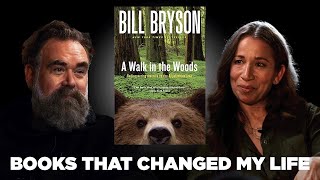
Interview (YouTube video) in which Chris Collins interviews Christiane Maertens about how Bill Bryson’s A Walk in the Woods influenced her life. Maertens recounts her immigrant family background, early life in Palos Verdes, career arc (Deutsche Telekom → Disney environmental education → founding Do Goodery in 2019), and the origin of her tequila brand launched from Mexican partnerships. The conversation covers production details (10,000 bottles; 5,000 liters total; 45% blanco, 45% reposado, 10% añejo; blanco at 42% ABV; 600 bottles of the añejo), distribution and state-by-state alcohol logistics, pricing strategy, and a philanthropic commitment (10% of each bottle funds clean water in a Mexican community). She describes reading A Walk in the Woods around 2009–2010, how the book rekindled her love of nature and adventure, and later pilgrimages (Camino de Santiago, last 100 miles) that reshaped her perspective.
Questions this video answers
2019
10,000 bottles (5,000 liters total initial production)
45% Blanco, 45% Reposado, 10% Añejo
42% ABV
600 bottles
Chapters
The book that we're here to talk about is A Walk in the woods by Bill Bryson. How long ago did a walk in the woods come into your life?
Oh, it's a very long story.
It's a big deal on the show that we make you a drink. So you're flipping the script on us. You're bringing us the drink.
How does that make you feel?
Excited.
Cheers. Cheers. Very nice to meet you.
So my parents are immigrants. My dad was from Germany and my mother is from El Salvador. Now, my dad actually thought he was Mexican, though. Like, that is a really important point to the story.
And just a quick pause. Right before I was getting ready to launch my company, my dad died unexpectedly.
We love talking about books that have changed people's lives, had such an impact that they are different. After reading the book, please welcome to today's show, Christiana Meritant. Okay, so the big question. How did A Walk in the woods by Bill Bryson change your life?
Oh, it's not as big as I thought it would be. It kind of looked like an Alice in Wonderland chair in the videos. And so I was like, okay, how am I going to sit in this thing but actually fit into it?
You were pre planning.
I was because I, you know, I mean, I don't want to look like Schmuck Chris.
That's impossible.
Give me a few tequilas and vamos A. But no, this is. This is delightful.
You know, it's a big deal on the show that we make you a drink. Like we ask in the questionnaire, like, what's your favorite drink? So you're flipping the script on us. You're bringing us the drink.
How does that make you feel?
Excited.
Are you a tequila drinker? Yeah. May I ask you what if you have a favorite. Not a brand, but a favorite expression. Blanco, reposado. An.
What are we doing?
We have all three. We're going to have all three.
No, but I'm saying, what are we doing? Because if I'm smoking a cigar and like, the darker.
Say we are smoking a cigar than the darker. Okay, so the anejo, that's your go to. Are you a big bourbon guy? Whiskey?
No, I'm a tequila guy.
So all the way. Oh, that's so exciting. All right, well, how did you get into this? Oh, it's a very long story, but I will keep it very short.
It happened in a summer?
No, no, it happened on a New Year's Eve trip to Mexico. But a little bit of background on me. So my parents are immigrants. My dad was from Germany. And my mother is from El Salvador. Now, my dad actually thought he was Mexican, though. Like, that is a really important point to the story. So in the 80s, he started going down to Baja and discovered La Paz. Have you been to Cabo La Paz? That part of it, yes. And so back in the 80s, it was a sleepy little fisherman town. Nobody was there. There was no senor Frogs or anything like that. And my sisters are 12 and 13 years older than I am. So I was an accident, baby. And then I showed up all of a sudden, and so I was still. I was. I wasn't 10 yet, in 1987, I think, or 88. So my dad took them down to La Paz and they were probably 20, I think, at that point. And they were like, this is boring as. And so they found a van that took them to Cabo San Lucas, this amazing new place called Cabo San Lucas. So they went, fell in love with it. And then a year later, I was in fourth grade. They're like, Christy, my kid name is Christy. My full name is Christiana, but I was called Christy or Boo Boo as a kid, specifically for the reason of being an accident, baby. So they. They brought me down and we went place in Cabo San Lucas hotel called Plaza de las Glorias. And they got the welcome margarita. And so we're all sitting like in a little table like this. I'm like, okay, Christy, you can have one sip. One sip. And I was like, okay. So I take my glass and I'm like. And I do that. And they turn around and I drink the whole thing. They turn around and my face is like bright red. And they're like, what did we do? What did we do? What did we do? So needless to say, tequila has been in my life since I was in fourth grade, but so has Mexico. So my dad, because he fell in love with it, Isaac spent most of my childhood living between El Salvador, Mexico and California. And so fast forward to my adulthood, I started a career in sustainability and social impact. So worked for Disney for many, many years, leading our environmental education portfolio. Then I worked for an environmental nonprofit in D.C. for another seven years. And then in that environmental NGO, realized that I was building a lot of corporate partnerships. And a lot of corporations, like, they don't. They don't have huge resources to invest in a whole corporate responsibility team or things like that. So they kept hiring us to do work for them. So I thought to myself, huh, why don't I start an agency where we can basically be like a mini corporate responsibility team? For these major corporations, major NGOs. And so I started a company called do goodery in 2019. And it took off. It took off. It took off faster than I could have imagined. Amazon Studios came in. Semper Energy. We started working with all these big companies. And just a quick pause before. Right before I was getting ready to launch my company, my dad died unexpectedly. And he was in El Salvador. Now, remember, he was a German one. My parents were divorced, but he was in El Salvador on my mom's childhood property where he opened up a Mexican restaurant. This is all a true story. And he died of a blood clot. So that's, you know, he was just living his life until the day he died. And I was in Switzerland at the time. So of course we all have to figure out, like, what the we're going to do. And so my mom and sister that was in Rome fly down to get his body. Me and my other sister fly back to LA to take over all of his affairs. So all of this crazy stuff was happening. Like, it had just been a wild ride. Then I started my company like a month after that, and it had already been. It was, it was nuts. It was a nutty time. But, like, I genuinely believe in the universe. And, you know, like, I feel like it gave me a kickstart once we started seeing all those clients come in. And I started building a multimillion dollar business overnight. And two years later, I am sitting with one of my mentors, Tom Staggs. He was the CFO of Disney. And so we're sitting at the Polo Lounge, like, I remember this so specifically. And he said, you know, Christiana, you've spent your entire career helping other companies be responsible or be more responsible, more community oriented. Why don't you start your own product company so that you can model what it looks like to be responsible and thoughtful and conscientious of like, other people on the planet from the very beginning, versus having to react to what you've already done. And I was like, I just started another company two years ago, but why the hell not? Let's, let's figure out what this is. So my, my sustainability consulting agency is called Do Goodery. That's the name of that. So I thought, I'm like, huh, what could be like a passive product, you know, passive income product kind of thing that I could look at. And I was like, do Goodery dating, Do Goodery Travel, you know, like really thinking about keeping that idea of doing good, you know, and whatever would come next. So two weeks later, I Go to Mexico. I go to a little town called Puerto Morelos, which is south of Cancun for New Year's Eve. And I met this amazing couple from Monterrey, Mexico. And the husband knew a ton of tequila. And he heard me ordering like we were on the beach in front of our hotel cocktail. And he's like, the sculpe. The sculpe, which means like, excuse me, excuse me. And I was like, yes. And. And in Spanish he says, can I make a suggestion of a different tequila? And I was like, I'd love a different suggestion, you know. And so at that point we became close friends, like me, my bestie and this couple. And I started learning a ton about tequila. And I called my head of finance, Lupe. Her and her husband's family are both from Jalisco, which is where the majority of tequila is made. And her husband's family has agave. And so I was like, lupe, I've got this idea. I want to start a tequila company. And she's like, I got goosebumps, let's go. So she introduced me to her cousin in law who introduced me to a guy, who introduced me to a guy, as the story goes. And that's kind of how it all started.
How much was the initial investment to get it started?
Oh, God. I mean, it's sort of ongoing. It depends, right?
Bottles did you make right out of the gate?
We did 10,000 bottles.
So 5,000 liters in all of all three.
No. So tequila start with silver. You have to. I mean, here's the deal with tequila. You could go down and say, I want to start a tequila company. And what you could do is find a company that's already making tequila. They have blanco in the bottle, repo in the bottle, and anejo. You take all that juice, throw it in some bottles and slap a label on it and call it a day. But we wanted to do our very own juice, so we did our own agave harvest. Like. So this is our own, not our own fields, but we sourced agave from two different estates. And so these three bottles, they take time, right? So the blanco, you know, you stabilize for a couple months. You can throw it in a bottle reposado. It has to be in a barrel from four months to a year to be considered.
What kind of barrel do you put it in?
American white oak bourbon.
So you buy it from Jack Daniels or whomever.
Whomever. And then an is a year to three years. So.
So you start with the silver and.
Then you, if you do your own, like if you if you do your own harvest and your own production.
So each time you did 10,000.
So we did 5,000 liters to start with. And we dedicated 45% of our juice to Blanco, 45% of our juice to Reposado, and 10% to our Nijo.
But then you have shrinkage, Right. Because when you put it in a barrel, it shrinks.
The angel. The angel comes in and takes her share.
It's interesting.
Yeah. I don't know if to call her the angel or the devil.
Is it profitable?
It will be eventually. You know, in the beginning, starting a tequila company or any product company. Right.
What years are you in?
We've been on the market for a year and a half.
Year and a half.
Yeah. So we're still really new.
How many. How many stores are you in?
Oh, gosh, I don't know. A lot. We're in California, New York, New Jersey, Florida, South Carolina, and randomly, Iowa.
So I just oddly know a lot about this because I've almost bought a couple tequila companies and almost started one. Well, the thing that I found out is you gotta make a deal with every state.
Yes.
So you. Most people just start selling in California, and then as they grow, they'll open up other states, but you have to have a distributor in every state, correct?
That's correct. So that's the hardest part about tequila or the booze industry.
Very competitive.
It's very competitive. But you know what's so interesting because. So 10% of every bottle goes back to the work that we're doing in Mexico. So right now we're funding a project to bring fresh water to the community where we work, because there are 21 households that do not have running water. And because of what we've been doing, we've gotten a lot of attention and a lot of support for the brand. So while it's competitive, I. I suspected that this vision would help set us apart.
So also, just oddly, I grew up in Mexico as a missionary's kid till I was 13.
No way. Where.
So I have a Tijuana.
Wow.
But when I was a kid, that was my first language.
That's amazing. I love Tijuana. Do you ever go back?
I've been back a couple times, but I don't go back to Tijuana that much. But, you know.
Yeah.
Further south, Cabo is more fun.
Yeah, it's a little different. Little.
Okay, which one should we try? So are you going to try it with me?
Of course.
Okay.
So now here's the deal with tequila. There's a couple Ways we can start. We can start with the anejo and go backwards. And the thing about blanco is why I like to start. People that have never tasted our product before with blanco is that you get to taste like it at its rawest form. So we're going to start with that one. If that sounds good, that's where.
That's where I would start.
Okay. But our distillery, they like to start with the anejo. And so you start with, like, the little bit of the sweeter stuff and go start with it or end with this. But since your palate is fresh and you haven't been drinking tequila all day, I think this is the way to start. Yeah, that's going to change. And all of you guys are welcome to drink tequila?
Oh, yeah, they're. They're all connoisseurs.
All right, so what's different about this one is it sits at 42% ABV, as opposed to your standard 40%.
So this smells great.
I don't need to teach you how to taste it since you're an expert, which I love. Makes my life easier. What do you smell?
You smell kind of the floral part, but also like a little saltiness.
Little brininess.
Is that what you call it?
I mean, that's a fancier word to say. Salty.
No, I want to be fancy.
Teach me. What else do you smell?
A little brininess.
I mean, it just smells like tequila.
Now, do you know what cooked agave smells like?
Yeah.
Okay, so that's what's kind of baked. Yeah, it's like. It's like, almost smelling. Agave syrup, sometimes caramelized. Yes, yes, yes. So, like, cooked agave. Oh, you have the book. I'm sorry. That's so exciting in the hardback version. Sorry, my book.
Yeah, I'm excited to talk about that too.
Okay. All right, so you ready to try? All right, so first of all, cheers. Cheers to meet you. Salute, gentlemen.
Oh, that's incredible. And then there's a. There's a little vanilla. Yeah, I don't smell the vanilla, but the vanilla comes right in.
So. You know what's wild about this is what. Your drink is just agave and water. There is a little bit of yeast for our wild fermentation process, but this has nothing else in it.
Okay, so let me tell you my. My way of tasting tequila, which is not scientific. Completely. Completely.
My experience.
Okay.
Is that there's kind of two things that I notice about tequila is either the burn is on the front and the taste is on the back, or the taste is on the front and then the burn is on the back. Then it usually.
Is synonymous with the higher quality that the burn is on the back. And the burn is on the back on this. So you get the vanilla right away and then the burn versus just burn.
Right.
Because when you just get the burn, you know, it. It messes with the taste.
We like to say the bite.
The bite. So I've learned two things. Bite and brine.
Yes. Briny.
That is incredible.
Thank you.
Big fan.
Well, you guys are welcome to come visit us at our distillery anytime. Anytime. It's a really special trip, really. We partner tours. Yes, our distillery does. It's a family owned distillery. They produce a brand called Athanasio. So it's just us and them, which makes it even more special because a lot of the distilleries, they produce 50, 60, 100 different brands and they do the most amazing tour. You even learn how to, like, hema. Yeah. And like, like harvest an agave. Yeah, that's incredible team building experience.
Yeah, we like that.
Yes, it is a fantastic team building experience with tequila. A lot of it.
Okay, let's do the next one.
All right, so next they're reposado. And so something to six months in the. Four months.
Four months.
And what's interesting about tequila in barrels is you have the opportunity to sort of decide how dark, how sweet you want your tequila to be. And when you get the bourbon barrels, there's a thing called charring. So they'll go in there and they will actually light the thing on fire inside. And so the darker the char, darker the juice, the sweeter, you know, I love. I love our blanco so much that I didn't want to. I really didn't want to, like, adulterize it with too much char. So you'll notice it's a pretty light reposado, as is our. So this is only four months.
And does that have to do with the age or the barrel?
Barrel.
So you're cleaning some of that out?
No, no, it's just a lighter char. So the darker you burn it, right. Then obviously the darker it's going to.
So they don't. They don't charm in Kentucky.
I don't know what they do.
You charm down there.
Yeah, yeah, yeah, yeah, yeah.
I didn't know that. I thought they came charred already.
No, I mean, I guess they can, but at least our process is we char them down in Mexico.
How much is a barrel?
Like, what do you mean?
To buy it?
Like to do a single barrel?
No, to buy the actual Barrel from Kentucky.
I don't know.
You don't know. You're not looking at those numbers.
My responsibility is to get this thing to market and do good work. Their responsibility is to produce good tequila. So I just go, okay.
Yep. That's the jump.
Yeah. Taste it.
Yeah. More vanilla on the blanco.
Okay. What are you tasting on the repo? Oh, we should have had a palate cleanser, but it's okay.
You have water right there.
Well, I know what it all tastes like. You have coffee. Is that coffee or tea? Coffee. Coffee.
I mean, you get the vanilla, but then you. You kind of taste the. The wood.
It's interesting that you're tasting vanilla.
You don't taste the van.
Do you want some of my water? No.
Okay, we'll do the coffee, but thank you.
You're very welcome. So what's your favorite so far?
The blanco.
The blanco. Okay, so now you're an anejo guy, and you're a cigar guy. Right? So this is 15 months in the same barrel. So again, this all started. This is our. Our foundational juice. And so you're drinking the same thing, just with a little bit of age and a little bit of barrel.
So our Niejo, we only produce 600 bottles of this. So this is actually sold out, which is. I mean, you can still buy it online, but our warehouse is sold out. How.
So is it another year until you get more?
Yes, because we're actually going back down next month to do our second production.
So, you know. You know what you need to do.
What's that?
Raise your prices.
Oh, that's a complicated thing. We started off with really high prices. Really high prices. And that's actually. And mostly because of the work that we're doing in the community. So we're like. We need to raise them up money to, like, do this water project. But if you look, there's an app called Tequila Matchmaker, and, like, we got so much praise, but then, ding, for price. And so it's like, eventually when we do, like, small, like, this was high, this was 120. And we had no problem selling it, so doing, like, smaller special batches.
How much is this?
That is 59.99.
What did you start at?
119, I find.
And once again, I've done a lot of research in this that if you price this one low, you can go crazy there.
Yeah, that's what.
So it's kind of like the entry point.
Totally, totally.
But if that sells out that quick, you should raise the prices.
The reason these are actually More expensive. Not because the juice is any better. It's just because of the angel share. That's why it's actually more expensive.
You're making your own, what's called a piquete, and it means two things. It means sex, but it also means coffee with tequila. So if you have a piquete and you're drinking a piquette, it's coffee with tequila. So you're making your own.
Oh, yeah.
My.
My grandma was like, good morning, coffee.
Love that. I love that so much. What do you think of the anejo?
It's incredible.
Yeah, it was. It was. It's funny. The reason we chose such a small allotment was because I'm not a big anejo person. So I was like, let's focus on the blanco and the reposado. But now I'm kicking myself. We did such little quantities.
That's my favorite.
It's a lot of people's favorite.
I would smoke a cigar with that in a second.
Please do. And then send me a picture when you're doing it.
Oh, for sure.
Yeah. Also, I would buy everybody here a set too. Oh, we'll talk about it.
Okay.
We'll talk about it later. Okay.
Okay.
We're here to talk about the book.
I know, I know.
And we'll. We'll come back to this as we go. So the. The book that we're here to talk about is A Walk in the woods by Bill Bryson. Tell me a little bit about where you grew up.
I grew up in a little weird place called Portuguese Beds, which is here in South Palos Verdes or South la. And Palos Verdes. My. Like, we kind of, like the Jeffersons, moved on up. Started in Inglewood, and my mom, you know, having immigrant parents, you just. Your life looks very different because the hustle is real. You know, both of them came here with nothing and had to figure out, you know, they. They wanted to create a better life for the next generation. And so my mom one day got. She got lost up on Crenshaw, all the way to the top of Crenshaw, which is in Palos Verdes. And she was like, where is this place? And she looked and she saw this community below. And she's like, I'm gonna live there one day. And so in 1984 or 5, she heard about this house that was for sale for, like, I don't know, $50,000 in the neighborhood. Do you remember Marineland? Okay, so this is all in, like, Palos Verdes, but Marine Land was, like, The SeaWorld of LA and Marineland went out of business in the 80s. And so overnight, like, SeaWorld came in, took a bunch of like, literally Shamu or one of the. It was. It was like, like a mafia sort of like, takeover Marine. It was wild. And so the guy that owned this house was a marine biologist there.
And they worked at Marineland.
Yes. But lost his job and had to sell the home. And so there was literally an alligator in the middle of the. Of the courtyard because he took it from Marineland to try to save it, no joke. And so, like, the house was overrun, and my mom was like, we're gonna. We're gonna buy this. And so we bought it. And I mean, it was a like.
But it was next to a stables. So I ended up, like, becoming a huge advocate of or add. Like, the thing that saved my life was growing up being outdoors, riding horses. And that was the neighborhood that I grew up in.
How old were you when. When they bought that?
5.
You were 5. How old were you when you started it, when you got horses?
Five. Five. Yep.
Wow.
Yep. There was a little pony club there, and it was really cheap to, like, because we didn't really have a lot of money, and so. But it was like, I don't know, 100 bucks. It was something very nominal. And that's how I started learning how to ride on a horse named Indiana Jones. And he was this big.
Oh, really? Is that like a miniature horse?
No, he wasn't a minute, but he was a pony. But he was tiny. I never got much.
Did you have dogs?
We did. We had a big old Rottweiler. Yeah, my dad was into. Yeah, yeah.
Was your dad an entrepreneur?
Oh, yeah.
So what kind of businesses did he own?
Both of them. He was an aerospace engineer, so he was in his. In his apprenticeship in Germany. He learned how to do machining, like, on big, like, aerospace parts. And then he moved to Canada, worked there, went to New York, and then came to LA because aerospace back in the 60s here was booming. So he actually worked on the first Apollo that. Like, the first man to Paulo. There's a great picture that we have of him. And then in 1979 or 1980, he started his own machine shop and then opened restaurants. My mom became a real estate agent, opened her own restaurants, so both of them.
In what kind of restaurants?
We had a pupuseria. Do you know what pupusas are? Yes. We had a pupuseria in San Pedro, and then we had a pizza place in PB Pals.
Did you work them?
Hell, yeah. I Did Seven years old. I was out there serving, taking orders.
What did you learn from your parents in relationship to being an entrepreneur?
The hustle. You know, also like the way they treated their people, too. You know, fair wages, you know, they treated them like family, too. Like, there's still a guy that's been working with our family since 1995 that still works with us.
And do you still own restaurants?
Oh, God, no. No, we got out of that business.
You're not a fan of that business?
It's a hard hustle. Yeah. People were calling to love it. You have to love it. You have to be there. I love going to restaurants. I like patronizing establishments. But I. The only thing I think about one day is, like, maybe opening up like a small pupuseria tequila bar, you know, where you can eat, listen to some live music, drink some tequila. But like, small, Small. Really cool and small when I'm bored, when I'm like 80.
What were you good at as a kid?
I was. I mean, I was a pretty fearless kid, so I was a good horseback rider. I was really good in terms of just like being ballsy, but I was also really good at getting people to do things. I was really good at it. Not in a malicious way, but if I'd be like, okay, guys, this is what we're going to do. Then the next thing you know, everybody be like, okay, Kristy, let's go. And it was sort of. It was. Yeah, it was my. My sister always laughs at it because they were older, so they got to observe this. And I was also good at negotiating. There was a horse for sale when I was Ted. His name was Taboo, and he was twelve hundred dollars on the market. And I was like, pop, I think this. I would love to have this horse. And he's like, cool, if you can negotiate it down to a thousand dollars, I'll buy you the horse. So, sure enough, I called Monica. That was the owner. My sister's right there, and she loves telling the story. And I got it down to a thousand dollars.
How'd you do it? Like, what was your.
Oh, I probably was like, my dad won't let me buy it. Or like something like that.
The truth.
You just told the. Sometimes that works.
So, yeah, but I don't know. But it's just like being. And working with people has been something I've loved my whole life, you know?
And so did you read a lot as a kid?
Oh, yeah.
Do you remember your first couple books that you had a relationship with?
Yeah, I remember I was in first Grade. And I took out a Nancy Drew book. And the librarian, who is my friend's mom, who also loves to tell the story, she's like, there's no way. This is your. There's no way. She's like, read me the first paragraph. And I was like, blah, blah, blah, blah, blah. And she's like, oh, Jesus. Okay. So she let me read the book. My biggest. My oldest sister, Sylvia, was avid, avid, avid reader. And then my first adult book, I think, was the Time to Kill by John Grisham. And, ooh, that book, I don't know, it was transformative for me and just thinking about social justice and just growing up in California versus the south and not really understanding and recognizing different parts of the United States and. Yeah, it was. But, yeah, I read. I love reading. Love it.
So that. Was there a point early on in your life where you felt like you needed to defend people and social justice? Like, how does that become a theme?
Yeah, and I really don't even like the term because it's become so polarized. So I think for me, understanding, like, always recognizing the privilege that I've gotten to walk through this world. And even though, you know, growing up in the mimic crisis look like a white person, right? Like, it's not. I don't. I'm not scrutinized except for anything else, except for being a woman, you know, and that's a whole different ballgame, you know, and that is, you know, something that I don't carry as a. As a, you know, across that I bear or anything like that. But I think also being born into a family where you kind of had to fend for yourself, right? Nobody was really looking out for you. I realized that I was kind of born with that sort of agency to do, like, to take care of myself. So I'm like, okay, how can I help other people that may not have that same sense of, you know, independence? And. And so, I don't know. I honestly. It started with environmental stuff when I was a kid. You know, I volunteered with Audubon Society and, you know, really learned about community and working in restaurants. You also learn a lot about community and the importance of, you know, supporting one another. And it just sort of evolved and evolved and evolved. And I. And I would say, like, I think for me, I don't feel like I have to defend people. It's more of just, like, treating people responsibly in the way that I would want to be treated. That's how I walk for the world, is I treat people the way that I want to be treated.
So do you go to college?
I did.
At that point. What are your interests?
I was a political science major and I thought I wanted to be a lobbyist for some righteous cause in D.C. and then my second internship in D.C. i was at a party, like a. Like a political party. And I was talking and I went to San Diego State University and I was talking to these girls and they were super cool and we were like having a great chat. And they're like, where do you go to school? And I said, san Diego State. They literally looked at me, went, huh? Turned around and walked away because they were Ivy Leaguers. And I thought to myself, that was kind of the straw that broke the camel's back, because really understanding politics is so much more of just politicking versus getting to do the work. And I genuinely believe that a lot of politicians go in with the same mindset of, like, we are going to change the world. But I was like, I need to do. Like I need to do, and I can't spend a lot of time politicking. So that's what I thought I was going to do. And then my life took a big old turn when that happened. And then I ended up working for Disney in the environmental relations division. Like, the world is wild. Like, it's so wild. But, yeah, that was. That was what I thought I wanted to do.
Is Disney your first job out of college?
No, my first job out of college was Deutsche Telekom. They were bringing T Mobile to the States and so it was really cool.
Because it's German, right?
Yeah, yeah. And what was great was it was 2003, so, like, Blackberries were, you know, smart. Not even like BlackBerry. Yes, yes. I remember the. You remember the Nokia brick where it's like, doot doot doot E doot doot doot D. You know, like how to send a text message. It took like 900 clicks. But I learned a ton about technology in that job because I worked for sales teams, like national sales teams, and I was their coordinator. It's a sales coordinator. How I got that job is a whole other story. They moved me up to LA because they wanted me to open up their LA offices. And then Disney came into my life via my sister's dentist. No joke. No joke.
Tell that story.
So both of you're sitting in the.
Chair, your mouth wide open.
I wasn't. So what's crazy is my sister, both sisters went to the same dentist. And I had left this job at T Mobile because it was just. It was it was so toxic. And I was like, I can't do this. And I ended up nannying for one of the Desperate Housewives stars. So, like, I had plenty of income while I was figuring out what my next move was. And my sister was telling him about me and, like, growing up riding horses and whatever, whatever. And he's like, my wife is hiring in their Environmental Education Division. Eight months later, 10 interviews later, three different managers later, I finally got the job. And that literally was the beginning of my life. Yeah, it was wild.
Were you a good nanny?
I was a good nanny.
Do you have kids?
No.
Do you want kids?
No, I like other people's kids.
Why don't you want kids?
I don't know. I mean, I wish I could answer that. It's always a funny question to me. Right. Like, it's, it's because, like, why should I want to have kids? Right. But at the same time, I feel like you have to really want them to have them. And I've never had better that way. Yeah. Yeah. And I've never had that, like, diabolical desire to want kids. No. But I work so much with kids, and my entire career has been dedicated to, like, larger sort of communities of people, and that's very satisfying for me. It's more than satisfying, but I'm a godmother to, like, 19 kids, so I get my kid fix everywhere I need it. Yeah.
And you can, you can be an unbiased mentor in that way, right, to those kids.
Oh, totally. 100%. And I love, I love working with young people. It's one of my favorite things to do, and I do it a lot. And, you know, I feel like I had so many people that believed in me that it's my responsibility to put that back out into the world with that.
Yeah. How do you, how do you feel about social media and young girls or younger kids?
Oh, just kids in general. Like, when parents.
When should a kid have a phone? How old as.
Not as a non parent. I don't think it's fair for me to say this, but I know a lot of parents who are my friends who do not let their kids have phones. And until they're 15 or 16, you know, and I, I, you know, again, as not a non mom, I. But I know for me, I got to grow up my whole life just being a kid, being out in the woods and not bullying. If you were going to be bullied, they had to do it to your face. Right. Like, and I've been bullied. I was bullied. Really. Badly my freshman year of high school, and. But they had to do it to your face. And so I think I feel very lucky. And then I to. Was able. Was still young enough to learn technology at the same time.
Did you see the bully later in life?
No, no, no. I never. Because I actually left that. I ended up leaving that high school, but somebody from that high school showed up at my work, and they're like, oh, my God. Hey. And I was like. I just pretended like I didn't know them because I was like, I don't want to know where any of those people. I don't want any of those people to know where I am. Yeah. Like, I'm good. I'm good.
It's probably the right way to do it.
Yeah. So all I know is I feel very lucky to have grown up in a world where I could have conversations with friends. Right. The outdoors, never.
Tequila. Totally your Tequila.
That is something I never pictured in my earlier years.
Pretty cool.
It is cool.
Pretty bad.
Thank you.
How long ago did Walk in the woods come into your life?
It was like, oh, 2009, I think. 2010.
Are you at Disney?
Yes. Yes.
And so what's your life look like at that point?
So at that point, something really interesting had happened. There was a huge shift in leadership. And so I went from working for the Most incredible leader, Dr. Beth Stevens, and then I was snatched away from her and had to work for a different team where it just. The magic was gone, let's put it that way. And what was interesting is they kept giving me more money and more responsibility, but the heart was just not the same. And I had a boyfriend at the time. He was in San Francisco. And I was reading this, and I was super inspired.
Like, did somebody suggest it?
My sister.
Your sister?
My sister Patricia.
What did she tell you when she suggested it?
I think it's because I started getting into hiking, and she's like, here, read this. Yeah. Yeah. And my boyfriend at the time, his family lived very close to the Appalachian Trail, and we had to go visit them. And I was like, oh, my God, let's do this. Let's do some of the at. And because. And that's how it all kind of started.
And so you. You ordered the book?
No, I think she gave it to me.
She gave it to you?
Yeah.
And then how long until you started reading it?
Oh, not long. Probably right away.
Do you remember the first thing about it that you were like, oh, I like this. This is pretty cool.
How funny. Like, Bill Bryson is such a funny. Have you ever read any of his stuff? No.
I saw that he's written quite a few books. Funny, that's the great thing about this show is I get to learn about books I would probably never know about. But he's written quite a few.
Oh yeah, yeah. And he's. Oh God. And some really brilliant ones too. Like about like the beginning of time. And you know, his one in the UK is really funny also, I think Australia.
But just, I just realized how funny it was, you know, and like the story, I won't talk too much about the story, so you can be surprised, but it's just a beautiful story. Like funny, sad, so many things, a million different things, more funny than sad. But a couple of really deep, poignant moments in there that I was like, yeah, months, life.
What were your takeaways?
The biggest takeaway, I would say, honestly, honestly. And this is so self serving, but listening to him talk about sort of things because he and his, his buddy that came with them, they would hike separately, you know, like for hours during the day. So he had a lot of time alone. And.
Just like the way that he thought, the way that he was able to write this book. And I was like, God, that sounds so peaceful. Like this opportunity just to be out in nature and think. And I was in this real like crossroads in my life of like, what am I going to do? You know, like, I can't, this is not sustainable to stay here, you know, what am I going to do? So that was like the biggest takeaway, honestly. And then the second biggest takeaway was really about relationships, you know, and these two guys, like, he hadn't seen this guy because he said basically like the premise of the story is he. I remember what inspired him to do the at, but he decided he was going to do it. And so he wrote letters to like everybody and their mother to see if somebody would join him. And then the guy that decided to join him was like a recovering fat alcoholic that lived in Des Moines, Iowa. And it's such a, like just to going back to our conversation earlier, it's like these two guys who hadn't seen each other in years live totally different lives yet somehow find this, like this sort of love for each other on this walk and this hike. And I thought that was really cool. Really, really cool how like the most unsuspecting people that you would think you would never have a relationship with. You know, you can have some of the best relations.
How long does it take to do the hike?
The hike itself is a little over 2000 miles.
So how long does that take?
Oh, God. It's like, you know, if you do it well, I think it's like three months, I think.
And how much of it have you done?
Oh, I just did a small part of it. It was a weekend.
A weekend?
Yeah. Yeah. Yeah.
So it goes all the way from Maine to Georgia?
Yep. Yep.
Which part did you do?
I did the Maryland part. The Harper's Ferry part.
Yeah.
I love how this book is designed. I love the images and just the font choices. Yeah, it's really cool.
I think you'll really like him, Chris. It's a. It's a. And it's a fun read. It's an easy read, but, yeah, it's. It was great. So. I don't know. The book just started. I don't know. And then I did the Camino. Do you know what the Camino de Santiago is?
Yeah. Well, I was gonna say that. Paulo Coelho's book on that. I read.
I did.
Yeah.
Oh, my God. It's. Do you like hiking? Walking. And that's okay if you don't. If you don't, you also. Do you like bike riding? No.
I have a mountain bike.
It. That changed my life. And I never say that about things, but the Camino changed my life.
You did it.
I did. No, I did the last hundred miles.
So how long did that take you?
One week or six days? Yeah.
And do you stay in hotels? So you did the bougie way?
Hell, yeah, I am. Let me just be real clear. I'm not a.
You're about room service.
1. No, I don't even need that. I just need a bed and a shower and a nice hotel. So a few things.
I'm about room service, so.
But, yeah, I'm not a hostile person on both levels, figuratively and literally.
But did you see some great art?
Architecture. Great architecture.
Don't some of those churches have crazy art in them?
Yes. So the Compostelo, like, where you end the art is. I mean, the church is stunning. You walk in and you're overwhelmed by its magnificence. And it's like majesticism. It's. It's unbelievable. But the architecture along the way, like, these old centuries, Centuries old homes that are turned into, like, little cafes where you can. And stop and no joke, for €3, have a gigantic glass of wine and a sandwich the size of my head.
Yeah.
You know, like, it's. And then you meet the best people. Because I did it alone. And it was hard for me to be alone, you know, like, I literally had to, like. Like, be like, okay, okay. How do I sneak out just to be alone? Because it's such a community. It's amazing.
Were you doing the journey because you wanted to kind of have a conversation with yourself?
Yeah, because it was. It was 2021 that I did it. My dad had died at the end of 2018. Had to deal with, take over his company, start my own company. Then I got into a relationship that I should have removed myself from way before. And then I finally did. So all these things had happened. I was like, I gotta. I gotta go. I gotta go. And one morning, it's an article in the Atlantic, and just everything sort of led to this thing. And I woke up, went online, and then I booked the Strip and then met the angels along the way. It was wild.
Well, tell me, like, what kind of art do you like.
If I'm being honest? Music.
Music? What kind of music?
Oh, I love everything. I love everything. I mean, I love African high life. I love R B. I love hip hop, I love country, you know, I mean, I love all music. I love salsa, cumbia, not banda. I can't do banda. It's just too much, which doesn't work well for me working in tequila.
Are they big on Bonda and tequila?
Yes.
I don't even think I know what Bonda is.
Oh, you would if you heard it.
I know. I have friends that say they hate reggaeton.
How could I forget one of my faves? Yes, I love it.
You like reggaeton?
Yeah. No, they're. No, they're. They can't. No, they're not even, like, in the same. No, no, no, no. But I love. Me don't love. But I love music.
Like, you probably like to dance, right?
Love to dance.
Can you not dance to Bonda?
It's like, Joey, we can show him later. Like, Joey would basically throw me around. I would hold on and he would just sort of spin me to Bonda. Yeah. Yeah, Literally. So it's kind of cool. Like, as a female, you don't have to do much. You just have to hold on. And they just kind of. The first time, I was like, oh, well, this is a lot less effort, but the guy's got to be big enough to be able to do that. So.
Okay, so the big question.
Yeah.
How did a walk in the woods by Bill Bryson change your life?
I think it sort of, like.
Gave me a sense of adventure again. Right. Cause I was working this corporate job and I was working 78 hours a week. Like, I just didn't stop. And so my exercise was going to the gym. No offense, I love our gym, but, you know, I was. I never got outdoors anymore. It was just like 5am gym, go work, travel, blah, blah, blah. Do it all over again. Hopefully see the boyfriend once every few weeks. You know, it was just literally like. And so that just sort of reset my mind again to remember how much I love nature and how important it is to, like, to be in it. It is, at least for me.
So it kind of brought you back to yourself.
Yeah.
That's beautiful.
For sure.







