Books That Changed My Life: Dalyla Suon & Man's Search For Meaning
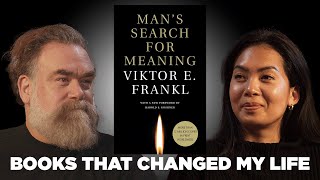
Dalyla Suon, a French actor, talks about how Viktor Frankl's Man's Search for Meaning helped her recover after a near-fatal car accident. She struggled with depression and survivor guilt until Frankl's ideas about inner freedom and love changed how she saw her survival.
Questions this video answers
Between 15 and 20 books a year.
France.
Bachelor's degree in Korean Studies and a master's degree in sociology of immigration.
33.
About 10 days.
Chapters
The book that changed your life the most, and that's Man's Search for Meaning. Tell me like where your life was. How were you feeling?
Still is healing from a lot of things. Mostly from a near death experience two years ago. @ that moment I realized that I almost died and I realized that my mom almost lost her.
Daughter. That event, that moment completely changed your.
Perspective. My entire.
Life.
Today we have a very special guest. Delilah Swoon was born and raised in France. A college graduate with a bachelor's degree in Korean Studies and a master's degree in sociology of immigration, Dalila is currently pursuing an acting career here in Los Angeles. She's an avid reader. She reads between 15 and 20 books a year. With a passion for sight psychology and exploring the human condition. The book that had the most effect on her was Man's Search for Meaning by Viktor Frankl.
How are you.
Delilah? I'm doing very good, thank.
You. What do you think about the.
Library? I'm very impressed. I saw some pictures, but being here it's so different. The energy and it smells so good. It smells like books and I love that.
Smell. Me too. Don't you love it when you walk into a bookstore that sells used books and you kind of get.
That? I mean bookstores are probably one of my favorite place and this is just awesome. I just love it. It's. It's one of my dream to have my own library.
Too. Oh.
Really?
Yeah. What like how would you design.
It? I think I would. It would be a very woody. I like old, you know, in like in huge library. There's like this little kind of lamps and it's like bookshelves that a lot of wood and open. But I love the, the workplace too that you have. It feels like you can just coming and do your own research. I just love that.
Feeling. Yeah. What are your favorite.
Bookstores? To be honest, I don't have any here because I'm born and raised in.
France. And you mostly read in French.
Here? No, only reading.
English. And what, what categories like fiction, a lot of psychology. The interest in psychology.
Comes from.
Where I started to be curious about how people succeed. So I started with.
What'S that name Guy. He's very famous. I don't remember the book. How to make Friends. I don't.
Remember. That's my. That's my first book too already where I was very different after I read it than before I read it.
Like a long time ago. I bet if I read it it would be different. But I learned so much with that one and how to communicate with people and make sure that there's an exchange and not just your point of view versus mine. And I started with that book and went on and on and on with other.
Books. Yeah, it's a good one. That there's a lot of good stories in that book. It's just.
Stories.
Yes. Okay, so today we're here to talk about the book that changed your life the most. The one you picked to be the most influential. And. And that's Man's Search for.
Meaning. Yeah. Right.
Yeah. By Victor Frankl. So.
How old were you when you read.
This? 33. I read it a few months.
Ago. Oh, it's not that long.
Ago.
No. Tell me like, where your life was. How were you.
Feeling? My life still is healing from a lot of things. Mostly from a near death experience two years ago and then a breakup that followed that near death experience. And so I decided to just be by myself and look into my.
Darkness and get to know myself to be honest. And that's, that's when I, my, my mind space was, who am I today?
My identity.
What I learned when I was a kid. And.
Does it serve me today as an adult after my near death experience. That book just made me realize that I was using the same tools that he did to, you know, escape that darkness. And that's how this book changed my.
Life. Tell me about the near death experience. What.
Happened? It was a random Monday night. I was at my ex's place and I went back to my place. So I took my car, but I was like hesitating between taking the freeway to go home faster or take the streets. And I was like, I'm very tired. I'm going to just take the freeway. I'll be there faster. So I took the freeway and suddenly there's like traffic. So I stopped my car and the person behind me didn't see any traffic. So he went full speed, I think 70 miles per hour in my.
Car. Oh my gosh. What kind of car were you.
In? A small suv. I think it did save my life, you know. So he reentered me so fast and so hard that my car flipped and rolled over several times. And the whole time I was just. It felt like eternity waiting for the car to.
Stop. For it to stop.
Rolling? Yeah, to stop.
Rolling. So like time stood still. Like it felt like.
Days. I had no idea. I just, I was just waiting and it felt like, ah, such a long time to wait. You know, am I gonna die or not? You know, it happened in a few seconds. The car stopped on the side like that. And I didn't know it was on the side. So I tried to open my door, but the door was on the.
Ground. And so you were really out of.
It? Oh, yeah. I checked if I had any blood on. I was very lucky. I realized that my car was on the side when I felt like I had to climb out of the car. So I did that and I jumped. I jumped out of the car. And then there's that one lady who was a nun. She came to me and she's like, do you need any help? And I was like, no, no, no. I don't need any help. I'm okay. But then she asked me again. I don't know why she did that again, but she asked me again, do you need help? And I said, I need a hug. And then she took me in her arms.
And at that moment, I realized that I almost died. And I realized that my mom almost lost her daughter, which is not how life is supposed to happen. And after that, I think the accident was just the beginning of how.
Dark my life was going to be mentally. It was very.
Tough. What do you.
Mean? You know, I.
Never. Before that, it was.
Dark. No, I mean, I had a tough childhood, but I had, like, a pretty peaceful life. And then that accident. You know when you're young and you just think you're just gonna die from an old age? You're just gonna.
Die. Think you're.
Invincible. Yeah. And then that night just. Was like, no, you can just die. Just like that. And then I had to struggle mentally with survivor's guilt. I had to struggle with depression, anxiety, panic attacks, suicidal thoughts. All those stuff that I'd never had before in my life. It all came all at once, and I just didn't know how to deal with it. And I didn't know who I was anymore.
I was very fragile.
Mentally. Did you end up going to the hospital and they checked you.
Out? Yeah, I went. The ambulance came pretty fast because my phone. You know, when your phone drops, there's a big shot. It called magically the. Yeah, it.
Did. Apple. Yes, Apple. Saving.
Lives. Yeah, it did. I went to the er. They checked me. I had. I mean, bruises, but.
Nothing. Nothing.
Else? Nothing else. Back pain, neck.
Pain. What about the person that hit.
You? I have no idea. I know that the person who hit me is autistic. Actually, I thought he was on drug because his car was on fire, and he was just so close to the car. And we kept telling him, come with us. But then my friend, a few days later, Check Instagram. And they saw that he was autistic? Yeah. I don't know if it helped my healing. I'm not sure.
But. So that event, that moment, completely changed your perspective, your entire life, and it made you face some things that you'd never even thought.
Existed. Existed?
Yeah. Okay, then how did that play into your breakup? How do those go, hand in.
Hand? Well, I was very on edge. You know, I was angry, I was.
Grieving. How long had you been dating the.
Person? A.
Year. A year.
Okay. And it took us another year to try to, you know, make it up, make it work. But, yeah, I was on edge. Fighting for love. Couldn't receive love, couldn't receive help. I just couldn't see it. And also, I thought I didn't deserve it at all. I didn't deserve to be happy. Why am I still alive? Why? Some people have car accidents and die, and I don't know why I did that. The next day I checked car accidents on the one on one, and the family just. The entire family died. And I was like. I felt so guilty being alive, and I couldn't appreciate life after that just because I thought I didn't deserve it anymore. So even if you have people who love you and it's usually the closest people to your heart that you hurt the most, that's. That's what happened to me. And I.
I didn't know how to handle things, which is okay now that I'm not in that situation anymore. I think it's totally okay to be on age and. And grieving and needed some time to know who you are.
Again. It's.
Natural. It's very natural, you know? But, yeah, that's why we broke up.
Yeah. So you got a low and then another.
Low.
Yeah. And then who tells you about the book or how do you find the book? How does it come into your.
Life? We were talking with my friend about books. I don't know if you know that. The Four.
Agreements.
Yes. And then my friend told me that this book.
Was.
Was about a man who was in camp, and the only thing that people couldn't take from him was his thoughts. And this triggered my curiosity, and that's how I heard about the.
Book. And how long did it take you to finish.
It? Maybe 10.
Days. So.
Quick.
Quick. You engaged the book and I engaged the.
Book. I took some breaks because it was intense. You know, when you read a book and sometimes there's like, there's some parts, some sentences that, like, that are so that you can relate to them, and it Feels like when you drink your first sip of a beer or. It felt like that. I was like, oh, my God, that is just so.
Beautiful. Even if the book is like, he talks about camp life, but there's a beauty in how he talks about it, I.
Believe. I love that feeling. When you.
Like.
Yeah. It gets you. Right. There's a thing like that that happened to me that I realized is when I was young, I would play.
Golf.
Yeah. And I was terrible. But the one good shot would keep you coming.
Back. Yes. And it's.
Enough.
Yeah.
Yeah. And it's even better in a.
Book.
Yes. And also the timing, like when a book will enter your life by coincidence. But it's exactly what you.
Needed.
Exactly. That feeling is pretty cool.
Too. It's awesome. And that's why books are so important for.
Me. So when you start the book, do you remember what the first thing was that you were like? Oh, hold on. This is.
Special. How he describes his life. Camp was.
A lot of sadness, to be.
Honest. So it's during. The premise is during the Holocaust and he's in a German.
Camp. Yes. Yes. And he describes how he's just became a number. He doesn't have a name anymore. He's just.
Nobody. So completely stripped of his.
Identity. Yes. And his belongings. I think he only keep his shoes or something like that. He's stripped naked. They shaved him, and he just has nothing left. I just had that image in my. In my mind, you know, And I think it's just horrible. And that's why I. I had to take some.
Breaks. Did you feel like your identity had been.
Disrupted?
Yeah. Did you feel like you were.
Stripped?
Yes. If you think about, like, especially for a female, like, if you shaved your.
Head.
Yeah. Like, you're.
You're. I mean, there's. I think that's what he went through is horrible. Right. And I. I think I want to be careful about not comparing my.
Situation. Yeah. No, I understand.
Yeah. But when you say stripped of my identity. Yes. Because I didn't know who I was anymore. That's how I felt. It wasn't physical.
It was mental. I just didn't know who I was. I didn't know how to live. You know, it's like I was learning how to walk again. Like a baby is learning how to walk. I was just learning how to walk.
Again. And was that part. One of the parts that you stepped away and had to think about it a little.
Bit? There's some. Several parts in the book that I had to take, like, some breaks.
Yeah. What's the next.
Part. The next one that struck me was when he's laying on his bed and he said that. That there's a soul window next to him and they put a corpse next. And he's just reading something and he looks at the corpse and then he just goes back to his book. And this was also extremely sad because for me, because.
For him to survive in camps, he had to ignore the pain. And he talks about the opposite of empathy.
Apathy. Apathy.
Yeah. And he talks about emotional death. And he's just looking at the corpse and like nothing happened. He's just going back to what he's doing. And this is repressing so much, you know, And I related to that part because.
I. I think I had to repress a lot in my entire life. And then the accident brought up so many feelings I couldn't repress anymore. It's like, no, you have to deal with them.
Now. What, you just didn't have time to stand up for yourself or how did you.
Feel? I mean, growing up with alcoholic dad is. You don't. You're not heard, you're not seen. So you believe that there's no need to talk. For me, I don't need to talk. I'm going to handle this by myself at a very young age. And I did that my entire life. And now after the accident, I have all those feelings and I need to talk about them. I feel I cannot keep them. Like, suicidal thoughts, never had them before. I'm like, is it normal to have those suicidal thoughts? You.
Know?
No. No. And.
I. It's not okay. It's an. It's a.
Imbalance. But I want to tell. It's okay. After this kind of near death experience. I think so many people have those suicidal thoughts and they think it's like a shame to talk about them. I want to say, if you have them, just say it. Hey, I have. I mean, it sounds so easy, but that's what I did at the time with my partner. I was like, I have suicidal thoughts. My. My ex said it's normal. And I had the therapy at that time. So I talked to my therapist and we went through all the process of how do I think of committing suicide?
So she asked me the questions.
And I said, wait, so the therapist asked you how you would commit suicide if you.
Did? Yeah, and it's, It's. I think I. I read somewhere that it's. Some therapists do that and some others are very against.
It. What do you.
Think? It helped me. I didn't Commit suicide. So. So she. We.
Were. What happens when you go through how you would do it? What. What positive thing comes out of.
That? Well, she asked me how I would do it. I said, with a gun. Okay. That was my.
First. I was like, you have a.
Gun. I do not. And that's the. That's the.
Thing. That's probably a good way to do it if you don't have a.
Gun. Yeah. But she didn't know that. She's like, how would you do it? I said, with the gun. I would put it in my mouth and shot myself like in. I see in the movies. She's like, okay, do you have a gun? I said, no. And she said, how would you get a gun? And then my whole process starts with like, okay, I need to go to the store and do the paperwork and give my idea. And at that moment, I was like, no, I don't want to commit suicide. That's why that method, I don't.
Know how they call it, but it's going through the.
Process. Yes. It helped me. I'm like, I'm not going to do.
That. That's.
Incredible.
Yeah. Was there a moment in there? Because when you were describing it, I thought like, an outcome is also, like how lucky we.
Are.
Yeah. Like, whatever our problems are don't compare to that.
Right.
Yeah. Did you get that feeling a little.
Bit? No. I never.
Compared my situations to others just because I'm. I don't think I'm wired that way. My mom taught me not to. When it comes to the book, I never compared myself to his situation, but I related to his feelings and thoughts process.
But I think in general, in life, I think everybody has their own journey. And maybe I needed that car accident to get to know who I really am and what I deserve and how to navigate in this world. You know, someone will be sick, have a cancer. You know, I. I just think that we all need some sort of trials in our lives. Maybe we don't need it, but it's just we cannot avoid pain, you know, in disease, breakups, death. And I think just every. Each person has their own journey. And if I can help with my own experience, I mean, that. That's one of my goal, to be able to help people with my own.
Darkness. I would say just by sharing your story helps people because they realize that they're not.
Alone.
Exactly. That we all face different.
Stuff.
Yeah. And when you just see somebody, you can't assume that everything's.
Okay. No. No.
Never. What? Any other big takeaways from the.
Book. Yeah. At some point he talks about his wife and his wife is not with him. So I think he was walking in the cold with all the prisoners and he needed to escape his.
The environment he was in. And to do that he was imagining conversations with his wife and you can tell how much he loves her. And I think it did. Saved his life. Love. And it sounds so cheesy, but also love saved my life. And I could relate with him in that part of the book with.
How he was in that cold environment, but he felt warmth from just thinking about his wife. He talks about inner liberty, inner freedom. And we all have that choice every day, every hour to go there, you know. And I have that with my mom. She loves me and my sisters so unconditionally that.
I think that's why I could be. I was able to get out of that depression after the accident because I know what type of. I mean, I. I love to say I come from love. And that type of love can make you move mountains if you want.
To. Yeah, that's beautiful. Yeah, it's beautiful too that the first thing you thought about when you got in your accident was your.
Mom. It was the first thing I thought about. I.
Her love. She went through a lot. My mom is Cambodian and she fled the Khmer Rouge, the genocide in Cambodia. And she didn't have in easy life. She came in France. Her husband was alcoholic, was pretty violent with her. So I grew up in a household where it wasn't safe, but just because my mom was there, I felt pretty.
Safe. Because of the.
Love. Yeah. Yeah, she's there, that loving presence. And I think.
The book, that's how I felt it. His wife is a loving presence in his life, even if he doesn't know if she's still alive. And he said it doesn't matter because she's there. And I think it was just.
Beautiful. That is beautiful. Is there anything about the book that you didn't.
Like? There is one huge thing. When I read the book and when I closed it, I was very mad at it. And I'm going to tell you why. So the books is like has two chapters. The first one, Victor talks about his life in camps. And the second one he talks about his theory, the logo therapy. And the first chapter I was like. I felt like. Like here sitting on chairs. He's sitting in front of me. There's a fire, is like, delilah, I'm going to tell you my story. And I'm just sitting here drinking his words and his emotions and his feelings. And then we Go to the second part of the book where I feel robbed of all this. And I felt like sitting in a cold auditorium in college. And it's not just me and him. It's me, him, and hundreds of students. And he's talking about his theories. I was mad at it because it felt like we went from being very.
Emotional to being very practical. It's like, first part of the book, you feel with your heart. Second part of the book, you are forced to think with your brain. And it didn't sit right with me. Let's say you go back home with your partner and say, I had a bad day. And your partner, instead of just listening, is like trying to be practical and logical about it when you just want to vent. It felt like that. It felt like I couldn't process what he just told me. And now we're jumping into something very.
Practical. You were still in the.
Emotion. Exactly. I was still there. And maybe I needed to take a break, maybe a week or a few days, and then go into the second part. But I don't understand why he did that. Because in the second part of the book, he's not even using.
His camp life and use it with his logo therapy. He uses his patients stories about there's a mom who lost her kid to cancer. There's a guy who wants to quit his job. But it has nothing to do with the first part. And I just didn't understand why.
I think it would have been great if it was two different.
Books. That makes sense. Any last big.
Takeaways? I think even if I got mad at the book, it's still one of my favorite. Just because I got that reaction. And I do believe. I think.
This book, I think, would serve. I mean, I believe that it would help a lot of people if they can just read that one. I think it's just such a. Even if the story is horrible, it's just beautiful how he coped with the situations and how he was able to survive just by using his.
Inner.
Freedom. I guess, kind of. One last question. Explain the darkness to.
Me. The darkness of the book of.
Mine. Yours. You've referenced it a couple.
Times. So scared of love, intimacy. I think it's just a protection that I have. I do know now, working on my healing, that I deserve it. Do I let people approach me that easily? No, I'm working on.
It. You don't trust.
Easy. No, I don't trust.
Easy. Why do you describe that as.
Darkness? Because.
There'S love.
And there's. What's the opposite of.
Love. It's a great.
Question. I don't know what it is, but this love and this.
I don't want love. I don't know how to say it, but.
Darkness would be for me, would be, do not love me. I'm going to hurt.
You.
Okay. And. And to know now I know who I am. I will never hurt anybody intentionally. But I needed to know who I am. And now I may be more ready to have someone in my life, but yeah, before I would be, do not. Do not love me. You're just going to get hurt.
But it's saying. It's a way of saying, do not love me, because I know you're going to hurt me. And before I let you hurt me, I'm going to hurt you first. Just a.
Protection. So is. Is there a magic in the fact that you have shined a light on it, like now that, that you realize it, does it lose.
Power?
It's beautiful. It's. It is magic, I think. Just acknowledge it. Like, okay, this is a.
Thing. It's.
Real. It's real. It's.
Me. It's a.
Pattern. It's a pattern. Exactly. Do I want it in my life? Does it serve me? Because it used to serve me as a kid. I needed to protect myself that way. And I'm like, okay, thank you. I'm thanking those walls that I put up for myself. Thank you. But I don't need you anymore. I'm an adult now, and if I get hurt, I think I can handle it. But as a kid, I couldn't. It was the only way for me to protect myself. I didn't know any other way to do.
It.
Yeah.
Yeah. And so then the thing is, what? Now I'm different. And that doesn't serve me now.
So. Yeah, exactly. I needed to unlearn a lot. Yeah. To unload a.
Lot. That's a great way to put.
It. Yeah. Because when you unlearn things, you make room for new things to learn. But you need to detached and learned so many things to get.
There. It's amazing. Well, I really appreciate this. And you, you know, you opening up like this. Can I share some books that I want to give.
You? Yes, of course. I would love.
It. I have not. I have no.
Fiction. Okay, that's.
Perfect. Have you. Have you ever heard of Rape of the.
Mind?
No. Okay. So very similar to Frankel Joust Merloo, which is the greatest name. And I think he's.
French.
French. I think Joust Merlot had family that went through the same thing and was Very curious. Why. Why the soldiers would do it, how people came out of the concentration camps and they were. They were fine and other people never recovered. And what was the difference? And one of the differences was having loved ones you were thinking about. Yeah, all that. So there's two books of his I would.
Recommend.
Okay. But if this is the better of the two. So if you don't like this one, you won't like the other one. But the other one's called Delusions and Mass.
Delusions. Oh.
Okay. But it's. I think it's right up your alley. And.
It'S. Thank you so much. I love the.
Title. Okay. And then. Then the next. Dost Ski. Have you read.
That? No, but he talks about him in the.
Book. Okay, so, brothers. Okay, my favorite part of this one is the idea of salvation, and that true salvation is accepting responsibility for things beyond yourself. And so he. He has a passage in here where he says, salvation is accepting responsibility for everybody, basically. And then he goes on to say, if you really want to test this out, go down to a courthouse and find somebody who's just been sentenced to jail for a crime and serve the time for them and set them.
Free. Oh.
Okay. Okay. And then the last one, this. This book is just nuts. Like, okay, everybody I give this book to says it's their favorite.
Book.
Okay. I. My best friend gave it to me, but it's the. It's Nathaniel Brandon, Six Pillars of Self Esteem. He studied self esteem his whole life. He wrote a bunch of books on it. And then this is kind of the summary of. Yeah, it's not what you.
Think.
Okay. It's kind of like how to win friends and influence.
People.
Okay. Where you think it's one thing, but it's really not just self esteem. It's. It's got a lot of depth. And this is one of those books where I had those moments. If I had my copy here and you could see the highlights, like, I might have highlighted 60% of the.
Book. Oh.
Wow. Like, at points I was like, I'm just highlighting.
Everything.
Yeah. Yeah. But it's.
Incredible. Thank you so.
Much. Of the three, I would read that one.
First. That one first.
Why? Well, if you get through the first two chapters and you're not hooked.
Then.
Okay. By the way, that's how I read books. If I'm not hooked by the.
Second chapter or you don't finish.
Them. No.
Way. I force myself. I try to. I don't.
Know. They don't like it, doesn't deserve.
It. That's.
True. Your time's too.
Valuable. That's true. I remember.
That. Why would you date somebody that's not a right.
Fit? Like, that's.
Perfect. You're dating a book. You're.
Gone. I never thought I.
Was. Some authors are terrible. They write books and they're just agitating the question. They never tell it. You know, if I haven't learned something or had an aha moment by the second chapter, that is not gonna get.
Better. Because I would try to force. I feel guilty not to finish it. But the way you said it, I'm like, no, I'm not.
Gonna. I always think like, what would I pay not to read this book? And it's a lot more than the 20 bucks the book.
Cost. Okay.
Right. Because your time is worth more than.
That. That's.
True. It's very just math. It is. Thank you so.
Much. Thank you so much.







