Books That Changed My Life: Jean Poirier & The Little Prince
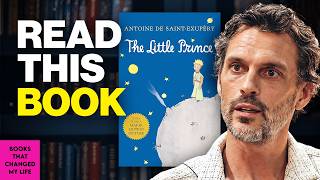
A recorded interview (Syndicate X Library: Books That Changed My Life) in which host Chris Collins talks with Jean Poirier about how Antoine de Saint-Exupéry’s The Little Prince influenced his worldview. Jean describes coming to the book early in life and rereading it across ages, using its lessons (value simple things, pay attention, nurture relationships) to counterbalance a high-performance, always-on lifestyle developed during his modeling and acting careers. The conversation covers Jean’s biography (grew up in Montreal; long modeling career in Europe; moved to New York for acting training; later relocated to Los Angeles), his habitual practices (meditation, journaling, routines, sports like hockey and boxing), his definition of happiness as an accumulation of small present-moments with trusted people, and how The Little Prince’s themes (the rose, the fox, seeing with the heart) have repeatedly reframed his perspective.
Chapters
How is that connected to happiness? What is the lesson there?
In all honesty, I'm still looking for what happiness truly means to me. And I catch myself.
Going like this and I bring myself back to be here. Look at everything. Look at the grass. How is it? What color is it? Do you hear any birds? What does it smell like? That brings me in a place of.
Calmness.
And I think these little moments, if I add them up.
Is happiness.
Welcome to the Syndicate X Library. We love books and this series is called Books that Changed My Life. Today we have an incredible guest, John Poirier. He grew up in Canada and moved to Europe to be a successful model. And then six years ago, he came here to LA to pursue an acting career. One of the fun things about the series is I get to hear about books that I did not know about or have not read, which is the case today. Incredible conversation. I learned a lot and so will you. Very fun. The book that changed his life was the Little Prince.
Thank you. Cheers.
With. With the fancy ice cube. How many books a year do you read?
I'm a little all in or all out in general in life. So I can get two, three books. Read two, three books in the span of a month for two months and then not read so much for a while. What I tried to do is there was an app that you can actually decide how long you want to read. Let's say you have 30 minutes every morning. Right. You do your cardio, make your coffee, whatever. You get a resume of that book in 30 minutes. Now, obviously you don't get all the details and everything, but then that really helped me choose and figure out books that I would like. Then I would get into the whole book and then I would buy the book and then read the whole book. So it's very. It's inconsistent.
So you'd almost use that as the trailer to see if you wanted to see the movie.
Yeah. It's really hard for me to stay concentrated. Right. If I watch a movie, if it's a visual thing, that's great. Visual media. But if I read a book, I can literally read a whole paragraph and be like, wait, what did I just read? You know, because my mind tends to wander. Yeah.
What do you do for a living?
Entertainment. So an actor. And I've been in the modeling business for almost two decades now.
Oh, wow.
Yeah. I've been with my thoughts a lot. I was traveling alone most of the time.
So where did you grow up?
So I grew up in Montreal, Canada. When I turned 18, I started traveling for work, for model. So I went to Europe. I lived there for about 10 years, which was great. Great career, met a lot of great people, culture, food, made some great friends. But something was missing. Didn't really feel fulfilled 100% as a person. Even though I was working a lot and I was making great money, I felt that my soul wasn't really part of the work itself, if it makes sense. I was tall, I was slim. I fit the clothes. To me, it was more like, of a physical thing than a me thing. So I always wanted to be an actor. So I moved to New York when I was, I don't know, maybe 25, 26, study, did a conservatory program. And then that kind of turned on the fire in me a little more.
How did you like New York?
For me, New York reminded me when I was a little boy and I was watching Batman and Teenage Mutant Ninja Turtles. So it was magic. Everything, the buildings, the sewers, the taxis, the hunking. Everything was.
The energy.
Energy was amazing. There was always that energy of also performing. You know, we got to work, and you got to be doing something. So I would go home and be like, you know, all right, well, I got to do something now. I got to work on my resume. Maybe I got to write something. I got to shoot something. That energy that I was picking up in the city was always coming back with me when I was. When I would go home. And at a point, I had to tell myself, when I get home, that's it. No more work. It was hard for me to sit down and watch a movie because I'm like, well, maybe I'm wasting my time here. Maybe I should. I don't know, you know, to do a director's workshop or always work on my craft, and it became an obsession. It was really, really hard for me to sit down and just, like, do nothing, enjoy it. So I moved out of New York about six years ago, and I moved to Los Angeles. I fly back to New York a couple times a year. Love it. It's great. I see my friends, I walk around. The city is beautiful. But it was good to me when I moved out for. For that energy. And again, maybe it's just me that was picking up the energy in a different way. I have a lot of friends that love New York, and they love that energy. You know, for me, I think when I moved out and California was a little more peaceful for me, and a backyard and the sun and the palm tree and.
Yeah, it's a different speed.
Yeah. Now the people. It's Also a different city. You know, it's, it's. If you don't have friends, it can be really hard in the beginning. You know, everybody wants to get to the top and live the dream and, you know, what can I get from you? It was really hard in the beginning. The first year and a half I was really thinking of moving back. It was really hard.
I grew up in Washington, so I lived in Seattle. And people would come down to la and I'd lived in LA for a while, went back and then came back. But I would always tell people, you got to get the joke. There's a superficial side of this where people are shaking your hand, looking for the more important person.
What do you do, you know, before your name and, and it was so nice meeting you. What was nice about it? I literally just told you my name. You know, now, you know, there's settings for that and sometimes it's just, you.
Know, it's, it's, you just have to accept it.
It's part of the thing, you know, My, my.
But it's nothing to hold on to. Like, it's not authentic, of course.
Exactly.
You'll get, you'll become very, very alone if you buy into that. You know, you keep trying to chase that, that rabbit or whatever it is. Yeah.
It reminds me of my amazing teacher I had when I did a two year conservatory back in New York. He would talk about this. Now, obviously in real life, in a real setting, you can't take everything, you know, personal or react to it or like make a big fuss out of it. But even when he would hold the door for us and would say thank you, he'd be like, because it's such a, it's so automatic sometimes, like, hey, what's up, Chris? Chris. Oh, you know, it was so nice meeting you. It's just like, just say, you know what, you know, good meeting you, you know, have a good day. Since I've been through that in the school and the. Because we worked a lot on that. Like what people really mean. Not really what they say, but what they really mean. And I pick up on that a lot and I'm very sensitive. So sometimes it's like kind of a trigger and I have to be like, all right, listen, that's, it's not what's happening right now. Just, you know.
Yeah, so the book, the Little Prince. How, how old are you when you come into contact with that?
You know, I thought about it. I really tried to remember where I was when it was, who gave it to me. I can't remember, unfortunately now. Maybe it's because it's always been there, but I guess I really don't remember. But I remember since I was little that was a book and a story that I always remember. It was fascinating.
So you must have been pretty young, the images.
Yeah. Yeah. I wish I would remember who gave it to me. I think it would make the story, you know, fuller. It's a book that I read every. Every year, once in a while, go to the beach, bring it.
And it is kind of a snack like that that you can read it.
Yeah, I actually read it yesterday. I want it to be fresh.
90 minutes.
Yeah. An hour, an hour and a half. Two cups of coffee or a big latte. Yeah, pretty much. Super easy, fun. Nothing complicated. There's moment that you stop and you're like, wow, so true. There's probably a lot of people that read a book and from that moment they remember where they were. I read it there and then my whole life changed. For me, that's not what. It's not what it is. What it is is every time I read it, I constantly understand things or realize things about my own life or what I'm going through, or the way I feel about things, or my emotions. So it's a constant growth for me. It always brings me something. So it wasn't a one timer. And then it was like, oh my God, this is amazing. It's magical. And then I just read it.
More profound could be because as a book that you've had a relationship with for your whole life, that's almost a deeper connection than the before and the after. It's evolved. Right.
I see it that way. Yeah. Makes a lot of sense because I read other books, there's other books that I love, you know, self growth books. And I'm reading Ikigai right now, which is a Japanese way, you know, to help you find happiness. And it's all great, but the Little Prince. When I was asked, when I was told about this show, the first thing that came to my mind was the Little Prince. My three friends, I told them about the show. I thought it was such an interesting concept. First thing they said was, I know what your book is.
Oh, really?
Yeah.
So have you given that book to a lot of people?
Yeah, Someone very special to me also.
Who.
When I studied in New York, there was a lot of students that came from different countries. You know, I'm Canadian, I'm now Canadian, American. But I lived in the United States, but I was from Canada. There's people from Puerto Rico. People from France, people from Germany. It was great. A lot of different cultures and diversity. And there was this guy who's a great friend right now. When I looked at him do his activity and everything, he barely spoke English. But there was something so beautiful about everything he was doing. Everything was magnificent for him. He paid attention to so many details. And then I started hanging out with him. You know, he barely spoke English. I had Latin friends. He was from Puerto Rico. I'm like, hey, I have Dominican friends if you want to come hang out. You get to meet people. And then we became.
Really good friends. It's been more than 10 years, and he actually reminds me of the Little Prince a little bit. There's a quality in him. You know.
We'Re adults, right? We have a lot of responsibilities. I'll speak for myself. I'm sure we all do. But I have a lot of responsibilities, and oftentimes I get overwhelmed by everything I need to do. This needs to happen, and this needs to happen. And I would be walking my dog with him in Central park, right? It's a beautiful park, beautiful day, New York City. And I'll be thinking about, oh, I gotta do this. I gotta take care of that. Yeah. And then suddenly he would be like, look. Look at the flower.
Yeah. I mean, big flower. No, no, look, look, look. The way the petals are because of this, and the way the thorns are. You know, this can happen, but this can't happen. But it only works one way. Or we would walk and we would look at the bird, look at the way it moves. It's amazing. And I'm here walking my dog, missing all this. No, I'm not saying you got to stop for everything, but that's what's happening right now. Like, stop. Stop worrying about all this. Relax, enjoy. And it happened in so many. So many different instances, these little things.
How do you think that that. Could we describe that as being in the moment?
I mean. Yeah.
How is that connected to happiness?
I think happiness might mean different things for different people. What I think happiness is. We're talking to you, right? I think, in all honesty, I'm still looking.
For what happiness truly mean to me. What, like, really makes me happy. I have to stop myself sometimes and really ask myself that question. Like, what really brings you to life? And when I stop myself, if I'm in Germany and I'm by a lake, and I catch myself.
Going like this, and I bring myself back to be here, look at everything. Look at the grass. How is it? What color is it? Is it like Light green, Dark green. Do you hear any birds? What does it smell like? That brings me in a place of.
Calmness.
And I think these little moments, if I add them up.
Is happiness. I don't think I could be in a state of happiness all the time. Maybe people. Some people can. I don't think so. I think it's the way we deal with things and what we do with it. You know, you can always look at the glass and see, is it half full or half empty? Sometimes I'm going to see it half empty. Sometimes I'm going to see it half full. But when I see it half empty, I'm trying to understand why am I seeing it that way? Why am I not seeing it half full? And then I try to switch it. I don't know if it makes sense to you, but for me, it's. It's. I'm always in seeking, like, what really makes me happy. It's a constant journey, I guess, because.
Kind of what you're describing is focus, right?
Yeah. Well, that's one thing.
If you're looking at the grass, you're changing your focus. So what is the. What is the book the Little Prince teach us about that and happiness? What is the lesson there? Because he's more similar to your friend, right?
There's a quality that the Little Prince has that I think we all have, but I really saw it in him, then realized that I also have the childish quality. For example, in the book, it's kind of a paradox between, like, the loneliness of growing up and adulthood. And the Little Prince travels to different planets. And, for example, on his planet, he has a rose, right? Beautiful rose. He loves his rose. So she's cold at night. He covers her with a glass. You know, a glass thing. And then there's a little bit too much wind, so he protects her. So he really, really feel that his rose is special. And then when he travels to other planet and he travels to Earth and he sees a lot of rose, a garden with thousand roses, he's like, oh, mine is not that special. You know, there's so many. And then throughout the story, he meets a fox. And then the fox, you know, tells him that what's really important is not what you see. You know, it's invisible, which might sound like a cliche line, but that's what it is. And he's like, what makes your rose unique is the time that you put into it the love, the passion, the care, the relationship. That's what makes that thing unique. Like, for me, it has a huge Meaning in everything. Friendships, relationships, myself. The time I take to take care of myself. It's worth something. And even yesterday, I was home. There's a million things I wanted to do, and I knew I was coming here.
Super excited, I'm home. Get up, make a great coffee. That's my little morning routine. That's me. Time, self, love takes five minutes. Make my cup of coffee, Go outside, beautiful sunny, walk the dog, go in the pool, lay down, put a podcast. Then I read my book. Then I started thinking, well, I got to do this. I got to go to the gym. I got it. Then I'm like, you know what? I'm shutting everything off. I'm in here. I'm in my backyard. It's a beautiful day.
Great meal. Made some barbecue on the grill. The dog is here, reading my book. That was enough. I didn't need to do more. For me, I need to.
Go back sometimes to simple things. Now, the relationship with the book is often in the book, it's mentioned to value simple things. If I would be in a country where it's minus 30 Celsius, like Canada in the winter, and it's.
Ice everywhere, and someone would say, you know what I did yesterday? Wow, 30 Celsius, outside by the pool, reading a book, made some good food, lay down, I would be like, man, you're lucky. Wow, must have been amazing. But sometimes when I'm in it, I'm not realizing what's happening.
And other things. But in part, the book and the way I understand it allows me to do that, be like, hey, relax, man. Amazing. And for example, my friend has this quality, wow, look at the ocean, look at the wind. I'm like, yeah, I mean, it's wind. Oh, it's fresh. It's good. We're here. It's only noon. It's amazing. We have the whole day. And it really touches me because I'm like, man, that's that. That was a moment of happiness that you just had. Simple things was free. It's just like, you know, looking around and taking it in and this is what. Yeah, I have so many things to say.
That's great. So you're constantly reminding yourself of that.
I have to.
Have you done any form of meditation?
I'm sometimes all in or all out. I have.
Not an addictive personality, but I have a. How would you describe, like, an all in, all out personality. Either I'm in it or I'm not in it. I have moments. I meditated. I got this nice bench for meditation. I would meditate and you know what.
It really makes a difference.
And sometimes I'm not going to do it for two months.
What kind of meditation?
Little thought. Oh, I have a thought.
If I could do guided meditation, then I hear someone, then I might think, oh, this voice reminds me of this person's voice. Oh, then it's just, you know, the less the better. My thoughts are enough. There's already enough. I don't need anybody else's input. So I just sit down, breathe. And all I do is concentrate on my breathing. Breathe in, breathe out. How it feels? Is it cold? Just. And every time I have a thought.
I let it go. Oh, I acknowledge it. Oh, okay. Thinking about this. Good. I'll take care of it later. And I would do 5, 10, 30 minutes, an hour sometimes.
But then when everything starts to be smoother, oh, it's good. All right, I'll do it tomorrow. I feel good. You know, which consistency is important. I'm very consistent with other things. This is something that should be a non negotiable because it really helps my mind to slow down. So that should be a priority. I'm going to be consistent on other things that are not priority. So yeah, like things like this, Talking about things like this make me make, makes me realize. So then I can go back home and say, you know what, you just realize that, why don't you make this a priority? You know, it helps. I mean, it does help calms you down. It just makes me start my day in like a.
A peaceful, peaceful energy. Like after a workout, I'm just like, you know, floating. So I think it should be a priority.
I think and even kind of in the book, don't you think things come in seasons?
What do you mean by that?
Certain things in life come in seasons. Like it could be you're all in or you're all out, but it also could be a season. And you learn different things in those seasons, right?
Yes, absolutely. I also know that a big part of my personality is not just seasons. If I'm started loving tennis, I mean, I'm gonna play tennis four hours a day for six months. I'm play tennis, play tennis, play tennis. And then, oh wait, boxing. This is good. This is fun. That really works. Then I'm gonna be all in boxing or cycling and then I'll do those fundraisers for kids and stuff. And I'm like hyped up. I'm trying to find something that stops my mind or slows it down. There's two things.
That really helps, right? I used to play hockey. I'M French Canadian, so I grew up playing hockey. Like for Christmas you wouldn't get toys or a Nintendo. You would get like a hockey and a puck. And that was me. Skates. Skates. Yeah, exactly. Playing hockey. When I lived in New York, we used to play two or three times a week. Then I had French Canadian friends that also lived in New York doing the same thing as me. That was the one thing. Whatever happens, bad luck, bad news. Agent calls, you didn't get the role, IRS is calling you. I mean, literally whatever would happened that hour that I'm on the ice, my mind is off, was so good. So I think I tried a lot of different things unconsciously. I'm actually realizing it now. Thank you for your question. And I think boxing right now is. I mean, I don't have time to think about that.
You know, there's many more things I need to. To worry about, you know.
So growing up, you did you have both parents?
No, so my parents divorced when I was three. So I grew up with my dad, my dad and my grandma.
Cuz my dad working and gone all the time.
Yeah, Often times two or three months.
Have you ever made the connection between this and that?
What do you mean?
Yeah, please.
High performance trauma that you have the need for constant movement because you didn't get attention.
A lot of us that are high performers, okay. Come from an atmosphere of not getting attention. So we get attention through success, through activity, through in. Some people cover that up with drugs and addiction and sex and things like that. But a lot of us do it through just wanting to be successful. We just got to work, we got to do, we got to be going. And it's that need for attention.
Because the way you're describing it, that's a pretty straight line. Wow. And then I was going to say transcendental meditation in seasons. Like there was a time where I did transcendental meditation all the time. And it's always there if you need it. But I think more valuable is what you learn about your subconscious and about how you function in your relationship between your conscious and your unconscious mind. That you can go back there if you, if you do it for a while. Like I did it for a year straight, two times a day. You can always grab that. It's always there. Now I don't do it as much as I used to, but there's a muscle memory there that forever.
Then you know how to use it.
Yeah, but that form of meditation helped me, you know, And I would be somebody I would describe as having ADD or You know, it's hard for me to sit still. It's hard for me to pay attention to something. And there's this. This battle with focus, what you're focusing and what you're putting energy on. And the all in thing also is a straight line back to.
It's like the dopamine I need.
Yeah.
You know, and please, how. How you call it the hyper. How you call that? Performance high performance trauma. Trauma. Wow.
I'm going to look into that. That's interesting.
Which is exactly the opposite of the Prince.
Yeah. I mean, that might be a reason why I like it, because it pulls me back, you know, as if balloon with starts, you know, flying away and just. Hey, man, just, you know, thanks for.
Does that make sense, sharing that? It could. Yeah.
I mean, most of the time we have a need to appear successful. We have a need to be the one that's in charge. We probably have control issues where we feel more comfortable if we have some control in a situation.
Yeah, I mean, for sure, for sure. There's. There's situations that I. I like to be in control of. I wouldn't say to. To an extent that it. It. You know, it's. It's. Oh, my God. Just. What are you doing?
Well, I don't mean control of others. I mean situations.
Well, yeah, for sure. Sometimes I would be understanding. All right. I don't. Can't control that. You know, it is what it is. Sometimes it gets to me a little more, especially in the. In the field that I am as an actor. You're being told no. Constantly.
Constantly. You know, and also you bring some of your own.
What's inside of you, like personal things. Sometimes there's auditions that are easier and lighter than others. You still have to find the truth. But when you really dig deep down and you're like, this is what it is, and then, you know, you pour it out there and it's like, thank you. No, now I understand the business of it. It's not. I'm not saying there's anything wrong with being told no, but it's a constant rejection.
Well, it's an art.
Yeah. And as an artist, when you put your soul into something, or you put your. Your own, you know, what, have your own past or your experience or your own feelings and emotions into something, and you're being told no and no and no and no, sometimes you got, you know, you got to deal with that.
Oftentimes you're being told no or you're being rejected for something that is a look or an accent. Or a dialect or, you know, you take that personal. To them, you're just a guy filling a role. And to you it's like, oh, I don't get to perform my art. I don't get to do the thing that I love to do because they don't perceive me as.
Well, now I know that there's. Because when you get out of acting school, I mean, for me, I didn't know the business of it. You know, it's just the auditioning and. And the. The business, the, you know, the producers, the casting directors, what they're looking for. If there's five. Five actors, you know, and there's one that's six, five, and everybody else is five foot, it might not work. I mean, there's so many things, so many variables. I know that now. So I take it way less personal. I mean, it is what it is, you know, But I still have to learn how to deal with that.
The thing you said is really interesting. I'm really going to spend some time reading it into that. Because that constant search for dopamine.
Well, yeah, and also, you didn't have a mom. You're looking for mom's attention, too.
Yeah, so, yeah, that's a. My parent got remarried. No, but that's a big thing, for sure. My dad got remarried, remarried when he. When I was 10. And this woman really took care of me. So that's the one I called Mom. Raised me, loved me unconditionally, taught me respect, how to love people, how to love myself, how to do things, how to be a gentleman. So many things. She passed years ago, but that really had a huge effect on me, you know. And I also grew up with my grandma. She was amazing. But there's five, six young teenagers.
She had a foster family. My dad wasn't there. And then when he got married, then it felt like I had a family. I could come home and have a dad and a mom and eat at a dinner table and. And she had a big effect on me.
The end of the book, with the snake.
What. How do you. How do you describe that?
I think he realized that after all his travels and different planets and thinking that maybe this person has his. Has it better or this is better, this planet is better. He realized that everything he had was enough and.
Good. His little volcano that he cleans every morning, you know, so they don't erupt, because he has a small planet, you know, he always thought they're so small, you know, and then he sees big mountains. Oh, my God, this is so, so much Better. But then he realized that what he had, the simple things were the. I don't know how to say that the roots of everything. It started from there. And then I think he was in peace. And he's like going back when I see my robes.
Yeah, because there's something beautiful about having a rose you care about than having a bunch that you don't care about.
Of course, the value in the friendship or in a relationship, or.
It'S the, the investment you make with that person. If I have a relationship with you and we spend time together and I spend time to know you and understand things you love and understand things you don't, and why you love them and why you don't love them and what makes you happy, what makes you sad, you know, that creates a bond. That's, that's what has value. It's not the fact that I know 100 people, they don't bring me anything, you know, And I'm very fortunate. I have such a good circle of friends.
Isn't there a line in there about you can't buy friends in a store? Something like that?
Yes, because there's this, the math guy who has a planet, all he cares about is numbers. And that's what the little prince says. He's like, grownups only care about numbers. Because if I tell them I bought a nice house, it has red bricks, has two big trees, it has beautiful flowers and grass, they won't care. But if I tell them I bought a three bedroom with a two door garage, a pool, outdoor, you know, indoor pool, and now they're going to care, you know, and if I tell them how much I paid, what do you got? Bought a nice house. Yeah. You feel at home. You're going to love it. When you walk in the house, how do you feel? Yeah, how do you feel when. What happened when you walked in the house? Well, we were visiting and I walked and I just like, ah, I saw myself here. I saw myself having a family man, you love the house. Good. We'll make a nice dinner, we're going to go enjoy it, you know, instead of only two door garage. What are you going to do with Buddy? That's not what's happening. And that's what he says, like all these grownups buy everything, you know, but obviously you can't buy friends. The king thinks he rules, but there's nobody on this planet. You're alone, brother. Nothing's happening. You're not ruling on anything, you know, the vain guy or the geographer who thinks he knows everything, but he's never been anywhere because that's not his job. It's other people's job to do. The explorators, they go, they see all these beautiful things. Then they tell me that I draw them down. But then you're missing on all that. He thinks he understood. You know, I'm the geographer. I'm the one who does this. Buddy, you're missing out on so much.
You know, you're not experiencing it.
Exactly. And he asks him a question. He's like, well, I don't know. That's what I was told. But I think it's like this. And then he talks about flowers. He's like, oh, so do you have like a list or, you know, do you document flowers? He's like, no, because they are. What's the word in English.
When something is not forever lasting? There's a word for that, you know, it's. It's eternal. The opposite of eternal. Perishable. Perishable. Let's say perishable. His eye, milk. As far as a perishable, I said, what are you talking about? Flowers are beautiful. There's flowers everywhere. So it's really.
For me, a constant reminder when I read it throughout the years that it's like. And I understand it differently because When I was 20, 25, 30, 35, I was in a different place in my life. There's some things maybe I wasn't seeing.
Was there something new you saw yesterday when you read it?
I picked up on one thing, and it might not even be a big thing, but in the beginning of the book.
The aviator who gets stranded in the desert that meets the Little Prince. When that aviator was a little boy, he did a drawing of a boa constrictor that ate an elephant, right? So the shape of it is kind of a fedora hat. And then he was showing grown ups. Oh, look at my drawing. They're like, it's just a hat. He's like, I don't have time for this. Or it's just a hat. And he's like, people don't really see it's not a hat. It's a boa that ate an elephant. When that aviator is stranded, sees the Little Prince, the Little Prince wants him to draw him a sheep. So before he draws him a sheep, he shows him that drawing that all the grownups thought it was a hat. And he showed it to the Little Prince. He's like, look. He's like, oh, a boa is dangerous. He ate the elephant. You know, you should be careful.
That part that he was the one that drew it. And then the Little Prince saw what it really was. I don't think I ever picked that up before, and I was just like, wow. Again. It might not be.
Meaningful in itself, but I just picked up on that. And it was just like, wow. Like he's really seeing what the thing is. Yeah.
But it's foreshadowing the fact that the Little Prince notices the. The moment. The things in the moment. The flowers, the details.
Yeah. And he draws him a sheep. He's. Oh, it's too old. Whatever, whatever. And then, you know, the aviators get. Gets tired of it. So he draws a box with three holes, and he's like, here you go. Your sheep is in it. You know, he's like, nice. That's what I wanted. There's a quality in this that it's. It's just. It's beautiful, man. It's. I don't know. I just.
Like these little things when I. For example, when I read it, these little moments make me happy.
I feel something. I smile, I laugh, and I don't think about anything else. And it's great.
It's beautiful.
It is. A lot of people think it's a kid's book. It's not a kid's book.
It's a human book.
It's a human book. Exactly.
How many people have you given it to? Have you bought them and given them?
Yeah, probably.
Yeah. Five or six people.
Anybody come back and talk to you about it?
Well, my friend that I told you his name is Gilberto from Puerto Rico. That has this childish quality. And that kind of reminds me a little bit of that. I got it in Spanish for his birthday because I wanted to make sure he could understand because he speaks really well English now, and you can read in English, but even mine, I have it in English, but I have it in French, and I like to read it in French because that's. He was a French author. So the way he wrote it, I wanted to have the exact words he used. And we talked about it. I don't remember the conversation we had about it. I wish I would.
Did you tell him that you thought he was the prince?
No, no, I don't think he is the prince. I think.
Well, he has the characteristics.
I think he has some qualities. Yeah. That sometimes it's like a child. We can walk around anywhere, and it's like, oh, look at the butterfly. And I'm here thinking about all my stuff I need to do today. Buddy, you're in a butterfly garden. Got the Butterflies, you know, it's not always like that. I'm not always, you know, super hectic. But there's moments that when I am more like that, I like to bring myself back.
How would you describe a happiness?
I think all these little moments spending some quality time with it, with my girlfriend, with a friend. Laughs for my 40th birthday, we went to Puerto Rico and my friends came. It was amazing. When I was asked, what do you want? I said, I just want to be with my people. We laughed, we sang songs. You remember that song? I remember this. This reminds me of you, who made good food. We talked, we hugged each other. Like these moments for me are just. It's priceless.
They're very valuable.
And I thrive to have more of them. Hey, man, let's go grab a coffee together. Let's walk. You know, how are you? How you really feeling? Like, these things with someone you can trust and they can trust you, and they listen with intent. These moments are just. Yeah, we dance. You remember that? And then everybody was asking each other, how did you guys meet already? And then you go back to that. I don't worry about anything. Everything that's here just uses all my senses. I'm happy, I'm hearing their voice or, you know. Yeah, it's a combination of things. But I think these little moments where.
I'm with people I really care about.
When I add them up, I think it's accumulation. I don't think happiness is something that's a constant.
State. And maybe I'm wrong. Maybe it is for some people. I don't think, for me, that's what happiness is. I would be curious to ask, what's your take on that happiness.
If you don't mind?
I think happiness is a decision.
And I think that the counterbalances expectations.
So to me, what you were just describing is beautiful. But that's joy.
I'm talking about when you're alone. So if you think about everything that makes you unhappy is a missed expectation.
So you expected somebody to do something. You expected to get the part. You expected it to be easy, you expedited. It's an expectation.
It'S a choice.
It's kind of like love. Like a lot of people think love is this cupid that like hits you with an arrow and you have no control of it. It's external. But you. You have a say if you want to. Like, you know, the people that really have healthy relationships are very careful in who they decide to love. Things have to add up their boundaries. They, you know, and. And Then you. If you have boundaries, you're allowed to love in a deeper way. Because it's not a ransom note. Right. Like, I'm sure. Have you ever dated.
Somebody who said, oh, my problem is I care too much. I just love and I get taken advantage of. And then they very quickly are like, why didn't you call me back? Why weren't you here? And you realize very quickly that it's a ransom note. It's them saying, well, I love you. If you do this, this, and this and this. That's.
I don't know that that's those conditions.
Yeah. There's this book I. I was reading the other day by this doctor, and he. He wrote one of. One of my favorite books of all time, which is the Six Pillars of Self Esteem. But he has a. Another book, and it's called.
The title Something Responsibility.
Okay.
And I just started it, so I don't know if it's good or not. But in the very beginning, he's talking about his wife, and he says she's one of the happiest people he knows. And he said things go wrong in her life, but she's never, you know, she's never holding on to it more than an evening. Like, the next day, she's back to being this positive energy, this, you know, kind of force of. Of positivity. And I don't know, I guess I would describe it as like a light, a shining light. And he said, and the thing is, like, she works at. She wasn't born that way. It's not. It's not a. It's not an accident. It's something that. Before she goes to sleep every night, she goes through everything she's happy about. She constantly is reminding herself of the context she wants to have. And then I'm sure, like, with. With anything, right. Is like, over time, if you start to do something and make something a priority and you focus on it, it becomes more of your context.
Absolutely.
Becomes more the way that you see things.
Absolutely.
And that's how he's describing his wife as being one of the happiest people he's ever met. And she works.
She makes a decision.
She wasn't born that way or, I mean, maybe a little more than you and I would be. Maybe. Maybe she had a different childhood or whatever it is. But I think it's a decision. And when you're alone with yourself, which I'm just talking about my personal experience, I measure happiness about what is going on when there's nobody else around, because it's Easy for me to do activities or hang out with people that would make me happy. It's easy for me to buy things that would make me happy. It's. You know, I can. Yeah, I can manufacture scenarios, but when you don't have all that and it's just you alone in a room.
It'S a choice. Like, it's. It's a decision. That's what I've learned about myself. I don't. You know, I'm by no means an.
Expert, but what I think is. I think it really makes sense.
When I'm not happy, I analyze my expectations. Well, I expected this person, you know, in business, and just like, with. With what you're doing and all the things you have going on, you're leaving a lot of things to other people to do something, and when they don't do it, it can cause a lot of unhappiness. You know.
That'S usually the cause for me is people not doing what they're supposed to or they said they would, or. And I am assuming that they will. And so the thing that I have to be better at is I have to communicate. I have to have clearer expectations. I have to spend more time with them on those.
And.
You know, I can't leave it to chance. You can't, you know, roll the dice on whether somebody's gonna do the thing that you're. You think you bought or you think they're gonna do or whatever.
I think you're right. I think about the choice, making a choice. The conscious decision, hey, you know what?
Today is going to be a great day, you know, And I. I think that, for me.
Really.
Make a difference is I journal a lot. So I get up in the morning and, like, okay, it's beautiful outside. I'm having coffee, and coffee smells good. I feel good this morning. I'm happy because of this, and I'm grateful for that. And, you know, I have this great memory from yesterday this happened. And I. I do it not to hype up my day, like, write it down, it's gonna make you feel better, but to really, like, realize there's so many great things actually that I'm going through. You know, I'm fortunate, I'm healthy, and that really makes a difference. And I know that if I don't journal for a couple days, I tend to, yeah, wonder a little bit. But I think the conscious decision of, you know, all right, shit happened, all good.
Yeah, it's good for me. You know, the hardest.
Hardest expectation for me to come to terms with was the expectation in the relationship I had with myself when I talk about, like, I didn't have a father. So I'm always kind of trying to prove something. I think the thing that I figured out was that I had to have more of.
And I'm using these words and maybe they won't make sense, but it makes sense to me as a kind sense of humor to my own flaws. Like, I had to accept the fact that I have some things I need to work on and that I consistently will do things that I'm disappointed in myself.
And.
Understand that I could change those things if I worked really hard at them. But I haven't made them a priority yet, and I can make them a priority and it would take a lot of work. But just acknowledging the fact that there is that relationship and that the expectations of myself are really where the problem starts because it's that expectation of being successful, of your appearance, of people's opinion of you. You know, we all have a need to be, you know, validated in one way or another, being a part of something. So I think just for me personally, that was probably the hardest part is having a little bit of a sense of humor about to choose to have.
That relationship with your flaws, you know?
Yeah, like, I'm too, I'm trying too hard sometimes because I want something so bad or, you know, I'm the same way. Like, I don't have a hobby. You know, if I decide tomorrow I want to play chess, that will be the only thing I'm doing in my spare time for a while. Like, because I have to be good at it. My mom said something to me when I was a kid once. She said, you know, you don't, you don't play with other kids in different scenarios.
When you're not familiar with the context of the game or the experience. Like, I'm not gonna go play a game.
Never played hockey with.
Yeah. And that's more because I don't want to be a failure instead of saying, hey, you've never played hockey, kid. Like, you're gonna look like a buffoon, you're gonna fall down, but try to learn something. That's a hard, that's a really hard thing to, to get past. And unfortunately I think I got in tune with that as an adult, but I wish I would have as a kid, but I didn't have the self esteem or the, you know, the understanding.
Yeah, the knowledge. That's exactly what, is what I was about to say a little bit like you, you know, obviously I. I like to Be good at what I do. And now, you know, if I were to. When I started boxing, I knew. I mean, I don't know what I'm doing. I think I know what I'm doing. But you realize you really don't know what you're doing because it's an art. But I'm okay with not knowing now. I still want to be good. I still want to, you know, I'm gonna do a little more. I'm gonna go home, I'm doing, Go watch videos because I still want to be good. But I'm okay with, you know, I might look like a fool for a while. That's fine. I don't mind it. I mean, I don't know. So I'm. I think it helps me learn. It helps it change my relationship with, with the art of boxing or the activity that I'm doing. But I'm okay with it now. I don't know if I would have been 25, if I would have, you know, trained somewhere else where nobody see me until I get a little better. And I don't think I would have gone to that extent. But I definitely sometimes want to be good at something before I put it out there, you know, so I, I can relate to that. And I can also relate to being a little older now and have the. I don't know if it's the wisdom, but to realize that, you know, you're like, listen, man, you got to start somewhere, you know, And I would go box with a really good friend of mine who used to be a high, high level athlete. And I'm happy, you know, it's been a year of in boxing. I'm gonna go see him in New York. He's all right, let's go train. I'm like, all right, man. You know, I'm gonna show him a couple moves. It's going to be nice, man.
Like, it's just. He's been doing this his whole life and I don't want to prove him anything, but I want to show you, like, you know, I got a little better. I mean, at the end of the day, it's a whole different, whole different level, but I still want to perform. Now I'm okay knowing that, you know, I don't go home and be like, man, you know, maybe like a few seconds of like, shit, I would have liked to, you know, do a little slick move here and there, you know, just like, oh, you know, you learned something.
So if you, if you were to sum up your. The lesson to take away from the Little Prince.
How would you sum it up?
Just to value the simple things. I think for. For me. I'm gonna speak for me. Value the simple things. Slow down and.
Spend some time.
Looking at the relationships I have and what makes them special. That's my duty until I reread it again.
It's beautiful. Well, thank you for doing this.
Thanks for having me.
It was very fun.
Thank you.
I mean, I think people are going to take a lot from this. It was great.
I would love more people to read it, and I would be interested in.
Hearing how they. What they got from it, you know, how it resonates with them. And I gotta. I got a little something for you too, if you don't mind. I watched your first episode with Malik. I think it's very interesting what you're doing. You said, and you seem very curious about people, why and how they feel about things and why they feel about things and where it comes from. A friend of mine has a. It's kind of a card game. It's called no Room for Small Talk. There's different categories. And let's say you have friends over or just anybody.
So many great questions. There's different categories. Love, friendship. It seems to me that this is something that you would like.
It's like a conversation starter.
Yeah, it's great, man. Honestly, it's great. You can bring this everywhere.
Thank you so much.
You're very welcome.
What is your favorite category?
I don't know, man. There's love, I think passion.
Should I open it for you? I got. I got long nails. I want you to just have. Get a quick.
Let's do one real quick at it. Did your friend come up with it?
Yeah. During COVID.
So normally you roll the dice, but you don't have to roll the dice.
Oh.
That'S it.
So.
Different categories, different colors. You can choose.
So categories, understand.
Emotions.
What are you still learning about yourself? That's a great question, by the way.
Oh, I'm still learning about myself.
So many things I. I want to say.
What was the first one that came to your mind?
But I kind of wanted it. I wanted to find something positive. But I think I was about to say a thing that I still learning about myself is happiness. But there's something you said about making a choice that, like, kind of resonated with me. I'm like, you know what? That's just what it is. Make the decision.
It's a great answer.
Beautiful.
Thank you so much.
Thank you.
That was awesome.
Thank you, man.
It's great what you're doing.







