Books That Changed My Life: Johnny D'Esposito & The Alchemist
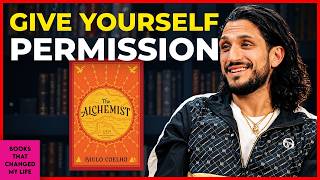
Actor Johnny D'Esposito credits The Alchemist with pushing him to leave New Jersey for Los Angeles at 25. His mentor Roger recommended it, and a passage about meeting Fatima stuck with him most. He's spent nearly a decade in LA pursuing acting.
Questions this video answers
About 25.
About 9.5 years (February will mark 10 years, arrived on Valentine's Day).
Valentine's Day (arrived on Valentine's Day).
About two days.
At a bookstore (Borders Books and Music), on the recommended-books table up front; he bought it the same day he was recommended it.
Chapters
Okay, so the book that changed your life, the Alchemist.
Yes.
How old are you when you read that for the first time?
For the first time, I was like 25.
How is this the book that affected you so dramatically? Like walk me through what happens.
It quite literally served as like the roadmap for what I needed to do. It's funny how once you start to work hard, you start to get lucky. You could want it more than anybody ever wanted it ever. It's not gonna do shit. You just need to take that first step and then once you start to take that first step, then you take the second step and then you start to realize like, I'm here, I'm here now. I am doing it.
Welcome to the Syndicatex Library, where we love books, but what we really love is talking to interesting, smart people about books that have changed their life. Today we have a special guest, Johnny Desposito, who is currently an actor creator here in Los Angeles, but he' from New Jersey and he is the descendant of Japanese and Italian immigrants, graduated college there and moved out here to pursue his dreams. It is a fascinating conversation. He's very smart, very insightful. And the book that we're going to talk about today is one of my favorite books of all time. And that is the Alchemist.
Thank you. Thank you. Cheers. Cheers. Cheers.
Thank you.
Cheers. Cheers.
This is Hennessy White.
Hennessy White or Hennessy Pure White? You choose.
What's your thoughts?
So I'm a tequila guy, but this is pretty smooth. It's sweet.
What do you think compared to regular Hennessy or. You don't really drink regular Hennessy.
I don't even remember last one. I would have tried Hennessy, but I know people love it.
I love it, I love it. Like I was saying earlier, my, my friends who I grew up with, I'm from Jersey, there's a lot of Dominican people in New Jersey and they're the ones who put me on. Every time they would go visit the Dominican Republic, go see their family, they'd bring me back the Hennessy White. Didn't know what it was, never heard of it before, but clearly grew to love it.
Yeah, it's a good, that's a good find. How long have you lived here in la?
Nine, nine and a half years. February will be ten years right on Valentine's Day, so. Wow.
Yeah, that's a native here almost.
They said 10 years. So once I hit the 10 year mark, it's my LA anniversary is a bittersweet day. I, I got here on Valentine's Day, so it's a day of love. It's a nice day. But unfortunately, my grandfather passed away, like, right when I crossed into California. So it's a. It's a nice thing that I got here following my dreams, but at the same time, it's always a reminder of loss at the same time.
Was he back in Jersey?
Yeah, he was back in Jersey. He was back in Jersey.
So did you have to turn around and go right back?
Funny you asked that, though. So my mom, My friend was supposed to drive out with me, but he built, so my mom's like, do you care if I come? I was like, no. Yeah, come with me. So we had a cool road trip on the way out, but things started to take a turn for the worse with her father. So as soon as we got here, she flew out that same day, that same night. So, yeah, we did a lot in that couple hours we had together. And then. Then she had to fly back, and then I flew back a couple days after for the funerals and all that. Yeah.
What do you think of the library?
I love it. I love it. I. I would move in if I could. Like, you'd have to kick me out. It's. It's.
It has a good energy, too. I feel smarter just being in here. That's.
That's the intention. That's great. That works. So you're. You're. Before we get to your favorite book, when. When did you start reading books? Like, how old were you?
Early. I started. I was an early reader. I started. I learned how to read. I was, like, barely four. Probably like. Yeah, yeah, yeah. So I like to read a lot. I always like to read my own stuff and not what, like I was supposed to read in school. So, ironically, I never really read a full book in school. Summer reading. Any book that we were supposed to read, I never. I never read one. I read Catcher in the Rye. Actually, it's a lie. I read one book, Catcher in the Rye, but I would always read my own books. I was just always interested in my own things. I didn't like being told what to learn, stuff like that, so I didn't get to read as much as I wanted to, but lately I've been reading a lot more.
So very young, you had issues with authority.
Yeah. Yeah, clearly I'm learning that now.
What were some. What were some of the early books that were what you would consider your type of book that you read?
You know, I like to read a lot of biographies. I was just interested in people that I looked up to. So I would read a lot of biographies on basketball players, baseball players, wrestlers. I was big into like WWF and stuff when I was a little kid.
Oh, that's fun. Who is your favorite wrestler?
All time? I think it was. Was the Rock. The Rock was my guy. You know what, it's funny because I don't really like him anymore. Now you can keep that into. You don't have to edit that out. He was always a very entertaining wrestler. I don't think he's a great sack.
He definitely is. He's evolved. He's evolved over time. I'll tell you, his tequila isn't very good.
No, it's. You're being kind. It's horrible.
The money grab.
Yeah, it's not good at all.
So you, you were read, Peter. You, you, you created a relationship with the books pretty early. Like.
Yeah.
A fondness for them.
Yeah, I would say. Yeah. I just always like. I think it's the same reason I love. I love films, I love movies and television. I just like. I like a good story. I like getting lost in a good story. It's entertaining. But you, you learn a lot also, so I feel like it's like, what's not to like about it?
Okay, so the book that changed your life, the Alchemist.
Yes.
How old are you when you read that for the first time?
For the first time, I was like 25.
And who turns you on to it? Or do you find it in a bookstore? What happens?
I'd always heard about it. It was a popular book, always. And I had picked it up a million times and put it down. Never bought it. So this, this gentleman named Roger. I worked part time at a liquor store on the weekends too. My friend's uncle owned it, so I would always help him out. There's an older gentleman, gentleman Roger, and kind of served as like a. Like an uncle to me, you know what I mean? Just through, through our conversations, he. He kind of got to know me a bit. He had known my struggle, my obstacles and reservations about coming. Coming out to California, to Los Angeles, to. To chase my dreams. And he was like, you know what? You really need to read this book.
How long had you been in California.
When he proposed that I hadn't even come out yet.
Oh, so this is still in.
This is still in New Jersey.
You're in New Jersey.
Okay.
And so you're thinking about going to California and you're thinking to go on a journey and.
Yeah, it's quite ironic. How fitting it is at that time. And the fact that I decided to finally listen to someone, I'm like, you know what? I'm gonna read this book.
What is it about New Jersey that made you want to leave and come here?
I don't know if it was necessarily wanting to leave, get away from New Jersey. I just always aspired to be an actor. Obviously, I'm so close to New York City. Not obviously, but I grew up in a part of New Jersey that's like 20 minutes from Manhattan. But everyone I spoke to in the industry that I knew anyways had told me that if I wanted to make it in film and television, all the opportunity is in Los Angeles. You need to move to Los Angeles. So that's what I did.
And so up until that point. Are you like in the. Were you in plays in high school? Were you taking drama class?
No, I was.
I was nothing. It was a whole new idea.
Yeah. It was just always something I wanted to do, but I just grew up playing sports. I was like, just always a 3 sport athlete my whole life. And so I didn't really have time to do plays or. I never really had interest in doing plays. I was probably a little bit judgmental of like the theater kids. A little bit, yeah.
Because you were the jock.
Yeah, yeah.
So then how do you decide without ever doing it that you wanted to do it?
You know what? I think it was always in me and then seeing someone that I knew move out here and start to be an independent film.
So you had social proof. You had a friend that did it or a family member.
Yeah. Or had at least someone that had tried. It was a friend from high school. He had moved out right from high school. And that's what I wanted to do. I was talked out of it. I Guess Once you're 18, you can do whatever you want. But my family just convinced me to stay home.
Was it mom, dad who?
More dad. Both of them, really.
What did dad do for a living?
He was in sales for like a produce company. So very, very stable.
What did he want you to do?
Stable, secure corporate ladder. Yeah, yeah, exactly.
What three sports did you play?
Baseball, football, wrestling.
So the big ones. The American.
Yeah, yeah.
The. The.
The all American. Yeah, But I loved it. I loved being an athlete.
You know, it's. It's part of performing as well. I think I like to perform too, you know, for. I think I'm naturally kind of shy.
Sports is performing, right?
Yeah, yeah. I think I'm naturally a shy person, but when I want the spotlight, I want the spotlight. I think I learned that from playing sports.
Yeah. That makes sense. The. I never made that connection. But sports are performing just like acting.
Yeah. It's a different type of art, but it's still. It's a skill and a practice and an art.
So he tells you about the alchemist after hearing your story that you're thinking about moving to California to be an actor.
Yeah. Yeah.
And he says you should, you should check out this book.
He said you should really read this book.
Yeah. Now, I've recommended this book to a lot of people, and I would say.
What do you normally guess?
This is a guess. But I would say 80% of the time that people read, they don't quite get to the halfway point and they quit.
Everyone I spoke to this week about this book, I was talking about coming here and doing this about the alchemist, and I've talked to three or four different people. They said, you know what? Everyone's always recommended this book to me. I've picked it up. I've read 40, 50, 60, 80 pages, and I put it down. I don't know why I haven't finished it. That's so funny you say that.
So for me, I do remember the first time I read it that it starts off slow, but when it picks up, it picks up like you, you forget about the setup in the beginning. But there's a lot of setup and then it goes. And once it goes, you can't put it down.
It is slow in the beginning. But there's so many, like, I think the beginning is one of my favorite parts. There's so many just, like little one off gems that are like, you can just reread the beginning over and over and still learn so much.
And also it's a two cup of coffee book. Like, I, I read this book a couple years ago on a flight to Oakland to go to the Bay Area.
Yeah.
And back.
Yep.
Like, it's, it's not a. It's not a big meal and it's.
Not, it's not, it's not a difficult read. I wouldn't say it's an easy. Actually, you know what I would say kind of. It is kind of an easy read, but you can reread pages over and over and pick up new things each time.
Yeah.
So that's why I really love it.
There's a lot of depth if you're open to it or in the right place. Right.
And every interaction he has, I feel like there is. There's a gem, there's a lesson to be learned.
Okay. So he, he suggests it. Do you go to the bookstore? What. How do you acquire the book?
Yeah, yeah, I go to the bookstore, and I think Borders Books and Music was still a thing at that time. And I went there, and ironically, it was on, like, their. Their table of recommended books that's sitting right up front. So I'm like, oh, perfect. And pick it up. It wasn't this copy I gave. I gave that copy away. Ironically. I like that one better. Had a cool illustration on the front.
Okay, so you. How long after he recommended it did you go buy it?
I think I bought it that day.
And then when you read it.
And then I think I read it. I bought it that day, but I didn't read it right away. I was still like. I think I knew I had to read it this time, and I was a little bit afraid of what. What was going to be, because now it's connected to this decision. Yeah, I. I think subconsciously I knew that because he. He was a very wise man.
And you felt like maybe if you read the book, it would influence you and you. You didn't want to be influenced.
Yeah.
I think you wanted to make the decision in a more organic.
I don't think that. I think I was just.
Maybe just nervous. I was like, all right, if I read this and it's so clear to me that I have to leave now, then I actually have to do it. It's like, my thought isn't just. I can't be like, well, everyone's talking me out of it anymore. You know what I mean? I have to take accountability for either staying or going after that.
So then how long does that play out, that purgatory?
Probably, like two, three weeks.
Okay. And then what makes you decide to read it?
I'm like, what are you being such a for?
What are you scared of? You just have this internal conversation.
Yeah, yeah. Like 24, seven for. For every day up until I.
So two or three weeks, you start to read it. How long until you finish it?
I think I read it in, like, two days. I think I Just briefly.
Yeah, that was the same for me once I started it. I was. I was. It was quick.
It sucked me in. I feel like it's easy to put yourself in the setting of this book. I go there very easily. I pick it up and I'm a page in and I'm already there, if that makes sense.
So you read the book. What changes in your mind? Like, how does. How is this the book that affected you so dramatically? Like, walk me through what happens.
It just. It quite literally served as, like, The. The roadmap for what I needed to do. And it was.
It almost kind of served as, like, the example that my friend served. I'm like this, okay, it's possible. All you have to do is really do it, and things will start to happen. It's funny how once you start to work hard, you start to get lucky. You know what I mean?
Yeah.
In the sense I'm like, okay, well, you want to achieve this goal thinking about it and wanting it. You could want it more than anybody ever wanted it ever. It's not going to do shit, but you can work harder than anybody who's wanted it more than you. And, and it'll. It'll. Things will start to happen. Like, you just need to take that first step. And then once you start to take that first step, then you take the second step, and then you start to realize, like, I'm here. I'm here now. Like, I. I am doing it, and it's still something that I feel now. And, And I was reminding myself, honestly, on the way over here. I'm like, man, you're. You're, you're. You're living your dream. Like, that you wanted. That you, like, fantasized about for years. I was like, you're here living in Los Angeles. You're not trying to be an actor. You are an actor. You're. You're, you're doing it. And very much like. Like the book. It's like the journey is the dream. You know, It's. It's, it's. Honestly, it's a very beautiful thing. Once you kind of like surrender. Surrender to that thought and accept that. I feel like a lot of people would benefit from truly grasping that concept.
The fact that you're coming here today to talk to me about this took you back.
Yeah. Yeah, it really did.
In. In you. In a good way, in the sense that you're proud of the fact that you did it.
Quite literally. Yeah. Because so many times we think about what we don't have and not what we do have, and it just made me flip, that framework. I was thinking about everything that I have achieved and everything that I do that I've always wanted to do, not everything that I'm not doing that I want to do.
So the, the conversation in your mind, like the private conversation with yourself.
Yeah.
Before was, you know, don't be a bitch. Read the book. What happens after you read the book? What. What are the conversations? How do you process it? And then how does it turn into action that you actually move?
I think the first thing I really felt was like, well, duh, you knew this all along, idiot.
But at the same time I was like, I called up Roger. I was like, roger, he's like, you leaving? He, yeah, he knew. He knew.
He knew when he recommended the book.
Yeah, he knew. He knew right away.
He was like a doctor writing a prescription.
Yeah, pretty much. That's a great analogy. Yeah.
So in a sense you felt more peace.
Yeah, very much.
The internal conflict was kind of, it kind of dissipated.
It kind of dissipated.
It turned into something else. Right. Like now how do I do it?
I think I just, I already even knew, knew that. I think I just knew what to do. I was like, it's not complicated. Why are you making it seem like it's this complex thing you need to figure out, like you've been saving your money, Just move and find a place to live and find a job and then just live and start to work from there. Like, why? Why is it so complicated? I was half disappointed in myself for letting myself be dissuaded and talked out of it for so many years. But at the same time, I was equally as, as proud of myself for, for man enough for me for making my own decision about how to live for myself instead of having.
Someone else, I. E. My parents, family, cousins, aunts, uncles, decide for myself, decide for me how to live.
How do you tell your dad?
I think, funny, I didn't even put this together now. I think the universe kind of threw me a layup with that one. I had been self submitting myself for auditions everywhere. New York, New Jersey and la. And I had got an audition for an independent film out here in Hollywood. So I said, dad, I got an audition in Hollywood. When I'm out there, I'm going to start looking for jobs. And he said, hold on, hold on, hold on, hold on. And he's like, me and mom will come with you. We'll stay in a hotel, you do your audition and then maybe we'll will look for stuff out there. So I ended up getting a call back on that audition. So they had to fly back before I had the call back. They had, they had both had work. So I extended my trip. I stayed the next week for a call back. They're home. I go looking for apartments, I take out a money order, I put a down payment on an apartment. I say, look, I got good news and I got bad news. Bad news, I didn't book the role. Good news for me, not for you, I'm leaving. I put money down on an apartment I'm moving out here in February. They thought I was with them. They thought I was joking around. But no, once. Once I got home, they saw I was serious. But I think the. Like I said, the universe tried to make it a little.
Very true to the book, right?
Yeah. Yeah. I didn't even put that together until right now, honestly.
But the things that you fear, those things that you're. You don't want to face, end up kind of sometimes just not being as big as you think.
Yeah, yeah, yeah.
The fear is worse than the actual event.
I feel like always that's the case.
Yeah, I do, too.
I feel like always I can really.
Work myself up into a frenzy, worried about something, and then you look back.
And you're like, mm, yeah, I'm very much the same way. I don't know. I think I get that from my dad, too. He's a paranoid guy.
He is. He worries.
Yeah, he worries a lot. Did he grow up New Jersey?
Did he have, like, a tough childhood?
A little bit. Not. Not like.
What do you think causes the worrying? I don't know, because worry is kind of a form of control, right? You're trying to control everything.
Yeah, yeah. He's very worrisome, and he's very. I feel like most of his decisions are based out of either fear or, like, okay, what's the safest, most stable decision to make? I don't know. Maybe that's just part of just growing up a little bit poor, maybe. I don't know. I think just, like, you want to control what you can so you don't get kind of blindsided by things, but I don't know. I've never really tried to figure it out. I've just tried to figure out how to deal with it.
Do you think you have, like, a healthy balance of your father being very conservative and kind of worrying and you having a belief in something bigger?
Yeah, yeah, yeah, yeah. I think I do. I think I've.
Because you could go too far the other way too, right?
Definitely. Without, like, him being that way. I think maybe I would go too far the other way because naturally, I think I'm just a curious person. I like to explore. I like to take risk. And he's not that. So. But I think it keeps me grounded and it kind of keeps me safe a little bit. So I'm grateful for that.
What's your favorite parts of the book?
There's. There's so many. There's so many. So I had written one down initially, but the one passage that was really Sticking out to me today is when he meets. When he meets Fatima at the fountain, It's.
I'm blushing a little bit. I'm a hopeless romantic a little bit. So when he's talking about how he had smelled her perfume before he even met her, how he was in love with her before he even met her, and just, like, it was kind of like a man. He says it so beautifully, but it's like a kindred spirits kind of thing that he describes. Like, that part always resonates with me. And ironically, I. I kind of forgot about it because I was thinking about all the early gems from the beginning of the book. But then when I reread it, I was like, man, I was. I was smiling so big when I read it. It's just.
It just really speaks to me. I feel like that part was written for me.
Do you. Do you know that this book was written in Portuguese?
I think I knew that. Yeah. Yeah.
I don't translate it, so there are kind of little sentences in here that don't quite make sense because of the translation.
But I think there's a certain, like.
I don't know if you say, like, mysticism or what, but there's an element to this book.
Yeah, right.
It's more than a book.
Yeah.
In a way. It's got, like, an energy.
It definitely does to it. It definitely does.
My favorite line in this book is when he's. When he's talking to the alchemist, and he's asking the alchemist, like, how. Why are you an alchemist? And he says, I'm an alchemist simply because I'm an alchemist.
That's it. I love that.
Like, I don't need permission.
No.
I decided and I'm. I'm doing it.
How powerful is that?
Nobody anointed me. Nobody knighted me. Nobody told me to do it.
It's, you know, it's like I decided to be therefore I am.
And I think so many people are waiting for permission.
Yeah. Wow. That's when you say that, too.
They're waiting for permission. They're waiting for somebody to believe in them or, you know, I mean, there's just so many people that never are told they're good at something or never. They. They never feel like they're worthy of something bigger for themselves. And so they're waiting for somebody to do that for them. And it doesn't come.
It doesn't.
And if you do it for somebody else, you won't have the same passion and belief. The world won't align even if you.
Get everything you want or think you want or everything that you're. You're trying to get from. From being that way. You won't even be able to really fully enjoy any of it because you're, you're, you're not being you. You know what I'm saying? It's like, yeah, you're robbing yourself of life. I think when you're, when you're waiting for. Or when you're doing something for somebody else or trying to get someone else's approval or validation, it's like you're missing the point. And it's funny that you said that you're waiting. People are waiting for people to give them permission. My first acting teacher out here, his name is Eric Morris. He's a pretty famous acting coach. Jack Nicholson's acting coach from back in the day.
And his. In his first book that he wrote. And in class, he says all the time, give yourself permission.
For anything, for anything to. Pertaining to acting means to be ugly on stage, to be gross, to be mean, to be disgusting. Just give yourself permission as an artist, as a person, as a human being. You need to give yourself permission to feel, to think freely. Give yourself permission to be yourself. And so many people don't. They don't. They don't.
Well, and so many people are living somebody else's life. So. Yeah, you have a parent that wants you to be a lawyer, or you have a high school counselor that thinks, oh, well, with what you've got, you should be this. Yeah, I remember I was told I should be an airplane pilot.
That's so specific.
Honest. Yeah.
Like.
And then I should go into them. I should go into the military. Going to the Air Force. What was the reason?
What did you do? Well, that they thought you should be a military pilot.
I don't know. It doesn't even. It doesn't even make sense. But those adults have such authority when you're a kid that you really think about that stuff.
You take their word as, like, fact.
Yeah.
Yeah.
And it's. Even if the advice is terrible. Like, I didn't want to be a pilot. I didn't want to. I definitely didn't want to go in the military. And, like, it didn't. None of that appealed to me whatsoever. But it, it carries a lot of weight.
Did you.
And then you feel like you're not doing the right thing if you're not following the advice. Yeah. That you're given even though you know it's wrong.
Isn't that, Isn't that a trip?
Yeah.
It's like, it feels wrong, but then going the opposite, you would feel like, well, that's wrong, so this can't be wrong.
The other thing that adults used to do that would mess me up is they would say I was in music.
Right.
So very similar to. To acting or art or whatever. It's a. It's a art in a way. They would say, you have to have a backup plan. And I'd be like, this is hard enough.
Yeah.
Like, backup plan. Like, what am I going to take.
Away from this to. To put time to something else if I plan on making it in this.
One of the. The takeaways, you know, in a conclusion that I came to is if you want to do something and you want to do it so bad that you'll sleep on a friend's couch to do it, the decisions made.
Yeah.
There's no turning. There's no backup plan. There's no turning back. Like, if you'll sleep in your car to do it, then you're gonna do it.
Yeah. Like 100. You.
It doesn't. You don't have to have a backup plan or a secondary way of, you know, like, you might have to wait tables. You might. You know, for me, I worked at a car dealership and I washed cars and, you know, to pay for it.
Yeah.
But, yeah, I was willing to sleep on a couch if I had to.
Same. I was willing to take any job, do anything. I didn't. I didn't care. I knew. I knew who I was and I knew what I wanted, and I was willing to do whatever it really took to get there. And.
Happier than I've ever been.
Like, I have no complaints. You know what I mean? I'm literally living my dream out. So, yeah, you have bad days like everybody. But at the same time, how bad is bad?
Like, they're your bad days.
Yeah, they're mine.
You're in charge of the bad days.
100.
It's not somebody else doing it. No.
And it's things that have happened from circumstances that I've put myself in. It's. I'm not. I. I have no one to fault for anything. You know what I mean?
That's where I think a lot of people get stuck or depressed, is they're living somebody else's life, and it's not, you know, fulfilling for them. And you start to feel helpless because, you know, you're externalizing control, waiting for permission. And the permission that you get isn't the permission that fits you as a person.
Yeah. Yeah.
If it's somebody else's narrative.
It's kind of. Man, it's sad how many people are living.
It's sad how many miserable doctors there are out there.
Yeah. Yeah, just people.
Mom and dad were like, you're gonna be a doctor. And they're like, you know, like, okay.
Cool, I'll make money.
But no, from the time there, too, they're like, you're gonna be a doctor, little Johnny. You're gonna be a doctor.
Yeah. Yeah. It's a sad thing. Every time I go home to visit, my. My tolerance for being there is. Is less and less. So you asked me earlier why I wanted to leave. I don't think I really wanted to leave. I just wanted to be here because I. I knew what I wanted. However, now every time I go home, I. Even the second I land, I'm like, ah, fuck. I'm like, all right, white knuckling it for these next couple days. I'm like, I just gotta get out. Even. Even when I'm around the people I love, it's just the.
They're gonna see this and smack me. But just the topic of conversation is. It's always. It's always negative. It's very. It's whiny. It's complaining, it's gossip. It's never anything like thoughts or ideas or creative or, like, constructive criticism. It's. It's. It's always. It's very opposite me.
Well, it's defense.
Yeah.
They're reacting to something instead of creating something.
Yeah. Yeah. Yes. Yes. That's a good way to look at.
It, because when you're stuck and you're waiting for permission, you're reacting. You're. You're basically acting out, in a sense, because you feel helpless.
Yeah.
Feel stuck.
Yeah. Helpless and stuck, for sure. That's. That's.
And the weather isn't that great half the year.
Yeah. So, yeah, you're. You're. You're fighting for an uphill battle half the year already to begin with.
Yeah. But I'm so grateful that I came out here. I think of even.
More than I ever have been able to truly know myself, which I feel like every day. I'm still learning things about myself. I think we all are, if you're open to it, if you're trying to, like, improve as a person and.
Grow. But, yeah, I think at home I would have been very inhibited, and I would have been on playing defense also, instead of being able to develop as a person.
It's great. I mean, it's such a great story in the Sense that somebody recommended the book. Knowing you and caring about you. And the book had that effect that, you know, it was a very.
Changed the rest of your life knowing this guy. He's a, like, he's, he's, he's a. This guy. But.
So, but for whatever reason, I knew it was a good gesture because we'd always talk about mob stuff, because being from New Jersey, everyone knows a guy who knows a guy who was half a wise guy. So that was a lot of our topic of conversation. And a lot of books he would recommend to me were he knew I liked reading biographies and history.
And about the Mafia. So he'd recommend a lot of those books to me. So when he recommended me this one, I'm like, huh, this kind of out of character a little bit. But I was like, let me, let me just, let me just accept it and read it and see what's what.
What were the books you would recommend? Like Machiavelli and things like that?
No, they were actually.
They're like history mob books. One was called Five Families, the other one called Murder Machine, another one called Born to the Mob. Yeah, they're. They're all great books, but not this. They weren't this book.
Yeah, a little, A little different. What are you, what are you reading right now?
Right now I'm reading. It's called no more Mr. Nice Guy. I don't know if you ever heard of it or not. It's.
I wouldn't say a self help book, but something like that. I'm a very generous, giving person and a lot of times I. People, please. And this book was recommended to. Recommended to me by someone who was like, you got to stop doing that. You got to help yourself out first. They see me wearing myself a little bit too thin by trying to help people out. So I picked it up and honestly, it's helped me so much. I'm not done with it yet, but it's already made. Made big improvements in my life.
What have you learned?
There's a couple things I've learned. I think a lot of it is realizing a lot of the way I am is because of how I was brought up and.
Seeing life the way I saw it. But also at the same time, I think I kind of never thought I was good enough to be liked as I am. So I would try to do things to make myself more likable.
And so taking care of people that maybe don't deserve it makes you feel likable.
Yeah, I'm like, well, okay. Well, they kind of have to like me if I'm helping them out. Right.
But then it hurts more when they don't pan out.
Yeah.
Because it's betraying that thing you're trying to do.
It's all of that. Yeah.
And so the answer is, raise your boundaries.
That's been a big part of it. Yeah, it's been. Been having boundaries.
I had a conversation about this with somebody who works here, and she's. She's a total sweetheart. And she, you know, she get her. Like, one of the things she does here is like, once a week, she'll make something for us. Like, she'll make these pies or cookies or, like. And she's. She's. She loves. She. There's love in those cookies. Like, it's not just a cookie. Right.
Like, there's only a thoughtful person. And.
And. And she gets energy out of serving people love. And we were. We were having a similar conversation about.
This and people taking advantage.
Yeah.
And the thought was, well, I gotta stop. I gotta stop giving my love away. And I don't. I don't think that's it. I think you just gotta be more choosy who you give it to, because.
Yeah.
There is a genuine fulfillment in. There's something in the, you know, that I think we don't understand. That happens when you. You give in a way, not expecting something in return. It's not a ransom note, right?
Like, correct. Yeah.
You know how, like, have you ever dated a girl that's like, oh, I'm so giving. I'm this and that. And what that really means is I'm gonna go through your phone and control everything you do. Like.
Yeah. Yeah.
Do you know what I mean? That's a ransom note. Yes, in a sense.
Yeah. You're almost, like, doing it. It's like, okay, but I'm going to be able to do all this because I'm doing this. It's, like, very transactional. Yeah.
You know, but, like, she genuinely gets energy and happiness out of making other people happy, which then in turn has this effect. Right. That is positive for everybody because it's making us enjoy a little moment that we wouldn't have enjoyed in a, you know, in a different way.
So you just gotta stop doing it for people that don't deserve it.
Yeah. You know what? It's a very multifaceted thing. Like, she does. As do I. I get a good feeling from being generous. I'm just naturally a generous person. But I do get joy out of being that way, you know, And I think where it has gotten Me into trouble is kind of two pronged. One time. One prong is like, all right, cool. If I'm being too much and people are just blatantly taking advantage because it's easy. I'm an easy target. I'm a, I'm a giver and they're a taker. So it's just all flowing out.
However, I think there's another side of it where I think with, with specifically with, with relationships.
I think part of it might be.
A little bit of like my ego and my wanting a little bit of control. Whereas like, okay, if I pick someone who needs help and I give them help, I, they, they, they can't leave me because they need me. So I think it almost provides me a little bit of security too. But I go about it in a way where I'm just being helpful or kind.
But you're doing it as a ransom note. So you have an expectation, like.
Yeah, like, I guess so.
So the expectation is what, what messes you up? Do you know what the key to happiness is? This is a 20 year study they did in I think London university. Took them 20 years to figure this out.
What's that?
Low expectations. Like if you think of any time that you're unhappy, it's because an expectation wasn't met. You thought somebody would reciprocate. You thought somebody would be nice. You thought they would show up on time. You thought they would remember what you said. You thought they would call when they were supposed to call. You thought the deal would be fair. You thought it was an even exchange. And it wasn't. But it's an expectation.
Yes.
The good news is you control the expectation.
I never really thought of it like, like that, like in that scenario I'm like, yeah, I guess I did kind of have a.
Expectation. Even if it was a low expectation, I still did have one. And even if that wasn't being met, then for sure I'm going to be dissatisfied.
Two easy, easy solutions is one, don't give that away. Don't give that special thing away to people that aren't going to, you know, just raise your boundaries.
Yeah.
To a higher developed person with a higher self esteem.
100.
Or give it away and don't expect anything. Either way you win because you still might be making somebody else's life better. Just don't expect that it's reciprocated.
Yeah.
Just give it away.
Yeah. It's funny how you end up in those situations. Right. Without planning.
There's this great book I'm gonna, I'm give you called the six Pillars of Self Esteem.
The person who recommended me that book that we're talking about now recommended that one also.
Best book I've read in five years.
All right.
He makes the point in there that you attract the same level of self esteem in others.
Damn.
No, that hit me too. Like I was like, oh, that makes sense.
Ouch. Do I have low self esteem?
No. No it doesn't. It's not love.
I was like, I didn't think it's not love.
It's the same.
Damn it. Their self esteem was kind of low.
That's interesting to think about.
It's a great book. Like it's very, it's very insightful and it also tells you like how to build it.
Even like there's, there's a thing in there that, that also hit me pretty hard is like there's the. Because you said ego a second ago, the thought that people have high. Too high of self esteem. He said that's not possible. When you perceive somebody is having too high of self esteem, they're actually acting out and they have low self esteem. They have to be in control. They have to be louder. They have to be.
Who's feeling that way? The person who thinks that someone has too high of a self esteem, he's.
Just saying that there's no such thing as too high of self esteem because real self esteem is fluid. It's comfortable, it's natural, it's authentic. It's not trying to force anything on.
Anybody like arrogance or cockiness. Yes.
It's not just, I'm just, it's comfortable, it's fluid.
I'm excited to read that book.
It's creative, like more Another kind of outcome of that book is like, that is the key to creativity.
Yeah, I see. I agree with that. Like you can't, you can't create. I, I could never get on stage if I had low self esteem. I could never go perform on camera if I had low self esteem. I could never go try to be entertaining if I wasn't feeling that type of way.
Funny, right?
That's a great point. Yeah. Damn. I'm still thinking about it.
It's an easy read too.
Yeah. Just because this book right now, it's, it's really helped me. It's helped me realize that I've had it. I, I've always had it. Right. My, my confidence and my self esteem. But for, for some reason, I guess I, I shrink it sometimes to be more likable or to make other people feel comfortable. Why I do that. I'm still figuring out, but I think.
That'S why it's probably one thing also, you come from a big family, right?
Yeah.
So are you out here alone?
Yeah.
So that's a part of it too. Like, you. You crave family. You crave connection in family. Like there's just a certain language and a certain feeling that you don't have to talk about or. Yeah, all of that. So I'm sure part of you wanting that is you're trying to build a family too, in a sense, unconsciously.
Yeah. Yeah.
And that's natural. Like, you just gotta. You gotta recruit better. If you feel like you.
Yeah.
If you feel like it's not working out, just recruit better.
Yeah.
Because all that's good. It's just who you're giving the pixie dust to.
Yeah.
Just be a little more selective or hold back.
I think I had honestly no boundaries.
Or just don't expect anything back. Just give it away.
I typically don't, which is why that one kind of me up a little bit, because I was like, I typically don't get. I'm giving without expectations. I just, I. I just naturally I think who I am.
But I didn't really think of that dynamic in. In the past relationship I was talking about as. As an expectation, I think, because it was so low. You know what I mean? I was like, just don't be shitty. Is that an expectation? I guess it is. Right.
Wow.
I think there's a social contract in just any dealings with somebody. Right. Like if you walk by somebody on the street and you say hi, you don't expect them to pull out a knife.







