Books That Changed My Life: Jonathan Shaw & On The Road
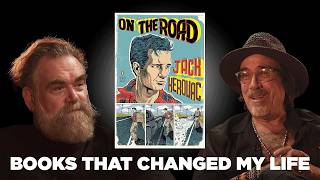
Jonathan Shaw found Kerouac's On the Road at a Hollywood newsstand at 16, while using heroin, and calls it 'the way out.' He later became a prominent tattoo artist, quit around 2001, spent 15 years writing and publishing three books, and returned to tattooing in 2022.
Questions this video answers
About 16–17 years old.
At a 24-hour newsstand on the corner of (publisher's transcript) Kawanga in Hollywood—found among a paperback rack.
Around 2001.
About 23 years (as stated in the interview).
Around 2022 (he says 'probably around two years ago' in a 2024 interview).
Chapters
Give me a little bit of a insight into where you were at in life when on the Road by Kerouac entered the pictures.
I was probably 16, 17.
So I was living in Hollywood. Teenage junkie. All my friends were dying of overdoses. You know, we were living that really grungy, fucked up life.
So who tells you about the book or how do you come across it?
Nobody. I saw this book and the words just shot out into my consciousness like.
Lightning. It just hit me on the road. And I took this book and I went back and I read it and suddenly I was like, this is the way out. This is the way out.
Welcome to the Syndicate X Library, where we love books. Today, we're talking about a book that changed somebody's. That somebody is Jonathan Shah. He is an author, famous tattoo artist. He has some incredible stories, some of which involve advice he got from Charles Bukowski. He is very kind, interesting, has a depth of experience that you would hope you would have in a lifetime. And the book that changed his life is on the Road, Beggar O Jack Kerouac.
This is coconut water. This is coconut water.
Oh, thank you. Oh, wow. Thank you. Thank you. Thanks so much. Coffee. Thank you.
Coconut water gives you lots of potassium.
It's pretty much all I drink.
Whenever I start cramping at the gym, I'll drink some coconut water and it.
Usually takes it away. I drink coconut water constantly. That's pretty much that's the only thing I drink.
How many books a year do you read?
You know, currently not a whole lot because I'm involved in this film process, you know, so I've kind of. There was times in my life when I would just constantly read. Other times in my life when I would constantly write, constantly obsessively, just eat, sleep, right. And there was other times when I would read and write, eat, sleep, read, write. And currently I'm in a different kind of situation. I'm in a more interactive kind of phase. You know, we go through phases. I don't know if we all do, but I do. So right now I'm doing a lot of painting, I'm doing a lot of artwork, and I'm doing a lot of interactive sort of stuff like this. Since the documentary came out, which was inspired by my books, I've had the opportunity to sort of go around the world to film festivals and theatrical presentations of the film and have a lot of press interactions, which I've done before because of, you know, when my books came out, I was on press tours, you know, doing interviews and interacting with the public and doing Q&As. And so now I'm doing that in conjunction with the, with the movie release. And so it's put me in a more of a spoken word kind of situation. It's been a while that I've been more interacting with the world through actual conversations like this. And just I'm known as a tattoo artist. I was actually at one stage of my life, I was one of the most famous tattoo artists in the world. And I stepped away from that 20 something years ago because I had something of a, you know.
Well, you know, my life went to. And as a result of that, I had a huge life changing spiritual awakening which led me out of my, my, my daily career as a renowned sort of tattoo artist. And I just walked away from it completely. And I spent the better part of the, the ensuing 15 years writing books obsessively. And I published three pretty big, hefty books, one after the other. And that was the time when I was reading, writing, mostly writing, but reading too. And then they made this movie and the movie covered my, sort of my career as a tattoo artist.
As a foundational thing. And through that process, eventually that led me back to tattooing full time. So for the last couple of years, I've been basically touring the world and just tattooing literally, you know, like.
Eat, sleep, tattoo and travel. I've been driving by car across the country. I think I've crisscrossed this country maybe six or seven times in the last two years. And also Mexico and also Brazil, all by car.
What kind of car?
Just an old cop car. Like a Crown Victoria Crown Vic? Yes.
When was it that you quit tattooing? Like what year?
Probably around 2001. And then when was.
When did you take it back up?
What are we in 2000? 24. 24. So I'd say probably around two years ago. 20, 22.
Is it, is there muscle memory? Is it easy to pick it back up?
It's like riding a motorcycle, you know, you never forget. You know, actually I've gotten a lot better because taking those decades off.
When I came back because I hated it, not only did I hate it, I hated myself because I was, you know, I was an alcoholic and a heroin addiction through most of my career at Functional. And when I finally crashed and burned and, you know, ate shit and died a thousand deaths, I hit rock bottom with everything. And then I realized, you know, I have to change everything in my life to recover from this spiritual malady, this, you know, mental illness, this insanity, this self destructive, you know, parasite in my consciousness. And so I. I had a huge sort of enlightening, you know, what they call a moment of truth, where I just said I have to abandon everything I think I know and change directions completely in my life. And at that point, I moved back to Brazil. I hung up my, you know, illustrious career and moved back to Brazil and basically.
Just started writing obsessively and excavating my own soul through that process. So.
And did you clean up during that?
Like, oh, I've been clean and sober for 23 years. Yeah. Yeah. And I've been on a, you know, pretty diligent spiritual quest for the. That entire time. And in that context, you know, the writing has been probably my closest connection to what I like to think of as the source of all healing and, you know, the creator, whatever you want to call it, God, consciousness, whatever. You know, it goes by many names, but, you know, that's through. I think there's, like, somewhere in my book there, I've written something. And they. I did the voiceover for the movie with little excerpts here and there from stuff that I'd written in these books. One of the final lines of the movie that they asked me to recite in voiceover was money, property, prestige, fame and fortune, liquor and drugs. They were all nothing but a means to an end for me. But ultimately, the quest for redemption through art has been the only thing I ever did that didn't end up in the fucking toilet. And then the movie closes with that quote. I guess they pulled that from. From one of my books.
It's pretty profound, though.
It's my.
Findings. You know, it's what I discovered in my. There was a. There was another one, the movie. You know, they. They managed to hand pick a few gems out of this book that, you know, fit into the general narrative. And luckily we had a. We had a good story editor because one of the directors was really good at making things look cool. And one of the other director. There was two directors was basically clueless, thank God. I actually insisted that they work with a story editor because I realized there was a story that needed to be pieced together out of all this 10 years worth of material that they compiled and filmed. And, you know, I'd given them access to my personal archives, which are huge, because, you know, I come from a long line of tortured souls with raging artistic egos and, you know, famous people. There was a lot of archives that I gave them access to, but there was also years of them following me around, you know, the world.
Doing this. And Doing that. And so they had all this material, but they didn't have a story. And the one editor was very. The one director was very talented in his niche.
Didn'T really know how to put together this as a story. And the other director was lost in the woods. And so I said, well, you're going to need to find a professional story editor. Take all this material, all my books, a screenplay that I've written. You've got everything you need. You've got all the material. You've gone out, you've interviewed all these incredible people. You've got ingredients to make the most incredible thing cinematically, but you don't have a fucking story. And I'm busy. I've already done the footwork. So find a professional story editor to work with who knows how to make a beginning, a middle and an end happen. And.
I'm off to the beach. And they did. And interestingly enough, that story editor's name was Grace. When people ask me if I like the movie, considering that I wrote powerful works of literature, and I can say this with all humility because I don't feel like it was me that wrote this stuff. I mean, I suited up and I showed up and I put pen to paper and I joined forces with whatever higher powers exist that I could be a channel for.
And so I can say with great humility that these are great works of literature because I didn't make them. I just. I was just open myself up to channel this universal goodness of storytelling through this humble vessel. So I'm not taking credit for. Without that connection, you know, I'm nothing as a writer, as an artist, as a human being. So, you know.
All credit to my creator, who I think I found a relationship with through desperation and the willingness to show up and let that little voice be told, you know, that voice of that tortured, lost little child be told through, you know, this flawed vessel. So people ask me, well, did you like the way the movie came out? And I can say, yeah, it was only successful in its presentation of the essence of a story through the grace of God. And interestingly enough, the catalyst for that was this story editor that I insisted they hire because they showed me a rough cut. And I was so appalled by what they thought would be presentable as a film, I was just like, are you kidding? Listen, here's the deal. You're going to hire a professional story editor and let them work with this material, or I'm going to pull the plug on this whole project. And they'd already invested a bunch of Money. And they were like, ah, so, so that happened and she, she, they found her and her name was Grace. And I, to me, I find that really significant and ironic and cool. And I hope to do other projects with her of my own direction. So it's great. Yeah, the.
So the book we're talking about today, on the Road by Kerouac, give me a little bit of a insight into where you were at in life when that entered the picture. So how old were you?
I was probably 16, 17.
Where did you live at that point?
I lived in a cheap rooming house room somewhere in the ass end of Hollywood. I was teenage junkie, strung out like a lab rat.
So you were on heroin?
Oh, yeah, heroin.
How old were you when you tried Heroin?
Same age. 16, 17. All my friends were, you know, there's a lot of stories in these books, you know. So I was living in Hollywood. Teenage junkie, strung out like a rab lab rat. All my friends had, you know, were dying of overdoses. You know, we were living that really grungy.
Up life. How are you?
How are you sustaining that at that point? Are you working? Are you a musician?
Worked in a lot of stuff. I was never really a musician. My father was a super famous musician. My father was already shaw.
But I had no father because my father, you know, papa was a rolling stone. I didn't have any relationship with my father until much later in life.
So how did you support your habit?
I was working. I was working in Hollywood.
I was working as an assistant to prop masters. I was doing grip work. I was driving trucks for know, until things got really, really bad. I was, you know, selling drugs. I was, man, I had some of the weirdest jobs. You know, I was working in the kitchens of restaurants. I was doing what, you know, what.
You know, a kid of that age would do to sustain himself. We were also doing.
B E's, you know, we were raking into doctors offices and stealing their stuff and selling it. Had all kinds of little things going on. So I was, you know, at some point I was spiraling downward in that downward trajectory and I was living, you know, as a strung out junkie lives, you know, just stealing and robbing and scamming and.
Just taking enough drugs just to not be sick. The party was long over, long over. And during that time, I was writing a lot. I was, I was writing even at that age. Oh yeah, no, I started writing when I was probably 15. Yeah, I wrote a lot.
So who tells you about the book or how do you come across it?
Nobody that's the thing. When I was in that situation.
I remember I was desperately seeking a way out. I didn't know I was seeking a way out, but I remember I was walking down Hollywood Mallard, just shuffling along like this lost soul. And There's a newsstand, 24 hour newsstand at the corner of Kawanga in Hollywood. You know, they had everything in there. They had like, you know, porno mags, they had newspapers from all over the world. They had a whole section of books in the back. They had like a paperback book rack. And I just wandered into that place one day and I saw this book on the shelf and I knew nothing of Kerouac, even though I, you know, I was kind of a literary kid. I mean, I liked to read a lot and I'd read a bunch of stuff, but I'd never heard of Jack Kerouac. Knew nothing of the beats. I'd interacted with Bukowski. I actually was a frequent visitor to his house, to his hovel.
When you were like 16 or 17.
Yeah.
So you would go to his house and just knock on the door or what?
Yeah, yeah, yeah.
And what would you guys talk about?
Writing, life, chicks, just whatever, just bullshit, you know, and we would.
What were you trying to do by seeking him out? Were you trying to learn how to be a writer?
No, I was writing. I wrote for. For a. Remember the LA Free Press used to have a column by an unknown writer named Charles Bukowski called Notes of a Dirty Old man, and he had a weekly column in the LA Free Press. And at some point I submitted something to the LA Free Press and they published it. So I was published in the same birdcage liner as my hero. And I was stoked like a log cabin conflagration with that. And so I pestered some older chick that worked there to give me his address because nobody had phones back then, you know, and. And so I got his address and I'd heard, you know, that people would go over there and, you know, sort of knocked on his door. So I did, and I, I stopped at the liquor store and bought a, you know, case of beer and, you know, and a pint of. Of. I think it was Old Crow or something like that. And I went and knocked on his door and he. He was in there typing away at this little kitchenette cubicle where he'd sit and type.
Could you hear him typing?
Yeah, you could hear him typing. He was right. You could see him. You could see him inside, you know, the cloudy window, and he's there typing away on the kitchen, you know, he.
Just knocked on the door, and I.
Sort of rapped on the window, and he didn't even turn around. He was like, who are you? What do you want? And I was like, I write for the Free Press. He was like, yeah, go away. And I was like, I got some beers and a piece.







