Books That Changed My Life - Julia Johnston & The Alchemist
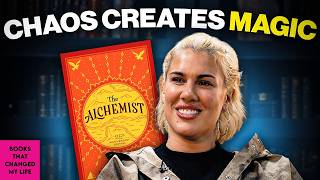
A recorded interview from the Syndicate X Library where Chris Collins interviews Julia Johnston about how Paulo Coelho's The Alchemist changed her life. Julia describes growing up across North Carolina, Baltimore, Nicaragua, London and elsewhere; experiencing bullying and anxiety after returning to the U.S.; receiving a copy of The Alchemist from her uncle at age 18; and using its concepts (Maktub, following the 'pyramid' or treasure) to guide decisions like moving to Los Angeles and entering a beauty pageant. The conversation also covers her reading habits, family background (three half-siblings), schooling struggles (almost failing out three times, later making dean's list with ~3.88 GPA), and how inspiration tends to be followed by luck and tests in her experience.
Questions this video answers
She moved on her ninth birthday.
18.
Three half-siblings.
About 10–12 books.
About 3.88 GPA.
Chapters
How old are you when the Alchemist comes into your life? 18. Who tells you about the book?
I go and visit my family in Florida and my uncle and I start talking and I don't remember exactly how it came about, but he knew that I was like, truly suffering. When I came back to the States from Nicaragua, I was bullied a lot. The walls were like closing in on me and he was just like, I think you need to read this because it helped me a lot when I was trying to figure out who I was. He understood without me having to tell him what was going on. I don't think anybody else maybe really saw me besides him.
Welcome to the Syndicate X Library, where we love books. And today we are talking about a book that changed somebody's life. Julia Johnston. She's an incredible human being. I found that I had a lot in common with her in the sense that she grew up in a foreign country as a kid. She is a singer, multi talented person, beauty pageant queen, and much, much more. The conversation is something you're going to take a lot away from. The book that changed her life is the Alchemist.
What do you think of the library?
I'm obsessed. I literally want to like camp in one of the aisles and just take it in. I would never leave.
You're always welcome to come and dig in. There's a lot of different categories.
Don't tell me with a good time, because I will. The magic section.
How many books a year do you read?
That is a great question.
I would say if I can average three a month. Yeah, but, but, but it's not like all non fiction, all fiction. It can be like, I just finished the War of Art, which is like a very small book.
Great though.
So I just try and like keep moving through them. But some take longer. Sometimes it's like literally one and a half a month because the subject matter takes longer to like digest.
Always reading, never audible.
Oh, no, no audible. I can't do audible.
How do you do you highlight?
I write in the book. So like literally all of my books have my notes. And some. I used to be embarrassed about it because it's like you give someone a book, then you're like sharing part of your soul because you've written what you think about it. But I'm like, well, that's why we're here. So.
Oh, you learn a lot about a person.
Yeah.
That way.
Yeah, you did.
You also can learn a perspective on a book that you wouldn't have had. Like, sometimes when I'm looking at other People's notes. I'm like, I wouldn't have thought of it that way.
Right, right. That's. I think that's the best part of it, too.
It makes it more alive, I think, in that way. So that's a lot. That's more than I read. That's really pretty good.
How many do you read?
Maybe one a month. I mean, it depends. Things come in seasons. But also sometimes I'll read sections of books if I'm working on something where I'll go to the part of the book that is serving the need, and I will, you know, I won't read it cover to cover.
Yeah.
So it depends. Do you feel obligated to finish a book if you start?
No.
Me neither.
Half of my books are unfinished. I have books stored all over the world. So I lived in London for three years, and I left a bunch of books in London with, like, random friends. Half of them are unfinished. I don't know if I'll ever see those books again. At my mom's house in Florida, same thing. Books everywhere, not even finished. But my favorite, London.
I don't even want to know because I'm sure my friends are like, this girl, like, how long are we going to have these books? But there's a lot, because I. I came and went a few different times, and books are the heaviest thing to carry. And it always gives me a reason to, like, go back. If I leave stuff, which I don't know, psychologically, maybe there's something to that. But the most important books never leave me. I will pay the extra weight for the suitcase.
How many are in that?
There's probably 10 to 12, I would say right now. 10, because I give them away. Okay, so right now.
Think. Oh, how do you. I always confuse the words. Think rich, think poor, grow rich. Or one of those.
Grow rich.
Yeah, think and grow rich. I never know the name, but it always comes with me. I have the Alchemist, of course. I have, I think, two Nancy Drew books, because I read the whole series as a child multiple times. I have. Which ones did I bring with me this time?
The War of Art, obviously, is now with me, and I'll probably continue to carry that one. Someone just gave me a book on anarchy that I've started reading that will probably come with me for the next year, but there's a few. I don't remember which ones I brought back from London this time, but they've.
Stayed the War of Art. When I read it the first time, I immediately read it again. I did the same Thing with your book today, the Alchemist.
Oh, yeah.
I immediately read it again. Yeah.
Oh, it's a good one. It is, yeah.
Tell me a little bit about where you grew up.
Okay. So I was born in North Carolina, and then I moved at, like, 2 years old to Baltimore for a few years. Then I moved to Nicaragua, and I lived there for a few years, and then I came back to the States, lived in North Carolina. Then When I was 17, I went to New York, and then I went to. I came to la, and then I was in Medellin for a little bit, like, on and off a year. Then I went to London for three. I was back in the States a few times, but I was mostly in London. And then I just came back to LA about a year. A year ago. So not really one place, but I would say I live in a spectrum between North Carolina and Nicaragua. Those are, like, my two.
You would call those home or you'd consider them home?
Yeah. I think North Carolina probably is the most home because I spent the most time there. But I think Nicaragua had such a profound impact on me as a child. And then I also randomly discovered I had this whole Nicaraguan family, because when we moved there, if you're. If you have Latin family, everyone is your cousin. Like, suddenly you have 100 cousins. And as a kid, I was like, oh, my God, this is amazing. And so we're married into a Nicaraguan family. And when I moved there, my mom was like, these are all your cousins. I was like, what? So I think that was more than even blood family. Like, that was so crucial to my development. And my mom lived there when she was a young adult, and my. The rest of my family was there too. So it's like this weird. I could never claim being Nicaraguan, but I'm so happy in there. I can't go back now because of the political part, but I love that place and my family. I'm very close with them.
So how many siblings did you have?
I have three half siblings. They didn't go well.
How old are you when you go to Nicaragua?
I moved on my ninth birthday.
And so do you go to school there?
I did. I went to. Oh, it was amazing. I learned Spanish. I didn't. My mom always spoke Spanish when I was growing up, but I didn't. I didn't know what she was saying. When I moved there, I immediately learned Spanish in, like, maybe a month and a half, because when you're a kid, you retain everything. And I was in two different schools. I've never Been more free ever. I just. My mom once tried to hire a driver to take me back and forth from school to home. I ran away from him and I went and decided to go train horses in the fields with my friend.
And you're like 10 or 11 when you're doing this?
I was 10, yeah.
So when you say never been more free, describe what free means in that sentence.
I think the human spirit is ultimately very free. We don't. When you're a kid, you don't know what no means until someone tells you. You just think, well, this is really cool. This feels like love. This feels like what I should do. I mean, there's obviously like when we misbehave, but there's a freedom to that where the world is just open and you're like, this is so cool, I should go try that. And there. Because my mother was, she was a peace. She was a Peace Corps director, so she was like extremely busy. And my dad is, you know, he's very white, so he doesn't speak Spanish. And he was like doing his own thing. I was just like left essentially a lot of the time to my own devices. And so I had this whole new world to just discover. And I was lucky because I was in the embassy, so I had, I was protected. Like, you know, my house had like 25 foot gates around it. We had a guard at night, we had guards during the day, all these things. But I could just go when I went in the afternoon after school to be where my horses were. I was free. No one ever was like, oh, you should be this when you grow up. Oh, you can't be that when you grow up. I thought I could be anything. I was a free person. I had other things, obviously. Like, my dad was very strict, but besides him, I was like, wow, the world is so cool. The world is infinite possibilities. And then obviously when you grow up and came back to the States, I was like, what? Like, there's so much pressure, there's so much social pressure. Everyone thinks you have to be this or this. This is crazy. So that was what free was.
So how do you navigate that now that you're here?
I think if anything, I've returned more to my child self now because I realized, like, it doesn't matter. You're on this planet for a finite amount of time. So if you're gonna live your life within the paradigm of, well, I'm supposed to be this. You're like, you're gonna have a hard time because it's never gonna resonate. I Think for myself with my soul. So I think for me, if I feel something come to me and it feels like divine inspiration, I will just go do that thing. I don't care if I don't have the money. I will find the money, whatever. And the alchemist was a big part of how that started to happen, because I was. When I came back to the States from Nicaragua, I was bullied a lot. I was very anxious as a child, and the walls were, like, closing in on me. And I was like, this is insane. I went to school in New York. Same thing happened. I almost failed out three times because I was like, none of this feels right, but I'm supposed to do it. And then the discovery process for the last, like, eight, nine years has been about finding freedom again on a soul level, on a deeply connected, to something bigger than myself level. I'm still doing it. I'm not, like, fully there, but I just think if I was to pass away today, would I be upset and why would I be okay with it? Because I did the things that came to me, and I feel like I contributed in a loving way to others, which is a work in progress always. Or would I be like, damn, I did not use my time well.
How old are you when the alchemist comes into your life?
18.
18. When you came back from Nicaragua, how many different schools did you go to? Like, how many times did you move?
So after Nicaragua, I was in 1, 2, 3.
Three different. Three or four different schools up until I went to college.
So. And if I'm doing the math right, when you came back, you were 12 or 13. Okay, so that's your teen. You're becoming a teenager.
Yeah.
Body's changing, hormones, lots of feelings. Yeah. And so.
You said bullied, but why do you think you didn't fit in? Was it.
It was the freedom. It was literally that conform. No, it was. I didn't know what that meant. So if you come from being in an environment where, like, I ran around pretending I was a horse, like when I was in middle school, because I didn't know that was wrong, I was like, this is fun. This is what? I love horses. I love being free. I love running around. Cool. Freedom. You come back to the US and all of a sudden you're. I was put. I was in a middle school and my family didn't have very much money, so my parents sent me to a private Christian school. And, you know, they were like, this will be the best thing for her. And realistically, probably it was, but we didn't Have a lot of money. So I was. I learned at that time because we had money in Nicaragua. We had this great life, but then we lost it. And I didn't care about that because those things didn't mean anything to me. But when we came back, it meant something to other people. Right. So I became embarrassed of where I lived. I didn't want people to see my house. I became embarrassed that we had this car that, you know, it was tiny. Like, these things that didn't actually have meaning suddenly had meaning. And also, I wore oversized T shirts to school every day because I thought that was cool. I continued to run around like a horse because I thought that was cool. Nobody else did. So I started getting made fun of, and that became this internalized self hatred of, like, why can't I just be cool?
And that persisted through high school because it was the same thing. Like, I'm in the South. It's beauty pageants, it's Southern belles, it's cotillion. And I'm like, what? Like, that seems like boring as hell. Mind you, I just ran from Miss California three weeks ago. But that was more of, like, a resolution to self. But, yeah. So I just didn't. I didn't understand. And then when you do realize the world is. Kids are cruel, you're like, I want.
To ask how religion played into that, but.
There'S something we have in common in the sense that I grew up a missionary's kid in Mexico.
Wow.
And then same thing. When I came back, I was around 13.
Yeah.
I, of course, didn't fit in. It was a huge culture shock, a lot of similar experiences. But the thing I think that stuck with me most, and I. I'm. I'm gonna bet that you're gonna agree with this, is that I noticed very early on when American kids would come down to Mexico in youth groups to do different missionary work or volunteer, that the kids in Mexico that lived in a cardboard shack that had nothing were happier than the kids that had everything I thought I wanted.
Right.
Right. Because I never fit in. I was the. Like you said, the kid in Mexico that would have been considered rich, even though we were poor, but we had more. And also we were Americans, which people aspired to come to America and the opportunity and all of that. And so I always felt very lucky in the sense that I noticed that juxtaposition or that contradiction that the people that had everything were miserable and the people that had nothing actually had more substance and they valued family more in connection and.
Oh, yeah.
Yeah. So I. I relate to that. How did religion play into your growing up? Because they made me go to Christian school too.
Well, I had a double triple whammy because my dad was a pastor.
Oh, so you're a pk.
I'm a pk.
So I was a pkmk.
Okay, so you had it all.
Yeah.
Yes. So you. You know the drill. So I was a pk. My mom was Catholic. So when I. Before we moved, I grew up going to a convent with my mom or a monastery, and then going to my dad's church, because my mom is now Presbyterian. But at the time, she still was very connected with a Carmelite monastery. So I'd go with her, see the girls, the nuns, and then I'd go to my dad's church. So when I came back to the South, I mean, my high school, my second high school was Southern Baptist, so that was like a whole other can of worms. But I was in Catholic schools, missionary schools, Presbyterian schools. I was in every kind of religious school. But I never was satisfied with the answers that I got, because I think I always wondered, like, how is it that God is so far away and yet everything is so close? Like, why, when I'm in school, are they talking about God? Like, God is so, so far from us when God is literally. And I see this now, maybe I didn't. Couldn't verbalize it as a child, but, like, I see God in nature. I see God in the horses that I was around. I see God in people. God is literally, to me, everywhere. And I think maybe that's why freedom was so. So tangible as a kid, because God was right there. And so I. You know, this. This teaching of, like, oh, well, God's gonna strike you down. Like, God is mad at you. Blah, blah, blah, blah, blah. It's like, what? Like, how are you gonna tell me that everything is love? Jesus taught love. And yet you're telling me, like, all this stuff.
So it's hard to monetize something if you don't have.
Right. There you go. And I think hell is very much also present in the human state now. I think, like, I don't. I don't know what's after death, personally, but I haven't died yet. But I think that hell is also something you can experience within the own mind, living on earth.
So you're 17 or 18. You've kind of gone through this experience where you feel like you don't fit in right. You've. You've been bullied. What else is going on in your life before this oh, my God comes.
Oh, my God was a mess. So that book. So I had had. I've had anxiety, not so much anymore since I was 5. I started having panic attacks at that time, and they persisted when I came back to the States. So that book I was in college, I went to. I was 17 when I went to New York. I didn't want to go to college, but my parents were like, well, you have to because you're underage. So I got two scholarships into a Christian school.
What are you going to college for?
I wanted to be an actress. So I don't even know what I was going to college for. I. My degree was liberal arts, but it was like, I was like, well, if this is what I have to do to be in New York, fine. So my course curriculum was all like, Socratic logic, theology, theology 2. My saving grace was film class, because I love film. So it was film theory, study of, you know, history of film, blah, blah, blah. But everything else, I was like, what am I? Like, why am I here? Like, seriously, why am I here? But I had two scholarships. I almost failed out three times, and my dad had just turned 70. 70, 70 something when that book came into my hands. And so I was, like, freaking out. I was like, oh, my gosh. Like, is this really life? Truly? Because I can't do this shit.
Who tells you about the book?
My uncle. So my uncle, who's married to the Nicaraguan woman. So he.
He and I have always been very close. He's a very gentle soul. And when other people were trying to get me, I was put on medication for anxiety and depression, and I was put on Adderall because they thought the Adderall would keep me in school and not lose my scholarships. Anxiety medication would keep me from having panic attacks, and they thought I had depression. I did not have depression. I had anxiety. And I hated school because I was in the wrong place at the wrong time, but I was too scared to do anything about it because I didn't know. So my uncle. I go and visit my family in Florida, and my uncle and I start talking, and I don't remember exactly how it came about, but he knew that I was, like, truly suffering because what I wanted was here, and what I thought I had to do was here, but right here was killing me.
Like, what is what you wanted?
Free Once again, freedom to go on my path, which was, for me, at the time, I thought acting. I thought I didn't know what it looked like, but I just knew that what was happening wasn't Right. But as you know, when you're in an environment like a Christian environment, and I'm. I'm Christian, I believe in God still. Like, I don't go to church because I have my own thoughts about church, but I truly believe in the higher power. But I felt so disconnected because I was like, oh, I have to be in school. I have to take these classes. I have to do this. I have to become this. I had a boyfriend at the time who was extremely religious. I have to be with him. I was dying. I was literally dying. Like, all that, like the Adderall with the anti anxiety, all of it was like, literally killing me. But nobody. My parents were like, okay, well, this isn't good. Well, what the hell? So my uncle gave me this book, and he was just like, I think you need to read this because it helped me a lot when I was trying to figure out who I was or you said something to that extent.
So he just came on your father's side?
My mom. So my mom's brother, Young, the youngest brother. And ironically, what does he do? He is now a therapist.
Okay.
And he's absolutely the most amazing. Like, he worked in a big corporate America. I think he was. He worked for some corporation, but, like, big. That type of job. And he left because it wasn't right. It didn't resonate with him. And now he's a therapist, went to school, and he. He. Yeah, but he understood.
Without me having to tell him what the. What. What was going on. And I think, like, I don't think anybody else maybe really saw me at the time, besides him. I don't think anybody could see, like, I was.
Everybody else was reacting to the symptoms, not the cause.
They were like, you're failing. You're a fail. Like, I'm not a failure at all. We all fail, but nobody. I don't believe anybody is a failure. I think people that are failing are just in the wrong equation.
It doesn't make sense. People. People are not failures. But he gave me this book, and I.
And you felt like he really saw you?
Yeah, I don't think I recognized it at the time because I think I was living in hell. So I didn't know. All I knew was the cycle of panic. And I went off all my medication, but I didn't tell my parents because I was like, this shit's gonna eat me up. So I went off of everything, and then I was just, like, forcing my way through everything else. And.
Does he give you a physical copy?
Yeah, he gave me my first Copy.
Okay.
And it had his notes in it.
Oh, it did. That's fast. That's another fascinating conversation. So when do you start reading it? After he gives it to you?
I will be honest with you. I do not remember the exact timeframe because a of that time, I've kind of, like, repressed that part of my life. Doesn't even seem like it was real, because now.
Was it. When you got back to New York.
Back to New York.
How many books had you read up until that point?
A lot. I mean, I was reading, like, interesting.
When you're the kid that doesn't fit in, you escape into books. Like, I. I find, like, it's kind of an introverted thing.
Like, well, it's a safe space.
Yeah.
And I think also when you don't understand your surroundings, other people's voices give context to what you're experiencing 100%. And I think that, like, that I loved film. I've always loved film and music, but it was the same reason, because I didn't understand my surroundings, and I felt like, well, I'm clearly not doing well out here because people don't seem to get me. But then you read a book or you see a film or you watch or listen to music, and you're like, oh, how did they. Perfectly articulate how I feel. Same thing with books. And then you realize a lot of authors, as well, were actually experiencing that feeling of isolation. Look at Edgar Allan Poe. Madman. But genius. And at the time, I would imagine, like, nobody got him. He probably was like, I what? But his work has lived on, and there's a lot of people that can find so much beauty in that. It's incredible.
Kanye.
Kanye's got a lot going on.
He's still a genius.
He's a genius. The Internet is a blessing and a curse, I feel. And I feel like when we. When I think about Kanye, I especially think about that because I wonder, like, how much of his genius, if it had just been left to a form of art, would have had.
All of the meaning it could have instead of.
I don't think you can have. I don't think you can have one without the other. I don't think it exists.
You don't think so?
I think with a lot of great artists, it doesn't exist, but there's a.
Sacredness to their art that I think won't lose its. It won't tarnish with, you know, like Van Gogh. Imagine if Van Gogh had had a podcast. Oh, my gosh, we would have.
It might not even be Coherent.
Right, but that's my point. We would have. I think societally, we would have looked at Van Gogh and been like, oh, God, this guy's crazy. Blah, blah, blah, blah. And I'm sure when he was drinking all that turpentine, we wouldn't have maybe wanted to know his thoughts, but his art would have remained what it is because we would just be like this. This painting is incredible. This vision is incredible. It's like with Kanye, like, you listen to his music, you're like, how did he arrange this? Like, this is insane. His videos. But then it's like, now that in 2024, the 2000s, we've got, like, all the commentary. It tarnishes the beauty of the poetry of the work, I feel.
Yeah, no, I agree with that. If you just knew the art without everything else, it would kind of stand on its own.
Because you're right, artists, a lot of them, the great ones, are geniuses. But genius also comes at a price. We don't necessarily need to know that price. We just have to appreciate what they've given us.
So you read it when you get back home to New York. You don't remember how long in between.
I probably picked it up and put it down, like, six times.
You know, one thing.
Is, I've given this book away. I mean, literally, we've had just stacks of them. I've probably given it away a couple hundred times. The one thing about it is that it starts slow. A lot of people give up in that setup in the beginning because it really doesn't click until the midway point. And then you can't stop.
Right.
Once you hit that midway point, you can't put the book down. But there's a lot of grind kind of getting there that has to exist. But a lot of people give up during the grind, I find.
I think you have to be ready to read it. Truly, I feel like you have to be prepared, like.
So what made you ready?
Suffering, probably.
But you were suffering when he gave it to you?
No, I think. I think worse. Yeah, I think. I think that there's suffering, but then there's suffering with awareness. Right. Sometimes I think we enjoy suffering because it gives life meaning, which is false, really, because I don't personally, at my ripe old age, don't think that human. Human beings should suffer unnecessarily. I think suffering, if you want to put it in that term, is a part of growth, because if there wasn't pressure, we wouldn't grow. But endless suffering, just suffering for the sake of suffering. When you know, you don't truly have to suffer is self gratifying. These are all my. I'm not saying this like this is the ultimate truth, but to me, I think there comes a point when you're ready, you've suffered enough, and you're like, what the fuck? How long am I going to live like this? Truly, like, what am I. What am I up to? And you may not have the answer, but sometimes you just pick something up and I can tell you without a shadow of a doubt that is how I got through that book. I. I know myself well enough to know that, like, it's the artist in me of being, like, well, I'm a tortured artist. Girl, please stop. This is bullshit. That is not true. So I'm sure that's what led me to read this book.
So you picked it up, set it down a few times.
Yeah.
And then what happens when you actually engage? How long from the beginning to when you finished it, do you think?
I can't tell you the timetable, but I can tell you what happened. I'll never forget. So I was. I was a junior in college. I forced my way through. I was like actually doing well in school because I realized I didn't like failing. I didn't like actually being that. That person. I told myself I was of like, oh, I'm an outcast, naturally. We all are to some degree. But I didn't like it anymore. So I became.
On the end of wearing that costume.
Yeah, what the hell? Like, to whose detriment but my own? So I got on the dean's list. I had a 3.88, I believe. GPA, something like that.
Intentionally or by accident?
Intentionally, because I was pissed. I was like, I broke up with my boyfriend. He started dating my mentor. I was like, girl, no, no, no, no. So wait, how.
How old was your boyfriend?
My boyfriend was two or three years older than me. My mentor was two or three years older than him, but she knew about the whole relationship, so she knew how I was struggling and blah, blah, blah.
You guys are all Christians.
But that's also why with the church.
I was like, okay, no premarital sex.
You're saying, I don't know what they did, but I was.
He was so he was.
As far as. That's what he told me, but I don't know what they were up to. And I was just like, okay, so if I'm seeing that this. I think subconsciously it was this thing of like.
So I'm suffering for what? Like, I'm love sick for What? I'm going through this. For what? For whom?
And then I was like, you know what? I want to win for myself. There was. I don't think I even had that conscious thought. I wasn't there consciously, but I was like, if I'm going to leave this school, why am I going to leave as a failure? If I'm going to have to bring my grades home to my parents, why am I going to come home as a failure? It's hurting nobody but me. So there was something that clicked and I got pissed off. I'm pretty sure, because I'm a Sagittarius, I'm a fire sign. So one of the quickest ways to get me to move is to piss me off. I was only mad at myself, so made the dean's list. Then I went in to renew my classes because I'd almost failed out so many times that I was now behind, like, a semester or two to graduate. I was like, I did that to myself. So I went to my guidance counselor. I believe I was probably. If I hadn't finished this book, I was maybe halfway through, but I was starting to understand that idea of, if you want something, if there's something divinely in your face or in your mind, your only obligation is to show up. But I was still not ready to do that, because I was still. I was. I would. I'd almost moved to la, like, three times, but I was still not ready. I was like, I can't. I can't. I have to finish. I can't. What am I going to do for a job? My parents are going to be mad. But my parents were actually starting to recognize, like, she needs to get out of this environment. It's not good for her. So. But I was. So I was ultimately the one in the way still. And I went to my guidance counselor, and she said, okay, let's sign you up for these classes. And I was like, signing up. And I was thinking to myself, like, oh, God, another year of this. Like, I don't even want to graduate. No job that I want comes with this. This is like, for what, man? And she. She stopped me. We'd just gotten all the classes in the computer, but she stopped me. And she goes, you don't want to be here, do you?
I was like, actually, no, not at all. She's like, well, why are you here? I was like, because I'm supposed to. And she said, for who? Something like that. And I was like.
It'S the first time somebody had ever asked me, like, why are you Here instead of good job for being here. She said, why are you here? I said, oh, my God. And I left that like summer, I think winter break started in a week. I never went back. Took my grades and left. That was it. I was out.
And so in that process, when do you finish the book?
I would say at that time. I think I finished and left about the same time. It all came together. Yeah, it all came together.
Okay, so when you're reading the book, what things do you remember kind of connecting with in the book?
The first time I read it, I think the only thing that I connected with was Maktub, which is this idea of destiny, like the re. I think you read this book a few times and get something each time. That time, I think the state of where my consciousness was was low. So I was only able to hang on to, like, one thing, which was basically this idea of like, okay, well, it'll work out, but that's it. That was it. That's all I had. Right. And I believe I read it again when I got to la.
Wait, so just the workout part. So that just gives you belief and a little faith in not putting so much pressure on yourself?
I was still putting pressure, but I think where my consciousness was is the only thing that I could hold on to was just try it. Right? This, like, hesitant, like, just try it. It's going to work out.
And does that inspire you to move to la?
Yeah.
Okay.
That inspired me to follow the desire to the pyramid. So that was my pyramid at the time was Los Angeles. But it wasn't much more evolved than that. I just knew, go to la. I knew for a while this thought of go to la, try it. I was too scared. But this idea of that being my pyramid was like, okay, that's enough.
So explain, because people haven't read the book, what, the pyramid.
So.
The pyramids, I think, are many different things, but in this basic, simple scenario, the pyramid is just. The boy believes the pyramids are where his treasure are. And he just has this. He just know, like, he just knows that that is where he needs to be. It's the pyramids.
But he has to get there, right?
But that's it. That's all he knew. Just like with me, all I knew was la. I just knew la. I didn't know what it was. I just knew my treasure and my pyramid. That was it.
And for the kid, there's wars, there's all kinds of things going on, and obstacles.
It's incredible how spot on this book is, though, because similar to myself and everything I've undertaken. When you have the thought and you follow the thought, there's some luck that happens.
Give me an example of that in your life.
Every. Every single thing I've decided to do has had this. I. I'll give you the most recent. I just ran for Miss California. I've never done a beauty pageant before. And.
That was like, literally divine inspiration. Like, where would I get the idea? Especially when I grew up with all those girls that bullied me. They were beauty pageants. They were queens. They were not all of them, but they were like those girls that I.
Thought were beauty queens of Beyonce reference.
Oh, no, those queens are different, honey. But these were like, beauty, you know, like the Barbies, you know? And I was wrong, I want to say, because the girls that I just ran with were absolutely incredible women. And any preconception I had of what a pageant girl was, I'm wrong for that. But I digress. So even with. To get back to the luck. So I decided to run. Did not. Like, I. I don't have disposable income to throw into a beauty pageant. And it's expensive. It's all very expensive.
Like, how much would you spend to give it a good run?
I can't truly answer that, because some of these girls, it's. It's 10. It's like, some girls spend, like, 20 grand because they hire a makeup team. They hire all these teams. I don't have that. And also, I'm the type that, like, I will learn how to do it. Like, why wouldn't. Like, I'll do my own makeup, but there's certain things you can't compromise on. But anyway, I had a number in my mind. I'm not going to tell you what it was. And I was like, how am I going to do this? The last week of the pageant, before the pageant, I was like, still not. I hadn't met my goal. And I was like, hustling, too. When I first started, someone gave me a grand. Out of nowhere, they just handed me an envelope with cash. Luck.
But then, you'll see with the book, the first lick of luck happens. Mine was, someone gave me an envelope with a thousand dollars. Someone else gave me 500. And I randomly got a coach. Like, these things fell into place right there to solidify the desire. So it was like, desire, I'm going to do it. Luck. That's the universe saying, go cool. But then after that, all these other things came up and I started, like, having to spend that money that had been given to me, you know, like, things fell apart. My dress, all these things. And I was like, shit. What? But I know now well enough, and I trust now when I'm at my best, enough to know that if the desire is given and the luck comes, there has to be something that tests you. Otherwise, it's not real. Sure enough, the week before the competition, once again, I was like, I'm still $1,000 off of my target, and I'm going to have to figure that out, because it's, to me still, like, that's a lot of money I got to make up. It's not like, I'm just like, hey, yeah, someone sells me $800, and someone else just out of nowhere goes, I want to pay for your dress. Another 300. Someone else gave me, like, 200 after that.
Every time. So that's just an easy example. That's just money. That's not. Money is everywhere. But to. To the point it always happens. It's like, if. If the inspiration comes and you say, okay, cool, I'm gonna follow that. The luck happens, the hardship happens, and then it goes on again. And that's literally the trajectory of this.
Book in the pyramid. In this analogy is you winning the pageant.
No, I didn't care about winning, but I wanted to compete. I wanted to compete.
Competing in something. You don't care about winning.
It was never about winning. No, it wasn't about participation, and it wasn't about winning. I think winning is a nuance. It's like, what is winning to you? Winning to me was. I don't think I recognized it until after, but, like, I hadn't seen somebody that looked like me run for a beauty pageant. And honestly, to be real with you, when I grew up, that was the one thing I was like, you'll never be that. I was not. Like, I was. I gained 40 pounds when I was, like, a freshman and or sophomore in high school. I was a weird. Kind of like a weird kid. I wore a yellow rain jacket every day my, like, junior year of high school. I was super shy. I did not. I was not cool. And I saw all these girls around me, like, perfect, like, beautiful hair, straightened, all the cool clothes. They drove a Mercedes. And I was literally like, I'm never going to be that. And that narrative that I said to myself as a teenager, I'm never going to be, that literally impacted so many of my decisions up until recently, because that idea of I'm never going to be, that meant that I was going to fail in school. Yeah, I wasn't happy. But also it's that narrative of, oh, I'm never going to be that. So I'm going to be this. I'm going to amp that up. I don't want people to think I'm this. And then the Miss California was literally me coming back to the core and being like, you know what? I am going to be this. I'm going to be whatever I want to be. And for any other girl that is like, oh, I can't be this. Yeah, you can. Yes, you can. You can literally be whatever and whoever you want. I have tattoos. I'm a curvier girl. I'm athletic. I can beat the out of someone because I've trained boxing, muay Thai and jiu jitsu. Like, all these things that made me think, well, I'm this, not that. What is that? And then you show up to the pageant and you realize, like, oh, my God, I'm an idiot. All of these girls are multiple.







