Books That Changed My Life: Justin Wenzel & Stop Doing that Sh*t by Gary John Bishop
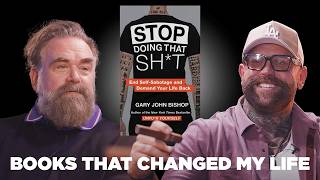
Justin Wenzel credits Gary John Bishop's Stop Doing That Sht with helping him recognize self-sabotaging narratives. He grew up in an auto-dealer family in Grand Rapids, recovered from addiction, worked his way up through GM, and started a marketing agency four years ago.
Questions this video answers
Grand Rapids, Michigan (moved to Maine when he was five).
Three.
Shooting guard.
About four years ago.
Chapters
So the. The book we're here to talk about today is stop doing that and self sabotage and demand your life back by Gary John Bishop.
Yeah. Oh, yeah.
Okay. So you ordered a coffee. Cheers.
Cheers.
Yeah.
What do you think about the library?
Unbelievable.
It's. I mean, there's everything.
When is come.
Into play until it was pointed out. The narrative that you build in your head. This type of stuff doesn't exist. When I started to realize that it was that I was self sabotaging. It now existed. Now you can start to identify things.
We love talking about books that have changed people's lives, like had such an impact that they are different. After reading the book today, our special guest is Justin Wenzel. So how does stop doing that by Gary John Bishop change your life?
The struggle is real. With this. With this lighter. Okay. Thank you though. Okay. So you ordered a coffee. That was your drink.
I did. Thank you.
Thanks, baby. Cheers.
Cheers.
This is really cool.
Yeah. What do you think about the library?
Unbelievable. It's. I mean, there's everything I like.
Can you tell that I. I have an inferiority complex or something? That I need to have more books than everybody?
I didn't look at it that way. No. Just a great appreciation. I love the Virgil book over here. And then that massive. The massive Rolex book. I'm a huge Rolex fan. Huge. One of my. One of my close friends and a guy that I do business with. He's a horologist, Rolex specifically. And his father was. And he's told me like some really cool stories. And obviously he has a ton of knowledge because he rips those things apart and puts them back together all day.
And how many do you have?
I have three right now.
Which one's your favorite?
This one.
And what is it?
This is a rose gold. Oh, that's GMT root beer.
Beautiful. I love the contrast of the black and the rose.
Yeah, I. It's probably my favorite. And then I have an anniversary Kermit. And then I have the white gold yacht master with the rubber one, the oyster flex band.
What do you think about the cigar?
Oh, it's fantastic.
So when you. When you had your son, did you like, did you have that moment that people always say like, oh, I changed?
No, no, no. I put a little bit about my story in there and I'm pretty outspoken about it.
But.
But I'm a recovering addict and when he was born, I was like in the middle of it, you know, it was always like, you know, up and down and up and down. And when he was born. I wasn't with his mother. We were like on again, off again, and it just wasn't a healthy relationship. And, you know, I.
Probably had no business having a child at the time. You know, as the years went on, I was able to obviously get myself right and all of that stuff. And. And later on, now our relationship is a lot, a lot better.
Is he. Is he a lot like you?
Yes.
Is he. Is he playing sports or what's he into?
Plays basketball.
Basketball. What position?
I think he's a guard. Shooting guard.
So he's fast?
Well, you know, he's. He's short and, and about as fast as a Greek Jew can get, you know.
Okay, so the, the book we're here to talk about today is stop doing that and self sabotage and demand your life back by Gary John Bishop. Where did you grow up? Did you grow up here?
I grew up in Grand Rapids, Michigan.
Oh, wow.
Grew up in the auto industry. What's funny is that I'm very familiar. I was very familiar with you before I actually got into. I am leader. And this. My father is a car dealer, and I went to Northwood University or University and did that whole. That whole thing and nada and all of it.
What, what brand?
Buick, GMC and Chevrolet.
Did you have any siblings?
I have a little brother.
A little brother. And so were you spending your summers in the dealership, working nights?
Yeah. Oh, yeah. Yep. Since I was really young, you know, started selling cars young and. And then I was in the auto industry all the way up until about four years ago when I started my marketing agency.
So what, what happens through. Through that journey? So Dad's a dealer and you are the heir apparent. You're gonna run it?
Yep. The oldest son sent away to Northwood. You know the story, you know. Yeah, it's very common. They say PhD, Papa has a dealership. Yep. And. And yeah, you know, it was like, kind of my, like what I was supposed to be destined for everything was like, always like, you know, you know, he built it. And he's first generation.
Was he a pretty good dealer?
Huge. Number one Buick GMC in Michigan.
That's hard there, because that's in the blood there.
Correct. Yeah. And we have Detroit Metro, Flint and Grand Rapids.
What were the biggest takeaways from your relationship with your dad in that sense of business? Like, what did you learn from him?
So, you know, my. My dad and mom had me really young, and so. And he started off selling. Selling cars for a Chevy store in Grand Rapids. I watched him build everything, you know, he didn't. He was not. He actually wasn't a very good car salesman. Got into finance and then. And then he had one opportunity to be a GM vice president, you know, variable ops director, if you will, in Portland, Maine. And that's where we bought our first or he bought his first Chevy store.
How old were you?
We moved to Maine when I was five.
Five. So he buys one and then ends up acquiring five more.
Yep.
And how old are you when that happens?
Between 5 and 10.
5 and 10. So pretty fast.
Very fast.
So he was a good operator. He scaled pretty quick.
Yes. When. When things weren't so good is when I would have been. Been to. Been in college at Northwood.
And. And then obviously, you know, you had to survive that. If you remember back then, that was during the government bailout.
So then we're 2007, 2008.
Yep.
And you're in college then.
Yeah. Yep. Survive the bailout, survive all of that. You know, a lot of GM stores and, and Chrysler, Dodge stores did not survive back then. We survived. And, and then.
It'S funny, when I got out of school.
My dad wouldn't hire me.
Why?
He wanted me to figure it out.
Do you want you to work for somebody else? That's. Old car dealer. Think.
Yeah. So I worked for a big auto group in Detroit.
What'd you do for him?
Sold cars.
Do you think selling cars is the most. Well, let me ask that a different way. Do you think that.
You learn more by selling cars than probably anything else in automotive.
Yeah. In terms of. Well, I think, I think being in the box is probably where you learn.
The most because you live and die by what happens. You start at zero. Like every other position has some sort of base or some sort of, you know, safety net. But you don't have that selling cars.
No.
And you can go all the way to the 15th and not have made a dollar and the world start closing in. World starts closing in on you and it's a mental game.
Yeah, definitely.
Yep. And I, and I couldn't imagine, you know, just a few years ago selling cars when there was no inventory.
Yeah.
Impossible.
Yep. No, I, I was, Yeah, I was GMing a store during that time and it made it really tough, was just you had to really just rely on, you know.
Equity mining with, you know, leases and stuff like that. And it was, it wasn't easy. I'm really, really thankful to not be in the auto industry anymore.
Let's come back, let's come back to that.
Well, yeah, I was going to say by the way, there's a good reason that this book in particular was.
It's directly correlated to my career in the auto industry.
So dad tells you to go work somewhere else. Did you ever go back and work for dad?
I, I did after a couple years of, of working my way up at another.
And where were you on the board at these dealerships you were selling at? Were you top five?
Yeah, yeah. Top five, everyone.
No, no, no. I had other things. Music and, and you know, partying and things like that. So I was just a good salesman, but not the best.
And so then you go and work for dad and what position do you take when you go work for him?
I started out selling cars.
Okay. And then how does that progress?
Finance. And I was an absolute killer in finance.
And then GM Sales manager.
Sales manager.
Sat at the desk. You know, the thing about the auto industry is it's, it's a great, it's a great place to make a lot of money. It's a time suck. It's an energy suck. It's, it's a, it's a. Usually a showroom is a haven of mediocre accomplishment.
I think there's a lot of arrogance and, and I'm guilty of it. I was the most arrogant of them all. You know, when I, when I got into finance. You know how it is, you know, guys, guys.
Closers, like that whole mentality, it's just douchey.
Yeah, it's super douchey. It always has been. It is, but it is, it's how people get motivated.
No. 100%. That, that whole, like, I love sales. I love sales, but I like the connection in sales. I like the vulnerability. I like the, I like the decision making processes and, and helping guide people with the right intention in the relationship ongoing. Well, yeah, ideally you have a driveway customer. Right. It was like, it's like the, the wolf of Wall street sales to me. And I was guilty of it. Right. But then when you have a wake up call in your life and you're like, this isn't right. The way people talk about customers and behind closed doors. Every single person in the auto industry is probably guilty of it at some way shape or form. You know, calling people with poor credit roaches and things like that, like it's, it's, it's just lame.
Yeah. It lacks empathy.
You don't know what's going on in that person's life.
So you're, you end up working for dad. How does that resolve or end?
We, we, we. I mean, my father and I have a really great relationship and I look up to him. He's my hero. But when we talk about, in terms of self sabotage, addiction, alcoholism and things like that, that, you know, a lot of, a lot of times.
Addicts, alcoholics, like we're, we're.







