Books That Changed My Life: Kelsey Grammer & Karen: A Brother Remembers
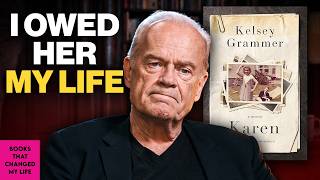
A recorded conversation (podcast/interview) between Chris Collins and Kelsey Grammer about the book Karen: A Brother Remembers. Grammer describes how the book and experiences with a medium helped him process his sister Karen’s death, his writing process (stream-of-consciousness, no chapters, recorded audiobook), spiritual beliefs (channeling, heaven/hell), themes of forgiveness, personal agency, generational trauma, and cultural/political views.
Chapters
Welcome to the Syndicate X Library. Our guest today, Kelsey Grammer, and he is here to discuss a book that changed his life. Karen, A brother remembers. Tell me about your visit to the medium. Is it Esther?
Mm. A couple of folks from this one little group that we've spent some time with suggested that I talk to Esther. At one point, it was arranged. And we. We met on the phone. There was a sort of, you know, the sounds like bones scratching a rattle. And I thought, okay, here we go. She said, oh, your sister's here. She wants you to tell her story. I think it was real. I think Karen came along and said, you need to do this now because it's still holding you back.
How difficult was it for you to do this? Did you give a piece of your soul?
Books.
They've saved us from the dark, set our souls on fire and whispered truths we couldn't ignore. I'm Chris Collins, and this is Books that Changed My Life.
So I always saw my own life as an obligation to live it fully. That I owed her that because her life was taken.
Okay, big question. How did Karen change your life?
We've met once before.
I thought so. And I was trying to remember why or how and where.
Do you remember Virgin America?
Yeah, of course.
It was the best. I was so sad.
Fantastic.
But flying from New York to la, and you were really busy writing. I didn't bother you. But at some point, I had to comment that you have the most beautiful penmanship.
Oh, thank you.
I've ever seen. And you've heard that before you were writing something. I don't know what you were writing, but you were intently at work.
Oh, you know what? I think I was writing my graduation speech for UMass Amherst, and that's what I was. It was beautiful. Thank you. Do you remember that? Yeah, I do.
I'm sure people comment on your penmanship, but there's a perfection to it.
Thank you. Yeah, no, I used to take it pretty seriously. Ms. Rizzuto, third grade. That was important. She just made it seem important. And so I did it as best I could, and it stayed with me for a long time. I've been shocked with the lack of cursive instruction in our current education.
Oh, it's gone.
It's like, how can you not have that in your. You know, your. Your quiver? I mean, you got to be able to write a note, you know, and have it charm people and even math.
Like, we used to have to do math the long way. Nobody knows how to do if they don't have a phone. They're. They're dead.
Although my daughter, my 12 year old is. She's pretty good at it. I don't know how. You know, we homeschool the kids, so she's done really well. She's accelerated some, but I'll be watching her. We were doing some remote stuff actually in Florida a while ago and the kids were on their lessons and I overheard Faith just going off. Yeah. Negative sees. And she says three.
There's a little, little pause. The teaser says.
Would you do that again? She said, run through the end. That is correct. Okay. Pretty impressive. I can't do it.
That's fun. What do you think of the library?
Fantastic. If I could, I would.
You know one of my favorite books in the library? The wisdom of Kamala Harris. Check this out.
Empty, right? Yeah. I knew it was coming.
And then the beautiful poetry.
Just for equal.
Equal.
That's really funny. Yeah. Somebody did this to me. Slowly.
As smart as that. That picture. They must have done it with AI or something.
That's terrific. Yeah. Of course, I love my kids too, for the same reason. They'll say, oh, that's AI And I think I have no clue.
But it's hard to tell.
They're already trained to just doubt what they're being told, which I like, you know, I mean that's. I always think, stand up against what you're being, you know, fed.
Yeah. Think for yourself.
Yeah. Yeah.
It's good. Welcome to the Syndicate X Library. Our guest today, Kelsey Grammer, needs no introduct, but here are a few things you might not know about him. He found God on a surfboard, Raised a motorcycle, riding dog named Goose the proud co. Inventor of the Oreo dipped in a Coca Cola.
Yep.
And he is here to discuss a book that changed his life. Karen. A brother remembers. What did you order?
Latte. Oh, latte. This is a. A half calf breve latte. Cuz I don't like to get too shaky so I just do half calf. But I like the half and half. Cheers. Hey, cheers.
So we. I'm a Northwest guy, so coffee is important. So that's a. A guy up there. The coffee is called Vivace.
Yeah, it's pretty nice.
And he takes it pretty seriously. You can tell he cares.
That's good. And it's true. I take it fairly seriously myself. So I travel around the country and I. I'm often on trips and I can't really find good coffee.
I take it with me.
Do you really? Yeah.
A couple of the companies like Canyon, they make those instant packets that are good. Like, they'll save you in a pinch. And verve to.
No kidding.
I don't know how they do. I know when I was younger, the instant stuff was terrible.
Yeah.
This. They've figured out a better way. It's pretty good.
Cool.
So just need hot water.
Thank you. Yeah.
Because it can be bleak.
Oh, yeah. No, it's that after a while, I kind of quit coffee. I think I shouldn't be doing that.
How long did it take you to write this?
Took me about three years.
What is your system for writing? Like, did you dedicate so many hours?
I. I meant to do that, but what I would find is. Because this is really my first venture into real writing. I mean, I. I had done a book previously called so Far that was ghost written, basically, and I didn't like it when I read it. I insisted that they not publish it. I said, well, you owe us a book in two weeks. So I said, okay, I'm not letting you release this one. So they sent a girl out, an editor named Audrey lafair, who's very lovely person, wonderful, smart and dedicated. So in two weeks, basically, I dictated what I thought it should be like. But we had the outline of the book already that had been done by somebody else. So it was sort of like filling in the blanks. I didn't really care for it when I decided to write this one, you know, 30 years hence.
It was an extraordinary experience. I tried to get it dedicated a certain amount of time to it, but when I would go down a certain passage, it would just take me with it. It really was stream of consciousness, which I used to find kind of offensive as a style of writing. Until I started writing.
Was the only way I could do it. It was like the only. It was like being in sort of a time capsule, you know, like.
I was in the moment that I was experiencing, no matter where I was or, you know, how many years removed, that was the moment that existed in that time. And so the book has a kind of haphazardness about tenses. Yeah. And what tense we're in at this.
There's no chapters.
Yeah, no chapters. I say I experiment with chapters for twice between and then between then and I think I'm going to forget. I don't need them.
You kind of come in and out a little bit, too.
Yeah, well, you know, break the fourth wall. I'll break the fourth wall. It was that. It was the. It was the Henry Fielding thing. Tom Jones. When I read that book, I was 18 years old. I was driving. I Was riding on the subway all the time. And I remember laughing out loud, like, sitting there going.
I found him so charming and sort of mischievous, you know, in a way. He went about just saying, oh, and by the way, you are reading the greatest novel ever written. I thought, son of a man, I want to borrow that. No, I didn't get so silly as to say that in the book, But I did say, you know what? I'm borrowing this style a little bit from Henry to step into the book and take people either closer to something or take them away a little bit, or ease them down, hold their hand for a second. So there's interjections in there. There's a letter to the reader. You know, thank you for being with me so far. Stick around if you want to. I understand if you don't. That's okay. There's gonna be some stuff ahead, but I'll be here for you and you're there for me. And that was a great device, but for me it was a personal outreach. It was just a connective thing.
Yeah, it's very kind.
Yeah.
So when you were writing it, did you. Did you write it?
No, it was all computer.
Computer. So, like, on a Mac?
Yep.
Into word or into word?
Of course. I got terrified a couple times. I thought I lost the whole thing a few times. Went, holy shit.
You didn't back it up.
Tw I did after a while. Finally learned that I did that about three times in the first 50 pages. And I went, where is it?
So what's the longest you went in a stream of consciousness?
The longest single night I went was when I was talking about Alabama in the book. I was in Alabama shooting a film.
And there had been. There had been a. A really violent thunderstorm, tornado warnings. So they had us, you know, kind of hunkered down for a bit. And then we just all went to the bar for. And had a cocktail. And then when I got back, the. The tornadoes passed. And it was almost just like the day that I was. I was riding my motorcycle for the first time further west than I'd ever been. And it was in Alabama when I got struck by lightning. And that. That night, I think. I think I wrote for 16 hours. Oh, wow. The whole experience really was like channeling. And then I'd review it. Sometimes I'd correct myself in, like, mid stream. I'd edit a little bit. Just as I was going. Then I started to think, maybe that was foolish. I should actually give it a little time to sort of settle into where I wanted it to be or where I wanted to be, and then go back and say, oh, no, I need to lift that out. There were several pages deleted because there were a couple of times I thought I kind of broke through the fourth wall a little too much and made it too individually personal, like my anger. A couple of times I thought, that isn't useful for the book right now. So I would expunge that in an edit later on, pick a word out that I thought, well, that's a little confusing. When I read the book aloud, recorded the book, I started to think, you know, that. That that sort of chemistry between a reader and the written word is being abrupted by my interpretation. Now, this does not mean I want people not to hear the recorded version, but I think the greater experience is in just the reading of it, you know, because then you get to have a sort of personal moment with the word itself. There are certain things that would come up to me, an apology.
An explanation, a digression. I would use words like that quite a bit to just mark, oh, I'm changing course here a little bit. And that was when I got into the idea about waypoints and what I remember about navigation and maritime laws and stuff. I started to think, well, waypoints, you know, show you where you've been, where you're going. And I thought I needed to repeat them sometimes. And those were just like markers for somebody say, oh, yeah, oh, that's. We've been here. What's different about this? That he's writing now. And then we could take a little trip together. But I realized that the written word will give you any brain that has experience itself. And of course it has. They all do. It'll give you seven or eight possible interpretations in the moment you read it. And I started to think that my spoken interpretation.
Kind of narrowed the ability of the book to reach people.
Yeah, that's. That's interesting. It is funny how those dimensions kind of play.
And I get the value of wanting to hear me read it. So a lot of people say, I wouldn't want to read it without hearing you read it. Oh, well.
Do both.
Well, you can see my thoughts on books versus spoken word. But, you know, sometimes an audible book can be. Can be pretty fun. So when you were writing it, do you have, like, a ritual? Did you drink coffee? Was there any sort of.
All sorts of different times. Sometimes I'd have martini. It was in the afternoon, late afternoon, coffee in the morning.
So just depend on the time of.
Day, kids waking up. You know, it's like the traffic in My house is pretty, pretty thick. And there's no real respect for, oh, Dad's writing. That doesn't happen. So it'd be like, dad, what are you doing? You writing? My son didn't. Son did an impression the other day. Gabriel said, dad, I want to show you my impression of you. So he went over to my computer laptop. She flipped it up, and he started going like this.
He's a rascal.
What a character.
Yeah, he's really funny. You got it. You did it.
What sort of art inspires you, boy?
Almost all kinds. I mean, I love. You know, I was the guy that always thought, let's go down to, you know, the Village and see some performance art. See somebody dancing around naked or somebody with a clarinet singing or, you know, whatever they were doing. I love live performance. I think that's great avant garde stuff. Impressionism, the Hudson River School. These guys all connect with me, you know. I mean, the American wing of the metropolitan one, they. They redid it, like in 74, something like that. And I used to. I used to go. I used to walk there when I went to school. I'd walk across the park and just go in. Because I was a student, I didn't have to pay anything, and I would spend hours there. But that American wing was really something. That's the one that has George Washington doing the thing with the boat and all that. But there's a couple. Couple of the guys at Hudson River School. Guys, you know, a guy with his hunting dog, and you can barely see them, and you see that they're sort of walking up a muddy trail inside of a hill. Just great stuff. Sort of documentary paintings of a life I don't know, you know.
Yeah. A time, too, right?
Yeah.
Do you have an art collection or do you have any pieces that you.
Well, I have a few things that are pretty cool. There's a strange period called German Romanticism, which is pretty much about 1827-1834.
It's a pretty narrow window. You know, things are a little happier. Yeah, there's only really a couple artists from there. And I have something that's pretty remarkable.
It's of the St. Mark's column in Venice.
And the moon is setting at the top of it with the griffin, like, on top of it, but all around it are, Friedrich Knorley is his name, but Caspar David Friedrich is the most famous painter from that particular time. But these two guys painted at the same time. And there's a monk curled up at the base of the column smoking a pipe. And you can still see the smoke. So it's a really. It's a great piece because it's barely been touched. There's no, like, sense of history in it. It's from 1830, and it's framed in the original frame. And they said there's a rumor that may have hung in the Russian Museum before, you know, the tsar was overthrown. The topic is. It's a. It's a. An invitation to Christian meditation.
Oh, wow.
It's really fascinating. And there's something about it. It just pulls you in mystically. It really does.
Do you have it in a place where you can sit down?
It's a place of value. Yeah. Yeah.
Do you often.
I'll just disappear in it. Yeah. People often come to the house and there's some pretty nice pieces of art around, but that's the one that usually resonates with. People come back and, yeah, it's about four feet by two and a half.
About like that. Yeah. Wonderful, wonderful piece. And, yeah, people come up once and say, oh, my God, I saw that painting. You know, it's probably the best one I got.
That's fun.
Yeah.
Okay, Tell me about your visit to the medium. Is it Esther?
She's a Brazilian gal. I've met a couple of folks, you know, we've been doing this sort of plant medicine journey. People group around lately in Southern California. It's been a couple years.
Everybody's got a shaman.
Yeah, right.
Pastor's been replaced with. I'd introduce you to my shaman.
So funny. I'll do a digression on that in a minute. But a couple of folks from this one little group that we've spent some time with suggested that I talk to Esther at one point. And so it was arranged. And we. We met on the phone and she said, well, just relax. Just relaxing has a bit of a thick accent. And she lives in London. She got on the phone and then there was a sort of, you know, this sounds like bones scratching and a rattle. And I thought, okay, here. Yeah, here we go. And somewhere after she started saying it, you feel like. Said, oh, your sister's here. She wants you to write. No, she wants you to tell her story.
I thought, that's interesting. Maybe she knew about my sister, but no one had ever told me that she wants me to tell her story. And I think. I think it was real. I think Karen came along and said, you need to do this now because it's still holding you back. I think that was the whole reason for it. And to celebrate her and to remember her. She knows what. What I think about the word remember. I mean, I talk about it in the book, but to remember someone means to take someone who's no longer part of your group and reintroduce them to it so that they're remembered. A member of the group. And Karen is finally membered among my friends, now membered among people I know and love. And what was remarkable, the very first person I gave a rough draft, who came back in a week or two and said, I actually got to know your sister. That's really something. That was.
That was the intention.
That's what I wanted. Yeah. Yeah. That was cool.
That's beautiful.
Yeah. Thanks, man.
How do you think that works? The medium?
I don't know. But, you know, I've been involved in it for years. I've worked with people who study it. I produced a show called Medium for several years.
Some are good, some are kind of shaky, but I do think, and it was described to me this way, is that it's meant to be a gift from God. Basically, that's a healing gift. You can't get past a certain sudden loss of communication or you're really longing to be with someone that you miss. There are those who are gifted in this particular place who are meant to help heal you. And, of course, it's a dangerous area. I agree with a lot of my sort of more fundamentalist pals in Christianity who say, you know, going in there, maybe not a great idea because you're vulnerable. And I get that. But there are some who are really good, and I still think it serves that purpose. There is a lot of swirling mischief around it.
Yeah, I mean, my. You know, I grew up a pastor's kid and a missionary's kid, and it would none of that. Like, my mom was ready to disown me when I did tm, and I kept telling her, like, it's not a religion. Yeah, it's just meditation. No, it's the devil.
Like, well, you know, it is pretty interesting, that whole thing. But I always. I would say the mo. You know, what is revelation? But channeling, I mean, in the Bible, you know, it's like John's sitting there in a cave and, yeah, who's that? Who's that dropping by? Jesus Christ.
You know, it's like, okay, I get.
It, but it seems like channeling to me. So.
Yeah, I never thought of it that way, but.
That'S true. How difficult? Before we get into this. So I'm going to read parts of this, but how difficult was it for you to do this. Did you give a piece of your soul?
Yeah, sometimes it was really hard. The way the book's written is I've talked about everything I was bumping into. I went to sleep. I don't know where. How to go this next route. Don't know where I'm headed. Something came to me last night in a dream about Hammer It out, you know, the Richard II speech. So the idea was to always kind of just be open, honest. And if I was having trouble, I'd talk about that, too. You know, I hit a block. Don't know how to go down this road. This is painful. This is. Oh, and here's a little amusing, you know, anecdote about, you know, my obsession with some teenage girl. You know, I mean, there was all sorts of stuff that happened that would. I would laugh about and sort of celebrate again, because when Karen and I were together, we were just a couple of innocent kids who loved each other, and we were lucky. Esther, in another session I had with her, I described her. I said, you know, I was just writing about Karen. And I said, and I realized she was the love of my life. And she said, yes, and how wonderful that you were born into the same family. You didn't have to spend a lifetime looking for each other. Boy, that's probably true. I mean, a year and a half apart.
She came and brought joy to a young boy who was pretty hurt. My dad wasn't around. Thankfully, my grandparents were, and my mom took me to her home where my granddad raised me. I think there was some kind of a wound there, a sense that my dad didn't want me. And so there was a kind of sadness, a melancholy about this little boy. And when his sister came, that was like her gift to him was to bring him joy. So I wanted to pay her back.
Are there behavioral cascades from that that you apply to your kids?
Well, that's an interesting word, cascade. That's not bad. I mean, I call it projection, too, sometimes. Because what happens is I don't want my children to suffer what I did. But I guess that's what all parents go through. They look at their kids and think, oh, gosh, the stuff you're gonna go through. I hope something I teach you along the way will make it a little easier. I used to say to my oldest child, I used to say, honey, you don't have to learn everything by experience once in a while. Try to learn it by example, you know, but didn't work out so well.
Yeah, but the contradiction there is, you Turned out pretty good.
Yeah. Right. So why should I be afraid of that? Right.
Yeah.
Just that pain that I've known, and I think, yeah, I got through it, but, oh, I could have done without it, you know? Right. And I'd like to. Maybe they can live a life that skips a little of it, you know, Maybe not.
Yeah, it's. That's a hard one.
Yeah.
Because especially, like, all of those hardships are what made you who you are. And then, in a sense, we try to protect people from that.
What am I robbing them of life? Yeah, yeah, yeah.
It's funny, I think one part of this that is a through line in the book is forgiveness. What are your.
Thoughts on. Because it's a big. It's a heavy, big mountain to climb.
Yeah. Yeah.
I did think that some of the intention behind this message I got was to help me with that, was to finally put it to bed a little bit. The lack of forgiveness that I would sort of visit upon myself was kind of brutal sometimes. I hung onto it for a long time. The book helped me to slowly release it. The forgive yourself idea that comes in that Karen mentions several times in the book. And I know I talk about it as though she's an actual character and speaking. And she was. So, you know, okay, that's how it goes.
I was admonished to forgive myself as often as I could. You know, as often as it would come up, it would just be. And remember, you need to forgive yourself. I took a lot of this on myself because for whatever reasons, you know, I was a big brother. I always protected her. And that was slammed shut, you know, on that one night. In that moment, everything I knew changed and everything I thought I was, was challenged. And there was nothing I could do about it until I wrote this book.
I mean, forgiveness is an interesting thing.
Especially in the world we live in today.
Yeah. Where.
I don't know, it's kind of. It's kind of beyond that in a way. So I got this tabbed here.
So thanks for reading it.
So I'm going to read this and then I'm going to kind of ask you. Ask you your thoughts. So. And I like the idea that after death, a soul can still manifest itself in some form, form or other, making itself known on this plane. I like these ideas, but I have no tangible knowledge that they are true. What do you think happens when we die?
Well.
Like I said, I have no knowledge that they're true. I just have experience that I believe is true. So I like the idea that someone can reach out and reach across the veil, through the veil, and give us information. I think channeling does exist. I really do believe in that. I think, you know, I've been told in the past that, you know, the aqueducts were channeled information to the Egyptians when there was a great drought, things like that. I believe that's true. I believe that sort of. You remember the Castaneda books, You know, Que Bueno and you know, how the world conspires to inform your choices. They're wonderful books. Was it the Adventures of Don Juan and Ixtlan? I think, anyway, the idea that we are in this dance on several planes and they actually will have a way of crossing into your existence once in a while, especially when you need it. I think that happens. I can't prove it, so I wanted to offer up, if not an apology. Yeah, apology is like an explanation, so a bit of an apology about where my head is on this stuff. I do believe it's true. I do believe that I've had messages, true messages from the other side in my lifetime.
Do you believe that there's a heaven and a hell?
Yeah. Yep. I. I believe it more now than I used to. I used to think, oh, you kind of, you know, oh, I don't know. That's all bull. The way the world is set up and the way good and evil seem to stand really in opposition to one another all the time. And yet you. Sometimes it's hard to discern which is which. I think there's somebody playing a really interesting game. Game. And it's bigger than us, and it may be heaven and hell, maybe God and the other guy. And there's all kinds of stuff that I think, may, that feels to me like it's more true now than it used to.
Have you ever heard the theory that the other guy is actually the one in charge?
I have. On this plane, certainly. Yeah. I believe that quite a bit. You do? Yeah. Because, I mean, warfare is not God's invention. It's Satan's.
It would make more sense because if your concept of God is love, then that would make free will sense.
The other guy wants you to go down the road and do exactly what you're told.
When I was a kid, I used to pray. So I also, like you, was raised by my grandfather, so my dad wasn't in my life. And I used to pray that my grandfather would be saved when I was a little kid. And then, you know, I kind of. I don't know, maybe the older I got, the less enchanted with that idea. I was. But when he died, I always wanted him to be proud of me. And I remember he was dying of cancer, and he came down to visit me here in California. I was a big shot. I had a big job. And, you know. And what was interesting is, like, none of my successes resonated with him. He didn't care. I remember he sat in my office, and he was like, what time do you. What time do you get in here? Like, he wanted me to show up on time and work hard. Like that's all he cared about. Like, he was a fireman and, you know, came out of the depression.
Yeah, my granddad, too.
But it was all like, do you show up early? Are you working hard? That sort of thing. And when he died, I had this, you know, really talented guy that worked for me, and I was upset, and I was just thinking, you know, did he go to heaven? Whatever?
And.
And he wrote me this, you know, beautiful note saying that someday I'll see my grandpa again and I can pull him up into heaven. I called him in my office. I was like, it's not the. It's not the way that I understand. He was Mormon.
Oh, really?
And the Mormons believe that you can pull people up. And I thought that was fascinating. I was like, I don't know. I mean, there's. There's also purgatory, Catholic. So there's a bunch of different ideas of it all. Fascinating. And I mean, really sitting here, we don't know for sure.
No, we just know what we believe in. Does it look like Michelangelo's? I don't know.
Yeah.
Yeah. It's a nice picture, though.
Yeah.
Okay. You wrote, we suffer mostly at our own hand and perception, or at least I do, and I am sorry.
Yeah. I mean, I create certain scenarios and certain interpretations of things that take me to pain. I end up sort of harpooning myself by insisting that I keep a certain image front and center when I needn't. Some of it had to do with. That's fairly early on in the book when I'm processing the idea that I'm supposed to get rid of a lot of this guilt that I have and try to forgive myself, and it sort of leads toward that. Yeah.
Is there a shortcut to that, or does it just take time and work?
I think it just takes the time. I think you got to put in the hours and do the work.
I guess if you believe in the idea that Jesus has died for your sins, you can. If you believe in it.
Shortcut it. Yeah, but that's by virtue of his, you know, he volunteers that.
Yeah, that's a. That's an interesting one, too, because in a sense, he's taking on all the responsibility, right?
Absolutely. It was one of those radio things. I think I write about it in the book as well. There's a section I was listening to one of the fundamentalist preachers. It was. It wasn't Greg, Gloria. It was one of the other guys. But I know Greg because I did the Jesus Revolution film, and he said, take my yoke upon me upon thee. Right. You know, and I thought that always meant. To me, in my mind, that expression always meant, you know, carry Jesus, carry his pain, carry it for him. And then this guy was explaining. This preacher in his sermon was explaining. He said, it means, I've got it.
It's my yoke. You come in here, I'll carry this. I mean, we'll plow the field together, but I'll do the pulling instead of a person having to. Jesus will do it for you. And I'd never really thought of it that way until then. I thought, take my yoke upon thee. And I thought, okay, yeah, I can see how that might help.
If he died on the cross and he could call down the angels or he could call it off, right?
Yeah.
And he doesn't. Then he's accepting a burden. That should take care of a lot of stuff.
A lot of stuff. Yeah, definitely. Yeah.
I mean, in a sense, right?
Yeah, that's it.
Okay. Here's kind of. We're touching on the forgiveness a little. But you wrote sad because how we deal with events beyond our control never steals our right to deal with them as we choose to rise above them and endure in spite of them. To me, one thing that I talk a lot about and I teach in the leadership, stuff that I do is this idea of locus of control. That you have an internal locus of control, which means you accept responsibility versus an external. Where you're blaming the government, your parents, God. People that externalize control end up being pretty helpless and miserable. But it's like 90% of the population that are waiting for the government or they're waiting to win the lottery, that sort of thing. To me, you're kind of touching on that in a sense of there is personal agency.
Oh, no, absolutely. A lot of that section is based upon the idea that I think no matter what happens, you do not have to surrender. You do not have to surrender to thinking it's somebody else's fault or that you're a victim to the point where you can't keep going. I always saw my own life, especially since Karen was killed, as an obligation to live it fully, that I owed her that because her life was taken. So. Yes.
Did you develop more personal agency because of that?
Yeah. Oh, I think so. Yeah. No, I've always been a Pretty much of a.
I mean, I'm fairly conservative, but I also. I'm definitely not a big government guy. I don't expect the government to help me at all. I'd prefer them to get out of my way most of the time.
Yeah, me too. But.
There is this thing that happens and has happened more and more, is the more you get the population to externalize, control, and the more they're gambling, trying to get rich, the more it's the government, the more you're blaming one side or the other side, the easier it is to control them.
Absolutely. Absolutely.
And so it's easier to control the population.
Nobody knows who they are anymore. I mean, this is all kind of, you know, working away at that. As long as you don't know who you are, we can control you. Somebody else is in charge because I don't have a clue about what I am. So we'll tell you. Nothing wrong with you, but it being as perfectly normal as it can be, you have this situation going on, and I can give you some drugs for it.
I can write you a prescription.
Yeah. It makes me think, you know, it's. You know, this is not your fault.
It's crazy. Yeah, it is. So do you think if what happened to Karen wouldn't have happened, you wouldn't have developed that personal agency the same way?
I might not have thought it was as important, but I do think I would have anyway. Really? I think. I think that's kind of who I am. It's. I would have loved to. I mean, who knows? We might have thought about it if she'd lived, you know, I mean, she might have had a different opinion, But I believe we both were really quite enamored of the idea of personal freedom, which also meant personal responsibility. It didn't mean, oh, I get a free ride and somebody else is going to cover it. It means I make these choices, and it's my. I'm on the line, and that's. That's the way I still feel.
That really kind of resonated with me.
Means a lot to me that you read it. I've been. I've been doing some interviews lately. Where you go, well, I didn't read this.
They're just.
Yeah. What made you think you wanted to do the book. Yeah, I think. Well, if you read it, you'd know.
Yeah. This is a little longer tail conversation too. Those things are. You're in and out.
Yeah.
Okay. Carl and his family were leaving town for a bit and he offered me his place in trade for house sitting. It was a blessing. And they had a great stereo system. And I played James Taylor till the grooves wore out. Grooves wore out meant something back then.
Yeah. Well, what's nice is it's starting to mean something again. Yeah.
You saw it?
Yeah. It's great, man. I'm just. I'm just putting one in my house too. Are you? Yeah, it's really fun.
What do you. What do you do? You know what?
You got an old. An old Technics. And there's a fellow that's designing sound systems for recording studios now who says, I've got these. I got to bring these speakers over. And they got all this drive stuff. So I'm just. I've surrendered to it now.
Yeah. And then all of a sudden, it's the price of a house in La Jolla.
Yeah, that's a little bit of a surprise.
Yeah, it's great. Okay. The power of prayer. So you wrote in here. Now here's the catch. I always leave my keys with the vehicle. I do it to this day. Don't tell anyone. And then your motorcycle gets stolen. And you said at the same time she said she was going to ask her church to do a prayer circle to get my motorcycle back. And so that Sunday, the fate of the bike was shared in church. And on Monday the police called me and said that they thought they had my bike. It had turned up in Mexico, been painted flat black and was seized in some sort of traffic stop by the Mexican authorities, identified and marked for return to San Diego and its rightful owner, me. I was wondering, are there any other stories in your life? That prayer, it was like the line was too straight.
It just. Yeah, that's the only one that really just was like, you gotta be kidding. I mean, she looked at me and said, I'm gonna ask a prayer circle to be done for your motorcycle. And it was.
17 hours later.
How messed up was.
Was not too bad. Cause they'd been driving it.
Did you like the flat black?
No, I mean that's the story. I repainted it. I learned how to paint enamel paint on my gas tank. So it's, you know, some good comes of almost everything that happens. But they didn't mess with it. And I think I put a new chain on it at the time, that's all, I think was getting kind of old anyway, you know, it was getting a little bit too lax. So I did that and I bought myself a big wide tire for the back of it. And that was a fun look. And I rode that bike for another 30, 40,000 miles. It's great.
This one is good. Auden wrote a great line. I will paraphrase. At 14, gazing in the mirror, all we are not stares back at what we are. At 14, gazing in the mirror, all we are not stares back at what we are.
Yeah, it's an Auden line.
It's from a book, sort of. Not an epic poem exactly, but just a longer form poem called the Sea in the Mirror and Caliban to the audience. If I remember rightly, there's a section where Caliban stepped out of the play the Tempest. See, in the mirror, there's all this stuff that, you know, comes together, but it's advice about figuring out who you are. And especially as an artist, what's your destination gonna be? What's. What is your destiny, if you even have one? What is the work you're about to do going to amount to? And you feel sometimes like you're an adolescent boy who's pockmarked and, you know, got acne and looking at him, and he's sitting in a room and it just reminded me of my life, sitting in the room, wishing he was something he's not. And he looks in the mirror and sees all the things he's not. And it's a brilliant. It may be pretty closely quoted, not as loosely as I suggest, but I know I missed a word or two in there, but the emotion I didn't miss at all. And that was how I used to feel sometimes was, you know, what am I going to be? How am I going to stack up? How am I going to make it? What am I around these magnificent people? You know, And I'm just a thing without any real identity or any real purpose. And those were. Those were torturous days, you know, that's. But that's probably adolescence, isn't it? I don't know, you know? Yeah.
Well, I always, like. I always think back and I'm. I'm by no means as successful as you are, but I always hear kids talk about anxiety and I'm like, I had anxieties. Nobody cared. I had to get to work.
Like, same thing. My little girl's got it now.
I was worried, like, I didn't think things would. Like, I didn't see a Path many times, like. And the only way was through. I just had to work. Like, the one thing I knew is I could outwork everybody. Maybe I wasn't smarter.
Well, I love what you're fireman.
My grandpa told me he would say it over and over again. He would just say, son, if somebody pays. And this is how old I am. If somebody pays you $4 an hour and you give them $8 worth of value, you'll always be in demand. And that just was always in my head, like, just give more value.
It's really good. I think the same way. Yeah. Yeah. It's in the book. At some point, I talk about my first union job as a construction worker. I lasted a day. You know, they came up to me and said, slow down.
I'm not even sweating. And I thought. And then somebody said. And this was the one that nailed me. They said, they're not paying you to work this hard.
What are they paying me for? To sit around and do nothing? You know, so.
But it's that gravity, gravitational pull to average. Like, don't beat the meaning.
Don't be being.
You know, there's standing out. Yeah, we gotta.
Yeah. You know, they said they were gonna beat my. So I said, okay, I'd rather. Rather leave.
This was. This was amazing at your high school. L. Ron Hubbard.
Yeah.
Alan Watts. What was it like to experience Alan Watts.
Fantastic. These people were. You know, this was the pinnacle of our current culture at the time. These guys showing up and talking about things, and it's like, I was like, wow. And I realized I have a debt of great gratitude to that school for the insight they had to invite these people there. But L. Ron Hubbard was just a guy who had written a book called Dianetics. He wasn't like, the leader of a church or a cult. A cult or whatever you want to call it. Yeah. It hadn't gotten there. And I've always wondered about the dynamics of that. Is that because when he died, somebody decided these things are. How did it become what it is? Scientology. You know, how did that happen? Of course, Kirstie Alley was a great friend of mine, and I never really was curious enough to look into it because I kind of had a sense of faith already, you know, that was constructed. But I think he was coming up with stuff about, you know, kind of like power of positive thinking, a little bit like Norman Vincent Peale, stuff I'd read before in my life. I thought, oh, that sounds a little like that. That resonates like that. Joseph Heller came and read from Catch 22. I mean, that was amazing.
That's incredible.
You know, we're sitting there, the greatest writers in the world are walking in the door and just reading to us Aloud. It was fantastic. Yeah, I was blessed that. That school was a blessing.
Whenever I'm having a hard time sleeping or sometimes if I wake up really early, there's this one Alan Watts recording called the Joker that I just love.
Yeah.
And I've. I've probably listened to it a hundred times, but it's like three hours and it's so good. And he's just. He starts off talking about the Court jester. It's incredible. That. That is fantastic. I mean, I'm. Some of that had to get on you.
Yeah. Because, I mean, absolutely. I think. I think so.
Some of that Pixie real, you know.
69, Summer of Love, 71, you know, that kind of stuff. And I thought that was beautiful stuff. You know, the people who've ended up in charge, that came from that generation. I don't know, they. They've lost their way.
Why do you think that is?
Power. Yeah, it's just. It does.
It is funny how power is such.
And comfort and, you know, suddenly you're walking around with a whole bunch of ideals and then you got five or six houses you want to keep. You know, you got this income stream coming from nowhere because you voted for. Oh, yeah, we should have stuff made out of corn. Yeah, I'll get a kickback from that. And you get addicted to the money. I mean, I think it's a really. It's an organized, you know, government, sort of like organized crime in a lot of ways. I'm a big fan of small government for that reason. I mean, I just don't.
What do they do they call that? Libertarian?
Yeah. Libertarianism. Yeah, I guess. But I'm fairly conservative too, though, because I think conserve, you know, to conserve principles, to conserve the good things that you have on the planet, to conserve the relationships between men, women and children and to sort of aim at a tolerance for each other that's real, you know, live and let live. I mean, that's where I'm at.
I'm like. The gaslighting drives me crazy because, like, if you just think about here in la, the amount of money, like, if you can't see that it's corrupt, and every time you ask them a question, they deflect somewhere else. Like, it's like, it's just common sense. Like, I'm not attacking anybody. I'm not. You know, but we don't need to Talk about three bathrooms right now. We can talk about them, but let's just talk about the 200 billion.
Yeah, right. And what's that?
Nothing's changed.
Why is that there?
It doesn't make sense.
No, it is really weird.
And you get. You just feel gaslit.
It's greed, you know, that's been transitioned into policy, that's actually been allowed to fester. And of course, then there's this stagnation of thought. There's people sitting around going, yeah, we just sign it, but just. Yeah, that just. Yeah, it just goes out the door. And they don't want it to change, but it needs to.
Yeah, there's got to be some sort of Right sizing on the ship. Yeah, I think we can't just lighting money.
We're gonna run out. Yeah, we're gonna run out. Well, I'll tell you one of my pet peeves. I don't know if you guys have experienced this when you're standing, when you're sitting in traffic and you're just about to go, but your engine turns off because they've got that thing on it, you know, that says, oh, yeah, you're sitting too long. So it just shuts you down to your butt. And I think, who's the guy that said that was a good idea? Cause it's like when I was growing up, if you started your car more than once or twice every five minutes or so, it was a waste of fuel. That's what I was taught. So I kept thinking, who's the genius that said, let's put this crap in our cars? So I got, you know, a million of these things that I just eat away at me on a daily level. But somebody got money for it, and that's what pisses me off. And I met Jesse Ventura several weeks ago, and we were talking about something. He said, you know, the one thing I did when I was, you know, governor of Minnesota, I said, I won't meet one lobbyist. I thought that was a good idea.
I don't understand how lobbyists are allowed. What is it like, there's four lobbyists for every congressman? Something like that.
It's easily that. Recently I went to the dedication to The World War I memorial, which took over 100 years to get made. And it's beautiful. Saban Howard's a sculptor who did it. It's dynamic and expressive and beautiful. So they dedicated it right near the Washington Monument. As I'm walking across the street from the hotel I was staying in to go to the swearing, the celebration of the monument. Three people came up to me. Every one of them said, here's my card, I'm a lobbyist. Here's my card. I'm a lobbyist. What are you doing in town? Good to see you. And the third person finally did, and I thought.
This is horrible. So I want that to change.
Yeah. It's just a conflict.
It's.
It doesn't line up.
It's just wrong headed. Yeah. What are we doing? The streets of Washington D.C. i mean, I first visited them when I was probably 1961 or 62 with my granddad. And I thought this is the most magnificent place I'd ever seen. Because I really believed in government and I believed that the United States was the best one there was. And.
Made my heart swell with pride that people were so responsible and thoughtful. And of course, maybe that was a big con then too. But going back this last time, I thought, I don't want to be here. That was tough. Yeah.
We could be so much better.
Yeah.
And.
And we got some great founding principles.
Yeah.
Somebody said, I'm not. I'm quoting somebody else, but I. I've sort of groked it myself. The, the notion that the Constitution doesn't need to be rewritten, it needs to be reread.
We'd all get along pretty well if we could get to there. Yeah.
And I, I think too, just to realize that we have more in common than we do different. You don't have to join the cult.
No, you don't.
Like we, we could if, you know, if you sit with just about anybody, like I always say, with politics, like, or even religion, People say, don't talk politics or religion. I'm like, why you could change my mind. Like, I'm really curious what you know that I don't know. You know, but what ends up happening is they don't know anything. They're just in the cults.
Right.
And so you can't really talk about it. You can't. If you start asking questions, people get offended and then, you know, you're in trouble.
I always say, well, they're playing with a full deck, but they're only using three cards.
My grandpa would say something.
Same one. Yeah. Well, I got that for you. So I get 10 of diamonds. Sorry, buddy, that's not gonna win that trick.
My grandpa used to say, the elevator doesn't go all the way to the top.
Yeah, right.
He also used to say, I'll slap you naked and hide your clothes. I don't know why.
That reminds me, I got a straigh this one. This is funny. A buddy of mine who I went to, went to school, college with. We communicated quite a bit during the lockdown, and it was kind of a rediscovery of an old friendship that we hadn't. Hadn't been active for a long time. So it was generating back up. And he sent over one little thing one day that said, I'm going to ask my mom if she's going to. If she'd still have to keep that promise to slap me in the next year.
The next one was murder Hornets. Remember where they came out?
The hell.
Okay. Generational trauma, you wrote. It is important because I believe so much of what we are is baked in another cake, baked into us by the suffering or successes of our ancestors, and so much of what they experience is in turn baked into our DNA. We inherit any number of emotions and hardships and histories from family that lived generations before us. You know, you think it's in our DNA?
I do. You know, I do think there's a. And I think we can break it. I think there, you know, the idea of a curse, I don't necessarily allow that to resonate through me so much, but a sense of sort of DNA habit that is absorbed. And I see the DNA molecules as the male, female. I see it as divine, masculine. No, sacred masculine, divine, feminine. And they wrap around each other and create our experience. This idea that something that happened to your generation, to your family maybe four generations previous, is bound to have a profound effect on that recreation gene, that molecule, the DNA, dioxyribonucleic acid.
I went to the Vatican about seven years ago and had a wonderful tour from a guy, an American kid from Ohio who was a priest who'd been put in charge of restoring all the art in the Vatican. And I thought, that is the coolest job any human being's ever had. And he had a tiny little office sitting up in one of what looks like a little minaret at the top of the church. But as we walked in, he greeted us. It had been arranged by a friend of ours who was Italian. And he said, you're going to like Father Mark because he's an American kid. As we're walking, he said, oh, and over there are the double helix stairs. And he kept walking.
I said, that's interesting, the double helix stairs. When were those put in there? He said, around 1100. So 800 years before they discovered the double helix DNA molecule in science. The model was in the Vatican. And I thought, well, there's something pretty extraordinary about what's going on. And if the DNA molecule was represented by a guy making a set of stairs a thousand years before, then all this stuff is connected. And it seemed to me a very profound lesson in the idea that God, or whomever. But I'm with God, it's okay that God reveals as he wishes to. And we're either ready for the information or not. But it's always been there. My great, great, great, great great great great great grandfather was a fellow named Thomas Cranmer, who was the Archbishop of Canterbury. He wrote the Book of Common Prayer for the Anglican Church for King Henry, Henry viii. He was burned at the stake after Henry died. And it was a story I was told when I was a little boy that until about three weeks ago, it was always on my mind just a little bit. And then I started talking about, like, all the premature young death in our family. And there's been a lot of it, and there may be others that have experienced it a lot. But I suddenly thought to myself, she handed me a piece of stone. This galaxy. She's sort of like a. Sort of like a channeler. But it was just we were sitting around talking about stones and stuff, and my wife and a couple friends, she handed me this stone and I looked at it and I thought to myself, well, that's his vision through the flames. And that moment had always disrupted me. And for the first time ever, I was seeing.
His vision of God through the flames and that he was okay with it. And I was. Suddenly, it released a ton of stuff for me. It was fascinating. So I do believe we carry some of this stuff. My grandmother's great uncle died from an overdose. He was a dentist. He used to practice the stuff they'd put people out with around the turn of the century, 1904. And it was pretty awful. It was pretty bad stuff to go ahead and OD on. But he did one night. And this was the same. This was the generation after all the people who crossed the country on foot. They thought they were going to a magnificent new future. And sure enough, one generation later, their kids are drinking too much and od' ing in Oakland, California. It's fascinating, but so that that wound. I think we have an obligation to discover it, uncover it, and discard it.
So is that the recipe to do it is knowing?
Yeah, I think so. Investigate, put yourself in it.
So if you keep having outcomes that are the same, that aren't desirable, try to figure out what the cause is.
Figure out where it goes to where it came from. Yeah, I did this thing A little while ago called Operation Recovered Warrior. I spent six days with guys whose issue is warfare. Their commonality is they've been in battle together different ways, different styles, different ages, different generations. But they all come together and basically do Bible study and talk about this thing, the dance between good and evil. And the warrior, the warrior and the warrior ethos, and the man who's willing to stand in the gap against.
Satan, basically against the guy that created war and what it does to you, how it can damage you, and how you get back to first principles, which is to be honorable and honest and true and brave. And all the stuff that we think is important or that we grow up thinking are the cliches that are important. They're not cliches, though. They're active choices that you can make. And I think that helps to diffuse a lot of the disenchantment we have from day to day. There's a great line in a book, Christian Science with Key to the Scriptures, Science and Health with Key to the Scriptures by Mary Baker Eddy. She talks about, do not grow weary in well doing. Wait for your reward for to that end, God works with you.
I get that. So you're not supposed to quit.
Short and sweet.
And also, you're not supposed to do it for instant gratification. You're supposed to do it because it's the right thing to do.
Exactly, yeah.
You know, one of my favorite books here in the library is I have an inauguration version of Kennedy's profiles Encouraged.
Oh, really?
That they gave out, you know, and that he signed and. Yeah, I think, you know, courage and bravery and standing up for the thing that's right versus the thing that's popular or. I think we experienced that during COVID too. Like how quick everybody was, like, just a mess.
I felt it was a blessing, actually, that we homeschooled our kids. We did it before the lockdown. And I thought, well, our life didn't really change that much. I mean, I went and shopped and I got a great. I have a buddy that's his. He comes from a long family of like, sort of witch doctors, you know. So he said, my grandmother's going to make you a mask. So she sent me a mask with a big buffalo on it. And I thought, yeah, I'll wear this. You know.
I didn't wear it for too long.
So kind of talking about time. One thing too that's interesting is the way you move around. Time does sort of have a hypnotic effect a little bit. I don't know if you kind of Know what I mean? But, like, you know, like movies like Pulp Fiction or Fight Club, how they move time around.
Yeah, right.
And when you watch the movie, you have a heart.
Hard time remembering where it was.
Yeah, it has that a little bit.
The way I laid out the book, it just came to me the way. So that's how it. That's how it ended up being written. Because I had that compulsion to kind of keep explaining what I was doing. At the same time, I was really quite happy about discovering that the time really had no value. My brain going from one place to the next. Didn't matter that it was separated by 60 years. Didn't matter that I was 7 when I realized that it mattered, that it connected all of a sudden in telling my sister's story.
Yeah, I had a great time writing it. In a weird way. I mean, it was really hard and difficult and sad sometimes. But then to discover some of the things that I did, to remember some of the things I remembered was fantastic. Like when I realized my tree was gone out of the yard in New Jersey. That was a great moment because I was just writing along, Just writing along, like, just taking a walk. And I went, oh, my God, my tree's not there. And that was. That was fantastic. I hadn't even thought of it.
So you talk about the criminal justice system and reform a little bit.







