Books That Changed My Life: Malik Scott & Into The Wild
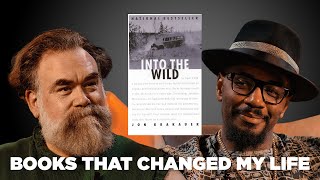
Malik Scott, a former heavyweight boxer, talks about reading Into the Wild as a teenager and how it connected to his relationship with his incarcerated father. Coach Fred Jenkins and boxing became his mentors and shaped his approach to compassion and spirituality.
Chapters
My father was a hero to me.
Sometimes you could love someone so much that any mishaps they may have, you don't even notice it because you're just in awe of this person. I think that's how I felt about my father.
How old were you when he was incarcerated?
Our guest today is Malik Scott.
Former professional heavyweight boxer. He's trained Deontay Wilder and many more.
He's a student of life. He's a father. He's an entrepreneur. The book that changed his life and had an impact on him at a very early age is into the Wild.
Try that and see how you see.
Went off the rip.
The brand of the ginger beer is usually a telltale with the lime.
One more.
And we don't scale a 1 to 10. Correct.
Considering the presentation. All of the lime. I'm very big on details of lime paint, and it's served in the mule cup. That's everything.
The vintage with your boots, mixing my vision, I'm gonna go with a 10. Plus the taste. Oh, very much so.
That's high praise.
Yes, it's very good.
What do you think of the library so far?
I'm impressed with it coming from a standpoint of the vintage look, the artistic look. It comes across. Yeah, there's tons of books in here, but it's more than a library feel. It comes across as more of a historian feel, more of an artsy feel.
And it has this spooky but fun feel as well. It reminds me of the library on another one of my favorite books of the Neverending Story, when the kid, he hid up in the attic library on top of the school. And this. Actually, that's what it put me in the mind of the library from the movie the Neverending Story.
Is that. Do you think? Because you wouldn't expect this to be here when you're outside.
Well, the first thing that was very impressive, Pink is my favorite color. And y' all have two big doors. That's pink. That's right there. So the entry right off the rip is very impressive. Just for the. For the big taste of things that I like that would maybe consider small for others. But I'm very impressed thus far.
Who are some designers that you like? Designers or artists, but that you appreciate?
I'm going to go with genres from all across. Right. So we'll say I'm very big on Shakespeare.
Oh, wow.
I consider Shakespeare artists.
So do you understand King Lear pieces?
But there's also. I'm very big on. We'll say that the artistry of Picasso. But What I'm very big on about Picasso is you have to be so in tune with his work and notice how he will actually put things together to express his work. So it's like his paintings. Like if you just look at it with your naked eye, someone will look at a Picasso queen and say, especially modern day humans would say, ah, I don't like that. But when you get the story behind it and you notice little scribbles and things like that that he was piecing together to explain the art and make you have a lot more appreciation for it. And that goes down to music. My love for Marvin Gaye, my love for Lana Del Rey, my love for Sade. And then I could hop right over to Rolling Stones and I can hop right down to the Doors and go back up to Miles Davis. So like there's so many, there's so many things artistically that I love in this world that has to do with entertainment. But then some things like this library is what I would consider like the subtle things in life that has a lot of meaningful to it.
Yeah. And I would contend that it's just books without the interaction and the human connection and the learning. That's what makes a library.
Absolutely.
Otherwise it's just books, Right? Yes.
But I would say, to piggyback off what you said, I would say that the first library I could remember myself being in was Richard alright library. Library. It's a middle school in Philadelphia, elementary or middle school in Philadelphia. And it was very, very standard. And if kids was used to just ripping and running in playgrounds and waiting to recess, that wasn't the library to really make you gravitate to it.
You weren't sneaking in there.
No. You was not. No, no, no. You would rather go somewhere else than that library. But even those kind of libraries, me coming up as a kid, it was tons of books. And I would go searching to see if anything could find me. Like you notice if a book could find me because I'm very big on like reading books that gravitate to me. Like, you know what I mean? I may be looking for one book, but then I end up falling for something, another type of read over here. And usually that's the read that I gravitate to. The one that I accidentally stumbled upon.
The question was posed to you, like, what is a book that.
Affected you and you know, has a deep meaning.
Yes.
And into the Wild is the book that you picked.
Yeah.
How old were you when you discovered this?
1997. It was the year of the Junior Olympics. Was I 16, 17? I believe something like that.
So pretty young.
Definitely a teenager.
Definitely how the book comes into your life. Do you believe that that's.
Some sort of higher power? Is it by chance?
I believe like, like we'll just say for the sake of spirituality, I believe that God. I believe that the universe at times put things in your path. That's for you, that's to inspire you, that's to strengthen you, that's to make you believe that whatever it is you're going through, there's people that come from different walks of life that may possibly going through them same things. And I'm someone that I thrive off of seeing people win. I thrive off of watching the underdogs get on top. I thrive off of people going through trials and tribulation and still smiling through a tough day. And my connection with that book during that time was Christopher McCandless. This kid at this age, he was 24, 23, 24, but he was in a time where temptation was at an all time high and he came from a good home. And when I say good home, I mean financially. But him and his dad and his mom, they had a very rocky relationship. And usually it's when you say a kid have problems with his parents, it's just one or something like that. He had issues with both of his parents, but he had a good relationship with his sister. And his parents loved him so much still, even though they had the issues in house and things that he would see that they actually gave him $25,000 to start college for his just to get started with his college routine. And he was so against things being given to him. He was so against believing in that once you've done high school, you just have to go to college and do things the so called quote unquote society American way that he ended up giving that whole check to a charity. And he did this on his mission when he was getting rid of any money that he had. So we'll say his last days, his last cash was like $124. He has pictures of it. When he literally is burning the money, he has pictures of it when he got rid of all his id, this kid really, this wasn't like this trip that he took and this journey that he went on. It wasn't some cheap thrill like nowadays. A cheap thrill to me would be something like people love the Bundy jump and they have this thing of a odyssey that they like to go about. They have a thing, it's like a rites of passage that is in all cultures. And you find kids, and you find older, some even older adults. They like to do things to make themselves feel like if I could do this one thing, this would make up for anything that I may have couldn't do in the rest of my life with other things. And at that time in my life, I've never won a national tournament. I never traveled anywhere and did things on my own with no help besides the actual thing, the actual craft that I was doing, which is boxing.
So at that point at 16, what is your relationship with your parents?
At that point of 16, my relationship with my parents was good. But at the same time my father was incarcerated, but we had a relationship from home to penitentiary. Phone calls. And my mom, she was always, when he was gone, a single mother that loved us, but obviously she couldn't be our mom and father, but she did her best.
How old were you when he was incarcerated?
Oh, he was in and out the penitentiary my whole life. He did a nine year run. He came, he would come home, then stay home for a year, then leave, then go. But the real peculiar thing about that is it never left me with a bitter sense of feel inside. If anything, me and him continued to get closer, even if it was through letters, even if it was through visits. My father was a. A street gangster. And at the same time, fortunately, unfortunately, he was like a hero to me. He was someone that I could talk to. He the only person I ever trusted. He was my best friend. And when he passed away, as I got older, I realized, like certain things I went without, I was blind to because my actual love for him, like, you get what I mean by that. Sometimes you can love someone so much, and I don't want to say idolized, but you could just love him so much that any mishaps they may have, you don't even notice it because you're just in awe of this person. I think that's how I felt about my father. I loved him so much that any mishaps he had that caused him to go to the penitentiary, you know, being a gangster, I didn't think nothing of it. I was just happy to see him, happy to talk to him, happy that I had someone to trust. And that's something Christopher McCandless never had.
In the book into the Wild.
His relationship with his parents, even though they're present.
Yes.
Is disconnected. Even though your father is incarcerated, you had a closer relationship or a more intimate relationship with your father?
Absolutely. A strong one.
That's beautiful.
Yeah, Very, very beautiful.
How do you avoid not following in his footsteps.
We come from the trenches in North Philadelphia. But coming from the trenches don't mean you come from absolutely nothing like, you know what I mean. My mom, my grandma, my aunt, my uncles, they did a very good job making sure I knew the difference between right and wrong and things that I may have to learn on my own. I could just say, like it never was. God truly was with me because there's so many avenues I could have went that I didn't go. But I almost went those wrong routes coming up in North Philadelphia, which is easy. And it will be very understandable for anyone to understand how to temptation for a young black man can get caught up into things. But I found boxing, you know, boxing came before my love for my dad. Boxing is at what age? 12 years old.
So you're 12 and you start boxing?
Yeah.
Are you naturally good at it?
Absolutely not.
Do you have like a coach that engages you and encourages you?
Yes, I know. Who is that? His name was Fred Jenkins. When my father was gone, he was my father.
The routes that I just explained to you that I almost went being thinking I was going to be a street punk at times. This is a man that would get out of his bed at 2:00 in the morning, leave his own family. When my mom didn't know where I was at, I would be just running the streets and he would come and get me, throw me in his van and take me home and say, I want to see you at the gym at 3pm and if this happened again, I'm going to do more than grip you up and bring you home. You won't have to really deal with me in a physical manner. Whatever I would have to deal with from your family, I have to deal with. But you're going to do the right thing in life.
How do you process that when you're.
12 beings of the fact? I came from a form of righteousness with a mother, with a grandmother that was a Christian and another grandmother that was a Buddhist and another. My mom was Islamic at the time that she had me. I come from knowing the difference between right and wrong. And when he told me that, I got on board because he also gave me a promise. He said, if whatever it is we doing in a year or two, you're not national champion. You don't get no big name or nothing. He was like, you can go do whatever you want. And before a year was up, I won my first tournament. Then after that it just became more and more and more and I just stuck to it.
So he kind of breaks your, your pattern. Yes, you, he manufactures some success for you. In a sense that gives you self esteem and confidence.
Besides the actual being of saying, uh, I'm a city kid, I'm tough. Confidence has to come past that. When you go on a confusion, you have to proof. Right. You have to prove, you have to win some fights. Absolutely. And he made sure not just that he was teaching me how to fight, he made sure that he was teaching me how to teach. He was making sure he taught me how to go about things in life. You want to know what's funny? Is because things in my life, different lessons remind me so much of this book. And I say that to say like the things that I had that Christopher McCandless didn't have. Like I had a Fred Jenkins. I believe if Christopher McCandless had a Fred Jenkins, a childhood trainer like I have, I don't think he probably would have been into going, taking these journeys and feeling extremely lonely a lot like he had no one to understand him. Fred Jenkins kind of was the one to do that with me coming up. And he made me believe in myself so much. Not just when I was around him, like when I would go miles and miles out of different states and he would literally just let me go and just represent the gym. And I did pretty well. And it worked out good because boxing, what I noticed, has became the tool for so many other avenues I've been able to walk in life. It's the tool to so many relationships that I have in life. It's the tool on why I'm able to get my kids jewels and gems on how to, to carry those gems in life, to know how to, you know, you could say carry themselves through this tough world because it's tough. And you have to have a backpack of armor. And prayer is one of the weapons you have to have that could be to your God, that could be to the universe. But you have to have some form of spirituality getting through these times. You just have to. And that's something that I knew after Fred Jenkins mixed in with my grandmother, always praying for me, mixing with my grandma Gwen, always chanting for me, Buddhism and mixing with. I come from a Muslim town and everything is salam alaikum, walekum as salaam. So I've always had people praying for me and things, you know, really, really went my way. You know, I'm extremely grateful for how far I got, especially with the mindset that I have on this journey of mine.
Well, I mean, it's an incredible Thing to have access to Buddhist, all of that Christianity.
Being so young, it could.
Be a bit confusing too because you know, I mean you have. My grandmother was, I mean four times a week at church she would come get me during the weekends. My grandmother was always at the altar, you can say and chanting and everything I did. When my friends would come over to the house, they would what's your grandma back doing back there? She's chanting I'm your ho ring hingo and I'm your whole ring kengo and I'm your whole rangingo. And that's the spirituality that she took on and she passed that on to not just myself. I have a son that's 19 years old and before she passed last year she even had him at the Buddhist center. And he chants now and he has his own spirituality that he goes about with his walk in life. So these gems been passed on. And when I sit back and look at it, I wouldn't trade my life for not one life that I've ever came across in this world. And I came across some beautiful people, some rich people, some people that's extremely rich in spirit. But I believe my life was set up perfectly. I give all glory to God for that, for the kind of person that I am. Everything that come my way, I can handle it. And on my awful days I still find a way to smile. And that's to me, that's all you really can ask of not just of any man, but any human. Because we all in this after the same thing and that's trying to be better than we was the day before. None of us is better than each other. We all are just trying to be better than the person we was the day before.
Do you think that, that, that sort of outlook that I would consider healthy and you know, kind of.
Positive in nature comes from being good at sports early and having something that you were good at. It became a part of your identity and then having a mentor that gave you responsibility. And do you think that's where that comes from?
I think everything with me comes from my embracement for strangers. I truly, truly believe that. I truly believe that everything I am is because of the way I embrace strangers. I have a non judgmental mindset. I'm always trying to learn. I'm infatuated with the homeless man on the corner. If he know how to talk straight, I can have just as much as a good conversation with him as I can sitting here with you. And I believe me, just having an open mind and.
Having a feeling and understanding and Having compassion, that my way is not the only way that's right or wrong. Your way is not the only way that's right or wrong. But if we share different perspectives of our walks in life, then I think we both can leave a conversation a lot better than we came. So it even goes back to what I just said before. It's all about a lot of times, I think a lot of us on this journey of life, we're always indirectly in competition with, you can say one another when the real to me secret to spirituality is most of us are in competition with ourselves. We don't even know it. We mask it through making it seem like, well, he or she got that. I need to have that look at it. Like most of us are in competition with ourselves. I'm just, I don't have mirror issues and I know the man or the person or human being I'm in competition with the most. And it's me. I'm always trying to make myself proud more than anybody. And that come with selfishness too. I have a lot of selfish ways in that aspect. I'm always trying to make myself proud. I'm always into not worrying about what you could say. Haters. I have so many people that is believers of me too. So I'm always trying to make them proud as well. It's very rarely that I entertain negativity and it's because I have so much positive to focus on.
You make that a priority. It doesn't happen by chance.
No, that's a huge priority. And I make it my business every day. I come from a world and I live in a type of bubble where I could be ridiculed, I could be judged. And I made a decision to take this journey and know this, what comes with it. So it's almost like I don't throw stones and hide my hands. I'm a professional, former professional high level boxer and now I'm a world renowned boxing trainer. And I'm a big personality. And all of these things come with being judged. It comes with the territory and I wouldn't trade it for the world. I wouldn't trade it for the world. I love my life, even with the ups and downs. And it's because I have a sense of a good feel of gratefulness, of knowing that I didn't have to wake.
Up this morning when you say like most people approach things like it's a competition. I find that there's kind of two parts to that for me that I've observed. I'm curious what you think One is that most of the time.
People look at things like a competition, interactions, conversations, and the outcome of that is somebody has to lose for somebody to win.
Yes.
The true meaning of, of life, I think, is all the stuff in between. Not the winning and the losing, but the collaboration and the understanding in between. And not judging people on the symptoms because, you know, somebody might have had a hard time and the symptoms or what they're portraying in the world is maybe not that attractive, but behind all that is a real person and they have a story and they got there somehow. But if you cannot judge on the, you know, the spikes that they're putting out as a protection mechanism.
Exactly what I'm saying.
Don't react to the symptom.
Try to understand, try to understand the person. And I'm, I'm very big on that. I believe everyone has a story. I believe that everyone has a reason. I'm sure something. I have this, I don't want to say addiction. I have this.
Love.
You can say for insane logic is what I like to call it. So we'll say like, I'm a huge ID, Discovery Channel type of guy. I'm huge on Forensic Files, I'm huge on horror flicks. I'm huge on. I'm not huge on serial killers, but I'm huge on the stories and the plots of how people have did certain things. And it's not even about them getting caught or getting captured. The insane logic how someone can go about doing something that's extremely treacherous, that's a whole disaster, but in their mind they have a reason for this. Whatever that seed is. I've always had a huge, huge, you could say, interest in it. If I never was a boxer, I'm sure I would have been something like. Not a psychiatrist, but what is it called when you say, like when Charles Manson, he went to the penitentiary, they would have people come in and he would tell them exactly. I mean, he would really release to these people exactly how they would feel. They wasn't cops, they wasn't detective, they was like correspondents. You can say, I believe my avenue would have been something like that. Not because I want to catch these bad people and put them in jail, because that's the law job to do that. But it's just to hear they point on things because all this start as a seed. You could show me the meanest person in the world that did the most treacherous acts. I know for sure that when he was born, he was an innocent baby, just like I was when I was born. These things Build up on people. And whatever this buildup is, I've always had a huge interest for her. Like, always.
We all kind of start like a blank slate. How did this.
How does this get there? And I'm even like that in boxing. That's the way I teach. So we'll say most people, and especially they. We are in at an ultimate high of an instability in gratification time. So that mean most people aren't into the actual sports. They into the highlights. It's the reals. I've always been the kind of person that I could see an incredible knockout in the sixth round. I would have to go back and watch round one through five to see how it was done. Because that build up to that, especially if you're dealing with a systematic fighter, somebody that's very surgical. No, that was set up. And how you learn in boxing into me in combat sports is not being into the highlights. You learn by seeing what set up this knockout that you keep. The lesson is not in the knockout. The lesson is in how did this set up? What system was used? I need to go back to listen to what his trainer was saying to him in the corner. I need to go see how he gravitated to the information. I need to go see how he was fainting before he knocked out. I need to see how many times he just missed that punch that finally landed.
There's a parallel there between your views on not judging.
In a sense.
Yeah, they're trying to. Because the knockout is the symptom or the end.
Yes.
But what was the. What was the story?
What was the why? What was the how in the process?
You know, the takeaway is we're not doing enough for these kids.
Yes.
Like these kids are helpless.
Yes. And that right there is the accountability part on. You could say the system, the law or whoever. Because the real fact is, if the help is given before the seed is actually even grown into that, those type of things may not happen. If you're keeping your right hand up when you're going to your right side, then you won't get hit with a left hook when you're going to that side. You won't be a highlight room. If you hold yourself accountable defensively, kind of like how combat sports is, especially boxing, the way you train, the way, the accountability you hold as.







