Books That Changed My Life: Manny Marroquin & The E-Myth
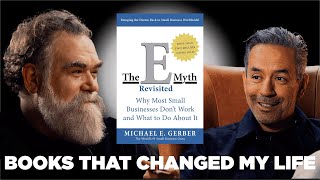
Grammy-winning mixer Manny Marroquin migrated from Guatemala to Los Angeles at nine and discovered mixing at 15. Reading The E-Myth at 28 made him recognize he needed to be more than a technician, leading him to start seminars, develop product lines, and eventually buy Larrabee Studios.
Questions this video answers
Guatemala.
Nine.
Fifteen.
13.
About 28.
Chapters
What did you discover about yourself? Was there a point where a teacher or somebody. An adult.
Yeah, Mr. Cooper, 15. He showed me the art of mixing. And I'll never forget from that point on I was like, wow, what I just played. I can change in motion based on frequencies. And I discovered that at 15, I'm like, this is what I want to do for the rest of my life.
Welcome to the Syndicate X Library, where we love books and today we're going to be talking about books that changed your life. We have an incredible guest, Manny Marroquin, who has 13 Grammy awards for his professional audio work. He resides in Los Angeles, California, and works from Larrabee Studios. Manny has worked with such artists as Rihanna, Kanye West, Katy Perry, Ed Sheeran, Taylor Swift, Rosalia, the Weeknd, Justin Bieber, Post Malone, Bruno Mars, John Mayer, Tupac, Mariah Carey, Janet Jackson, John Legend, Alicia Keys, Sia, Lana Del Rey, Linkin park, and many more. The book that changed his life and we are going to discuss today is the E Myth by Michael Gerber.
Cheers.
Cheers. Thank you for having me.
That's a good way to start the morning.
Oh, yes. Yeah.
Better than coffee.
Way better. This is my. My coffee right here.
Where did you grow up?
I grew up. I'm from Guatemala originally. Grew up in L. A. Holly hood.
So were you born in Guatemala?
I was born in Guatemala.
How old when you came up?
Nine.
Nine, yeah. Yeah. And so what is your earliest memory of music?
I come from a pretty musical family on my dad's side, like, my aunt is like a famous classical pianist in Guatemala. And my. My cousins, uncles, they always played, you know, in Latin America, every weekend there's a party. Right. You have every weekend and there was always. There was always a jam session. So I remember my grand grandfather playing timbalis and my cousin playing guitar and my other one playing sax. And I'd be this little kid sitting in the corner just absorbing it all. Right. Around the time where I left, I started picking up the drumsticks.
And so drums was your initial.
That was definitely my first love entry into it. Yep. And then came here and, you know, single mom were considered war refugees at the time because, you know, the civil war in Guatemala, all of Central America.
Was your dad still there?
No, my dad was unfortunately gone. Yeah, when my mom was pregnant with me. So she.
So you never met him?
Never met him, no. Oh, wow. Yeah. She was five months pregnant. Yep. So then, you know, migrated here. We got on the plane, it was like a culture shock, man. It was like coming in from a Third world country to, like, Holly Hollywood.
Do you remember what your impression was? Did you see it as opportunity or did you see it as scary or.
So my mom said. We. She's like, look, we're gonna go to California. We're gonna go to Disneyland. So my sister. It was. My sister and I were like, Disneyland, Mickey Mouse. Yeah. Sister.
Older or younger?
Older. Year and a half. So we're like, oh, we're going to Disneyland. And we landed.
And Mom's a good sales person.
Yeah, she's very good. And why are we storing all our furniture? It's like, oh, yeah, we're taking that to Disneyland. We got here, and we're like, it was a Thursday, November 11th.
Or 10th. We land. And I remember seeing the bluest skies because Guatemala's tropical. There's always clouds, and they're moving fast. It's like, you know, like, rains for 20 minutes, and then blue skies and then rains again. And here's just the bluest of skies. And I see. The first thing I see is a theme building at lax. I'm like, I'm gonna get a tattoo of my neck of that shit to remind me that's the first thing I saw in America. And my first meal was Chinese. I never had Chinese food in my life. You know, it comes with little, you know, boxes. I'm like, what the hell is this? Right? And then by Monday, we were in school, and my sister and I were like, why the are we in school? Like, where's Disneyland? You know, I thought, we're going to the beach.
English.
No, no. Zero. Wow. Yeah, yeah, yeah. So they put us in esl, which is English as your second language. Basically, you were. It's like having a disability, in a way. They put you in the corner, you know, kind of.
They try to teach us English and not learn anything, really. So right there alone, you're disadvantaged, right? But my mom was a. She's a hustler, was smart. She put us in English school. Tutor every day, two hours a day. And then three months later, we're still like, man, where's Disneyland? Shit, I want to see Mickey Mouse. And the people we're staying with was my mom's best friend, and she married a restaurateur. Pretty successful Italian born Argentine. Raised and migrated to la. The culture was very different from Guatemala. So from there, you know, he'd have to have wine every night and have a, you know, eat well. And.
So we lived in Hancock Park. A pretty, like, the Fresh Prince of Bel Air, like, type of, you know, like, coming from A little one bedroom, two bedroom, shitty apartment in Guatemala to like this massive house in park. I mean, it's still a freaking mansion. So it was just a weird, you know, then that we were in school and you know, three months in, she's, she told us, she's like, we're not going back. We're like, what do you mean? It's like we're staying here. Like, all right, well, you know, as kids, you, you, you're able to adapt to your environment much easier than we give kids credit.
What did mom start doing for work?
So she's a nurse. Like she was running a hospital in Guatemala and her, her, all her friends were getting kidnapped by the rebels. So at the time there was, you know, the United States was funding the government, Russia's funding the rebels. So it's like another Vietnam.
So were they kidnapping nurses?
Because they needed them, they needed that. They needed them to treat their, the injured, you know, so. And then at that point they would rape them and kill them, you know, so my mom's best friends got kidnapped. She was maybe next, you know, because she was the head of the hospital. And at that point she's like, oh, we gotta get outta here. Because she didn't speak English. She started like cleaning houses, just doing whatever, whatever job she could get to support both of us. You know, it's the classic immigrant story, right? Just gotta go through it and she's like, man, she's tough, tough woman. Then she started learning English. Very stubborn. Doesn't speak it though. Doesn't like to speak it. But she got a job at a nursing facility. So she would do the graveyard shift and then during the day she would go clean a couple houses and. And then she. So my, my sister and I had all the time in the world. Like we were unsupervised kids because she was never home. So we got into a lot of trouble.
Did you have any impressions from him being a restaurateur? About what somebody owning a business is like, or too young, you know, Too young, too young.
Now I go back and maybe subconsciously I. Yeah, you know, maybe sense, maybe. Yeah, yeah. Never really thought about it until I was telling a story and I'm like, oh, wait, he was also a restaurateur, so maybe there, maybe there's a connection somehow.
So what, what did you kind of discover about yourself after that and being here that you were interested in or good or was there, was there a point where a teacher or somebody, an adult, there's always pointed out something that you were special.
Yeah. First start started with Mr. Cooper. In middle school. I went to JB John Burroughs, right on Wilshire and Crescent Heights. And that's when, you know, there's a lot of, you know, big gang culture around there, you know, Hollywood. But I, yeah, I was never that kid. I was always. Music was always in my blood, just from, you know, my family. So. So I started playing drums. And it's funny because I grew up with listening to hip hop. So I would play hip hop on drums, but then all my friends that were musicians, they all listen to rock music. So. So then I was playing rock and hip hop and I feel like we were before Rage against the Machine. We had a buddy that would rap over hard hip hop beats. And it was, you know, that was the culture that I grew up in. It was like Rage against the Machine.
Where you felt natural that they would coexist.
Yep, yep. So, so that got me out of trouble, man. When I say music saved my life, it, it saved my life because if I didn't find that, I would have been with all my other friends that are knuckleheads and who knows what would have happened. So I ended up going to this music school.
Which, that's what saved my life because I would have gone to my home school which was Hollywood High. And Hollywood High at the time was like, you know, it's just not the best of schools. You know, there was no middle class. Either you were, you know, that, you know, someone's son or you know, daughter or you're at the bottom, you know, you're like just hustling. So I knew that that was not going to be a good school for me. So I ended up going to Hamilton, which is in Culver City. I mean that meant that I had to get bused in at get up at 5, bus will pick us up at 6:30, take us to school or maybe even 6, get there by 7. School starts at 7:50 and we didn't go to school. We went to school from 7:50 till 4. So by the time you get home, it's dark again and you know, so it kept me out of trouble, you know. And you, you'd have to join a band or two and then you. So we would sit there, do homework, go play.
I mean we get home by 10, 11 and then do it all over again, you know, and, and we were probably one of the best music schools in the country at the time. By the time I left, we, we were competing with junior colleges because all, all of LAUSD were like, it's not Fair. You guys got the best musicians. We're always, you know, competing for second, you know, second place. Because we were killing everyone, every school, whether it was string ensemble, percussion ensemble, orchestra, jazz band. I mean, our B jazz band was kicking ass, you know, so it was a great culture and environment to be a part of. Especially when you're a kid, like, trying to find yourself, you know, there's probably only.
Maybe I'm wrong, but I feel like there's only two things in the world that bring people together, and that's food and music.
I was just gonna say food and music. I mean, well, there's three. That's why my restaurant's a triangle is the trifecta. Food, music and libations.
Right, Yeah, I was. Yeah, yeah, I was throwing that in.
Yeah, that's part of the music. I mean, the food, the food and beverage. Right.
But yeah, there's just something about that, that there's a, you know, I don't know, feed your soul, in a sense.
No matter where you go in the world. And thankfully, I'm fairly well traveled. That's it, man. It's that trifecta. The. I. I usually don't trust people that don't have at least two of the three. You know, maybe you don't have the libations because. Former alcoholic or whatever. Because I've met people that don't like music. I'm like, how do you not like music?
I worked for a guy like that.
It was weird. Weird. This is weird.
Because it's like he felt nothing.
Nothing. It's like, like, wait, turned off. Yeah. But, yeah, that was a really interesting background, you know, like growing up. And I just got lucky. I met the right people. To your question, like my main guy, his name is David Sears. He was my high school teacher and he kind of knew the kids that needed a little more attention, you know, so it's give teachers so much credit for, you know, picking up that energy from kids. And he just saw me, he just took me under his wing and they had a little studio there and he got put me in charge of the studio. And that's kind of how I learned the art of the guy that I mentioned earlier, Abe Laborio, the drummer for Paul. Paul McCarty. He killed my drumming career because I saw him play. We were 15, he was year older than me, so I must have been 14 and he was 15. I saw him play and I was like, I will never be that good ever. Like, no matter. I can practice 10 hours a day. I will never be that good. And maybe at 14, I'm already realizing my weaknesses and strengths. Maybe I'm like, there's no way. So we. We always joke when we see each other that I thank him for being a badass. Because I. Because then at that point, I'm like, checking boxes. I'm like, drumming. I'm reading. Reading electronic music slash production. I'm like, I don't know what the hell that is. Let me check this box. And that brought me to the studio, you know, and from that point on, at 15, I discovered the studio and never looked back. That was it, 15. He showed me the art of mixing. And I remember doing the song, probably crappy song. And then he listens to it and he goes, oh, okay, now you gotta mix it. Like, what do you mean mixing? What is the. What's mixing? It's like, I'll show you. He took the time. There were only five kids in the class. Took the time. It was like, this is how you do it. And then had a real, real tape machine and had a little desk and. And I'll never forget from that point on, I was like, wow, I can't believe you can change emotion. What I just played. I can change it based on frequencies, right? The world's all about frequency. Everything's a frequency. And that's an equals emotion. And I discover that at 15, I'm like, this is what I wanna do for the rest of my life. I'm still doing it, you know, at a high level. And I love it more now than I. Than ever, you know. So that's been, what, almost 30 years?
What was the first book you read?
You know. You know, at school we would read a lot of, you know, just the typical books that, you know, I remember reading Huckleberry Finn. Yeah, exactly. A lot of Walt Whitman.
And you would read them.
I read them.
You did your book report like a good student.
I did. But, you know, I. I learned later in life that I'm slightly dyslexic, you know, so. So I would. It would take me a long time to read because I want to make sure I understood, slowly understood what I was reading to take me a little longer. That's why I'd like audiobooks, you know, and it's funny because later I learned that there's a lot of successful people that have slight dyslexia. So it makes your brain go to a different level of learning. So I. I read them and I would grasp onto things, you know, But I can't say I was really into it, you know, I was my. At that point, music was my life. So. But catch 22, I remember really liking that book in high school, you know, and. Or middle school. So, yeah, there's been, you know, the books that they make you Fahrenheit 451 and like, just those books. But then later I wanted to, you know, just learn more about things, about leadership and about business and. And I started reading more book, you know, which brings us to, you know, the E. Myth, where it kind of. Those are the books that kind of change your life. Right. And that one, that's the one that changed my life. My business manager gave it to me maybe, I don't know, 20 years ago.
So where. Where is your career at at that point? Like, do you own a studio?
No, no. At that point, I'm like, you know, I'm a mixer.
And what did you mixed up until that point you were proud of?
One of my first records that I mixed that got me a lot of attention. I was 21, and it was a Whitney Houston song called Heartbreak Hotel, which Faith Evans and Kelly Price. So that was like, you know, people took notice. Yes. The right people, they would call me like, hey, I didn't know you mixed. That didn't give me a lot of work necessarily, but it kind of put me in the different.
In the conversation.
Yeah, yeah. And I was 21. And then from that point on, my career never did this, which I'm happy. I'm glad that it never took off like that. Yeah, Screw just kind of groove. Slow, slow growth, you know, it's like that was a good mutual fund, you know.
So how old are you when you're introduced to the EMA?
28, maybe.
28, yeah. So you've done Whitney, what else had you done up until then?
At that point, I was doing a lot of R B. I was doing a lot of whit. I did Whitney, Tony Braxton, the Braxtons, Christina Aguilera, a lot of Baby Face. Gosh, my. So much stuff. But in R and B and hip hop, spice Cam, but battle cat, dj. So what do you.
What do you think about your career at that point that your business manager feels like you need that total vision?
Yeah, yeah. I had the blinders on. I wanted to be, you know, the best mixer in the world. That was my goal from 15 or whenever, you know, when I discovered it. So it was very focused on just building my career, like, never, never looked back. And my business manager at the time noticed that, you know, noticed that I wanted more. You know, I just wanted, you know, Just more growth really. And he would always, you know, he gave me a book called Silver Spoon when I had kids. And in this case he gave me the book at the perfect time, which was at 28. I was trying, you know, it's a crucial age for every, every man. Right.
Or you're going to turn 30.
And yeah, you're like pre, pre 30. You're still knucklehead. You're still, you still have youth, but not wisdom, you know. So he just gave me the book at the perfect time where I was trying to grow my, my mixing knowledge and career, you know, this before I became an entrepreneur, you know.
So he get, he gives you the book. How long does it take you to start reading it? From the time.
So I was, I was bicosa for a long time.
I had between here in New York. New York.
Yep. So I remember reading it on the plane.
Did you ever fly Virgin? Yeah, I miss Virgin so much. Oh man, it was the best. I did that a lot too. And I stopped doing it when Virgin got bought, remember?
First like when I got married, I was like, you know, I'm going to spend money on two things, three things. Food, wine and the flights.
I used to say to people, you know, in the office, I would say, don't even present me with something if Virgin doesn't fly there.
Exactly. Yeah.
Like that was really my rule because it was so different, man.
We, we did this upper class at the time and this was 20 plus years ago and it was like the second level with a lounge and the bar and like it was incredible.
I miss it so much.
We went to France and It was what, 12 hour flight. And right around the 11th, oh, we're going to get ready to land. We're like, what do you mean.
Make it another 13 hours?
So you're, you're, you're flying so you have time to read.
You got time to read.
You just take it on a flight and you start reading it.
I couldn't put it down. It's like, and like I told you, I'm not the fastest reader, but I just couldn't set it down. And I, I read it there and back and I called him. I'm like, man, this is one of the best books I've ever, you know, read. Thank you. And I didn't really know it until maybe this realize till the second time, maybe the third time. I started picking up more because I remember this is something I want to read almost like often. Like, it's like my bible in a way, you know. And Every couple of years, I would read it again, and I. The second time, it just, like, really, really clicked, you know? So it's a. It's just. It just keeps coming back, you know, and it's. It's one of the most powerful books I've ever read, you know?
So at 28, you read it. What changes? Like, what are the. The immediate changes in your thinking?
So at 28, you're. You're always in the music industry. You're always fighting your ego, right? You're. You're always like. Because, look, I feel like a lot of people think this. They have to think like this. When you're successful at anything or want to be successful at anything, you got to think about. You got to think you're the best. You have to, right? I got to think I'm the best at this. So that you can perform, but you can also. Don't. But your ego will get in the way. So you can't lose track of. You can't let that sheet in front of you get in the way. So there's a fine balance of. And I always reference Kanye and Jay Z. Like, you know, Jay Z can say, I am Jehovah and I'm the best in the world and the best rapper alive. And then Kanye can say exactly the same thing. But the difference is when you were to describe Kanye and say, is he cocky or confident? 9 out of 10 people will say he's cocky. Then you go to Jay Z. Is Jay Z confident or cocky? 9 out of 10 times people will say confident. So why is that? Why is one more confident than the other one cocky? Right? It's the way you present yourself and outside of business. So I got to think I'm the best mixer. I have to. But I'm not going to say that I'm the best mixer, you know, but in my head, I have to think that. So this book was the first time where I ever kind of looked in the mirror. You know, it kind of like when you go hyperspeed on Star wars and then it stops and then you see all the stars, right? It was kind of like that effect for me where I looked in the mirror and said, wait, who the. Am I really? What am I? Why. Why am I. Am I being selfish? Am I being cocky? Am I being confident? So it was the first book where I gave me an opportunity to look in the mirror for the first time. And not hyperspeed, but normal speed.
So you felt like up until that point, you had been posturing.
I just been too in My bubble, like, like the blinders. Being the best mixer, being the putting out the best product, not thinking about my career, not thinking about myself or people around me. And you know, I was just very in the, you know, in the zone. I think the book, one of the main parts you get from is knowing yourself and your personalities that, that everybody possesses and how do you, and which personality are you and how do you control that personality, right? So for example, he talks about every single one of us has the manager, the entrepreneur and the technician, right? And one of the examples in the book is, you know, blue collar employee that wants to expand and do open up her own business. She happens to bake, be a good baker and she opens up her bakery, right? So in her mind, right. Just to give you an example.
When you become a business owner, you got to think, you got to be a technician and in her case, you got to have the best pies. You just have to. If you're going to sell a pie, the manager, well, you got to manage the business. Something as simple as opening up the doors when you say you're going to open them. Making, having the book so in order, I mean your P. Ls and payroll. Payroll, yeah, taxes, exactly. And then the entrepreneur, you got to sell it. Sell it. How do you sell it? And these three personalities in your head are going to think that they're more important than the others. For example, she's like, well, listen, if my pies. The technician will say, if my pies aren't good, then no one's going to come in, no one's going to buy, no one's going to eat them, no one's going to buy them. The manager is like, well listen, if the store wouldn't open in time to have access to your pies, nobody would even have access to your pies. And the entrepreneur, hang on. If I didn't promote the business to come at seven in the morning for you to open and you make the pies, then nobody would know about your pies. So this is happening in all of us. And it doesn't matter what you do in life. The beauty about the book is you gotta realize which personality is most dominant.
So were you a technician up until that point?
I'm a technician. Exactly.
And so the manager and the entrepreneur didn't exist. Didn't exist. And so.
How do you go through that architecture at 28? Like, what are you thinking now? Like, oh, these are the things I have to change.
Well, you know, I always say there's buyers and sellers for the Most part. Right. You know, I. I'm a studio rat. I'm not a. I'm a buyer, I'm not a seller. I. I don't do a good job selling myself. So that made me realize, like, you gotta. I mean, you gotta do a better job selling yourself as a mixer because you, You.
The mindset for the technician is let the work speak for itself.
Exactly. So then at that point, I'm like, well, now I gotta be an entrepreneur. Now I gotta think outside the box. And how do you pro. How do you promote yourself? And I have a line of plugins. I have my own headphones. I'm a better seller because of that book. And when I say sellers, you know, sounds maybe a bit.
No, but the entrepreneur.
Yeah, exactly.
The promoter. You got to promote it.
You got to promote it.
If you're on an island and nobody knows about it.
Exactly.
What were the changes, immediate changes that you made in your approach?
I started doing more seminars. I started going out to trade shows more. I started, you know, this is before social media, you know, so just being out.
Just being out hanging out and talking and.
Yeah, just being more social, really. Honestly, that's level one.
So you start showing up to release parties. You start showing up to different award shows and different things.
At that point, I had a manager. I started having conversations with my manager on how he can promote me, you know, strategically. Yep. Yeah.
Were you shy?
Yeah, very. I mean, look, insecure about being from a third world country. English is my second language. There's a lot of insecurities for. Yeah.
And you're a technician.
I'm a different. I'm in no man's land.
So how do you start to get over that?
Like, getting over that social anxiety, you know, that's. I mean, I think we all have it to. To an extent, you know, and no matter how confident you are, I still have it, you know, but. But at least I make a conscious effort, and at least I know about it and I, you know, I accept it and be better at it, you know, and.
But at that age, how did you change it?
You know, it's just. It was. It was just a gradual change. It was just the beginning of putting.
Yourself out there a little more. A little more?
Yeah, yeah. Just being more. Being conscious about it. I think that's the most important thing. Where before I didn't even know that I had to do that. I didn't know I had the three personalities. I didn't know about them. I just thought I was 100% technician, and that's what I was. And I'm still multiple more dominant as a technician. But now, you know, at my age today I'm a better entrepreneur than I've ever been. I think because of the gradual change from 28 to now and consciously working at it. And this just never ends right. But the beauty about it is it teaches you how to recognize what your dominant personality is and the others. Then you can put people around you that possess those personalities that can compensate for it. So it's not like you have to a thousand percent change. You just got to make the right adjustments, you know.
So in a sense, your way of becoming a better entrepreneur was collaborating with your business manager.
I think it's a combination of a lot. I mean that's one that's a big key, you know, like having, you're saying.
Having other people around you to help.
With some of those business managers, music manager, you know, sometimes you get a publicist when you do a big project that you don't have to talk about yourself, but somebody else will. And then the manager, the third one that we, you know, don't really speak about that much. Even though I have a music manager, he's not my manager internally. So internally that means that I have to show up, I have to make deadlines, I have to keep track of my clients, I have to make sure I email them back. I got to make, you know, just be organized with your business, you know. And that was probably the biggest lesson that I learned on how to have a structure in my business. I always preach SOPs, you know, standard operating procedures. So you gotta have these procedures to have some balance so that the technician can now perform at its best. Because now you can trust the manager, that the manager side of you is making all the proper procedures to put the technician in the position to succeed without the manager. Again, I'm just a mixer, you know, that's not going to meet deadlines, it's not going to show up on time, that's going to stay there all night and be tired the next day. So you have to have that manager to kind of like that personality to organize your life, basically. So again, all three are equally as important to be able to. And it's all happening here, you know, in real time. Right. And to visualize that just empowers you, you know, empowers you to be a well rounded individual, you know. And that's really the simplest of saying, it's like just you're just trying to be a well rounded, in my case, mixer. And then there's a lot. And it gets really technical on structure of business and entrepreneurial and why certain people are better business as better entrepreneurs than others, you know, and. But the foundation of the book is really looking in the mirror and seeing all your, you know, your little here and little there and little here and accepting all your imperfections. Maybe not even imperfections, but accepting yourself. That to me is the real like the core of what this is. And at that time it just hit, it was the perfect book at that time, you know, for me. Because then you realize, oh, it's, it's, you know, I've been always, I've been on this high speed train and now I got to slow it down. And really if I want to take the step back and take five forward, I need to at least know myself, you know, and realize what kind of person in my business I, I am and who I want to become. And it's like that other book, the Secret with the power of Suggestion, right? And it's like, you know, which is kind of, I mean, I don't know if I necessarily believe in that. You know, it's like put it out into the universe. I, you know, but, but it does, does work sometimes where you, you know, you visualize, you know, your run like the Olympic, you know, 100 meter dash and they're all like stretching and they're visualizing that running that race. I think we got to do the same thing. It's like I got to visualize my career, my path short, mid and long term, right? The short is like this song that's in front of me. I visualize it, I hear it, I gotta perform it and I'm gonna try to do it to perfection. The mid is like as a mixer, I wanna X, Y and Z achieve that. And then long where do I wanna, you know, where do I want to be as a long term mixer, you know, and that, that's what was happening at 28.
So how long after that do you decide to open your own studio?
I was a client at this place, Larrabee Studios, which I currently own. So back in the day we, you know, these studios are so expensive and you know, this technology is completely different. It's not like you can get a computer nowadays and have a studio. Everybody has a studio and their laptop there. Then you had to go to these big commercial studios and they're, you know, they're not cheap so the label would pay for them. And so I would bounce around town with all my equipment going to different studios. And so that was sort of the common practice back then, then 08, the crash happens, right? That affected the music industry because at the same exact time, streaming, streaming and what's that? Napsters, you know, and Limewire. And all of a sudden the music industry decides to fight it, right? Which is probably, looking back, not probably was the wrong thing to do, right? They never embrace that technology. The music industry goes through a 13 year recession, right? So in the first, second year, the owner of the studio, he's a business guy, he's a former stockbroker. So he saw the Titanic sinking and he's like, I'm out. I had been one of his best clients at the studio and he asked me, he's like, do you want to buy it? I'm like, absolutely not. I'm, I'm a studio rat, I'm not a studio owner, you know. But then going back to the myth, I'm like, well, you know, growth and you have to, you know, you have to long term and visualize what that's going to be like. Because I didn't know anything about studios running them. I know how to use them, but not run them. That, that's a whole different path. So then I have a. One of my rooms is the Georgia Morota room. And for those of you who don't know who Georgia Marauder is, look him up. He's basically the architect of disco. He kind of invented disco. So in 79, disco dies, right?
So his career ends. So then how to reinvent your career? He started doing soundtracks and he did Scarface, he did Top Gun, Flashdance. I mean, he did all the big films. So he became a soundtrack guy. Now, of course, if you're a soundtrack guy, you got to move to la. He moves here and looks for a studio, finds his place, builds two rooms. And this is one of the rooms that I'm in, you know, and he, he was here for five years and went back. So Kevin is his name. He's like, look, man, if, if, if I sell Laramie, if I sell studio, you got George's room, someone's going to want it and they're just going to move in and like, wait a minute, come again?
So the takeaway is, what got you to think about getting it is you didn't want to lose, I didn't want.
To lose my room. And I've done so many like records. There were so superstitious. I'm like, there's no way I'm going to lose my room. So then I call my businessman. I'm like, man, there's A studio. I mean, it's for sale. He's giving me an opportunity to buy. And my business bag goes, are you out of your mind? Of course not. Don't do that. I'm like.
Because everybody's mindset is the sky is falling.
It's done. Yeah.
What kind of console was in that room?
I'm an SSO guy.
Like, oh, really? Not a Neve guy.
Not as a console. Neve sound is incredible. But as a console, I think the SL has done a great job, like with routing and all of that.
You know, all the automated faders, all.
That sort of thing. Yeah, Flying faders on the. Was always so faulty.
I remember in the Neve at London Bridge in Seattle.
Yeah.
They would call us in and like.
Like you had a. You had a job to do in the mix. So we had to mute these two at this point and fade this.
We would get 10 GA's runners and we ride like in big red letter numbers. Like, okay, at this 201 fader goes from red to blue and we literally would mark the faders. And so this kid, this 18 year old kid would go, oh, oh, oh.
Yep, that was me.
Fingers. Yeah, we had fingers everywhere. That was like automation, right? Before automation.
But the. There's something about the Neve that just sound.
Yeah, it's just clean, big open. I love that sound. But I just didn't like the maintenance, the, you know, the, the ability.
Oh, man. On a channel or two would go down then to fly a guy in from England.
Yeah, it was.
And when they would take it apart, it was.
It's a nightmare. So. Although I do believe that the consoles were a much better sound. The SIL was a better instrument. It's almost like you play a Fender or do you like an SG or Strat? You know, it's like for me and ssl, I was able to do things quicker and more efficient, you know, I'm happy that, you know, that, that, that lingo with knees and nest cells and.
Oh, people used to come in and just run their, their album through two channels.
Yeah.
Neve kind of had this theory and I just read about it. Right. But he had this theory that there's what the human ear can hear and then there's what you can feel.
Right.
So the high and the low would expand beyond that.
Yeah.
Do you have any thoughts on that?
Yeah, man. You know, so Rupert Neave is like one of my idols. He said something that has stuck with me my entire career. Conversation about digital versus analog. Right. That was always not so much Anymore. But a one point, that was it. That was the main conversation we used to have. Argument. And Neve said it the best. He's like, look, this fader is a, is called a vca, a voltage controlled amplifier. That means that there's a signal, there's a current going through the console. And then at the end, because it's the last thing on the chain, there's a VCA and fader and there's current going through the fader, but it's so small that you don't actually feel it and you don't feel the current, but there's current going through it. That means that for every time you touch a fader, there's something going through your body. Whether you, you know, it's just science. And we don't know what that current is doing to your emotions and we don't know how that's driving your brain. And therefore you can't compare analog and digital because in digital there's no current. To me, that's like the biggest mic drop.
Like, you know, so what do you, how do you process that when you, when you're younger? Like, what did you think about that?
Well, to me there's. It's a, It's a living thing.
It's like organic versus yeah, exactly.
Living.
So you're describing as living.
It's living.
It's dead.
First. Not. Maybe not dead, but definitely not living. Yeah, not. There's a physical current that's going through your body and then maybe.001. But as you know, in the console you're touching the fader a million times. So maybe that point 001 turns into 5% and it's a game of inches. If that 5% gives you an edge to towards in the motion, then you're 5% better than the rest. You know, now you have a. Now it's a game of inches. Now you may win the game based on that inch. So I'll never forget when he said that. And to this day I'm like, well, there's a current going through it and you're performing a mix instead of just, you know, suddenly in my studio, my monitor's like this big. It's like. And people come in, they're like, what? Because most studios now or engineers have these massive monitors. Let me just do the smallest screen that I don't want to even look at it. I mean, it hurts my eyes even looking at it. So let me use my ears, my gut, my, so my heart. Let me just do that instead of seeing the Actual waveform, you know, and that changed. You know, that completely changed my approach and, like, doing things for the right reasons because we forget that people think that it's a technical field. Right. And it's the complete opposite. It's. It's. As a mixer, I'm. My job is to exaggerate emotion, you know, My job is for you to not hit skim. I don't want you to hit replay, you know? And why is that? We can write a book about that, you know, on the psychology of why and how something makes you feel in certain frequencies and combined with other things. It's like art. Why are these colors make you. Why are they so aggressive? Why they're soothing? Why do they make me want to cry or dance? Just from a visual, Sookie.
Or Caravaggio or, like, listening to vinyl.
Yeah, look, you have a cubist, Picasso's cubist movement, and it's like a line between two colors. And then you look at Renoir, and it's all blended in and it's all morphing into each other. It's a different emotion. It's not better or worse. It's just a different emotion. And I approach me telling a different story. Yeah, yeah, exactly. In the best possible way. You're a good storyteller, right? That's a good way to put it. I'm. Hopefully. I'm a good storyteller in the sense that somebody has a story, let me just inject it with steroids so that that story becomes even more compelling.
How do you navigate expectations and personalities and the outcome where, you know, artists have a. Have a certain feeling about things and then you have a certain wisdom and expertise of time. How do you approach that with. With, you know, what, you know, now.
At 52, you know, artists are artists, right? I mean, they're all. They're artists for a reason. They're right brain thinkers. They're, you know, they're dreamers.
And do you consider yourself an artist?
Yeah, absolutely. Yeah, yeah, yeah. I have to be. I have to think of an artist because I'm utilizing the right side of my brain. So I think that anybody that utilizes the right side of the brain on a 50, 50, not even a majority or, you know, you have to be an artist because now the right side of the brain, which is a brain that we don't really utilize as much, it's the. It's this, you know, it's dreaming. You're dreamers. You're thinking of things that are not in front of you. And that, to me, is an artist, and you could be an artist with anything, but if you put. If you think from the right side of the brain. So my job is to not think from the right side or the left. My job is to be right here.
So you're the interpreter?
Very much so. Yeah. Yeah, yeah, that's. That's a good way to put it.
What is it, though? What psychology are you employing to get the best out of them while you make sure the outcome is something that will work?
I feel like a psychology degree would have been better in music.
That's what I'm getting. I'm sure you understand psychology more than most people.
Most people, yeah, because, you know, you read the body, you read their body language, read the time of the day, the weather, the time of the session. I mean, there's maybe 20 things I can think of right off the bat that will, you know, dictate on the emotion of that artist at that moment. Because, you know, there's studies where you listen to music, you listen to a song with the lights just full blast, like led, annoying lights, right? And you listen to a song and then immediately you turn all the lights off and you play it again. And you have a completely different reaction, emotional reaction to that. So we know that light affects your mood. That's obvious, right? The most obvious is during the day, during. At night, you do different things, right? So that's the obvious one. So now you got to take that on a really kind of dig in and go under the hood and. And realize what this artist is looking for. Because a lot of the times they're looking for validation. A lot of the times they're looking for a really honest answer from you. Other times they don't want to hear what you have to say. Other times they just want to hear what you have to say. So you have to really study them before you make any opinion or before you even speak. Because the next words that are going to come out of your mouth may really influence the. The rest of the session. You gotta treat them like they're artists, you know, and you have to think like an artist to deal with an artist.
Are there commonalities between the best artists in the sense that the artists that are looking for approval, are they undeveloped artists?
You know, I mean, some of the most secure, developed artists can be the most insecure artists as well.
Are there any patterns there?
You know, the only patterns are, so think about the artist's career. Say I'm working with this guy Sucro from Italy right now, and he's like the Frank Sinatra, Italy. He's, I don't know, he's 70 something and he's worked with.
Yeah, I've heard him.
Yeah, he's incredible, right?
Yeah.
And he's probably not an insecure artist, but he's looking for validation and he's in Italy, I'm here and we're doing it through emails and calls and all that, but he's a vulnerable artist and if you were to talk to him and not know who he is, you would think this is his first album and he's probably made 20, 25 albums, you know, So I, I don't think age has anything to do with it. I think that it's basically where they are, where, where they're at in their lives doing this piece of work. I feel like artists, true artists, when they make an album that is a snapshot of your life at that moment, for those two years, one year, three months, five years, whatever, that, that's a snapshot of your life. And I think that true artistry has the responsibility to show I need to know you in your life at that moment. Sure, sometimes you're playing roles and that's totally okay, but I want to see what you're going through at that moment in your life. So that's going to continue for the rest of your life. So you may be more insecure as an older artist than you are, say as a brand new artist that doesn't really know who they are at that point. It's constantly evolving and that's kind of the beauty of what we do. It's never the same. I never had the same session twice in 25 plus years. And they say the 10,000 hours, is it 10? I feel like I got 30,000 hours on the psychology of dealing with some personalities. And my philosophy going in though is I'm going to treat you the way I want to be treated. Simple as that. That's, that's, that's the bar. Now. If you want to treat me like shit, then I'm not going to. I don't care who you are. You could be whoever, the big, the weak. I don't know who the biggest artist is today.
Taylor Swift.
Taylor Swift. Perfect example. Yes, perfect example. Like if you're, if you're a bitch, I'm just not gonna do it. I don't care.
I doubt, I doubt that she is.
The bigger the artist, the, the most humble. They are.
Yeah.
Because they've gone through it. They've had humbling moments, you know, and they realize this is a gift, this is not guaranteed. And they realize, they become wiser to, like, enjoy the moment, because this could be taken away at any moment because it has been taken away. And I had to work twice as hard to get back on. The knucklehead artists, the new artists think, and they have a little success in the beginning. Those are the ones that think it's going to last forever. It's like athletes, right? Like, you see all these veteran athletes, you see it in the NBA, they're all like, the nicest. Like, when you knock some on the other player, they're the first ones that want to help the. In rule number one, you don't help the opposing players get up. You know, that's like. But you see the veteran plays go, oh, my bad. Here, let me get you. So they become the good thing with age, you know, especially in artists, it's like they become at least more aware of their position in the industry and. And how vulnerable we all are. So they appreciate it more and they don't take it for granted.
You know, will you just say, I'm not. I'm not a match for you? If you feel. If you feel like they don't.
You know, sometimes I don't have to say, but my manager would not. In those exact words, all of a sudden I'm not available. You know, all of a sudden I'm.
In your Hollywood way of doing it.
You have to. Okay, yeah, yeah, yeah, yeah. But, you know, that's. Yeah, it may seem like it's in the Hollywood way, but it's just, you know, sometimes there's an art to communication and, you know, it's going to have.
Less of an effect that way because it's not confrontation.
Yeah, it's not confrontation.
You're not. You're not trying to stop them from what they're doing. It's just not a match.
I don't want to run the risk of why, you know, because that's the first thing they're going to ask. You can go on and on and on. It's infinite. So to me, it's not necessarily a Hollywood way of saying it. It's just. There's no reason to go on the why, because now your mind is going to go, like, in a million different directions. And it could be something as simple as we just. Our energies are not connecting, but you can't say that. So sometimes it's easier and smarter to not tell you the why. You know, it's just. It's just. It is what it is. Is it a Hollywood way of. Maybe it is. But for me, it's a smarter way, you know, to, To. To. To have a relationship. Because now they're going to respect that, because then the next album, we may be on better frequencies and maybe we go back and work together. As opposed to timing, energy, mental state, career state. There's a million different variables. Maybe not million, a lot of different variables why it didn't work at that time. So I see it as more respectful. Sometimes artists need that. How honest do you want to be or can you be? And naturally you're like, I want to be the most honest person. Because you deserve it. Yeah. But sometimes, you know what? As a human, as an empathetic way of looking at it, maybe that person just needs a pat on the back timing. So who am I to give you my opinion? And that's. Maybe now I'm being a little more selfish, but I'm being empathetic to your feelings and your emotions into thinking, man, you just need a hug sometimes. And that's. Sometimes we. All we need is a hug. And that's not to me.
You know, it's not an.
It's being a leader.
It's authentic way of. Yeah, yeah.
Being selfless.
And you said leader. That. That word, leader means a lot to me right now as I'm evolving as an entrepreneur. Because to be a good leader, you get to possess a few things that may not necessarily align with some of other people's mentalities or viewpoints. And to be a true leader, you gotta look at the whole landscape. You know, I always say, never ask why, because then it's infinite. I just, you know. But what happened? You're going cut through the. And it's exactly going straight to the point, well, what happened? And I can give you a hundred different examples of what that's like, but to me, that's being a better leader onto making decisions quicker and, you know, and hopefully the best possible decision that helps. I always say the front of the jersey and not the back of the jersey. Jersey. So. So it's not about being you, but it's about the brand or whatever you're trying to build. Right.
So one was making sure it was a match.
Yes, yes.
And.
And the other one, you know, nowadays, technically we have rough, rough mixes, right? Because now everybody has studio. I can create something that I think is going to be the final product. Mixers exist not because they can't mix it themselves. Producers exist not because the artists can't produce. Artists exist. You know, in today's technology, it's easy to. To do to do it all. So they still call guys like myself for one. I'll give you a quick, quick example. So you're an artist and a producer and you're trying to finish this song and you're like, but we can't finish it for whatever reason. So then you're having great tequila, good wine, you're smoking whatever you're into at that moment. It's two in the morning, late night at the studio and you call your buddy to come play a guitar solo. His buddy comes and starts shredding, right? And you're all looking at each other like, this is it, this is what the song needed. Send it off. So at that point they call someone like me because I have an unbiased opinion about everything on the song because I wasn't there. So now I may look at that solo and be like, I mean I'm going to exaggerate. And I'm like mute. Right? I would never do that. But.
They could never do that because now it's an emotional connection because they don't want to get rid of that moment that they went through. Or for me it's like it doesn't even matter what does it work with a song or not?
Yeah.
And I'm able to make decisions based on an unbiased opinion. That's my job. It's not because I'm a better mixer or, or they can mix it. It's just, they just won an opinion that they respect, you know?
Yeah, we have a art piece up here that says you can't read the label, the jar you're in. But I think I made most of my career early on is going in and fixing businesses.
Right.
My advantage was I wasn't connected.
Right.
The son in law, whatever it was, you know, making decisions.
Right? Yeah.
There's customers aren't getting taken care of. Like it's, it's really pretty simple at the end of the day. And even to the point people would say a lot like, oh, well, we thought about doing that. I'm like, okay, well we're going to do it. We're not going to think about it. But I'm unbiased, I'm not attached. I just want to get a result.
There's. There's those emotional decisions that people can make and that's why we hire, that's why we hire attorneys. Right? Attorneys. Like I want to buy that house or like for X amount. But now you got a vested interest in this ward. Not a house, a business.
And I don't know how many times I wanted to invest in something and I send it to. To my attorney, and they're like, think.
About this, this and that.
And you're like, oh, okay, yeah.
Attorneys are supposed to do all the scenarios so that you can make that choice. Because choice is a great word, right? Not decision, choice. Because choice is what you go through all the decisions that somebody else or you or come up with, pros and cons, right. And then it's your job to make that choice. And it's really important to call it a choice because it's you. It is what it is. So that means that if it fails or succeeds, it's your choice. You can live with that if it fails. And you can. I mean, not to take the credit, but you can live with whatever choice you made. That's why that word is so important for me. Because if I choose to do something, that's. That means that I'm 100% in, for better or worse, as opposed to a decision. Decision is based on other variables. I was watching this thing last night on the. This guy being interviewed, he's like, well, the reason why I'm not in the NFL is because Roger Goodell, da da da da da. And that's a decision that you made. That's not a choice. So that means that you're blaming others, that you have no control over making that decision for you. I feel bad for that person because there's no accountability at that point. And that's big. That's big. That's like talk about freeing your mind to do things in the future. I feel sorry for him until he changes, decides to change. That mentality of. It was my choice. I'm the one that hit that player. And I got paid on the side to. As a bounty, you know, because I needed to hurt players until you made that choice. Not Roger Goodell, not anybody. So that kind of triggered, like when we make choices is really important to go through all the variables, the pros and cons, so that you make that choice. Right? And that's like what I do in music, and I make that choice and I stick with it. And it may not be the right choice, but at least you made a choice because at that point you're going to have another choice, Right? And whatever that choice you make, hopefully it'll be something that you're satisfied. And if you're not satisfied with that choice, then you have another choice. See what I'm saying?
Yeah.
And it's going to be accountability, and I think that. That it will free up your mind and to make me hopefully making better decisions through experience. I always see, like, this, the beginning of your life. This is the end of your life, right? There's a circle, right? And here's. You hit boom. Say, 50, right? There's this side of the circle and that side. On this side is youth, energy. You still got energy and desire and passion and drive. On this side, you have wisdom because now you have all. You know, when this thing moved here at 20, all you had is energy. You don't have wisdom. Wisdom doesn't come till later. But when you have that sweet spot of wisdom and energy now, you're dangerous in anything you do, because now.
No one can mess with you or no, you know, you've been there, done that type of thing, and you're still energetic. To do things that are so crazy, that's. That are going to require energy and passion and drive, and all this moves here, that energy is gone. Now you're getting. Okay, I don't have the energy for that. Right. We've heard it a million times. And the complete opposite. So I feel like that line has always moved, and I've always wanted to move with that, with both things in mind, you know, with enough wisdom and enough energy to execute, you know? Yeah. And that goes back to artistry. To look at it, you know, goes back to the question of artistry. It's like, you know, I want to be able to have. I'm working with artists that are my kids age, you know, so how do. How do they. How do I relate to these kids? They're like my kids. Well, hopefully I have enough of that side of that circle of energy and be able to relate to them. And what they're looking for me is that wisdom of being been there, done that. And that's how artists personalities, that's how they think too, you know, so navigating artists is like such an art form, you know, is.
Are there commonalities between the artists that are the most fulfilled? Like, maybe they don't sell the most albums, but they're making the best art and they're doing it their way or their commonalities.
You know, it's funny because that always changes too. I always talk about art and commerce, right? Like, if you think of artists that we all love, right? You can name any. Any artist that's a classic artist, right? They have the perfect combination of art and commerce. That means that they can make their art, they can make whatever music they want. No labels saying you got to do. No one's pointing at them telling them what type of music they should be.
Freedom.
Freedom as being artists. That's art. Commerce is like, now the masses love what they're doing. They're streaming, buying, whatever it is for them to have a financial career. Right? And that's really important to think about because everything has to have art and commerce. I always say everything in whatever successful business you have to have art and commerce. So artists, you know, in dealing with some of these artists.
You realize which ones want art, which ones want commerce. And when you choose one or the other, those are the artists that, quote, never quite make it. Quite make it. The artists that are aware, consciously or unconsciously, then those are the ones that are actually quote, make it.
What would be a couple examples of the ones that make it that you think have a good balance?
Yeah, like, say, like Alicia Keys or, you know, like a Kanye West. Kanye may be one of the best examples. However, you, you know, politics and all that crap aside, the guy did whatever he wanted in the studio because I've been with him in the studio for so many years and so many sessions that I see art fully, fully engaged. Commerce is that people love what he's doing, the masses love what he's doing. Music.







