Books That Changed My Life: Mark Kriegel & Reading The Fights
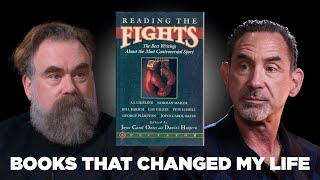
Mark Kriegel credits the anthology Reading the Fights with steering him toward boxing writing. He traces how passages from Mailer, Hamill, and Talese shaped his prose style and led directly to his biography of Mike Tyson, The Baddest Man.
Questions this video answers
1944 (he says his father lost use of his legs at age 11).
2022.
1988.
June 27, 1988 (the Spinks fight).
Late 1962 (he says "I was born in late 62").
Chapters
Welcome to the Library. Our guest today is Mark Kriegel, and he's here today to talk about the book that changed his life. Reading the Fights, compiled by Joyce Carol Oates and Daniel Halpern.
My father was born poor in the Bronx and became crippled. A middle class born in Manhattan. You have no excuse not to soar. I remember reading his memoir of being crippled. It's not the way you want to see your father. I worshiped him. He died 2022. There were still sections in this Tyson book. I was like, man, I wish I could read him this.
But then, do you talk to him?
I mean, after he died? Yeah.
Books, they've saved us from the dark, set our souls on fire, and whispered truths we couldn't ignore. I'm Chris Collins, and this is Books that Changed My life.
My dad, and for me, primary unit of beauty. The stuff that we most give a sh t is the sentence.
Question.
Yeah.
How did Reading the Fights change your life?
Welcome to the Library. Our guest today is Mark Kriegel. He's written five books, including critically acclaimed biographies of Joe Namath, Pete Maravich, Ray Boom Boom Mancini, and his latest work, Baddest Man, a biography of Mike Tyson. That's a great cover.
Thank you.
And he's here today to talk about the book that changed his life. Reading the Fights, compiled by Joyce Carol Oates and Daniel Halpern.
Which.
It's a collection of writing.
Yeah.
Yeah.
It's peculiar. The most, most savage, corrupt. Thank you, Michael. Violent of sports has been a wellspring for the written word.
Consistently. I mean, it's dysfunctional, it's terrible for the fighters, boxing, but it's great for the writers. I mean, it's great for the novelists, it's great for the journalists. It's obviously great for the screenwriters. There's something about the sport. I mean, I don't. I don't know if boxing is even a sport anymore. And I cover it. It's my day job, too.
But thank you. I don't know if characterizing it as a sport is accurate. It's kind of like where showbiz meets organized crime. Boxing, it's good for writers like me.
I don't know. I've always thought the two hardest things to do are stand up comedy and boxing. Because you're alone. It's just you.
You're alone and you're exposed. Yeah.
And exposed is a good way to put it.
And you're, you know, when you're a fighter, you're almost literally naked and certainly metaphorically Naked. And if you're a comic and you're up there with the mic, I've never done it, will never try. You're certainly alone. Metaphorically. And for the fact you're sitting up there addressing the audience, it's pretty effing lonely spot to be in.
This book was hard to find.
I know. I don't know why, but there are a number of really extraordinary boxing anthologies. But this one did change my life. And I didn't even realize that it happened gradually.
I'm curious. So where did you grow up?
I grew up on 8th Avenue in Manhattan.
8Th Avenue and 28th street, which is a couple blocks from Madison Square Garden. I remember when the famous Gym Gleason, now it's in Brooklyn, was on 30th Street. And I was always very aware of the Garden. I was aware of it when Ali fought Frazier. It's something momentous was.
How old were you?
8. Something momentous was happening in the world of grownups. Kids would argue about Ali or Frazier at school, not knowing why each had been assigned great meaning.
What did your dad do?
My dad was a professor of basically American literature, or should I say American Male Literature at City College. Your mom? My mom stayed at home. Then she went to work and she wound up in pr. She was. She was an actress.
Eloped with my dad. Her family cut her off because she married my dad.
Why?
He had polio, which is the central in my life and his life and her life.
My dad fashioned himself very much a warrior.
Because of polio or a fighter? Yeah, because of polio.
What did polio do to him?
Took his legs.
So was he in a wheelchair?
He was in. He was on crutches through. Till most of the time, till I was in. Through high school. And my dad. Braces and crutches and lost the use of. Lost the use of his legs.
And. But he was massive up top, shoulders, chest, barrel chested from just refashioning his body after he. I think he spent like two years upstate in some aptly named reconstructional.
Went back to the Bronx and at some point decided that he would tear his body down to build it back up. It was a very conscious decision. And there were certain writers, I think, who were therapeutic to him. Hemingway for sure. Despite his excesses, his limitations. But I think it was very important to my father, the idea.
My father is more of an academic writer than I.
But consumed with the notion of masculinity. What's a man? What's a good man? What is a tough man? What's a Coward. I'm. Stuff that, without me realizing it all found its way into my work. And boxing makes all that stuff explicit. When you're writing about boxing, you're almost inevitably, at some point, you're writing about fame and masculinity.
You're writing about courage and cowardice, how it's hidden who's really stoic, who's really tough.
And who's not.
Because.
You'Re judging these essentially naked figures who are fighting.
So those are kind of the subjects, but there's kind of an inherent understanding or appreciation for just the form of communication that is writing. Right. From your dad. Yeah, because it is a form of communication on a deeper level. The written word.
I think. What was. What was in a professional sense.
Like, do you. Do you feel a superpower in a sense of the way that you can communicate with.
I sit down words. I sit down to write. I'm as scared. Listen. I've always been.
Really?
Yeah. It's like, you gotta prove yourself. It's primitive. It doesn't help me anymore. I'm not proud of it. I don't think my dad was a lot more sane.
Than I. For my dad and for me, the primary unit of beauty, the stuff that we most give a shit about, is the sentence he wrote mostly and most eloquently about being crippled. That was. That was the material he was given to work with.
Do you remember something about that that he wrote that you, like, stopped and, like, had to acknowledge or think about?
Yeah, I remember reading his memoir of being crippled. He lost the use of his legs in 1944 at what age? 11.
And it's interesting because that. That informed not only his vocational and literary choices, but mine as well. My dad was an overwhelming presence. It's funny or ironic. I'm not sure how you'd characterize it, but now, like, I've always written about fathers and sons, and it's nothing I set out to do. It just happened that way. It's not very difficult to figure out why, but this age in boxing that we're currently in used to be you could never train your own kid. It's. How do you. The ego calculations are too nuts. How can you. How do you know when to stop a fight? Your own blood is there. It's a very vain thing for. Especially for guys looking at their sons. Can't coach your kid. That was an accepted. You couldn't. That was a no. No. Now I see every fighter just about as trained by their father. Girls too.
And so I. I guess I got into boxing at the. At the right time, in a peculiar way.
But back to your dad.
Back to my dad. So he was.
He was 11 when he lost the use of his legs. He's writing this memoir. For who Is It? Is the Plan that it ever be published? No, no, no.
They were all published.
It was published. So how old are you when you read it?
The book must have come out in the mid-60s. The first book was called the Long Walk Home. It was a memoir of getting polio.
And now you had these conversations with him.
Yeah.
And so is it different reading it than talking to him?
Yes.
Explain that. Explain how that felt.
Oh, man. It's a great question.
Is he better with. Was he better with words on paper than he was in conversation?
He was equally powerful, but they were different. And what was different?
The vulnerability.
The level of vulnerability, the level of detail when he would talk to me. Very charismatic guy. You knew you were in the room with him, but they were essentially talks from a very articulate coach.
Also, when you say charismatic, I think of somebody that are kind of selling you a little bit on something.
No, I guess he was selling me on his idea of virtue, his idea of what being a tough guy was, what an accomplishment was, what was art, what was. My father had very little tolerance for what he considered. He wasn't always right. Sometimes he was dead wrong. But.
The books themselves, a lot of that stuff's really raw. It's not the way.
You want to see your father. I worshiped him. I didn't want to see the intimate vulnerabilities of my dad as a cripple.
I mean, you don't want to see your parents having sex, and you don't want to see none of that shit.
But it's not just that. It's the awkwardnesses of being a teenager on crutches. Then he did. I mean, he did some scholarly stuff, but he also did a memoir about his neighborhood in the Bronx, which I think is fantastic to this day. I'm.
Obviously biased, but it's called notes for the $2 window. Came out, I think, in 76, 77.
How old are you at that point?
13, 14?
13.
I was born in late 62, so whatever. You do the math. But, you know.
So when you're. When you're that age, do you, like. Do you get a copy of the book? Can you read it?
Yeah, parts of it. Parts.
Did you have any siblings?
I have a younger brother.
Younger brother. Is there any element of it that he's living vicariously through you?
Who?
Your father.
Like when he's talking to you, every parent wants their kids to do better than them. But also because of his disability, there's probably. Or I'm assuming there's an element of that also. Right. That you had your legs and you could function.
I think that we never spoke on.
This, but do you think that made him.
No.
Let me have a higher standard for you.
I had a higher standard for me. My father was born poor in the Bronx and became crippled. I'm middle class, born in Manhattan. You know what? You have no excuse not to soar. And I believe that I was given these extraordinary advantages and blessings, like, what are you going to do with it? And I still think it's interesting now that I think about it more than it being a matter of his expectation. Although he would open the paper and see my column in the paper or see something that I had written well, or my first book came out, you know, the sort of obligatory bad first novel, like preening, you know, guy stuff, or. And when I started to write biographies, he was, I think, immensely proud and gratified.
But my take is I wanted more to please him than he was living vicariously through me. I'll tell you what. He died 2022, and there were still sections in this Tyson book that.
I'm undecided about phrases or sentences. And sometimes I call him and read it to him just to have him reassure me that it's good. Or sometimes I would go, hey, let me give you the two versions. Tyson did this and this and this. Tyson did that. What's better? And after, you know, September 22nd, he wasn't there to take the calls anymore.
And there were many passages in this book for reasons of pride, vanity, but also uncertainty. I was like, man, I wish I could read in this.
But then you talked to him.
I mean, after he died. Yeah, you know, I said, like, the.
I don't know if we talked. I think might have talked a little bit, but not about, like, I said, the Kaddish prayers and all that stuff. I knew he'd want me to do that for a year, talk to him.
I mean, I never had a relationship with my dad, but my grandfather was my father figure, and I talked to him all the time.
I don't know.
I just have a muscle memory of what he would say or his point of view, and so I know what he would say. I feel like he's listening somewhere.
I know what he was saying. I mean, that's a form of talking to him. I sure as hope you're right. I Do, man.
Yeah, yeah.
It's hard, right?
I feel that way. The other thing that I was thinking when you were talking about feeling like you needed to do better and that you had been handed a better, you know, a better hand of cards, isn't in a sense that good parenting, Because a lot of kids grow up very entitled, even if they have a lot of money or the middle class, they feel like the world owes them something. And that's usually the outcome of bad parenting. So whatever he was doing and your mom was doing behind the scenes created an individual that had self agency and didn't feel entitled to anything in a sense. Right, right.
And it was. In a certain way, it was the sensibility he imparted to me. First thing I remember him. I remember him lifting weights like his big old steel iron was old school weights in the house, sitting on the floor and sweat dripping off him. And he would tell me the story about.
Reconstructing his body as a teenager.
And I took that to mean, like, you have no. You have everything open to you but an excuse. And that's a very.
Like, that's. That's the best part of America, I believe, and.
Fundamentally good American sensibility that you can, you know, unlike Europe, at least, where everything was based on the class system. A lot of it.
Yeah. And the class just for people that don't understand. Like, if you're born to a plumber, you're going to be a plumber in Europe, like for the most part, that's the class system. Right. Not that there's anything wrong with a plumber.
No, no. But in. But in America, at least for someone like me, there were no barriers. Maybe different if you're a person of color, you know, be a lot different. But that's what was. That's what I got. You have no. You have no excuses. I very much wanted to please him. That was like. They very much want to please him. It's incredible. Well.
It'S incredible and it's a gift only if you come to that point where as much as you love and respect whatever gifts you've been given from your teachers, if you can stop imitating and shake off all the other. All the lessons and all the crap that you're supposed to be and become whatever you. Whatever is you to find, you know, your own style, your own rhythms and sentences, your own subject matter.
Looking back, you know, it was difficult to, for me, especially my 20s, to figure out, you know, where his sensibilities ended and mine began.
I had to like to be authentic to yourself.
Or to figure out what. Who the hell am I as a writer?
And so how did you figure that out?
Trial and error. Hard work. If you write a newspaper column. I was covering cops in courts at the Daily News in New York. And I played a lot of basketball in high school. So they had to promote this like three on three tournament. And so the editor brings me in, made a Sunday magazine at the time, write something on basketball.
You know, somehow. And I took all these assignments really, really seriously. Supposed to be just like a promo. So I write a kind of reported essay, basketball in New York.
The premise of which essentially being it's like, you know, politics or crime. It's another New York story of ethnic succession. You know, the Irish, Italians, the Jews, you know, black, Puerto Rican. Everyone has their own iteration of this stuff. And that's why I looked at basketball. It was probably. It was a finalist for the Pulitzer Prize as a kid, probably a week year for Pulitzers. But when the Post was kind of busted out and all its sports writers left the paper, they took a buyout. And then we went on strike at the News. Sitting at the bar and a couple friends of mine make credo. Your sports columnist. I said, no, I don't want to write. I want to write a city side column. I don't know, take a sports column. And the editor told me at the time, listen, I really don't give a shit if you don't want to be a sports columnist. I just want like red meat. I shut up. Take, you know.
I'm giving. I'm offering you a column here. Oh. We were on strike for a few more months. Eventually I wound up doing a sports column at the Post, which I was entirely unqualified to do. I never covered a ball game. Really. And were you interested in sports at all? I love basketball because I played a lot and I. And I did have a passion for basketball, but I wanted to be.
These jobs no longer exist and they were really on the way out then. I wanted to be like Pete Hamill or something, like Jimmy Breslin. I wanted to write a big city tabloid column. A lot of those great city side columnists came out of the sports section. But to get back to your point, how you find your voice.
Is by writing a slew of shitty columns. And, you know, you may think they're great. Like when you're in your 20s and you're adrenalized and you're on deadline, you're telling yourself this is passable and most of it's. But out of that, you Accumulate enough failures and enough near misses and enough hit and finally enough hits.
That you get something approximating a voice.
Did you have an editor or your dad or somebody that said, do more of this? Like when you. When there were times where you were more authentic or it just resonated more and they were like, do more of this.
I'll tell you what I did have. I had a bunch of people tell me, do less of that.
Same thing.
Yeah. I mean, how did you.
How did you take.
Hamill was one of them.
My father was another.
Because when you're writing a column, didn't you have pretty instinct, feedback, like, the thing comes out and. Well, first you have that. Your editor, your peers that would read it before it goes in, right?
Yeah, but I mean, especially with sports column, you're on deadline.
So it's.
You were on, you know, you. And there's one of the things. Larry Merchant guy, hbo, great, famous boxing commentator. He was a wonderful columnist, first in Philadelphia and later for the New York Post. Great, great sports columnist. There are basically two kinds. There's the bleeders and everyone else. And one day.
We were talking about. I was talking about how much I worried on deadline and trying to get the right thing. And I remember being on the phone all night long trying to fix the kicker or the lead. I call, run out of quarters at the bar, like, calling the desk, read that back to me. And I was a bleeder. I remember Larry saying, like, yeah, I was a bleeder, too. The famous. The famous. I hope I don't mangle this, but where that comes from is the great Herald Tribune and Times sports columnist Red Smith. Some. Some cocktail party, something like that. Some woman asked him very politely and respectfully, what is your process? I said, oh, my process is very simple. I just sit down in front of the typewriter and I open a vein, and that's, you know, that's. I still feel like that. I still feel like that. So I was really happy to know.
Larry was a bleeder, too.
But that was. That was my process. Still is.
But what about the feedback?
But if you. If you bleed enough. If you bleed enough, eventually you're going to get better. The feedback. I requested feedback because I had. I had such a big, but fragile ego.
But for. I mean, just for younger kids trying to figure out life or whatever, isn't that a part of the process that's necessary, is to seek feedback, to be open?
I think that's. But I also think that's one of the. I don't. I don't see it nearly as much now because I don't think people cluster around the newsroom or the sports section inside the newspaper anymore. That was its own organism.
But I don't think that part matters, because it doesn't matter what you're doing. That process is the same whether you're a painter or whatever it is you're doing.
Chris, today, if I'm a kid today, I shoot out my piece on Twitter, and immediately I get back, like you MF, 100 times. What is that teaching me? What is that? I would get that in letters at the paper, or sometimes once in a while, someone would call, I'd be at the desk. But I also got. But I also got the praise. And I just think it's something. There's something different about. And there's something irreplaceable.
About getting the feedback.
From a. From an. From a person, another writer, an editor in your midst, like, looking over your shoulder said, no, move that paragraph over there. And I don't. I don't see that in the same way, because everyone's. Everyone's remote. You know, I remember the other thing, too. I remember seeing guys like, if you change. If you change my lead, I'm throwing this typewriter out the window right now.
Yeah, but it was all in a. In a room, and there was an.
Energy to it, but there was contact, human interaction, sweat. There was passion. There was a lot of nuttiness. But I wonder if kids today are.
Learning a lot of secondhand smoke.
A lot, especially for me. I smoke like a chimney. I couldn't for. For a long time. I couldn't do it.
It was part of your process.
So funny. So how old are you when this comes into your life?
I don't know what month.
This is the copy.
I don't want to say stole, but this is the copy I appropriated myself from my father's desk. And it came out in 88. So I was at the Miami Herald from 86 to 88. I come back to work at the Daily News, and I was really just thrilled in June of 88, and somehow.
I find this book, and I lifted it. Like I lifted this one.
From your dad, from my dad's collection.
And what's written.
In the apropos to Professor Kriegel. Thanks for all the help and support at cwe that was the center for Worker Education. We were Keep on fighting. Underline. It's by Guy Steve Popper. I don't know.
So he gave it to your father as a guest.
Gave it to my father. I guess after this semester was over, and so this must have landed on it on the shelf around the time I came home from Miami to be a newspaper man at the Daily News. And.
I don't remember when I start thumbing through it, really, but I remember the stuff that had the most impact on me and.
How.
So how is that move from Miami back to New York? Did you like Miami?
I like some of the stories I had there.
You know, Florida's nuts.
Did you spend any time with Angela?
Who?
Dundee?
No, he was not. I wasn't a boxing writer then. I wasn't. I wasn't a sports writer. I was covering. I was general assignment reporter, which meant, you know, mostly crime. And in. In Florida, it was like nutty crime.
Cocaine.
Cocaine. There was a religious sect called the Yahwehs, remember? So I didn't come back with any intention to be a sports writer, although I like writing about basketball at the time.
But I started reading some of the pieces in here and, wow, I could do that or. I want to do that. I want to be around this stuff.
Boxing or sports?
Not sports. Never sports. Boxing.
Why do you say it like that?
I never wanted to be a sports.
Writer, but boxing is a sport.
I know, but I make an exception.
For boxing, but explain that exception.
I think it's where show business meets organized crime. And both of those are very enticing things to cover. They're less about the score of the game than they are about whatever conflict the fighter or the manager or the trainer or the promoter is. Is going through. There's a piece in here by. By Mailer. I think it's from. From the book, the Fight on Ali Frazier.
Yeah, yeah. But it begins.
But it begins with the word ego. Like, exclamation mark. Not, you know, Mailer. You either like them or now really can't stand him and is fully out of fashion. But he nails something there about ego.
This is one that I highlighted, so let me just read it to you. Okay, so it's Norman Mailer, and the piece is called King of the Hill. And he says, ego.
It is the great word of the 20th century. If there is a single word our century has added to its potentiality of language to it is ego. Everything we have done in this century, from the monumental feats to nightmares of human destruction, has been a function of that extraordinary state of the psyche which gives us authority to declare we are sure of ourselves when we are not.
Does that sound like sports writing to you? No. Sounds like Mailer pontificating. But. But he. But he nailed Something there in that. The whole sport, even more than greed, which is. There's a lot of greed in boxing. It's a venal sport, it's corrupt sport. But the whole thing, the engine, the real fuel is ego. And you need this extraordinary. Not just. You're not just dealing with the fighter's insecurity and the fighter's craziness that he's bringing his whole past in there, but you're dealing with that fighter's ego because it takes an incredible amount of vanity, balls, courage, whatever you want to call it, to get up, take those steps up into the ring where you're again, essentially naked. And there are actually three protagonists here. It's you, it's the other guy, and there's the audience. And that's where the. That's where the ego comes in. And it's different than being. It's different than being in a fight, locked in a room with some guy somewhere that no one can see. When people can see it, when people are bearing witness, it changes the entire dynamic. And what I find consistently, it doesn't matter if it's men or women fighting as fighters. What fighters fear a lot more than physical violence or harm is, Is humiliation, is being seen as a chump. The other part of this, and Mailer writes pretty extensively in that same book, I don't know if it's in the excerpt about Don King and Don King, how much, you know, the history, came out of jail and refashioned himself as the greatest promoter who ever lived. One of the most corrupt, but certainly one of the greatest. And it was force of ego that propelled him. And what you do need in boxing is a guy at the center, a Barnum type figure, saying, come one, come all. You're about to see the greatest thing you ever saw in your life.
So the whole thing is like a grand symphony of ego.
So when you read that, how does it change you?
That changed me gradually. That led me to some stuff that Mailer did on Floyd Patterson and Sonny Liston. I think in 1961 he wrote for Esquire and he touches on it in there, but that got me thinking about the nature of the press box. And, you know, I tried to imitate that stuff very unsuccessfully, but it stood in my mind. I didn't understand the ego part of it until much more recently. The couple of other pieces in there, I don't think we bring it up now.
Yeah, you can drive.
But.
There'S a piece by Pete Hamill, who did become my rabbi in the business, about Cus d'. Amato, It's a eulogy for Cus d', Amato who was Tyson's first trainer. And it's really about the relationship between fighters and writers, boxing people and writers, and his debt to d', Amato.
Who was this driving force behind the creation of Tyson. And I remember thinking, like, dude, I want to live in this New York. This is the city I want to be in.
So the part that we highlighted in this article by Pete, you can't want too many things, he said to me one wintry evening after the fighters had gone, the speed bags were stilled, and we stood at the large gym windows while Snow fell into 14th Street. The beginning of corruption is wanting things. You want a car, a fancy house, or a piano, and the next thing you know, you're doing things you didn't want to do just to get the things. And that was custom autos.
Cus was a brilliant, eccentric guy. But there is something that d' Amato wanted above all else, which was for Mike Tyson to beat Floyd Patterson to become the youngest heavyweight champion in the world after we had already groomed Patterson to be the youngest ever heavyweight champion in the world.
Cus had his own excesses and he had his own wants. They just weren't material.
Yeah. But I realized, isn't there a sense of family to you, to what he had going on?
There is a sense of family, and certainly Pete was affected by it deeply, and he's recounting his debt. D' Amato was a charming figure and a wellspring for so many writers.
There's a piece in there Gay to Lease on Floyd Patterson. And while I'm researching the, the Tyson book.
I can literally see Gates Elise's progress to becoming this, this great nonfiction writer. And he's doing it through boxing, and he's doing it largely through d' Amato and Floyd Patterson. There's a famous piece from Esquire in there called called the Loser, which again, goes to this point about.
Wasn'T getting his ass kicked that Floyd Patterson was afraid of. It was humiliation, which is why Patterson would have to put on a disguise after the fight. And, you know, d' Amato had a.
Almost a theology about fear and bullies, and it's absolutely brilliant. But it all comes to bear on what he made Tyson and how I believe in many respects, it's. It's a reaction to what made Patterson vulnerable. Patterson wasn't a scary guy. He made sure that Mike scared the hell out of everybody to that point on 14th Street. Yes, it's about Family. And when he moved his gym or his to Catskill, New York, that was definitely about family. Dysfunctional family, as all families are, but certainly family. Pete wrote a novel in which the Trainer was based on Customato. Robert Lipsite wrote a famous young adult novel. I don't think it's ever. It's been like in print for half a century. Called the Contender, the Trainer was modeled on d'. Amato Obviously, he was a huge influence on Gay Talese becoming Gay Talese. So.
Yeah, so in this one by Gay Tales, called the Loser, a little earlier in the book, he says, I must keep my enemies confused. D' Amato once explained, when they are confused, then I can do a job for my fighters. What I do not want in life, however, is a sense of security. The moment a person knows security, his senses are dulled and he begins to die. I also do not want my pleasures in life. I believe that the more pleasures you get out of living, the more fear you have of dying.
Right. And that's nuts. Damn right it's nuts. Give me the pleasure. By the way, that's.
That's your.
No, I'm not heating this. What's my vice?
No, I'm just saying you want the pleasure.
No, no. But he had his own excesses and, you know, there's paranoia there that underneath it.
Denied certain fighters opportunities.
Well, there's a contradiction in that, right?
Contradiction in a lot of stuff.
What are you fighting for if it's not for security and pleasure, but it's the illusion of it, I guess?
Well, he doesn't want it for himself. And from, And Talese does this really well in developing d' Amato's character as a kid, he's consumed with death. He's watching, you know, funeral processions. He's, you know, he's consumed with this, with this idea of, of.
Stoicism.
Being immune from pain.
Standing at attention longer, whatever, going through whatever sort of self deprivation of kind of self flagellation has to. To come out as, as this superhero custom model. But, but there were, there. There were contradictions in the guy, you know, his, his ambition, his drug. I think what he essentially tells Mike Tyson years later is, all right, kid, I'll get you out of juvenile lockup and you can live in this nice house in the country with us where it's a family. But what I really want from you is not obviously how he said it, but I think this is really the tacit bargain. What I really want from you, kid, is you're going to be the greatest of all time. You're going to be the youngest ever heavyweight champion. You're going to make me live forever.
And that, to me, is a very Faust Gym bargain. And.
Tyson disagrees with me, but I stand by my take.
And.
D' Amato's story is literary. It's a wellspring for generations of writers, including later. Like Joyce Carol Oates tackles young Tyson in the 80s. He's not without his glaring contradictions. For instance.
The way that the Tyson fable is told and the way that Pete eulogizes him here is that he.
Which is. Can I. Can I read that really quick? So Pete says, but sometimes late at night, sitting over coffee, he'd talk about the fighter that didn't exist. The perfect fighter, the masterpiece, the ideal fighter has heart, skill, movement, intelligence, creativity. And then he says, towards the end, he thought perhaps that he had the perfect heavyweight at last in young Mike Tyson.
And many respects he did, and he had the foresight to pick Tyson out. But it's the contradictions in d' Amato that curse certain things. I think they bedeviled Floyd Patterson. There were other guys like Jose Torres, who was a great middleweight but never got a shot because.
Because the model is concerned about. He sees gangsters and organized crime everywhere, but conveniently forgets about his own friendship and relationship with fat Tony Salerno, you know, from Italian East Harlem. You know, he was selective, as most of us are. But when you say things with such force and passion and conviction as the motto, you know, you do leave yourself open to hypocrisy. But there are certain guys like. Like Torres never got a shot at middleweight. He should have winds up being a champion of light heavyweight. But there are other fighters who never got. Never got a title because of Cus's paranoia. And there are also those who to this day just feel blessed by that association, feel that they were saved, saved from prison, saved from whatever because of Cus d'. Amato.
So you're. You describe the kind of deal that you feel like Cus had with Tyson, like, hey, you're gonna come up here and live. But you said Tyson didn't agree with that.
What was.
Ty didn't agree. What was his. What was his point of view?
He was much more pro. Cus. I'm much more ambiguous about Cus. I said, hey, we had a couple sessions on the phone, and I threw it out there. Said, you know, I'm not sure Cus necessarily did you that greater favor. He was basically telling you that you have to make me live forever. And he said, words to the effect of, well, didn't I?
He did. I mean, and he says, as long as people know my name, they're going to know his, I'm his glory. I think that that's largely true. And I don't think as long as there's boxing, people will remember certainly Mike Tyson and therefore Cus d'. Amato. I do think, because.
Cus was racing against time, he was already an old man when he got Tyson, that.
He'Ll do anything to ensure this success. So they cut some corners. Like what? Telling Mike not to worry if he got suspended from school. We'll get your private tutorial.
The manager is, you know, clearing stuff up with the cops when he's a teenager. They're bragging about it. He was no doubt a special kid, but they protected him from a lot and because they wanted. Needed him to succeed.
But you see that as cutting corners, not just handling him. I mean, isn't he.
I seen his cutting corners. I see this cutting corners. If you're. The whole idea was that they were developing. What they sold to the world is they're developing.
This extraordinary kid who's not just a fighter, but a boxing savant.
A boxing historian, and he was. And Tyson, at a very young age, develops an almost talmudic understanding of the boxing history and other fighters. And I think he thinks of himself as kin to other fighters. But when he got jammed up, he was protected, he was insulated from the consequences of his actions.
So how does it change Tyson if he wasn't insulated?
I think it would have made him a more mature person and a longer lasting fighter. Yeah, yeah.
I mean, it's, it's hard to know, it's hard to say. I mean, yeah, I can see the, the possibility of that.
He.
What about custom Tyson and the father son dynamic?
It's there, it's apparent, it's very strong.
He rebels, he comes back.
He loves him, he grieves. First he's suspicious, like, yo, what does this whole white dude want with me?
Perfectly reasonable question to be asking. Perfectly sane question to be asking, especially if you're from where Tyson's from. We used this shorthand with neighborhoods like Brownsville or the South Bronx. Like ghetto.
It wasn't ghetto. It was a full on dystopia. Just a terrain of rubble, abandoned buildings, and, you know, more housing projects per square foot than like anywhere outside the Soviet Union.
It was oppressive and it was violent. I remember guy kind of gangster, guy older than Mike, explaining to me about the neighborhood, like, you can't trust anybody.
Your brother, your cousin, your friend. Anyone will, Anyone will get you at any time. So it wasn't, you know, how does.
He get Mike to trust him?
Well, I mean, he's offering him freedom. The way out. He's offering a way out. He's offering him privilege.
How does race play into that? I mean, I'm just, I go back to. There's this great clip in an Ali documentary where they called it the syndicate, and there's all these white dudes sitting around a table and you got Ali.
You know, different time syndicate that owned him.
Yeah. Yes, A different time. But you just. Like the.
Kentucky.
He was the, he was the product. Like, Ali was the product. But all these guys were, they were, they were investors. Like, they were looking at him in a sense as a. That was an roi, a return on investment.
So, but, but so were Tyson's handlers.
That's what I mean, though. How do you get trust in that when there is a transactional side to, yeah, come move into my house. I'm going to, I'm going to train you, I'm going to coach you. He has a, you know, he has a track record of success.
Right.
And he knows what he's talking about.
One of the. He had a track record of, of success. Yes. But he had been away from the game. So.
This is an irresistible story.
And for most people that don't understand, Tyson moved into his house and kind of became like. Like he ate dinner at the table. Yeah, like, became part of the.
He ate first. He ate best. You know, d' Amato was really strict about who was eating what, who. Who took the chicken wings, who took the hot dogs, whatever. Unless you were Tyson. Oh, look at me. This was Kass's ticket to immortality. But back to the race question. I'm sure it was difficult for Tyson. I know it was difficult for Tyson to trust initially. Eventually he does place his trust in d'. Amato. D' Amato protects him. Is there. Is.
Do you. Are you aware of any sort of.
You know, flip where that happens?
Cus dies in November of 85. Okay. Tyson's on his way, but he dies in November 85. So who's left then are the two managers, a guy named Jimmy Jacobs and Bill Caton, who had vast boxing archives, film libraries. Jimmy essentially functioned as a, a tireless PR guy. He's a hustler. Bill was much more reserved. The racial flip that you're talking about that you're right on with, happens after Cus dies. So thank you. He's like, hey, man, These guys are selling me, like, something I'm not. I'm from Brownsville, and they're selling me almost like Goody Two Shoes. Like, they're making me do PSAs with the cops. Like, just say no to drugs and corny, corny stuff like that. He thought it was corny. And in depositions, I found what Katen and Jacobs are saying is that they felt this great need to sanitize Tyson. And they were cuts.
Never did that well, Cus.
That wasn't Cus's end of the bargain. Cus was about the boxing. He left Jimmy and Bill in charge.
Of the selling and the pr In.
A sense, selling the PR and the money.
And, you know, they're older white guys, and I think that, like, their head is still concerned about the Sonny Liston of this at all. Oh, my God, what if he's too scary? And what they didn't realize is that at that point, by the mid to late 80s, it was okay to be Sonny Liston. As a matter of fact, as hip hop came of age, or just began to come of age, began to gain some prominence, Mike's identity shifted. The first arenas that he fights in as a pro are upstate New York. And.
He'S marketed to primarily like white ethnic guys.
In the Albany area, Catskill area.
And it's not till later that the hip hop community, whatever you call, hey, wait, he's our guy. He your guy, he's our guy.
And all of a sudden you see him, he's in Public Enemy lyrics. And it shifts. And I think that. To go back to your question, Tyson was a lot more at home.
Being idolized.
In hip hop lyrics than he was.
Wearing an NYPD cap at some public service announcement or doing some just say no commercial.
Yeah. My question is, when did the trust flip where Tyson trusted?
After d' Amato's death, I thought, yeah, I mean it because. Because the motto was removed from the equation there.
And d'. Amato, so the way you're describing is he was really more just about the boxing. The money wasn't primary. I'm sure it was played a role.
He. He had no need for money. And when he says, you know, when you start wanting things, that's the beginning of corruption.
That was where stoicism.
Except what he wanted, what he wanted, he wanted just as dearly and devoutly and intensely as anyone wanted things. And he would. You know. I think the first car he got for Tyson when He was like 16 years old, couldn't drive, was a Cadillac Seville. But what d' Amato wanted was priceless. What d' Amato wanted was immortality. D' Amato wanted to go down in the history of boxing. I was the trainer of Mike Tyson, and Mike insured that. But that. That's not a small ask. You can't even put a price on that thing. So he wasn't. He wasn't without.
His own want or, you know, if I'm not going to be hypocrite about his own corruptions.
Yeah.
There were different rules for Mike than were for everyone else.
The perfect boxer.
But. But.
To that passage that you read from Pete, the perfect kid. And Lipsych talks about this, too. That perfect kid coming into the gym. Holy shit, he's here. But what am I. I'm pushing 70 years old. We gotta hurry up. It becomes existential. So the, you know, there's a clock ticking. I gotta get this kid ready before.
I go he starts programming. Mike, you're gonna be the youngest, you're gonna like.
He's almost put some under hypnosis.
Yeah, he's hypnotizing him.
No, I'm not talking figuratively. I'm talking literally.
No, I know. Yeah, yeah.
So he puts Mike under hypnosis and.
You know, your jazz saw my section on him.
Yeah. So. Yeah, your jab is a battering ram. You're a scourge from God. My question to Tyson, which he got, you know, a little pissed off at. I don't. I don't blame him. This is a sacred guide to him, my job as a biographer. Something different. Say, hey, Mike, you know, I'm not sure he did you any favors putting you under. You know, you take a kid who's not far removed from Spofford, which is the notorious juvenile detention center in the Bronx, no longer here, and you put him under hypnosis and you tell him he's discouraged from God. I'm not really sure that that's going to have a happy ending. What? I never anticipated where the book begins.
We all thought everyone who wrote about him and Tyson himself and everyone around him.
I don't know if this guy makes it to 30, much less 40. But here he is. What, he's going to have a birthday on June 30th. He's going to be, I think, 58, something like that. Who the hell ever imagined him being here, coming back from all of this? And he was, forget the drugs and the booze, like he's famous in a kind of way that will kill you. Like, you know, like we.
So we had him on this show. He used to do called Business Outlaws. And he was in, in the lobby of our building for five seconds and there were 200 people there. Like, that's a form of insanity, man. Like the level. And I mean, just for me as a kid, there's so many moments with Mike Tyson fighting that I shared with my grandfather that, you know, are just beyond something that, you know, you can even explain.
I want to.
Well, I mean, my grandfather, My grandfather was from World War. You know, he fought in World War II and he was in a boxing league. So boxing was a big deal for him when I was a kid. He wanted me to box. I remember took me to the YMCA and I boxed. I remember the first time the kid was just pumbling me. And I remember I'm crying and I'm like, I can't. Because the kid had his hands up. And I was like, I can't. And this was a life lesson for me in that moment that changed me forever. My grandpa said, hit his hands. And I started hitting his hands.
Poetry, grandpa.
But just a, like, just one of those things that, like, when you think back, like, yeah, you gotta hit the hands. Like you gotta do something like.
Cause I always take his hands down.
I was giving up. I was just giving up, you know, and. But my grandpa very much, you know, thought boxing was.
Something special. And, you know, it gives you confidence as a kid and a necessary part.
Of a man's education.
But it was a big deal. And my grandfather's a huge, huge fan of Tyson. And back then, you know, you. You couldn't just see the fight. So one of his fight with Spinks was on closed pay per view, where he had to go to a stadium close circuit. Yeah, so we went.
It was, it was actually the first. It was, it was the first pay per View fight. First. But we had to go to team. Yeah, we had to go to the.
To Commodore, which is a stadium that holds, I don't know, 20,000 people there, that a lot of concerts would happen. And there's a big screen just like a concert, and then everybody's watching it, people on the floor and the whole thing. So he buys us tickets, just him and I, and we. This is a drive, right? So it's a 40 minute drive. We go. We. I don't remember an undercard, honestly, but being broadcast.
What the undercard was, the undercar was Trump.
Really?
Essentially, yeah.
My book ends on that fight. Oh, really? Yeah, it ends on that fight. And it's that take that whole day from like Trump and Robin Givens going on Good Morning America through the end of it.
What year?
88.
88.
June 27th of 88.
So I'm.
And it was a fight of the century.
I'm a sophomore in high school, and.
It was billed as a fight of the century. Like Ali, Frazier.
Oh, yeah, big deal.
So. And they had been building it up for so long, you know, HBO had been depending on it. And then.
And it's kind of, from what I remember, it's like, yeah, Tyson's beating all these people, but can he beat somebody of this level, like a real. A real fighter?
So the Trump is center stage for all of that stuff. And it's almost like.
You know.
He just failed at New Jersey Generals. And he very much wanted a way back into sports, and I think this offered him a way into public life, boxing that.
Other avenues didn't. And again.
I'm not saying this even as a political statement, but boxing attracts, as I said before, narcissists. You know, it depends on vanity. So here, Trump gets to be the guy, gets to be the Barnum saying, come one, come all.
And at the time, he owns a casino in Atlantic City, and the press.
Is, like, almost uniformly adoring of him. But you see, that was the undercard. No, it wasn't really the undercard, but.
It was the second narrative in the broadcast.
There is no what happened. The only thing that you really see before the fight is this buzz around Trump, which he's organized, and he wants to be center stage. And now it's his promotion. Essentially.
He's a great promoter.
That's how he's orchestrated.
Great promoter. So we go to the Tacoma Dome, we drive there, we go in, we wait in line, and my grandpa gets a beer. And I don't know, I must have had a Coke or something, but he gets a big beer, 20 bucks. He complains about the price of the beer.
20 bucks, then.
Nah, he complained about the price. It was a lot, but it was a big beer.
Grandpa's bunk.
We sit down, fight starts, 45 seconds. And my grandpa goes, I think it was 91 seconds. Okay. It wasn't long. Didn't last the first round. And my grandpa goes, I'm finishing my beer.
Yep.
And we sat there, and the place cleared out, and he drank his beer. And then, you know, I don't know, maybe. Maybe we were there 20, 30 minutes.
What did he tell you on the way home about Tyson?
Oh, he thought Tyson was second coming, you know, and so there's an interesting narrative there, too, because my grandfather came from a generation where he didn't see Ali like we see Ali or like I see Ali. He had a different opinion because my grandpa served in World War II and he very much had a hard line that if you had the opportunity to serve your country and you passed on it, you were a coward. You were whatever it is. And so his view of Ali wasn't that he was the greatest, but I.
Think just a note on Ali, I think for a lot of those people, and I'm painting with a very broad brush here, but after Zaire and after Manila, where Ali's courage.
Became so abundantly clear, was on such magnificent display, even guys who were not at all predisposed to like him, or even those who wanted to hate him, had to at least grudgingly give him his respect.
Yeah, grudgingly. But there's always this underlying.
Well, the reason I asked about what he thought about Tyson, and I understand exactly what you're saying about how he.
Thought he was incredible, Right.
But there was a sense.
That.
He was groomed by the first. The first part of his fan base. Go back to it, like the white guys. And he hearkened back to something when boxing was a different sport.
It harkens back to Dempsey. Not that he was raceless or that he was white. That's not what I'm saying.
But he was tethered to this old America where it was much easier to figure out who was on what side. And.
When he comes to the public's attention, he has his hair cut like Jack Dempsey. They're not selling him as Sonny Liston, they're selling him as Jack Dempsey. Jack Dempsey, you know, had a pretty tough life too. And Tyson was really well schooled in the lives of all these fighters. But. But.
It harkened back to something sacred.
And male in the American 20th century.
And that's the first spark of why Tyson got over and was so powerful. The biggest thing is what you saw that night. Holy shit. 91 seconds, he knocked him out. This was supposed to be a fight. It was. It was never a fight. It was like a ritual execution over before it began. Right. But another element is this. Oh, Tyson's the kind of guy my dad rooted for. Tyson's the kind of guy my grandfather rooted for. And then he became, in addition to all that, a hip hop icon. She crossed over in all sorts of ways that no one had ever thought about before. And while his handlers, Jimmy Jacobs and Bill Caton, after Cus has left the stage, want to make him like Goody Two Shoes Mike, he doesn't feel comfortable in that anymore. He feels trapped in that image.
So it evolves. And Larry Merchant, the guy I was talking about before, became this great, magnificent boxing commentator for hbo. What he told me is the only guy who really understood it. How big Tyson could truly be.
Don King. Don. Everything about Don. Brilliant. Corrupt all of that. The fucking genius. He's a genius promoter.
Yeah. There's a couple things about Tyson that really confused me. Well, when I was talking. When we were talking to him, he made some comment. I don't remember what it was, but basically what he was saying is he realized there was more money and success in being the bad guy. As a kid, I never saw Tyson as the bad guy.
No, he was.
I didn't understand it when he said it.
But you're right, and he's right. They groomed him. There are two terms in wrestling, and I think you can't. Whether you like professional wrestling or not, you can't really understand America if you don't understand professional. Some basic understanding of professional wrestling. Tyson's groomed to be the baby face.
That's the good guy in wrestling. And he becomes the heel. And yes, there is a hell of a lot more money in being a heel.
But the heel.
In previous iterations of boxing, like Sonny Liston. No one wanted Sonny Liston then. Now they want a bad guy. Something changed in our culture that romanticized the bad guy, and Tyson found himself at the exact right time. I think that's what you're saying right there. I didn't think. I remember in those same years, 85, 86, 87, 88, he was the good guy. Then all of a sudden, he has this craziness with his marriage, and, you know, he's kind of cracking up. What he does during that Spinks fight is extraordinary. Like, 10 days before the fight, his wife comes out with a story in New York Newsday. A friend of mine did it. Wally Matthews. Like, he's beating me. He's an alcoholic. Putting aside the allegations and whether she was pregnant or not or when she was pregnant, this kid's cracking up as he goes into what everyone else is thinking of as the fight of the century.
See, for me, just my human experience and, you know, granted, like, it's a. You know, it's a small part of my life. But what I remember thinking is that when Cus d' Amato died, Tyson didn't have a father figure and didn't have anybody he trusted. And then he was searching for something, and I never saw him as the bad guy. I Saw him as a human living a very human experience.
Yeah, but he's living it. He's living it. So large.
Oh, yeah. And that adds to it though, right? Having, you know, $100 million also is a burden to bear.
But when he gets, when he gets, when he gets out of prison.
That'S when he starts making.
Not 10 million, not a couple million dollars as he had been for HBO or 20 million as he did for Spinks, which was they didn't anticipate the kind of windfall they got from the early pay per view numbers.
And that fight was without precedent. He made more for the Spinks fight and I believe the combined annual payrolls of the Dodgers and the Yankees.
One fight and the second thing.
But when he comes out of prison though, now he's a full on bad guy or pretty close to it. He's getting $30 million a fight.
The second thing that blew me away in that conversation is he's talking about Don King and being taken advantage of and money and all that.
When was this?
I don't know, man, because he went.
Back and forth on, you know, 2017. Oh, yeah.
He's talking about all his money problems. And then I don't. Somehow he's rich now we get on the thing. Well, I mean, is he.
I mean.
He made a ton of money with the Jake Paul fight, but.
Well, I guess the point I would make is he's still working.
So he needed that money when he did that and he's still working.
So the marijuana business is pretty lucrative.
No, no.
Maybe you know better than I. Yeah.
But his point to me and him and I had a discussion because I just kept doubling down on it. Like he said, I don't care about money. And I'm like, well, you keep getting taken advantage of, you should care about money. And he wouldn't relent in a sense of he doesn't care about money. And when I watched that Jake Paul fight, I was like, yeah, you know, like you're working for the money. But this is humiliating.
Wait, wait, hold on. Back on one thing. I don't care about money. I don't care about money. I don't care about money. Who does that sound like to you? Cost, right? Same stuff. I don't know. Material things.
They're very different people.
I don't know. I understand that. I understand. But it's the same party line though.
Yeah, I don't know, I just. The contradiction. It was interesting to me. Okay, so the big question, how did reading the fights, the best writing about the Most controversial sport. Change your life.
I kept returning to it, and when I became a sports writer.
I still love covering basketball, baseball hair, football hair.
But the only sport.
I truly loved was this. And I would look forward to fights. I remember the first big heavyweight title fight I covered was Bo Holyfield. I'm sitting there at ringside and I remember.
Sweat or like a globule of Vaseline flying off of Vander Holyfield. And Riddick Bowe just cracked him. Maybe it was the 10th round, which is one of the great rounds in boxing history. And I'm telling myself.
Holy shit, this is where I want to be. This is where I belong. And this is what they were talking about in this book.
And I kept returning to the pieces in this book.
The loser Hamill's eulogy for Cus, but also this extraordinary story by a Scottish columnist, late Hugh McIlvain, called Onward Virgin Soldier, about.
A Welsh fighter.
Johnny Owen, who dies in LA fighting lupe pintor in 1980. And he's like, obviously a. He's a bantamweights. He's a rail thin, pale kid, like, just came out of the mines in Wales and big ears, and I guess he's. I think he's 24 when he passed from the beating he endured.
And he dies a virgin. He was obsessed with boxing. He never allowed himself to, you know, have the comforts of a physical, a romantic relationship. And to me.
It is of course, the essence of tragedy, but also.
The kind of up poem that keeps generation after generation of writers coming back to this. Call it a sport or call it what you will, but the way he wrote it, I would think about that. Could I ever write anything that good?
And the way that he quotes.
People in Wales talking about Johnny Owen, like I wanted to give him a good basin of broth or something. She's just. You could hear. You could hear the lyricism in the language still. And I would wonder like, shit, could I write anything that good? I don't think so, I don't know.
But I kept returning to that and.
I always felt like the other sports were so much and so much selling. When everyone, when people appealed to nostalgia, it was usually a hustle. But to me.
Boxing, for all its corruption, injustice, all of which are there in abundance, but you see moments like that up close. Bo Holyfield, round 10.
Or later, Mike Tyson, Evander Holyfield won for the ear biting, for the insanity. You tell yourself.
Wow, this means something. This is worth something. What I'm seeing, despite all the BS around it, that's the real thing.
What you're seeing there is the real thing. I don't know if it's good or bad, but it is. You know, we're always. Everybody wants authentic today because we're living behind screens. That was authentic, and that stays with me. And I. And it was the stuff. It was the shards of other people's memories and other people's sentences that I picked up from that book. And it's a. No, it's a. For me, a straight line to the Tyson book.
So what I love about this show is I would have never heard of this.
I don't know who.
Yeah, I mean, it's incredible.
If you get a chance, I hope you like it.
So hard to find. By the way, if you try to find this, you can download the PDF. If you can't find the book, it's really worth checking out. Okay, so let's just talk about the Tyson book. All right, so tell me. It's coming out June 3rd. June 3rd.
So I don't know if this will air before or after such a great picture.
Geez. He had no neck.
I know.
And they worked on that. And, you know, I think that their theory was the size of your neck had something to do with your chin or your. Your punch resistance, which I think is largely true. Tyson. Tyson had. His heart, was criticized later. I think he was dispirited after he came out of jail, but he had a hell of a chin. A guy named Tony Tucker, who today would be like a world champ many times over. Tony Tucker hits him with an uppercut that literally lifts him off, off the ground, and he just shakes it off. Around Memorial Day, 2021, I owed the publisher a book, and I've been trying to give him back the money for, like, years. Like, please take it. I don't want this hanging over. No, we'll find something for you to do.
Memorial day there about 2020, I'm laid up. I torn my hamstring. Complete tear, most painful. And so. And I'm trying, like, literally every way I can to cut the pain. So I'm not exactly my right mind. Would you. Would you consider.
Doing Tyson? No way. I ain't doing Tyson. Why not? I just. I'm not going back there. I don't want to relive the 90s. No way. Then a friend of mine says to me, he goes, writer. He goes, what, are you kidding me? Your duty as a writer. You can't turn down money. I said, watch me. I'm not doing this again. I'm not living through this stuff? What are you crazy? You could write it off the top of your head. I said, no, you can't do that. You need to like bleed for a book, you know.
You'Re crazy.
So I start thinking about it. I call the editor, publisher. Hey, what if I wrote like a kind of personal essay, you know, looking back on my career and covering Tyson and what it meant? Sure, whatever you want. Great. And I remembered he did his one man show, Undisputed Truth. It was in preview in Vegas at the MGM hotel.
And I went to see, I was doing a column for like Fox Sports. And it made me weep. And this is after a whole career writing every bad thing about Tyson you possibly could. Like, he's the designated. You know, I told you before what he wanted me to do when I got into the new newspaper business or the column writing business. We want red meat. He was my red meat villain. I meet him after the show.
And.
He wasn't an abstraction to me anymore. He was like a real person. And he was different than the person I remember who had been such a prick around the fights. I told him this. And I remember my first Tyson assignment. I was covering cops. Go up to Harlem and go to Dapper Dan's. Like, what's Dapper Dan's? A club? No, it's a clothing store. Get the fuck up there. Hurry up. It's at 4 in the morning.
I tell him running around doing stories about his crazy marriage, his trial.
And he turns to me, he says, very soft spoken now, how did it make you feel?
I was like, shit, how did it make me feel? I thought about it being like a young reporter and that, that, that rush when you like touching the live wire, you're close to it. I said, man, great. It was, it was like, it was like being high. And he just kind of nodded. And I remember that because it was the first time he was fully human to me, fully real.
Not some villain I was typing.
So I told the, told the editor, I said, like this kind of thing with that, is that thematically appropriate? Does that work for you? Great. So it started out as this kind of essay about boxing and newspapers and writing, using Tyson as spine.
And it was supposed to be kind of a collection of anecdotes. I don't, I wasn't fully formed. I don't have the ability to write short. Like, if I was better writer, I could write an essay. But Tyson generates so much story.
That, you know, a couple years later, having lunch with the editor and he goes, oh, it's really good I really like it. Doing great, thanks. Because again, I need my ego. I'm scared. I said, yeah, but I got about 80,000 words. And he's what, like 16 years old? 17, maybe.
This is not an essay anymore. It's getting. And he says, well, can you do two parts? Absolutely not. That's a long answer to a short and perfectly good question. I'm sorry, is it going to be two parts at this point? Yeah. I mean it ends in 88.
Is there anything that we learn about Tyson that we don't know?
Well, it should be a hell of a lot. I think that.
If you don't learn anything, I shouldn't have written a book. But what would those things his, the way he was created, a lot of the stuff we've been talking about today, the way that his first, first component of his fan base.
Just how intentional.
It was, were guys who, you know, like your father or your father's father.
To me his real family are other fighters. His unlikely literary pedigree. I had this great conversation with his, with his half brother. I didn't know he had a half brother. The idea that again, this is my interpretation, but I'll stand by it with everything that the CUS was asking. This kid, this 13 year old kid make me immortal. That's different than the legend and myth has been portrayed. This beautiful story of cussing the kid. The way the manner in which he is manipulated and over by the people who are handling him after. I mean the contracts are signed, they're really, the deals are really shady. His place at the dawn of hip hop.
And above all.
There'S some virtue in him having survived because he thought he wasn't going to see these years. I thought, no one thought.
And what he survived. And to me the best moment in the book.
Probably with Rosie Perez.
He'S going through all of these girls left and right. Then he hits on Rosie Perez and she's like, come on. She shuts him down. And you know, he. One thing Tyson, especially young Tyson never hears is no. And Rosie shut him down. And Rosie wrote her own like very beautiful book about what she had overcome as a kid and the damage she took. And I said, so what? Like how'd you shut this? She goes, mike, get out, get out of here. And.
And she looks at him and she knows, she says to me, you know how like game knows game cliche. Yeah. Well, damage knows damage.
And it was incredibly perceptive, but it's also beautiful. And then she sort of mushes his face like a kid. And underneath all the pathology and the violence.
There is something tender and like I was a pain to Rosie Perez, like hunting her down to an interview, like trying to corner her. But I knew something in my gut told me she has the anecdote that I need. I was right. Sometimes I get it right.
It's incredible. Was there anybody that you wanted to talk to for this that you didn't.
Talk to Don King?
He wouldn't talk to you?
No. Don King, you asked me before what I learned about Tyson, what I think is new.
There's virtue in what he survived.
D' Amato wanted immortality, but I also that there's. He wanted his father. What you said about Don King connected to me, he was told on his birth certificate, I think that the Tyson on his birth certificate is like a cab driver, I think a West Indian descent. But he was told that his real father was this kind of player in the street, and he wants desperately to believe that his biological father is, in fact, a pimp. You know, a guy with street standing. The idea of your standing on the street, especially in places like Brownsville, is of central importance here. But.
I think that want of the gangster father leaves him open to his seduction by Don King.
It wasn't just that the two old white guys handling him, Jacobs and Katen.
But they did things. They handled him toward the end in a way that made them.
Their connection to him, vulnerable. Don understood it the same way that Larry Merchant told me. Don understood what Tyson could be.
As a commercial phenomenon. So, yeah, Don King.
So he wanted the gangster father. But probably the most potent force in his life.
Outside of d', Amato, perhaps, perhaps is the unending, thankless quest for his mother's love. And I don't mean to sound like psychologist. I really don't. I know it sounds like it, but it's always there. It's always there for him. And she dies before he becomes Mike Tyson. And I get the very distinct sense this is the biggest hole and the biggest gap, biggest longing.
I think in some ways, he probably filled it with his current wife, Kiki.
My opinion, great for him and her mother. In another way, I think that his relationship with Robin Givens.
She famously came as a package deal with her mother. He certainly fell in love with Robin Givens, and she was beautiful and she was smart, but.
He didn't love her and want to marry her, despite the fact that she came with an overbearing mother, but because of it.
So maybe. I think that's newish.
I never heard that. It's beautiful.
Will you Sign it for me.
It's my only copy.
Oh, I thought they.
I thought they didn't. Haven't even gotten a copy yet.
I thought they were sending one for us. No, I'll buy a bunch of them and give them away to friends.
Thank you.
No, thank you. I could. I mean, I could talk to you, so make sure. June 3rd. The baddest man, the Making of Mike Tyson by Mark Craigel.
Look how fancy this is.
It was great setup you got here.
Thank you so much.
Oh, thank you, man. Thank you.
That was wonderful.
Thanks, fellas, ladies. And thanks for the donuts.
True New Yorker.
Culture that romanticized the bad guy. And Tyson found himself at the exact right time. I think that's what you're saying right there. I didn't think. I remember in those same years, 85, 86, 87, 88, he was the good guy. Then all of a sudden, he has this craziness with his marriage, and, you know, he's kind of cracking up. What he does during that Spinks fight is extraordinary. Like, 10 days before the fight, his wife comes out with a story in New York Newsday. A friend of mine did it. Wally Matthews. Like, he's beating me. He's an alcoholic. Putting aside the allegations and whether she was pregnant or not or when she was pregnant, this kid's cracking up. As he goes into what everyone else is thinking of as the fight of the century.
I see for me, just my human experience. And, you know, granted, like, it's a. You know, it's a small part of my. My life. But what I remember thinking is that when Cus d' Amano died, Tyson didn't have a father figure and didn't have anybody he trusted. And then he was. He was searching for something. And I never saw him as the best bad guy. Saw him as a human living a very human experience.
Yeah, but he's living it. He's living it. So large.
Oh, yeah. And that adds to it, though, right? Having, you know, $100 million also is a burden to bear.
When he gets out of prison.
That'S when he starts making.
Not 10 million, not a couple million dollars as he had been for HBO or 20 million as he did for Spinks, which wasn't, you know, they didn't anticipate the kind of windfall they got from the early pay per view numbers.
And that fight was without precedent. He made more for the Spinks fight than, I believe, the combined annual payrolls of the Dodgers and the Yankees. One fight.
And the second thing.
But when he comes out of prison, though. Now he's a full on bad guy or pretty close to it. He's getting $30 million a fighter.
The second thing that blew me away in that conversation is he's talking about Don King and being taken advantage of and money and all that.
When was this?
I don't know. Maybe it was like because he went.
Back and forth on, you know, 2017. Oh, yeah.
He's talking about all his money problems and then. I don't. Somehow he's rich now we get on the. Well, I mean, is he.
I mean, he made, he made a ton of money with the Jake Paul fight, but.
Well, I guess the point I would make is he's still working.
So he needed that money when he did that and he's still working.
Marijuana business is pretty lucrative.
No, no.
Maybe you know better than I. Yeah.
But his point to me and him and I had a. A discussion because I just kept doubling down on it. Like he said, I don't care about money. And I'm like, well, you keep getting taken advantage of. You should care about money. And he wouldn't relent in a sense of he doesn't care about money. And when I watched that Jake Paul fight, I was like, yeah, you're working for the money, but this is humiliating.
Back on one thing. I don't care about money. I don't care about money. I don't care about money. Who does that sound like to you? Costs, right? Same stuff. I don't know. Material things, they're very different people. No, no, I understand that. But it's the same party line, though.
Yeah. I don't know, I just the, the contradiction, it was interesting to me. Okay, so the big question.
Yeah.
How did reading the fights, the best writing about the most controversial sport, change your life?
I kept returning to it. And when I became a sports writer.
I still love covering basketball, baseball, ha. Football, ha.
But the only sport I truly loved was this. And I would look forward to fights. I remember the first big heavyweight title fight I covered was Mo Holyfield. I'm sitting there at ringside and I remember.
Sweat or like a globule of Vaseline flying off Evander Holyfield. And Riddick Bowe just cracked him. Maybe it was the 10th round, which is one of the great rounds in boxing history. And I'm telling myself.
Holy shit, this is where I want to be. This is where I, I belong. And this is what they were talking about in this book.
And I kept returning to the pieces in this book.
The loser, Hamill's Eulogy for cus. But also this extraordinary story by a Scottish columnist, late Hugh McIlvainey, called Onward Virgin Soldier, about.
A Welsh fighter.
Johnny Owen, who dies in LA fighting lupe pintore in 1980. And he's like, obviously he's a bantamweight. He's a rail thin, pale kid, like, just came out of the mines in Wales and big ears. And I guess he's. I think he's 24 when he passed from the beating he endured.
And he dies a virgin. He was obsessed with boxing. He never allowed himself to, you know, have the comforts of a physical romantic relationship. And to me.
It is, of course, the essence of tragedy, but also the.
The kind of up poem that keeps generation after generation of writers coming back to this. Call it a sport or call it what you will, but the way he wrote it, I would think about them and could I ever write anything that good?
And the way that he quotes.
People in Wales talking about Johnny Owen, like, I wanted to give him a good basin of bright or something. She's just. You could hear. You could hear the lyricism in the language still. And I would wonder, like, could I write anything that good? I don't think so, I don't know. But I kept returning to that and I always felt like the other sports were so much and so much selling. I want everyone to. When people appeal to nostalgia, there usually was usually a hustle. But to me.
Boxing, for all its corruption, injustice, all of which are there in abundance. But you see moments like that up close. Bo Holyfield, round 10.
Or later. Mike Tyson, Evander Holyfield. One for the ear biting before the insanity. You tell yourself.
Wow, this means something. This is worth something. What I'm seeing, despite all the BS around it, that's the real thing.
What you're seeing there is the real thing. I don't know if it's good or bad, but it is.
Everybody wants authentic today because we're living behind screenshots. That was authentic and that stays with me. And I. And it was the stuff. It was the shards of other people's memories and other people's sentences that I picked up from that book. And it's a. No, it's a. For me, a straight line to the Tyson book.
So what I love about this show is I would have never heard of this.
I don't know who.
Yeah, I mean, it's incredible.
If you get a chance, I hope you like it.
So hard to find. By the way, if you try to find this, you can download the PDF if you can't find the book. It's. It's really worth checking out. Okay, so let's just talk about the, the Tyson book. All right, so tell me. It's coming out June 3rd. June 3rd.
I don't know if this will air.
Before such a great picture. Geez. He had no neck. No 22 inches.
And they worked on that. You know, I think that their theory was the size of your neck had something to do with your chin or your punch resistance, which I think is largely true. Tyson had. His heart, was criticized later, and I think he was dispirited after he came out of jail, but he had a hell of a chin. A guy named Tony Tucker, who today would be like a. A world champ many times over. Tony Tucker hits him with an uppercut that literally lifts him off, off the ground, and he just shakes it off. Around Memorial Day, 2021. I owed the publisher a book and I've been trying to give him back the money for like years. Like, please take it. I don't want this hanging over. No, we'll find something for you to do.
Memorial day there about 2020. I'm laid up. I torn my hamstring. Complete tear, most painful. And so. And I'm trying like literally every way I can to cut the pain. So I'm not exactly my right mind. Would you, would you consider.
Doing Tyson? No way. I ain't doing Tyson.
Why not?
I just, I'm not going back there. I don't want to relive the 90s, no way. Then a friend of mine says to me, he goes, writer. He goes, what, are you kidding me? Your duty as a writer. You can't turn down money. I said, watch me. I'm not doing this again. I'm living through this stuff. What are you crazy? You could write it off the top of your head. I said, no, you can't do that. You need to bleed for a book.
You're crazy.
So I start thinking about it. I call the editor, publisher. He, what if I wrote like a kind of personal essay, you know, looking back on my career and covering Tyson and what it meant and. Sure, whatever you want. Great. And I remembered he did his one man show, Undisputed Truth. It was in preview in Vegas at the MGM hotel.
And I went to see, I was doing a column for like Fox Sports.
And it made me weep. And this is after a whole career writing every bad thing about Tyson possibly could. Like, he's the designated. You know, I told you before what they wanted me to do when I got into the newspaper business or the column writing business? We want red meat. He was my red meat villain. I meet him after the show.
And.
He wasn't an abstraction to me anymore. He was like a real person. And he was different than the person I remember who had been such a prick around the fights. I told him this. And I remember my first Tyson assignment. I was covering. Cops go up to Harlem and go to Dapper Dan's. Like, what's Dapper Danza Club? No, it's a clothing store. Get the fuck up there. Hurry up. It's at 4 in the morning.
I tell him running around doing stories about his crazy marriage, his trial.
And he turns to me, he says, very soft spoken now. How did it make you feel?
I was like, shit, how did it make me feel? I thought about it being like a young reporter and that rush when you're like touching the live wire, you're close to it. I said, man, great. It was like being high. You just got.







