Books That Changed My Life: Michele Wong McSween & The Joy Luck Club
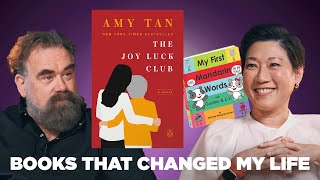
Michele Wong McSween, a fashion designer turned children's author, discovered Amy Tan's The Joy Luck Club at UC Berkeley and found her own immigrant mother-daughter tensions reflected in its pages. Reading it as a young adult helped her understand her mother's sacrifices. Years later, after having children, she reconnected with Chinese culture, learned Mandarin, and created the bilingual Gordon and Lily series.
Chapters
Take me to the time where this book comes into your life. What's going on?
I'm at UC Berkeley and I have a real lack of connection to my Chinese heritage. A lot of it stemmed from being teased, not wanting to stick out, wanting to look like my blonde haired, blue eyed friends. I think a lot of people feel that way who look different on the outside. And I wanted to feel American. So I tried everything I could to just try to blend in and put that Asian ness, hide that Asian ness so that I could just fit in and not stand out. So it was a really pivotal time in my life. So when this book came along, who.
Introduces you to it?
It was my mom.
What did mom see that she thought this would heal or help?
I think.
Foreign.
Welcome to the Syndicate X Library where we love books and especially books that have changed lives. Today's guest is Michelle Wong McSween. She's a fashion designer turned author and the creator of the bilingual children's book series Gordon and Lily. She's joining us today to talk about the book that changed her life, the Joy Luck Club by Amy Tan.
Hi, Chris.
Hi.
Can I put my things down?
Yeah, have a seat.
All right.
What did you bring?
I brought Gordon Lee all about me and I brought Amy Tanner's Toilet Club.
Is that your original one?
No, I couldn't find it. I think my mom took it back.
Took it back?
Yeah. This is a. Can you tell it's a very new, modern cover?
Yeah, we got this one old one.
I've never seen that one.
I always get hardcovers.
I know, but do you know I knew I was going to be traveling because I had to power read this on the plane before I got here to refresh. But I do love hardcovers too.
You can learn a lot about somebody by how they mark the book, I think. So you're not a highlighter, huh?
I'm not a highlighter person. I'm not an underliner person. But I don't like the permanence of it and I think it kind of, you know, it ruins the pages and.
If somewhere ruins is relative, it could enhance the pages.
I also feel like if I were to pass it on, which I love passing on books because if I love a book, I feel like I want to share the experience and pass it on to my friend or my mom or my niece and if I've already highlighted what I like, is that going to take away from their experience and being able to enjoy it free and clear of any preconceived my ideas or whatever? What I think is important might not be important to them. So I don't want to taint it for anybody else. I like to keep it clean.
You're so sweet. So my thing is, I'm never giving my book to somebody. I don't loan books.
Look at you. You have.
I will buy them their own copy if I'm going to give it. Like, you can see stacks of books that I give away.
Oh, I do stick.
But my copy, I highlight so I can go back and review the stuff that impacted me. So it's very personal. I could never. In fact, sometimes, like, if there's books that I have that if you were thumbing through it and looking at my highlights, I'd almost be like, oh, it's too intimate.
See, that's how I feel. I feel like these are my thoughts. This is my experience, and I don't want to share it. So, like you, I probably wouldn't pass it on. But because I live in New York and I have a very limited space and I don't have a beautiful library like you, I do pass them on. I don't keep them.
You know what I really like about you already?
What's that?
That you don't do it on a Kindle.
I have two Kindles, and I cannot pick them up. I try. I really try. So I feel like, oh, it'd be great at the beach or at the pool. I don't have to worry about it getting wet. Of course, you do have to worry about it getting wet. But I flip back and forth all the time. That's why I have this one here. This is my go to tab. When I was reading about the characters, especially when they have multiple characters, I like to go back and remember, who is that? And then I go back here. Then I go back here. You cannot do that on a Kindle. You're like this. How far do I go back? It's not the same.
Kindles make a great door.
Make a what?
Doorstop.
Not with my kind of doors. Well, I don't know. Oh, you stick it in the jam.
Whatever.
Whatever. They're in my drawer now.
Yeah. We have a note. That's one of the interview questions here.
What's that?
If you read on a digital reader or real books.
I can't.
We're not fans. What did you order to drink?
A latte.
Latte.
A latte.
We take our lattes pretty serious.
Do you?
Yeah.
Oh, look at that. Thank you.
Gracias.
Wow.
Try it. Let's see what. What you think.
First of All. I love the cup. I just came back from Barcelona. No, I'm sorry. Valencia. No, my son was in Valencia. I was in Barcelona. We met in Barcelona. But the pottery. So pretty. Let's have a taste. I love your sneakers, by the way.
Oh, my gosh. That is a really good cup.
Vivace from Seattle.
Vivanci. I don't know. Favanci.
Just a little coffee. Coffee roaster in Seattle that been around forever.
It's almost light.
Never need sugar.
No aftertaste. It's beautiful. Can I have the name later when we leave?
Oh, yeah.
Okay. Wait, do you grind your beans?
We even make you a little care package if you want.
Oh, delicious. Thank you. I'm enjoying this.
Cheers.
Cheers. So nice to meet you. Thank you.
So you. You live in New York?
I do.
Did you grow up in New York or did you grow up here?
I grew up in Sacramento, just up north from you.
The capital.
The capital. That's our one claim to fame. Well, there's a lot more now. I mean, we have the kings.
Oh, yeah.
We have a great downtown area.
But yes, New York, Silicon Valley kind of falls into that. There's a lot of talent and culture there.
Yeah. But New York has been my home for the past 28 years. I can't believe it's been that long.
New York.
I do too.
It's the best.
I really do too.
So good.
Are you from here or from.
So I grew up in Mexico until I was 13, so my parents were missionaries. And then When I was 13, we went back to where we were from, which was Washington state. So outside of Seattle. And then when I was 24, I moved down here and I've been here ever since.
What brought you here?
Well, I kind of. It's either LA or New York for me. I like big cities. Louisiana isn't in the best shape right now.
New York isn't either, but it still has a soul.
And New York would be my favorite city, but LA is probably more my pace. I love to go there just to visit. And I've. I mean, I've had periods where I've been there a month at a time. And, you know, you just.
It's.
There's something about it. I love London, too.
I haven't spent a ton of time in London, just a couple of trips. But yeah, New York is kind of it for me. And it's close enough to California.
Oh, yeah.
It's easy. It's easy.
So you grow up in Sacramento. What kind of kid are you?
What kind of kid am I? I Was pretty outdoorsy.
Tomboy.
Yeah. I had three brothers, so I wasn't really allowed to.
Were you in the.
I'm the third out of four. And my younger brother and I, actually all of us would, you know, be outside. We lived across from a park. We would get our big wheels and make fake crashes and I would photograph them lying, pretending we had to crash. And we would climb trees and my dad was a doctor, so he brought home these really huge syringes that we would fill with water and squirt each other and have water fights. That's what we would use, syringes.
Safe, safe run with syringes.
And, you know, I hate to say it, but we did, you know, use magnifying glasses to look at murder bugs. I'm sorry. Yes. I mean, we did all that weird stuff. You know, you grew up in the, the suburbs. We would, you know, we would go to this stream, we would collect pollywogs, put them in our pond, they would turn into frogs. And I mean we. I had really nice, outdoorsy, kind of free childhood, riding bikes everywhere. It was a very different time than now. And people ask me, how do you raise kids in New York? And the answer is, I don't know. I grew up in Sacramento. It's a nice little suburb. New York is a completely different environment. So the things that I grew up with, my kids didn't necessarily have. I mean, we still did a lot of outdoorsy things, but it's just, it's different. It's different. So I was able to grow up in a very free, safe environment and it was really great.
What were your early interests?
I love to read. I would be the kid that would say goodnight to my parents, then hide under my covers and read my books before falling asleep. I loved make believe. I loved playing games with my brothers. We would always make up weird stories. And my younger brother and I would have picnics in my bedroom because for whatever reason, my parents thought it would be a good idea to have a green carpet in my bedroom. No pink, no purple, no white or anything like that. I had a bright green carpet, like almost like Astroturf. Well, more like lime greenish, not harsh or anything. It was very pretty, like spring green. But it was a perfect setting for our picnics. So we would bring in. We weren't allowed to eat in the room, but we'd bring our make believe snacks. We would have picnics and have my Barbies do tea parties, that kind of thing. And then I had tons of cousins in Sacramento, so we would, you know, swim at the pool together. We were, we did a lot of fun, outdoorsy, carefree things.
Were you close to your dad?
No, not really. Not as a kid. He was the real patriarch of the family where he worked all day and at nighttime, you know, we would go to bed and my mom would, they would, you know, come say goodnight to us. But he was really.
The patriarch and it wasn't like now where. And you know, also being a Chinese dad back then, they didn't show a lot of affection. My mom was really the nurturer, the hugger, you know, cuddly. But my dad was, you know, a little more distant. He was always thinking about providing for us. And he was a doctor. So he worked, you know, all hours of the day and night and weekends he was on call. So we did a lot of family vacations, you know, skiing in Tahoe, fishing in Tahoe, Disneyland, all that stuff. But it wasn't like he was the day to day be really involved with their lives. That was really what my mom did. He would help me with my math, some other homework, but when it came to like a project, that was my mom because my dad was working. I think that's very common for really traditional families. And you know, I'm fourth generation, my dad is second and my mom is third. So he was, you know, you learn from your experience. So his dad was, you know, the kind of dad that just went to work and multiple jobs to provide for the family. And the mother was really the caregiver. I think that's very common for a lot of immigrant families. And so my dad kind of took on that role.
Take me to the time where this book comes into your life. What's going on?
I'm in college.
Where are you going to college?
I'm at UC Berkeley and I have real, a real lack of connection to my Chinese heritage. And even though I grew up with a very large Chinese family, I'm very close with them. I didn't feel super connected to my Chinese culture. And a lot of it stemmed from being teased, not wanting to stick out, wanting to look like my blonde haired, blue eyed friends. I think a lot of people feel that way who look different on the outside. And I wanted to feel American. And I always told my parents, I'm American, I don't need to speak Chinese, I'm American, I don't need to learn these things. That's so old fashioned.
I'm American. And so when I went away to college, I had that mindset and I'm embarrassed to admit it now, but I Think it's important to address it because I have come so far and I have reconnected. But back then, I was not ready to embrace my culture. I was not ready to have this relationship with my culture because all I wanted was to be like all these American kids. And to me, American meant blonde haired, blue eyed. Because of the shows I would see on tv, everything was depicted with commercials of blonde haired, blue eyed families or brunette or whatever. But you never saw Asians in the media. And so I always felt like an outsider. And I did not want to feel that way. So I tried everything I could to just try to blend in and put that Asian ness, hide that Asian ness, so that I could just fit in and not stand out. So in college, you know, I didn't join any of the Asian clubs. I joined a Caucasian, like, typical Greek sorority. And there were maybe four or five Asian girls in my sorority, but it was majority Caucasian.
What kind of hazing did you guys have?
It wasn't that bad. I mean, obviously drinking, but I think for Chinese.
Are you known for being able to drink more than everybody else?
No. No, you could not. Asians can. Well, a lot of Chinese cannot hold their alcohol. We're missing this enzyme that breaks down the alcohol. So I turn bright red and I just. I cannot. My body cannot process it.
So my best friend growing up was Korean, and he was like that. And do you know you can drink Guinness?
Well, I don't care for beer, but. Okay, you can drink Guinness.
So he's. We figured this out because Guinness isn't pasteurized or something. Something. It doesn't have that enzyme. Okay, but you. It's like eating a loaf of bread. Like, he gained a lot of weight.
That's what did it for me.
It wasn't good.
Mm, mm. Not good.
But.
Yeah, not good at all.
So no drink. So how did they haze you if you can't?
I mean, it wasn't pretty.
I turned bright red. Yeah, it wasn't pretty, but, you know, that was just a silly little thing that you had to do just to get in. But, you know, the overall experience was a really wonderful sisterhood. And I just had dinner with one of my sorority sisters last night. You know, I've met some of my best friends. You're not gonna be friends with everybody. I mean, it's a big house, but I did stay friends with at least four of them, and we are still best friends to this day.
Yeah, it's a crucial time in your life.
It really is. And you know, Berkeley is such a big School, and it's very easy to get lost. And I really wanted to have that kind of home base there. And it really provided that for me because I was insecure about being Asian. And that gave me kind of my, okay, I fit in somewhere. I'm Chinese, but they accepted me. And look, here I am with these girls. And.
It was actually a really great time in my life. And my dad likes to say that I'm a late bloomer. So I feel like that was the time where I started to really come into my own. Not as. Again, not as a Chinese American, but just as a person. My confidence grew, and I never had sisters, so I started building friendships with women that I had never had before. So it was a really pivotal time in my life. So when this book came along, my mom. Who introduces you to it, it was my mom.
So why? What did mom see that she thought this would heal or help?
Well, she saw me as a daughter that didn't appreciate her culture. And I get it so deeply now because I have three sons. And it hurts me to my core when I hear them say, we're not. I mean, and this. They go through different waves. Oh, I don't say I'm Chinese. I say I'm American, or I say I'm half, or, you know, they emphasize the non Chinese part. And it hurts me. And so when I would say things like.
I'm not Chinese, I'm American, I can see now how that hurt her. And so I think this was her way of trying to extend an olive branch to me, saying, you know, when you're ready, read this book. Because this provided so much insight for me, and it really cracked open this world for me that I still wasn't ready to connect with yet. But what it showed me was these really intense experiences that mothers and daughters have. And I'm her only daughter. And so I see it now. I didn't see it back then. I see it now that this was her way of trying to connect with me and trying to share our culture with me. And while I didn't embrace it back then, it did kind of spark something in the back of my mind where I actually could relate to something written by a Chinese author, written about Chinese mothers and daughters and the complicated relationships that they have. And it really kind of. It really did spark something in me. But again, I'm in college. I'm having fun. Not ready yet. Still not ready yet. Timing's a whole thing.
Timing's a big part of it.
Yeah.
So she gives it to you. She gives you her copy.
I actually don't even know this is how out of it I was. I was so, you know, in my own world. I'm away for the first time. I'm with all these new, you know, feeling fun girls and I'm, you know, okay, so I studied, but, you know, going to parties and things, you know. You know, that's funny.
You're like, you know, no surprise you partied in college, so.
But she gives it to you, she.
Gave it to you.
How long till you start reading it?
I honestly can't remember when. I honestly don't know when, but I did read it during college. I must have picked it up and was like, okay, what's this book that mom sent me? It must be important. So I did start to read it and.
You know, I didn't fully take it in. It did, you know.
Plant something in my brain about, oh, there are people talking about these complicated relationships and the things that I see with my grandparents and how my mom is with her parents and how my dad is with his parents. I did start to understand.
Those.
The relationship between an immigrant parent's experience and an American born child's experience. And it's very hard to kind of.
See each other's point of view. And it's really important to listen. And I think this was my first time of actually listening to these stories. I had heard stories, you know, my parents would tell me, oh, you're a grandfather. You're a great grandfather. When you hear. It was so hard. And of course, here we are, American born kids. Yeah, yeah, yeah, here we go again. You know, and it's terrible, but kids are just not ready.
And they get there on their own time. But again, they were in there. I had heard the stories. So this, and reading these stories really kind of made me think, oh, so I'm not the only one having these experiences. This amazing Chinese author wrote about these experiences and I can learn from them, connect with them, and now look at my experiences with my parents.
So Amy Tan is the writer and just if you could just kind of sum up what the book is about.
It's a book about mothers and daughters, the complicated relationship between them. These, all of these mothers came from China and they had harrowing, traumatic.
Upsetting, horrible experiences. But they came to the state to give their children a better life. Isn't that the immigrant story then? Their daughters who are born here, San Francisco, California, they see what their parents go through, but they don't feel what they had to go through on that ship with those people.
Those Experiences. It's really hard to understand them if you have a completely different one here in the States. And so.
Really complicated relationship because the mothers have this point of view, the daughters have this point of view and it's not gelling and it's just there's so many subtleties of. And not so subtle with the mothers expressing the sacrifices, the expectations, the hopes that they're instilling into their children. And I think that's also a very common theme with immigrant families. They come here for a better life. And so, you know, we've struggled, but you don't have to. You're here in the States, you have this amazing land of opportunity. But then there isn't that same understanding of gratitude and appreciation in the American born children. And that's where the problems kind of start.
Yeah, in a sense. And so I have some experience with this because I grew up in Mexico and in Mexico, you know, a lot of the, you know, people would love to be Americans and they try to cross the border and come up here for, for opportunity. Right. And so in a sense, like I always kind of in the, in the back of my head had the understanding that I was lucky sperm club in a sense that I was born American because it was something that, you know, even at the age of like 10 or 11, there would be dads trying to get their daughters to, you know, they wanted them to marry me so they could become citizens. Like they, you know, and it's a real thing because there's opportunity here that you take for granted if you live here and unless you've experienced it somewhere else, you don't understand. And then the other part of it with, with a lot of immigrant families is the parents that make these sacrifices to come here for their kids to have a better life. And then they kind of in a sense hold it against the kids. So it's this, you know how there's this kind of this thing with people in their shadow, right. Like where the person who's the most critical of others and judgmental usually doesn't like themselves. Right. Like there's that inner battle that we all have. It's human, the contradiction. It's that contradiction between the parents and the kids of I made this sacrifice, but the kids would never understand firsthand because they weren't there. They didn't live in China or Mexico. They're like, I'm just trying to fit in at school, like, and I got zits and I'm going through puberty and I'm being teased. Yeah.
You know, doing Funny things with their eyes and. Yeah.
And so that. That tension is. Is fascinating. And that's kind of what's happening.
It's the lack of understanding each other's stories. And I just think you have to hear each other's stories to have this coming together moment. And it's hard. It's really hard because everyone is so consumed with their experience. And it's hard if you're the immigrant. It's hard if you're the first one born here. It's hard.
So I'm just gonna kind of go through some parts of the book and get your take. Okay.
Look, we tab it the same.
Yeah. Except little difference.
Did you write in it too?
Highlighter.
Oh, you do highlight? Yeah. Did you use a ruler?
No.
Oh, you're very straight with your highlighter.
Mine gets a little writing it too. I don't care. Book works for me.
Wow.
Yeah, I'll. But once again, I'm not giving that to anybody. So I'll read this and then talk about it. I had always assumed we had an unspoken understanding about these things that she didn't really mean. I was a failure, and I really meant I would try to respect her opinions more. But listening to Aunt Lynn tonight reminds me once again, my mother and I never really understood one another. We translated each other's meanings, and I seemed to hear less than what was said while my mother heard more.
Again, it's. It's not understanding each other's points of view. And it's interesting. I feel like as I get older, I understand my parents more because now we're having these conversations. But back then, when you're like, June. That was June speaking. She was trying to make it in her job. She was an ad. You know, she was a writer for this advertising company, and she wasn't hitting the marks, and she was so consumed with, you know, she wasn't married and, you know, all these things going on. So again, it's your own situation and being consumed with your own problems, whatever they are, and not understanding the other person. So it's very hard to come together. But see, as you get older, right now I can understand what my kids are going through, but they're not seeing me all the time unless I really make a big point of saying and explaining these things. But they are so concerned with, okay, well, I gotta stay for this. I got this test and my friends and this. I think it happens later for kids. So there. There's like this, again, this timing thing where their kids aren't quite ready and the parents Are like, come on, I want you to meet me here. I know what you're going through. I've been there. Ish. But I really want you to understand what. What's happening in my life. And kids are like, but I've got my own things going on. There's that disparity all the time.
So how much did it, did it change your perspective of having your own kids?
Hugely.
Can you describe.
Just changes? You know, I.
I just think of all.
How does it change your relationship with your culture internally?
Well, this is interesting you asked that, because that is exactly what kind of. That's when I became ready to.
Learn about my culture, embrace it, and really invest in it. It was when I had my kids. Something.
Was it when you got pregnant or was it when you had them?
When I had them.
When you looked at them.
No, they were older. They were three and five. And I remember thinking, well, you know, here we are in New York. My husband's Caucasian. I'm Chinese. They're half. And wait a minute, I don't speak Chinese. So how am I going to pass on the language? I can pass on some of the culture, but I was really starting to feel like it could be lost. And I was starting to feel like it was my responsibility to learn about my culture, connect with my culture so that I can instill it in my kids. Because then I started thinking back to my parents and I thought, wow, they really did do a lot to teach me about my culture, to continue traditions. And I felt like that's kind of what you do as a parent. You want to teach your children about where they come from, to know that they're special, to embrace it. And I did not embrace it early on. And I really feel like I missed out. I wanted my kids to connect with their culture early on. And so that's what kind of sparked my whole journey with wanting to teach them Mandarin. I didn't know Chinese. I started taking classes to just teach them. And then that sort of sparked this whole journey, wanting to connect.
What traditions do you want them to appreciate?
You know, I could say this real traditional things of, oh, you know, we. During Lunar New Year, we give oranges and you give the. The parents give the hong bao. And you eat special lucky foods and you wear certain things. And don't use a sharp knife. Cause you'll cut away your good luck. And don't wash your hair. You'll wash away your good luck. Those are all, you know, kind of fun, silly superstitions. But what I think is more important are the underlying things that are written so beautifully in here, it's the underlying things that we don't say, but they're just. They're just done. Like when you go to someone's home, you bring them something. When they leave, you give them something. It's this reciprocal.
Generous kindness.
So many subtle things. There's one of my favorite parts in the books is when one of the daughters brings her new boyfriend over. He's American. And the mother spent all this time making this homemade, beautiful Chinese gourmet dinner, and she saves the best dish for last. It's this steamed fish. And as a mother does, she likes to kind of put herself down to have everyone say, oh, no, no, no, that dish is amazing. You're an amazing cook. So she puts it down and says, okay, you know, this dish, not so good. Not the best fish. But you try it. You try it. And he doesn't try it at all. He says, oh, all it needs is some soy sauce. And he douses the fish with soy sauce. And you can just hear the gasps. I internally cringed. I thought, oh, my gosh. First of all, you taste it, and then you say, oh, I'll just put it on my own. And you never douse your food with soy sauce, ever. And so there's a lot of unspoken traditions, unspoken cultural things that we do and don't do. That I think you just get from being in a Chinese household and visiting your grandparents. You know, you take your shoes off, you wash your hands. I don't know. There's just little things, little subtle things that aren't necessarily, you know, written about, except, you know, sometimes you write about them in books to make a point.
It's just your culture. It's just how we are.
Did you have that experience when you were younger where you brought a boy home and there was a cultural difference?
I didn't bring boys home.
You didn't?
No. I wasn't allowed to date.
Oh, good, dad.
No. No.
Wow.
Yeah. Not even in college.
Who's the first boy that you introduced him to?
Oh, actually, okay, I did have a boyfriend in high school, but he didn't come around and hang out and come to dinners. We didn't do that. So I guess the first one that came over for dinner. Let me think. Wow. I really have to think. It was probably maybe a boyfriend after college. After college. But we weren't that kind of household. I know, like, American families. American. When my kids have, you know, my sons have girlfriends, they bring them over all the time. They come over and hang out we have dinner. Can so and so come over. And I just feel like I have to just go with the flow and say, yeah, of course. Because the thing that being raised in a very strict household, I felt very.
You know, kind of unseen and not always supported in my life. And I feel like I got close to my parents after college. I wanted the relationship with my kids, you know, during those really pivotal, crucial times when I knew they were going through hard things because I went through them elementary school, middle school, high school. Oh, my gosh, the friend group thing, the pressures of great whatever it is. I wanted to be really involved. And I knew that, you know, they were going to date earlier. And I wanted them to feel comfortable because I wanted them to be able to talk with me about things I didn't feel comfortable talking to my parents about. Oh, my gosh. Actually, I never did talk to my parents about boyfriends until much, much later. And still it was just with a little trepidation. And I think, again, that's part of, you know, the immigrant. Even though my parents were not the immigrants, it was their parents and grandparents. It's still that kind of formality. Parent child relationship.
That's a tradition in a sense, too, right?
It is, it is. And not just with Chinese families. It's a lot of.
We're very mimetic. Like, dads end up being like their dads and moms end up being like their moms and.
They think they're not, but most of the time. What's that saying? The apple doesn't fall far from the tree.
Yeah. And, you know, it's interesting. I tried really hard not to be.
I said, I'm not going to be strict like my parents. I'm not going to do this. I'm not going to do this.
I bet if we asked your kids, they would say you're straight, right?
Yeah, I think so. I mean, I do. I do feel like I've become, you know, I'm more lenient. I mean, my parents look at me and think, oh, my gosh, she's so loosey goosey. But at the core, I still hold onto those values.
Also, the contradiction in the whole thing that's funny is you turned out really well.
I hope I did. Yeah. Like, I mean, I'm. I think I'm well adjusted. Yeah.
Your parents, in the end.
Raised a good human, right?
They did. They really did. You know, and I always ask. And now I'm asking my parents for advice. How did you do it with four kids? I only have three. How did you do it they said, you know, we did our best and we prayed for the rest.
That's all you can do.
I love when parenting advice is random.
Well, we don't know. Good luck.
Is some of this, like, kind of what you're.
Using as influence or, I mean, of course it's going to be there in Gordon and Lily.
What parts of that culture difference and the difference between daughters and moms carries over?
I don't think the relationship of mothers and daughters carries into Gordon and Lili per se, but it is all about connection at the end of the day. Yes, Gordon and Lili teach first words in English and Mandarin, but it's really a way for parents and kids to connect in a fun and easy and accessible way. I didn't have books like these for my kids growing up, and I wanted that because I saw the books that they gravitated towards when they were young. Colorful, bright, really clean pages. And I reacted to those too. Being a former designer, I didn't like what I found in Chinatown bookstores. They were old fashioned. Illustrations were kind of complicated and not cute and friendly. And I thought, how can I connect my kids to their culture in a fun way? What's going to make them want to actually pick up that book and say, I, I want to read this at bedtime, Mommy. And out of sheer frustration, I had to create it because I wanted it so desperately for my kids. And that was my way of starting to connect them with our culture. If they saw it in a cute, fun book, it wouldn't seem so different. If you saw this really old fashioned.
You know, illustrated book with really tiny Chinese characters that were hard to read, you know, there was a vast difference between the books that they liked and what I found that was available back then. And so I knew that in order for me to connect them with our culture early on.
The things that I had to create would be something that they would actually gravitate towards.
That's great. It's fun when you create something that you wish existed.
Yeah. I think a lot of moms end up doing that, you know, out of sheer necessity.
Yeah.
And moms are like, I'm not going to waste my time. I'm going to do it myself.
Moms are great inventors.
Yeah. Out of necessity, right?
Yep. Yep.
So do you feel like you had any trauma growing up?
I mean, of course my identity was an issue. I wouldn't say I was traumatized by it. I was uncomfortable with it. I was embarrassed of it. I just wanted to be blonde and blue eyed, you know, I would try to pinch my nose to make it more pointy, but I don't think it caused me deep rooted trauma. I mean, trauma to me seems, you know, really severe. I think I have been able to heal whatever insecurities I had about being uncomfortable with being Chinese. And I've really fully grown into my Chineseness. And I call myself a born again Chinese woman. Forget the born again Christian. I'm a born again Chinese woman because I really feel like I can't believe, like this is my culture. And I'm so proud of what my great grandfather did when he came here and what my grandfather did and my parents. And I'm so proud of what we've done, what we've accomplished, and what I have done here and the community that I've been able to connect with in New York. And then the authors that I've met along the. All the Asian American authors I've met along the way, it's really, it's really.
It'S really incredible. And I feel like I've healed many, many times over from whatever insecurities I had. And I'm fully embracing who I am now.
There's a great, great kind of.
Perspective on it. Just trauma in general. In here it says that is the way it is with a wound. The wound begins to close in on itself to protect what is hurting so much. And once it is closed, you no longer see what is underneath, what started the pain.
And that's what a lot of, not just immigrants, but a lot of people do. They just tuck it under and then ignore it. And then guess what? 30 years later, they're in therapy about it. Like, I don't understand why I feel this way. Oh, way back then when I didn't address these pains or humiliation or trauma, they come out. I feel like it's like the boy that stuck his thumb in the wall holding the water in. Eventually it starts coming out in all these different ways and you can't really figure out why or how it's coming up. But things do start to materialize as you get older. And especially with relationships. Not just with your kids, but, you know, with partners, even with girlfriends and parents. Gosh, there's so much to unpack about relationships and how they evolve and how your past can really affect your relationships with people in the future.
Behavioral cascades, right?
Okay, so the, you kind of mentioned this earlier when you're talking about your dad, but the patriarchy and just that hierarchy is interesting. And so in here, she says for women is yin. She cried sadly, the Darkness within where untempered passions lie and man is yang bright truth lighting our minds. What is the difference in China with the patriarchy versus here.
Culturally?
Hmm, I don't really know if they're is a difference. I think patriarchy.
Is kind of the constant here, the male and I'm going to only speak from the Chinese perspective because that's all I know.
Well, Chinese and then a female perspective.
True. So that point in the book and actually all of the mothers immigrant experiences when they were in China, women and I don't know if you know this, but women when, when young girls were born, they were raised to be married into the husband's family. Once they are married into the family, they are part of the husband's family, never to return to their own. So the daughters are never fully, they never fully belong to the family that they were born into because they're only being taught how to cook, clean, embroidery, all those things so that they can take them to their husband's family.
So the daughters were always seen as almost a burden and a way to trade for a better life. So if you had a daughter that could do all these things and you married her off into a well off family, then your daughter would have, you know, status. And so the men really dominated in.
How families were perceived and the power that they had over other families and especially over the women. Women were just there to serve the men. And.
I think.
You know, a lot of the hardships that women had to deal with, there's a lot of trauma there. And I think that's what a lot of American women. Now you're talking about the yin and the yang. So okay, now in the Americanized version, men still have that.
Ruling fist. I am the leader of the family and the women still do the caretaking, the nurturing. So there does have to be this balance. And I see it in my parents. You know, my dad's always been the one to work out of the home. My mom is always the one to work in the home. And it has to have that balance to create their marriage of 62 years.
Were your parents marriage arranged?
No.
So in China though, would they be arranged?
Oh, absolutely.
That's a difference.
Oh, huge difference.
Because if you choose somebody versus.
Of.
Your own choice, I don't know how you're traded. Is it a trade or how does it work?
Essentially yes. You have what's called a dowry and you can have a goat, a sheep and family jewels that would the daughter would take into that family to increase her value. So in addition to her maybe having the bound feet. Do you know about the bound feet? Kind of, again, that was a way.
That sort of stuff's kind of hard to.
Oh, it's.
It's hard to understand.
It really is. But it was their way of, again, keeping the women in their place. Because you can't walk, forget about running. So the women were really there to just sit and, you know, needlepoint, have the children and carry on the family name with sons. And.
Yeah, it's hard. My great grandmother had bound feet.
And you have to crack the bones. It's torture. And so that really does something to your psyche, you know, where you are meant to be in the family. And so the husbands are strong. They go out and work in the fields. The women stay at home and do the caregiving. Very clear the roles. So, yes, when you come to the States.
It'S still that way, but you have more freedoms, obviously, picking who you can marry. My grandfather and grandmother were matched, but with the condition that they liked each other. So every generation gets a little bit more looser, I guess, and you start having more choices because they start pushing back and saying, I don't want that. So, you know, my parents were able to choose each other. I was obviously able to choose my partner.
But I still think that there is that underlying. And it's also society, the patriarch. I mean, now, of course, it's. Some men stay at home, some women are in the workforce, but I think in traditional families, it's still the man. You know, we take the man's name, and I think it's, you know, it's still. It's still there.
Yeah, it's. Yeah. Did you. So did you feel that as being a daughter, was that still kind of something that you felt?
Absolutely.
That you were gonna be married off kind of a thing.
Oh, no, no, not that. I just felt like my dad was the iron fist and, you know, my mom would be the one.
He's playing a role.
Yeah. My mom would be the one we would negotiate with and say, hey, can I do this with a friend? No, no, because of this. And then I'd go and ask my dad, and he would say, did you ask your mother? I'll say yes. What'd she say? No. And, you know, he would be the lay down the law kind of guy. Um, but yes, my father was very much, you know, I. You know, I was intimidated by my father as a. As a young girl.
This exchange is pretty funny in the book.
Okay.
About torture.
About torture. Okay, I need to get my glasses. Good thing I brought them. Okay, about torture. Do you want me to read it out loud or just read it to her? I asked her, ma, what is Chinese torture? My mother shook her head. A bobby pin was wedged between her lips. She wetted her palm and smoothed the hair against my ear, then pushed the pin in so that it nicked sharply against my scalp. I remember those days. Who say this word? She asked with a trace of knowing how wicked I was being. I shrugged my shoulders and said, some boy in my class said, chinese people do Chinese torture. Chinese people do many things. She said simply, Chinese people do business, do medicine, do painting. Not lazy like American people. We do torture best torture.
I actually tag this because we take pride in doing things the best, no matter what it is. I cracked up when I read that. Okay, yes, we call this torture, but we do it best way.
Yeah.
It's so fun.
Yeah. And I think that's what's the Chinese people take pride in everything they do. Whether it's because I remember my mom pulling my hair to make my pigtails and tying it so tight that I felt like she was scraping my scalp so hard. But the final product was, oh, my gosh, there's perfect little pigtails with the perfect little. But, I mean, she ironed my ribbons before she tied them. That's how we.
Attention to detail.
The attention to detail. And I think there's that pride in everything we do. We do it well, no matter. And actually, I think that even goes across all economic status, you know, any socio. We just take pride in what we do, and we want the best for our family. And I think that's what is kind of the running theme in a lot of Asian families. We just want the best. You might not have, like.
You know, it's the quality over quantity type of thing.
Yeah.
And it's the pride that you take in it. So, yes, the daughter was embarrassed by what this boy said, and she's trying to almost, like, goad her mom saying this. Oh, he says we do torture. As she was being tortured by having this bobby pin scraped against her scalp. And the mom just takes it and try. Yes, we do torture, but we do best torture. It's like, put her in her place.
So good.
So good.
Okay, so the big question. How did the Joy Luck Club by Amy Tan change your life?
It really made, you know, it changed my life back then because it started to open this, like, you know, how you said you bury things? I had buried deep, deep, deep. My Chinese culture. And this started to lift the carpet so I could See it a little bit. This cracked, cracked it open a little bit. And reading it again, it's just full blown, wide open. I see it so clearly. I understand it so deeply. It's now just becoming so much a part of my understanding from my parents, my grandparents. What I, I just see so clearly now how I want to be with my children. I mean, I, I know how I want to be with my kids, but I always want to make sure that everything I do, they understand how it's rooted from where we come from and this beautiful culture and this heritage of family tradition that I want them to understand and take into their lives and into their children because I don't want it to be lost. It's too beautiful of a culture to be lost. And, you know, this is my Gordon and Leelee is really my way of bridging that, holding onto that and connecting them and other families with their culture. And it's been really wonderful to see, see how Gordon and Lili have helped other families connect with her culture like me. And so many people say I didn't grow up speaking Chinese either, and it was really hard for me to pick up these books, but yours make it so easy. Thank you so much. So it's really.
Like I said, this has immy tan. Thank you so much. It has really been kind of the.
One thing that kind of just started the conversations and started my journey. I wasn't ready then, but now I see how it did start. Just to crack open and peel back the layers to this deeply rooted hidden.
Treasure.
Have there been any unintended surprises from Gordon and Lily and the feedback that you get from people that you didn't expect?
Well, this one email I got from this woman that was really unexpected. I saw my books as a way to connect people with their kids and start this journey together. And actually a lot of non Chinese people use my books because they're so accessible for non Chinese people. You can pick up my books and learn Mandarin without knowing anything before. And that's what I wanted it to be. But I got this email from this mother who was in China picking. Oh, she's from Ohio. She was picking up her newly adopted Chinese daughter and she bought my book, brought it to China so that she could learn first words, toothbrush, cup, shoe, book, so she could just speak to her newly adopted daughter on those really basic everyday words and terms. And that just brought tears of joy to me because I thought, I never thought of a different kind of mother's and a different type of child's experience. So that really opened up my understanding of how far Gordon and Levi could reach people. And that really. That stayed with me all these years. I still talk about it, and she sent me a picture. Oh, it's really precious.
Yeah. That's so sweet.
Yeah, that's great.
Is there anything that we didn't. We didn't hit or talk about that you want to talk about?
Have you ever tried to learn a language?
So I grew up in Mexico, so I knew Spanish.
And you learned it as a child, right?
Well, being a kid down there, it was my first language for quite a while because my mom used to say I would talk in my sleep in Spanish.
Really?
Well, because I was in a. You know, I was in Mexico, so I didn't have any American.
So did you retain it?
No, you know, I hated it.
You hated Spanish?
Well, I hated. It's kind of hard to explain, but when you're a white kid in Mexico.
You don't fit in.
And there I was, what would be perceived to be a rich kid, even though we were very poor. Like, the clothes I wore were donated, but I had clothes.
But in America, I was really poor and ashamed. Like, I didn't fit in. So I didn't fit in in Mexico, and I didn't fit in in America. And what I really wanted was just to be an American. And so when I was 13, my stepdad, he was a pastor of a church down there. He left my mom and I and we went back to Washington, and I got to be an American. And you know, the thing. The other part, too, is when you're a missionary's kid, they go around to churches and they raise money, and.
You'Re a performing monkey. So people are like, oh, you're the missionary kid. Tell us something in Spanish. And like, you're. It's always like this thing. And so when I could be done with it, I was done. It's so funny, too, because I took Spanish in high school and got like.
A d. It didn't come back.
And I knew Spanish better than the teacher.
Wait a minute.
It wasn't that it didn't come back. I just didn't want to do it.
I wanted that part of me, that shame that I don't fit in. I'm a gringo in Mexico, and I'm the poor missionary kid in donated clothes. That's poor. That, oh, speak Spanish. Do a trick for me kind of a thing. Um, and I mean, granted, all that is.
You know, when you look back on it now, it's like, I could have had A better perspective. I didn't have to be that negative.
But you're young. This is what I mean. The timing wasn't having any guidance.
I was very shy.
Yeah.
I was very. I was a very empathetic kid where I felt things very deeply. And so. I don't know. I didn't have a way to deal with it. So I let it go.
Right. That's the story. So many immigrants let it go. Cause they just want to fit in.
Yeah. I wanted to fit in.
That's. I mean, speak English perfectly, dress like an American. And that's how we lost a lot of our culture, and that's how we lost a lot of our language, because we wanted to fit in and assimilate. And I think that is the immigrant story, too. You're so outwardly different that you try everything you can to lose it all, to fit in because you want to belong.
I would beg my mom to let me shave my head and dye my hair black. But you know why the kids shave their heads?
Why?
Because of lice. I would get lice, like, once a week.
Oh, my gosh.
But I had this, you know, light, blondish red hair.
Yeah.
And long. And all the other kids were shaving their heads because of lice. And my mom wouldn't shave my head, and she wouldn't let me dye my hair. So, yeah, I wanted to fit in.
Oh, the trauma.
I don't.
I'm.
I. I see it the same way you do. It's not. It's a. It's an incredible experience to be a kid growing up in a foreign country.
Amazing, Amazing, amazing.
Like, there's no.
What a gift. I mean. And that's what I say.
Yeah. When I meet people that speak Chinese and they buy my books because they don't know how to speak to their kids in Chinese. And I'm thinking, you know Chinese, Just speak to them. No, no, no. It's so hard. I don't. I'm thinking, oh, my gosh. If I spoke Chinese, I would be speaking to my kids all the time. I didn't grow up with that gift. It's a free gift to give to your kids. But it's. It's a really hard thing to. If you're not in the. If you're not immersed in it, to pick up the language like that.
You know what's funny is my mom and stepdad used to have. On the weekends, they would have Spanish. Only days in the house. But so they had to learn it because I knew it because I was a kid. I just learned, and they didn't. So they would say, you can only speak Spanish in the house. Because they wanted to learn where I was like, you're like, I know Spanish. Yeah. Because. Oh, when you're a kid, you can learn a language really quick.
Oh, my God. You're a sponge. I always tell people, you know, when kids have that sponge for a brain. You can absorb everything. Well, I've got that brick. Nothing's getting in there.
Oh, yeah. I think about. Like, I've thought recently about learning French because, you know, we go to France.
And it's like, it's a beautiful language.
I don't know. So much work.
I took three years in high school.
Google Translate works.
I took three years of French in high school. I can only say three things.
Yeah. As you get older, just. It's not the same, but it's funny. Yeah. So I understand that part of it. It's funny.
This has been really nice.
Yeah. Thank you for doing this. It was really fun.
Thank you for inviting me.







