Books That Changed My Life: Mike Drucker & Convenience Store Woman
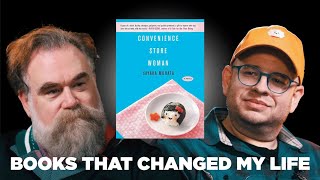
YouTube episode (Books That Changed My Life) in which host Chris Collins interviews Mike Drucker about Sayaka Murata’s novel Convenience Store Woman and how it influenced him. They discuss the novel’s premise (a 35-year-old woman who finds identity and solace working at a convenience store), themes of societal expectations and normalcy, and several favorite passages including the book’s final letter/paragraphs. The conversation also covers Drucker’s personal background (bookish childhood in South Florida), how he discovered the novel in an indie Manhattan bookstore, how many copies he’s gifted (≈15–16), and his own writing career (memoir Good Game, No Rematch: A Life Made of Video Games — sold after pitching; negotiated word target ~80k that ballooned to ~85k; roughly six months to write plus an extended editing period).
Questions this video answers
June 6, 2025
41
Four years
About 15–16 copies
Good Game, No Rematch: A Life Made of Video Games
Chapters
So our guest today is Mike Drucker. We are here today to talk about the book that changed his life, Convenience Store Woman by Sayaka Murata.
Yep. There's always this pressure to be a certain way, which I know we all talk about. But being a certain way isn't just being rich and successful. It's. Well, you're supposed to get married and have kids, but if you don't do that, you're supposed to get married and have a good life. And if you don't do that, you're supposed to be single but, like, living big. But if you don't do that, like, you have to have these markers for people to consider you normal or to not consider you being held behind.
Do you think that that tension and that expectation from society is the cause of a lot of unhappiness and anxiety? Currently?
Books, they've saved us from the dark, set our souls on fire, and whispered truths we couldn't ignore. I'm Chris Collins and this is Books that Changed My Life.
In this book, she feels like she has to pretend to be this normal person, but the only time she feels like a human being is when she's working in this convenience store.
The big question, how did Convenience Store Woman change your life?
Oh, is that your copy?
This is. This is. Well, technically, I. For this podcast, I rebought a copy to mark up because I realized an ex I had lent it to, we'd broken up and she had it. But I was like, you know what? I want to be able to mark it up again. So I just bought a new copy, read it.
How long has she been your ex?
Four years.
What else did she steal from you?
Honestly, that might be the only book. It was less of a steal and more like she was borrowing it when we broke up and didn't. And I'm. Someone who's. Unless it's like a load bearing item in my life, I'll be like, that's the payment of breaking up.
Yeah.
You know what I mean? So I got a new copy.
Can I see your style of how you like?
Oh, it's completely chaotic. It's the same since grad school, which is just nonsense.
Okay, but you write in it like I write in it like that. I like that. I mean, it's always fun to look at how other people do it. There's so many people that don't highlight or write at all. And I'm always like, yeah, I don't get it. Like, I want to.
Like, sometimes if a book is really nice, if a book Is like, really nice. I'll like, photograph parts of it if I'm like, I don't want to because, like, sometimes I'll like. I have an old copy of English as she has Spoke by. Do you know that book? So there was this early book that you could say was like an 1800s version of going viral, and it's called English as she has Spoke or as she has Spoken. But what happened was this Portuguese translator wanted to make a Portuguese to English dictator dictionary for travelers. He didn't know English, so he didn't know any other language. So he got a French dictionary. So he went Portuguese to French and then French to English and released it. And it literally became like the equivalent of like, remember in the early 2000s, there'd be bad translations and people would go crazy for them like that. But it became a hit book and Mark Twain wrote an introduction to the reprint of it that called it, like his favorite thing ever and said it was absolutely perfect. So. But I have an old copy of that from the 1800s and I've like, taken photos of passages, but I will never write.
That's so funny. So our guest today is Mike Drucker. He is an Emmy nominated writer, producer, and standup comedian. He named the famous Zelda character Groose.
That's right.
And from what I've heard, he was killed by the Terminator.
That's right.
And most recently he wrote Good Game, no Rematch. But we are here today to talk about the book that changed his life, which is Convenience Store Woman by Sayaka Murata.
Yep.
Here's the book that changed my life. It is the May 1993 Braille issue of Playboy.
Is this from Robin Hood Men in Tights or is this the.
No, that's.
Oh, that's the actual one. There was a gag in Robin Hood, Men in Tights where there was a braille Playboy. I didn't know that they made actual Playboys in the.
No, they really did.
That's crazy. That's so cool. Can you.
Can you tell me anything about the centerfold? Can you close your eyes and see if you can. What do you. What do you think? Like, what? Blonde, brunette, what?
Had a successful life after this. Ended up very happy.
Mary. Yeah.
Married a comedian, filled. Nothing went wrong after. And the. The rest of her life she was glad she did this.
Still waiting to give back the convenience store woman to her ex.
Yeah, yeah, yeah. She could keep it. It's fine.
It's all yours. It's so funny. So what do you. What do you think of the library.
This is the. This is one of the craziest things I've ever seen. It is so beautiful. It almost makes me angry at you. Like, it's so nice that I'm like. Like, it's almost like I want to be like, hey, look over there. And just, like, break into things and take stuff. It's like, what a. And I mean this as a compliment, what a child thinks a supervillain's library would look like.
Oh, yeah.
You know what I'm saying?
No, I pinched myself. Like, for the longest time, I just had stacks everywhere. Boxes of books. And when I finally got to put it somewhere.
Oh, man.
And actually kind of have it in categories, and then it's not that old. Oh, I know. I have that book. But where is it? And you're going through boxes.
Yeah. Oh, I have that all the time.
Even at home right now, though, I have stacks that I need to bring here because I just buy. I just love books.
No, I got you, man.
I really want to add to certain parts of the library now, since I kind of understand it, but one thing I want to add more of is architecture.
Oh, you should. I know nothing about it, but you should.
Well, we're really glad you're here. The fun thing about this is that you get to hear about books that have a huge following but you just never heard of. And I think just about everybody here is reading this, and we wouldn't have heard of it. And I think even Ryan, who helps us here, is reading her other book from reading this one.
Yeah, she just had a new one come out called. I think it's called the Vanishing World. Well, technically, it came out in 2015, but the English translation of it just came out a few weeks ago.
That's great. So we appreciate that you're inspiring us to discover stuff we haven't discovered before.
I love that, and I love this author.
Kind of. Tell me a little bit about where you grew up.
So I grew up in South Florida, probably about an hour north of Miami, and I was just always a super bookish kid. Weirdly, my dad's not. I would say, a big reader, but he was a bookish kid, so he kind of passed that along to me as a kid, and it just stuck with me. So, like, he was a huge HG Wells fan. He was a huge Jules Verne fan. He would give me his childhood copies of these books, and I would just dig into them, and I would. I still have a laminated book I made in kindergarten that is War of the Worlds 2 which is just like an eight page retelling of the same story. But of course, I called it a sequel. So like, even like when I was a little, little kid, I would read these books and I would just like, have these flashes of wanting to be a part of it, wanting to participate in it, wanting to add to it. And so they've just always been this giant part of it. Plus, in Florida, the sun is bad. And I was not a child who liked going outside.
Just burn like a tomato.
Just burn like a tomato all the time.
Me too. It's funny. So was your mom into books?
She was. My mom was very into books.
Always fiction.
She actually was a little more into nonfiction. She liked reading biographies of people, like celebrities. She was also someone who read the newspaper every day. So even when she wasn't reading a book, she was constantly reading. Like, she was constantly reading National Geographic. Every magazine she could get her hands on, every newspaper. She grew up reading comic books. She was actually a big comic collector when she was a kid. Your mom. Yep.
That's like the dream. That's like the dream mom for somebody.
Yeah. So both parents were super supportive of.
Thanks, Michael. Will you throw that up there for me?
Both parents were super supportive of reading Cheers. And I mentioned this in my book, and we can talk about it, but my parents realized my family didn't have a lot of money growing up, and we had a local Barnes and Noble. And my parents realized that when they were both working late and my sister couldn't babysit, they could just dump me in that Barnes and Noble for, like six or seven hours. And that was, you know, back when they had chairs and music so you could really just like, settle down. And so I would spend, on a Saturday or Sunday, six or seven hours at a Barnes and Noble and just read things. So I was always surrounded by books in some way.
Anybody ever try to kidnap you from the Barnes of Normal?
No, but I did have employees ask me if I was okay. Like, plenty of employees. Be like, you have been here a long time, little boy. I'd be like, I'm waiting for my mom.
That's funny.
Yeah.
Okay, so at what point in your life did this book come into the picture? How old were you?
Not very long ago, probably. I'm 41 now. It's probably 30, 34, 35. When I found it, I just happened to be. I was in Manhattan. I forget what indie bookstore, But I just walked into an indie bookstore, you know, probably killing a half hour before I did a standup show or something.
The Greatest in Manhattan.
You're like, I'm gonna kill 30 minutes and then walk out with eight books.
Is new York your favorite city?
Seattle's my favorite city. I lived in Seattle when I worked at Nintendo. But New York is a very, very close second for me.
Back when they owned the Mariners.
Back when they won the Mariners.
And you're from Seattle.
Oh, I loved it. I love Seattle Seahawks.
Did you become a Seahawks fan?
No, but I'm not a big sports fan in general. Although I do like that.
If I had to have a team, would you say the Seahawks?
If I had to have a team, Actually, I'd say the Seahawks because I know too many jerks that like the Miami Dolphins. I have too many relatives that I'm happy when the Dolphins lose.
Yeah, poor Dolphins.
Oh, yeah. Never. But, you know, fun team to grow up with in the 80s with.
How long did you live there?
I lived there Till I was 18, and then I went to NYU for English lit, and then I stuck around an extra year, and I got my master's degree in English Lit.
So you were the guy that helped me on my English homework.
Yeah. Well, my high school was actually really fun. And so. And this is probably not ethical, but I would be friends with the athletes, and I would get paid 50 bucks a pop to help them polish up their college essays. And it wasn't like a bully thing. It wasn't like, hey, nerd, you're going to do this. It was like, I will give you $50 if you can make this make sense for the University of Florida.
No, yeah, it makes perfect sense. Okay, so you're in New York. Yeah. You're. You go into a bookstore, and then. What about this?
Is it the only book you bought that day, or did you buy a few, do you think?
I definitely bought a few. This is the only one. I could tell you off the top of my head. I bought because I'm one of those people that will walk out with, like, a stack and then be like, where did. Where did I even get all these? But I think it was one. It's such a small, you know, like, book in size, and it has such a bright color that it grabs your attention. And because it's small, you're like, I'll pick it up and read a few pages, because, you know, it's not. It's not going to be. It's not going to be a big effort. And then I must have read 10 or 20 pages just standing there in the store, and I was like, oh, I'm. I'M going to get this. I have no choice but to buy this book. And it was, it was one of those things where I thought it was going to be like, you know, sometimes in that stack of eight books where you never read it, it's just a cool looking book or something. And I blew through it and I like forced people to read it. It just, it, it was so good and I just hadn't read something like that before.
How many copies have you given away.
As probably, I want to say maybe 15, 16, you know, Christmas gifts.
That's a great.
Birthday gifts. Yeah, usually the people who'd get it because it is a specific book with a specific tone. So, you know, you want to make sure that the right person reads it.
Okay, so kind of tell me the, the premise, like what is the premise of the book?
So the premise of the book is there is a woman who works in a convenience store and she's 35 and she's worked there for 18 years. And her.
Family and friends are starting to get worried that she's, you know, wasting her life away. She's not married yet. And this all takes place in Japan in which these are heavy issues of like, you know, women are often having worked at a Japanese company. I know sometimes women in Japan, if you're not married by a certain age, you're kind of mistreated, you're kind of dismissed. Like we have that in our culture. But in this book it's very big part of it where she feels like she has to pretend to be this normal person. But the only time she feels like a human being is when she's working in this convenience store and all the other employees don't really care about it. And the people think it's dumb she works there. But to her that one place is where she feels like a human being. And there was just something that I really understood about that. That feeling of, oh, this weird thing that makes me abnormal is actually the only thing that makes me feel normal internally. Which is what I think for me just like, I don't know, not just video games, but sort of like the sense of everything being play like a very play oriented person. You know, when you're someone who's very into video games, I think a lot of you get a lot of the cliches that you have. You know, you're not paying attention to things. You don't care about literature, you don't care about art, you're just much more for shooting guns at stuff. And for me it's like sort of like what I was saying with War of the Worlds, it's like a place where I can exist and my imagination can kick off and I can feel like, oh, there's a set of rules in this game. There's something I can follow that makes me feel like I understand what I'm doing versus trying to parse human interaction at times, which can be difficult if you're very awkward.
Yeah. And so also like, for her working in the convenience store, it's kind of, in a way, kind of humanizing, right?
Yeah.
Like you're kind of like boiling it down to the simple human experience.
Exactly. Yeah, yeah, absolutely. It's a common experience. And it's also like, you know, so many people have, you know, their first summer job that might be retail or like, you know, a quick job that's just between other jobs and you don't care about it. And that's also humanizing. So it's interesting to see like the people who are like, this is just a part time job. Why is this a big deal to you? And someone who's like, this world, this convenience store is the world. I understand, like the fact that she dreams in the convenience store, like dreams of the convenience store. The fact that, you know, to her when she walks by another convenience store, it's almost like she's tempted to just go inside and fix things up. It's. I don't know, that's just. It's so interesting to me and it made me feel seen in a weird way.
Yeah, it's a, it's a great, great premise. What. So on the flip side of that, what do you think that says about society?
I mean, I think that there's this, there's always this pressure to be a certain way, which I know we all talk about. But being a certain way isn't just being rich and successful. It's. Well, you're supposed to get married and have kids, but if you don't do that, you're supposed to get married and have a good life. And if you don't do that, you're supposed to be single but living big. But if you don't do that, you have to have these markers for people to consider you normal or to not consider you being held behind. And that's another thing that I experience with my love of games is they're often this thing where it's like, isn't that for kids? Or you're still into that and it's like, no, this is an art form that brings me immense pleasure. But at the same time there's this weird. Almost like an impermeable barrier between people who understand why that might be fulfilling and people who think that it's very strange and immature for you to still be fulfilled by that.
I know this is deep, but I'm just curious, like, your thoughts. Like, do you think that that tension and that expectation from society is the cause of a lot of unhappiness and anxiety currently?
Absolutely. Absolutely. Because I think that we're all being, you know, told and told in different directions what we should want, you know. You know, you should want to have a big family, but also you should want to have a lot of money. You should want to have. You should grind as hard as you can to get, like, the best job. But also, your job's not your life. You should live your life. You know, you should be true to yourself. But remember, you can't always. You know, it's all of these contradictions. And I feel like, you know, almost like a computer freezing. There's certain times that me as a person, I think other people just sort of go, like, I don't know what you want from me. Like, I wish there was a set of instructions you could just give me that I could just follow.
Yeah, I think it's. It's hard. It's hard.
This is great, by the way, this. This coffee drink.
So. From Seattle. So are you familiar with any of the coffee companies in Seattle?
I'm familiar with a couple of them, but no.
So Vi is the one on Capitol Hill that's famous. He never sold.
Okay.
And there's always, like, a line. It was just. For a long time, it was just like a kiosk on Broadway in Capitol Hill.
I must have missed that.
And he make like he roasts his own. And, like, never, kind of never sold out. Well, you can order it, and he'll ship it, like, every couple weeks. He roasts. And so I gotta do that. This is Seattle's.
That is very good.
Yeah, it's special, right? You can tell he gives a.
You really can.
He's like, there's a craft to it. So what kind of happens in the book with her? What's her. What's the journey?
So a new guy starts working at this convenience store who's almost her mirror reflection. He's immediately dismissive of the job. He's like, this is pointless. You know, this. We're only doing this job because we're told we're supposed to. He does. He doesn't have a home because he wouldn't pay his rent. So he's like, sort of on the run from his roommates who are trying to collect money from him, and they're. You know, his family has lent him money. And it's this mirror image of someone who refuses to participate because they also feel like they don't fit into this machine. But unlike this woman who goes, I have found my spot where these are the rules that I understand that make me. This guy has instead rejected all of it at once. And so this guy totally throws her off. But she also sees an opportunity to solve both of their problems because he's being judged for not being in a relationship and not being married and not having a proper career, and she's being judged for that. And so she proposes not a marriage of convenience, but a relationship of convenience in which they can both seem like normal human beings to other people. But the problem is they also don't really like each other. And it's not a romance so much as it is two people who just are trying to figure out how to navigate a world that's not made for them, seeing if they can team up to trick everyone else to leave them alone.
Is there sort of an element where. Where one is trying to fix the other? Like they think they can fix each other?
It's. You know what, it's almost like they think they. I think that they think they can fix each other, but they think they can fix each other by just, like, haranguing the other. Like, there's a lot of, like. Like the. The guy talks a lot about, like, we're still in the Stone Age. In fact, he sort of has almost an incel. Like energy, you know, the sense of women only want this because that's how humanity was developed. And anyone who pretends that women want men like this are lying to themselves. And he's that type of guy where his sheer bitterness at the world is actually what has prevented him from fitting into the world. Whereas for her, it feels a little more like she would love to fit into the world. She just does not quite understand. And so she doesn't.
In your history and relationships, are you usually the one trying to fix the girl, or is it the girl trying to fix the nerd in you? Like, I can get him away from video games. Or has it been both?
It has been both. I think it has tended to be both. It's usually less like the lifestyle of games and stuff and a little more like, you should do more things. So it's not like, I need to get you away from games or these are bad, or Anything. But it's more like, hey, maybe we could go outside Saturday and Sunday. So it's usually not someone trying to fix me so much as, like, expand my range, which I usually appreciate. Like, there's a lot of things I love now that I wouldn't have picked up without a relationship where someone was like, hey, I know you want to do this, but let's do this new thing that you haven't experienced yet.
Like what?
Broadway. Like, even Broadway musicals. Like, for a long time, I wasn't super into them, but then in my 20s, I dated someone who, like, really broke down. How to enjoy them, what each song meant, the rhythm of the shows. And it really made me understand it a lot better in a way where if I was just like, no, I'm in my little this is all I want, I don't think I would have ever picked up on.
Yeah, that's. That's. That's good. What do you tend to try to fix?
I. You know what?
That's the type you attract that you.
Think you can fix. I tend to. When I say I date, I tend to date messy people. I don't mean psychologically. I tend to date people who have, like, messy homes. And so I'm always like, someone who's like, oh, maybe we should take the shoes off. Like, I start to get annoying like that. Or, like, I'll, like, panic clean their kitchen while they're asleep or something like that. So I'm always trying to get things to be a little more clean, but, like, literally in the literal sense, not trying to, like, fix the mess of their lives so much as being like, you know, I. Sometimes I think this should be in the refrigerator.
Wait. But I like. So there is one thing that I know.
Yeah.
Is that people that are that way, their lives are messes. Also, like, if you go and get in somebody's car and it's a mess. Yeah, they're usually a mess.
Yeah, that's. I guess that's true. But I can usually accept the mess as a fun eccentricity. Whereas sometimes the dishes drive you crazy. Yeah, yeah, yeah, yeah, yeah. But, like, I'm still willing to clean it myself. It's just. That drives me crazy.
So then what happens with their relationship?
I mean, it kind of. It immediately falls apart when she just sort of realizes she doesn't need him. And, you know, it is a very short book, and I don't mean to spoil it, but she realizes that she doesn't actually care what other people think. That as much as everyone in her life is Horrified by the fact that she works in this convenience store. The only place that she feels like she can breathe, she can be herself. She even says, like, outside of it, calls it almost like wearing a mask. Like, the place that she feels like she understands the world is that store. And that's sort of the end of the book, is her realizing, no, I don't have to pretend to be anything. Not just not screw these people, but literally not caring and just sort of going back in and becoming what she really is in a weird way. And this is going to be the weirdest comparison. It's almost like the end of the hockey movie Slap Shot. And I know. I know because in that movie, the whole movie is about this team, if you don't know that is, like, full of goons and bruisers. And they start to become popular because they're beating everyone up on the ice. And they have this coming to God moment where they're like, we can't do this. We should win the real way. We should win the way that people are supposed to win, through skill and talent. And that's not working. And at the end, they're like, I guess we just beat people up. That's the end of the movie. But there's something fulfilling about that where it's sort of like a character realizing who they really are after trying so hard to be someone else.
Yeah. So let me read this, and then you kind of tell me what you think. So this is page 161. The voice of the convenience store won't stop flowing through me. I was born to hear this voice. I realize now I. I went on relentlessly, more than a person. I'm a convenience store worker. Even if that means I'm abnormal and can't make a living and drop down dead, I can't escape that fact. My very cells exist for the convenience store.
Exactly. And that's so beautiful to me, it's this. It's this happiness she has. This, you know, this almost religious, like, experience of it where it fills her like it's. It really almost has a holy spirit type feel to it. Like the convenience store. The sounds of it fill her heart, fill her soul.
And then it ends with a letter to the convenience store.
Yeah.
Says, dear Convenience Store, I hope you don't mind me getting straight to the point. We've known each other for 17 years, but I guess this is the first time I've ever written you a letter.
Yeah.
I was 18 when we met. I thought you were really scary to begin with. You were so grown Up. And I thought you wouldn't have time for the likes of me. I always felt nervous with you. I kept a notebook in my pocket just to jot down detailed notes of every little gesture. Habit of yours. I noticed. It's so great. That's so great.
And the way she talks about it, both in that letter and throughout. Like the moments of tenderness when she's touching something or fixing something or making something look good is always in the store. Like when she goes to her house, she just boils a bunch of vegetables, throws something in the microwave. She talks about her apartment being full of cockroaches and being small and how when this guy does sort of move in, he sleeps in the tub because there's not a lot of space and he doesn't like the place. But when she's at the convenience store, she is spot on and knows exactly what to do.
Yeah, it's like home.
Yeah.
It's odd, right? That that's home and home isn't home.
Right. And not, not to do another weird comparison, but it's almost like how like Bruce Wayne isn't Bruce Wayne, he's Batman and Batman's the real person.
Yeah, I like that. That makes sense. Any other favorite quotes from the book?
Oh, man, there's me.
Fine. Because there's one or two that. Rereading this, I was like, yes, okay. This is sort of similar to Good morning. I love this moment. It feels like morning itself is being loaded into me. The tinkle of the door chime as a customer comes in sounds like church bells to my ears. When I open the door, the brightly lit box awaits me. A dependable noise, normal world that keeps turning. I have faith in the world inside the light filled box. Like, just describing her heaven.
I love it.
I love this book. Yeah.
Okay, so the big, the big question. How did convenience store woman change your life?
As. As much as I have no similar experience to a Japanese woman working in a convenience store, it was one of the first times I've seen a main character react. Certain ways I've reacted, you know, throughout the book, she's almost confused by people being worried about her. You know, it's not like, yeah, yeah, yeah, I know I'm supposed to do this thing. It's more like. But I don't understand why this is important to you. And that's something I've felt throughout my life. When people are like, you know, like, I have no problem with kids, but when someone's like, why don't you have kids? It's crazy. I'M like, I just, I don't have that in me. And so I don't understand how to even respond to you, really. Because it's not like a, it's not like an off the, it's not like a fun response. Like I just like partying. It's more like I do not have the mechanics in me. To know and explain that to you and to see a story about someone who's under that pressure and sticks to her guns in a way that everyone else would find stupid or insane or self defeating meant a lot to me because I saw in that character someone who was like, no, I'm going to be myself, even if it's the dumbest thing anyone thinks I could possibly do.
Yeah. I love that. I always feel that way when people ask me what I do and I'm like, when I try to explain what I do at the end I'm like, I should have just said I'm a plumber. Because they want you to just say what you do in one word.
Yeah.
And it's like you're not allowed to be more than one thing.
No.
And they really. When. The other part of it is when they're asking you, it's more like most of the time it's just a size comparison. How important are you? Like if I say I'm a doctor, I'm more important than if I say I work in a convenience store.
Yeah.
And so it's more like, where do you fall on the hierarchy? But if you can't give them like, I'm a plumber, I'm a lawyer or whatever. Yeah, they just like, they spin.
Yeah.
And yeah, sometimes I'm just like, yeah, I'm a plumber. Like just, I'm just going to make it easy for you because that'll make you feel superior and then we can get done with this game. And there's Because I, I'm not one thing. I, you know.
Yeah.
I'm always evolving and changing and I do a lot of things.
Like, absolutely. Also, I feel like when you, even when you do something that is kind of cool and you say it and there's follow up questions, there's a point where you kind of, you're like, now I'm making it not sound interesting anymore. You know, like when I talk about being a late night writer for shows, people will be like, it must be crazy meeting a celebrity. And you do this and you're like, well, you know, you walk in, you're professional and you talk to them and then you guys have your Day. And you're like, wait, I'm making my own cool things sound boring.
Yeah, but they're just people.
Yeah, yeah, that's the thing.
Like, that's the other thing is people give this importance to celebrity and it's.
Like, oh, yeah, yeah, yeah.
It's like they're just people. Like they have the same problems you have and.
Yeah. And they're like, like people be like, what is it like working with them? We had a conversation and they were very professional. So it was good.
Yeah, I always feel that same thing. It's, it's just funny how people, they need it to be singular.
Yeah.
And they need it to be easy and better if it makes them feel superior.
Absolutely.
It's funny how that works. Okay, so now, now let's, let's talk about your book. So I'm curious, what is your process for writing a book? Like, what was your process for this? So the book is called Good Game. No. Rematch. A Life Made of Video Games.
So this is weirdly my third, but my first two were independent books and one was my first book was a sort of a scholarly book about this game called Silent Hill 2. So that was much more using sort of my grad school days of doing research and almost just writing a very long term paper. So that was a little more like a grad thesis. The second book I wrote was called Plumbers Don't Wear Ties and that is the worst game ever made. And a company bought the IP rights to the worst game ever made. And they asked me to write a novelization of it that both made fun of it but was also a novelization of it. Like almost like a mystery Science Theater 3000 in book form of this game.
Did the sales for the game go up when you put the game?
The game hadn't been sold in like 30 years, so it technically went up just because it hadn't been on offer for a long time. But it was also, the advance was $0.
They were like, we don't have any money. And I was like, this just sounds fun. And so that one was the process of. That one was just me watching and playing the game over and over and just taking copious notes. This one is a memoir, but it's comedy stories about my life and video games and how I've humiliated myself and how I've tried to impress crushes or try to impress people at work and failed many times using video games. And so for me, the process was first coming up with the stories. And so I literally shotgunned out a big Google Doc of this little story from my life or this. Or do you remember this? Do you remember that? Do you remember when I played this game with my brother? Or when I dressed up as Mario to impress these girls in elementary school? Which did not work. And so then I kind of did that. And then I wrote a paragraph on each one, sort of sussing out which had meat on the bones. Because sometimes you have the funniest anecdote and then you're like, oh, this is. This is a page and a half and it's not worth telling. So I sort of fleshed them out a little bit, took those, took the ones I really liked and put them into the pitch. Pitched it, thankfully.
So what was the pitch? The short version.
Short version of the pitch was sort of a. Not a nonfiction of Tomorrow and Tomorrow and Tomorrow, but sort of a nonfiction companion to that. A book that is also about how video games can change your life and influence the way you see the world. And in a positive, funny way.
How many times did you have to pitch it before somebody took it?
One.
Oh, come on. We need the story of how 100 people told you no, no, like, too easy.
Five publishers said no, and two publishers put in bids. So it was actually a much easier process than I thought it would be.
That's great. So then you get in advance and how long do you have to write it?
I had a year to write it. A year? Yeah. So I went from the. Actually, no, I had six months to write it, but then there was about a year of like the edit phase where we were like editing it and doing a legal pass. And I was.
When do they assign you an editor?
They assigned me. The. The buyer of the book was the editor assigned. And then there was an editor under him that was a little more hands on.
And so six months in, they start reading it and giving you notes.
That's right.
How much did they change it?
Not much at all. I mean, they were. They were really good in that one. They were. Were both editors were fans of video games, but they weren't obsessed with them. Which is almost the perfect middle ground. Because they could say, I think as the layperson who gets this, you're over explaining. Or as someone who should know this, I have no idea what you're talking about or, you know, and just like a regular editor would, there was times when they were like, this is a story that has great jokes in it, but I think you're telling it slightly out of order. Or, you know, the funniest part of it is sort of Just left in the dust. And so I would say.
It was very few major changes, but a lot of little nuances that made it better. And they're also. When you're writing a comedy book that's like 85,000 words, it's so helpful to have someone say, you've told the same joke five times. Like, it's very helpful to have a person. Exactly.
Yeah. What is your process for writing? Like, once you had the deal, how many hours a day would you write? Any weird quirks like Aaron sorkin that showers 11 times and puts on different clothes or.
It was a little complicated because I was working on the Tonight show for some of it, so I was like, I had another writing job on top of that, and I was working on a couple award shows. And so I had to balance my time between the immediate future of what I had to write versus the book deadline. And, you know, like, if you spend eight hours a day writing jokes, it's a little hard to, like, sit down and spend a few more hours writing more jokes. So what I would really do is I had to set time aside, especially on weekends. Like, weekends were my big writing days just because those were when I had all the space.
Girlfriend or no girlfriend at the time?
Girlfriend at the time.
And she understood.
She understood.
So how many hours on the weekend? Like, did the weekend start Friday, or was it Saturday? Sunday.
Like, Friday. Usually Friday. And I would just start early. I would usually start early. I try to start before, in the afternoon, before the sun went down. Because for some reason I have this psychological thing that once it's nighttime, like, I'm like. Well, it's too late for me to work, so I'm much. I'm not a morning person. It's almost like I have to find this window of time in the middle of the day to do it. But I just.
You don't drink coffee when you write?
Oh, I absolutely drink coffee.
That late?
Yeah. Oh, wow. Yeah, I drink too much coffee. Me too.
But, yeah, I can't. I can't write without coffee, in a sense. But I. I start early. I like to start at like, four in the morning.
Oh, that's. I. I would be healthier if I did that. I would be. I would be a better writer.
When you say, like, before the sun goes down, like, like six, seven.
I would say like, some. Usually something like noon or 1pm to like, 6 or 7.
Okay. So lunch? Lunchtime?
Yeah.
Like, I'll usually got a cup of coffee. You're at a desk.
You.
Yeah.
What kind of computer Usually I'm using a MacBook. I also have one of those free write typewriters.
The only problem with those things, I have one too, is you can't fix your mistakes.
I kind of like that at times though, just because I get it.
But it doesn't work for me.
Which is fair. Which is fair.
I do race to get the first draft done. And so for that it works, but sometimes it just gets a little like you can't tell what the word was.
I think it's helpful to me when I feel very like I can't make progress through something because if I'm just like, I am stuck. This is a wall. I can just power through and just try to shotgun out something. And since I can't go back and read it, I know that it's not gonna be as good as a draft. When I'm feeling myself and I'm in my Google Docs and I'm really focusing and going back and fixing a sentence and adding something back in. But if I'm trapped having a. You have no choice but to go forward type machine is helpful. That said, I know it's like kind of a luxury I don't need.
Also, we should probably explain to people. So the free write is like a old school typewriter that just has a little screen on it. You type. You can only read a little bit of it as you go. You cannot go back and fix anything. And then it uploads to a cloud.
Yes.
In a text format or whatever.
And the screen is E ink on this. So it kind of looks a little nice when you're writing it. Like, it looks like you're writing. You're typing onto paper. That's kind of.
It's a little comforting feeling like you're Bukowski and you're.
Exactly.
Okay, so if you get stuck, like let's say it's Saturday and you're stuck, what do you do to get unstuck?
I have to do this thing, which I know this sounds silly, but I will imagine myself about to jump into like a cold pool or like a cold lake of water. Where. Lake of water. A cold lake where you're almost like, go like. I almost have to like not pump myself up. But almost like sort of the best I can describe it is the way you jump into a pool where you have to like psych yourself up so.
You'Re still sitting at the desk.
Still sitting at the desk.
But it's almost like you just do this mental gymnastic. Exactly where you're gonna jump in the lake. And you're gonna freeze to death.
Exactly.
When you hyperventilate a little bit. Unsticks you.
Yeah, it helps. It's like a nice little thing for me to imagine just like, being like, I know this pool is gonna be cold, but if I don't jump in the pool, I'm just going to not be in the pool.
But you're not jumping in the pool. It's all imaginary.
It's all imaginary.
Wow.
Yeah. But it helps.
That's great.
Yeah.
Any other things you do to get unstuck?
I Especially, because I write a lot of comedy, I will go back and listen to old comedy albums that I really like, whether that be George Carlin or more modern stuff by people like Nate Bargazzi. And that'll help me sometimes just because it almost, like, loosens my brain a little bit where I'm like, oh, that's what funny's like. Now I remember how to write a joke.
Do you have them on vinyl?
I have some on vinyl, yeah.
What are your favorite vinyls?
Definitely the George Carlin ones. I have a shelf Silverstein one, which is really fun. And I collect a lot of video game vinyls, so I have probably 40 or 50 video game soundtracks on vinyl.
Do you listen to music when you're writing?
Yes, but I can only listen to music without lyrics. I cannot listen to anywhere.
So what do you listen to?
You know, movie soundtracks, sometimes ambient stuff. Stuff like Brian Eno type stuff that's a little more abstract.
Unstructured.
Unstructured. But it depends, like, if I'm writing something that's intense, I might have slightly more intense, like, you know, like Inception type music. If I'm writing something that's a little sillier, I might have it a bit lighter and more background, so it's not influencing my emotions. I just can't hear words because the moment I hear a word, I'm no longer passing paying attention to my words.
And so was it established with the publisher that it'd be 85,000 words?
They said 80 and then sort of ballooned to 85.
That's always fascinating to me because I would find that very limiting.
You know, it isn't. It isn't. It is in that, you know. You know, there's one or two stories that I'm like, ah, if I had a little more space, I could fit it into the book. But there is something that's also nice to being like, I have a goal, I have a goal to hit. And also I have a goal where I should be efficient Enough to tell the stories I want to tell well within this space. Versus being like, I'll just keep expanding this. I'll just keep fluffing this out. Or, you know, I don't know. I think it'll look better if this is longer. Almost like, you know, the way a college student will half ass an essay and be like, you know, what if I add an extra page to this? Maybe they'll like it more. This made me a little more focused, which I liked. I've.
I think, like, I'm weird, but I always think, like. Like, just take, for example, this book.
Yeah.
Like, I get the feeling like, this. Or my favorite books. Nobody even thought about word count.
Yeah.
They just wrote the thing that needed to be written.
Yeah.
And I find word count very distracting. Like, I want to make the thing good. Yeah. I don't. Like, I have no concept of words. I don't mind when people ask me how many words. I'm always like, I. No idea.
I. I'm not obsessed with words, but I don't mind.
Publishers are obsessed with words.
They are? Yeah, they are.
They have, like, 40,000 words, 80,000 words. 120,000 is too much. Like, and you're just like, whoa, like, don't we want to make it good? Like, but for me, if you could do it in 40,000 words, why wouldn't you?
I agree with you. But I do like the. I do. There's something comforting to me where someone's like, this is. This is sort of what we're looking for. And I'm like, you know what? I now know.
They have a. They have a formula. Like, they know what they're doing. They. They understand it. I guess I just don't fit into the formula or I struggle with it, or.
You've risen a little anarchist. Some of us are still in purgatory. You've risen to the kingdom of heaven.
Well, I'm the evil villain with the library.
I think it was a compliment.
Okay, let's go. Let's go through some of this. I love who did the COVID I don't know.
And I wish I knew because it's such a great cover. Like, the moment they showed it to me.
The thing about this. This sort of COVID that I love is it kind of tells you everything.
Yeah.
Like, it's. And that's hard to do.
Yeah.
There's an art to that. Like, it's not easy.
It's like, I. It. I was so happy when they showed me this. It was almost like, I think there might have been one Minor change of things. And that was it. I was like, it's big. Basically, that's it. We're good. Okay.
Turns out my grandfather was the only person in that golf group who was not in the mafia.
Yep.
They just really loved hanging out with him, but didn't want him to know. My angry, loud grandfather was a hip, cool golf bro to. In his youth. He only figured out his friends were in the mob when one of us, one of them invited him to his house and there were multiple guards with guns.
Yep, that's true. That's back in the like, that's back in like the 60s when that was like Vegas. Vegas.
That's fun.
Yeah. My grandparents were sort of like, you know, by the time we were kids, they were just grandparents, but apparently in my parents day, they were like on vacation a lot of the year and they were gone. And they were like these jet setting people. I'm relatively sure they were swingers, but no one in the family wants to address that. But like, they just like these people who partied all the time and went to Vegas.
Okay. However, I made one mistake.
Yeah.
I used punch out as my example. I told my. I told my sister that when you punch with the power glove, it's like punching something in real life. That definitely. That's definitely the way I phrase it. Which was a bad idea. My sister donned the glove and then she punched me straight in the stomach with it. Hey, she said it works.
That's very true.
It's funny that.
Yeah.
Your analogies are video games.
Do you dream video games?
Sometimes, yeah, sometimes. If I'm like, very into a specific story. Like, for me, it's almost like a book where if I'm really in depth in there and I'm thinking about it all the time, it'll pop in my dreams.
That's so fun.
Okay.
The problem is that as a kid, I was required to go to football and baseball games. I didn't have a choice. Get in the car or I'll give you something to cry about. May have been my father's catchphrase for a couple of years. He desperately wanted his kids to love watching sports, and he would work overtime to make me and my sister hate watching sports in the process. Your poor dad.
My poor dad. Because my, you know, in his defense, it was never like, I want my son to play baseball and he doesn't play baseball. And that makes me mad at him. It was more like almost like video games are to me. Sports were so important to him, and I just didn't Click with them at all that. I think he was bummed out. It was almost like, does my son not like me? Does he not like, am I kidding?
Does he want to play catch?
Like.
I must take him to enough football games for him to like it. Like he really wanted to solve it. Almost like inconvenience to a woman again, where it's like, come on, you're a guy, you must like sports. We'll keep pushing you towards it until it clicks.
Did you ever get him into video games?
He is very into Tetris, so I actually recently set up a bunch of old Tetris games that he loved when I was a kid and made them very easy for him to play. That's like the only thing he's ever been in.
Do you consider Tetris a video game?
I consider Tetris to be the one of the best video games ever made.
Really?
I think it's brilliant, top to bottom. One of the creators of it said something along the lines of, when all the other games are gone, Tetris will still be around.
That's interesting.
Yeah, it's, it's. It might not have the best story of any game ever made.
Say, what is the story?
There's none. But to its credit, it's just Tetris. It's just this perfect puzzle game made by a crazy Russian mathematician who was bored at work. And it's one of the most beautiful things ever made.
I've spent a lot of hours playing Tetris. Yeah, I think about that now as an adult. I understand that's why he didn't want me to know what he was talking about with those managers. He told them what had happened to his family and said, man to man, asked for a little help. During a hard time. My dad had humiliated himself in front of strangers so he could afford to buy back at least one of the games that had been stolen. Even then, I recognize this. I might not have known what he was saying, but I understood what he was doing. Something extremely kind.
Yeah, I mean, I wasn't super close with my dad as a kid because we didn't have similar interests, but my sister often watched us while my parents worked late, sometimes overnight shifts. You know, again, we didn't grow up with a lot of money, so my parents had to work a lot. And one night when my sister was watching us, she and, you know, almost like a movie, invited some friends over, who invited some friends over who invited some friends over. But the problem is my parents don't have any alcohol in the house. They don't drink. They've never drank. Drank. I've never seen my mom have a drink in her life. It's not sobriety. They just don't. And all of these people came into this house and the moment there was no beer or wine or liquor, they lost their minds and they got angry and they literally, like, when I say, robbed the place, it was almost like people were just picking things up and leaving. And, you know, you have your super Nintendo in the living room. And so, you know, and these are teen boys, so they kind of share the same interest. So they walked off with a ton of our video games. You know, as a little kid, I was so inconsolable. And my dad, who again, worked hard, worked late hours, and we didn't always get along. I think to him, he was like, I'm not going to let this end this way. And so he took me and we went from, like, store to store to all these department stores, a lot of which are closed now, out of business. And he would talk to the manager and kind of be like, this is what happened. Is there any way we can get a discount? I'm trying to do this for my son. And I know, you know, he's a proud dude. I know that's hard for him. So as much as we've had conflicts in our life, like, that memory was very important for me to.
Write down because it was one of the greatest moments of my childhood with my dad.
It's very, very sweet.
Thank you.
What story in here were you like? I don't know. That's too vulnerable.
You know, it was talking about my wedding because I was married for about a year and a half and I had a Mario themed wedding, which I do not recommend anybody does. And in the book, I recommend against it. Also in the story, my brother gives a very great speech, which is one of the best wedding speeches I've ever heard. But, you know, I'm somebody who doesn't like speaking negatively about previous relationships or exes. You know, unless something horrible happened, I kind of just, you know, want to leave it be. So I wanted. I really put in a lot of effort to write it in a way where it was about this interesting wedding, this interesting thing my brother did, but not about the marriage itself because I didn't want to bring someone else's bad moments in their life into this as part of the comedy. So that was a really tricky line to walk because the story is funny, but the story doesn't exist without talking about the wedding. But you can't really talk about the wedding without mentioning the fact that I'm no longer married, which I wanted to be careful about. I just. It was one of those things where I didn't want to hurt the feelings of somebody that I haven't talked to in 10 years.
Yeah, that's a hard line to dance. But the story's still a part of it, right?
Yeah.
What page is his speech on?
His speech is on. It is the chapter.
Never have a Mario.







