Books That Changed My Life: Nyasha Hatendi & Invisible Man
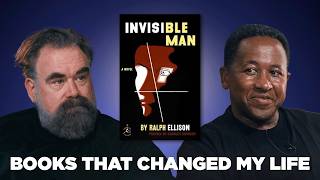
Nyasha Hatendi talks with Chris Collins about Ralph Ellison's Invisible Man, which he discovered while struggling in New York and found it validated his anger and identity. The book pushed him toward African and African-American theatre and storytelling, shaping his career and life.
Questions this video answers
Invisible Man by Ralph Ellison.
Washington, D.C.
1981.
Chapters
How does the Invisible man come into your life?
It was actually one of those moments where my life had kind of imploded. My very first job out of drama school and part of that job involved coming to America for a while. When I went back to the uk, one of the customs officials asked me, do you intend to look for work while you're here? So I had a student visa at the time and I said, well, if somebody offered me a job I probably wouldn't say no. And I was being facetious, but I ended up in a cell. Then I was put on a flight back to New York where I'd just been. So I ended up in this apartment at this point where I thought this was going to be my first job. I was going to go on to get job. The world is going to be my oyster. Instead I end up grinding the streets trying to get an agent and trying to get a manager. Kind of what every actor has to do but in an environment that I wasn't prepared to be in and to do it in. So there were lots of moments of depression and sort of anger and sort of this will where I was like, one day I will overcome this. And it's at that point that I came across the Invisible Man.
How did the invisible man change your life?
Foreign.
Welcome to the Syndicatex Library where we love books, especially books that change lives. Our guest today is Naisha Hatendi. He's an actor, writer, director and producer and the creator of Sacrilege Curse of the Mimbari, available today on Audible. He's joining us to talk about the book that changed his life, Invisible man by Ralph Ellison.
What do you think of the library?
It's, it's pretty, pretty cool. It's amazing. I've never seen such a. An astute collection and well organized collection of books and the range as well is pretty, it's pretty stunning. Yeah, it's, it's, it's amazing.
Yeah, yeah, it was interesting. When I first kind of did this I had a lot of those books in the front like photography and art.
Yeah.
But nobody. A lot of stuff we do in here is business related and people didn't care. So then we went out of our way to curate like presidential stuff and more for the audience in a sense. But over 50% of the books are art or some sort of art, photography, that sort of thing.
Cool, cool, cool, cool. What a passion.
Yeah, I love books.
Yeah, clearly.
Big little everything.
Yeah, yeah. And you so free with that expression as well. It's like that's what that's cool. It's just this sort of. There's an unapologeticness of, like, it doesn't have to be. There's no purpose behind it other than the sort of. The pure enjoyment of that, which is interesting.
I wasn't a big reader when I was in high school, but when I was 24, I was going through a kind of difficult situation. And I was living in Portland, Oregon, at the time, and there's a Barnes and Noble downtown there, and I just kind of wandered in, and I was in a contentious sort of environment with my employer at the time I'd moved to Portland. They'd promised me a bunch of stuff. It wasn't happening. I was right, but I was losing at the same time. Like, have you ever been in a situation where you were right but it didn't matter that you were right? Like, it wasn't working either way kind of a thing. And so I was butting heads a lot, and I was pretty low. Like, I was feeling pretty bad. Cause I had expended all my savings and, like, you know, I was kind of at this point, and.
I walked into the bookstore, and I don't know, for some reason, I didn't know anything about it or whatever, but I was attracted to the book how to Win Friends and Influence People. I bought it. I started reading it. I literally was in tears, like, realizing that I was the problem.
Right. Yeah.
It didn't matter that I was right. I read it again, and then I started to have this feeling like, oh, books are a cheat code in a way.
There's books out there that can really give you an insight to something.
Yeah. Can release something or sort of. Yeah. Yeah.
So then I just started, you know, reading books like everybody does, like, recommending, talking to friends, you know, and in our old office in the old building, there was just nowhere to put them anymore. Like, I had so many books and that they were just stacked, you know? And so what we did is we put them in boxes and put them in storage. And then I'd buy more books, and we'd put them in boxes and put them in storage.
And.
And so when I thought after the pandemic, I'm like, I want to buy a building, and I could put all my books in there. And so then at the same time, a couple situations came up where there were estates that were getting rid of a larger collection of books. And so then I started buying collections of books. Then it gave me permission to just go crazy.
Do you read all the books?
I have not, but I Aspire to some day be able to just sit here and read. Yeah, but I read a lot of books.
Yeah, yeah, yeah. Well, I don't.
I like to.
When I get moments where I have to read something, I read a lot of scripts because I'm an actor by trade, so sort of I'm taking all that in a lot of the time, but I never really sit down and read something out of pleasure. Very rarely. It's quite rare for me to get the opportunity. But I do love books. But I also have this weird feeling that if I have the book, I have to have read it. So if I put it on display and say that book is there in my. We have a very small, very, very small library. And I keep wanting to buy books, and I feel this immense guilt that I haven't been able to read the books that I put on my shelf and. And I buy them with every intention of reading them and sort of with a desire to connect with the author for whatever particular reason. Like, just the other day I bought Dambuzo Marichera's the House of Hunger. He's a Zimbabwean author that I'd never read. And I was thinking about this. I was thinking about Ralph Ellison. I was thinking about all these authors when they were trying to think, well, who are the Zimbabwean authors that sort of speak to that world? And so I bought his book, and I've got Tsitsidangarembra on my bookshelf, and, you know, Wallace Oyinka, all these great authors, and they're all sitting there waiting for me to. To sort of. To read them, to digest them. The idea of reading books, there's an intellectualism to it. It suggests something about you. There's a sort of. It projects something. And my fear is that it's. That that thing is not real, as it were. And so I'm afraid of. I want it, but I'm afraid that I don't have it. And the books remind me that I habit a lot of the time.
Oh, really?
It's a weird one. Yeah. Unless I've read them and then I'll get this, like, glow of, like, pride. Will I go up the books and I'll be like. And, you know, a lot of it's, like, subconscious and sort of like. It's not really sort of. I'm just kind of. I'm probably sort of doing it down a little bit. I'm sort of like. I've actually probably read more than I give myself credit for because I'll go around it and I'LL go like, oh, that book. I remember reading that book. And I'll get like a little glow of pride at the fact that I finished reading that book. And it has that. It's that really weird relationship with. So it's never really just pure joy, which I want it to be. It's more. This is an achievement of some form. Do you know what I mean? It's like I've achieved something by reading a book in some way and that gives me points in some way or form. But it really shouldn't be that. It should be. I wish I didn't have that. Put it that way.
Yeah. I don't experience it that way. In a sense. Do you feel obligated to finish a book when you start it?
Yeah, I don't. Yeah.
I don't at all.
Yeah.
See, I look at the, the book is. It works for me.
Yeah.
And there's just certain things that I don't connect with also. Have you ever had this happen where you. You're recommended a book or you get a book, you start, it doesn't really work 10 years later.
Yeah, yeah.
Like, for me, a book like that was the Alchemist. I tried to read the Alchemist because a friend was like, you got to read it. It's the best. And I, I just couldn't get through the first part. I just couldn't. And then 10 years later, somebody says, you know, you need to read that book. And I was like, I'll give it another shot. And it was like, oh, it was like what I needed in the moment, you know, and so timing. I never feel obligated in the sense that if it's not the right time, it doesn't mean that the book's not good or just, you know, I'm a little more free flowing with it. But I don't know, I also feel like it's my individual experience. I'm not, I mean, I don't know. We have somebody here who's way smarter than me that can read a book a day.
Yeah.
That's not me.
Yeah.
Nor would I ever want to. I also have friends at Speed read.
Yeah.
And I think that's almost like, to me, not fun. Like I, you know, I like to go. I go back when I pick up a book, I go back a chapter from where I left off just to regain context.
Yeah. Yeah. Do you know, part of it, I think is the embarrassment about how long it's going to take me to get through a book. It's like, I wish I could read it. Faster. But then I'm like, oh, no, this is going to take me a couple of months to kind of get through one book. I enjoy it, but I'm all. I don't know. I've got these weird attachments to it, which have kind of always gotten in the way of me just purely enjoying it. But I know what you mean about, like, a book that comes to you. I tried that with. I tried to read the Satanic Verses. Have you read that? No. Salman Rushdie. Just because I was like. I was listening to an interview of him speaking about this, the awful thing that happened to him where he lost his eye. And it was really interesting how there was an idea of him that had sort of gone into the world, and it was nothing like the idea that was in the book that was him as a writer. And so I was like, okay, I'll go back to that. I'll try and read it. But I couldn't do it. I couldn't do it.
I'm still trying. And I was tried, I think, about 10 years ago, and then I heard this interview. I was like, no, I've already got to go back and do this to find out who the real Salman Rushdie is. But I got about 10 pages in. I was like, nah, nah.
No, I don't feel any guilt with that.
Yeah, yeah.
Not at all. Also, I think it takes me longer to read, but I think I retain more than most people.
Yeah. Do you feel like you feel changed? You get, like, an emotional reaction to sort of certain moments that sort of resonate a lot of times? Yeah, yeah. I think that's the. That's. I think I remember how books made me feel more so than the contents of the book. Yeah. That makes it a good one.
And there's nothing better.
Yeah, yeah.
Than that.
Yeah.
Also, like, have you had one where you just can't stop?
Yeah, yeah, yeah, yeah.
So I kind of try to keep looking until I find that one.
Yeah.
I don't feel like I'm obligated to.
Kind of find that in everyone.
I don't know. Sometimes, like, a good book seduces you in the beginning in some sort of way. I don't know, with a story or something. There's something about it.
Yeah.
That kind of seduces you.
Yeah, yeah. Martin Amos did that for me. Martin Amos, the Rachel Papers. I remember that was a cool book. But I first was like, oh, this is. This is cool. And I felt cool for reading it, but it was also just cool just the way it was written. Just the way the Words tripped off the. Off the page, and I was like, wow, this is. This is awesome. I know. I know what you mean. It's exactly that.
I'm always searching for that.
Yeah. Yeah.
It's a high bar, though.
It is a high bar.
It's rare.
Yeah. I kind of like the idea of being able to like anything or find a way of liking anything. Do you know what I mean? Even if it's not something that immediately appeals to me is to sort of study it in a way or sort of find an angle where I can. Okay, I get it. I understand what you're trying to do here. Or what. What is. I understand the purpose behind it. You know, I love finding that. So I do feel some kind of guilt sometimes when I. When I don't. When I'm not able to. Do you know what I mean? It's like. I mean, that's where I. That's. I really want to be able to understand that. And sometimes when I can't, it's like there's an element of failure that's sort of associated with. Which is. Anyway, it's ridiculous. It's totally kind of. It totally gets in the way. And it's kind of mind. The mind playing tricks. And I'm sure there's a whole load of history or sort of like, you know, therapy that would sort of explain all these sort of reactions, but it's. It's kind of. It's. It's interesting walking around here and looking at the books and then talking about what books changed your life and what books mean to you and sort of. And then just the concept of books, as it were, it has so many different associations, some of which are really sort of liberating and some of which are really intimidating and frightening and. And. But really they're all intended for us to enjoy to some. To some degree, or at least grow from. And benefit.
Yeah.
Educate. Yeah, yeah.
Or experience.
Yeah.
Like that book we were looking at in the front is an experience.
Yeah, yeah, yeah, yeah, yeah.
Like, in the. The scale of it adds to the experience. Like, it wouldn't be the same if it was.
Yeah. If it was kind of. Yeah.
You have to work like, you know, we have to. It's. It's in the way.
Yeah.
Like I even said, I'm. Like, I could put it up on the table because it's in the way.
I'm glad you didn't do that, because the accidents.
It's almost £100.
It took two of us to get it in.
It did. I mean, I Saw it when I walked into the room and I sort of. I went towards it and I lifted it, and I was like, no, I gotta. I gotta leave that. And then you walked in and you said, oh, that's how you do it. And then you would, like, lift it up. I was like, oh, that is probably the biggest book I think I've ever seen.
Were your parents strict when you were a kid?
Yes, in some ways. I was expected to do a lot, I think.
Were you expected to appear a certain way?
Yeah, there was. There was, yeah.
Do you think that's connected to the feeling towards how it appears?
Yeah, you know, it was that. It was the 80s and when I was. I was born in 81 in DC so my parents moved to DC from Zimbabwe. Two Zimbabweans living in DC. My dad was working at the World Bank. My mom was a doctor. So they were like, how old were you when you.
When they came over?
I was. I was born here. So they. So they were. Yeah, I had. I was. I was not even a concept when they came over here. Well, maybe I was. I don't know. When they were in dc, There were these, like, aspiring. It was a. It was. D.C. was a weird world in the 80s. You know, it was like. There was Reagan. The Reagan era. Yeah. And everybody was aware of how they appeared, so to speak. Everybody was consciously aware of that. And so they grew up, or they. They were. They were coming up as two immigrants in that sort of environment. And so, you know, I think they were very aware of how they appeared. And so that kind of came down to us in a sense. You know, we were as particularly. I was the firstborn, so I think. I don't think it was just the time. I think it was also like parents at a point in their life where they were trying to make something of themselves. And so the idea was, you've. These are the things that you do to be a part of this society and to sort of be meaningful in that society and important in that society. And these are the trappings that you need to have in order to sort of be validated in that society or sort of be seen as important in that society to some degree. And they'd also come from, so my parents. Zimbabwe at a time.
When there was udi, which was Ian Smith regime, which was the sort of white regime, which is effectively an apartheid regiment. There was separation of the races. And it was very difficult for them in their youth growing up to get the opportunities that they did. So they were always very conscious of appearances and how those Appearances could hinder or, you know, sabotage your progression through the world. But they also were very ambitious, like, insanely ambitious. My parents were incredibly ambitious and hugely successful people, particularly given their context. And so I think that, in a sense, developed a sort of a way of being that they passed on to us as. That's how we. That's how we grew up. There was just that sensibility. There was just that awareness, in a sense. And I mean, there was also, like, the sense that there was an irreverence to that as well. My dad, particularly was very, very irreverent and didn't want. People didn't care as much about what people thought of him, in a way. And he was very, very adamant about that because he sort of. Both my parents were, you know, very vivacious, fun.
Interesting and colorful, intelligent, successful people, you know, And I think they had developed this. The two of them had developed this ability to sort of go through the world without caring about the opinions of others in a way that was both very powerful but also a little alienating in a weird way. And so being brought up in that kind of environment was really. Was tricky. You know, it was interesting. It's like I kind of look back and think, like, how did those attitudes or how does the world that. How did the world that form them affect me? Or how is it in me, as it were? Yeah, a lot of it kind of makes sense given. Given that context.
What is. What is your point of view about that, in a sense of. Does it matter what other people think?
Ultimately, no. Ultimately it doesn't, but we feel that it does. And it's difficult to get to a place where you feel that it doesn't. And there's an immense liberation when you do. There are circumstances where it does matter what people think, because it's. It's the difference between getting a job or not getting a job.
So context matters.
Yeah, context matters a lot. Yeah, so. So, yeah, it's. I think it would be disingenuous to say because we all like to think, like, I don't give a. What people think about me. You know, we all like to say that, but that's not true. You know, we all. We all are seeking an approval or seeking to get forward in life. We're sort of. We're all seeking to sort of construct our narratives in a way. And sometimes we need to do that in interaction with other people. And so it's important what those people think of us. And so we do care. Ultimately, I think it's when you become obsessed with at the denial of oneself, the need for validation. That's where it becomes dangerous.
And sometimes it's useful, sometimes it's useful.
But really useful in a way of sacrificing yourself to learn about yourself.
Well, I think there's an element of self sacrifice that one needs to have to learn about oneself. But I think more from the point.
Of view where you were saying, sometimes it's good.
Sometimes. Yeah, sometimes it's good. Is that in the sense that if you don't care about.
The fact that you need validation or the fact that that is something that is a part of you or who you are and it doesn't, you don't see that as a negative in any way.
Like if you're willing to be a fool or self deprecate.
Exactly.
Or be vulnerable.
Be vulnerable or entertain or sort of whatever it might be where you know that you are conforming to this idea that other people need you to be in some way there, that not. Not having that self consciousness or that sort of fear that you in some way might be betrayed. Portraying your true self in some way or form can be an advantage. That's kind of what I'm saying, in a way.
Yeah, yeah. Do you, do you feel like you've navigated that and learned about it as you got older?
As I got older, definitely. Yeah.
It's hard when you're young.
It's. It's insane. You know, I wasn't even aware of it when I was young. Yeah, yeah.
And nobody really tells you about it either.
I know.
Nobody talks about it.
Like, come on, somebody say something as well. It's. And you. I mean, sometimes I think that's why mentors are so important, I think, you know, and then, you know, father figures, the father, the mother, the parents and, you know, that's why we expect them to do that and they often can't because of circumstances. Situation. But it would be nice to know that as you grow up, you always had that one person, that little AI on your shoulder going, no, no, no, don't think you should be doing that type thing. It would be helpful. The world would be in a better place, perhaps.
Yeah. I've woken up a couple times and felt like I'm living a life that isn't me.
Like, yeah, that it's not authentic to who I am, but also where my skill set is.
Yeah, yeah.
And if you compromise too much, you end up kind of in a place where you're like, oh, no, this isn't.
This is.
Everything about this is wrong for me. Yeah.
No, I know that feels like. I definitely know what that feels like. The fear of that. I'm. The fear of that all the time, you know, when I get it to.
That point, I just break it.
What do you. So when you break it, what do you do?
Everything I move.
Yeah.
Like, I move where I live. I get a different car, I get a different wardrobe.
Yeah, yeah.
Because I don't know, I've found that my.
Unconscious mind will. Have you ever had a friend that was an addict and they went to rehab and then they moved back to where they lived before, and they. There's something about your unconscious mind that the muscle memory of that convenience store, you end up back in that part of town buying cocaine or whatever. Like. And the best thing to do is to move across country, find new friends, find a new coffee shop.
Yeah.
Because there's no association with it. And so I'm very aware of the associations and the habits in the automatic pilot that get me back to the same thought process that then creates the same actions that give me. In a situation that I don't want to be in. Yeah. So I literally consciously, like, just.
Just. Yep. Move them. Yeah.
I did it during COVID where I just moved. Got a different car, a car I would never have got before. Like, what was. Different wardrobe. A Land Rover. I never. I always thought Land Rovers in LA were like, the. The guy, you know, the agent.
Yeah.
Like, whenever you go meet with an agent, it's always a Land Rover and they always come down the hill, and it's like. I don't know, I just had this. But I forced myself to do the thing I wouldn't do. Right.
Yeah.
And, like, move to a, you know, a completely different place in a bigger house that, you know, was a little.
More.
I don't know, grandiose than what. But it's what I wanted, you know, I just wanted to expand myself.
Yeah, yeah, yeah. No, no, yeah. Changing your circumstances and it worked. Yeah, yeah, yeah.
Even doing this, like, was part of that reinvention. No. I'm gonna put all my books. I'm gonna have them in one room, and, you know, I'm. I'm gonna lean into this thing because I love this thing.
Yeah, yeah, yeah, yeah, yeah. I. I love that. That's admirable. There's a. There's a certain bravery to be able to do that. There's a certain mindset that one has to have to be able to feel. Well, I don't know. You tell me, but I feel like I used to do that when I was.
From Zimbabwe to London, like going to university in Edinburgh and.
Going over to the US and coming over always. I was always changing my circumstances and I was always like the new person. And when life. So when we left dc, for example, my parents wanted to go back to Zimbabwe. And so that was a new situation. And that was more. That wasn't a choice per se, that was more like something that was going to happen and I had to go through.
How old were you?
About eight at that time. Yeah. But doing that, I think, set this notion of.
Being in a new situation. The experience of being in a new situation, completely new situation, forced you, or forced me to change into something else. This is where an understanding what that process was, however painful it was, that understanding what it was. And now I find that as something empowering. I find that, like, I did it again when I moved to England and sort of went to a very fancy public school and was like the only guy there and felt that that was another moment where that happened. And then when I went to Edinburgh University, that was another moment. Moment when it happened. And then going to drama school and becoming an actor was another moment when that happened. And it was only up until I got married, really. It was like in 2019.
That's when I suddenly was like, you know what? I kind of. I could keep doing this for the rest of my career, just going back to London, you know, going back to that world or getting a job that takes me somewhere else. And I liked that idea because. And I loved it because. Because it did that. It can. You were. I think that was. The joy of being an actor is that you're always in different circumstances, you're always learning about new things. You're always being forced to. Being forced to grow by the circumstances that you're in. And there's an exhilaration to that. There's a. There's a joy to that. But there was a moment where I was like, you know, actually part of my mind is saying, do I want that life for the rest of my life or do I want to. Do I want to settle down? You know what I mean? Do I want to kind of do I want to get married? Do I want to have kids and do I want to. And if I do, where would the place to be that be? And I suddenly became that person and sort of fell in love almost immediately. Once I sort of, in my mind made that decision that actually just. Yeah, it all seemed to kind of aligned.
And now, when. Now that that circumstance is settled and sort of, we. It Is. I still have the urge, though. I still have the urge to say, okay, I think we should move to London. Particularly lately, I've been like, yeah, let's move back to London. Let's go uproot.
And I love London.
It's. It's a cool.
London's, like, maybe my favorite city.
It's a. It's a freaking cool city, man. I miss London in a lot of ways. I hated London for a while before I left, and then it's evolved a lot since I've been away. And now that I go back, I kind of. I look at it, I think I wish I'd stuck it out because there's stuff about this place that is always getting better, you know, and it's.
I love London so much. I took the team. London.
Yeah. Yeah.
I want, like. I don't know, Like, I. There's just certain things I wanted them to see that I thought would elevate are, you know, our thinking.
Yeah.
Like, just standing in front of a Caravaggio.
Yeah.
In the National Gal. That National Gallery is like nothing you can ever. You could go there every day for a month and see something new.
Yeah.
In a new way.
Yeah.
I mean, there's just so many incredible things. Having tea at Claridge's. Yeah. Is like. It's an experience.
Yeah.
Yeah. There were a bunch of things that we kind of experienced in a week, and it was great bonding, but it also just like, expanded. Everybody's thinking of what's possible. Like, if Caravaggio did that hundreds of years ago. Like, it's insane. It's just insane.
Yeah.
You can't even put it into. And also, you can't look at it in a book.
Yeah.
You have to. You have to see the scale.
Yeah.
And you have to see it in person.
Yeah. Yeah.
It's amazing. Same thing with the Turners.
Yeah. Yeah.
Like, you can look at the turn, like, in just the. So at tate, they have 500 of them or something, but you just, over the time, how he got more abstract.
Yeah.
It's incredible.
It's amazing. It is amazing. There's nothing like, being there like Caravaggio in particular.
I.
Just.
The light and the dark and the sort of. The rawness behind it, the sort of. I love that artist.
I know what you mean. It's like, I was in Amsterdam the other day as well, and when you sort of walk into this gallery and there's a huge Rembrandt sort of in front of you, it's his most famous one. I can't Remember the name of it. But there's nothing like. There's just the scale of it. When you're talking about the scale and sort of being in the presence of this piece of art is overwhelming. There's like. There's nothing better. In a way. It's, it's funny what the brain does when you're in that. In the presence of art in a way like that. It's, it's. Yeah, it elevates you. It elevates. That's what it's.
But yeah, that's London to me. Like, they really support the arts.
They do, they do. They really do. It's, it's, it's, it's. There's a purpose to it and there's a real respect for it. And, And I think artists really feel very validated in London and in Europe, I think in general, I think there's, you know, you make a career of it, you spend your life doing that thing and that's all you do. And you're validated by a country and a culture that sort of celebrates that.
Then you can develop and you can develop where here it's like you're on or you're off at. Almost feels like.
Yeah, yeah.
It's not appreciated in the same way.
Yeah, exactly. I mean, a friend of mine was saying the difference between.
Film, TV and art in general is that here it's seen as. As a. Not necessarily a commodity, but a form of entertainment. Whereas in Europe or in, in, in the UK or throughout the rest of the world, it's seen as a purpose. It's something to sort of change society, a tool with which to change society. Society. And so that different approach dictates the way in which we consume it and relate to it in a way. Yeah.
How serious you take it.
Yeah, yeah. Or.
Eli, it's not fleeting.
Yeah, exactly. It's meant to resonate in more ways than one. Yeah.
Eight year old in D.C. eight year old in Zimbabwe.
Yeah.
What are the differences? What is it? How does it feel different?
There's no way to describe what Africa feels like. When you sort of. The moment you step off the plane those days, remember you. The planes would get. You'd have the steps down to the, to the pavement and you'd get off the plane, you walk down the steps and you'd walk across the Runway into the airport. And I always remember getting off that plane. British Airways flight from. Used to be directly from London. Get off and the heat first of all hits you. Then there's just a certain quality of light and smell that is so distinct that the moment you're there. I've always felt like home. Like, it's always. For me, it's always felt like I'm coming back to somewhere that has something that. That resonates for me.
Even at 8?
Even at 8, yeah, because I used to go. It was like I used to go, but it wasn't the first time I'd been back. We used to go back to see my grandmother a lot.
And you always felt more at home.
There than D.C. yeah, I always felt like this is where I'm from. This is. This is. Is. This is who I am on some level. There's the. But I was always. DC Was like, as a kid, that's where I grew up. That's where I was. But there was something different about this place. Whenever I came home, it was like in my grandma's kitchen cooking scones and jam and stuff like that. That was like family, you know, that was like. That went deep. And so there was always that. That was the first feeling of difference was that there was a different association with Zimbabwe as a place where I. I'm from. And like, my family is from, my ancestors are from. And like, that was the one biggest thing. But then there's also a history that sort of permeates a lot of. A lot of the experiences. The boarding school I went to was a very draconian boarding school. I remember being shipped off about three weeks after I'd arrived. And they would. The first night I was at boarding school, the. You're all in this big dormitory, and the teacher says, lights off at a certain hour. And then they say.
If you. There's no talking after lights out. And you know what happens if you do. And of course, I didn't know what happened if I didn't. I think I asked somebody, like, about what happens tomorrow morning. And, like. Because I'd kind of just been dumped into this school. And of course, the teacher was still by the door and was like, in a very. Mr. Mackay was his name. Who's talking? He said. And I was like, oh, he. Yeah, it was me. And he said, come with me. And so he took me downstairs. We went to his. To his office across the way. And he said, go around the back. So I went around the back to his kitchen. He opened the door and he said, come in. Bend over. And he smacked me three times on the butt with, like, this little cricket bat. And this is weird and this traumatic. And I was like, I know I've done something wrong, and I probably you.
Know, probably deserve way overreaction.
I was not expecting. Yeah, exactly.
The punishment doesn't equal the crime.
No, exactly. I mean, who does this type thing? And. And so obviously tears my back. He said. He turned away and I was like. And somebody was like, you're right. And I was like, yeah, I'm fine, I'm okay. And I carried on talking for a bit and he said, who's talking? And that point, I knew what was gonna happen. And so my hand sort of just creeps up. He takes me outside. Come with me. Go back. Went by the back and I've got beaten again. And that was the first night I was there. So talking about a culture shift. It was like, that was the culture. I think in some ways it was like maybe they. They knew that was going to happen. There was like. There was a. They were. They were making a point of it so that it was like the trunk, you know, to make me aware that this is a completely different kettle of fish than I'm dealing with and that I got to learn quick. But I did. And. And there was so that apart from, like, physically being quite a sort of a shift, it was also. Zimbabwe is a country with a very unique history and a unique culture as a result. And there's a lot of tensions that are underlying there. The tensions between black and white, the tensions between rich and poor. It's. It's so much more raw in Zimbabwean ways that I never really fully fully understood until. Until I look back on those experiences in hindsight. I went back to the. When I went with my wife back to Zimbabwe the other day, and.
I was going to propose to her and wanted to see where I went to school. And so we went back to the school and on the lawn there was. It was about 4 or 5 o' clock in the evening, and on the lawn there was a group of teachers who I recognize, one of whom was one of the teachers while I was there, and he was there with another, the father of two boys that I'd been in school with. And I remember walking up and. And being, oh, hey, Nyasha, what are you doing here? I was, oh, great, it's good to see you. I'm here. My wife come to search, wanted to show the place. And the dad said to me, so do you remember this place?
What.
How was it? And I said, oh, yeah, I remember those times we used to get six of the best as it were. Those. Those were the times. And he stood and he looked at me and he said, no, that wasn't Good. That wasn't. Those weren't the times. This was a terrible time. And I wish we did things differently. And it was the first time where I was like, oh, yeah. I guess that whole experience of this sort of draconian strictness, this sort of militant sort of.
Ideology that we were sort of like the boarding school culture was kind of dysfunctional and sort of messed up. And so, yeah, when you're talking about the difference between DC and Zimbabwe, it was that stark a difference. It was stuff that I would never have experienced in D.C. that I was sort of, you know, was run of the mill and sort of became normal until I was like, 16, 17.
Did you feel like your parents were abandoning you?
Yeah, a few times I did. A few times I did.
Did you want to go home?
Yeah, I did. The first three weeks were really tough. Like the first three weeks of born.
Did you talk to your parents?
No, no, you don't talk to your parents because.
Oh, they. They got that built in.
They got that built in.
So they isolate you.
Yeah, yeah. Well, it sounds.
I mean, that's the recipe for a cult is what you do is you cut off all communication.
Well, I mean, it is an educational cult. Yeah, to some degree. Yeah.
You couldn't call.
Couldn't call. Couldn't. You know, if there was an emergency, obviously you'd go to your. Your headmaster's house and you'd be on the phone. You write letters and stuff. And every so often they'd sort of pop in on the weekends to come and say hi. They could come and drop off stuff and you'd spend Sundays with them and stuff. But usually it was three weeks at a time. You were sort of isolated in this place. And, you know, it wasn't bad. It sounds. I make it sound really bad, and it was shocking, put it that way. But this place was in the middle of nowhere.
It was in the beautiful bush in Marindera. Place called Marindera is about an hour and a half outside of Harare, surrounded by farmland. So on weekends we'd sort of climb the copies of these granite stones and we'd sort of spend time outdoors and we'd play rugby and we'd go. It was a very.
It was. It was a great school in that respect and a great experience. And there were lots of things that I loved about it, but one of the things that I'll never forget was the shock of sort of being. Being part of it. And then little details of, like, the way teachers would speak to you and, like, little words that were used from time to time, where I was like, oh, when I was in it, I wasn't necessarily kind of registering it. It didn't sort of, like, incense me. But when I look back on it, I kind of think, oh, there was. That was wrong. There was a lot of thinking that was still very prevalent there along racial lines that was problematic. That, for the most part, one was able to get by and one was able to walk through Zimbabwe. Very good at that. But it was still very much alive. And I, yeah, I think of it fondly, but I also think of it with wariness and was glad that I left at the time. I was glad that I was able to go to England, actually, which I ultimately did when I was like, 16.
How does the Invisible man come into your life?
I was in New York. I.
Was in a dingy apartment in Bed Stuy. It was actually one of those moments where my life had kind of imploded.
I had been. I had to start again from scratch. Everything I thought was gonna happen hadn't happened. And, like, what I was. So I was. I just finished drama school and I had. I have an American passport because I was born here and I had finished a job that had taken me. I was playing a spear carrier for a director called Peter hall, very famous director. It was my very first job out of drama school and part of that job involved coming to America for a while. And we were here actually now, like, first time I came to LA was to play Spear Carrier Number One. And I really want to remember the play because there was a moment in it, Jaques was the character. There's a speech by Jaques, all the stage, all the world's a stage and the men and women are all but players on it. Which I watched, like, several times during the course of that run. And it filled me with a lot of excitement. It was my first job. Etc. When I went back to the uk, one of the customs officials asked me, do you intend to look for work while you're here? And I literally just finished school and so I had a student visa at the time. And I said, well, if somebody offered me a job, I probably wouldn't say no. And I was being facetious, but I ended up in a cell like, 20 minutes later. And then I was put on a flight back to New York where I'd just been. And this all happened in the space of, like, two weeks. So I ended up in this apartment at this point where I thought this was going to be my first job. I was going to go on to get another job. And then I was going to build my career. I'd been to great drama school. I thought my opportunities are just. The world is going to be my oyster. Instead, I end up in Bed Stuy, in a sort of very dingy basement apartment and grinding the streets, trying to get an agent and trying to get a manager. Kind of what every actor has to do, but in an environment that I wasn't prepared to and to be in and to do it in. So there were lots of moments of depression and sort of anger and sort of. There was this will where I was like, one day I will overcome this. And something. Something was ignited in it. And it's at that point that I came across the Invisible Man.
Were you in a bookstore? Did somebody recommend it? How did it come across?
No, I was. It was actually an audiobook. It was actually audiobook audible. I'd come across audible at the time, and somebody had recommended this. The book. I can't remember who or why I happened to. Happened upon it, but when I turned it on, I just couldn't stop listening to it. And Joe Morton gives us this incredible reading of it. So fully encapsulates the spirit of it in a way where.
I was just blown away. And I just remember being sort of transported in that time.
And. Yeah. Feeling like something profound was happening while I was reading it.
Kind of describe the book. And in a sense, the book is from the perspective of a person that. You don't know the name. A narrator.
Yeah, right. Yeah, yeah.
And then you have different characters. So you have Dr. Bledsoe, you have Mr. Norton, you have Ra's, the extorter, the Brotherhood.
Brotherhood.
Reinhardt.
Reinhardt, yeah.
Kind of describe the premise of the book.
It starts with a character, an invisible man, who is at an institution of higher learning in the south, and an institution that is funded by great white men as a sort of, I think, an hbcu. Sort of the idea of sort of trying to elevate the blacks in a way to sort of educate them in ways that are. Is elevating them in a sort of. So that they become a credit to their race and something that we can then use in our society for the better good, so to speak. This institution is created to sort of produce those types of people. And at one point, he. He makes the mistake of showing one of these benefactors what actually happens. He's assigned to sort of drive him around and takes him to a place, a bar called the Grand Day, I think the Golden Day. And he meets all of these.
Characters from the south that are all representative of what America has done to various parts of black society or African American society. And as a result, he gets expelled. And in his expulsion, he's told to go to New York and seek out a guy called Emerson who will give him a job.
And he'll make his way and then he'll return back in the summer. And so because of this failure, he gets off on a train and he goes off to New York and says he's going to make a man of himself and get a job. He's going to re. Establish his importance and return back to this place in the south where he's going to be educated. And at some point he realizes that the teacher who had sent him there had actually betrayed him and had no intention of re. Accepting him. And instead it's a very devastating moment where this letter is read. He's given 12 letters and is supposed to go around, around the. The city and give them to 12 important men. And they were all supposed to give him a job. But of course he gets no response. And then at one point, the son of. Of Emerson opens up that letter and says, look, I have to tell you, this is. This is what's in the letter. It's got you. They have no intention of accepting you back. You, you know, you're on your own, basically. And in his anger, he. He goes. He ends up getting a job at this point at a paint. Paint site. He meets all these characters who are representations of African American culture. Sort of this swathe of different characters who. That are somewhat surrealist. And they all sort of have with them. They're all sort of allegorical in a weird way. And they're all sort of saying something about what it is to be black in America. And through the course of his time in New York and his time sort of trying to rebuild his sense of self in a sense. He comes across these characters and then finds that he.
Finds himself at an apartment block and there's an eviction going on. An old man, an old woman are being kicked out of their apartment. And this is in Harlem at the time. And he, the. The crowd starts to get very sort of angry and sort of these two Irish guys are sort of kicking him out and sort of like, you know, unceremoniously, all of this stuff is on the street outside this apartment. And something takes over him where he has to speak, he has to say something. And he discovers an aptitude for public speaking. Ultimately, he is able to capture the passion of this crowd and ferment it into something Dangerous, really, and powerful. And that catches the eye of this institution called the Brotherhood. And the Brotherhood is an institution that is made up of whites and blacks that are coming together under Brotherhood to be able to change the status quo of the. Elevate the African American cause and sort of create a society of equality and idealism, the ideal society. And he gets given a job. They give him a job to speak for them. And so he becomes a figure within the Brotherhood. And there's all these moments where.
He discovers this truth when he's on stage, when he's in front of these crowds. He has an aptitude for saying the thing that he. That they need to hear, but it isn't in an inauthentic way. It comes from a very truthful sort of grounded, acute intelligence and raw honesty. And he finds that the power in that honesty is what liberates them and what liberates him. And he starts to find a form of identity. But then, of course, there are other sort of factors. There's another group that Russ the Explorer is a part of who believe that the Brotherhood, because they are, in the sense they are controlled a lot by us, the white liberals, as it were, that they can't be on the side of the black person. And so there's this other group that are sort of militant, more militant, sort of representative of the Malcolm X sort of thinking at the time that are also competing for the. The. The passion of the people and the sort of start a revolution effectively and capture these audiences. And there's a battle for like, who is the right representation, who is doing the right thing, who is, you know, is he really black or is he selling out or is he really black or is he really delusional? The only way to do it is actually to sort of imagine a world where we can be together. Or is this, is it delusional and is it this tug and pull between these identities of blackness that, that he. That he kind of evokes with these characters in these situations that are really amazing Anyhow, it gets to the point where it's a coming of age story effectively, where through that process he develops his voice and he thinks he's become. He's gone from being invisible to something substantial. But the spoiler is that at the end of it, he kind of realizes that he's always going to be invisible. He's always been invisible. And.
I don't know, there was something in that journey and that sort of. That journey to this idea of self and the sort of. The coming into one's own. The sort of the ability, the honesty, the truth, the power behind that and his finding that power within himself and. And then also the complexity of the community with which he was dealing with and all the various different stories and sort of the rich history that exists within it. It. And how he has to navigate all of this and somehow make sense of it in a way where he can make a difference. And the. The struggle is something. It's. It's idealist and it's. It's beautiful, it's funny, it's kind of. It's. It's dark and. And, you know, I was reading it.
Reading it was transformative because it spoke to. There was a. I think particularly his aptitude for telling the truth. Aptitude for saying the things that we're afraid to say and laughing at the things that we're afraid to laugh at. The irreverence with which he does that is liberating. But it also almost. I think the most important thing is that it gave credence to my anger and validated the violent feelings that I was having within me with as I was trying to figure out who I was in the same way. And so there was an irony that I ended up in this hole in New York at the same time, and he ends up in a hole in New York at the same time and is trying to discover who he is, trying to earn a living, trying to. So all of these strands were connected, and I think that's why it really resonated for me.
How did your outlook change?
My outlook changed where I felt liberated, I felt seen, I felt. I understood a little bit more about the complexities of.
How did that change your behavior, your approach?
I started reading a lot of August Wilson. I started wanting to be involved in African American theater a lot. I started doing. I ended up in a play called Real Black Men Don't Sit Cross Legged on the Floor by a guy called Malik Brown, which was done by.
Is that a true statement?
Yeah, it's true.
Well, I wouldn't quantify whether somebody's a man or not, whether. If they can sit cross legged on the floor.
But does it make you. Yeah, it's funny. Does it make you white if you sit cross legged on the floor?
I think the suggestion is that, yeah, possibly.
It's a great title.
It is. Makes you think, yeah, it's great. Great, great playwright, Malik Brown. And similarly, I kind of. I think it was having read this, where I read that and was like, I wanted to be involved in it. I wanted to be involved in all Things. August Wilson. I wanted to understand the African American experience and how that related to me, how that related to me as an African. And while I was in America, I was like, this is something I really. I really want. I really want to be a. I want. Want to understand. I really want to sort of understand and find a place within and find a voice within. And it kind of. Yeah, it instilled me with this, I don't know, ambition to be something more and to sort of. It gave me license to have a voice and a way in ways that perhaps I hadn't. I became very militant afterwards. I. I've always been pretty militant. I've been, you know, I've been. I'm a bit of a rebel in, in, in many ways. I enjoy.
Provoking a response. I think the purpose of theater and film and television is to provoke a response and art in general. Yeah. And I. I thrive in that. And he was doing that with such abandonment and that. It sort of gave me license to do the same.
Did you feel like the Invisible Man?
I did, yeah. Yeah.
It's such a great frame.
Yeah, yeah, yeah.
Isn't it crazy that a book can do that? Like somebody somewhere wrote a book and in a moment it met you and it has this life changing effect.
You know, indirectly.
It's just.
There's a magic to that.
There is. It's beautiful. And to this day, just rereading it.
So the writing style in here is nuts.
It's nuts.
Yeah, yeah. So we highlighted. I don't know if you want to read some of these, but some of.
These.
I don't know, the speeches or the dialogue is just nuts. Right. So this is back to when he. He's getting. This is when he's getting expelled from school. This.
You want me to read it?
Yeah.
Okay. Oh, yeah, yeah.
You're a black educated fool, son. These white folks have newspapers, magazines, radios, spokesmen to get their ideas across. If they want to tell the world a lie, they can tell it so well that it becomes the truth. And if I tell them that you're lying, they'll tell the world, even if you prove you're telling the truth because it's the kind of lie they want to hear. Yeah.
Isn't that great? Yeah.
Yeah. His voice, that character, the. The. The teacher. Bludsoe. Oh, he's such an infuriating character.
My shoes will be polished, my suit pressed, my hairdress not too much grease, and parted on the right side. My nails would be clean and my armpits would swell. Deodorized. You had to watch the last item. You couldn't allow them to think all of us smell bad. Yeah.
Like, trying to keep up a certain standard in appearance.
Yeah. And this is earlier on in the book where he's still caught up in this idea. It's a guy from the south coming to the north with all these ideas of, like, how they see us down south, you know, what are the. And it's not just white people. It's black people as well. It's like we have to.
We got to represent, but almost more like, you have to.
Yeah, exactly. Yeah. And this was a sign of that time. I mean, the narcissism in that time. I was watching the Gilded Age the other day. My wife was like, you got to watch. And I just couldn't stand it. I just can't stand it because there's such a. There's such a revelry and this sort of. The narcissistic. The sort of. The appearances in a way that is so kind of toxic. And it's the same at that time. And in New York, it's part of this idea of, like, we have to appear a particular way. We have to curate these appearances in a way which is so. Such a denial of the truth of what's important and what matters. And it's so tragic that you become sort of consumed by this idea of what you need to be or what you need to present to sort of. It's. It's.
And also that it makes it okay.
Yeah.
Like, if you appear this way, somehow it's okay.
Yeah, yeah.
But you're treating the symptom, not the cause in a way. Right.
It's. It's the surface rather than what's actually happening inside. Yeah, yeah, yeah.
It's like the. I don't know, like the diabetic that takes the. The medicine but doesn't change their diet.
Yeah.
You know, like that. Which is. You know. I don't know. We're good at that in America.
Yeah, yeah. It's part of the American sort of mindset, I think, but particularly if you're black. You know, it's. It's. I get it when you. There's. I mean, my grandmother used to say this with. With my. With my dad, you know, all about, like, you've got to. Got to speak. Right. You got to. You got to sort of. You got to. Don't ever give them an excuse to deny you something. Something that you need in some way. And. And you do what you need to do in order to do. That. So for some, it's just about survival. It's not aspiring to sort of any sort of status or idea about themselves is literally just survival.
So I don't know. There's a couple here, but I'll. I'll just kind of skip to this one at the end and maybe you can give it context.
Yeah.
So all hell is pretty much broken loose. This is the moment where he's kind of. He. He. I think he realizes he's failed in a way. And the violence that comes out on the streets is so. So visceral and kind of uncontained. It's this raw sort of violence. And he, as he runs away, starts to sort of, like, reflect on. Let me reflect on, like, the journey that he's come to. To kind of how he has caused all this. What is all this for, as it were, if that makes any sense. Probably doesn't. But anyway, whence all this passion toward conformity anyway? Diversity is the word. Let man keep his many parts and you'll have no tyrant states. Why, if they follow this conformity business, they'll end up by forcing me, an invisible man, to become white, which is not a color, but the lack of one. Must I strive towards colorlessness? But seriously and without snobbery, think of what the world would lose if that should happen. Yeah. America is woven of many strands. I would recognize them and let it remain so. It's winner take nothing. That is the great truth of our country, or any country. Life is to be lived, not controlled. And humanity is won by continuing to play in face of certain defeat. Our fate is to become one and yet many. This is not prophecy, but description. Thus, one of the greatest jokes in the world is the spectacles of the whites busy escaping blackness and becoming blacker every day, and the black striving towards whiteness becoming quite dull and gray. None of us seems to know who he is or where he's going.
That is incredible.
Yeah.
Writing.
Yeah.
What do you think about that?
I think it's. It's. I think it's beautiful. I think you think. I was reading this on the way back and on the way here in the car and just thinking of just how.
It speaks to today, to now, this struggle of understanding what is America? Who are we as Americans, what is it to be black or white by all these sort of different identities and this lack of tolerance for other cultures, the immigrant cultures, this sort of lack of diversity, as it were, as if somehow that doesn't make us who we are. But it does, and it always has. And it's what makes us stronger. And he articulates this in a way which is generous to both black and white. We're all fools in that respect, sort of chasing something that we're not. And in some way, but the reality is that we are going to be and we have to coexist if we're ever going to make anything work or if we're ever going to succeed in any way or form. And I think he's. I think it's beautiful the way he pulls it together.
I thought about Elvis and the idea that you got this white kid in Memphis, that if he sings that music, it's popular.
Yeah, it's. Yeah, it is interesting. It's like Isabella Wilkinson wrote a really interesting book called Caste about this, about the way we see black and white and how it's sort of intrinsically baked into our value systems as well. When we see race, we see caste, class, and it's validating in some way or form. My daughter at the moment is growing up and every time she. She's obsessed with Elsa, and half the time I'm always like, well, Tiana. What about Tiana? Or Arisha from Wish, I think her name is. But it's interesting how the things we associate with whiteness tend to have more value. And if we see things through a white lens, it translates into something more valuable in some way or form, which is a complete misnomer. And it's true that when you're in a circumstance or a situation where you know that that's the case and that's the only way that you have to make a way, make your way in the world, you have to conform to it in some way or form. You have to sort of learn how to adapt to it. But it isn't a reality. And it's never the truth. It's just the way that. It's just a perception in a way. And unfortunately, it still translates into, you know, wealth in some instances and sort of, you have. It also means that a lot of. It's like the Sinners phenomenon, for example, Ryan Coogler's Sinners doing so well in the way that it did. That shouldn't be a surprise, but for some reason, for some people it is. And the only difference between him and Chris Nolan is the color of his skin. They're both incredible filmmakers. They both created these incredible films. And yet for some reason, we give more value to one than the other. That's a shame. It means that we lose the richness of what's there and what we have. Part of the reason why I. Why I do what I do is to bring attention to that fact, is to bring attention to not just the black and white thing, but to Africa and the wealth of culture and history that exists there that we have never tapped into. We have not tapped into it nearly enough here, at least in the west, so to speak. And there is such a welfare that we should be thinking about and we should be validating and we should be recognizing. Because it would be foolish not to. It is foolish not to. And also, I do it because, like, when my daughter looks at a TV screen or a film screen or listens to a story and I want to. I want her to see those stories or see something that represents her in the mainstream in a way where it's there on the same level as anything else, so that she feels that she is as validated as. As anybody else, no matter the color of their skin. That's the world that I think not only. I think is a better world to live in. I think it's a world without anxiety. I think the world that we have where we sort of conform to this myopic view of the way the world should be, like this race, that race, this identity, that identity, all these sort of. I think that creates a lot of anxiety because it means that we're all sort of struggling to be something is a word that resonates in this circumstance, but it's all false. And actually, there's a freedom of being able to step back and say, actually, you know, it doesn't have to be this way. It's far more complex than we're ever going to be comfortable with. And instead of being afraid of that, we should embrace it. We should sort of sit there and sort of say, aren't we lucky to have a world that is this rich and this complex and learn how to see that as a strength rather than a weakness or something to be afraid of.
I love that perspective. I never kind of thought of it that way. What. Like, what would you change? What would you change? So it was different for your kids.
I would start telling more stories from all over the world. I'd start. Stories. Stories.
Yeah. See, the thing about stories and that. That you realize is that we have more in common than we do. Differences. Yeah.
Yeah.
Like, I had a friend once that said, well, you know, Chris, you're different. You don't see color. And I was like, I know you're black. Like, I don't. I just don't think that anybody's less or more valuable But I would want to celebrate being Latin or like, and at the same time, sometimes like you almost feel guilty being white. And it's like, I don't know, I don't want to feel guilty being white. Like in, in that way, you know, Like, I think we all have way more in common. We should all work towards every. Everybody becoming the best version with the same opportunities.
Absolutely.
But we live in a world where if you go to school in Compton, you have a completely different.
Environment and outcome than if you go to school in Brentwood. And if we're not willing to, to say, hey, if, if the people in Brentwood aren't willing to send their kids to this school, we got to spend enough money on that school till it's even. We got to have after school programs. We got to have like we, we show our intentions by the things that nobody talks about, the things that we invest. It's in the dark.
Yeah.
That like we treat the symptom like we want to have this conversation on the. Talking about our differences. But, but at the end of the day, if we stand for opportunity and we stand for the idea that in capitalism everybody gets the same opportunity and then it's based on your work, your charisma, whatever you bring to the table, but everybody starts at the same starting line. And that's the thing that we don't address. We talk about all the other stuff and it's really easy to point out differences, but we don't. Like, especially here, like everybody's so caught up in LA about different things that are popular. But I think the schools are maybe more important than any of it because if those kids don't have high self esteem and they don't have opportunity and mom's working two jobs and dad's nowhere to be found and that group of kids accepts them, that's a bad group of kids. And they're vulnerable to that because they want belonging and meaning and they don't feel like they fit in at school because there's no programs that represent, you know, what their talents are and where they start to feel good about themselves. Like that's the thing to me that we have more in common than different. We're all that way as kids. Like, yeah, you, your self esteem as a kid is based on your ability to do something and fit in and be accepted.
Yeah.
And for some kids it's art, for some kids it's sports. For some kids it's chess. But we're cutting all that stuff back.
And yeah, I mean, no, I agree totally. It's bonkers. It's stupid. It's literally stupid. And I think, you know, it is all about that feeling of like, who am I? How am I, how am I valuable to the world? How can I be of service to the world around me? And how do I foster that feeling that I am valuable and that I do belong? No matter what they've come through, where they come from, what they look like, what they believe are all intrinsically valuable and should all be made to feel valuable. And as part of our society, that's what we should be fostering. That, in my mind, logically, would lead to a society that is functional. And however we keep choosing these ways of being or ways of thinking that promote dysfunctionality and this idea that, you know, dysfunctionality allows for certain to control and certain to, you know, the few to control and the many to sort of be beholden to those few in some way or form. So I think capitalism, the concept of capitalism in general, the idea that market forces are intrinsically good and sort of natural in some way or form and aren't easily manipulated. And I, I think that's a misnomer. We, we kind of call it, or sort of talk about it as the great equalizer, but I, I don't think it is. I think that's also a sickness that we have. I just, you know, we talk about like, what I, what I want for my daughter growing as she grows up, you know, thinking about that, I, I want her to, to live in a world where she's not afraid, where she's not afraid that somebody that looks different from her is going to think about her in a particular way or feel that they can validate some form of behavior towards her because of the way she looks, you know?
Yeah. And just judge and write her off.
Judge, write her off. And not only just judge, but then go out and act on that judgment. You know, that's the world that I'm saying. No child deserves to be projected on in that way. And we do not. We are failing the future, our future generations if we allow that to happen. And it is really all about them. Because if they know that, that unsal. Is it coming to them like kids growing up in, in Compton going to school, trying to. If they knew that whenever they get on a bus, whenever they walk into a, a store, that they weren't going to be looked at like they didn't belong or that they weren't for some reason lesser, if that wasn't a reality for them, think how much easier it would be for them. To sort of realize who they are and realize their sort of find their own strength. I think the. We've created a system of status and wealth and it's imprisoned us to think of each other as the enemy. The other is a threat.
And I think that's sad and I think it's stupid. I wish the powers that be had better sense than they do. Unfortunately, it's just the world that we live in right now.
What are your 5 all time favorite books? If you were deserted on an island, what five books would you take with you?
The Courage to be Disliked, which I read the other day. I can't remember the name of the author. Ichiro Kaguro, I think his name is. It's a conversation between a philosopher and a young man about finding the meaning of happiness. It's sort of like sort of finding his way to happiness. Letters to a Young Contrarian There's a book that I really, really love is by Christopher Hitchens. It's basically a book designed to sort of help you think critically and sort of tells them to sort of teaches them the value in questioning everything that you're told. That's always a good book. One that I always recommend to sort of to give your kids. The outsider. Albert Camus. Carson McCullough's is the ballad of the South Cafe is one that I love. Shorts, a collection of short stories. Haruki Murakam, Pretty much any of his books. The Colorless. Colorless Tazura Tsutsukuru, I think was the one. The first one I read. Do you remember what it's called? Colorless. The Colorless Life of Tazaru Tsuku and His Pilgrimage. Something like that. So meditation on the past and sort of relationships in the past and how they evolve into the future and looking back on them and what they say about who he is and dealing with grief and trauma.
Yeah, I think I'd be happy with those five.
So tell me about your audible series.
Okay. It's called Sacrilege, Curse of the Imbirui. And it's about an African American family that traveled to Zimbabwe on holiday. And in the course of their travels their son creates, commits a sacrilege which invokes an evil spirit that chases them down and it all turns very sticky.
Yeah.
Do you believe in that?
I do. Yeah, I do. Respecting. Respecting your roots, respecting cultures. Yes, I do. Do I believe that you'll get devoured by an evil monster if you don't? There are stories that it has happened in some ways, maybe not literal, but with this, with Sacrilege it was inspired by. When I was growing up in Zimbabwean. There's a place called. In the eastern highlands called Nyanga, where I travel with my family. And it's kind of like. It feels like Scotland with enough. It's, like, sort of green and sort of lush and. And it's a very mystical place. And it's known throughout Zimbabwe for its mysticism. The spirits are very much alive there. And so when I was growing up, we used to go on hikes a lot at the time and had always been taught to kind of respect the flora and the fauna. They never, never say anything bad about it. And we were told stories about a Canadian couple who had done and had disappeared. And I remember my cousins had actually come from Canada because they live in Canada and Toronto. And we were walking, and Chipo, our guide at the time, was. Was telling us the story, and the three of us, to this day, we sort of. I was talking to them the other day. They were like, oh, man, sacrilege, man. Remember the time we were hiking and we got that story? And I was like, yeah, that's where it came from. And it just spoke to so many things about my relationship to Zimbabwe and to the idea of roots and spirituality and in a both very profound and also very exciting way. And so Sacramento image came from those moments in my youth where I sort of discovered a fear and an admiration for the culture that I was a part of.
Is there an underlying story that if you kind of betray those sort of things, there's a consequence in another dimension?
Yeah, yeah. I mean, it's also the metaphor of, like, respecting your parents, respecting. Respecting all of the sort of, you know, the constructs that we have. It's. It's the boogeyman, you know, so the.
Big question, how did the Invisible man by Ralph Ellison change your life?
It was the first time I felt, while reading a book, that I.
Was seen in a way that spoke to.
Who I was at the time and who I could become. And it gave me a clear path in a way and an understanding that happened at that time and in that moment, and had anything else been different, I don't think it would have had the same resonance that it did. But I'm so grateful that I did have that moment because it really changed my life.
It's great.







