Books That Changed My Life: Ramon Gomez-Cornejo & Outwitting The Devil
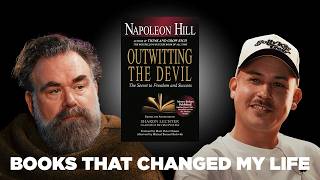
Ramon Gomez-Cornejo credits Napoleon Hill's Outwitting the Devil with turning his life around in his mid-20s when he was struggling with a breakup, substance use, and money problems while pursuing music. The book's dialogue format and focus on definite purpose taught him he controlled his own thoughts, and techniques like self-talk helped him reduce anxiety and reclaim his life.
Chapters
The book we're talking about today is Outwitting the Devil by Napoleon Hill. Where were you in life when. When this book came into focus?
I was lost.
Cheers. What did you order?
Old fashioned.
Empty stomach. Old fashioned. It's running.
Let's go.
What do you think of the library?
The library is crazy. It's dope. The setting, the lighting, everything. Still.
One day I woke up and I was like, man, I need to get my together. So I started looking for information.
That's when I came across the title, Looking the Dub and that captured my interest.
We love talking about books that have changed people's lives. Like had such an impact that they are different after reading the book. And today's guest, we have Gramo Gomez Cornejo. How did Outwitting the Devil by Napoleon Hill change your life?
Oh, thank you.
Thank you, Michael. Cheers. What did you order?
Cheers. Old fashioned.
Nice.
Yeah.
I was debating on drinking today or not, but you know what? Yeah.
How would you rate it?
Let me set one more to Hoyler.
Seven and a half, eight.
All right. That's good. Yeah, that's high.
Yeah.
Yeah, he. He's good. They. They care a lot about that.
Yeah. Empty stomach, old fashioned. Let's run it.
Let's go. Okay, so the. The book we're talking about today is Outwitting the Devil by Napoleon Hill, which is a great one, a lesser known one by Napoleon Hill. Yeah, right. Most people think of Think and Grow Rich and his other ones, but this one's maybe a little more realistic, I think, in my opinion.
Realistic?
Yeah.
And even maybe a little fantasy in there too, because since we're personifying the devil himself, but 100%, because it's super relatable, I think, to any person that.
Thinks, you know, where were you in life when. When this book came into focus? I was.
A little. I was lost, you know, in a sense, getting out of relationship, embarking on the music because I make music, hip hop music. So I embarked on that career. I put a lot of effort within that time frame, but also mixing it with alcohol. Alcohol and weed and music mixed very well. So it was an every night thing. You know, waking up hungover, feeling a little lost, feeling a little sad because I had a prior situation with a. With a girl. One day I woke up and I was like, man, I need to get my together. So I started looking for information. First financial, because I was super broke. And then after that I came. Napoleon Hill is a perfect author to. When you're looking for financial advice, at least for the mindset. Of it. That's when I came across the title at wedding, the Devil. And that captured my interest.
How old were you?
I was about. I might be wrong, but it was like 25ish to maybe 26.
What was the situation with the girl?
Oh, I was in a long relationship with her. I think I was.
What's long?
A month, two years, sometimes.
Couple days?
No, when I turned 18. And we ended it when I was probably around 25. Yeah, 25.
So you were with her a while? Yeah. And why did it end?
We just had our eyes on different things. We were bumping heads a lot. We. I wasn't the most. How do I say, Disciplined boyfriend, you know, So I had a lot of fault. Having fun, doing dumb.
Did that breakup change you? Like, did you.
For sure.
Like, in what ways? Like, did you stop doing dumb stuff or did you. Did you change the type of person you wanted to be with? What. What happened?
I. After the breakup, I did more dumb stuff until I got sick of doing all that dumb. And then I kind of got out of that little pit hole. I was like, I need to get it together. Because she was older than me, so she was an insightful girl, you know, So I learned a lot from her.
So when that ended and I kind of going through. I started going through my little benders and stuff, I was like, yo, like, why the hell was I being guided? Why. Why did I look for somebody kind of to have the upper hand in the dynamic of where things were going? And that's when I kind of wanted to gain more control over myself and where I was heading, if that makes sense.
Yeah, it does. So upper hand being that she was more cultured and older and had more experience?
Yes, 100%, like, you know, more. She knew how to get through life. And me, I was kind of like, I'll couch surf. Oh, I don't have a place to say I'll do this. I was. I was just chaotic, you know, which I'm very thankful for because that taught me a lot as well, being that way. But there was a certain point where I noticed I need to make a transition.
Do you still talk to her?
Oh, no, no, no. We have conversation.
Like, when it was over, it was over.
It was over. Yeah. Yeah. Well, we got back together and then I just couldn't really. I didn't like the stress I had getting back with her because I always felt like one phone call was going to tell me, you know, I can't. Because she was back and forth about making it work. And then One day I was like, I don't like that pending feeling of doom. And I was like, yo, I can't do this no more. Like, I'm. I'm a walk away. And that's when it was, like, for good.
And so you're kind of at that. And at that moment of a relationship ending. And then financially, you weren't doing that well. Were you working or what were you doing?
I was making music. I was getting, like, a couple hundred per show. I was selling merchandise. Like, to me, on a Black Friday sale. Making $1,000 was big for me, and I was like, hell, yeah. Live it up. You feel me? So my. My outlook wasn't as expanded when it came to, like, where I was trying to be and the longevity of things.
How much is your overhead? Like, your rent, your bills at that point? No.
Then. Oh.
Good times, man.
I know, right? You think back, you're like, I wish I could go back to that, bro.
I think my overhead was probably $400.
Okay, so you could do it.
I was living in a back house, you know, and that was my. My rent. I didn't. I wasn't doing no payment, car payments at the time. I wasn't doing nothing.
And so you're thinking, like, okay, I got to figure out how to make money, and I got to do something different than what I'm doing. And so you go to a bookstore or do you go online?
I go online and I start listening to lectures. And that' when I came across, like, Bob Proctor, I came across like, the. Those guys, you know? And then after I got to Napoleon Hill, and the Thinking Grow Rich was like the book everybody was, like, talking was. Was the one. So I picked up that book, and like I said, that's when I started getting more into the psychological things.
Did you read Thinking Grow Rich first?
Yeah.
What did you think of that?
I didn't even finish. I don't think I didn't finish Thinking Rich, but I got like, 70 done. Maybe even less than that. I think it was good. It was more of a mindset thing. It was more of like a seeing the vision through. So it wasn't like, step one, do this, step two, you know, it's more of a, like, y. Like, view yourself in a different light, and then in you carrying that construct is going to help others to see that, which. Whatever you're projecting, you know, and that.
Type of stuff kind of like the secret, in a sense, is, like, what you're projecting and who you are is going to be what you become. And so you get that one and then you're like, okay, this was good, I want more. What were you thinking?
Yeah. And then I just started being a hermit and just picking up and trying to learn as much as I can. And then, you know, there was even a point I think it was fueled by. I've always been. How do I say this? I'd like to. If I'm in a graffiti world or if I'm in the hip hop world, I like to like compete I guess. Even if it's subconsciously without me knowing. I like to know I'm on my. Even with the. With the knowledge stuff like I started feeling like some sense of ego to learning. So at first it kind of started. I noticed it was a. Oh, if I know this and I know that I know this, no one has an upper hand on me. Oh, I know what I'm doing. No one's controlling me. So it became a. Or even me putting people on game was ego driven kind of at the time. You know, it's like, oh, I learned this. You don't know that. I'll put you on some arrogant. So it started with that and I feel like that's what fuel that fire also wanting to learn and all that. But there always was like an ego aspect to like expanding my insight and knowledge. Like not being a victim to stuff.
Was there anybody that you could talk about this stuff with? No, that was all just internal.
Yes. It's crazy.
And you were just looking for a leg up or like an edge.
Yeah. And edge. Yeah, for sure. You notice when you start being manipulated by like I started getting like very resentful towards like yo health advice or life advice and so many. There's so much people chucking advice that you. And sometimes they're just marketing or trying to make you like see in their angle for their benefit. So when I started like noticing now that show them I'm going to just seek myself. I'm not going to ask for no more insight from people because I used to have a couple of homies that I thought were on some but I started noticing what they were doing with it, you know. Yeah, very.
They were doing like a very culty approach to stuff.
Yeah. Kind of Machiavellian in a way.
For sure.
Yeah.
Working their angles.
What do you think about those books like the Prince and the Art of War by Machiavelli?
I never finished the Prince. I have it. It's worth looking into. I know a lot of people demonize that that perspective but I feel like it's it could be useful, like, for anybody to know about those outlooks.
Yeah, well, you know from. From reading my book that my approach is, just because.
It offends somebody doesn't mean that it's not the truth.
Yeah, right. 100%.
And so there's a lot of truth in there.
The gold nuggets is always in the taboo, the cold. That's how I see it, man. Like, I'm looking for, like, the. The hidden treasures that people are scared to tap into. And once you get down that rap those rabbit holes too, you might feel a little crazy because people really can't. How do I say this? They. They don't relate or they haven't tapped into those angles of self, so they look at you like, oh, let's see. What. Why is he talking about this? What do you mean by that?
And kind of like the shadow. Shadow self in a way.
Yeah. And a lot of times, it's even the other people projecting.
They fear that stuff so much because they're scared of their own shadow. Right.
It becomes their undoing, really, in a way, because they become very thin and linear.
Mm. Yeah.
And so then you're. You're online, you've read Think and Grow Rich, and then you see the title, outwitting the Devil, and you're like, oh, okay, I'm already in. Just from the title.
I was like, how's he gonna play on the devil topic? You know, I wanted to see if he's gonna come at it on a. In a dogmatic sense or if he's gonna come at it in the archetypical or, you know, the. The principles that come with that title.
So you order it, you get it. Do you read it right away when you get it?
Yes. I got hooked. Just the format of it. The dialogue, asking a question, having a conversation with the devil. It was a very interest.
Because you felt like you'd had that conversation yourself.
Maybe it's because I feel like I didn't have that conversation with myself in that manner. So when I read it in that way, I was like, oh, damn. Like, cool. Yeah.
Like, you. Like. You were like, oh, I should have had this conversation.
Yeah. Long as something. Yeah.
Besides the format in the conversation, what's the first kind of takeaway? I mean, I know the book kind of start. Doesn't it start out talking about his spirituality and.
No, it just starts pretty much Napoleon demanding. Demanding answers from the devil. Like, you know, like, hey, like, I want to know. Like, it starts really abruptly, like, so, let's see. I think it Even starts like, oh, I have the devil in front of me or something like that.
He's talking about in the beginning. He's talking about fear and success and how most people are driven by fear.
The paperback I have starts with the dialogue.
Then chapter two discusses his faith. And then a sixth. The sixth sense. Infinite intelligence flows through all things when we're purpose and intentional.
Definite purpose. Hypnotic rhythm. Those are like the principles that are most important in the book. But yeah, like the. The paperback I have, it starts with the pretty much him demanding answer straight out from the devil. I think it has a forward.
Interesting. I have a different version of the book.
What's your first takeaway?
That we're responsible for our thought process and the way we're. We choose to use our outlook. Pretty much just putting power back in one's hands. Hypnotic rhythm. Learning how to use that principle. How to condition the mind to. To view the world the way you want it and the way it's most beneficial to you.
Do you find that most people feel like they can't control their mind?
Yeah, and I'm including. I'm part of the most people too, because there's times when I'm like. When I'm anxious, like, I'm not gonna lie, I'm nervous as hell. Like coming over here, doing the interview. It's most natural thing to do for me.
So they're. Take another.
We're trying to relax you. We understand all these cameras and lights. It's intimidating.
Mm. I'm telling you, man, I'm not much of a putting myself in the spotlight, except with the music stuff. And the music stuff is very behind the scenes. You know, you just put out the finished product.
You're letting the art speak for itself.
Yeah, it's different.
I mean, it's the same thing. Writing a book. Right.
I never wrote one, but I could.
Imagine the same thing. You're putting it out there, and then people are going to experience it. Good or bad, they'll judge, whatever. But it's not about me anymore. It's about that. That becomes the focus where this. You're the focus. So, yeah, it's shifting the. You know, the lens in a sense that fascinates me that a lot of people believe that they can't control their thoughts and their behaviors. You know, just the idea of free will. The things that make you successful are the things that you control. Right. Like showing up your attitude, your work ethic.
Yeah.
Those are the things that have the most leverage.
Yeah.
But most people focus on the things where they don't have leverage. And they end up in this mindset where they don't think they can control their thoughts. How did you work through that? Or how do you work through that?
I have this tyrant in my mind, so it's kind of like he whips me in shape when I feel like the little weak in my mind is trying to peek out. So I always have a. I have a rough self talk. Like, like if I start tripping on. If I'm about to hop on a flight and I'm like, oh, I'm getting panicky. Do I need to go really out there to wherever I'm. And I'll have the guy in my head like, yo, you're being bro. Like, come on. Like you're really gonna trap yourself and not live life because you have these little points of fear. Yeah, fear, you know, and then that's a horrible way to live. And I see myself, I see a very whack future if I limited myself based on my fears, Knowing I come here and you know, have a whole interview with you or a conversation with you, it's nerve wracking. So I could avoid it and never have these type of situations arise, which sounds like a very boring life. Or I could just push through, be nervous, feel, feel a little panicky it and leave it and, and then leave the spot and then know I could do it again and do it again. The more I do it, the more that eases off. Having that insight that I've done it before frequently helps con, you know, condition myself to not fear as much.
What, at what age did you develop that voice?
Probably like four years ago ago.
Did the voice come from your want to advance and get better and improve your life?
Yes.
That you developed a counter to your fears. Like that was like, hey, stop being a, you know, or whatever?
No 100% man. So like there's a time where like I had like a crazy bout of hypochondria. So like anything that happened to me, any little feeling in my body, I was like super hyper, like vigilant about like so going through that and getting myself out of that trap. Put other look like, put other traps I haven't already in perspective that I had to get out of as well. So like hypochondria, social anxieties, little dump like that. Right. I can't live a life where I'm just cooped up in my pad 24 7, man. So yeah, it definitely has to do with that. Want to live life more fully.
What do you think is the difference between you and others that don't develop that voice, that have the want. What? What is it?
They're unaware of the power of the mind. They're unaware of the power we hold. You know, that's what I think, that that's all it is. And sometimes you can make a person aware by sharing the ideas of it. But they won't understand it until they put it into practice, you know, because once you put it into practice, you're like, damn, I broke out of this little trap. What other traps can I get out of? Like, there's a point where I wanted to be like outlandish as possible because I was like, yo, like, why am I. Why am I like conforming my parents voice, you know, I know a lot of these little voices in my head come from my stern parents. They're very stern people. Or homies. Like, or just there's so many voices. So I was like, man, why am I out here? Like in your book you talk about permission. Like, you know, we. We seek permission to like be. And it's like, why? But I've had. That's why. Like I told you when I came, I was like, bro, your book's crazy, bro, because everything I read in that shows like I felt like 100. So it was really a frustration of why was I not breaking out of this.
Yeah, no, it's interesting. You and I think very similar and we kind of have a similar perspective on stuff. Like, I was the same in school. I didn't. I couldn't pay attention. I've always kind of had a distrust of authority. Like I question stuff and I'm not one to just do it because somebody says to do it. You know, I'm an artist in that way. So I think I was excited for you to read the book because it's presented in a different way too. And you being a fan of books, like, yeah, you know, I was presenting it in a way that I would in ingest it. Where you would sit there with it. It wasn't like rush through and read it beginning to end.
Yeah.
You know, so the dip. It's hard for some people because they're used to just reading a lot of words in a row and not stopping and like thinking about it.
The way. Yeah, the way you transition from topic to topic was great. Like it was great.
It's all tempo. It's music in a way. Right.
I mean, my girl read it with me, so she got to like the first half. So I like. Because I read it. I read the first one and I got, like, 75% down with it. And then I was like, yo, I want to read. Like, I need you to read this for me, you know? And then, like, I restarted from the beginning again and then finished it. Like, she didn't finish it with me, but she got to, like, 50, and then she fell asleep, but I was reading it to her out loud. Yeah. It's a great book, man.
So would you, would you say that your advantage? Well, I, I, I'm gonna, I'm gonna ask it that. I think it's two things. One is your advantage now, but also the difference between where you were and where you are now is your ability to control your mindset and your thoughts or challenge them and not just take the first thing that comes to mind.
Yeah, 100. 100. I'm not much of a settler. I like to get what I want, you know, and then, and, and what I mean by that is, like, perform the way I want. And if I don't, like right now, once this releases, I know I'm going to watch it, and I want to watch it. Why do I do that? Why do I ramble like that? Why do I do it? I'm just going to pick myself apart. But I know next time I go somewhere and do the same thing. I already have those notes, and I've been working on those, not even on a literate sense, but mentally, like, oh, I need to work on these type of things. And I'm very big on picking myself apart, dissecting myself and rebuilding myself the way I would deem beneficial.
Can I give you the counter to that?
Yes.
There's a lot of kids out there that are 20 or 18 or where you were before, and you sharing your story gives them a roadmap and somewhere to go look and start learning. I think the other thing that they have to understand about you is you have to have a general curiosity and want to improve yourself, because curiosity is a big part of the recipe. Right. You were curious. You talking about it helps a lot of people, and you being vulnerable lets people know that, oh, I'm not that different because I think a lot of us experience anxiety and judgment and, you know, judgment against ourselves. Like, we can be our worst critic sometimes.
That's one thing. I feel like I've been making music since I was 16 years old, and I have a fan base. I stopped for a while, a few years, but I still have, like, a cult fan base that follows me. And I think the reason is that I've always been open about intrusive thoughts. I've always been open about panic disorders. I've always been open about certain propaganda that makes this a certain way. Conformity. So I feel like I've. That's the only reason I've had. I have a bond with a lot of younger people or people my age. Are people older than me, I trip out. There's, like, people that are 50 that will come to my shows and like, hey, bro, you dropped this song. And when you spoke about this, like, I. I felt it. I would rap about my heartbreaks. I'd rap about, like, a bunch of personal stuff. Also a lot of arrogant. Of course. I'm a hip hop artist. That's something I never want to take away. And I feel like I'm strong enough to expose my vulnerabilities. Because if someone ever tries to play my vulnerabilities against me is like, you're stupid, bro. Because I know every angle to my vulnerability already. Like, maybe that sounds arrogant in itself, but I've just dug very deep in the mind. It's very uncomfortable. Little caves in there.
Well, I mean, there's something to the fact that if you'll share it, you already control it. It can't be. It's like the shadow, right. Is like you're putting it out into the light, so it can't really be held against you because you've already shined a light on it. So.
Yeah, yeah.
You're more vulnerable if you don't. In a sense.
Yeah. Especially someone could pick up your shadow and be like, oh, this person, he doesn't like this. Or he's avoiding this within himself. I know how to move them. Yeah, yeah.
No, I see that a lot in people. Like the people that most would consider difficult or, you know, some sort of way that's unattractive. Usually those are the easiest people to control because they're really actually dying for approval or connection.
Yeah.
They just don't know how to. To express it. And so they're expressing it in a weird way. But if you look kind of beyond that, they're. They're really looking for some sort of connection.
And seeing that within myself is easier to see outside in other people too. Right?
Yeah.
Yeah. Because we all, I feel like, to a degree, still have lingering projects to work on inside of us, you know, at least personally speaking. I know I do. Knowing thyself, as they say, is a great recipe to know others.
What else did you pick up from the book?
Honestly, it just. It just sums up to the power of negative thought and the way you Correspond with it. And, and also I love when it talks about religious institutions or dogmas, school systems, how parents sometimes unintentionally put certain ideas in young kids minds that end up being their worst enemies while they're growing up. So overall I picked up like, yo bro, like snap out of this rhythm that you've put yourself in that's driving you in places you're not trying to go to. So instead of like applying in that manner, apply in a way you want to go. So it's just more power in your hands taking control. Yeah. Of the mind. As you said prior, what are some.
Things that parents do that hold kids back in that way?
Man, you know, kids, they respond like a lot of fear. So instead of a parent telling you the actual reason why you shouldn't do something, they'll just try to induce fear in you by telling you if you go over there as a boogeyman, you know, so it's kind of like you're already like embedding fears of monsters in your head that you never thought about until your parents said it because they were too lazy to explain the real reason why. Or maybe it's more complicated trying to talk to a child and express those ideas. So they just use the easy way. I'll be like, if you go over here, a monster's gonna grab you. Or if you eat this, you're gonna get this and look what happened to that kid. You know, So a lot of fear tack tactics like, like what religious institutions use, you know, and, and even school systems and stuff like that. It's off. I feel like it's very fear, fear driven. They're trying to implement fear. Even pharmaceutical industries even like if you feel this, go talk to your doctor. You feel depression, go talk to your doctor, get a pill, pop a pill.
I mean the less responsibility people take and the more they externalize control, the easier it is to sell them a prescription or get them to believe in a certain narrative.
Or like in your book you said a leader provides somebody with like a sol. Right. Like, like you first there's a problem. You, you, you present yourself as a savior by providing them solutions or even ways of thinking that might get them out of that little pit hole. So like it could be putting your whole life's development on God's hands and letting go of the wheel. Like I think you made that an example too. And people just stop trying for themselves. So yeah, it's putting your power on outsources that I feel a lot of.
Things up and people don't Realize that that's. That's being done to them. Like pharmaceutical companies create the problem and then solve the problem. It's a magic trick. Right. There's this Great book by Dr. Sarno that's. I think it's called the Mind Body Connection. But he was. He. A lot of his books were based on back pain and helping people with their back pain. But in that one, he talks about, I think it's fibromyalgia, that nobody had it. And then one day it was on TV, and the next day, like, week or whatever, 7,000 people had it. Like, the mind is powerful. If you create the problem, people will buy into it. And if you have the solution.
Yeah.
And also, it's. It's always odd to me how willing people are to be labeled. Like, I don't want to be labeled. Like, I don't, you know, the scapegoat. Yeah. Like, I'm bipolar. This. And it's like, well, hold on. Maybe in certain situations I might overreact, but that isn't who I am.
Like, yeah, yeah. 100.
But people love the label because it feels safe now. They've given their thing a name, and it can become a part of their identity. They can integrate it, and then, you know, they can testify to everybody that that's what it is, and it just becomes more and more real.
Yeah. And they. You. They form excuses with that all day. Like, yo, I didn't. I didn't show up here because. Or I didn't do good in school, because it is. I didn't do. Yeah.
And you already know it's funny, right?
Yeah.
How they do that.
Yeah.
Okay, so the big. The big question. How did Outwitting the Devil by Napoleon Hill change your life?
It helped me regain power over myself. I sound like a broken record right now, but it really did help. Like, I can't emphasize it enough. Like, when I have bad days or bad weeks, I'll go back to that book and read it. And it sheds insights. Like, hey, homie, let you go. The powers all in your hands. So you're allowing this negativity to linger for as long as it is, you know? So it's just power back in your hand, man. That's really, like. I can't really say much more about that because I can't say. It taught me that people were trying to manipulate me. I already kind of knew that since growing up, man. So it just gave me. Yeah. Helped me regain power.
Yeah. That's great. Thanks for doing this, Ramon. It was a very fun conversation.
Oh, yeah. Thank you, man.







