Books That Changed My Life: Reto Sterchi & Guy Bourdin: A Message For You
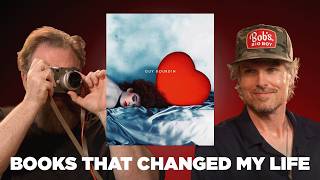
This is a YouTube video titled "Books That Changed My Life: Reto Sterchi & Guy Bourdin: A Message For You" created in July 2025. It features a conversational interview primarily between Chris Collins and Reto Sterchi, with occasional contributions from Rachel Weiss. The discussion centers on Reto's background, his journey from architecture to photography, and the profound influence of photographer Guy Bourdin on his artistic style and philosophy. They also touch on topics such as photography techniques, collaboration versus artistic control, and cultural impressions of cities like Seattle and Nashville. The content is an in-depth, personal conversation about art, photography, and creative inspiration.
Tell me about Michael Gomez and what was his impact on you?
Oh, huge impact. In Nashville, I picked up a still camera because I took headshots of my girlfriend and her agent was good friends with the photographer who was like, oh man, you need to like do more of this. You got it. You're good at this. So I went to this guy's studio, but he wasn't shooting in there, he was painting. He was like, here's a brushed paint. So I helped him paint for a day and after the day he was like, here's the key to the studio. You can use it whenever you want. That's sort of like when I started.
What happens to you at 18 or 19 after this? How does it change your relationship with the camera?
Yeah, I think.
Welcome to the Syndicate X library where we love books and we love talking about books that have changed people's lives. Today's guest, Redo Starchy is an LA based photographer and he shot everything from makeshift jet packs to Taylor Swift to nuclear test sites and even me. The book he's here to talk about. A message for you by Gay Bourdin. How's it going?
It's going great. How are you, Chris?
What kind of camera is that?
That is my walk around camera.
What is it?
It's a very old Sony.
Oh, nice. I got this.
Yeah, See, that's a great camera. Which one is that? A Q.
So it's the new M11P Safari.
Shooting digital or film?
Digital. Was that film?
No.
You shoot film?
Almost never.
I should have put the 50 on this. So this one, you have to focus.
I like it.
It's really hard. Hold your Bob's Big Boy cell.
There you go.
I didn't know you like liquor.
I do, but.
What?
But I don't think you need a like.
Well, I mean you don't need. You don't need a Bob's Big Boy hat.
No, I kind of do because my hair is. It wouldn't work without it. I'm like so far past.
You know how many people would kill to have your hair?
I know, I know, but you got Craig hair. It's a slight.
It's receding though.
Yeah, mine too. I just turned 40.
Your year between 40 and where I'm at is. Is a good time.
I'm looking forward to it. I'm not mad at it.
I like it.
Did you just get this?
Yeah, like a month ago. I'm trying to learn.
I noticed when I walked in here first that you're into art, obviously, but then like this space is like, amazing. I love it. But then you're like, you guys know Guy Bourdin? I like this guy a lot. He knows what's up. Nobody ever said that to me. I'm always the one that said Dinogi Boudin.
Is that the favorite part of your library or is the coffee your favorite part of the library?
The books.
The books, yeah.
Coffee is second.
Second.
Yeah.
I went there, by the way, in Seattle.
Oh, you did?
Yeah.
Okay, so for people to kind of understand, we have Vivace Coffee here. And you're going to Seattle to do.
Yeah, to do a shoot.
Shoot.
Who do you. Who is the shoot for? Or can you talk about it?
Yeah, it was an actor, actually. My friend Darren Mann. He's a great actor. He's on that show 1923 on Yellowstone on Paramount. It's a Yellowstone offshoot. And I've been friends with him for a long time. And it. This shoe came up for a magazine and we were like, let's just go to Seattle. Shoot in Seattle. I've never shot in Seattle. So, you know, we went there, took the family with me, and funnily enough, the place where we stayed was three minutes from Vivace.
Oh, so you stayed on Capitol Hill?
Yeah, stayed in Capitol Hill.
So I said, you have to go to Vivace. So it's just an iconic spot. And coffee in Seattle is like a religion. You take it very seriously. Because it's cold all the time.
Yeah.
Best latte ever had, hands down.
When I used to live there, it was like you just. If you were having a bad day, you just go get in line. And for the longest time, it was just a little kiosk.
Oh, it was?
Yeah. On the street, you had to stand in the rain, and then you could go into the kiosk. Like it was in this little hut. Yeah, you would go into the little hut, but you'd literally be standing in the rain waiting.
That makes it even better, doesn't it?
Yeah, it was the best.
Yeah.
He's the one guy that never sold the Starbucks. Like all the other coffee nerds that, like, built businesses.
Oh, amazing.
Thank you. They sold. He never sold.
Wise. Wise. How did you find that spot?
Well, I live there. I grew up there. When I was a kid, I grew up like an hour outside of Seattle. One of the first times, like 17 and a half, I moved to Capitol Hill right there and shared this little tiny 400 square foot studio with. With this girl. So that's a whole other funny story. But that, you know, Capitol Hill. And right there, it's the street it's on is called Broadway.
Yeah.
Was. You know where. Yeah, where we existed, I guess.
When. When did you live there?
So when I was 17.
Okay.
Is when I moved there.
Were you there during the whole grunge thing?
Oh, yeah.
Oh, man.
That was the. That was the time. It was different. What is your overall impression of Seattle?
It felt very European. It felt like not American city. And I'm trying to figure out why I felt that, why it felt like English. Maybe it's the architecture. I don't know. The whole time I felt like we're.
Not in the US you got the green, the rain all the time. Yeah, that's kind of a part of it, too. What about the food there? Did you like.
We ate some good food. Yeah.
The food there is usually pretty good.
I mean, we try to eat fish. Figures. Like, fish was like, the way to go, you know. In Seattle, we went to the fish market, saw them throwing fish.
Yeah.
Pike Place.
Yeah, Pike Place. I don't know why they throw the.
Fish, but to get your attention.
It was funny. I guess that's what it is, right?
Yeah.
They were like, throwing a fish to a tourist, and I was like, please don't pick me. I don't want to, like, catch a fish at all. But, you know, great spot, just. But the fish market, too, reminds me of England. It's just these port towns, you know, like Seattle, Liverpool, Hamburg, stuff like that. Old cities. I guess maybe the age is what made me feel like it was European.
Yeah. The architecture is old, too. Pretty much, yeah.
Yeah.
I'll definitely go back. It was great. We found this old plant, this old, like, factory that was like, turn it to a park. And we shot the whole shoot. That was amazing. It's like the best location I ever shot at. But it's funny, like, I always had. I always felt like I always knew about Seattle and always wanted to go to Seattle growing up because of Nirvana and, you know, Pearl Jam and all that. But then going and being there felt different than when I thought it was going to be like. Like less. Less grungy. I mean, obviously, like 30 years passed in this Nirvana almost. But, you know, it has a different feel to the rest of the.
There isn't a music scene there now anymore. Like, there was.
Yeah.
It's not the same. It was a time.
Yeah, there was a time.
I think it, like, now, like, Austin and Nashville.
Yeah.
Are kind of better. If you want to go see live music.
Nashville is. I used to live in Nashville, so. I know, like, you go to any spot in Nashville. The music craft is the highest level. So inspiring.
Yeah, some of those people, you just go out to a bar and they like they're playing for Faith Hill or somebody in a. On a tour and then they're there. Exactly, exactly. And they've written like hit songs and just the talent level is insane.
Yeah, you can just hear it like it's not like messy, it's so precise.
The craftsmanship of it. Craftsmanship, yeah, exactly. The skill, the magic of it. So yeah, it's really fun. So this is our attempt to recreate the vivace latte.
Amazing.
So tell me a little bit about where you grew up.
I grew up in a place called Signau. It's in the Emmental valley in Switzerland. Signau has about 2,500 people living there, but I grew up outside of signau, so like 20 minutes by.
So less than 2500 people?
Yeah.
Like growing up in like a hundred yard radius were like five people in my life. So it's like super rural. You know, I walked to school it.
Was it a farm or.
Yeah, it was a farm. It was a farm building. It still is a farm building. It's like 300 years old. And my father's family had been in it for generations and still is, but they had stopped farming. So when I was growing up, they still were. There still were cows in it. So I remember like going to the barn growing up, but then when I was like 10, they stopped farming and it just remains a farmhouse without animals. But you know, it's extremely Swiss traditional style, very old house, creeks, probably haunted. But yeah, I had like a very huck fin childhood.
So how long have you lived here in Los Angeles or just America?
2010. So coming up on 15 years.
15 years, yeah. Why do you see in these surveys that they come out with where they say that Switzerland is. Raises the happiest people? Basically like people that live there are the happiest.
Yeah.
Versus us. Like we're always miserable here in America. What, what is the difference? Why are people happier there than here?
And I would want to know what kind of questions they ask about the happiness. But to me living there growing up, basically when I was in school, it's kind of like reaching the end of, you know, school, like eighth, ninth year of school. Yeah, we're done after nine years of school. I don't know how many years of school there are here. I think more, right?
12.
12?
Yeah.
Nine years.
You're done in nine?
Yeah, nine years, then you're done.
So that's why everybody. Maybe that's why all those awkward years. So you're nine. How old are you when you're finished?
15, 16.
Yeah. So those weird, awkward teenage years.
Yeah.
You're working or going to college.
They kind of. You can pick. Yeah, they. So in school, they basically had this book with professions in it, and. And they're like, well, here, take a look and pick something. But to me, it was always like, at 15, you don't know what you want to do with your life. That's way too young. Such as picked something. So I picked architecture. But the first day at work was like, I'm not in love with this. And I'm supposed to do this for like, you know, 50 years. I don't think I can. So, like the. Ironically, the first day at actual work, I was like, I'm gonna do something else. I'm gonna figure it out for my life.
But you went to architecture school.
Yeah, I finished it.
For how long?
Four years.
So you went to. During the four years of school, at no point did it occur to you you weren't going to want to do it?
No, from the first day, I knew I was not going to do it for a long time.
But you just stuck with it.
Yeah. Because they have like the. It's called apprenticeship.
Right.
That's like. Switzerland is known for that, which is, I think is a great thing because you learn. Any profession has an apprenticeship of like three or four years. So whenever you're done with it, you're a pro at it. You're amazing at it.
So if you go to school for four years, there three of it, you're an apprentice. You're working in the. In the actual field that you chose.
Yeah.
So those four years you're in the field, it works like, you basically get employed by a company and then you go one or two days per week, you go to school, and then you go back to work. So you like working on the job, learning on the job, and makes so much more sense. Yeah, it's a good system. It's a great system.
You knew from the beginning you didn't want to do it, right?
Yeah, but I still had to finish it because it was like, my parents were like, you need a good foundation if you want to fall back onto something. So I did it. I finished.
How many siblings did you have?
One sister. Younger sister.
Younger sister, yeah. And so what did your parents do?
My dad was working for the county. He still is. Like, he kind of knows everybody in Cigna. You know, people respect him. And that Was something that always was, like, cool to me. Like, I walk around with my dad and everybody knew him and respected him and, you know, in school, like, what.
Did he do for the county?
He was basically the secretary of the county president. I don't know if there's a job description.
So he controlled the money?
He. No, he. He kind of would, like. He would like, write the press reports for the county. He would be like, represent the county anywhere else for the county.
So communications or pr?
Exactly, exactly.
Oh, okay.
Yeah, yeah.
Then what did mom do?
She was at home looking after us.
You felt pressure to finish it, but you didn't feel pressure to do it?
Yes. Right.
So do you tell your dad that you're not going to do it after the four years?
Yeah. Yeah.
And what did he say?
Great. He'd do what you want to do.
They would always finished your thing, and as long as you finished it, it was okay.
Yeah, I think even if I really didn't want to finish it, they would have been fine with it.
And you didn't feel any stress about the fact that you were.
No, no. I was so young still, and I still didn't really have a master plan of what else I would do.
So you're like 20, 21 at this point.
Younger, like, starts at like 16, 17, 18. And then in the. During the apprenticeship, we like, you know, you different projects about certain things and you can use different ways of making these projects. I would often use photography and film to present something. So even if it was architecture, I, like, started learning other things at the same time. So, like, film came in and photography came in and I was like, oh, this feels very much more like what I want to do. The architecture was just. I love architecture, but I don't really know what it was.
Is it too much math?
Too many, Too many. Like, so many regulations about what you can't do, you know. And in Switzerland, it wasn't like, you're going to design buildings, you're going to like, draw a new window for the neighbor, you know, stuff like that. Little things, very technical, which I love still. I'm like, I'm super into engineering and stuff. I think I'm basically. I'm more into it now than when I was 16, into architecture. But yeah, it was never for me.
So during that whole time you start taking pictures.
Yeah.
When did you get your first camera?
My dad was always an amateur photographer, so he always let me use his film cameras. But, like, then I love Polaroid cameras because you can see it instantly. But the film was like, oh, my God. It's like slow, and there's always not enough light. Boring.
Right?
And then video was, like, the first thing. So I was like, I got a video camera, like a mini dv, I guess it was at the time, camera, maybe I was like, 18 and just started experimenting. So everything. Everything for school was like, oh, let's do a movie. And had a friend who was also in class with me. He was, like, felt inspired the same way. So we did stuff together. And scrap was so much. That's the most fun I had during the apprenticeship.
That's fun. Okay, so then what's going on in your life when this book comes into the picture?
So I was like, guessing 18. So during. Exactly during that time, I would always sort of like, go to the library, you know, and pick out a book that looked interesting. Different photographers. I'm trying to remember how I exactly found keyboard Dag. Because it was like, before message boards on the Internet. But I must have somehow. I don't remember why I picked out the specific book or how I found it. It may have been through other artists talking about him.
But did you go seek it out?
I don't remember if I went to seek it out or if I saw it on the shelf.
And was it in a bookstore?
Library.
Library.
Library in burn.
So cool that the library would even have that.
I know. It's a great library. It's an amazing library. I hope it's still there. I think it is.
Yeah, I hope so too.
Yes.
So you. You. You pull it off the shelf, and then what happens?
I looked through it and, like, some of the photos just blew me away. Like, there's one with the swimming pool in it. There's one with the plane in it. And I just was like. I brought it home to my dad and was like, look at this. This is, like, unbelievable. He shared the love. Like, he's. I mean, just like. That's just.
You know what's interesting is I saw that print for sale.
This one.
Yeah. The other day.
Here.
It's online. It's for sale.
Yeah.
The only thing is, is that. So that print isn't, to me, my favorite.
Yes.
Although I love it. But the one of the girl on the bridge is my favorite.
Okay.
Same style, though, where he took a picture of the model with a Polaroid and then has her hold up the Polaroid.
Right.
It's brilliant. And I think it's. I think it's an ad for. For the shoes, isn't it? This one maybe. So funny, because he's one of the photographers. And that was like, an inspiring thing to me, that no matter what the objective is for the photo always makes art. It's not like, yeah, just, you know, take a picture of the shoes, like in a studio. He always made art. Every single photograph. And that's just so inspiring.
Which, in a sense, is why you were bored with architecture.
Yeah, right.
Is you. You wanted to express something, you wanted to communicate something.
Yeah, definitely.
Versus just do the math.
Definitely.
Yeah.
And put a window and a wall that wasn't there before.
Yeah.
And if I had wanted to be, like, an architect who designed stuff, it would have been a long road in school. And to go that way, if you're not falling in love with it, I don't know. I would have wanted to do something else.
How would you describe when you're like, 18 or 19? How would you describe this book and the photography then versus now and what, you know now?
The photos were just different. His photos.
It was different. How?
It was like, it's music, but still. It was like frozen music.
It's music, but still.
It just. It's. You just look at it and you feel something. And it's not really an intellectual feeling. It's sore. It's. It's like you don't need to think about it. It just hits you. And that's. I love that there's photographers who have that and then there's photographers who don't. Like, this was always one of my favorites. That's just great. It's just. He broke, like, all the rules. And I always love artists who break all the rules.
Do you feel like you break the rules?
No, I don't break the rules.
Why not?
I should break the rules more often. I break. I break some rules, but they don't really. It's such a different time to be in. In photography. I think this was like. This was like the golden age of fashion photography. You know, it had a different meaning. Like, it sort of breaks my heart. Like, having Instagram now how, like, people look at a photo for, like, less than one second and then keep scrolling. And that's just. I think photography had, like, a way higher standard back in the day than.
It has now, because people don't spend as much time looking at it or making the photographs. Yeah, you don't spend as much time making it.
Yeah.
Guy Bourdin had. He worked for French Vogue for 33 years, which is unbelievable. He started in the 50s to the 80s. 33 years, he had a contract. And for every single story, it would be a Full spread. One picture. Always one picture. And when I do a story, it's like yesterday I edited something down from 120 to 25 photos to deliver, and I'm like, why so many? Always, you know, just. Just make one great one will be way more interesting. I mean, I'm trying to make like 20 great ones, but Guy spent like a month on one. And, you know, it's just that. Just a different thing. Obviously, I'm not on the same level as Guy, but just the mentality towards photography has just shifted so much with the Internet. So it's sort of hard to put yourself into this, into seeing this for the first time, you know, in the early 2000s, which I also just learned that he was not known by the time he died. He died in 91, and he wasn't really known in the world. He didn't care about fame or anything. And I think this book came out in 2003. And that's when the world was like, oh, who's this? Who is keyboard?
Most people don't know who he is.
Yeah, that's crazy.
Even photographers.
Yeah.
Yeah, I know. I was like, so from learning about him, I was like. Told my dad about him. It's like, oh, my God, Great. Then I went to film school in Zurich, Switzerland, and they had a photo class. So I was like, do you guys know Guy Bourdin? No one. It's like, we know Abaddon not keeping us. Like, okay, fine. I moved to Nashville. Like, he has no tekeebor there.
No one.
Then I meet people from New York. Everybody's like, oh, my God, yes. So it was like, finally I found people who, like, got it, you know, or, like, got it, which just, like, shared the same passion. That was why it was so cool when you said, like, when you brought up, like, keyboard out of nowhere, oh, my favorite.
Like, I don't think there's anybody even close.
I agree. It's like Helmut Newton.
I mean, I have. I think I have almost every book on him. And I told you, too, I have that New York Times insert lingerie catalog that he did. The funny thing about that, that I just imagined and kind of to your point with Instagram, is like, how many people got that day when that came out, whatever year it was, the Sunday New York Times, which is probably just like, thick, full of coupons and whatever. How many people threw that away or didn't even look at it and had no concept of what an incredible piece of art it was stuffed in with all the coupons. And I can't junk in the Sunday paper.
Do you know what year it was when that came out?
I don't.
Was that as. Must have been 90s?
Yeah.
Okay. So, like, was he alive still? Did he make.
So, yeah.
Okay.
Yeah.
It's crazy. It's crazy.
And so what happens to you at 18 or 19 after this? How does it change your relationship with the camera?
So at that point, I was really making films, so I was at film school. So my main camera was, like, the video camera and not the still camera. I went to film school, and then I came to the US Still. Like, in film school, I went to Nashville to study film. So that was 2011. And then in Nashville, I picked up a still camera because I took headshots of my girlfriend. And her agent was good friends with the photographer who was like, oh, man, you need to do more of this. You got it. You're good at this. So I went to this guy's studio, but he wasn't shooting in there. He was painting. He was just painting the studio. And he was like, here's a brush. Just paint. So I helped him paint for a day, and after the day, he was like, here's the key to the studio. You can use it whenever you want. So, you know, that's sort of like when I started changing my thinking to stills from videos because I was like, it's probably easier to sort of, you know, make a living with stills as opposed to as a film student, like, jumping, you know, into, like, directing music videos or something like that. So that's when it started. But I was never, like, trying to evoke Guy Bourdin in any way, because I was. Stylistically, my work is very different from his. I think he would, like, conceptualize his images perfectly before he even got on set. And then he would build the set, do the fashion, the makeup, the hair. Everything was, like, in his. In his brain before he took the picture. And I work more like. I think I prefer collaboration, you know, with someone. I kind of have an idea of something, then I go on set, and then we work it out with the team. Sort of like a film director. And he was like, a film director, like Stanley Kubrick. He's like, in a film dictator, which, you know, it takes those people. They make amazing stuff.
Yeah, go to the. Go to the blue tab right here. So read that part under that. That dot there. Kind of about that.
This one?
Yeah.
Buddha graphs. Each image on a graph paper. So each composition is like an architectural blueprint. When he shoots, he knows the result.
Yeah, yeah.
And there's actually a book of his. His drawings.
I love that book. I don't have it, but it's. I looked at it. I got it from the library. It's amazing. I think he was like. He was more like a painter, I think his sensibility. He started as a painter too, and then he, like. I think he apprenticed under Man Ray where he, like that surreal element came in and. And, you know, he became Guy Bourdin. It's just. You can see the Man Ray influence. It's just incredible. And it was. But I was always like. It always seemed like so good that it was like impossible that you're ever going to be this good. In my brain, it was like, that's the gold standard, you know, the North Star.
But when. When something like that happens, you either do one of two things. One is you quit and give up, or it inspires you somehow.
Absolutely super inspiring. Super inspiring. It's because of the elegance and images and just the effortlessness.
So when. When you think about your style and the amount of control. He clearly had a lot of control. And like, kind of his point of view was he was the only one that was going to have the idea. Everybody else was in service of his idea, in a sense. What do you think about that as an artist or as a photographer versus a style of more collaboration?
I think both of them work. Both of them work and you can get great results both ways. I don't know if the dictatorship style of making images still exists or not in today's age. I prefer the collaborative aspect of it because it's like basically like. I think I'm at heart a film director because I think I would prefer to take someone's better idea and put it in the picture, you know, than the one I had from the get go. I'm like, yeah, let's try that. That's a good idea.
What do you think it says about somebody like him who has the better. Like he has the better idea?
Yeah, I think, Man, I think his idea was just on a different level. So nobody even. Nobody working with him is like. Doesn't even knows what the hell's going on in his brain, to be honest. He's just on a different level. Like, his concepts are just. How do you come up with that?
It's brilliant.
Like, you don't even see the photo of just. There's a photo of a field and there's a telephone pole. And there's a girl behind the telephone pole. You just see her shoulders. Like that is just so punk. You Know, I would have never had that idea.
Go to the. The purple one. So the other thing that I think is so interesting. Yeah, the purple tab is he. He literally tried to dye the ocean blue for a picture.
Yeah.
Like, he wanted to dye the ocean blue.
Yeah.
Like, the. In a sense, you're like a godlike figure in your belief in what you're doing.
Yeah.
That you want to change the world to fit into the thing you're trying to do versus adapt. There's no compromise in that sort of mindset. Do you ever feel like you're compromising?
Yeah, for sure.
Where does the line of compromise and collaboration?
Well, I have certain people that I kind of talk with about that stuff. Like, I have a friend who sort of manages me, and I run stuff by him. And he has a really good. He kind of. He's a great. Like, he just knows what's cool and what's good. So I'm like, do you think I should push this that way? And he's like, yes, for sure. Or he's like, no. So I like. I like people as. Uses people as a sounding board, you know, whether it's a good idea or not. Because in the person I'm talking about, I just. I know he makes my work better when I listen to him. So it's, you know, again, collaboration. I guess I need someone to, like, banter back and forth about ideas, and then it's like, then it comes.
Do you ever wonder what it would be like to be, like, gay and not need that?
Yeah.
Like, you're so sure about the thing that you're doing. Just get out of my way. You're either in or you're out.
Yeah. Yeah.
I. I mean, I feel that way about film projects. I'm like, no, this is the way 100%. I know it needs to be this way in photography since I'm not really. I'm not really a fashion photographer. I'm a portrait photographer or a documentary photographer. So I kind of. I need a little bit from the other person in order to make the picture. So even if I have, like, a preconceived idea, it will most likely change a little bit when I photograph the subject, I guess, for. Because Gui was like, you know, shooting models mainly. So, like, you lay here. Turn your leg this way. Done. That's the shot where my work is, like, you know, in service of something else. Often, I guess, you know, it would be fun to play God more often.
I know I proposed to you recreating that dolly picture with the cats, but Do Bulldogs where he's throwing the cats.
Yes, that would be amazing. Let's do it.
But you'd have to control every aspect of that.
Yes.
And you probably get one or two takes, like.
Yeah.
I still don't know how they did that photo. Do you know how they made that?
I've watched people describe it, and it just. They did it. Like, it wasn't easy, but it's got to be, like, 20 people behind that picture throwing and. Yeah, every element's controlled.
Yeah. Did you.
Did you ever see that documentary about Guy? There's a documentary that I think one of his assistants made, and it was, like, showing a festival, but now it's, like, not available anywhere. No, I think it's called, like, when the Sky Fell down or something like that.
Oh, really?
Yes.
I tried to find it before this, but I. I found it. No, I found the guy's email address, so I'm gonna email him and see.
Yeah, if you get a link, I would love to see it.
Yeah, absolutely.
Absolutely.
Is it in English or in French?
In English. There's a trailer for it on YouTube. That's all I could find. I'm like, today, like, you should find anything, you know, and everything.
But did you watch it?
The trailer? I watched. I didn't watch.
Oh, you haven't seen that?
No, I haven't seen it.
What. What impact do you think he had on?
Huge impact. Some people say he's the most important fashion photographer of all time. I mean, I would agree, but you know.
You know what him and Marcel Duchamp have in common?
No.
Man Ray.
Oh, yeah. I guess you're right.
Yeah.
They collaborated.
Okay.
Yeah.
I mean, I. I would say Man Ray is probably, you know, just as important or not more important than Guy, but he's in my top three forever.
Guy.
Poor dad. Like, him and Helmut Newton. When it comes to fashion, it was always, like, those two guys. What other photographers are in your pantheon besides key? Your top three?
My top three?
Yeah.
Boy, that's hard.
Yeah, I know.
You've seen how many photography books.
Yeah.
You know, when we had somebody come in and do an inventory of the library, I think, like, 25% of this library is photography.
Okay.
Like, it's well over a couple thousand books.
Is photography your favorite discipline in art to look at?
I think that photography plays really well in books.
Yeah, yeah, yeah, absolutely.
I mean, there's just some. It just. They. They. They work like milk and vivace espresso in a sense.
Yeah.
And the bigger they are, I think the better a Lot of times.
Absolutely.
Like, I do wish one of the publishers would do a big one on him, like Tashin or somebody. Do a big one? Yeah, because his stuff just looks great.
Big, you know, he was against a retrospective when he was alive of his work he did not care about.
He was kind of a stubborn. Doesn't seem like the kind of guy that would be super fun to hang out with.
No, not really. Not really. And I'm not looking to find out too much about him. I don't want to find anything I don't like, you know.
Yeah, I understand that, like. Yeah, that kind of meet your heroes can be a disappointment.
Exactly. It's also, I find that, like, I like that about him that he didn't care at all. He just only cared about the picture. He, like, he didn't care if his name was on the picture at all. It's just that full page. That's all that matters. And like, if you work in magazines as a photographer, it's the most coveted thing. It's like the COVID and then the full page spread. That's what you want. And for him to only ever do full page spreads and nothing else is unheard of. There's nobody else that did that. It's fantastic.
I'll tell you what we'll do at the end is I'll bring you some books that I love and then I'll get your opinion.
All right.
Because you kind of have to. I think you have to experience them. Tell me about Michael Gomez and what was his impact on you?
Oh, huge impact. Michael Gomez, he's the guy that put the paintbrush in my hand. And what he said was like, you gotta serve people sometimes in your career. And I guess his point was that by being willing to help him paint, he was, you know, he was willing to share the studio with me and he had a tremendous impact. When I got my first assignment, my, funnily enough, my first assignment for a magazine was shooting Taylor Swift. It was for a German magazine. I think it was like2015. I think when it was, I was living in New York and Taylor Swift is like huge in the US but sort of coming up in Europe. So I hire an assistant in Nashville and I fly over. I get to Nashville airport and the assistant's there, but Michael Gomez is there also. And so I was like, what are you doing here, man? He's like, I'm not going to let you this up, so I'm going to make sure you nail it. So he was like, basically back up all day for Me? Just, you know, in case you need anything, I'm right out here. The door, outside the door. Whatever you need.
Were you nervous?
Yeah, I was nervous a little bit. You were? I'm always nervous for every shoot.
Really?
Yeah. Why?
I don't know. I'm. I'm. I made peace with it. I'm fine with it. I'm nervous.
You feel like it's healthy?
Yeah.
It's not like a crippling anxiety or anything like that. It's sort of like rising to the.
Occasion and not underestimating.
Yes.
Every.
The opportunity.
Yeah.
Every time. Even if somebody gives me an iPhone, like, hey, take a picture of this group. I'm like. But then as soon as I look to the.
You know what I do? I take a picture of myself. That's the way.
There you go.
See it? Yeah. Yeah.
No, it's just a thing. But when I look to the viewfinder, like, it's gone. The anxiety, then it gets. It gets replaced with a joy. Every time. I love. Just still love photography. Every day. Every. Every day I get to do it.
I mean, that's a pretty selfless thing for him to do, to show up there just to assist and.
Yeah.
Just make sure that you were okay.
Exactly.
Yeah.
I don't even know how he found out about it. It's just like. Well, no, I noticed the assistant. You know, it was like a seat. In Nashville, everybody kind of know each other and help each other out, but it was. I will never forget. I was like, unheard of. Nobody else that I. I work with would do that, you know, And I will. You know, he's. If I had. If I had, like, mentors who were, like, big photographers, and Michael Gomez is, like, a great, you know, a great Nashville photographer. He does good stuff, but he's in no way, like, one of the world's leading photographers. But still, like, working with him was so much more instructive than anything else, because the higher you go, the more ego you meet and you kind of see, like, I don't know if I want to be like that. I don't want to. I don't know if I feel like that's a good person or if I want to conduct my business in that way. And Michael, just, like, his human side, I think, was very important to me at that age to, like, learn from him that way.
Yeah. And maybe the lesson is you can. You can be both. Right. You can be really good at your craft and also care about people.
Exactly.
You don't have to compromise.
Yeah, exactly.
Yeah.
Maybe that's what he stands for.
I think so.
As an example.
I think so, yeah. Yeah. And I try to kind of, you know, be the same way, you know, be helpful to young photographers, be open, answer questions, you know, come on set. You know, I try to just, you know, continue the message that he instilled, because I think it's a good one.
Did you learn any lessons from Taylor Swift?
What did I learn from Taylor Swift?
I mean, she's clearly an incredible marketer, business person.
Yeah, my wife is a huge fan.
I.
What's your favorite Taylor Swift song?
I don't know. A single one. Yeah, I don't. I. I mean, she was a very nice person to meet. For those, like, eight minutes that we got to shoot. It was this overcast day in Nashville, and they had. They rented the whole floor in a hotel, and they would be like, the time slot would change. They would, like, call me. Oh, no, it's, you know, it's one of those things. And me and my assistant, like, had this cart full of equipment, and then they're like, all right, let's come in. And then we wheeled it in, and as soon as we come in through the door, the whole thing collapses. The whole cart falls to the ground, like, oh, my God. And then I heard somebody say, oh, these are the Germans coming in. Yeah, here we are. That's great. You know, it's a good way to make an introduction. But it all went well. It was great.
Yeah.
I'd love to, you know, obviously photograph her again. Now. I love the challenges of shooting people who are very. Who are icons of, like, every photographer.
When you're doing a shoot, do you have a pre game ritual that you go through?
Chewing gum.
Really?
Yeah, I always chew gum.
Is there a specific kind of gum?
No. Any of it just gum? Just chew gum in the car.
What does that do for you?
I don't know. It just relaxes me.
Is that a form of meditation?
Maybe it is.
Yeah. Yeah.
Sometimes I do yoga before a shoot at home just to ground myself. Sometimes I sit on the ground in the studio, which is very helpful. It's sort of like, gives you that childlike, you know, mentality. Just by grounding yourself by sitting on the ground or just do something or, like, do everything with my left hand to just raise my awareness or, like, play with a tennis ball. Just stuff like that. Just kind of get in the moment, not be too much in my head.
Yeah, that's good.
Yeah.
Do you. Do you have a favorite picture you've taken? Ah.
Oh, man, that's a good question. I have favorite shoots that I've done, but not necessarily the favorite pictures. The favorite. I thought about the favorite picture, but I. I can't, like, put my finger on one. I don't know. So, no, the answer is no, I don't have a favorite picture I've taken. But, like, shoots that stand out or like, growing up, there was this climber, this Swiss climber. His name was Uli Steck, and he was from the same village from Signau. And our family, like everybody in Switzerland, sort of followed his ascent to becoming a super famous climber. And he set, like, the speed record on the Eiger North Face in under three hours. And that put him on the map worldwide. So he was a huge star. And I always wanted to photograph him. So I tried and tried and tried to, you know, get an assignment through a magazine. And finally I just kind of lied to him. Like, I was like writing an email saying, hey, I got this assignment from a magazine. We'd love to photograph you without having an assignment. And it's. And it worked. So, you know, we got to meet him in Switzerland, and I took my dad with me, which was awesome because it was like, we always wanted to meet him. And, like, so we spent the day with him. He trained, you know, climbing. He, like, ran up a mountain while we took the gondola. And I took photos up on the hill, talk with him all day. And then the photos eventually I was able to sell to Vice Sports that existed then, which was awesome. But. But the. The crazy thing is that less than a year after that, he died. Uli Stek died on. In the Himalayans. So it was like Dino. And he was like. I think he was 39 or 40 when he died. So that one will always just stand out for, like, grateful that I was able to meet him because he was always. I would always, like, in my. Even though what he did and what I do is, like, unrelated, it was always like, he's from the same village and he just went for it for everything. He just went for it 100%. Like, that is so inspiring too. So it was very sad to, like, lose that North Star, you know, of, like, look, what's he doing now? I was doing that crazy thing, but I try to, like, lift that more and more. Just, you know, not. Not do the things that, you know, not where the money lies, but just things I want to experience. That's, like, where it's at for me.
Tell me about Trinity and what drew you to that project.
Oh, Trinity. That was a Great one. Sad, too. I read this book by Josh Wheeler. I think it's called Acid West. It's a book of short stories about southern New Mexico. And I saw it in my friend's house because the title stood out. Acid West. It was great. So I started reading in it. And one of the stories in it is about the Trinity downwinders. So it's people who lived downwind from where they tested the trinity bomb in 1940. So basically, they tested the bomb, supposedly evacuated the area, but they were, like, you know, mostly Hispanic farmers living in, like, a very close radius to the bomb. And all these people, like, ended up getting cancer and dying for generations and generations. And the US Government would basically refuse to help them. So Josh wrote about it, and I was like, oh, my God, this is so touching. I want. So I reached out to Char and I'm like, is there any way to, like, photograph this? Like, put it. Put it on the map? And so he's like, yeah, let's try. You know, he knew everybody personally very well. And so I went to New Mexico, like, a couple months later for a Swiss magazine, and we shot the story. Sadly, like, a lot of people that I photographed then was like, when was it? 2021. Maybe already dead by now from cancer. And the story was supposed to run on the COVID of the Washington Post magazine, and then they pulled it, like, two days before it was supposed to run, because I think they got cold feet, you know, for challenging it. Yeah, like, you know, running a strong authority. Exactly. But it was sort of a great example of doing something. Trying to do something that's right anyways. And to sort of just in the function of photography, like, as a photographer, I want to sort of do stuff that matters. And that one felt like being able to take those photos and take them in a way that they evoke empathy from other people was, like, the right thing to do. I just. I try to do, like, projects like that to. Even if. Even if it. Like, even if it introduces, like, the problem or the. Of that project to a single person, they're like, oh, wow, I didn't know about that. That's a success. As opposed to just getting paid.
So kind of in the same vane. What about race, class, guns and God?
Oh, yeah, that was a great one. It was a Swiss magazine, hired myself and two journalists to travel across the US in 2017 and saw the report about these four things. Race, class, guns, and God.
And people in Europe are kind of, like, confused by guns and, like. Cause whenever I've been in Europe, People will like, literally ask you that, like, yeah. Oh, they just think everybody's walking around shooting each other. There's some sort of perception. It's so foreign to them.
Absolutely.
We're here. You know, I had somebody from England once, like, commenting about the guns and I'm like, well, you know, it's because of you. Like, yeah, he wouldn't let us have a shovel. And so it's in our DNA that you're not taking our, our guns. It's like a, you know, it's a, it's a perspective that's ingrained in us.
Yeah.
The specific gun thing was like, also in Switzerland, I went to the military when I was 20. It's like mandatory service and they give you the gun to take home afterwards, including bullets. So I think the gun per head in Switzerland may be higher than even in the U.S. so, you know, I don't think Swiss have the right to criticize Americans about that stuff or like criticize or like, question. I don't know if it's a thing, but yeah, no, I, I, I, I was always used to guns. My, my dad taught me how to shoot when I was very little. But then, like, when you go to the army, you get really bored with guns. Like now I'm like, oh, my God, I don't want to shoot. It's so boring.
Yeah, yeah.
And I also have like, a lot of respect for of guns.
Like, what did you learn in that? The race class, guns and. God. What did you learn out of that experience?
I, personally, what I learned about this experience was that we met so many people driving across the US Hundreds of people, and one single person was a dick. Everybody else was super friendly across the whole political spectrum. So I was like.
That surprised you?
A little bit. What I think what I learned was very important is that whenever you go out to the world, that is the real, real world, not what you see on the Internet or on the phone, you know, and I think people have to always remember that, like, if you actually go out and talk to people about anything, you're going to find like that mostly every people are nice and friendly and agreeable. And even if you don't agree, it's fine.
Yeah.
Because when you're meeting in person, you have more in common than you do differences.
Right.
Even if somebody's views might be extreme in certain areas, the actual human connection and sharing a cup of coffee can be common across every political spectrum or economic class.
Absolutely.
Yeah.
Yeah, that was, I'm trying to get them to send us again across the country to go maybe the other way. It's like that was like, as a. As a, you know, as a member of the press project like that. It's as good as it gets, like, to be able to travel across the United States for a month. It's a dream.
What. What big projects do you have coming up now?
I'm going to Oklahoma tomorrow night.
For what?
For some tornado chasing, actually.
Yeah.
What? That's the next one. Well, there's a lot of things about the project that I can't really talk about all the way. But the.
Why.
Let's just talk about why you want to put yourself in that situation. Because me caring about you as a person, why do you want to go do that?
I think it's because just seeing. I love to see things that are mind blowing.
Have you ever been around a tornado?
Yeah, one time. Yeah, I did it last year.
Oh, okay.
Yeah.
But I have to say it's. It's not as dangerous as you think.
Because until it is.
Yes, but I'm not planning to get to go that close. Like, there's people who go, like, into tornadoes.
But are you shooting it?
Yeah.
You're shooting the tornado shooting. And it's a documentary also.
So film to you?
Yeah, yeah.
Which I'm kind of pivoting back to film more often.
Oh, really?
A little bit more, yeah. I think, you know, I always wanted to make documentaries. That's like. I love it. It's like. And then also other film projects in the fictional realm. But it's just. I just think the. I just think the image, the still image has lost so much of its power in today's media that, you know, I think I have to diversify and go back to the moving image as well.
Good. So the big question, how did a message for you by Guille Bordon change your life?
It put like. It put the craft of photography by one person. What he does was like, show me, like, what's possible as opposed to what I knew. It was like. It was like visual chess somehow. Or it was like the films by David Lynch. It's sort of that surreal element. So that.
That.
That thing that you can't explain, but it hits you emotionally. That was his work. I had never seen that before. So it was like. It's so. It's sort of like it's something that's that good. Just striving to be that good. To go towards it or like to look at it, like every couple days, like to remind yourself that is what's possible. Changed my life from seeing it for the first time. And it still, like, inspires me every shoot.
What are. What are your top, like, three photography books?
Oh, man. Well, in the American west by Abaddon is one for sure. This one. And I would say probably, I don't know what it's called, but it's by Edward Curtis, the guy who photographed the Native Americans in the late 19th century, early 20th century. That one. So those three, I don't remember what it's called, but he's one of my favorites as well.
What are your top three albums, music wise?
Oh, man. The Beatles, White Album. I didn't know we're gonna ask that. Acdc, highway to Hell, and probably Curtis Mayfield. The great photo, I think is inspired by Gibbour dad.
I did see that.
Yeah.
Yeah.
So those three.
What's the thing you look for in a. In a photograph?
Well, I learned in school that everybody. The first thing people look at is either the most, the sharpest point in the photograph, the brightest point in the photograph, or where the human is.
The eyes. Right.
Yeah.
That was the genius of Picasso. He's the eyes.
Yes. Yes.
People probably don't catch that, but he always has eyes. Even if it's a bird, whatever it is.
Yeah.
There's eye. True contact. Is there such thing as a perfect photograph?
Well, I don't know if you need perfection, honestly, in a photograph. To me, even if, like, technical perfection is one thing, I don't believe in it. I don't care about it. It doesn't need to be sharp. It doesn't need to be, like, well lit or anything. It's all about the first impulse of seeing it. Like, the first second of seeing it that makes, like, that makes the impression. So if it does that, if it catches my attention in the first second of looking at it, it's great.
Gracias. When you talk about Instagram and like, just shocking, I think that Teller is that.
Yeah, in a way.
And I have a couple books of his actually at home. I have one that he did of Kanye and Kim.
Oh, yeah.
That's crazy.
Yeah.
And why they even made it into a book, I have no idea.
Yeah.
But yeah. What do you think of his stuff?
I love his stuff. It's so creative. It's like when you see those W magazine spreads, what he did, what he does of the. Of the actors, people are like, it looks like shit. But I'm like. But it's interesting to see these people, these iconic people in this setting and photographed in this way. It's unusual. So as Photographs, I'm like, yeah, they're fine. You know, it's not my favorite, but as art, I think it's great.
Yeah.
Yeah. It's just more shocking.
Yeah, absolutely.
What about Todd Hito?
Oh, man, I love, love his work so much. Talking about perfection, what I find interesting is that his photographs sort of feel like memories. This would not be technical perfection, but it just evokes something that's way more interesting than if this photo was in focus. It just looks like a frame in my memory. It's just the way he. The way Todd Haido shoots landscapes is phenomenal.
But for me, there's like. Especially the stuff he does of, like, houses.
Yeah.
There's never people. There's a loneliness.
Yes.
To it.
Yeah.
He shoots a lot of stuff through it, through the windshield of his car when it's wet. So it just, like, streaks it out. And I love that. It's just. It just adds so much more depth to. If you, like, stood next to the car and took this photo and everything would be sharp. It would just. It would just not be the same.
He would be one that I would.
Yeah, he's.
He's.
And then Hiroshi and. Have you ever looked at his stuff?
Yeah.
So the.
These.
Man, I don't even know how to talk about those.
Yeah.
So, like, this book where he's literally. Literally using the wax figures but shooting them like they're humans.
Yeah.
It's so creepy.
Yeah.
But such high art. I don't understand how he does it. And then this one of.
That's great.
Yeah, Einstein. So literally, these are wax figures. Like, the amount of work that was put into that, and then it's just kind of funny. Right? Like E equals MC square. Like, it's just funny.
What a concept. Man, oh, man. Yeah, that's something.
These are like taxidermy. So same sort of ideas. This. He's creating a fictional world in kind of creepy.
Yeah. Yeah.
Isn't that nuts?
Great stuff.
So he put them in the actual landscape.
Yeah.
So he's recreating something that you would think would be. Would be photographed in nature. But no, it's taxidermy.
Yeah.
It's a recreation. When you talk about documentary. Are you familiar with Mary Ellen, Mark? Yeah, I have a lot of her stuff.
Yeah, it's great stuff. I looked a lot at her work, like when I was in New York.
Yeah.
That'S great. I just saw a dog smoking a cigarette. Yep, there they are. Yeah, that's something.
Yeah.
Incredible.
Same sort of thing. Jane Evelyn Atwood. Too much time Women in prison.
I don't think I'm familiar.
I mean, I love photography books that are abstract.
It's great.
Forced into a certain experience. And then like Mark Lyda's first book is like that, where he's, you know, traveling across America and taking pictures of people and their identity is so strong. But the identity here in a women's prison is so strong. Yeah, like prison has its own. And there's an emotion to it.
Yeah.
I mean, that would be heavy to shoot this. I think this picture is a good example that this needs to be a photograph. Because if it's a drawing, it's something else. If it's a video, it's something else. But this just needs to be a photograph to tell this story. This one, this whole book. I see what you're saying, though.
Yeah. About.
I mean, I did this story on that trip across the us I went to West Virginia to document women's rehab that were addicted to painkillers, to, what's it called? Opioids. And that was like such a heavy day to. Just. Because I was just like. Compared to the problems they have, I have like, no problems. Like, my problems are like this. Right. And then they just go in there and like take photographs and like feel the pain that's in there, but also feel the hope that's in there. It was.
It'S.
It's like. I don't think it's for everybody to like work in environments like this. You gotta have, like. Gotta put a certain distance between yourself and it, but you also have to feel it, but you also have to know how to get out of it. So I don't know, I'm glad I never got to like, had to work in a war zone or something like that. I think it's like you say you like cross the line that you maybe can't go back across. So. Yeah, this is important stuff. It's a great book. I'm also. I love black and white.
Platon.
Yeah, sure.
Yeah, man.
I love his really up close portraits. And he's using a fisheye lens right when he does it. Yeah, but he's right up in there.
Yeah.
When you're that close to somebody, there's really nowhere to hide. And he's forcing you to look the camera right in the eyes. And to me that is form equals function is like when you're right up on somebody. Because I think, like, I've seen videos of how he does. He's just sitting on a crate and they're sitting on a crate and it's all about the face, and you're forced to look the camera in the eye, which isn't something you normally do.
Yeah, yeah. There's a humanity to it. That's great, isn't it, Rachel Weiss. Amazing. I think there's something to be said about, you know, photography being sort of like an empathy machine.
Wow. I never thought of it like that, but, yeah, an empathy machine.
Yeah. Yeah.
He. That's sort of like before he had his. Found his style of, like, the. I'm trying to find one that he's known.
The famous one where. Where I first noticed him was the. The Bill Clinton on the COVID of Esquire.
Yeah.
Where he's like. He's got his legs crossed and.
What's that?
That, too. I love that. When the hand is a different size or the perspective is shifted like that.
Yeah, that's great.
It's sort of a continuation of, like, Avedon's American west, but sort of, you know, a little bit more abstract and a little bit more surreal.
Which.
The rules are there to be broken. That's what we know from keyboard there.
And just kind of.
There it is. Going back to what you said.
Oh, yeah, there's that Clinton shot. Famous shot.
Yeah.
And he said, like, he had three minutes to do that. Like, Clinton was late, sat down, he took the picture, and he left. And then being, you know, I've lived in LA for a long time, so Esteban. I just love his style.
I don't know him.
No, no. So he kind of started off doing, like, bands and.
Oh, great. Yeah, yeah.
But there's a whole culture here in LA of the Chicano culture. Tattoos, music, cars. Yeah.
Yeah.
I love this guy's work already.
I love his stuff.
Incredible. That's great. I was just working with an actor, Jason Isaacs, and he was like, every actor hates photo shoots except for Adrien Brody.
Oh, really?
Adrian Brody loves to do shoots. Everybody else hates it. Like.
All right.
I didn't know that. Love to photograph Adrien Brody. And why do you hate it? I always talk about. They like. They love. They love movies, like videos, but they hate stills. And I'm trying to, like, change that little by little. Dennis Hopper, man.
Dennis Hopper's photography is pretty good.
Yes.
I have a bunch. Not a bunch, but a couple of his books.
Yeah, this is really good stuff.
And so also, I think, like, you know, the. The fun thing with us working together and you shooting me is I thought the first time we shot together was good, but the second time was better because there was a Familiarity and a trust. What is it about the trust aspect that happens between the photographer and the person getting photo, the subject that makes such a difference? And how do you build that trust? Like, how do you build instant trust when you only have seven minutes with somebody?
I usually tell them something about myself immediately. Like, you know, if I had to, like, clean my daughter's poop right before I left, something happened. Just something like that, you know, something that humanizes you. Yeah, exactly. Something that makes us sort of like, the same because we have similar. Similar experiences. So, like, now being a dad is often, like, talking about kids, basically. Like, just find common ground somehow with somebody, because then you have, like, something to refer to. You have, like. You have, like, this level of empathy. It doesn't matter what it is, what it's about. It's just like with you, it was like, oh, this. He loves keyboard. It's like, oh, man, this is great. We have a lot in common. We talk about stuff. It's just. There's nothing worse than feeling like I can't talk to the subject because we're so different. And sometimes if there's PR involved, it's hard to, like, you know, have a private conversation with someone for too long. But mostly it happens. I try to, like. I try to, like, be as open and transparent as possible in, like, getting into a shoot. Like, this is what my idea is. What do you think? I want to know what you want to do. These are the clothes. It's just like a open sandbox, like, collaboration. That's always the idea, as opposed to, like, stand over there. Great. Which. That works too. Some people do it like that, but I think, you know, how much does.
That affect the work? Like, if you look at the projects you've done, and let's say there's somebody like me where there is a connection, and then somebody who there is no connection with. How does the final.
Always better with the connection.
Always better with the connection. Definitely with the trust.
Yeah.
Yeah, absolutely.
Because otherwise, it's just if, like, the subject doesn't understand what you want to do, there's always, like, a certain unease in the photos. And I think, like, a great portrait is always effortless. You know, just. It's like, oh, they look like. It looks like that person. That. That's the best compliment that you can get. Like, it looks like him, truly him. That's the best compliment you can get. That's always what I strive for. And, I mean, there's people who, like, you know, get off on, like, a little bit of animosity Like, David Bailey, the British photographer, would always, like, even if you make a matte, a good picture. So that's a way too.
It's just.
I don't think I could do it, like, to piss someone off, but it could be fun. Maybe I should.
It would be. It would be an interesting experiment.
Yeah, it would be interesting. I mean, sometimes it happens that it's just you're not on the same page and you kind of mad.
Yeah. So, you know, I kind of intuitively knew that the second one would be better because it's always been my experience the second, third.
Yeah.
Once you have a relationship with somebody.
Exactly.
You can just get to work. There's no awkward.
Yeah.
Like, in our case.
I.
What I expected the shoot to be was not at all how it came out. The first one is like, what did.
You expect it to be?
I expected it to be more, like, corporate and straight. Yeah, exactly. Exactly. So then when I met. He was like, oh, all right. This is, like, way. This is way better. This is more interesting. This is, like, way more like, stuff that I'm into. Like, we can. You know, we're on the same page. We're like. We like the same things we, like, can lean into the sort of the same page. We're like. We like the same things we, like, can lean into the subversive or the surreal a little bit. Have a. Have some fun. It's the best. If you can have some fun trying to make photos, that's where it's at. Yeah.
Sometimes the happy mistakes are the best.
Yes.
It's the same in art, music, anything.
Exactly. Just. Just be willing to try.
How much of photography do you think is psychology?
I think a lot of it. A lot.
Yeah.
Just.
Do you.
Do you consider yourself an empath?
I think so, yeah. I try to empathize, always. If I can't, I try to find a way. You know, it's like.
I think that's an important ingredient.
I think so, too.
It comes through in the pictures. It's more human.
Yeah.
I always hope it does. I always hope it does. So then the photo can be an empathy machine for somebody else who looks at it. I mean, that could be, you know.
Debated whether that's true, but I don't think Yay. Had any empathy.
Maybe not too much.
No. It was very rigid.
Yes, I think so, too. Sort of like the Stanley Kubrick, you know, of photography.
Yeah.
Where. But, you know, I think. I think Stanley Kubrick, though. I read this amazing book about the making of 2001 Space Odyssey. And what I learned is that he had just. He would just. He was so brilliant about figuring out where people were great at certain things. He didn't care if someone like had shot like four films or I was like a 20 year old student. If the student had a better idea, he went with that. Just amazing. So much to learn from these guys. Even the, you know, if he probably wasn't the best one, the nicest guy, Stanley. The funny thing is he would like smoke chain but never bought cigarettes. He would like bump cigarettes from everybody on stage. It's fun.
Yeah. That's probably just a mind game to always be on the edge.
Stanley was definitely like a psychological psychologist.
Yeah.
Like you can see in his movies.
Thank you so much for, for doing this. I know I had to kind of convince you. I'm like, you have to come on and talk about this book because it's the first photography book we've ever done.
I love that. I'm honored. Thank you so much for having me. This is like an amazing space. Like, I love libraries. And just to think that, you know, young kids nowadays probably don't go to libraries that often anymore. So to think like in 10 years this is going to be like even more special.
It.







